
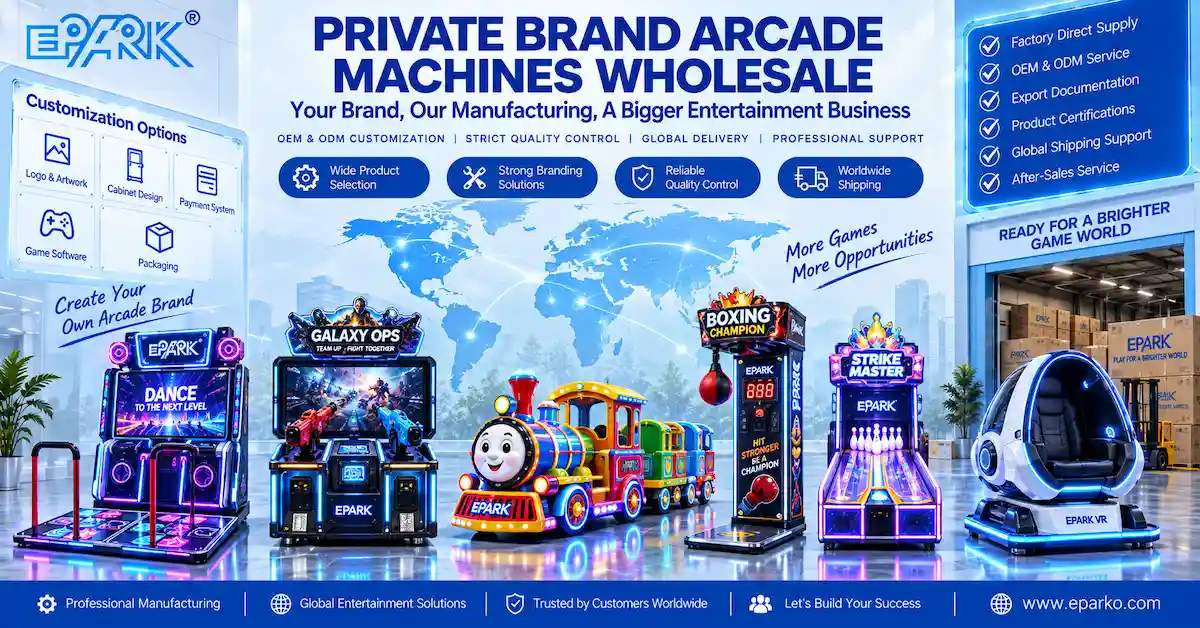
What Do OEM Arcade Machines for Distributors Actually Mean?
For a distributor, OEM purchasing should mean more than adding a logo to an existing cabinet. A useful OEM program connects the distributor’s brand identity with a clearly defined factory model, payment configuration, controls, artwork revision, software or game version where relevant, accessories, spare parts, packaging, and repeat-order records.
When sourcing OEM arcade machines for distributors, the commercial objective is usually to create products that can be sold under the distributor’s own brand while remaining technically traceable to the production platform behind them. This distinction becomes important after the first sale. A customer may request a replacement controller, payment part, graphic panel, power component, or another service item months or years later. If the distributor has replaced every factory reference with only its own marketing name, technical support becomes unnecessarily difficult.
A stronger approach is to keep both identities: the distributor-facing SKU and the underlying factory model. Buyers can first review EPARK commercial arcade products to identify suitable base platforms and then define the OEM changes required for their market.
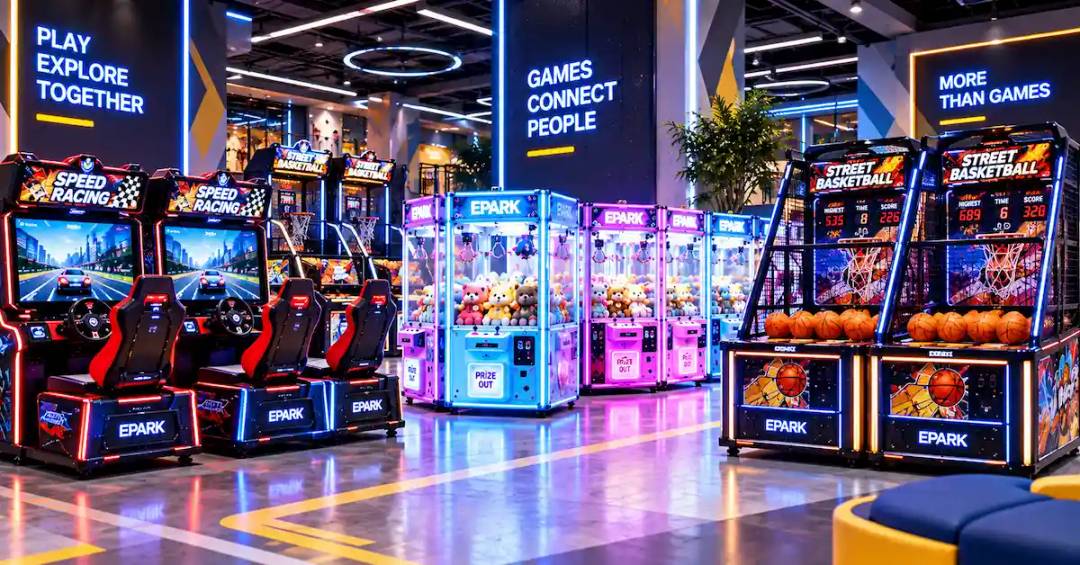
Which Distributors Benefit Most From an OEM Arcade Program?
OEM makes the most sense when the distributor plans to build a repeatable product line rather than make a one-time purchase. Regional amusement-equipment distributors can use OEM to create recognizable product families. FEC suppliers may standardize machines under their own commercial brand for several customer projects. Arcade chains with a centralized purchasing operation can also use OEM controls to keep graphics, payment configurations, accessories, and spare-parts references consistent between locations.
The model is less useful when the distributor is buying a few unrelated machines with no repeat-order strategy. In that case, standard products may reduce artwork work, sample approval, packaging complexity, and version management.
A practical decision is therefore to ask whether the planned machines will become part of a long-term catalog. If the answer is yes, OEM control should be established from the first batch rather than added later.
Start With the Base Machine Before Discussing Branding
Distributors should first decide whether the underlying machine is suitable for the intended customer and market. Attractive OEM artwork cannot correct a product that does not fit the target application.
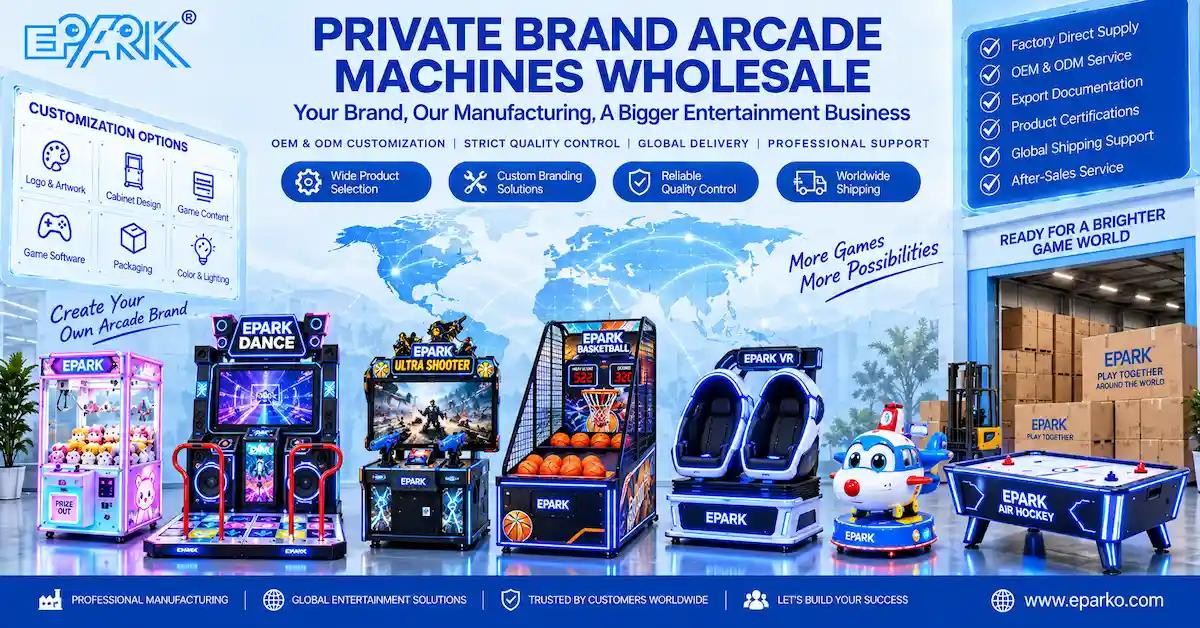
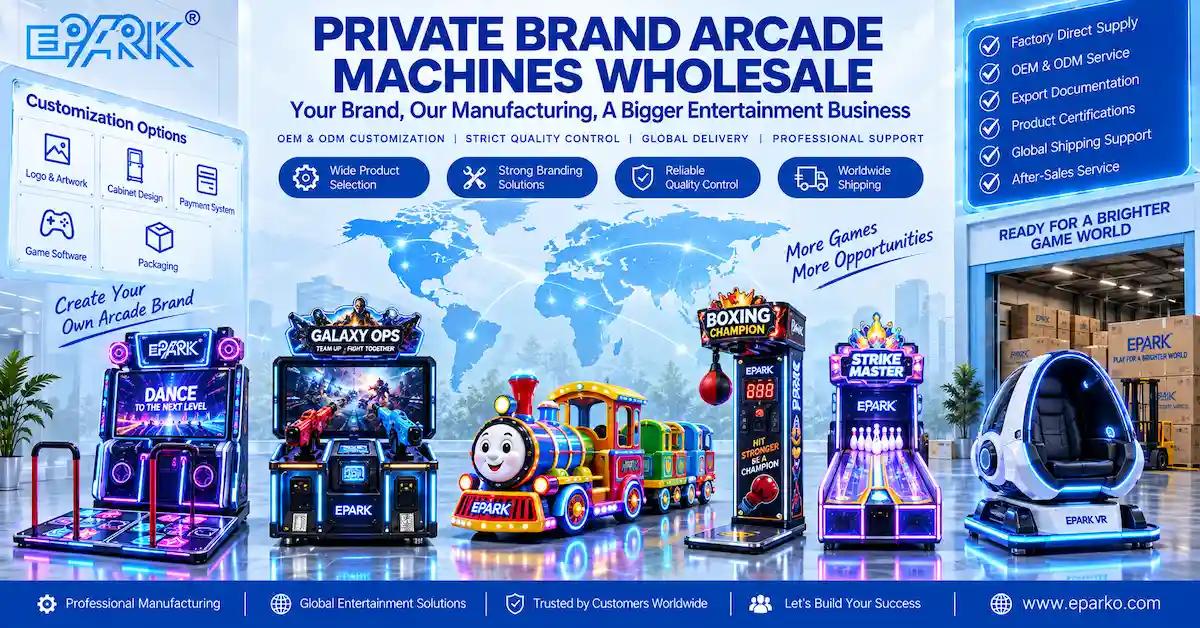
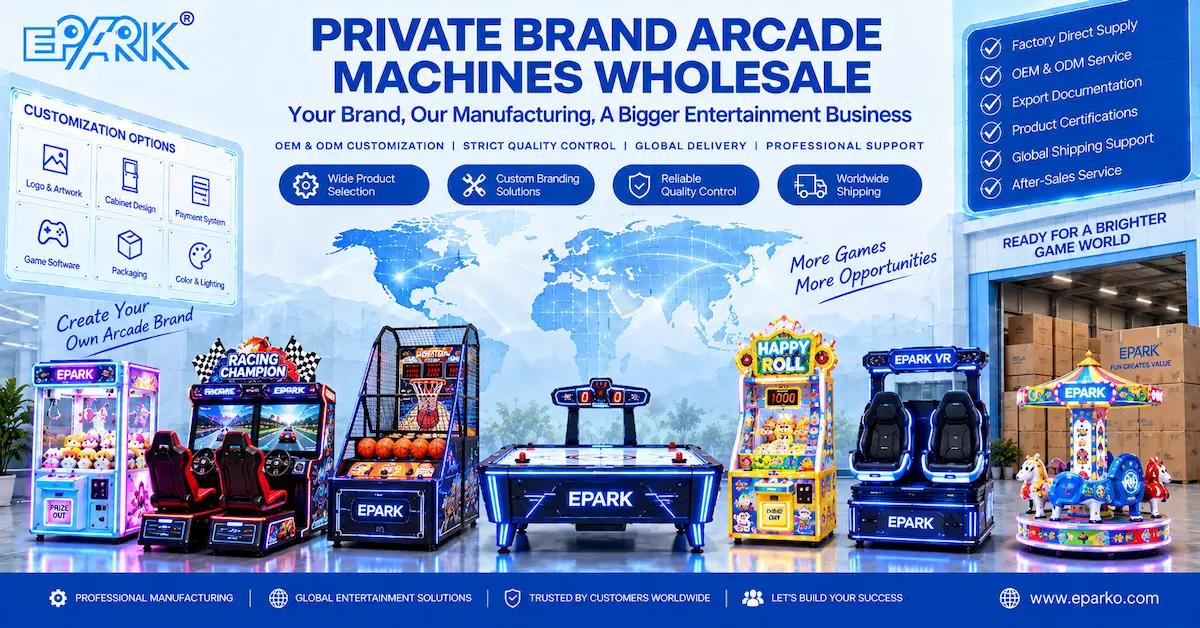
Review the equipment category, gameplay, player group, cabinet dimensions, operating clearance, payment method, maintenance access, and parts requirements before beginning graphic work. EPARK’s Products page can be used to compare available equipment directions before selecting the machines that will become part of the distributor’s branded range.
| Equipment Category | Typical Distributor Market | OEM Priorities | Technical Points to Retain |
|---|---|---|---|
| Claw Machines | FECs, malls, prize venues | Logo, cabinet graphics, colors, labels | Grab mechanism, payment setup, prize access |
| Racing Machines | Arcades and competitive zones | Header, side graphics, seat styling | Steering, pedals, display, linked configuration |
| Redemption Games | FEC and prize operations | Brand graphics, payment/reward configuration | Scoring, sensors, ticket/points function |
| Basketball Games | Sports and social-play venues | Cabinet graphics and branding | Sensors, scoring, structure, assembly |
| Shooting Games | Skill-game areas | Header, cabinet artwork, branding | Controllers, display, calibration |
| VR / Simulators | Premium attraction zones | Exterior styling and product identity | Hardware, software, controls, setup |
| Kiddie Rides | Family venues | Theme, colors and labels | Operating cycle and service parts |
This process keeps OEM customization connected to a commercially proven use case.
Define the OEM Scope Before Requesting Wholesale Pricing
“Custom logo included” is not enough information for a distributor quotation. OEM projects can range from a simple artwork change to hardware and market-specific configuration changes.
The buyer and supplier should separate the scope into layers.
Branding Scope
This may include logos, cabinet decals, header graphics, color schemes, labels, startup graphics where applicable, and packaging identification.
Market Configuration
This can include payment hardware, language settings, voltage or destination configuration, plug requirements where applicable, and other market-specific options.
Technical Configuration
This includes controls, displays, accessories, reader interfaces, sensors, software versions, or other elements that affect operation and maintenance.
Packaging and Documentation
The distributor should define carton markings, buyer SKU, package labels, manuals, accessory identification, and any private-label packaging required.
EPARK’s Why Choose Us can be used as the starting point for discussing customization scope before a final production configuration is released.
Create a Distributor-Controlled OEM Specification
A serious OEM program should use one controlled specification rather than managing the order through separate emails, chat messages, and image attachments.
| Specification Area | What the Distributor Should Confirm | Reason |
|---|---|---|
| Factory model | Original manufacturing reference | Technical traceability |
| Distributor SKU | Private commercial model number | Inventory and sales management |
| Revision | Current approved production version | Repeat-order control |
| Quantity | Units by model/version | Production planning |
| Artwork | Approved file and revision | Brand consistency |
| Color scheme | Approved color references | Future reproduction |
| Payment system | Coin, token, card or agreed system | Market compatibility |
| Controls | Buttons, joystick, steering, sensors, etc. | QC and spare parts |
| Software/settings | Version and language where applicable | Configuration control |
| Electrical requirement | Destination-specific requirement | Installation preparation |
| Accessories | Keys, cables, hardware, manuals | Receiving inspection |
| Spare parts | Initial or recommended service kit | Distributor support |
| Packaging | Standard or private-brand package | Warehouse identification |
| Packed dimensions | Package size and count | Logistics planning |
| QC criteria | Appearance + configuration + function | Batch acceptance |
The distributor SKU should never become a substitute for the underlying technical model. Both references should remain connected.
Build a Brand System Instead of Redesigning Every Machine
An OEM product line looks stronger when different machines share recognizable branding without forcing the exact same graphics onto every cabinet.
A distributor can establish a common visual system containing the logo, main colors, typography, icon treatment, label design, packaging style, and general artwork direction. Individual machines can then adapt that system to their cabinet shape.
A racing cabinet may use the distributor brand on the marquee, seat base, and side panels, while a claw machine may emphasize header graphics, side frames, and lower cabinet panels. Basketball equipment may have fewer suitable artwork surfaces but still use consistent labels, colors, and logos.
This approach helps distributors create a recognizable product family while preserving the function and serviceability of each machine type.
Control Artwork by Model and Revision
Artwork files should be treated as production-controlled documents. For every machine, retain the distributor SKU, factory model, artwork filename, revision, approval date, and approved reference image.
If graphics are changed for a later order, issue a new revision instead of overwriting the previous file. This prevents a common problem where the purchasing team expects one version but the production team uses a more recent or older graphic without anyone clearly identifying the difference.
Artwork control is especially valuable when distributors sell the same base machine into several markets under different brands or color schemes.
Verify Payment Configuration Before Sample Approval
Payment configuration can affect the distributor’s entire downstream market. A machine that is technically excellent but incompatible with a customer’s payment system can create expensive field modifications.
Before approving an OEM sample, identify whether the machine uses coins, tokens, a card reader, or another approved payment setup. For card-based systems, provide the actual reader or provider information instead of using a generic statement such as “card ready.”
The functional acceptance process should verify:
payment recognition → credit registration → game start → gameplay → scoring/reward → reset
This test should be performed on the approved configuration, not merely on another standard machine of the same cabinet type.
When Should a Distributor Approve a Sample or First Unit?
Not every OEM project requires the same sample process. A graphic-only change can often use artwork approval plus production QC. A significant payment, control, cabinet, software, or hardware change may justify a physical sample or first-unit acceptance before the bulk batch continues.
Appearance Review
Confirm logos, colors, graphics, labels, lighting, cabinet condition, and visible OEM elements.
Functional Review
Test payment, gameplay, controls, displays, sensors, scoring, reward functions, and relevant mechanisms.
Configuration Review
Verify the correct hardware, settings, accessories, destination configuration, and buyer SKU.
Production Reference
Record exactly which revision becomes the reference for mass production.
A distributor should avoid approving a sample with comments such as “looks good, please produce” if several technical items remain unresolved.
How Should OEM Batch Quality Control Work?
OEM QC should verify both normal machine performance and distributor-specific requirements. A machine can function correctly while carrying the wrong artwork, label, payment reader, or accessory pack.
The buyer should therefore use several acceptance groups.
Machine Identity
Confirm factory model, distributor SKU, revision, and quantity.
OEM Appearance
Confirm graphics, logo, colors, labels, surface finish, cabinet condition, doors, locks, and lighting.
Functional Performance
Verify payment, startup, controls, gameplay, display, sound, score, reward functions, sensors, and mechanisms where applicable.
Configuration
Confirm payment hardware, software/settings, language, accessories, and agreed options.
Packing
Check package identity, manuals, keys, spare parts, accessory cartons, and separately packed assemblies.
For a wholesale order, compare multiple units rather than inspecting only one representative sample.
Protect Distributor Inventory With Change Control
Repeat-order control is one of the most important reasons to formalize an OEM program. A distributor may have machines in stock, machines installed at customer venues, and a new batch in production at the same time.
If an important controller, payment component, software version, display, sensor, or mechanism changes without documentation, the distributor may unknowingly create two technically different products under the same SKU.
When sourcing OEM arcade machines for distributors, require the supplier to communicate meaningful configuration changes before production. If a substitution is proposed, determine whether it affects function, installation, spare parts, service procedures, or documentation.
If the difference is significant, create a new revision or SKU rather than pretending nothing changed.
Plan Spare Parts Around the Distributor SKU
Distributors often provide first-line technical support to their own customers. Spare-parts planning should therefore be part of the OEM program from the beginning.
The exact parts depend on the machines, but may include payment devices, buttons, joysticks, sensors, power supplies, control boards, switches, cables, motors, locks, and machine-specific mechanisms.
For every stocked spare, maintain:
- Distributor SKU
- Factory machine model
- Applicable revision
- Component reference
- Compatible machine range
This enables warehouse staff or technicians to identify the correct replacement without needing to reconstruct the original project.
Buyers can discuss technical and service requirements through EPARK Service.
Compare OEM Wholesale Cost Beyond Unit Price
When comparing OEM arcade machines for distributors, separate one-time OEM costs from recurring machine costs.
| Cost Area | What to Clarify |
|---|---|
| Base Machine | Exact configuration included |
| Artwork | Design service or buyer-supplied files |
| Sample | Sample/first-unit charge |
| Custom Hardware | Reader, controls or accessories |
| Software | Configuration or licensing where applicable |
| Packaging | Standard or branded |
| Spare Parts | Included or separate |
| Documentation | Included project files |
| Freight | Factory-side or broader logistics scope |
| Repeat Orders | Which customization charges repeat |
A supplier with the lowest base machine price may not offer the lowest total distributor program cost. Compare equivalent commercial scopes.
Separate OEM From ODM Before the Project Expands
Distributors sometimes begin with an OEM branding request and gradually add cabinet changes, new controls, different interfaces, and new gameplay requirements. At some point, the project may become closer to ODM development.
| Project Type | Typical Scope | Distributor Use Case |
|---|---|---|
| Standard Product | Existing machine | Trial stock |
| Basic OEM | Brand graphics and labels | Private catalog |
| Configured OEM | Branding + market configuration | Regional sales program |
| Custom Cabinet OEM | Existing platform with structural changes | Venue/customer requirement |
| ODM | Deeper design/function development | Differentiated exclusive line |
Defining this boundary early prevents a “simple OEM order” from accumulating unplanned engineering work and delays.
Build Lead Time Around Approval Stages
OEM lead time depends on more than machine assembly. A useful schedule should separate requirement confirmation, model selection, artwork approval, payment/configuration confirmation, sample review where needed, mass production, QC, packaging, and shipment readiness.
For distributors, buyer-dependent approvals should also be clearly identified. If the artwork remains unapproved for a week, that delay should not later be confused with factory production lead time.
General support information can be reviewed through EPARK FAQs, while final timing should be confirmed against the exact models, quantities, OEM scope, and shipment plan.
Use Packaging as Part of Distributor Product Management
OEM machines may move through the distributor’s warehouse before reaching the final venue, so package identification matters.
Each package should identify the relevant machine and buyer SKU. Multi-package machines should make it obvious which seat, header, frame, accessory kit, or other component belongs to which main unit.
For private-brand packaging, decide whether the project needs fully branded cartons or whether clear distributor labels and shipping marks are sufficient. Elaborate packaging has little value if it increases cost without improving warehouse handling, brand presentation, or customer receiving.
Compare OEM Suppliers by Their Ability to Support Distribution
| Evaluation Area | Weak OEM Supplier | Stronger Distributor Partner |
|---|---|---|
| Product Identity | Private name only | Buyer SKU + factory model |
| Branding | Logo application | Controlled visual system |
| Artwork | Informal approval | Revision-controlled files |
| Payment | Generic promise | Market-specific validation |
| Sample | Appearance only | Appearance + function + configuration |
| QC | Standard factory test | OEM-specific acceptance |
| Changes | Unannounced substitution | Documented change process |
| Spare Parts | Generic list | SKU-linked part system |
| Packaging | Standard shipment only | Distributor-ready identification |
| Repeat Orders | “Same machine” | Revision-controlled production |
The supplier should help the distributor preserve a commercial product line, not simply deliver isolated machines.
What Should Distributors Send EPARK for an OEM Quote?
A useful inquiry should include the target country or market, machine categories, estimated quantity by model, expected repeat-order volume, branding files, preferred colors, payment system, electrical or market configuration, distributor SKUs if already defined, packaging requirements, spare-parts expectations, and target shipment schedule.
If the distributor supplies complete FEC projects, also provide typical venue types and customer segments so the equipment mix can be evaluated accordingly.
Review EPARK Products, Why Choose Us, and Design & Process, then submit the final OEM purchasing brief through Contact Us.
Frequently Asked Questions
1. What Are OEM Arcade Machines for Distributors?
They are arcade machines manufactured or configured for a distributor’s commercial program, often using the distributor’s branding, model numbers, artwork, packaging, or market-specific configuration while remaining tied to the underlying production platform.
2. Does OEM Always Mean a Completely Custom Arcade Machine?
No. Many OEM projects use an existing machine platform with branding or configuration changes. Completely new structures or functions may require deeper custom or ODM development.
3. What Information Should a Distributor Prepare Before Requesting an OEM Quote?
Prepare the target market, machine categories, quantities, branding files, payment requirements, electrical configuration, packaging needs, spare-parts plan, expected repeat volume, and project schedule.
4. Should a Distributor Keep the Factory Model Number?
Yes. Keep the distributor SKU and factory model linked internally. This supports technical troubleshooting, spare-parts identification, and repeat-order consistency.
5. Can Payment Systems Be Customized for Distributor Markets?
Payment configuration can be discussed, but the buyer should provide actual requirements or system information. Compatibility should be confirmed and tested before bulk production.
6. Is a Sample Necessary for Every OEM Order?
Not necessarily. Simple artwork changes may use artwork and production approval, while deeper hardware, payment, cabinet, or functional changes may justify a physical sample or first-unit review.
7. How Should Distributors Control OEM Quality?
Check machine identity, branding, configuration, payment, controls, gameplay, hardware, accessories, spare parts, and packaging against the approved OEM specification.
8. How Can Repeat Orders Stay Consistent?
Maintain revision-controlled specifications and require review of important changes to artwork, payment devices, components, software/settings, packaging, or other relevant production details.
9. What Spare Parts Should an Arcade Distributor Stock?
Stock selection should reflect the installed machine mix, service obligations, downtime risk, and replenishment time. Keep every part linked to applicable machine models and revisions.
10. How Can I Request an OEM Arcade Machine Distributor Program?
Review EPARK commercial arcade machines and submit your market, models, quantities, branding, payment configuration, packaging requirements, spare-parts expectations, and repeat-order plan through EPARK Contact Us.
Conclusion
Sourcing OEM arcade machines for distributors is a product-management and supply-chain process, not simply a branding exercise. Distributors should connect their private SKU to the factory model, define the OEM scope before pricing, control artwork and configuration revisions, validate payment and functional requirements, establish batch QC, prepare spare parts, and require documented change control for future production.
A well-managed OEM program gives distributors a branded commercial product line without sacrificing the technical traceability needed for warehouse management, customer support, and repeat orders. Review EPARK arcade equipment or contact EPARK with your target markets, machine categories, quantities, branding files, payment requirements, packaging plan, and repeat-order expectations to discuss a distributor-focused OEM program.
Disclaimer
The information provided on this website is for general informational purposes only.
While EPARK Arcade Game Machine Manufacturer strives to ensure accuracy and reliability, no warranties—express or implied—are made regarding completeness, performance, or applicability.
Product specifications, designs, and features may vary depending on usage, customization, and customer requirements.
Buyers are responsible for verifying all technical details, compliance certifications, and suitability before procurement.
EPARK shall not be held liable for any direct, indirect, incidental, or consequential damages arising from the use of this website or its content, including but not limited to business losses, data errors, or equipment misuse.
For tailored solutions or further verification, please visit our Contact Us
Intellectual Property Notice
All articles, product images, videos, catalogs, software, and related materials published on this website are the intellectual property of EPARK, unless otherwise stated.
Unauthorized reproduction, distribution, modification, or commercial use of any content is strictly prohibited without prior written consent from EPARK.
EPARK reserves the right to take legal action against any unauthorized use, including but not limited to copyright infringement, misrepresentation, or unfair competition.
Trademarks
The name EPARK, the EPARK logo, and all related brand elements displayed on this website are registered trademarks or trade names of Guangzhou EPARK Electronic Technology Co., Ltd.
Other product names, company names, or logos mentioned on this site may be trademarks of their respective owners.
Unauthorized use of EPARK's trademarks for commercial purposes, including advertising, promotions, or product packaging, is strictly prohibited.
Governing Law
These terms are governed by the laws of the People's Republic of China.