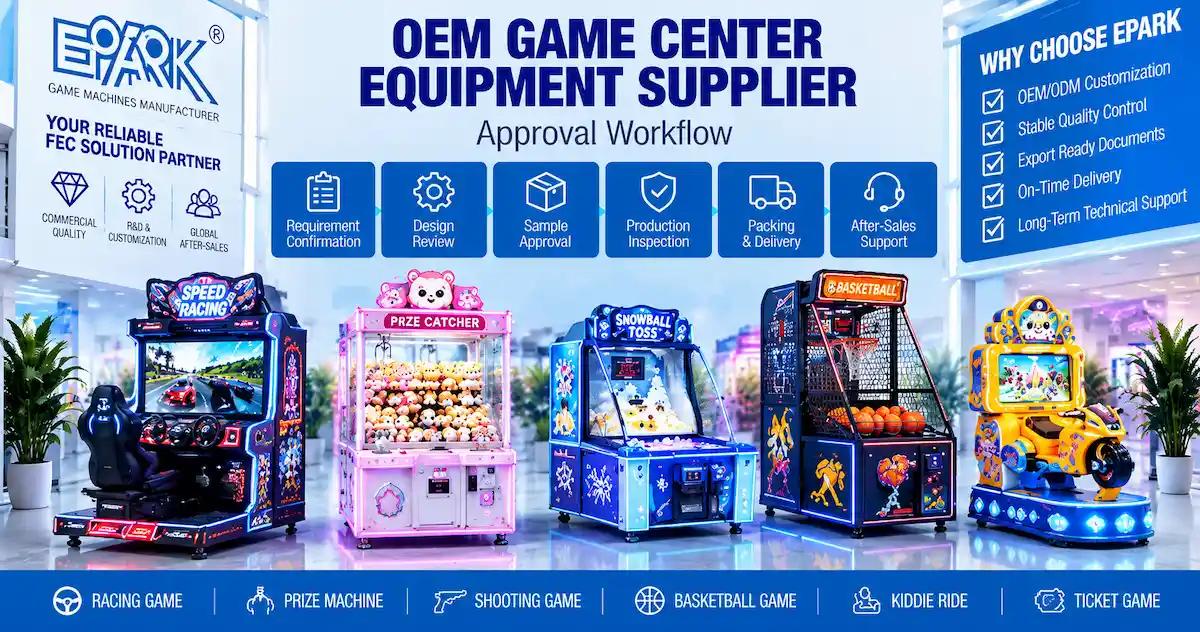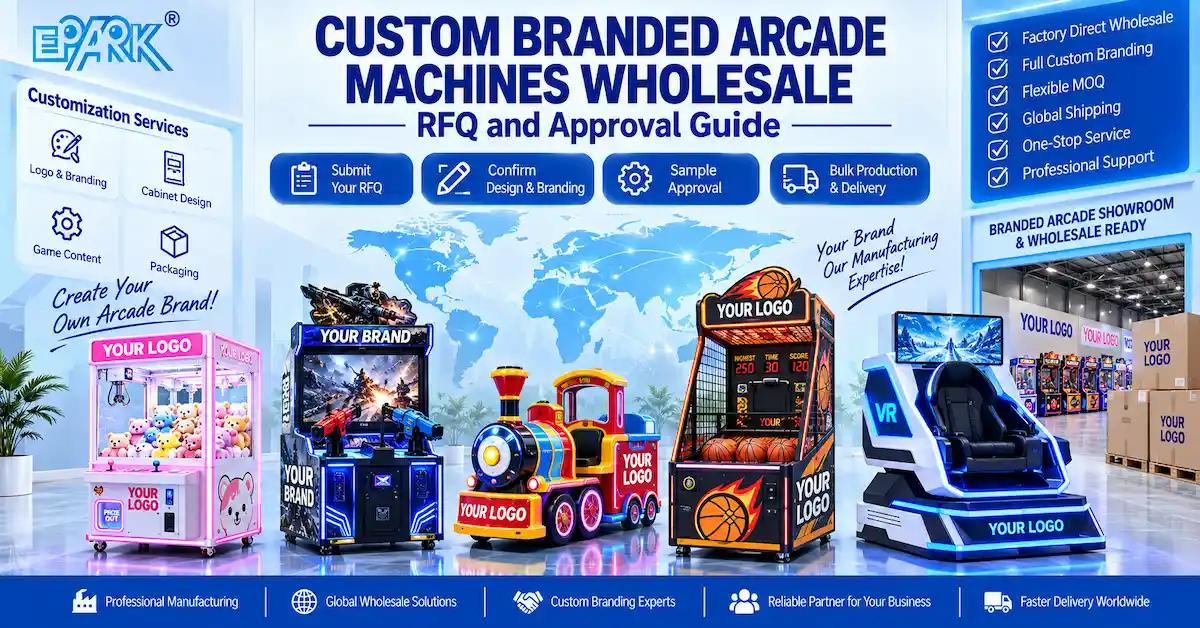

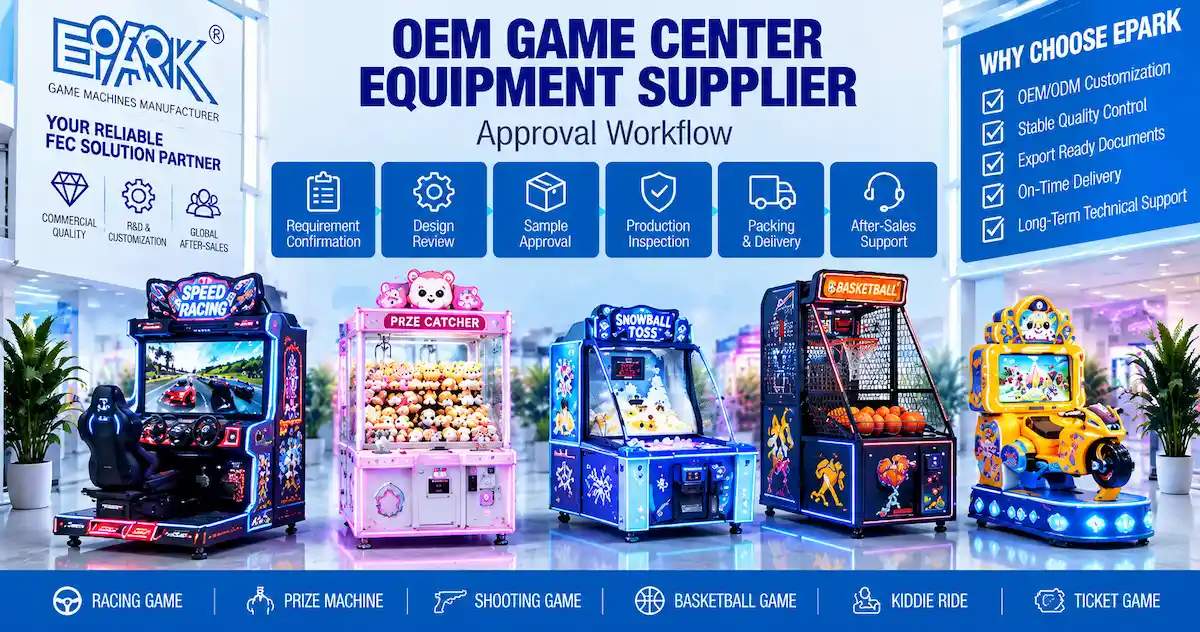
What should an OEM game center equipment supplier deliver before mass production?
An OEM game center equipment supplier should deliver more than a branded cabinet. Before mass production, the buyer should receive an approved commercial brief, a frozen artwork pack, a model and component schedule, a sample or prototype sign-off, a revision log, a test plan, a packing specification and a repeat-order control. These documents turn a creative idea into a reproducible product. Without them, the first shipment may look acceptable while the second shipment quietly changes color, controls, software, packaging or service parts.
This is an RFQ-intent question for distributors, game-center brands, multi-location operators and contractors who want equipment under their own identity. The task is not to compare generic OEM claims. It is to define what the factory must design, what the buyer must approve and what cannot change after approval. Guangzhou EPARK Electronic Technology Co., Ltd. identifies itself as a Guangzhou manufacturer integrating R&D, design, production and sales, and publishes OEM/ODM, layout, manufacturing, testing, packing and support capabilities.
Use the word “OEM” carefully. Logo printing, cabinet color, marquee artwork, payment integration, a new cabinet, a new game mechanic and a private software build carry different engineering risks. A supplier should separate these levels in the quote. If the brief says only “custom branded,” the supplier and buyer may imagine different deliverables, and the disagreement will appear after deposit.
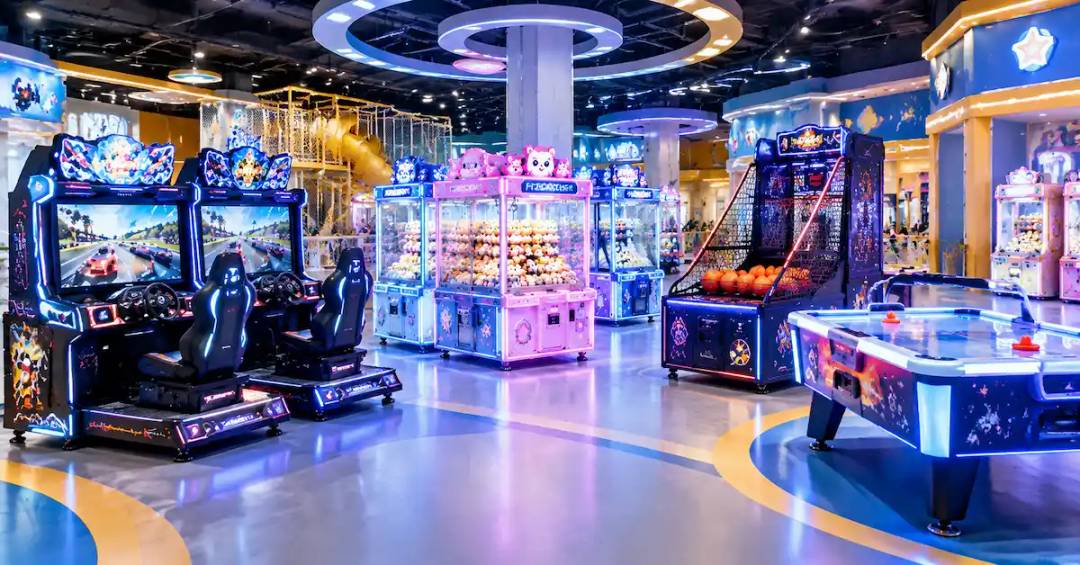
Freeze the commercial brief before discussing artwork
Begin with the game center's commercial purpose. Identify whether the equipment is for a new brand, a distributor catalogue, a chain rollout, a themed venue or a replacement program. Define the audience, price point, payment method, languages, service region, venue ceiling and expected order pattern. A branded cabinet for one flagship site may tolerate more custom fabrication than a distributor model that must fit several countries and be replenished every quarter.
Write a one-page product brief for each machine family. Include the base model, player count, play posture, screen and control assumptions, cabinet footprint, power region, network requirement, payment interface, target age, cleaning exposure, packaging route and service access. Separate “must have” from “nice to have.” A new cabinet shape, for example, may affect tooling, packed dimensions and the service route; a new logo color may only affect artwork and paint.
Ask the supplier to return the brief with a responsibility column. The buyer owns brand assets, regulatory review and final commercial approval. The factory owns manufacturability review, component integration and production records. Shared items, such as payment integration or translated instructions, need one named owner. This simple table prevents a common OEM failure: everyone assumes that someone else validated the interface.
| Field | Approval question | Owner |
|---|---|---|
| Base platform | Which existing model, controls and electronics are retained? | Supplier with buyer approval |
| Brand system | Which logo, colors, fonts, icons and languages are final? | Buyer brand owner |
| Functional change | Does the change alter software, wiring, safety or payment? | Supplier engineering |
| Sample gate | What exactly is approved, and what remains provisional? | Joint sign-off |
| Repeat batch | How will the next order match the approved sample? | Supplier quality plus buyer audit |
Choose the right OEM depth: decorate, adapt or develop
Use three practical levels. “Brand application” changes artwork, logo, color, marquee and language while keeping the base machine. “Functional adaptation” changes payment, control layout, screen format, lighting behavior or cabinet dimensions while retaining a proven platform. “New development” changes the structure, electronics, software or game concept and requires a development plan with prototypes, engineering validation and a higher commercial risk.
Each level needs a different approval path. Brand application can be approved with artwork proofs and a color sample. Functional adaptation needs an interface test, wiring review and updated service documentation. New development needs a functional prototype, a test matrix, a change budget and a clear decision about tooling, software ownership and future support. Do not use a low-risk decoration timeline to promise a high-risk development schedule.
Ask the OEM game center equipment supplier to label every item in the quotation as “standard,” “modified,” or “new.” This classification helps finance understand non-recurring engineering cost and helps operations understand the future spare-parts burden. A standard button may be easy to replace. A custom control board may be unique to the project and require a reserved stock commitment.
EPARK's public Service and About Us pages describe OEM customization, cabinet designs, branding support, game themes, layout consulting and technical assistance. Those pages establish capability categories, not an automatic inclusion list. Convert each desired service into a line item with deliverable, approval point, price basis and owner.
Build a brand system that can survive a busy game center
Branding should be designed for the physical machine, not pasted onto it at the end. Define the logo safe area, minimum size, contrast, viewing distance, light behavior, paint finish, vinyl finish and cleaning tolerance. A dark logo may disappear under blue LED light. A glossy panel may show fingerprints. A thin marquee line may be unreadable from the queue. Ask for a flat artwork proof and a rendered cabinet view so the buyer can check both detail and distance.
Create one master asset folder with approved vector logos, fonts, color references, translated text, legal marks and file versions. Lock the naming convention. Record who may approve a change. The supplier should never pull an old logo from a previous email because the new artwork was sent without a version number. The brand owner should never approve a screenshot that does not identify the machine side, language or scale.
For a chain or distributor, define what is common and what may vary by market. The cabinet silhouette, control layout, button colors and service door should remain stable if staff are expected to move between locations. Local language, currency, payment label and legal notice may vary. This distinction makes future orders faster and avoids redesigning the entire cabinet for every country.
Approve the sample as a controlled engineering gate
A sample approval is not a general statement that the machine “looks good.” Define the gate. The buyer should check cabinet dimensions, color, artwork position, logo scale, screen image, control feel, sound, lighting, payment behavior, language, safety labels, service access and packed condition. Record photographs from fixed angles and note any accepted deviations. The sample serial number and software version should be in the approval record.
Use a punch list with three statuses: must fix before production, accepted with written deviation, and open for later improvement. Do not mix a cosmetic preference with a functional failure. A small color shift may be accepted if the brand owner documents the tolerance. A payment reader that loses the session after a network interruption should not be accepted as a cosmetic deviation.
Ask for a second approval when the supplier changes the base component. A different screen, speaker, power supply, control board or reader can alter the cabinet's fit, heat, sound or service procedure. The supplier should explain whether the change affects the approved sample and update the bill of materials. The buyer should decide whether a new sample is required or whether a documented equivalence review is enough.
For a first OEM project, budget time for a real operator test. Give the sample to a venue employee who did not design it. Ask that person to start a play session, change a tariff, clean the controls, open the service door, reset a fault and explain the instructions to a customer. This test reveals usability problems that a design review often misses.
Control engineering changes after design freeze
Design freeze means the supplier cannot silently substitute a part or artwork. It does not mean the project can never change. Establish a change request with reason, affected documents, cost, lead-time impact, risk, approval and effective batch. Keep a revision number on the drawing, artwork, bill of materials, software package and packing list. A change that appears minor in one document may create a mismatch in another.
Use an impact question for every change: does it affect player safety, payment, warranty, service parts, packed dimensions, power, software language, brand appearance or local compliance? If yes, the change should be reviewed by the corresponding owner. The supplier's engineer can assess manufacturability, but the buyer's brand or operations owner must approve customer-facing behavior.
Record obsolete parts and artwork. A factory may have an older screen or logo file in stock. If it can still be used, mark the allowed batch and quantity. If it cannot be used, define the disposal or return responsibility. This discipline matters when an OEM program runs for years and several versions share a similar cabinet.
EPARK's public Design & Process page describes progress photos and videos during production. Ask for those updates against the approved revision list. A progress photo is useful when it shows the current artwork, control panel, serial label or packing stage. A generic workshop photo does not prove that the correct revision is being built.
Connect production evidence to the approved bill of materials
EPARK describes artwork printing and painting, PCB installation, wiring, LED lighting, screen and control integration, final assembly and function testing. For an OEM project, translate these stages into evidence requests. Ask for an artwork proof before printing, a control-board or wiring photo when the configuration is unusual, a screen and lighting check, and a final view that shows the brand details. The purpose is traceability, not a photo gallery.
EPARK's public FAQ also describes model-dependent materials such as metal frames, ABS plastic, tempered glass and plywood. Treat that as a material range, not a universal OEM specification: the approved bill of materials should name the material and finish for each cabinet panel, control surface, screen protection and service door. This prevents a visual change or replacement component from quietly altering cleanability, weight, durability or packed dimensions.
Use a bill of materials that distinguishes standard components from project-specific components. Standard items may be replaced by an approved equivalent. Project-specific items may need reserved stock or a written substitution approval. Include the part name, supplier or model where appropriate, quantity, revision and warranty treatment. A simple table prevents the after-sales team from ordering a visually similar but electrically incompatible part.
Ask how serial numbers are assigned and where they appear on the machine and packing list. For a multi-location game center, serial numbers support service history, warranty claims and batch comparisons. Link the serial to software version, payment configuration and artwork revision. If the supplier cannot provide that linkage, create a buyer-side receiving register and ask the factory to provide the minimum fields needed to complete it.
| Stage | Evidence | Approval trigger |
|---|---|---|
| Artwork | Versioned flat files and cabinet render | Brand owner signs proof |
| Assembly | Photos of controls, wiring, PCB and screen integration | Engineering confirms revision |
| Function | Gameplay, payment, lighting, sound and reset test | Sample or batch test passes |
| Packing | Serial list, carton marks, accessories and protection | Buyer releases shipment |
Use a test matrix that reflects the branded experience
Testing an OEM machine means testing the branded experience, not only the base game. Confirm the logo and artwork appear in the correct locations, the selected language is complete, the payment prompt matches the venue, the game starts and ends as specified, and the reset path does not expose an internal menu. Check that the lighting does not obscure instructions and that the sound level is appropriate for the planned zone.
EPARK's public process states that a 48-hour full-operation test covers gameplay, electrical safety, lighting effects and mechanical durability before packaging. Ask how that public process is applied to your order: every unit, a sample, or a production batch. Add your own acceptance tests for branding, payment, language and software version. A generic endurance test cannot replace an OEM-specific approval.
Where a payment or management system is supplied by a third party, define the test boundary. The factory may test the reader connection and the cabinet interface, while the payment provider tests settlement and account reporting. Write down who owns a failure at each boundary. This prevents the supplier from treating a transaction problem as a software problem and the payment provider from treating a wiring problem as an account problem.
Keep failed test evidence. A short video, error code, serial number and revision number make corrective action faster. Record the correction and retest result in the same log. This is especially valuable when a batch is shipped to several locations and one site reports an issue that other sites do not see.
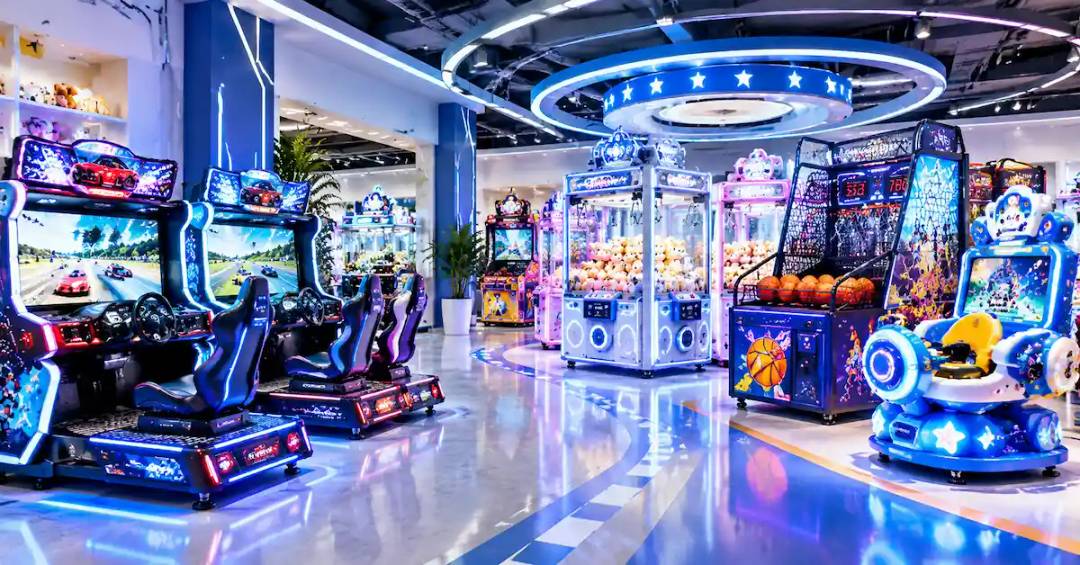
Make packaging part of the OEM design
Custom artwork and cabinet changes can alter packing risk. A protruding marquee, special control panel, glass screen or detachable sign may need a different protective method. Ask the supplier to show the packed dimensions, weight, lifting points, accessory carton, moisture protection and crate or frame reinforcement for the actual version. EPARK's public process describes bubble wrap, thick foam, wooden-frame or crate reinforcement and waterproof film for sea shipment; confirm which protection is included in your order.
Label every carton with model, serial range, revision, destination and handling direction. Put keys, manuals, cables, payment parts and spare parts in a controlled accessory list. A branded machine can arrive in good condition yet still lose time because the correct cable is in an unmarked carton. Require the packing list to match the serial register before loading.
Ask for an unloading assumption. Does the destination have a lift, forklift, dock, stairs or narrow door? A new marquee or taller cabinet may change the route. Confirm whether the supplier's packed dimensions include the crate. The buyer should not discover at the venue that a cabinet cannot pass through the planned opening.
Protect repeat-order consistency
The value of OEM is usually realized after the first order. A distributor needs the next batch to match the approved sample closely enough that customers recognize the range. Define the repeat-order record: approved sample photos, artwork revision, bill of materials, software build, color tolerance, packaging method, spare-parts list and acceptance test. Keep this record accessible to sales, purchasing, service and the supplier.
Set a change-notification rule. The supplier should notify the buyer before changing a component, finish, control, software version, packaging method or subcontractor that affects the approved product. The buyer can then decide whether to accept, retest or request a new sample. This is more realistic than demanding that a factory never improve a component; the important point is controlled communication.
For a multi-location operator, receive a small number of units at one pilot site before releasing the entire rollout when the project risk is high. Test installation time, staff training, cleaning, payment reconciliation and service access. Feed the results into the final batch documents. A pilot is not a promise of performance; it is a way to expose operational changes before the cost multiplies across locations.
Ask how long the supplier retains artwork, drawings and test records. If your brand depends on a repeat model, record the retention expectation in the contract and keep your own archive. Do not rely on a salesperson's personal mailbox as the only copy of the approved design.
Clarify IP, software and service responsibility
OEM branding raises ownership questions that a normal wholesale order may not. List who owns the logo and artwork, who may reuse a cabinet concept, whether the supplier may show the finished machine in marketing, who owns custom software, and who may produce compatible spare parts. These points do not need complicated legal language to be useful; they need clear names, territories, permissions and exceptions.
Separate exclusive branding from exclusive engineering. A supplier may agree not to print your logo for another buyer while still using the underlying cabinet platform. If you require a truly exclusive structure or game, identify the development cost, minimum volume, tooling ownership and support period. Do not infer exclusivity from the word “OEM.”
Service documents should carry the brand version. A technician needs the correct wiring diagram, software build, payment interface, error codes and parts list. EPARK's public Service page describes installation, remote diagnostics, technical support and spare-parts assistance; ask for the exact support package for the OEM configuration and the hours, channel and response target that apply to your market.
Turn the RFQ into a stage-gated schedule
A useful OEM RFQ has stages: discovery, feasibility, quotation, artwork, sample, design freeze, pilot or pre-production, mass production, factory test, packing, shipment and handover. Each stage should state the input, output, approval, payment trigger and change rule. This prevents a buyer from paying a production deposit while the artwork or payment interface is still unresolved.
Ask the supplier to separate recurring unit cost from non-recurring engineering, tooling, sample, artwork and testing cost. State MOQ by version and the price basis for repeat orders. Clarify whether a low MOQ applies only to standard cabinets or also to new structures and branded electronics. A transparent cost model helps the buyer decide whether to simplify the design or accept a longer development path.
Require a final document index with the shipment. It should include the approved quotation, model schedule, serial list, packing list, manuals, warranty terms, service contacts, software or configuration notes, test evidence and spare-parts list. The index is the handover map for the operations team. Without it, the buyer may own a custom machine but not the information needed to operate it.
Assign ownership for the launch and the next revision
OEM projects often fail after shipment because the approval team disappears. Name the people who own receiving inspection, site installation, payment activation, artwork questions, warranty claims and the next purchase order. Give each person the final document index and a short escalation path. A brand manager should not have to diagnose a loose connector, and a technician should not be asked to approve a new logo color without the brand owner.
Separate launch corrections from design changes. If a cabinet arrives with a missing key, damaged panel or wrong cable, use the receiving and claim process. If the buyer wants a different control layout for the next batch, use a revision request and update the approval documents. Mixing the two creates confusion about warranty responsibility and may cause the factory to ship a change to every location before the pilot has been evaluated.
Before the next order, compare the approved sample with a returned service report and the first batch's actual installation time. The review should decide whether the base design is frozen, whether a component needs an approved equivalent, and whether the spare-parts package should change. This turns OEM from a one-time branding exercise into a controlled product line that the supplier and buyer can support together.
Common OEM failure modes to remove from the quote
The first failure is a visual-only brief. The buyer approves a logo and color but never approves payment behavior, software language or service access. The second is a moving target: artwork, cabinet dimensions and components change in parallel without a revision owner. The third is an unrepresentative sample: the prototype uses a temporary screen, reader or control board, but mass production uses another configuration without a new approval.
The fourth failure is an unpriced change. A buyer asks for a new marquee after design freeze and assumes the original lead time and cost remain. The fifth is a missing repeat-order file. Sales remembers the last color, purchasing remembers a different MOQ and service has no record of the special wiring. The sixth is a shipment that is “complete” only in the factory's terminology because manuals, keys or payment settings are missing.
Each failure can be addressed with a small control: a responsibility table, versioned artwork, signed sample, change request, document index and serial-linked packing list. These controls do not slow a well-run OEM project; they reduce rework and make a fast decision possible when a real change appears.
Frequently asked questions about an OEM game center equipment supplier
What does OEM mean for arcade or game center equipment?
OEM can mean branded artwork on a standard machine, functional adaptation of a proven platform or development of a new cabinet, software or game concept. The buyer should define the exact level in the quotation instead of treating “OEM” as one fixed service.
Does EPARK provide OEM and ODM services?
EPARK's About Us, Service and FAQ pages describe OEM/ODM customization, cabinet design, branding, layout support, production, testing and technical assistance. The buyer should convert the desired capability into model-specific deliverables, costs and approval gates.
How long does a customized order take?
EPARK's public FAQ states that customized production depends on complexity and commonly describes 15–30 days for OEM orders after design confirmation. Because design depth, sample approval, components and quantity change the schedule, the signed quotation should define the exact trigger and date.
What should a buyer approve before mass production?
Approve the model, dimensions, artwork, colors, controls, screen, sound, lighting, payment behavior, language, safety labels, service access, software version, packing method and open deviations. The approved sample serial and revision number should be recorded.
How can repeat orders match the first batch?
Keep an approved sample record, revision-controlled artwork, bill of materials, software build, color tolerance, test matrix and serial-linked packing list. Require advance notice for component or artwork changes and repeat the relevant acceptance tests.
Who owns custom artwork and software?
The contract should identify ownership and permitted use for logos, artwork, cabinet design, game content, software and service files. Do not infer exclusivity from the word OEM; state whether the agreement covers branding, engineering, territory and duration.
Conclusion
An OEM game center equipment supplier earns approval by making a custom project reproducible. Define the commercial brief, classify the OEM depth, freeze the brand system, approve a representative sample, control engineering changes, connect production evidence to the bill of materials, test the branded experience and archive the repeat-order record. EPARK's public manufacturing and service pages show the process categories a buyer can discuss, but the project becomes reliable only when every promised customization has an owner, a revision, a test and a written acceptance point.
Disclaimer
The information provided on this website is for general informational purposes only.
While EPARK Arcade Game Machine Manufacturer strives to ensure accuracy and reliability, no warranties—express or implied—are made regarding completeness, performance, or applicability.
Product specifications, designs, and features may vary depending on usage, customization, and customer requirements.
Buyers are responsible for verifying all technical details, compliance certifications, and suitability before procurement.
EPARK shall not be held liable for any direct, indirect, incidental, or consequential damages arising from the use of this website or its content, including but not limited to business losses, data errors, or equipment misuse.
For tailored solutions or further verification, please visit our Contact Us
Intellectual Property Notice
All articles, product images, videos, catalogs, software, and related materials published on this website are the intellectual property of EPARK, unless otherwise stated.
Unauthorized reproduction, distribution, modification, or commercial use of any content is strictly prohibited without prior written consent from EPARK.
EPARK reserves the right to take legal action against any unauthorized use, including but not limited to copyright infringement, misrepresentation, or unfair competition.
Trademarks
The name EPARK, the EPARK logo, and all related brand elements displayed on this website are registered trademarks or trade names of Guangzhou EPARK Electronic Technology Co., Ltd.
Other product names, company names, or logos mentioned on this site may be trademarks of their respective owners.
Unauthorized use of EPARK's trademarks for commercial purposes, including advertising, promotions, or product packaging, is strictly prohibited.
Governing Law
These terms are governed by the laws of the People's Republic of China.