
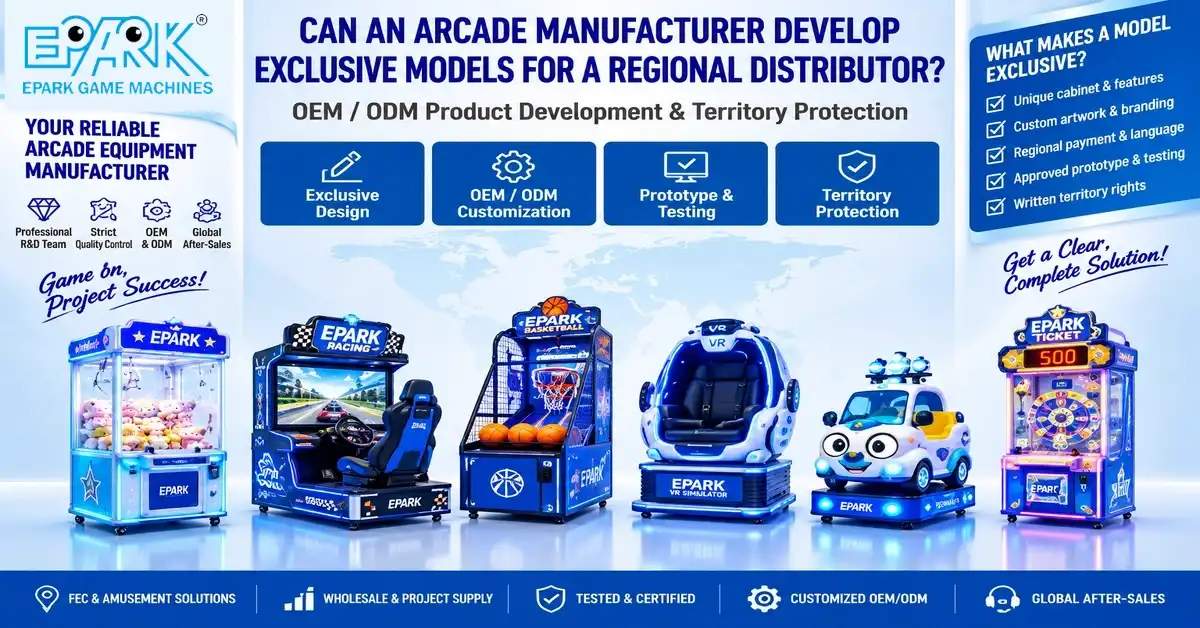
Quick answer: yes, but exclusive arcade models require a product brief, investment, rights and repeat-order controls
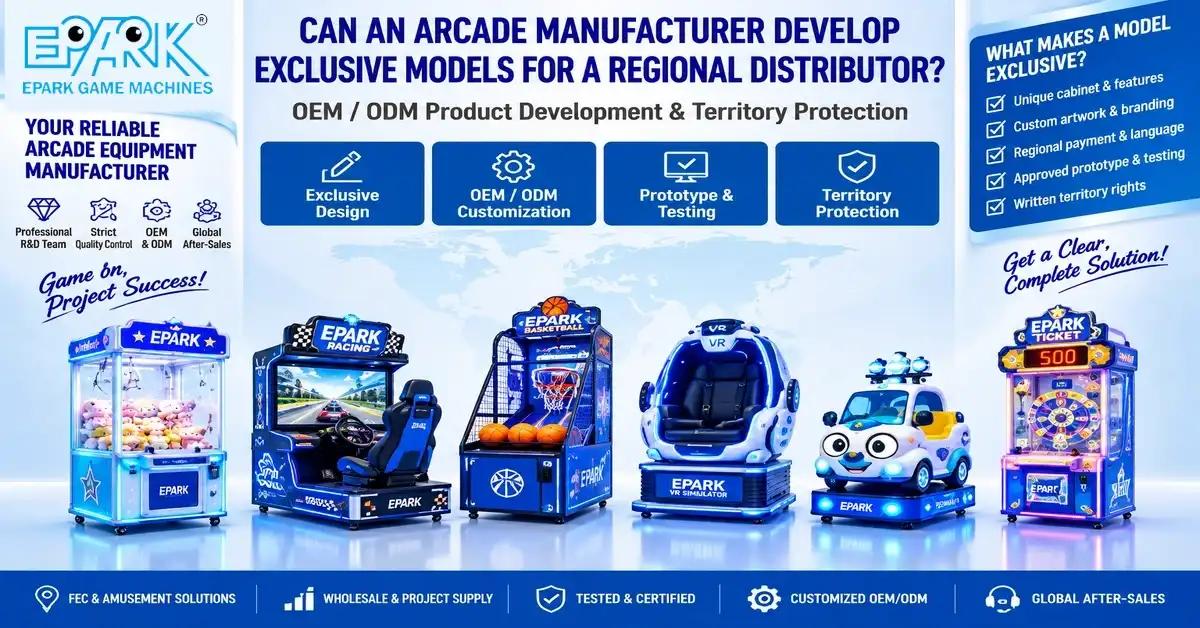
Can an arcade manufacturer develop exclusive models for a regional distributor? Yes, an experienced manufacturer may be able to develop a model that is exclusive to a territory, channel or distributor program, but exclusivity is not created by printing a logo on a standard cabinet. A credible exclusive-model project needs a defined product brief, an engineering and prototype process, evidence of what is unique, a written rights arrangement, agreed performance or purchase obligations, and change control for future batches.
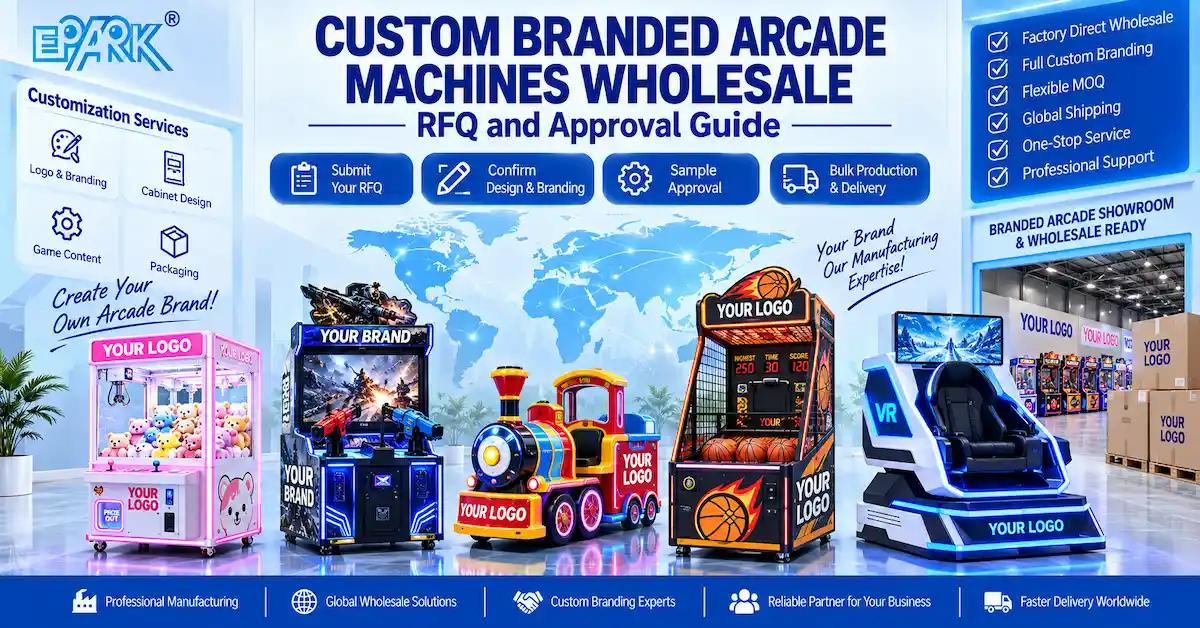
The important distinction is between private-label customization, semi-custom adaptation and exclusive product development. Private label changes the commercial identity of an existing machine. Semi-custom adaptation changes selected cabinet, payment, language, artwork or feature elements. Exclusive development creates a defined configuration or product family that the manufacturer agrees not to offer to specified competitors, territories or channels under agreed conditions. Each level has a different cost, timeline, technical risk and contract requirement.
Define what “exclusive” means before discussing a price
“Exclusive model” can describe several different rights. A distributor may want a cabinet unavailable to named competitors, a payment configuration reserved for one country, a design sold only under its brand, a model unavailable through the manufacturer's website, or a product category protected for a period. If the parties do not define the right, the word becomes a sales promise that cannot be enforced.
| Structure | What is protected | What the distributor must clarify |
|---|---|---|
| Territory exclusivity | Named country, state, language market or account group | Territory boundaries, online sales, existing accounts and direct factory inquiries |
| Channel exclusivity | Malls, FECs, cinemas, retailers or a defined customer segment | Whether the manufacturer can sell the same model in other channels |
| Brand exclusivity | Cabinet artwork, name, colors and commercial identity | Who owns artwork, files, tooling and customer-facing content |
| Configuration exclusivity | Specific cabinet, software, payment, voltage or mechanical combination | Which features make it unique and how revisions are controlled |
| Development exclusivity | Concept, prototype or product family for an agreed period | Development fee, launch obligation, minimum purchase and termination |
A new distributor exclusivity normally has more leverage with a narrow, measurable right than with a blanket promise covering an entire country and all arcade ODM development products. A protected configuration for a named product family, plus registered project leads and a first-right-to-quote process, may be commercially more realistic than an unsupported “sole distributor” claim.
Separate private label, semi-custom and true new development
Before requesting exclusivity, classify the project. Private label may use an existing cabinet, board, screen and game content with new artwork, colors, language and brand labels. Semi-custom work may add a payment system, change the cabinet dimensions, combine two player positions or adapt the lighting and prize presentation. New development may require a new mechanical structure, control architecture, software behavior, game content, mold, tooling or safety assessment.
The classification matters because a distributor cannot reasonably claim ownership of a standard machine merely because it paid for a logo. Conversely, a manufacturer should not treat a genuinely new cabinet and control system as a free artwork service. The brief should identify which elements are pre-existing, which are modified, which are created for the project and which third-party components or licenses remain outside the distributor's control.
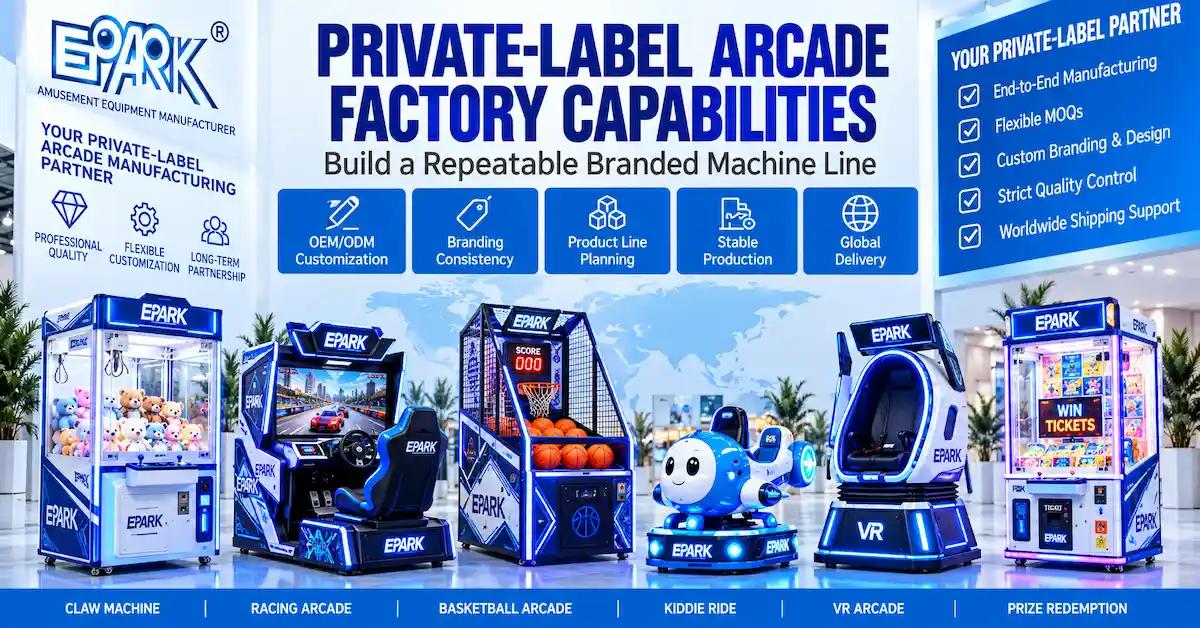
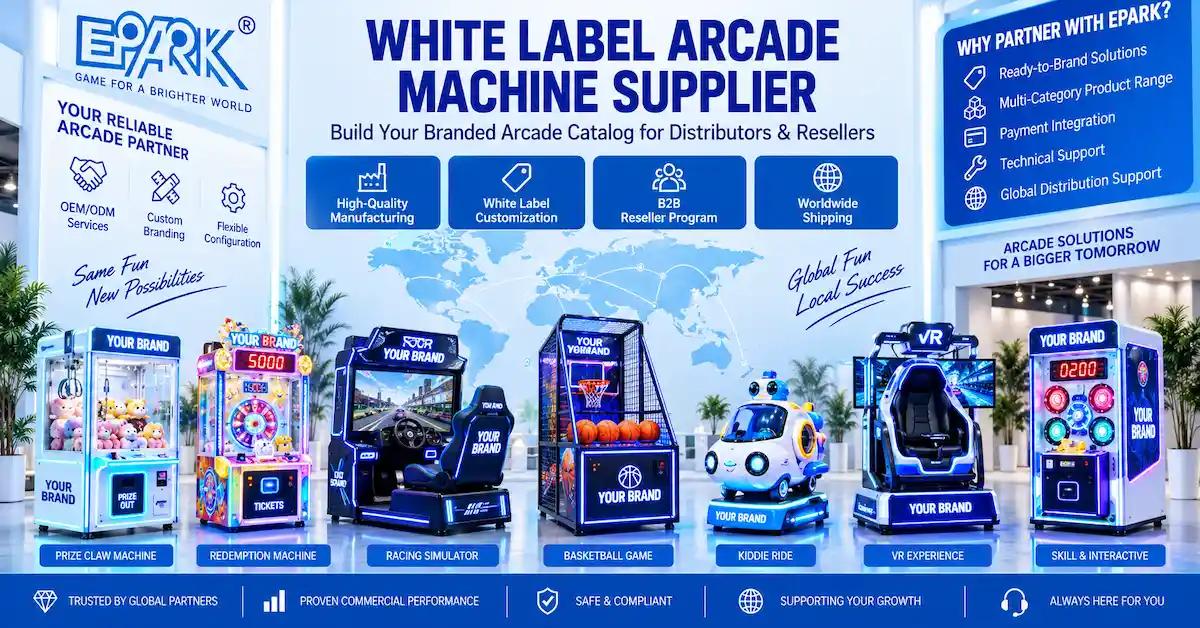
EPARK's public OEM and custom-manufacturing content and ODM development guide are useful for understanding the difference between branding, customization and development. Use them as background, then ask the factory to classify your proposal in writing before commercial terms are discussed.
Write a market and product brief the engineering team can build
An exclusive model starts with a buyer and venue problem, not a mood board. State the target market, customer type, venue, player age range, expected operating hours, floor-space limit, queue pattern, price or payment environment, local voltage, language, service capability and reason the existing catalog does not solve the problem. If the distributor wants a regional identity, describe the design language and the features that must remain recognizable across repeat orders.
Then define the product. Include target dimensions, player positions, display size or layout, controls, sound and lighting, prize or ticket behavior, payment hardware, software language, network requirements, access panels, cleaning points, safety features, packed dimensions, target weight, materials and environmental conditions. Use target ranges where exact engineering values are not known. The purpose is to let the factory identify feasibility questions before promising a price.
For a product intended for malls or family venues, include non-game requirements: sightline, accessibility, noise, heat, cleaning, staff access, electrical isolation, child supervision and signage. A model that looks exclusive but cannot pass mall loading, maintenance or fire-route requirements is not a useful distributor product.
Ask the manufacturer to return a feasibility response that marks each requirement as standard, adaptable, engineering-dependent, third-party-dependent or not recommended. That response is more valuable than an immediate unit price because it shows where development risk sits.
Decide what evidence proves the model is genuinely different
Exclusivity should be attached to a configuration, not a vague product name. Create a configuration ID with a product drawing, cabinet dimensions, artwork revision, bill of critical components, payment option, software or game version, voltage, plug, label and packaging method. A model can retain a factory family name while the distributor's protected configuration is identified by a separate revision.
Define the “unique elements” in measurable language. Examples include a new cabinet geometry, specific player arrangement, approved payment integration, exclusive front panel, regional language package, defined lighting architecture, new prize presentation or an engineering feature that the factory agrees not to sell to named competitors. Avoid claiming ownership of generic buttons, screens, LED strips or standard game content.
Request drawings, prototype photographs, test records and an approved golden sample. If the manufacturer substitutes a screen, board, power supply, sensor or payment reader later, the change must trigger a technical review. Otherwise, the distributor may hold an exclusivity promise for a product that no longer matches the launch model.
The EPARK design and process page describes artwork, painting, electronic assembly, screen and control integration, final assembly and function testing. In an exclusive project, connect each stage to a deliverable: approved artwork, engineering drawing, sample, test checklist, packing standard and release record.
Negotiate development cost and commercial commitment separately
Exclusive development can require design labor, engineering time, prototype materials, tooling, software work, testing, compliance review, artwork and sample freight. The quote should separate one-time development charges from recurring unit prices. It should also state which charges are refundable, creditable against production or retained if the project stops.
The factory may ask for an MOQ, launch order, annual purchase target, marketing investment or deposit before reserving capacity. A distributor should not accept a large obligation without knowing the prototype acceptance criteria, target unit cost, production lead time, service parts and termination rights. A manufacturer should not grant indefinite exclusivity without a realistic performance mechanism.
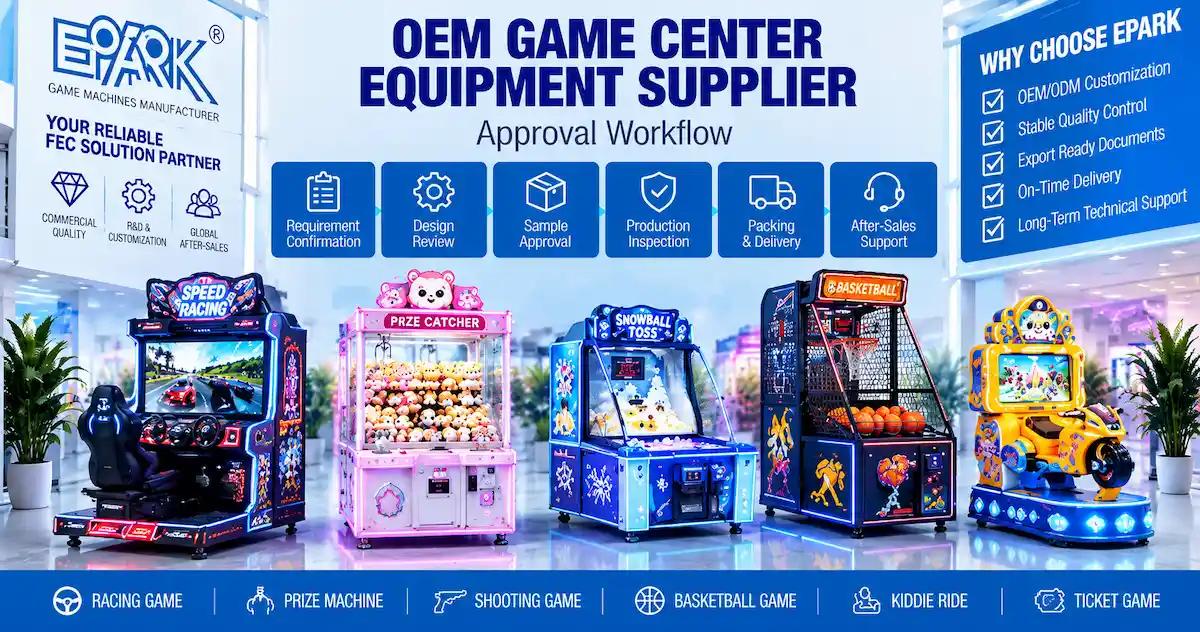
Use a staged commercial structure: feasibility and brief review; design proposal; prototype; functional and venue testing; pilot batch; launch review; then repeat production. At each stage, define the payment, deliverable, decision owner and exit condition. This protects both parties from discovering after mass production that the model does not fit the target venue or local payment system.
| Stage | Factory deliverable | Distributor decision | Commercial checkpoint |
|---|---|---|---|
| Feasibility | Requirement review, risk list and preliminary concept | Approve scope or remove unsupported requirements | Agree development budget and responsibilities |
| Design | Drawings, configuration ID, artwork and component assumptions | Approve dimensions, user flow and brand direction | Freeze what is standard, modified or new |
| Prototype | Physical or functional sample with test plan | Test gameplay, access, payment, safety and venue fit | Approve, request correction or stop |
| Pilot | Limited batch with inspection and service pack | Review customer response, faults and install effort | Confirm launch quantity and exclusivity trigger |
| Repeat production | Revision-controlled units and change notices | Accept only the approved configuration | Review rights, targets, parts and renewal |
Define IP, artwork, tooling and data ownership precisely
“The distributor owns the design” is too broad for a factory contract. Separate background IP from project IP. Background IP may include the manufacturer's cabinet techniques, standard control boards, production methods, software frameworks, supplier relationships and generic components. Project IP may include distributor-funded artwork, a new logo, a specific industrial design, a custom payment workflow, a regional content package or a new mechanical feature. Third-party IP may include game content, payment software, fonts, music, images and branded components.
For each asset, specify owner, license, territory, duration, permitted modifications, source-file delivery, confidentiality, reuse rights and what happens after termination. If the distributor pays for tooling, state where it is stored, who can use it, who maintains it and whether the factory can use it for another customer. If the factory contributes engineering, define whether the distributor receives an exclusive license or ownership of the resulting design.
Do not promise the end customer that a model is “patented” or legally exclusive unless the relevant rights have been verified. EPARK's public website displays a patented-product capability statement but does not provide patent numbers, jurisdictions, owners or model mapping in the general source material. A distributor should request written evidence before using patent or registered-design language in a sales proposal.
Build territory protection around products, channels and leads
A product right without channel rules can still be commercially weak. Define the territory by country, state, language market or named accounts. Define whether the factory can sell the same configuration under another brand, through an online marketplace, to an existing multinational account, or to a project contractor. Define how direct website inquiries from the territory are handled and how registered opportunities are protected.
Exclusivity should also state the protected product scope. “All arcade machines” is usually too broad. List model family, configuration ID, category, brand and major options. If a factory may sell a standard version but not the distributor's protected configuration, describe the difference. If a competitor can buy the same cabinet with a new sticker, the distributor has no meaningful product protection.
Set a term, renewal process and performance mechanism. The manufacturer may require annual quantity, launch activity, demo stock, service capability, marketing or payment performance. The distributor should receive notice and a cure period if a target is missed. The agreement should cover discontinued models, component shortages, engineering revisions, force majeure, customer-owned tooling and outstanding warranty obligations.
| Clause | Minimum definition | Risk if omitted |
|---|---|---|
| Protected product | Model, configuration, revision, artwork and included options | Factory can sell a nearly identical cabinet and call it different |
| Territory | Countries, states, language markets or named accounts | Distributor and factory disagree about geographical scope |
| Channels | FEC, mall, cinema, retail, online and project sales | Another channel partner receives the same opportunity |
| Lead ownership | Registration, protection period, direct inquiry routing and exceptions | Factory and distributor quote the same customer separately |
| Performance | Launch date, minimum purchases, service and marketing obligations | Indefinite rights with no commercial basis for renewal |
| Exit | Notice, cure period, tooling, stock, warranty and customer handover | Customers and inventory are stranded when the relationship ends |
The earlier regional distributor manufacturer guide covers channel evaluation and lead ownership. This article narrows the task to the extra controls needed when the distributor is paying for or requesting a product that should not be offered broadly.
Test the exclusive model in a real venue before a regional launch
A prototype can pass a factory test and still fail commercially. Put the unit in the intended venue or a realistic test environment. Observe queue behavior, visibility, noise, heat, cleaning, staff access, payment completion, prize or ticket flow, player understanding, accessibility and service-panel clearance. Ask the operator to record faults by configuration ID rather than by a casual product nickname.
A pilot should also test the distributor's business model. Can local staff install and explain the machine? Can the distributor stock the critical parts? Can the factory diagnose a problem remotely from photos, video and serial data? Can the same artwork, labels, software and payment settings be reproduced in the next batch? A product is not ready for exclusivity merely because the first sample looks distinctive.
Use acceptance criteria that are measurable and visible. Examples include cabinet dimensions within an agreed tolerance, approved screen and controls, payment success under the destination configuration, safe access, test duration, noise or heat limits if specified, packing condition, document completeness and the absence of unapproved substitutions. Keep customer feedback separate from engineering non-conformities so the factory can act on both.
Protect repeat-order consistency with change control
Exclusive models create a long-term service obligation. A new screen, board, power supply, sensor, payment reader, software version or cabinet material can change the user experience and spare-parts plan even when the product name stays the same. Require a change notice showing old reference, new reference, affected serial range, reason, test impact, compatibility, artwork or manual impact and approval owner.
Store the approved golden sample, drawings, critical component list, software version, payment settings, labels, test checklist, packing method and service parts together. Link the commercial SKU to the factory model and configuration ID. This is especially important when the distributor sells through multiple local branches or asks for replenishment several months after the launch.
Ask how the manufacturer handles discontinued components and substitutions. A factory may be able to propose a technically equivalent part, but the distributor should know whether a new assessment, pilot test, customer notice or price change is required. Silent substitution is incompatible with meaningful exclusivity because it can erase the unique feature that justified the investment.
Evaluate the manufacturer before granting a protected program
The manufacturer should be assessed on more than design creativity. Review product engineering, prototype discipline, component traceability, factory testing, packing, export documentation, service files, spare parts, software support and the ability to repeat a configuration. EPARK's public materials describe a broad product range, project layout, OEM/ODM, production, testing, packing and after-sales support. A distributor should convert those claims into evidence for the proposed model.
| Capability | Evidence to request | Decision question |
|---|---|---|
| Engineering | Requirement review, drawings, BOM assumptions and prototype plan | Can the factory explain what is new and what is reused? |
| Production | Process stages, assembly ownership and revision records | Can the approved sample be reproduced at volume? |
| Testing | Configuration-linked test checklist and failed-unit process | Will the unique options be tested, not just the cabinet power? |
| Commercial control | Development quote, MOQ, targets, term and exit clauses | Are the rights realistic for both sides? |
| Service | Manuals, parts list, training, warranty and escalation workflow | Can the distributor support the model after launch? |
| Channel integrity | Territory map, lead registration and direct-sales policy | Will the manufacturer protect the agreed market rules? |
Use verified, partly verified and open statuses. Do not grant a broad territory right simply because a factory has a large catalog or attractive samples. Exclusivity is a commercial investment, so it should be earned by evidence that the manufacturer can build, support and protect the product.
Frequently asked questions
Can a regional distributor request an arcade machine exclusive to its territory?
Yes, a distributor can request territory, channel, brand or configuration protection. The manufacturer must agree the product scope, territory, term, performance obligations, lead handling and exceptions in writing. A public OEM capability statement is not itself an exclusivity grant.
Is a private-label arcade machine an exclusive model?
Usually not. Private label commonly changes artwork, logo, colors or commercial identity on an existing machine. It becomes a stronger exclusivity case only when the protected configuration and the manufacturer's non-reuse obligation are specifically defined.
Who owns the design of an exclusive arcade machine?
Ownership depends on the contract and on each asset. Separate distributor-funded artwork, new industrial design, tooling, software, factory background technology and third-party content. State licenses, source files, reuse rights, confidentiality and post-termination treatment.
Does exclusive development always require a large MOQ?
Not always, but a manufacturer may require a development fee, prototype payment, launch order or annual purchase target to justify engineering and reserved capacity. Ask for the exact commitment by product, configuration and territory; EPARK's public FAQ does not publish one universal exclusive-development MOQ.
What should be approved before mass production?
Approve the configuration ID, drawings, artwork, critical components, voltage, payment system, language, software or game version, labels, test plan, packed dimensions, spare-parts list, acceptance criteria and commercial rights. A physical golden sample is strongly preferable for a new cabinet.
Can the manufacturer sell a similar standard model to another buyer?
It may be possible if the agreement protects only the distributor's defined configuration. The contract should explain which features make the protected model different and whether visually or functionally similar versions are restricted.
How long should exclusivity last?
The term should match development investment, launch cycle and performance obligations. Define renewal, notice, cure period, discontinued models, outstanding orders, customer warranty and remaining inventory. Avoid indefinite rights without a review mechanism.
Can EPARK develop an exclusive arcade model for a regional distributor?
EPARK publicly describes OEM/ODM, cabinet, artwork, lighting, language, payment and project customization. Whether a specific model can be exclusive depends on feasibility, development scope, investment, territory and written commercial terms. Submit a product brief through the contact page for a model-specific review.
Conclusion
An arcade manufacturer can develop exclusive models for a regional distributor when both sides treat the project as a controlled product program rather than a logo request. Define what is unique, build a requirement and configuration record, approve a prototype, test it in the intended venue, separate development costs from unit prices, document IP and tooling, protect territory and leads, and control every repeat-order change.
EPARK's public OEM/ODM, product, design-process and service information provides a reasonable starting point for an exclusive-model conversation, while the critical commercial questions remain order-specific. Send the target market, venue, product brief, desired unique features, quantity plan, payment environment and support capability through the EPARK contact page and request a feasibility review with written development and channel terms.
Disclaimer
The information provided on this website is for general informational purposes only.
While EPARK Arcade Game Machine Manufacturer strives to ensure accuracy and reliability, no warranties—express or implied—are made regarding completeness, performance, or applicability.
Product specifications, designs, and features may vary depending on usage, customization, and customer requirements.
Buyers are responsible for verifying all technical details, compliance certifications, and suitability before procurement.
EPARK shall not be held liable for any direct, indirect, incidental, or consequential damages arising from the use of this website or its content, including but not limited to business losses, data errors, or equipment misuse.
For tailored solutions or further verification, please visit our Contact Us
Intellectual Property Notice
All articles, product images, videos, catalogs, software, and related materials published on this website are the intellectual property of EPARK, unless otherwise stated.
Unauthorized reproduction, distribution, modification, or commercial use of any content is strictly prohibited without prior written consent from EPARK.
EPARK reserves the right to take legal action against any unauthorized use, including but not limited to copyright infringement, misrepresentation, or unfair competition.
Trademarks
The name EPARK, the EPARK logo, and all related brand elements displayed on this website are registered trademarks or trade names of Guangzhou EPARK Electronic Technology Co., Ltd.
Other product names, company names, or logos mentioned on this site may be trademarks of their respective owners.
Unauthorized use of EPARK's trademarks for commercial purposes, including advertising, promotions, or product packaging, is strictly prohibited.
Governing Law
These terms are governed by the laws of the People's Republic of China.