

Quick answer: place machines by the job each zone must do
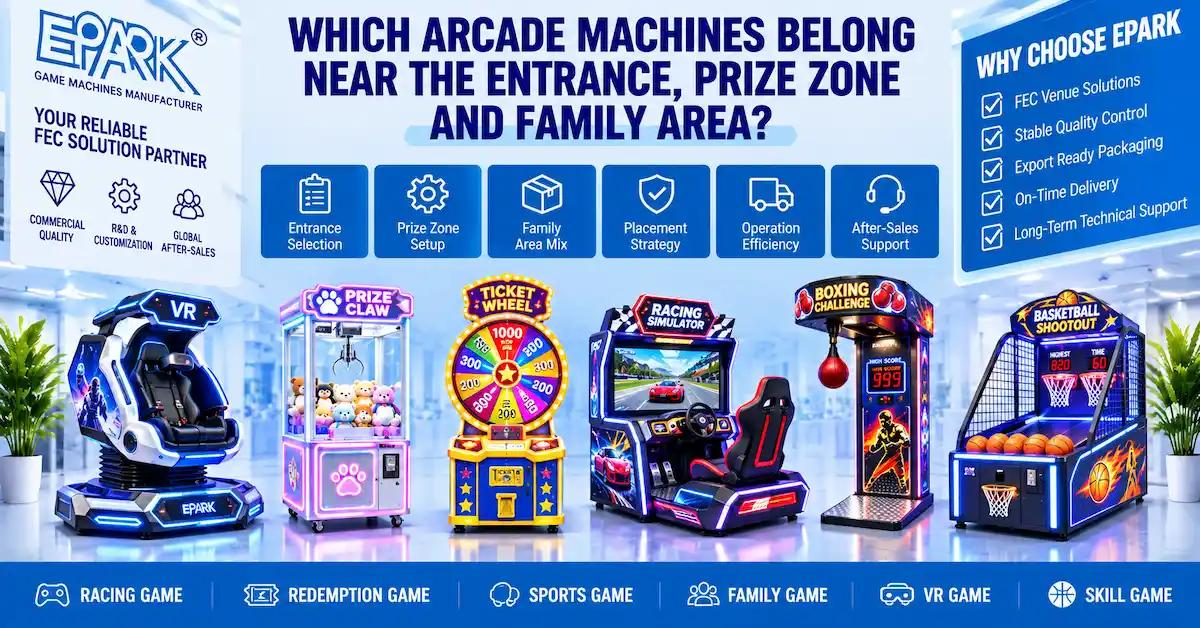
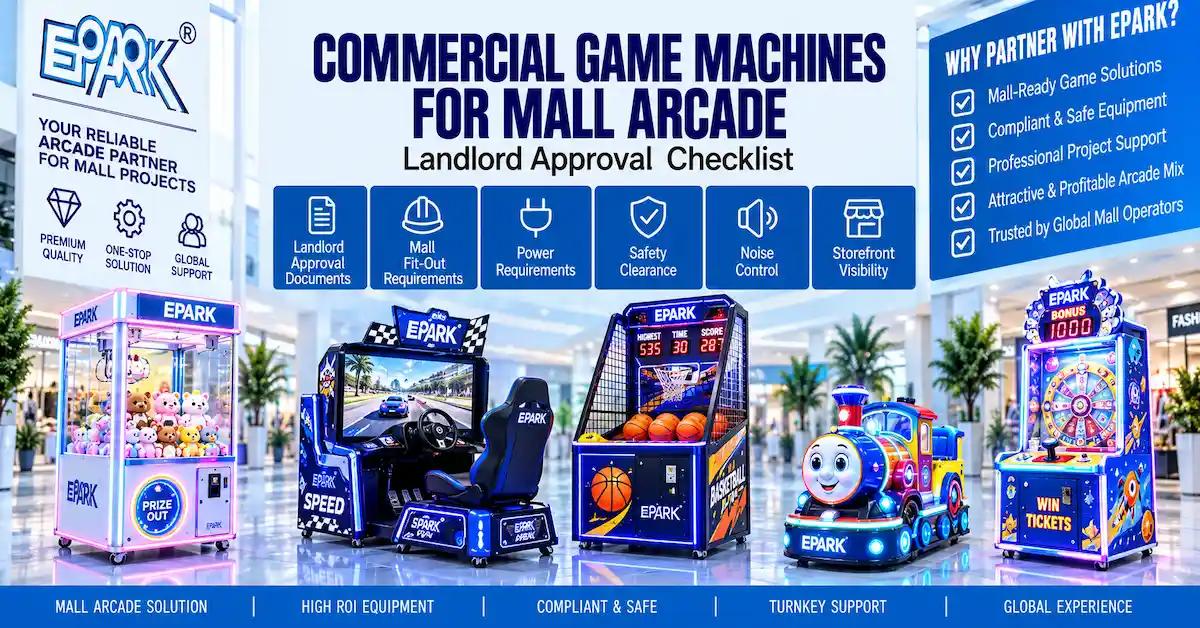
The best arcade machines near an entrance are bright, easy to understand and quick to start: compact claw machines, prize vending, family-friendly video games and a small number of visually strong redemption units. The prize zone should contain ticket earners with repeatable play, visible prize displays and enough service access for replenishment. The family area should prioritize two-player cooperation, low reading burden, adjustable challenge and clear parent sightlines. This is arcade machine placement as an operating decision, not a list of the latest machines. A cabinet belongs in a zone when its footprint, sound, queue behavior, payment method, age appeal and maintenance routine support that zone's commercial purpose.
That distinction matters to operators, mall developers, FEC buyers and distributors. A high-impact racing simulator can be a strong anchor but a poor entrance machine if its queue blocks the door. A profitable ticket pusher can work beside a prize counter but become confusing in a toddler-facing family area. A claw machine can advertise the venue from a mall corridor, yet the wrong height or prize mix can create complaints rather than repeat play. The recommendation below treats arcade machine placement as a testable operating choice and should be adjusted to the measured floor plan, local code, audience and payment system.
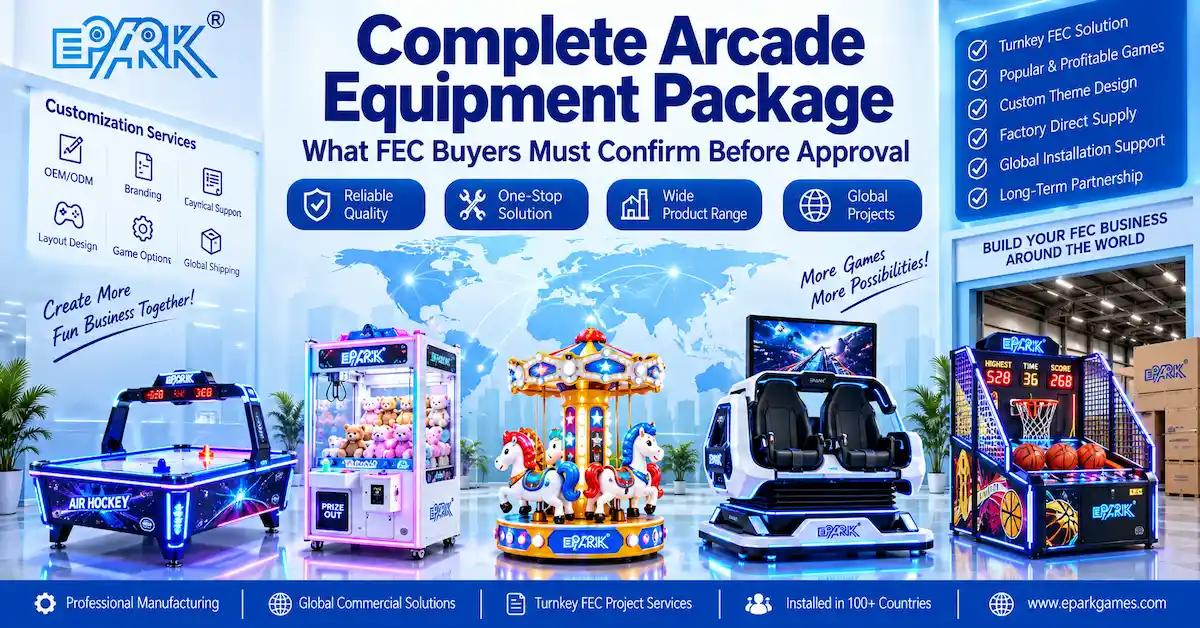
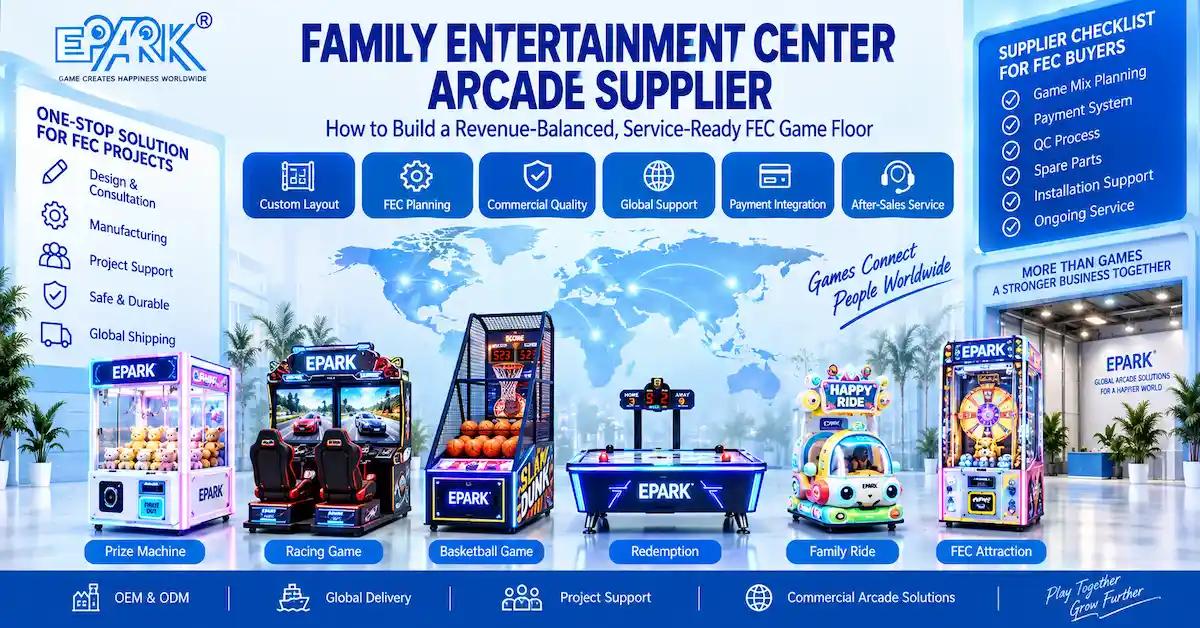
EPARK publishes commercial arcade equipment, claw and prize machines, redemption games, sports and skill games, racing and driving simulators, VR attractions and venue-layout support. Its arcade machine supplier and custom venue layout page is a useful starting point for matching a product family to a floor plan. It does not replace a model-specific quotation: dimensions, power, payment compatibility, noise, language, packed size and final configuration must be confirmed for the selected machine.
Start with the three jobs of an arcade floor
Entrance, prize and family zones are often described as visual themes, but they are operating systems with different jobs. The entrance must convert passersby into players without creating a bottleneck. The prize zone must turn play credits or tickets into a satisfying reward decision while helping staff control stock and redemption. The family area must let different ages share a visit, with enough variety to keep a group moving and enough visibility to reduce supervision friction.
Write the job before selecting the cabinet. A useful brief has six fields: the first action the visitor should take, the expected dwell time, the acceptable queue length, the age groups, the required staff intervention and the next zone the player should naturally visit. This prevents a catalog-led layout in which every attractive machine competes for the same corner. It also gives a distributor a repeatable way to recommend equipment to several venues without copying one untested mix.
| Zone | Primary job | Useful machine behavior | Failure to avoid |
|---|---|---|---|
| Entrance | Stop, explain and convert passersby | Immediate visual feedback, short first play, low instruction load | Queues, dark cabinets, blocked sightlines or a complicated payment step |
| Prize | Make earned value visible and encourage another play | Repeatable skill, ticket or points output, visible rewards, easy restocking | No holding area, hidden stock, unclear ticket rules or service access blocked by queues |
| Family | Keep a mixed-age group playing together | Two-player cooperation, adjustable difficulty, safe reach and parent visibility | Adult-only intensity, sharp queues, loud conflict or controls children cannot reach |
Which arcade machines should be near the entrance?
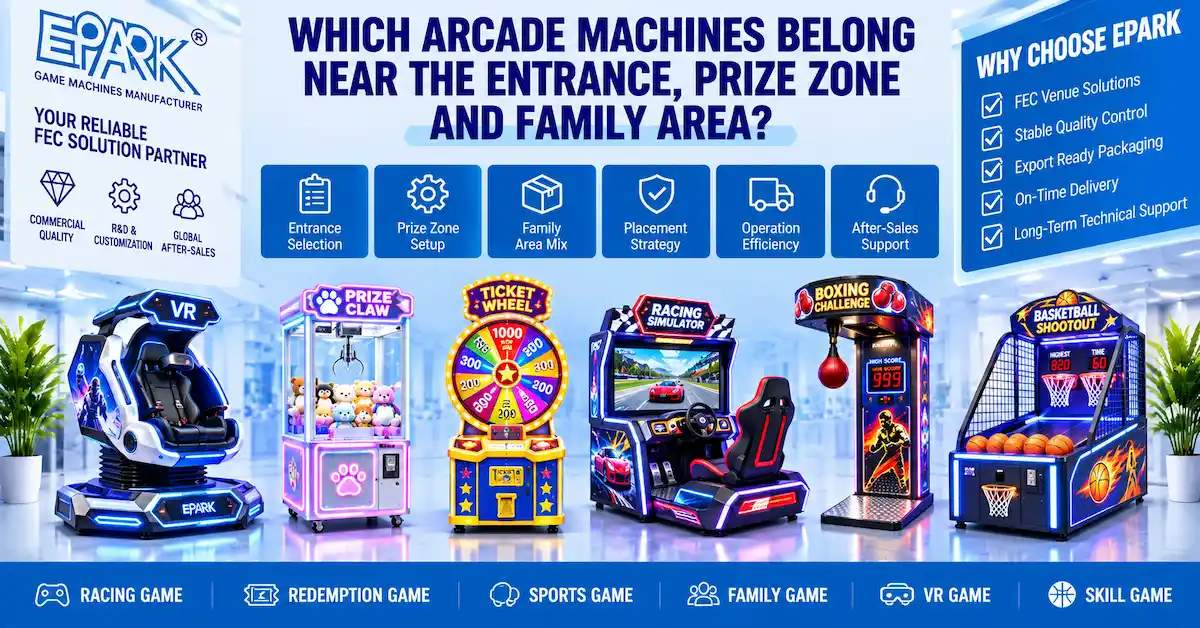
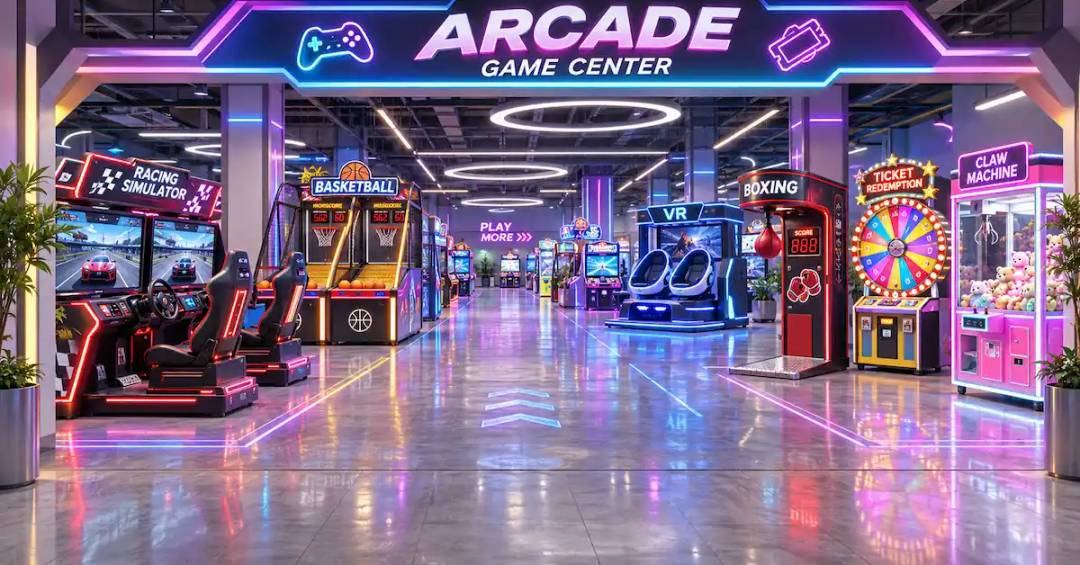
Entrance machines are merchandising as much as they are games. They must communicate fun in a few seconds to someone who has not decided to enter. Choose cabinets with a readable silhouette, a visible play outcome and a short demonstration loop. Claw machines, capsule or prize vending units, compact redemption games, basketball or other skill games with visible scoring, and carefully selected family video games generally fit this role. The exact recommendation depends on whether the entrance opens to a mall corridor, a ticketed FEC reception, a cinema lobby or a street-facing storefront.
Use one visual anchor and several low-friction invitations
A common mistake is to line the entire entrance with large anchors. The result looks exciting in a rendering but turns the threshold into a wall of queues and sound. Use one anchor that can be recognized from the approach path, then place smaller invitations around it. A large racing or VR unit may work when it is set back from the door with a defined queue. A pair of compact claw machines can work closer to the threshold because players understand the action and can leave without a long session. Leave an unobstructed path for people who are still deciding.
The anchor should be visible without becoming a safety obstacle. Keep cabinet doors, emergency equipment, fire routes and accessible circulation clear according to local requirements. Confirm actual service clearances rather than using the cabinet width alone. Delivery packaging can be materially larger than the operating footprint, so the entrance choice should be checked against the route from unloading point to final position.
Recommended entrance mix by decision logic
Claw and prize machines: Use them when the venue needs a simple first action, visible prizes and a strong corridor-facing display. Confirm prize dimensions, replenishment frequency, claw settings, payment method and whether the machine supports the venue's cashless system. The one-stop commercial claw machine solution page can help a buyer review the product family and prize-supply context.
Compact redemption or skill games: Use a unit with a clear score or ticket result when you want visitors to understand the value of a play without staff explanation. Place score displays toward the approach path and keep the queue shallow. Do not assume a game is suitable because it is small; confirm sound level, player stance, ball or accessory storage and the direction in which players exit.
Racing, shooting or VR anchors: Use them when the entrance has depth, strong power capacity and enough room for a managed queue. Their purpose is to signal a premium experience and pull visitors deeper into the venue. They are less suitable where people must pass immediately behind seated players or where the line would spill into a mall circulation route. EPARK's public product index includes racing and VR solutions, but model-specific seat count, footprint, power and network needs must be quoted.
Family video games: Use cooperative or two-player formats when parents and children arrive together. Avoid putting a highly competitive adult game in the first line of sight if the venue's promise is family play. The first machine should make the venue feel approachable, not exclusive.
Design the entrance for conversion, not decoration
Measure the first ten seconds of the visitor journey. Can a passerby see a game outcome? Can a child and an adult stand without blocking the next person? Can a staff member explain payment while maintaining the door line? Can a wheelchair user pass without turning into a cabinet edge? These questions are more useful than asking whether the entrance looks full.
Use the approach direction to orient screens, prize windows and scoreboards. Avoid placing every display perpendicular to the flow; that makes the floor appear visually flat from the corridor. Conversely, do not angle cabinets into the path if the angle reduces accessible clearance or creates a collision point. Mark a “decision pocket” where a group can pause before paying. The pocket is not a permanent queue unless the venue has planned it as one.
Payment is part of the machine recommendation. A coin acceptor, token system, card reader or cashless integration can change the time required at the entrance. Ask the supplier which payment hardware is supported, who supplies the reader, how currency or language settings are handled, and whether the operator can change the configuration later. A machine that needs a staff member to explain an unsupported payment method is not low-friction, even if the gameplay is simple.
Sound also sells the entrance, but uncontrolled sound creates fatigue and neighbor complaints. Group loud machines, orient speakers inward and specify an operating test at the intended volume. If the venue has a cinema, restaurant or hotel neighbor, record the landlord's acoustic constraints before selecting a motion or shooting anchor.
Which arcade machines belong in the prize zone?
The prize zone is where play becomes a visible exchange of effort for value. It should contain machines that generate tickets, points or a clear collectible result, plus the display and service infrastructure needed to make redemption credible. Ticket redemption games, ticket pushers, skill games, claw machines with appropriate prize levels and prize vending can work together, but they should not all compete for the same customer decision.
Build a ladder of effort and reward
A healthy prize zone gives a visitor more than one way to win. Include an accessible first-win option, a repeatable skill option and a higher-target option for experienced players. The ladder is not a promise of payout; it is a way to make the rules legible. Label the ticket or point logic, show the reward choices and keep the lowest redemption option within a realistic visit pattern. If the lowest prize requires a number of plays that the target family rarely reaches, the zone will feel closed even when the machines are busy.
Place the most understandable redemption game at the edge of the zone, then move toward more deliberate or higher-dwell machines. A ticket pusher or skill game can create a visual rhythm, while a prize counter or vending unit provides the final decision point. Keep the prize display visible from the main aisle, but avoid placing valuable stock where it can be touched or removed without staff control. The service route should remain open when staff refill tickets, prizes or consumables.
Separate play queues from redemption queues
Many prize zones fail because the machine queue and the prize selection queue merge. Players waiting to play should not stand in front of families comparing rewards. Use a small holding area or a clear directional cue. The choice of machine affects this geometry: a seated game may need a different approach than a standing skill game; a machine with a ball return needs a recovery path; a ticket pusher may invite spectators to stand behind the player.
Track the operational signals that tell you whether the zone is working. Record plays per opening hour, ticket or points issued, prize cost, service interventions, jam frequency, refill time and abandoned queues. These are management measures, not universal industry benchmarks. They help the operator decide whether a machine needs relocation, rule clarification, prize adjustment or technical service.
Control prize economics without overpromising ROI
Prize economics are local. Wholesale prize cost, ticket value, tax treatment, payment fees, staffing and customer expectations vary by market. Do not select a redemption machine on a generic “high ROI” claim. Build a local worksheet with price per play, expected ticket output, prize cost, target gross margin, replenishment labor and the number of plays required for each reward tier. Then test the worksheet with actual opening-week data.
EPARK's public pages describe prize and redemption equipment and one-stop solutions, but they do not establish one universal ticket payout, prize margin or revenue result for every model. Ask for the machine-specific configuration, payment and ticket interface, recommended maintenance, packed dimensions and support terms before approving a prize-zone package.
Which arcade machines suit a family area?
The family area should make a group feel that everyone can participate, even when ages and abilities differ. Choose cooperative sports games, two-player video or skill games, family racing formats, gentle interactive attractions, compact prize games and machines with clear controls at child height. The right family machine is not necessarily the least challenging. It is a machine in which a parent can assist without taking over and a child can understand the next action.
Use shared play as the selection filter
Ask whether two people can stand, sit or move together without blocking another group. Can the game start in a few steps? Does it rely on reading a long English instruction screen? Can the operator offer a local-language setting? Is the control force appropriate for the intended age group? Does the machine create a sudden sound or motion that could startle a younger child? These are specification questions for the supplier, not assumptions from a product photograph.
Family areas benefit from a mix of short and medium dwell times. A short skill game gives a waiting child something to do. A two-player sports or racing game gives a family a shared event. A redemption or claw unit gives the group a reason to move toward the prize zone. Put machines with similar audience and queue behavior together, but vary the posture and interaction so the area does not become a row of identical controls.
Protect sightlines and supervision
Parents should be able to see the relevant machines from a reasonable standing or seated position. Avoid tall opaque cabinets at the boundary of a toddler or low-height activity area. Keep staff routes behind or beside machines rather than forcing employees through player queues. The floor plan should show power points, cable routes, maintenance access and any barriers required by the venue.
Do not use “family-friendly” as a substitute for risk review. Confirm moving parts, pinch points, heat, glass, ball recovery, cleaning surfaces and emergency stop behavior. Local authorities and qualified professionals determine applicable safety and accessibility requirements. The supplier should provide the model-specific manual and technical information needed for that review; the buyer remains responsible for destination-market compliance.
Use an arcade machine placement matrix before approval
A matrix turns preference into a decision that can be reviewed by operations, finance, design and procurement. Score each candidate against the job of the zone, then record the evidence source. A score is not a certification. It is a transparent way to show why one machine belongs near the entrance while another belongs deeper in the floor.
| Machine family | Entrance fit | Prize-zone fit | Family-area fit | Confirm before order |
|---|---|---|---|---|
| Claw / prize | Strong visual invitation | Useful for prize ladder and display | Good when reach, prize size and supervision fit | Cabinet height, settings, payment, refill access |
| Redemption / skill | Good if result is visible quickly | Core category for tickets or points | Good for shared challenge | Output logic, jam points, storage, service path |
| Sports / interactive | Strong when space permits | Secondary, if it produces tickets or ranking | Good for parent-child competition | Ball return, noise, clearance, scoring accuracy |
| Racing / VR | Anchor only with queue depth | Usually not a prize core | Works for older children and groups | Footprint, power, network, hygiene, motion and age guidance |
| Family video | Approachable invitation | Only if linked to ticket or points flow | Strong for cooperative play | Language, controls, screen height, two-player clearance |
Use “fit,” “conditional” and “not recommended” rather than pretending every machine can serve every zone. The matrix also reveals what information is missing. If a candidate cannot be scored because the supplier has not provided packed dimensions or payment details, that is a quotation gap, not a reason to guess.
Connect placement to the rest of the venue
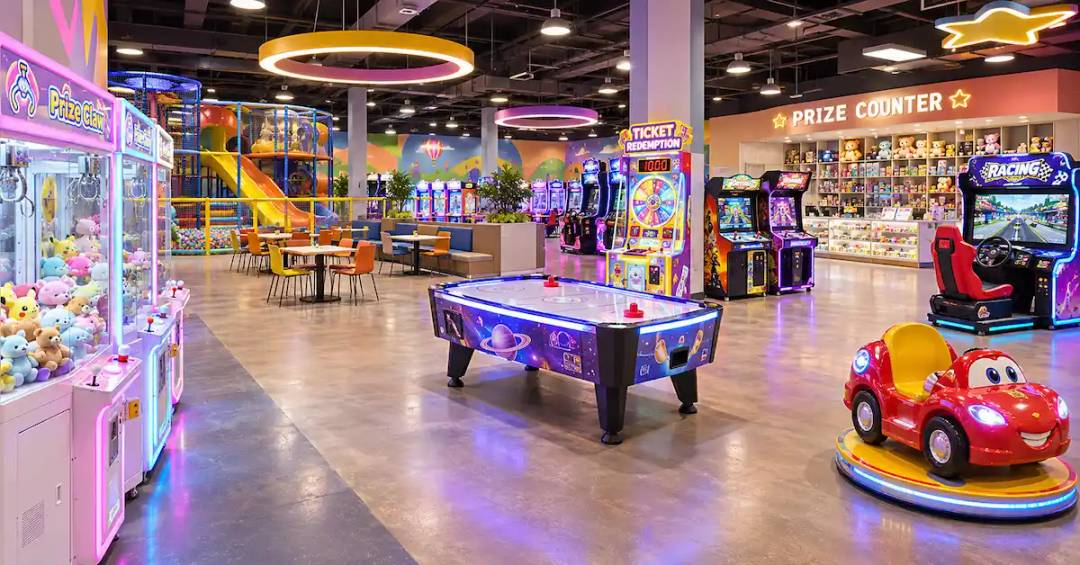
Zone placement changes the behavior of the whole floor. An entrance claw machine may pull people toward a prize area, while a racing anchor may create a queue that hides a quieter family game. A prize counter can become a destination or a dead end depending on whether the exit route passes it. Draw the intended loop: arrival, first play, deeper exploration, prize decision and exit. Then test it with a family group, a solo adult, a wheelchair user and a staff member carrying a refill box.
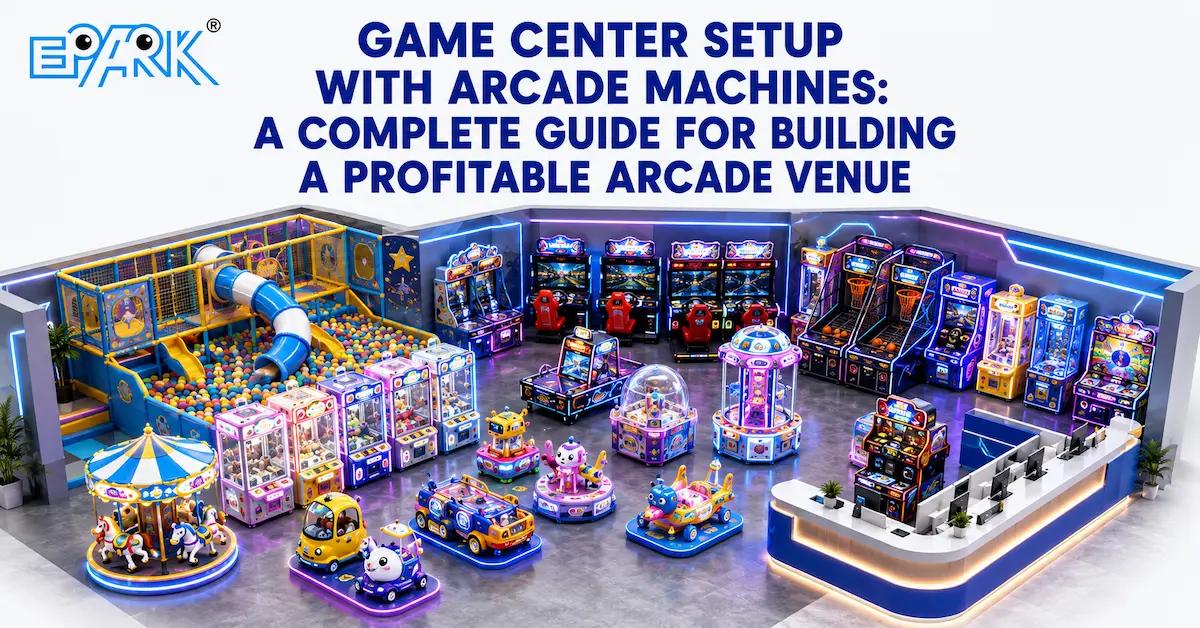
Use the venue's real dimensions and constraints. EPARK's public layout examples include different project scales, and its service information describes design, equipment selection, production, shipping, installation guidance and after-sales support. These are useful capabilities to discuss in a project brief, but a published concept image is not a universal capacity or ROI recommendation. Ask for a drawing that labels operating clearances, queue lengths, doors, power and service access.
For larger projects, treat the plan as a version-controlled document. Record the factory model reference, revision, cabinet dimensions, artwork, payment hardware, language, prize interface and approved position. If a machine changes after the design is frozen, update the drawing and the service route. Silent substitutions can create an unexpected queue, a blocked panel or a mismatch between spare parts and the operator manual.
Procurement questions that protect the placement decision
Send the supplier more than a list of favorite product names. Include a measured plan, the three zone jobs, target ages, operating hours, payment method, desired first-play time, queue limits, sound constraints, delivery route and local requirements. Ask for a model-specific schedule with operating footprint, packed dimensions, gross weight, power, voltage, plug, language, payment options, network needs, maintenance clearance, test scope, warranty route and spare-parts recommendations.
Ask what is known and what is still to be confirmed. EPARK's public FAQ and service material describe factory production, testing, export packing, technical support and warranty information, but not every commercial condition for every model. Confirm the exact warranty exclusions, response route, consumables, local labor, shipping responsibility and the evidence supplied before loading. A written answer is more useful than a general statement that the machine is “commercial grade.”
For a sample or first order, agree how the entrance, prize and family assumptions will be tested. Photograph the installed clearances, run the payment system, observe a complete game cycle, check the ticket or prize output and record the service access. Do not treat a showroom demonstration as proof that the final configuration will fit the venue or operate with the destination payment system.
Frequently asked questions
What is the best arcade machine for an entrance?
Usually a visually clear, quick-start machine such as a claw or prize unit, compact redemption game, family skill game or one carefully queued anchor. The best choice depends on the approach path, available depth, sound, payment system and local audience. The entrance should invite a first play without blocking circulation.
Should racing and VR machines be placed by the door?
Only when the entrance has enough queue depth, power capacity, service access and acoustic tolerance. They can be effective visual anchors, but their footprint and dwell time often make them unsuitable for a narrow threshold or a shared mall corridor.
Which machines belong in a prize redemption zone?
Ticket redemption games, skill games, ticket pushers, suitable claw machines and prize vending can form the core. Select them around a clear effort-and-reward ladder, visible prize choices, replenishment access and the venue's ticket or points system.
How should a family area differ from a general arcade floor?
It should make shared play easy. Prioritize two-player or cooperative formats, reachable controls, adjustable challenge, clear instructions, parent sightlines, manageable sound and safe service access. “Family” is an operating requirement, not only an artwork style.
How many machines should be in each zone?
There is no universal ratio. Start with the job of each zone, the measured area, circulation, queue tolerance, power and staffing. A smaller number of well-positioned machines can outperform a crowded line that hides games and reduces service access.
Can one machine serve both the entrance and prize zone?
Yes, if its visual role, ticket or prize output and service route work in both positions. More often, a machine is moved only after operating data shows that its queue or audience differs from the original assumption. Record the new position and update the layout.
What should a supplier provide before layout approval?
Request model references, operating and packed dimensions, gross weight, power and voltage, payment options, language, maintenance clearances, queue assumptions, test scope, warranty route, spare-parts information and destination documents. Ask the supplier to identify unverified fields.
Does EPARK publish a fixed machine mix for every venue?
No. EPARK presents multiple equipment families and layout or project support, while the correct mix depends on the site, audience, budget, operating model and selected configuration. Request a project-specific recommendation rather than treating a concept image as a universal package.
Conclusion
The answer to “which arcade machines should be placed near the entrance, prize zone and family area?” is a zoning method. Put quick-to-understand visual invitations and one proportionate anchor at the entrance. Put ticket, points and prize decisions in a serviceable redemption zone with a clear reward ladder. Put cooperative, reachable and observable games in the family area. Then verify the mix against queues, sound, payment, power, delivery, maintenance and local compliance.
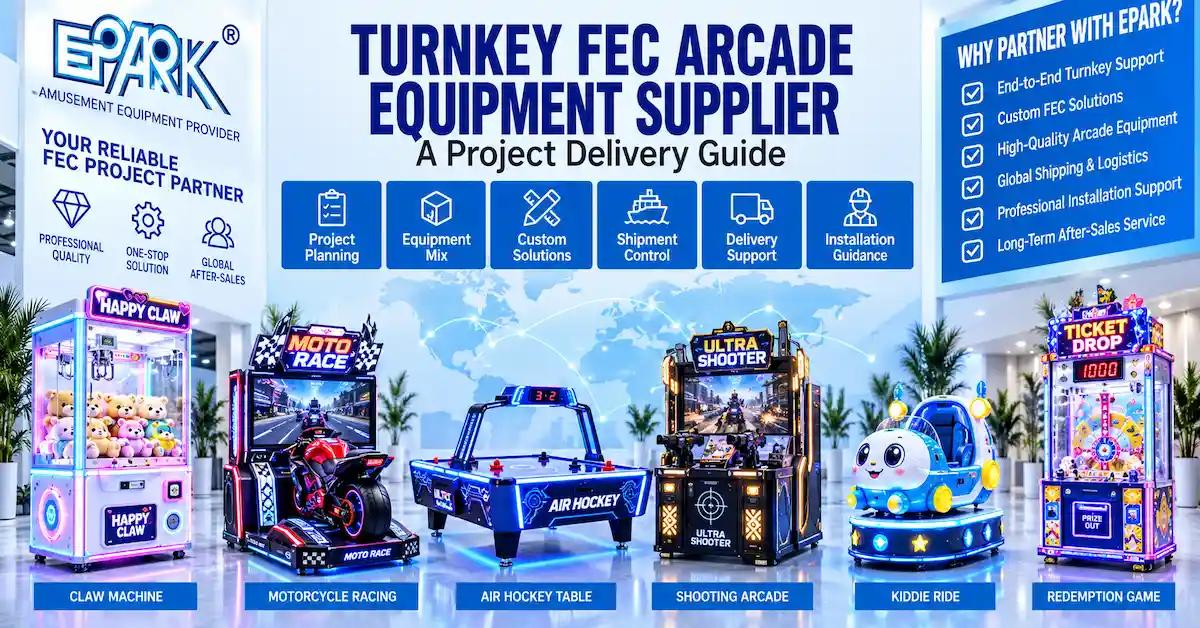
Use the turnkey arcade layout example and EPARK's published equipment categories as discussion inputs, not as a substitute for a measured plan. A strong RFQ connects every proposed machine to a zone job and asks for the technical evidence needed to approve its position.
Disclaimer
The information provided on this website is for general informational purposes only.
While EPARK Arcade Game Machine Manufacturer strives to ensure accuracy and reliability, no warranties—express or implied—are made regarding completeness, performance, or applicability.
Product specifications, designs, and features may vary depending on usage, customization, and customer requirements.
Buyers are responsible for verifying all technical details, compliance certifications, and suitability before procurement.
EPARK shall not be held liable for any direct, indirect, incidental, or consequential damages arising from the use of this website or its content, including but not limited to business losses, data errors, or equipment misuse.
For tailored solutions or further verification, please visit our Contact Us
Intellectual Property Notice
All articles, product images, videos, catalogs, software, and related materials published on this website are the intellectual property of EPARK, unless otherwise stated.
Unauthorized reproduction, distribution, modification, or commercial use of any content is strictly prohibited without prior written consent from EPARK.
EPARK reserves the right to take legal action against any unauthorized use, including but not limited to copyright infringement, misrepresentation, or unfair competition.
Trademarks
The name EPARK, the EPARK logo, and all related brand elements displayed on this website are registered trademarks or trade names of Guangzhou EPARK Electronic Technology Co., Ltd.
Other product names, company names, or logos mentioned on this site may be trademarks of their respective owners.
Unauthorized use of EPARK's trademarks for commercial purposes, including advertising, promotions, or product packaging, is strictly prohibited.
Governing Law
These terms are governed by the laws of the People's Republic of China.