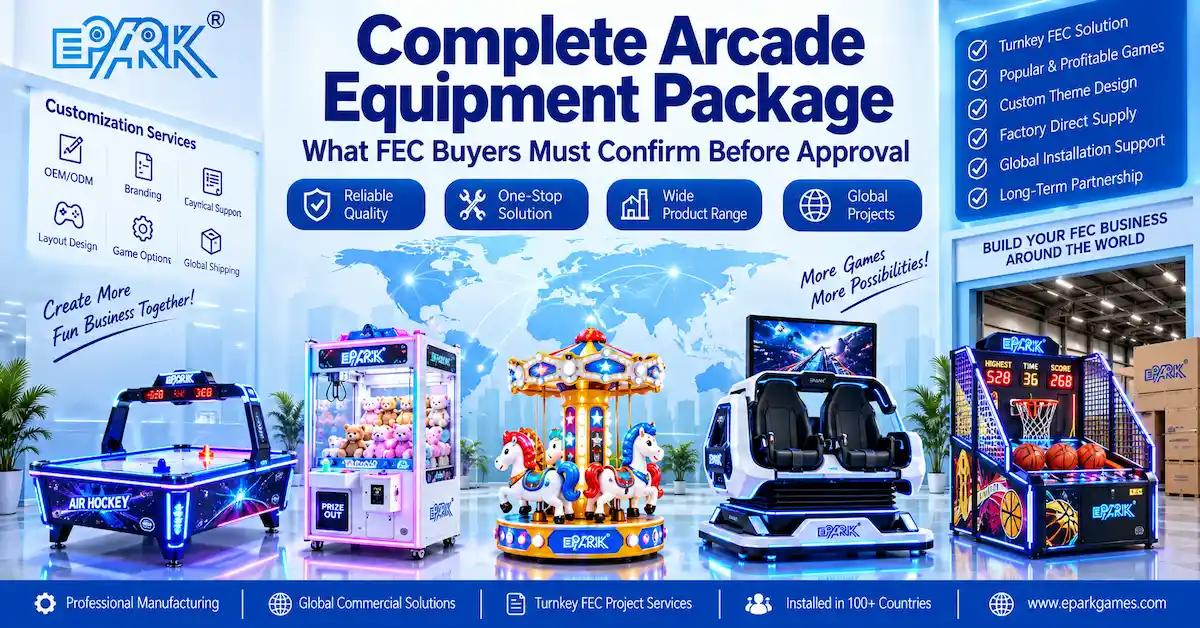


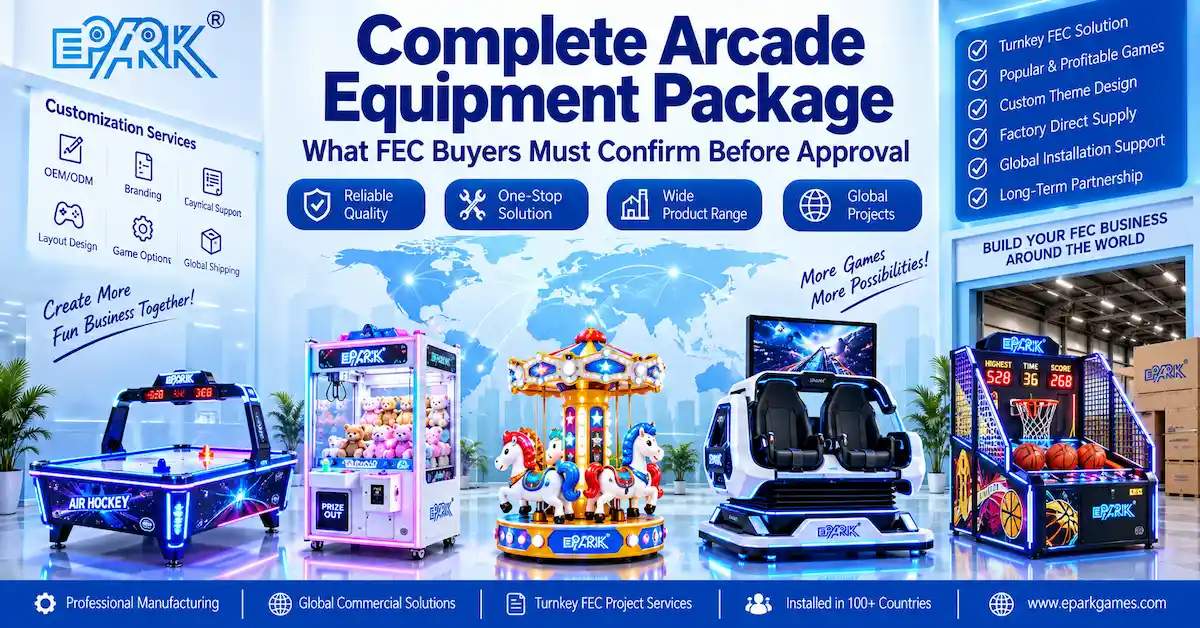
What should a complete arcade equipment package include?
A complete arcade equipment package should include more than a list of cabinets. It should connect the venue brief to a defined machine mix, layout assumptions, payment or redemption scope, electrical and network requirements, factory testing, export packing, delivery documents, installation guidance, training and after-sales support. If a quotation only lists model names and quantities, the buyer still has to discover the project gaps after the deposit.
This is a commercial-investigation question for FEC investors, mall operators, indoor playground brands, arcade distributors and contractors who need to deliver an operating entertainment zone. The purchasing problem is not “which game looks attractive?” It is “what must be included so the venue can receive, install, operate and service the equipment without rebuilding the project scope?” A package should therefore be evaluated as a chain of responsibilities, not as a discount bundle.
Start with the venue brief, not the catalog
A package becomes complete only in relation to a specific venue. Before requesting a price, provide the measured floor plan, usable area, entrances and exits, columns, ceiling height, delivery route, service access, landlord restrictions, electrical points, HVAC limitations and site photographs or video. Add the target audience, opening date, operating hours, staffing plan, budget range, payment method, prize model and local compliance requirements. The supplier can then distinguish a concept package from a site-ready package.
EPARK's published project process asks for venue area, floor plan, entrance and exit locations, target audience, preferred game categories, budget and site photos or video. Those inputs are useful because they tie equipment selection to player flow. Add the practical information that is often missing from a first brief: lift dimensions, crate storage, unloading labor, floor loading limits, network availability, fire routes and the party responsible for local electrical work.
| Input | Information to provide | Package effect |
|---|---|---|
| Venue geometry | Dimensioned plan, obstacles, doors, ceiling and circulation limits | Changes cabinet sizes, queue space, service access and delivery route |
| Audience | Age groups, family mix, group size and supervision needs | Changes game categories, controls, seating and operating procedures |
| Commercial model | Coins, QR, cards, tickets, points, membership or bundled admission | Determines payment readers, software, redemption and reporting scope |
| Destination | Country, port, voltage, frequency, plug and import requirements | Changes electrical configuration, documents, freight and compliance review |
| Opening plan | Landlord handover, construction milestones, training and opening date | Separates production lead time from shipping and commissioning |
Mark unresolved fields as assumptions. “Power load pending final model selection” is safer than placing a generic wattage in the quote. A package that exposes uncertainty early is easier to price, schedule and approve.
For a complete arcade equipment package, the assumption list is part of the purchasing evidence because it shows which decisions still belong to the buyer, supplier, contractor or venue.
Define the equipment mix by operating role
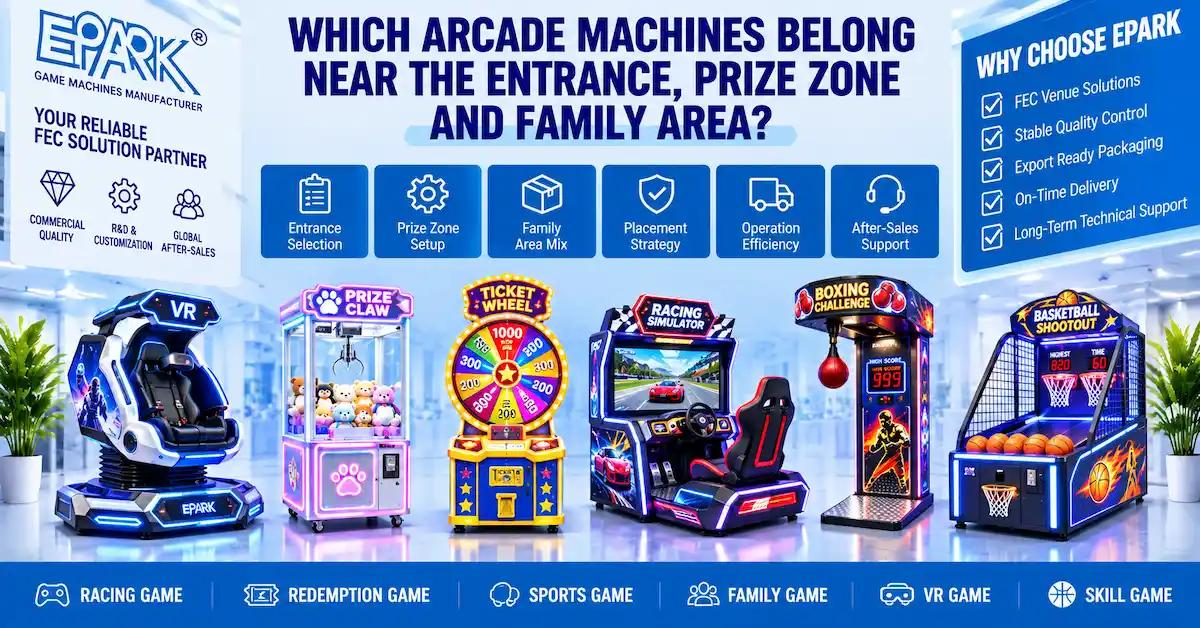
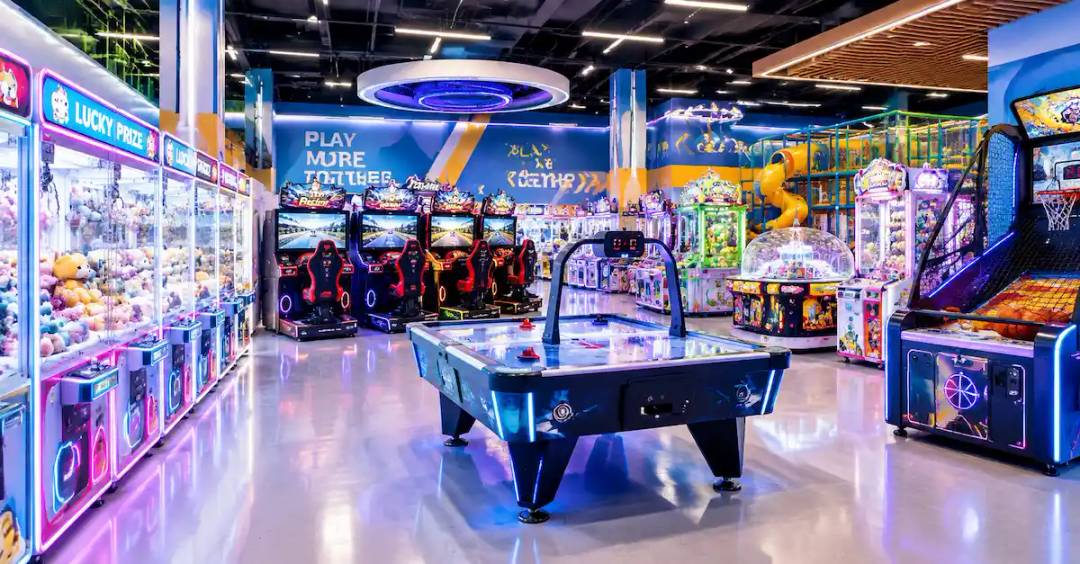
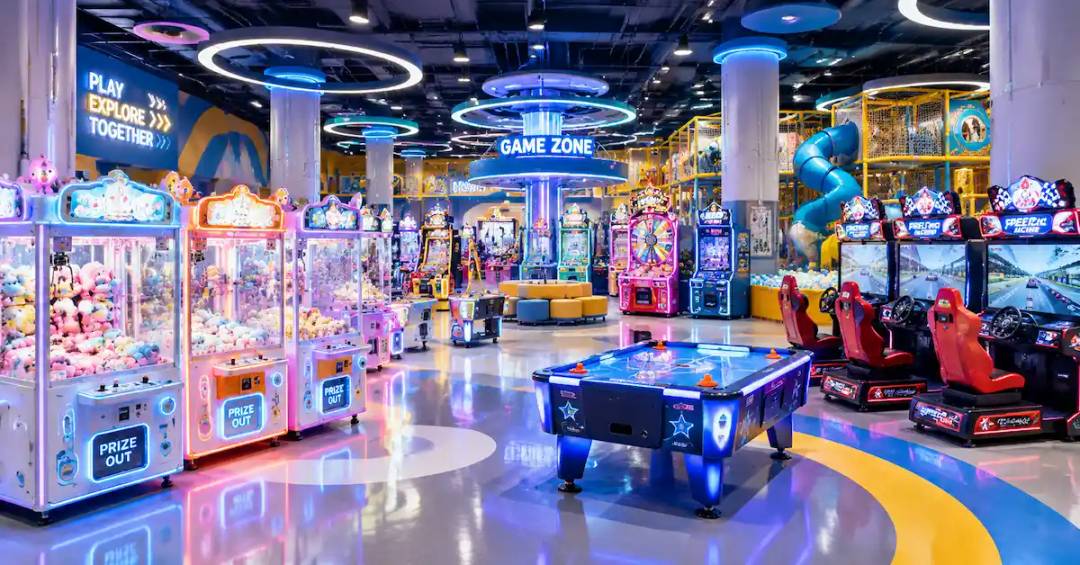
A complete package should explain why each equipment family belongs in the plan. A visible claw or prize machine may create a low-friction entry point. Redemption games connect play with tickets, points or prizes. Basketball, shooting, boxing and rhythm games create short competitive sessions. Racing and VR simulators can act as visual anchors or higher-involvement attractions. Kiddie rides and soft-play elements address younger visitors and require different supervision and maintenance assumptions.
This role-based approach avoids a common procurement error: selecting one attractive category and then discovering that the venue has no reward workflow, no queue strategy or no service capacity. Ask the supplier to show the intended role, player flow and operating dependency for every proposed category. A mixed package is not automatically balanced; it is balanced when the equipment, audience, space and staff model agree.
| Role | EPARK equipment family | Dependencies to state |
|---|---|---|
| Visual anchor | VR, racing or large interactive simulator | Sightline, queue, footprint, power, content and operator access |
| Fast-turn play | Basketball, shooting, boxing, rhythm or skill games | Player clearance, noise, score display, controls and repeat-play workflow |
| Reward interaction | Claw, prize and redemption machines | Prize visibility, ticket or point system, replenishment and counter location |
| Young-family zone | Kiddie rides, soft play and child-focused cabinets | Age guidance, supervision, cleaning, access and destination requirements |
EPARK's public categories include small arcade, FEC, theme-park and area-based package examples. Treat the listed machine counts and floor areas as examples from those category pages, not fixed rules. The final schedule should be based on the measured plan and the operator's commercial model.
Separate the machine package from systems and site work
Buyers often use “complete” to mean different things. One quote may include cabinets, while another includes readers, tickets, software, layout, freight, installation and training. Normalize the scope before comparing prices. Ask the supplier to identify whether each item is included, optional, supplied by a third party or owned by the venue.
EPARK's public material mentions coins, QR codes, cards, tickets, points, redemption and membership systems. It also describes card or management system integration. The reviewed pages do not define one universal payment vendor, API, network protocol or data model. Therefore, a package should state the reader, software, network, reporting, settlement and support owner rather than simply saying “cashless system included.”
| Scope layer | What to list | Common exclusion to expose |
|---|---|---|
| Equipment | Factory reference, model, quantity, configuration and accessories | Similar photograph substituted for the quoted revision |
| Systems | Payment, ticket, points, membership, content and reporting | Third-party software, license, network or reader configuration |
| Design | 2D/3D layout, theme, colors, graphics and equipment placement | Construction, permits, landlord approval or electrical design |
| Logistics | Export packing, freight, insurance, customs and delivery tracking | Import taxes, unloading labor, storage and last-meter handling |
| Handover | Installation, commissioning, manuals, training, parts and support route | Local electrician, network team, construction or ongoing venue labor |
Put the scope matrix beside the quotation, not in an informal email. This makes it possible to compare a lower equipment price with a higher service scope without misreading the difference as a factory discount.
Confirm materials, process and factory evidence
Commercial arcade equipment faces repeated play, cleaning, transport and service. EPARK's public material mentions metal frames, ABS plastic, tempered glass, plywood or high-quality plywood, screens, controls, power supplies, speakers and LED lighting. These are published material and component categories, not a universal specification for every model. Request the model-specific construction, display, control, power and service-access information that affects your venue and customer promise.
EPARK's Design & Process page describes artwork printing and painting, PCB installation, wiring, LED setup, screen and control integration, final assembly and function testing. It also states that each machine receives a 48-hour full-operation test before shipment, covering gameplay, electrical safety, lighting effects and mechanical durability. Use this as official process evidence, then ask for the test scope and result connected to the selected model, quantity, revision and payment configuration.
Use an evidence file instead of a generic quality promise
- Approved equipment schedule with factory model references and revisions.
- Material or component schedule for the cabinet, display, controls, PCB, wiring and payment hardware.
- Production photographs or video showing the released cabinet and visible brand or theme elements.
- Test checklist, serial-number range, defects, corrective action and retest status.
- Packaging photographs, carton marks, packed dimensions, weight and loading sequence.
- Manuals, spare-parts list, warranty route and technical escalation contact.
Mark evidence as supplied, pending or not applicable. That status is more useful than a blanket “factory tested” label because the operator can see exactly what remains open before release.
Build the quotation around quantity, MOQ and timing
A package quote should separate sample or first article, initial production, repeat order and optional expansion. EPARK's FAQ discusses small trial orders and large-scale production, but the public material does not establish one universal numeric MOQ for every model, customization level or mixed shipment. Ask for MOQ by model and configuration rather than assuming that a package title creates a standard quantity.
Lead time also needs a start event. A standard unit ready for final inspection is different from a package requiring layout approval, custom artwork, payment integration, prototype review and mass production. EPARK's FAQ gives general ranges for small orders and larger or customized orders, while an OEM answer refers to a production period after design confirmation. Use those statements as planning guidance, not a guaranteed arrival date. The final quote should identify design approval, deposit, production, inspection, packing, shipping and site commissioning separately.
| Field | Buyer question | Record in the order file |
|---|---|---|
| MOQ | What quantity applies to each model and customization level? | Model-level quantity, mixed-order rule and shipment basis |
| Sample | Is it visual, functional, saleable or first article? | Approval status, cost, reusable components and changes |
| Lead time | When does the clock start and what pauses it? | Design, production, inspection, packing and freight milestones |
| Price basis | What is included or excluded from the equipment price? | Equipment, services, packing, freight, insurance, taxes and local labor |
| Repeatability | Can the same model and revision be reordered? | Golden reference, change control and future parts route |
Coordinate packing, delivery and installation
EPARK's published packaging descriptions include bubble wrap, thick foam, wooden frame or crate reinforcement and waterproof film for sea shipment. The site also discusses customs support, insurance support, delivery tracking and multi-batch shipping. Ask which method applies to each cabinet and whether the packed dimensions and weight fit the venue's receiving route.
Delivery responsibilities should cover truck access, lift dimensions, floor protection, unloading labor, crate storage, carton disposal, damage photographs and the deadline for reporting shortages. A factory can finish production while the venue remains unready. Include site readiness and receiving ownership in the package schedule.
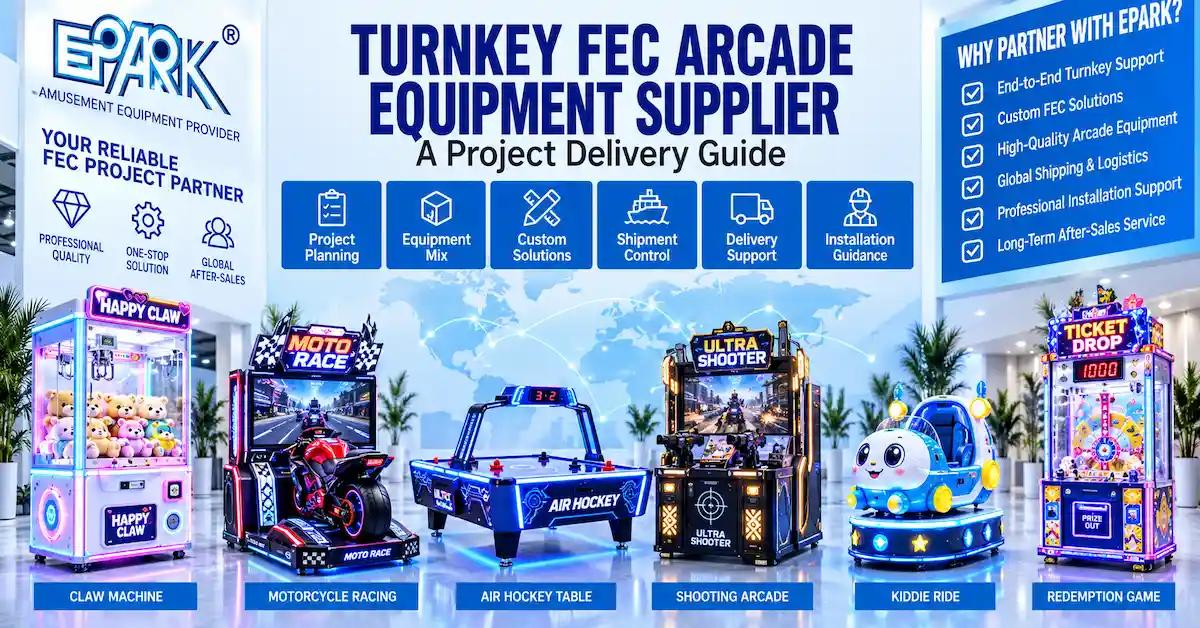
Installation is another field that needs a precise definition. EPARK describes installation guidance, online or video support, operation training and, for some projects, on-site installation. Ask whether the quoted service includes cabinet assembly, electrical connection, network setup, payment configuration, game calibration, staff training and opening-day support. Local labor, travel, permits and electrician work may remain outside the supplier's scope.
| Stage | Supplier evidence | Venue action |
|---|---|---|
| Release | Approved schedule, test result, serial list and packing plan | Confirm site date, access route and receiving team |
| Transit | Commercial invoice, packing list, labels and agreed freight documents | Broker, import, unloading, storage and damage reporting |
| Commissioning | Assembly instructions, technical contact and test checklist | Power, network, local labor, cleaning and safety readiness |
| Handover | Manuals, training, warranty route, parts list and acceptance record | Operator sign-off, open issue owner and operating schedule |
Adapt the package to the venue's buying stage
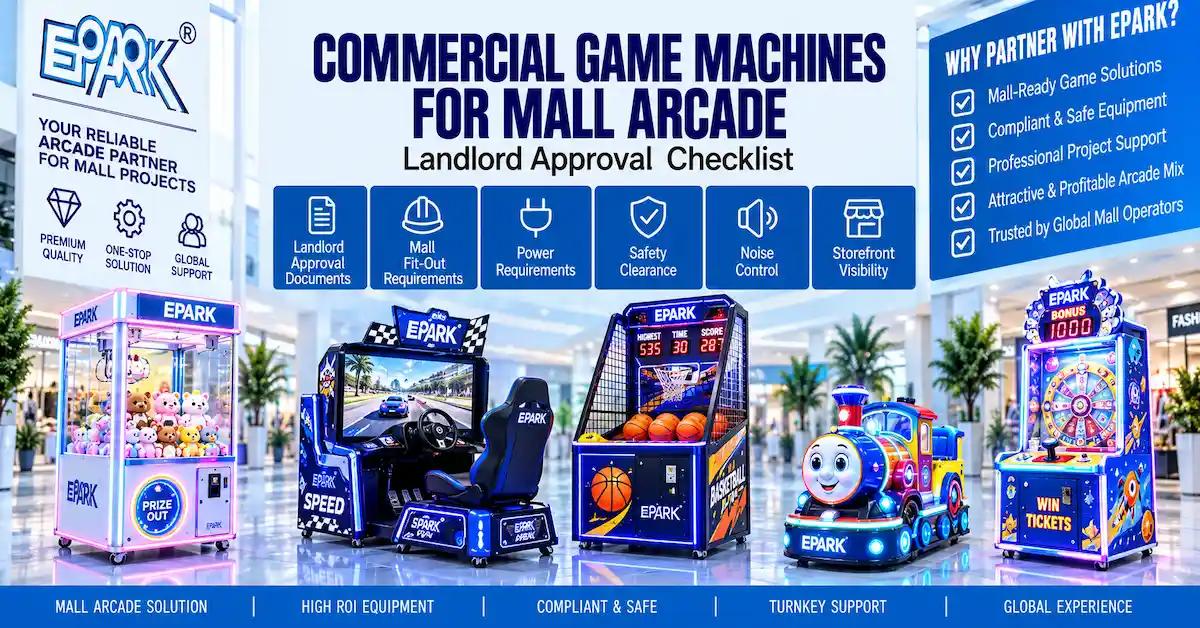
Not every buyer needs the same version of a complete arcade equipment package. A new FEC may need a concept package that tests audience, zoning and budget before the lease is finalized. An operating venue adding a second location may need a repeatable equipment schedule, compatible parts and a faster approval path. A mall tenant may need a compact, highly visible mix with strict delivery and landlord rules. A distributor may need a modular range that can be quoted across several customers without holding every machine in stock.
Ask the supplier to label the proposal by stage. A concept package can show categories, approximate footprints and planning assumptions, but should not be treated as a final purchase order. A quotation package should include model references, quantities, technical data, price basis and exclusions. A production package should add approved artwork, revisions, testing, serial records and packing. A handover package should include operating documents and support contacts. This staged language stops a preliminary layout from being mistaken for a guaranteed shipment.
| Stage | Purpose | Evidence before moving forward |
|---|---|---|
| Concept | Test the venue, audience and category direction | Measured plan, assumptions, indicative mix and open questions |
| Quotation | Compare commercial and technical scope | Model matrix, quantity, price basis, packed data, schedule and exclusions |
| Production | Release the exact equipment for manufacture | Approved specification, artwork, sample or first article, test plan and change control |
| Handover | Put the venue team into operation | Commissioning record, manuals, training, serial list, parts and warranty route |
This staged approach is especially useful when a buyer is comparing a factory proposal with a local integrator or contractor. It clarifies whether a price difference is caused by equipment, services, design maturity or missing scope. It also gives the supplier a practical way to update the quote when the venue changes without rewriting the entire project from scratch.
Audit package completeness before approval
Use a simple completeness review before the deposit. A package is not complete because every row has a price; it is complete when every operational dependency has an owner and an evidence requirement. Review the schedule from five viewpoints: the person who receives the crates, the technician who installs the machines, the staff member who operates the games, the buyer who handles a warranty case and the customer who experiences the venue.
- Receiving view: packed dimensions, weight, labels, quantities, unloading route and damage-reporting deadline are known.
- Installation view: assembly, power, network, payment, calibration, tools and local labor are assigned.
- Operations view: start-up, cleaning, ticket or prize replenishment, basic fault isolation and shutdown are documented.
- Service view: serial records, compatible parts, warranty evidence, response channel and exclusions are visible.
- Customer view: game rules, prices, language, accessibility, queue and reward process match the venue promise.
If one viewpoint produces an unanswered question, mark the package as pending rather than approving it as complete. That small discipline protects the opening schedule and gives the supplier a clear list of items to close.
That final review is what separates a complete arcade equipment package from a discounted collection of machines that still requires the operator to source missing systems and documents.
Use a handover file for the operating team
A complete equipment package ends with an operating file, not a delivery receipt. Include the as-built model schedule, location, serial number, revision, manuals, cleaning instructions, basic troubleshooting, settings, payment or ticket procedure, spare-parts route, warranty exclusions and support contacts. EPARK's public FAQ states a two-year warranty from shipment, replacement parts for manufacturing defects during the warranty period, and exclusions for consumables and misuse. Confirm freight, local labor, third-party systems and order-specific exceptions in writing.
The published warranty FAQ also asks for a serial number, problem description and photographs or video for a claim. Train the venue team to collect that evidence. Ask how the supplier supports machines after warranty, whether software updates or bug fixes apply to the selected configuration, and which parts are paid. Do not assume that a cabinet warranty covers a venue's card system, network or local installation.
Send a package RFQ that can be accepted
Use one document to request the complete scope: “Please recommend a complete arcade equipment package for our venue using the attached plan, audience profile, destination and opening target. Provide the equipment schedule with factory references, dimensions, power, voltage, payment or ticket interface, quantity, packed data, customization and price. Separate layout, systems, export packing, freight, insurance, customs, installation, commissioning, training, spare parts and taxes. Identify all exclusions, assumptions, MOQ, sample or first-article terms, production start event, test evidence, handover documents and warranty route.”
Ask the supplier to mark every line as standard, custom, optional, third-party or buyer-provided. Ask what happens if the layout changes, a model is substituted, the opening date moves or the destination requirement differs from the first brief. Those questions turn “complete” into an auditable procurement definition.
Frequently asked questions about complete arcade packages
What is included in a complete arcade equipment package?
It should include a defined equipment schedule plus the systems, layout assumptions, technical requirements, testing, packing, delivery documents, installation boundary, training, spare-parts route and warranty process needed for the venue to operate. The exact inclusions must be listed in the quotation.
Does a complete package include construction?
Not automatically. Construction, permits, landlord approval, electrical installation, network work, unloading, local labor and taxes may remain outside the supplier's scope. Use a responsibility matrix rather than relying on the word “turnkey” or “complete.”
How many machines should a package contain?
There is no universal count. Usable area, cabinet footprints, queues, circulation, service access, audience, prize operations and commercial model determine the schedule. EPARK's area-based pages are examples, not fixed rules for every venue.
What materials does EPARK use?
Public EPARK material mentions metal frames, ABS plastic, tempered glass, plywood or high-quality plywood, screens, controls, power supplies, speakers and LED lighting. Confirm the exact material and component specification for each selected model.
Does EPARK publish a universal MOQ or delivery time?
No single MOQ applies to every model and customization level in the public material reviewed. FAQ shipping ranges are planning guidance, not a guaranteed arrival date. Request model-level MOQ, production milestones and destination-specific freight terms.
What factory test evidence should the buyer request?
Request the model and revision, test scope, serial number, result, corrective action, retest status and photographs or video when appropriate. EPARK describes a 48-hour full-operation test before shipment; confirm how it applies to the selected package.
What should the buyer receive at handover?
Receive the as-built equipment schedule, serial list, manuals, operating and cleaning guidance, commissioning record, spare-parts information, warranty route, payment or ticket instructions, support contacts and a list of open issues with owners and dates.
Conclusion
A complete arcade equipment package is a controlled project scope, not a collection of attractive cabinets. It should explain the venue assumptions, equipment roles, payment or redemption systems, materials, testing, MOQ, lead time, packing, delivery, installation and operating handover. The more clearly those layers are written, the easier it is to compare suppliers and protect the opening schedule.
EPARK's public information provides a relevant starting point: Guangzhou manufacturing identity, multi-category commercial amusement equipment, layout support, OEM/ODM, a described production workflow, a stated 48-hour full-operation test, export packaging, installation guidance, training, parts and warranty support. Convert those public capabilities into an order-specific schedule and acceptance file before approval. That is how a package becomes complete for the venue that must run it.
Disclaimer
The information provided on this website is for general informational purposes only.
While EPARK Arcade Game Machine Manufacturer strives to ensure accuracy and reliability, no warranties—express or implied—are made regarding completeness, performance, or applicability.
Product specifications, designs, and features may vary depending on usage, customization, and customer requirements.
Buyers are responsible for verifying all technical details, compliance certifications, and suitability before procurement.
EPARK shall not be held liable for any direct, indirect, incidental, or consequential damages arising from the use of this website or its content, including but not limited to business losses, data errors, or equipment misuse.
For tailored solutions or further verification, please visit our Contact Us
Intellectual Property Notice
All articles, product images, videos, catalogs, software, and related materials published on this website are the intellectual property of EPARK, unless otherwise stated.
Unauthorized reproduction, distribution, modification, or commercial use of any content is strictly prohibited without prior written consent from EPARK.
EPARK reserves the right to take legal action against any unauthorized use, including but not limited to copyright infringement, misrepresentation, or unfair competition.
Trademarks
The name EPARK, the EPARK logo, and all related brand elements displayed on this website are registered trademarks or trade names of Guangzhou EPARK Electronic Technology Co., Ltd.
Other product names, company names, or logos mentioned on this site may be trademarks of their respective owners.
Unauthorized use of EPARK's trademarks for commercial purposes, including advertising, promotions, or product packaging, is strictly prohibited.
Governing Law
These terms are governed by the laws of the People's Republic of China.