

How should an FEC buyer compare supplier quotations?
Compare an arcade equipment supplier for FEC projects against one agreed equipment schedule, not another supplier's headline total. Fix the required machine functions, quantities, payment interfaces, testing evidence, packing and installation boundaries first. Then separate confirmed inclusions, priced options, exclusions and unanswered questions. A lower quotation is only a saving when it covers the same usable, supportable equipment package.
This guide addresses a specific purchasing decision: you already have competing proposals for a family entertainment center, but the offers describe different machines or different service scopes. The task is to create a fair comparison before selecting a preferred bidder. It is not a general catalog guide or a promise that the most expensive proposal will perform best.
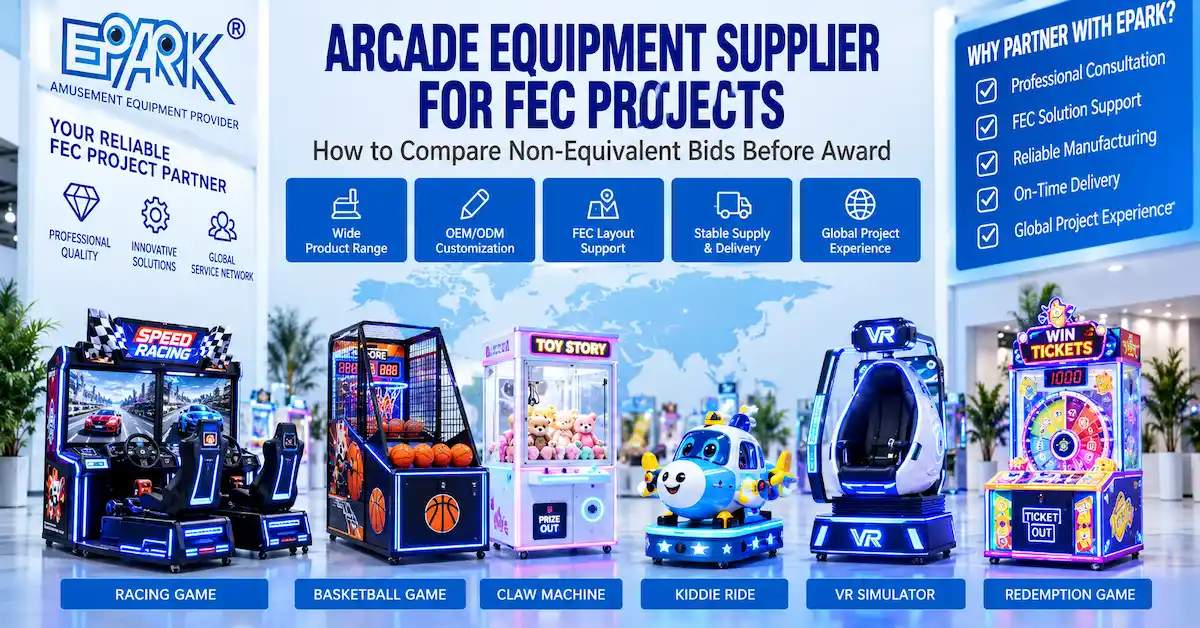
Guangzhou EPARK Electronic Technology Co., Ltd. presents itself as a Guangzhou-based commercial amusement equipment manufacturer integrating research, design, production and sales. Its published portfolio includes arcade machines, VR simulators, kiddie rides and gift machines, with OEM customization and venue-planning support. Those capabilities make a project discussion relevant; the quotation still needs to identify what your particular order includes.
Define the comparison unit before asking who is cheaper
“Thirty arcade machines” is not a sufficiently precise buying unit. One proposal might count a linked racing pair as two cabinets, while another counts the pair as one attraction. A redemption proposal may include ticket hardware but exclude the venue's card system. A simulator price might include a different seat or display arrangement. Dividing each total by the stated machine count disguises those differences.
Create a buyer reference for every required attraction. The reference belongs to the project, not to a supplier's marketing name. Record the operating role, player arrangement, quantity basis and minimum functionality. Ask each bidder to map its proposed model to that reference and declare every deviation. Alternative suggestions are welcome, but they belong in a separate column.
Write a functional requirement, not a guessed specification
For a racing attraction, you might require side-by-side competitive play and compatibility with the selected venue payment system. Do not invent a screen size, motor type or power rating to make the schedule look complete. Request the proposed configuration and have the relevant technical team confirm whether it satisfies the requirement.
The distinction matters when evaluating an arcade equipment supplier for FEC projects: comparable function comes before comparable price. If one supplier offers an unlinked cabinet and another offers linked play, the difference needs an explicit buying decision rather than a hidden adjustment to the totals.
Keep one venue brief behind every quotation
Two technically valid offers can still solve different projects. One bidder may plan from the gross lease area; another may reserve space for reception, circulation, prize storage and staff access. Neither proposal can be compared fairly until the planning assumptions match.
Issue the same measured plan, target visitor groups, intended operating model and payment preference to every candidate. Identify which areas are available for equipment and which remain outside the arcade package. Flag fixed entrances, columns and access limitations. Where information is provisional, mark it as provisional instead of allowing a bidder to treat an estimate as approved.
EPARK's Design & Process page describes collecting venue requirements, developing a 2D layout and then discussing equipment and a preliminary quotation. The page also identifies a 300 m² indoor game-zone example in Tunisia. This establishes a published planning reference, not a universal machine count or a cost benchmark.
Build a bid-leveling sheet with four answer states
Bid leveling means arranging offers against the same requirements so that differences are visible before price ranking. Give each requirement one of four states: included and confirmed, separately priced, excluded, or unresolved. Keep these states separate from whether the proposed equipment is technically acceptable.
For example, a reader can be included but incompatible with the selected payment platform. Conversely, a compatible reader may be excluded from the machine price because the payment provider supplies it. One column records commercial inclusion; another records technical approval. Combining the two creates misleading green ticks.
| Comparison field | Required bidder response | How to handle a difference |
|---|---|---|
| Equipment reference | Proposed model, version, quantity and player arrangement | Separate a functional alternative from a like-for-like offer |
| Payment and redemption | Installed hardware, interface, setup and responsible provider | Price the missing scope only after compatibility review |
| Materials and finish | Construction details for the quoted model and approved artwork | Request clarification rather than assuming all cabinets match |
| Testing and records | Inspection scope, evidence and correction process | Identify tests and documents absent from the offer |
| Export packaging | Protection, package count, packed dimensions and reassembly | Compare the actual packing basis before comparing freight |
| Installation and handover | Remote or on-site tasks, personnel, travel and acceptance scope | Assign unpriced local work to an identified owner |
| Starter parts and support | Named components, quantities, service route and exclusions | Keep included parts distinct from future warranty replacements |
Do not convert “unresolved” into zero cost. Keep an uncertainty register with an owner and a date for clarification. If a material requirement is unanswered, the commercial comparison remains provisional.
Separate an alternative machine from an equivalent machine
A good supplier may propose a smaller cabinet, a different game category or a simpler simulator. That can improve the project. It does not automatically make the alternative equivalent to the original requirement. Evaluate the change in a separate option review, then update the comparison baseline only if the buyer approves it.
Use a hypothetical substitution test
Suppose one offer includes a motion attraction and another substitutes a non-motion game. This is an illustrative scenario, not an EPARK product comparison. Check whether the substitution changes the intended visitor experience, operating footprint, supervision requirement, maintenance capability and local installation work. The smaller purchase price is meaningful only alongside those differences.
Apply the same reasoning to prize and redemption equipment. A claw attraction, a paper-ticket game and a digital-point game do not perform identical operational roles. The proposed equipment should support the venue's actual prize and payment strategy, rather than merely fill the same rectangle on a drawing.
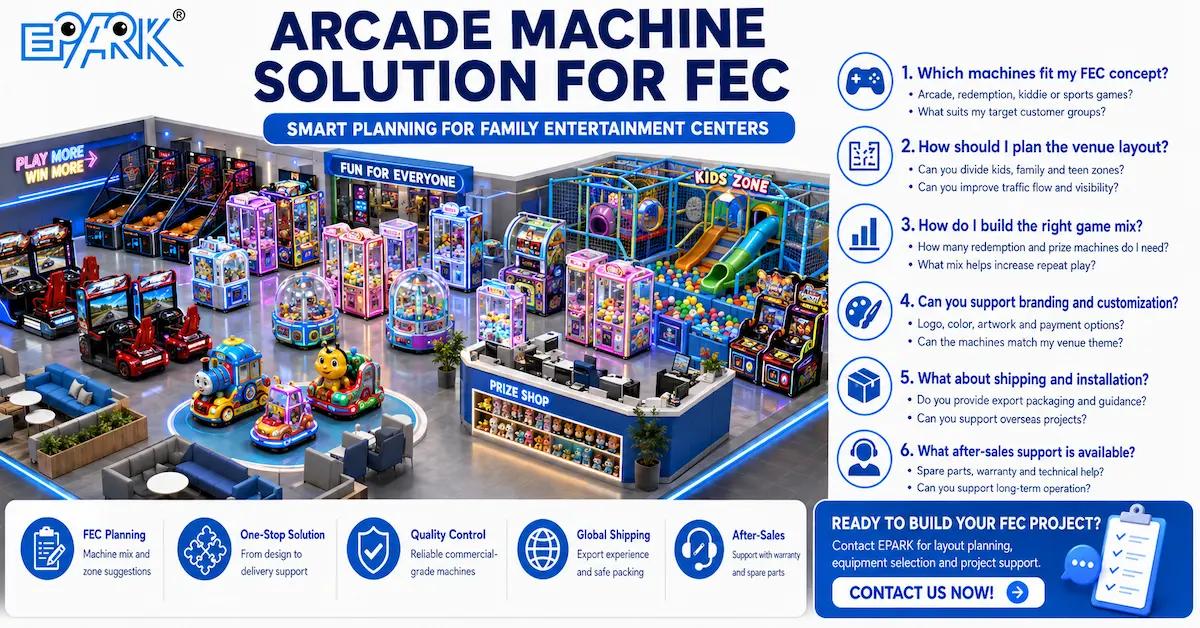
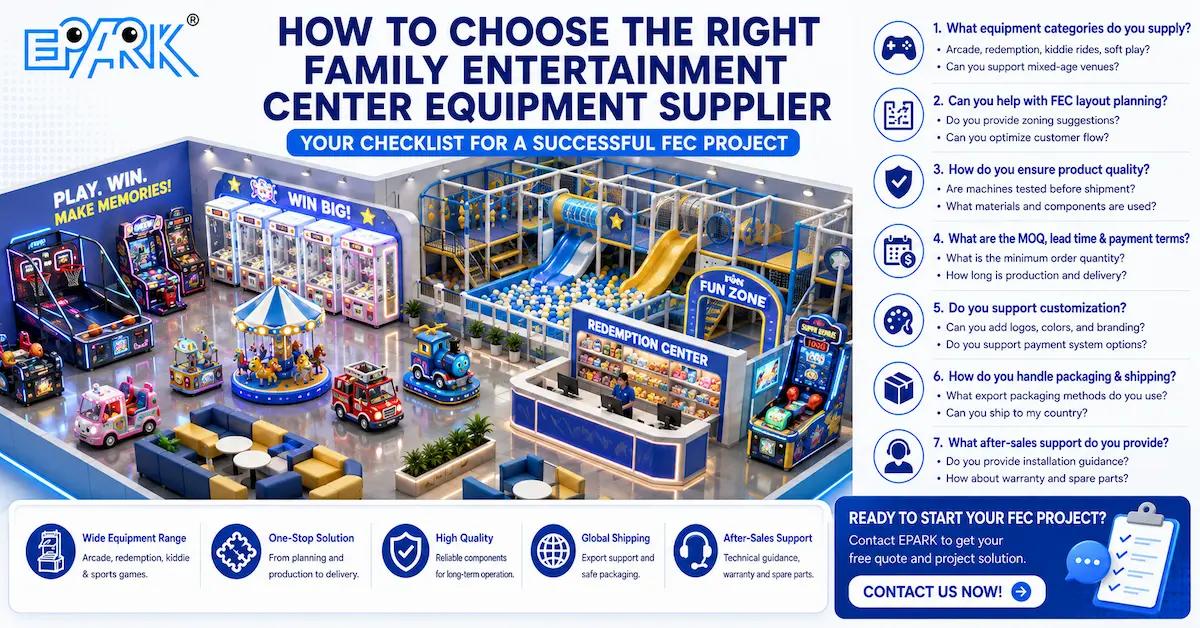
When reviewing the EPARK Family Entertainment Center solution, use the category as the commercial starting point. Build the final comparison from confirmed models and configurations, not from the number of product URLs or the breadth of the category description.
Compare the payment scope as a complete transaction
A quotation stating “cashless ready” leaves several questions unanswered. Does it include the reader, machine interface, mounting, configuration, payment-provider account and testing? Who fixes an issue that appears only when the venue system communicates with the machine?
For each bid, identify the machine-side scope, payment-provider scope and operator scope. Require a proposed test that follows a transaction through credit recognition, game start and the relevant reward output. For digital redemption, clarify which system records the reward and who approves that interface. Do not treat a powered reader display as evidence of an accepted integration.
Two quotations should not be ranked as equivalent if one includes a tested configuration and another only provides a mounting position. Obtain the missing work as a documented option or establish who will complete it. Use the same rule for linked gameplay and any required network setup.
An arcade equipment supplier for FEC projects should explain these boundaries in the response. The buyer should also involve the chosen payment provider before production, because a cabinet supplier cannot approve every account, software or network condition on that provider's behalf.
Ask for evidence that belongs to the quoted equipment
Factory photographs establish context, but they do not identify the configuration in a particular quotation. Request a model-specific evidence list that connects the proposed construction, current component arrangement and approved options. For customized equipment, keep artwork approvals separate from functional approvals.
The EPARK FAQ names metal frames, ABS plastic and tempered glass in its general materials answer. That is useful background. It does not establish the material, thickness or construction of every panel on every quoted machine. Ask the bidder to confirm the relevant construction for each selected model.
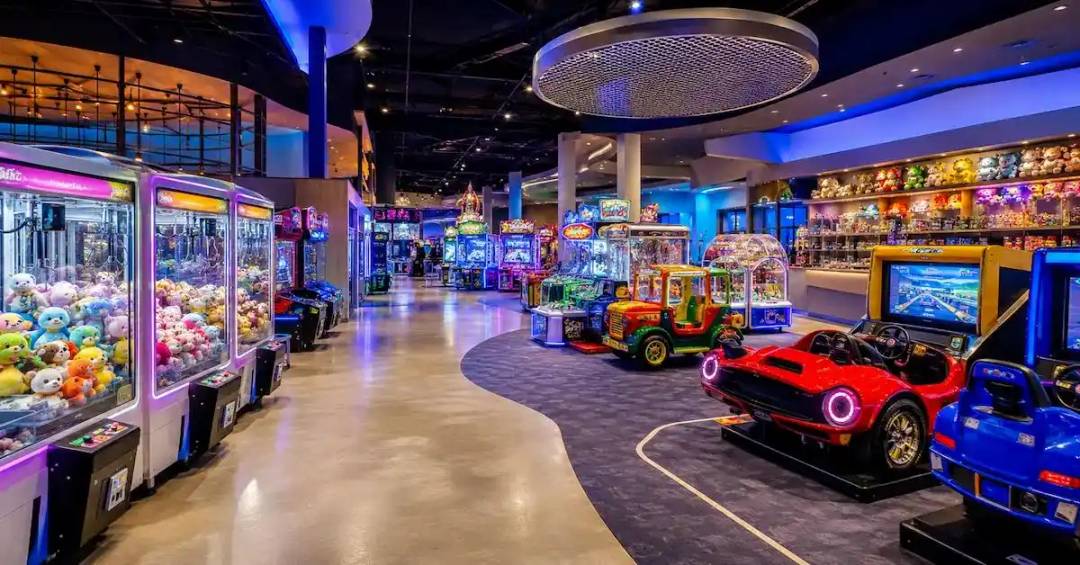
EPARK's published production workflow describes artwork preparation, electronic assembly and control integration. The image below supports that published manufacturing context. It is not a serial-numbered inspection record for a future order.
Request bounded evidence instead of broad assurances
Ask for the label, configuration sheet, approved drawing or relevant test document that answers the question. A request for “all certificates” can produce a large file set without resolving whether the selected machine is covered. Match the model, document scope and intended market; refer any destination-specific acceptance question to the responsible project specialist.
Translate factory testing into priced acceptance deliverables
EPARK states that machines undergo a 48-hour full-operation test before shipment, covering gameplay, electrical safety, lighting and mechanical durability. This is a published process claim. It does not provide your order's pass record, failure history or inspection evidence.
In the comparison sheet, request what each bidder will actually deliver: a functional checklist, configuration confirmation, identified photographs or video, correction records and packing evidence. If a buyer witness inspection or third-party inspection is requested, clarify its scheduling, cost and effect on release.
Use observable acceptance criteria. A request such as “check the basketball game” is vague. A better purchasing instruction identifies the approved machine, scoring function, controls, display and agreed operating sequence to be demonstrated. Technical personnel should define the safe test procedure; purchasing staff should confirm that the agreed evidence is included.
Record correction and retest separately. Otherwise, one bid may include a documented release review while another relies on a brief demonstration. Do not assign the same quality score simply because both offers contain the word “tested.”
Normalize packaging, logistics and opening-date assumptions
Compare shipping quotations only after confirming the packing basis. The same equipment can generate different package dimensions if structures are separated for transport. A lower freight line may exclude the assembly work created at the destination.
EPARK describes foam and bubble protection, wooden reinforcement and waterproof wrapping for sea transport. Ask how the proposed protection applies to the selected equipment and what remains to be assembled. The receiving team also needs package identities, weights, handling information and access requirements for moving equipment into the venue.
The public FAQ gives general complete-machine dispatch ranges of 7–15 days for small orders and 20–40 days for larger or customized orders, depending on order size and destination. These are not an FEC opening-date commitment. Request the starting condition, production-release milestone and shipment assumptions for the actual proposal.
Put the milestones in separate rows
Design approval, configuration freeze, production, inspection, dispatch, transport, destination handling and commissioning are different events. Ask each bidder to identify dependencies. An unresolved artwork revision or payment interface can invalidate an apparently shorter schedule. Compare dates only when the starting assumptions match.
Likewise, separate freight from local unloading, electrical preparation and technician availability. A supplier may coordinate one stage without accepting the cost or responsibility for the next.
Check insurance as a separate inclusion. EPARK's expanded shipping FAQ says insurance can be included on request; it does not say every machine quotation automatically includes it. Ask the bidder to identify the quoted arrangement, insured shipment scope and claims contact. An insured freight option should not be compared with an uninsured option as though the two services were identical.
Compare a trial order with a phased FEC purchase
EPARK's FAQ says it accepts small trial orders as well as larger production orders. That does not establish a single numerical minimum for every machine or customization. Ask for the minimum order and commercial conditions for the selected models rather than treating a general trial-order answer as a one-unit policy.
A trial can answer a bounded question, such as whether a selected configuration works with the approved payment arrangement. It cannot, by itself, establish the installation scope or operating result for the complete venue. Write the trial's acceptance question before approving it, and identify which conclusions still require review at project scale.
If an arcade equipment supplier for FEC projects proposes phased purchasing, compare each phase against the original equipment schedule. Ask whether a later batch requires a new quotation, whether its configuration will remain available, and which shared costs occur once or repeat. Record how approved trial changes will be incorporated into the balance of the order. This prevents a useful pilot from becoming a separate specification that the final project never adopts.
Read a worked comparison before ranking the offers
The following example uses answer states rather than currency. It illustrates how to review two non-equivalent offers; it does not describe EPARK's quotation, costs or commercial position.
| Required item | Illustrative offer A | Illustrative offer B | Buyer action |
|---|---|---|---|
| Approved payment configuration | Reader mount only | Reader and test included | Obtain the missing interface and commissioning scope |
| Opening spares | Generic kit, contents unstated | Model-matched list provided | Require quantities and compatible models |
| Installation assistance | Remote guidance | On-site option separately priced | Compare remote scope first; evaluate site attendance separately |
| Packing | Package dimensions pending | Dimensions confirmed | Hold the freight comparison until the data is complete |
| Warranty expense allocation | Unanswered | Parts, freight and labor separated | Request written clarification before ranking support value |
Once the gaps are priced and technical deviations are resolved, calculate a normalized comparison total: the quoted scope plus confirmed required additions, less optional items not required in the common baseline. Keep unpriced gaps outside the number and visibly unresolved. Do not make up a contingency value and present it as a supplier's actual cost.
Keep the calculation tied to the quotation revision and currency, with the supplier's stated validity period. If one bidder updates its equipment list, request a revised comparison rather than combining the new price with an old scope. The decision record should show why the selected arcade equipment supplier for FEC projects meets the approved requirement, not merely which spreadsheet cell was lowest on a particular day.
Check spare parts and support without counting them twice
EPARK's complete FEC equipment solution page states that container orders include a spare-parts kit. Treat this as a page-specific offer: request confirmation of eligibility, contents, quantities and compatible machines for your project. A kit description is not a warranty schedule.
In the bid comparison, distinguish included opening stock, optional purchased spares, future warranty replacements and chargeable post-warranty parts. A supplier should not receive extra credit twice for the same component merely because it appears under both “free accessories” and “after-sales support.”
EPARK's service page lists remote diagnostics, technical assistance and emergency parts supply. Ask how the proposal defines availability, response, dispatch and local work. These are separate service questions, not interchangeable measures of restoration time.
Close deviations before awarding the equipment package
Before choosing an arcade equipment supplier for FEC projects, hold one clarification round using the same response format for every bidder. Record the proposed departure, operational consequence, price effect and schedule effect. Ask the responsible buyer to accept or reject the departure.
A useful deviation log has a requirement reference, supplier answer, evidence reference, decision owner and closure date. “To be discussed” is not closure. If a change affects the layout, payment system, inspection or documentation, update those records together rather than leaving contradictory versions in circulation.
Use three decision gates. First, reject proposals that cannot meet a critical functional requirement. Second, normalize the remaining scope. Third, compare price, evidence quality and the remaining delivery or service risk. A scoring average should not hide a missing safety-critical document or an unresolved system interface.
At award, preserve the agreed quotation revision and clarification log as part of the order record. Identify how later substitutions will be approved. This protects the comparison you worked to create; without change control, a carefully leveled bid can become a different package during production.
What should an arcade equipment supplier for FEC projects receive?
For an actionable discussion, send your measured floor plan, destination, target visitor groups and buyer equipment schedule. Identify which items are mandatory, which are optional and which need a recommendation. Include the intended payment platform, opening milestone and the installation resources available locally.
Ask the response to separate equipment, customization, payment hardware, documentation, inspection, packing, starter spares and support. Request proposed model references against your schedule and a list of exclusions. You do not need to share another supplier's confidential pricing to explain the comparison problem.
A concise RFQ instruction is: “Please quote against the attached reference schedule. Mark each line included, optional, excluded or unresolved; identify technical deviations and provide a separate price for approved alternatives. Please state the assumptions behind production release, inspection, packing and installation support.”
This gives an arcade equipment supplier for FEC projects a defined procurement task. It also lets your team compare responses without guessing what a marketing description includes.
Frequently asked questions about FEC quotation comparisons
What does an arcade equipment supplier for FEC projects need to quote?
A useful quotation identifies the proposed machine models, quantities, configuration, payment responsibilities, customization, tests, documentation, packing, spares and service boundaries. For a fair comparison, each supplier should respond against the same project schedule and measured venue brief.
Is price per machine a reliable comparison?
Not on its own. Cabinet counts, player positions, game functions and included services can differ. Establish a common functional requirement and quantity basis, resolve deviations and then compare the normalized scope.
Should an alternative game be rejected?
No. Evaluate it separately against the intended visitor experience, space, technical resources and cost. If approved, revise the common requirement before treating the alternative as equivalent. Do not quietly substitute it inside the base comparison.
What should happen when a price is missing?
Mark the requirement unresolved and request a written clarification. Do not treat an empty cell as an included item or zero cost. If the item is essential, the affected quotation cannot yet support a final commercial ranking.
Does the published 48-hour test replace an order inspection?
No. EPARK describes a factory process. Buyers should agree the order-specific checks, evidence, correction process and release requirements. The published duration does not, by itself, establish what the selected machines passed.
Are all container-order spare kits equivalent?
No. Ask for the actual components, quantities, compatible models, packing location and offer conditions. Keep opening stock separate from future warranty replacements, and confirm the page-specific EPARK kit statement in the project quotation.
Should every quotation include on-site installation?
Only if that is part of the common buying requirement. Compare remote guidance, local installation and supplier attendance as distinct scopes. Confirm labor, travel, tools, site preparation and acceptance responsibilities rather than assuming “installation support” covers everything.
Where should an FEC buyer begin with EPARK?
Start with the FEC solution category and send a measured plan plus an equipment reference schedule. Ask for a response that identifies proposed models, exclusions and unresolved assumptions, so the proposal can be reviewed against your actual procurement requirements.
Conclusion
The right arcade equipment supplier for FEC projects is the supplier whose approved offer meets the venue requirement at a clearly understood scope. Compare functions before unit counts, resolve payment and installation boundaries, request equipment-specific evidence and leave unanswered items visibly open. A documented comparison is more useful than a cheaper headline total that shifts essential work to your team.
For an EPARK proposal, bring the floor plan, equipment references and clarification questions together. That gives both teams a practical basis for agreeing models, project responsibilities and a quotation that can support an informed purchasing decision.
Disclaimer
The information provided on this website is for general informational purposes only.
While EPARK Arcade Game Machine Manufacturer strives to ensure accuracy and reliability, no warranties—express or implied—are made regarding completeness, performance, or applicability.
Product specifications, designs, and features may vary depending on usage, customization, and customer requirements.
Buyers are responsible for verifying all technical details, compliance certifications, and suitability before procurement.
EPARK shall not be held liable for any direct, indirect, incidental, or consequential damages arising from the use of this website or its content, including but not limited to business losses, data errors, or equipment misuse.
For tailored solutions or further verification, please visit our Contact Us
Intellectual Property Notice
All articles, product images, videos, catalogs, software, and related materials published on this website are the intellectual property of EPARK, unless otherwise stated.
Unauthorized reproduction, distribution, modification, or commercial use of any content is strictly prohibited without prior written consent from EPARK.
EPARK reserves the right to take legal action against any unauthorized use, including but not limited to copyright infringement, misrepresentation, or unfair competition.
Trademarks
The name EPARK, the EPARK logo, and all related brand elements displayed on this website are registered trademarks or trade names of Guangzhou EPARK Electronic Technology Co., Ltd.
Other product names, company names, or logos mentioned on this site may be trademarks of their respective owners.
Unauthorized use of EPARK's trademarks for commercial purposes, including advertising, promotions, or product packaging, is strictly prohibited.
Governing Law
These terms are governed by the laws of the People's Republic of China.