
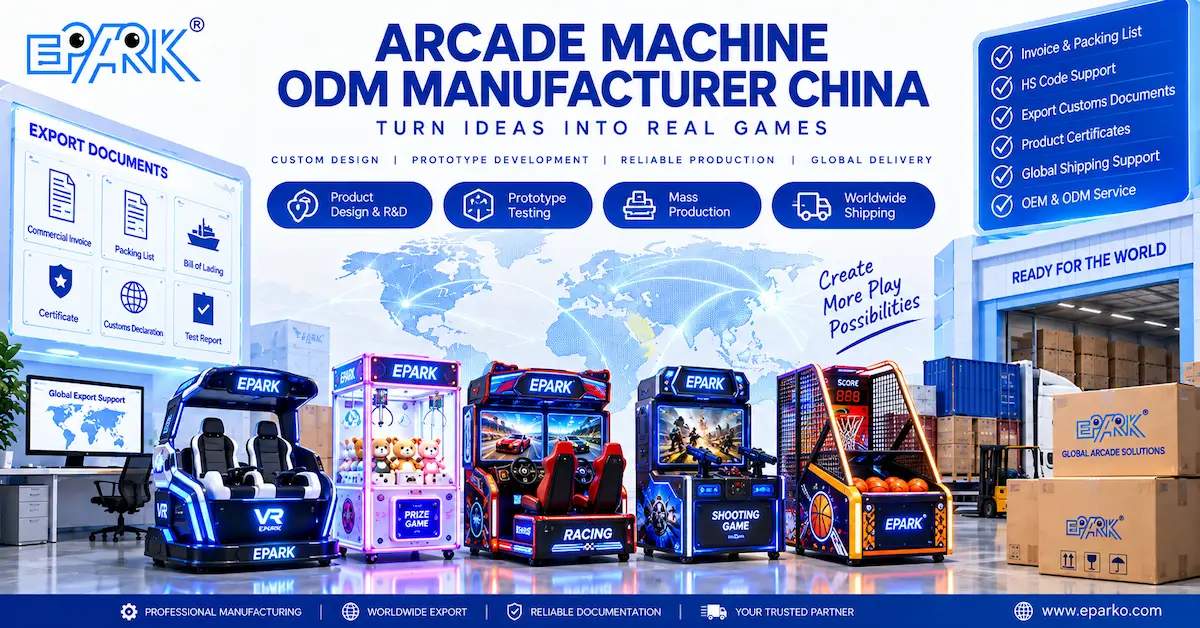
What Should an Arcade Machine ODM Manufacturer in China Deliver?
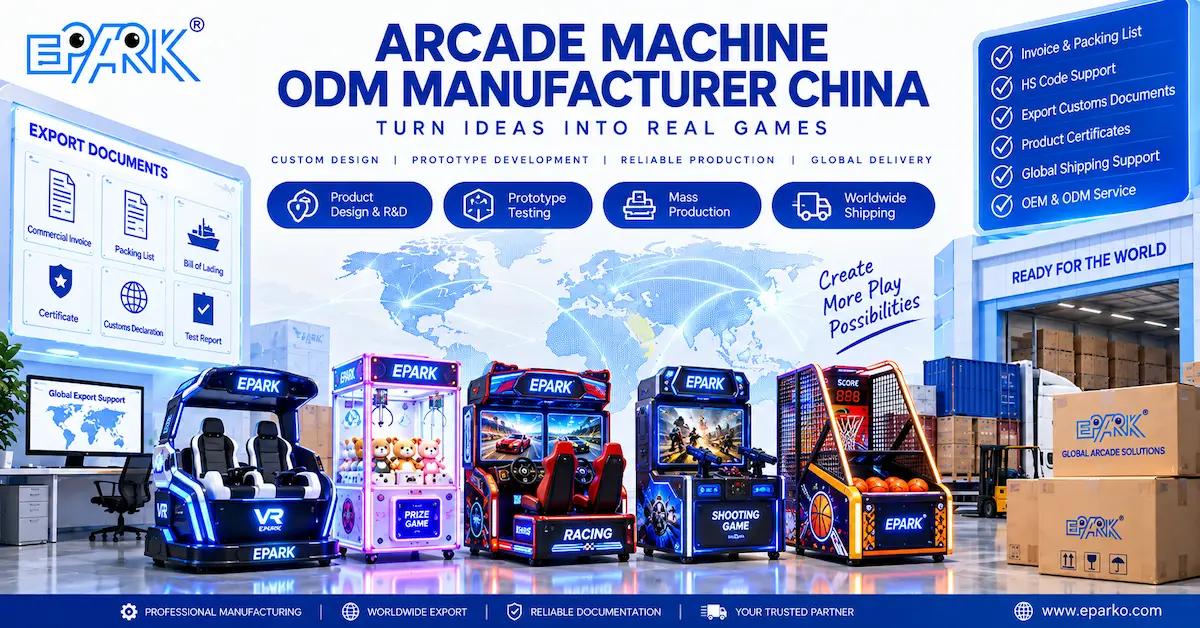
When choosing an arcade machine ODM manufacturer China buyers should evaluate the design responsibilities, prototype process, production controls, and long-term technical support—not simply whether a factory can create a different cabinet.
When Is ODM More Appropriate Than OEM?
Start by identifying what is missing from the product you need. If an existing machine already meets the functional requirement and only needs approved branding or configuration changes, evaluate the OEM route first. If the supplier must develop the cabinet architecture, player interaction, mechanical arrangement, or system integration to meet your brief, discuss an ODM scope. EPARK’s OEM arcade machine guide makes a similar distinction between existing-platform customization and deeper development. For a distributor building a differentiated product range or an FEC chain addressing a specific operating problem, define that problem before choosing the route. A venue needing immediate equipment, with no time for prototype review or design revisions, should also compare standard products rather than committing automatically to development.
Compare Equipment Platforms Before Commissioning a New Design
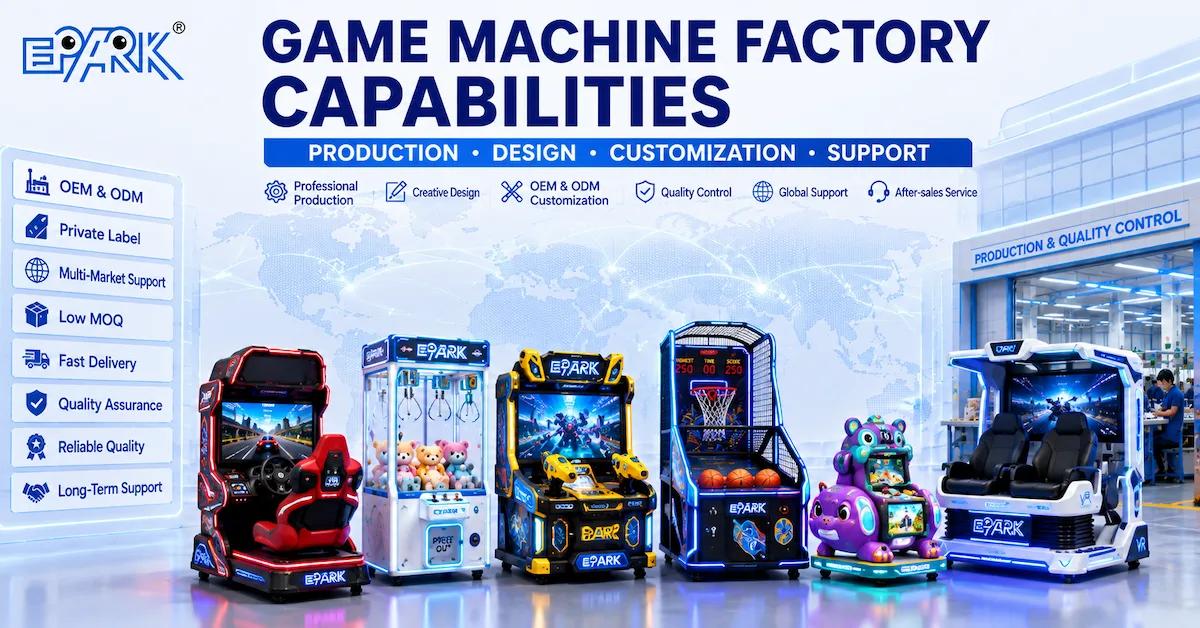
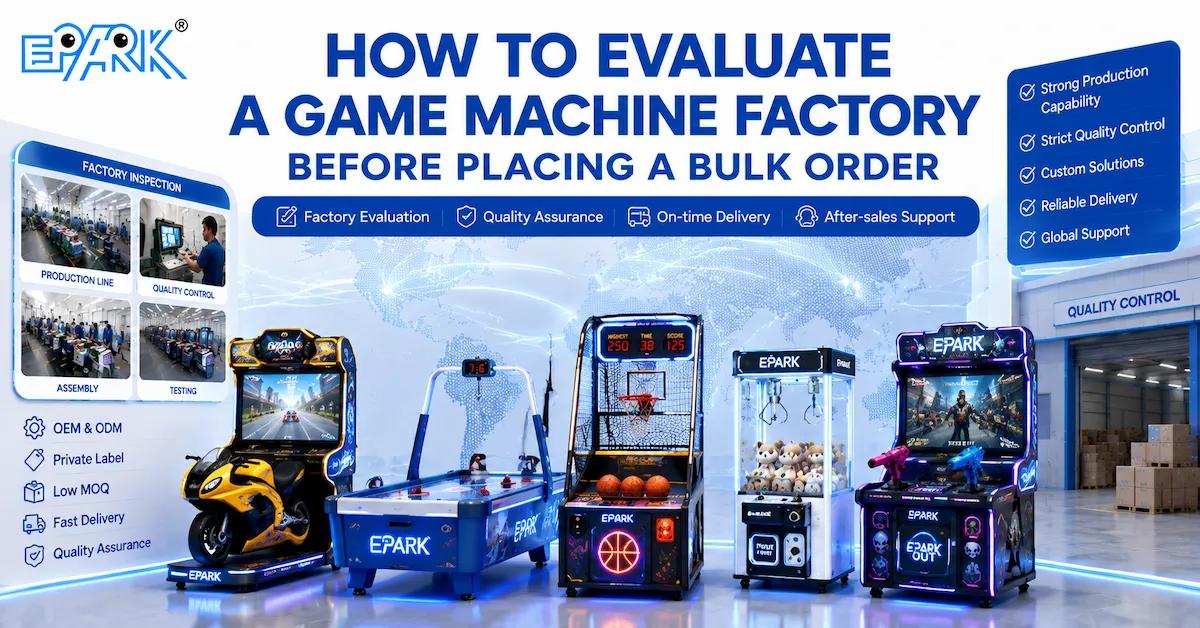
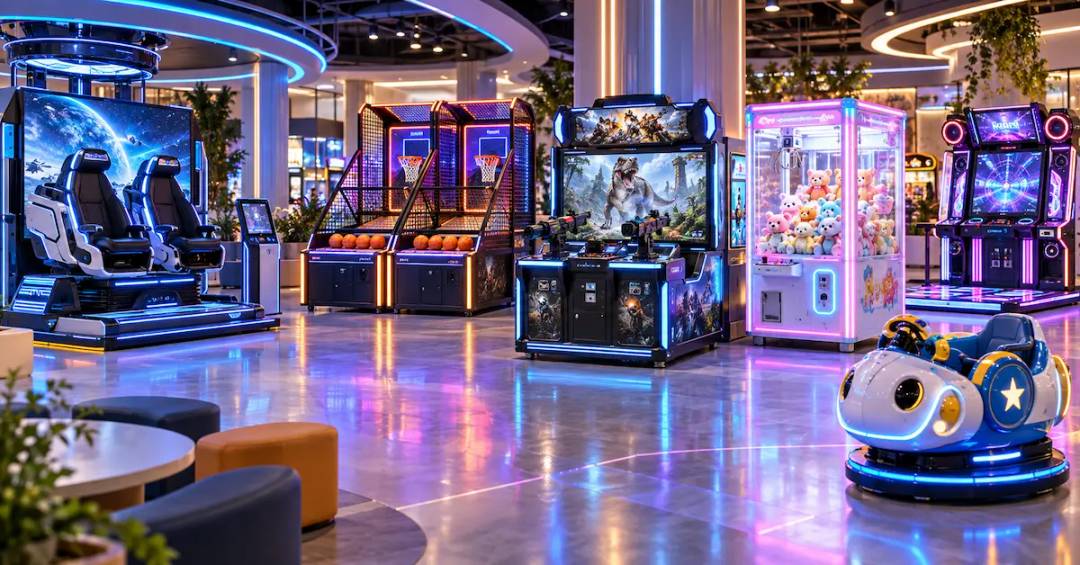
Review the EPARK arcade equipment range before requesting a completely new machine. Published solutions include prize and redemption equipment, racing and sports games, and VR configurations. Use them to discuss which elements can be retained and which require development. The comparison below identifies potential development starting points, not approved ODM models; final model numbers, specifications, feasibility, and prices must come from the project proposal. Its application and review columns are planning suggestions, not claims that every proposed modification is already available.
| Potential Starting Platform | Buyer Application to Discuss | Reason to Evaluate the Platform | Development Work to Review |
|---|---|---|---|
| Claw or prize cabinet | Private-label prize machines for mall or FEC locations | A reference for prize display, controls, and replenishment | Cabinet dimensions, mechanism arrangement, player reach, and service access |
| Redemption or skill game | A distributor’s differentiated game range | A reference for physical interaction and reward delivery | Sensors, scoring logic, reward interface, and fault handling |
| Racing or sports equipment | Branded competitive-play zones | A reference for controls, player position, and spectator visibility | Ergonomics, controls, displays, structural changes, and linked functions where required |
| VR or simulator equipment | A themed immersive attraction | A reference for experience hardware and operator workflow | Content, controls, motion where applicable, accessories, and setup requirements |
Write a Product Brief That Engineers Can Test
Replace requests such as “make it more premium” or “develop something unique” with requirements that can be reviewed objectively. State the intended player, venue, interaction, space constraints, payment arrangement, maintenance resources, and commercial purpose. Separate mandatory requirements from preferences so the manufacturer can identify tradeoffs during feasibility review. Maintain one document showing the buyer’s request, the supplier’s proposal, the approved value, and unresolved items. This proposed specification worksheet is not a list of standard EPARK parameters; it defines the information to obtain before a new design is released.
| Specification Area | Requirement to Define | Approval Evidence to Request |
|---|---|---|
| Product purpose | Player group, venue, number of players, and intended experience | Agreed product brief and gameplay description |
| Dimensions and access | Maximum footprint, height, delivery route, and service clearance | Dimensioned drawings and physical checks |
| Materials and finish | Frame, panels, transparent surfaces, finishes, and cleaning expectations | Approved material specifications and samples |
| Electrical configuration | Destination supply, machine requirements, and connection arrangement | Engineering specification and relevant test records |
| Controls and mechanisms | Input devices, sensors, moving assemblies, and intended behavior | Component references and functional demonstration |
| Display and audio | Viewing position, interface, sound controls, and operating settings | Approved configuration and application review |
| Payment and rewards | Provider, reader, credit handling, ticket or point functions | Interface confirmation and transaction tests |
| Software | Required functions, languages, version, licenses, and update scope | Feature list, version record, and delivery agreement |
| Safety and documentation | Intended use, restrictions, protective functions, and required documents | Review by the responsible technical parties |
| Serviceability | Replaceable modules, access, diagnostics, and spare-part identification | Maintenance demonstration and service information |
| Production and shipment | Quantities, packaging, accessories, and approved revisions | Production specification and packing records |
Evaluate Mechanical Design, Electronics, and Payment as One Machine
Cabinet Design Must Include Player and Technician Access
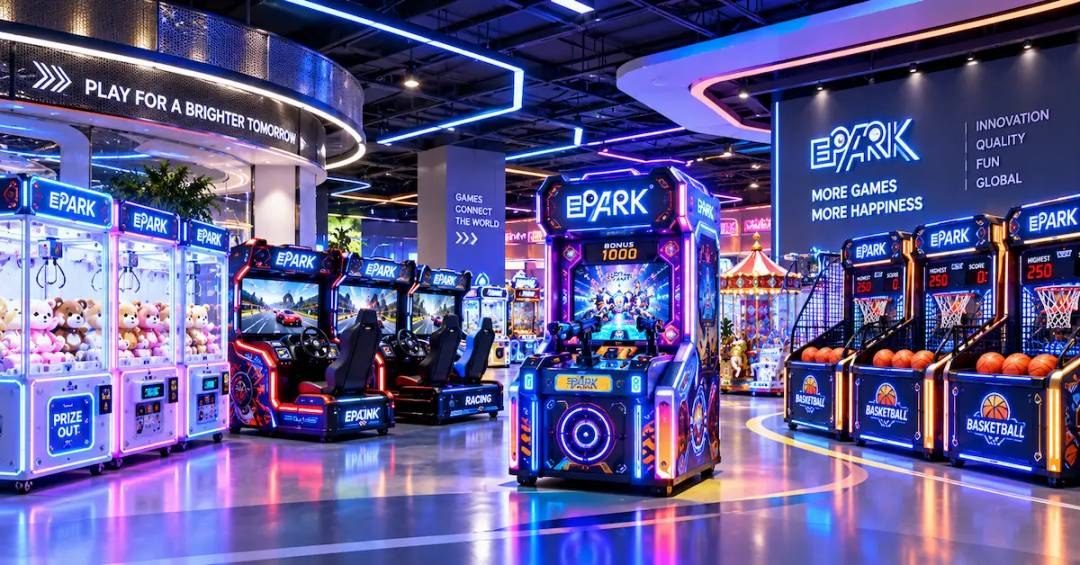
Review control reach, screen visibility, entry and exit, refill access, and component replacement alongside the external styling. EPARK’s custom game machine design guidance treats controls, screen positioning, seating, payment integration, and maintenance access as design considerations. For your project, ask the team to demonstrate the tasks an operator will actually perform. Where a decorative structure overlaps a service door, resolve the conflict before approving the appearance. Keep the material specification model-specific; do not turn a general factory materials list into a requirement for every cabinet.
Define Connections Between Controllers, Sensors, and Mechanisms
Request a system diagram showing how the proposed controls, sensors, displays, power supplies, and mechanisms connect. Identify the party responsible for each interface and any third-party engineering work. For every new function, define both the intended response and the required behavior when a fault occurs. Ask the engineering team to document how relevant conditions—such as a missing sensor signal or unavailable reward mechanism—will be evaluated safely. Avoid approving unfamiliar electrical or motion-system changes solely because a demonstration video looks convincing; require the appropriate technical review and test evidence.
Separate Game Software From Payment Integration
Specify whether the project includes existing game software, configuration changes, a revised interface, or original game development. Then identify the payment platform separately. EPARK describes self-developed or third-party card and management systems within its operator support services. For your proposed machine, name the actual provider and define who supplies the reader, configures credits, activates accounts, and resolves integration issues. The acceptance test should follow the transaction through payment recognition, game start, gameplay, and any reward output. A working reader display alone should not be the approval condition.
Clarify Design Deliverables and Commercial Rights Before Development Starts
Ask the manufacturer to itemize the files and assets included in the development price: cabinet drawings, artwork, mechanical specifications, wiring information, firmware, executable game software, service manuals, and tooling where applicable. Request explicit answers about access, permitted use, updates, and what happens when the cooperation ends. Keep source-code delivery, branding rights, tooling arrangements, and territory exclusivity as separate discussion items rather than treating them as interchangeable. Confirm what permission is needed for any third-party content. Have the relevant agreements reviewed by appropriate advisers; neither the word “ODM” nor a development payment should replace a written description of the deliverables and commercial arrangement.
Use Separate Approvals for Appearance, Function, and Production Readiness
Concept Approval: Is the Proposal Worth Developing?
At concept review, approve the intended experience, preliminary layout, key constraints, and proposed technical approach—not an unrestricted production commitment. Require a list of unresolved issues, the work needed to resolve them, and the next approval point. For example, distinguish an accepted visual direction from an unverified control mechanism. EPARK’s custom manufacturing guide describes design confirmation followed by prototype or sample testing for more complex customization. Use that distinction to define what each review authorizes in your project.
Functional Prototype: Does the Intended Experience Work?
Identify the prototype by revision and record which production-intent components it contains, which parts remain provisional, and which tests are outstanding. Review player interaction, operator settings, payment, gameplay, service access, and the applicable mechanisms under agreed conditions. Give each issue an owner and a retest requirement. As a hypothetical example—not an EPARK project—a two-player redemption cabinet might fit its allotted floor space but require rear access for ticket refilling, even though the venue plan places it against a wall. The approval should remain open until the refill arrangement or placement is resolved. “Looks good” is not an adequate decision record.
Production Readiness: Can the Approved Design Be Repeated?
Ask for a production-intent build or pilot batch appropriate to the development risk. EPARK’s ODM development overview distinguishes prototype validation, design freeze, and pilot production. For your approval, look beyond whether one machine works: examine whether assembly instructions, parts selection, wiring, software loading, artwork, and inspection criteria reproduce the approved configuration. Record any hand-adjustment or rework needed to complete the units. Require the responsible team to resolve those production issues before treating the build as the reference for a larger order.
Make Workmanship and Quality Control Specific to the New Product
Define observable acceptance criteria for cabinet fit, finish, fasteners, wiring, connectors, controls, doors, labels, and machine-specific functions. EPARK’s design and manufacturing process describes artwork printing and painting, PCB and wiring installation, lighting, screen and control integration, and a 48-hour full-operation test before shipment. Request the conditions and records applicable to your development; the published duration does not replace a product-specific validation plan. Separate prototype validation from routine production inspection and packaging checks. When a defect is corrected, record the change and the required retest rather than accepting a replacement photograph without confirming which requirement it addresses.
Review Compliance Against the Approved Design and Destination
Before detailed engineering is finalized, ask the responsible destination-market reviewer to identify the documents, assessments, labels, instructions, and tests relevant to the proposed equipment. Request a document-to-model mapping rather than an unfiltered certificate folder. For each proposed design change, ask whether the technical review or documentation needs updating. Keep manufacturing quality, product conformity, and shipping paperwork as separate approval items. A buyer should be able to identify the exact configuration represented by a report or declaration. Record who supplies information, who performs the assessment, who pays for additional work, and what must be completed before shipment; unresolved requirements should remain visible in the project schedule.
Compare ODM Cost, Minimum Quantities, and Development Timing Together
Separate One-Time Development From Recurring Production
Request separate figures for design work, prototype builds, tooling where required, software work, testing, pilot production, and the recurring machine price. Compare quotations using the same deliverables and assumptions. For budgeting, calculate an illustrative development allocation as agreed one-time development charges ÷ the production quantity used in your planning scenario. Do not treat forecast units as committed sales, and keep this allocation separate from recurring costs. Ask which costs would change if the design is simplified, an existing platform is retained, or the production quantity changes. A low cabinet price does not resolve an undefined development scope.
When comparing an arcade machine ODM manufacturer China proposal, buyers should separate one-time development costs from recurring production costs and review milestones, prototype requirements, and production assumptions together.
Request Milestones Instead of One Unsupported Delivery Date
For an arcade machine ODM manufacturer in China, evaluate capacity against the proposed design and order—not only the factory’s overall output. Request milestones for feasibility, engineering, prototypes, testing, revisions, pilot production, and shipment readiness. Identify buyer-dependent approvals and the event that starts each production period. Ask whether minimum quantities apply to the machine, a custom component, artwork, or packaging, and how pilot quantities are treated. EPARK’s FAQ publishes general small-order and customized-order shipping ranges, but it does not provide a complete schedule for a new ODM concept. Obtain a development-specific plan rather than applying those ranges to concept-to-launch work.
Design Packaging and Long-Term Service Before Production Release
Include a packing and service review before approving the final machine. Verify the shipping configuration, package dimensions, separated assemblies, accessory locations, and reassembly instructions. For custom electronic or mechanical modules, request identifiable replacement references and record which versions they support. Agree on software recovery, updates, and troubleshooting assistance where relevant. EPARK’s installation and technical support FAQ describes remote guidance, setup manuals, and operation guides. Confirm the support applicable to the new design, including local technician responsibilities and any additional setup work. The production-release file should connect the approved machine, software version, packaging, manuals, and service information so the first shipment can be supported after arrival.
What Should You Send EPARK for an ODM Feasibility Review?
Submit the product concept, intended players, venue or distribution market, target footprint, desired interaction, reference images, electrical and payment requirements, branding direction, and known problems the design must solve. Include prototype quantity, an initial production estimate, target schedule, and any existing content or technology you expect to use. Mark provisional information clearly. EPARK’s company profile describes its integration of R&D, design, production, and commercial amusement services. Use the EPARK contact page to request an assessment that separates the proposed platform, development tasks, technical uncertainties, deliverables, costs, and approval milestones.
Frequently Asked Questions
1. What Is the Main Difference Between an ODM Project and an OEM Order?
For purchasing purposes, identify who develops the design. An OEM order can work from an agreed design or established configuration, while an ODM project asks the manufacturer to contribute more design and development work. Define the actual tasks rather than relying on the labels alone.
2. Do I Need a Completely New Machine for a Private-Label Brand?
Start by comparing existing platforms with your requirements. When approved branding and configuration changes solve the problem, evaluate OEM. Request ODM development when you can identify a functional, structural, interaction, or integration requirement that the proposed standard platform does not satisfy.
3. Can EPARK Evaluate a Concept Without Completed Engineering Drawings?
Send the concept brief and distinguish requirements from references or preferences. EPARK publishes OEM/ODM and design capabilities, but the work required to turn an initial concept into engineering drawings should be scoped in the proposal rather than assumed to be included automatically.
4. Is Original Game Software Included in Cabinet Development?
Request separate confirmation. Identify whether the proposal includes existing content, interface adjustments, firmware configuration, or new game software. Define licenses, languages, permitted use, updates, recovery procedures, and delivery format before treating software as part of the approved development package.
5. What Should I Approve on an Arcade Prototype?
Approve the documented revision against agreed requirements, including interaction, controls, display, payment, gameplay, service access, and relevant mechanisms. Record provisional components and outstanding tests. Appearance approval should not automatically authorize production when functional or technical issues remain unresolved.
6. Does a Successful Prototype Make Pilot Production Unnecessary?
Discuss the remaining production risks with the manufacturer. For a deeper development project, request evidence that the approved configuration can be assembled and inspected consistently using the planned process. Agree on a suitable pilot scope rather than adopting a universal batch size.
7. What Minimum Order Quantity Should I Expect?
Request a project-specific answer. Separate prototype, pilot, and production quantities, and ask whether custom components or packaging create additional purchasing requirements. Do not infer an ODM minimum from a standard-machine quotation or a general statement that small orders are accepted.
8. Will I Receive CAD Files, Firmware, or Source Code?
List each requested deliverable before contracting. Ask what will be supplied, in which format, under which permissions, and with what support. Keep design-file delivery, executable software, source code, tooling, and exclusivity as distinct items in the commercial discussion.
9. How Can I Control Changes on Repeat ODM Orders?
Retain the approved machine reference, drawing revision, component records, software version, artwork, test requirements, and packaging specification. Request a documented change review before the next batch. Link approved substitutions to the affected machine versions and update service information accordingly.
10. What Is the Best Starting Point for an ODM Quotation?
Provide a focused product brief describing the operating problem and required outcome. Add target market, player group, dimensions, controls, payment needs, quantities, and schedule. Ask EPARK to distinguish an initial feasibility estimate from a quotation based on an approved development specification.
Conclusion
Selecting an arcade machine ODM manufacturer China partner should give private-label brands, distributors, and FEC buyers a clear route from an unresolved product requirement to an approved and repeatable commercial machine. Evaluate design responsibilities, prototype evidence, software and payment integration, workmanship, production readiness, costs, documentation, spare-parts support, and long-term repeat-order control together. EPARK can support ODM development from concept review and customization through production and project delivery, while the exact technical scope and commercial responsibilities should be confirmed for each project. Contact EPARK with your ODM project brief to discuss the appropriate development route.
Disclaimer
The information provided on this website is for general informational purposes only.
While EPARK Arcade Game Machine Manufacturer strives to ensure accuracy and reliability, no warranties—express or implied—are made regarding completeness, performance, or applicability.
Product specifications, designs, and features may vary depending on usage, customization, and customer requirements.
Buyers are responsible for verifying all technical details, compliance certifications, and suitability before procurement.
EPARK shall not be held liable for any direct, indirect, incidental, or consequential damages arising from the use of this website or its content, including but not limited to business losses, data errors, or equipment misuse.
For tailored solutions or further verification, please visit our Contact Us
Intellectual Property Notice
All articles, product images, videos, catalogs, software, and related materials published on this website are the intellectual property of EPARK, unless otherwise stated.
Unauthorized reproduction, distribution, modification, or commercial use of any content is strictly prohibited without prior written consent from EPARK.
EPARK reserves the right to take legal action against any unauthorized use, including but not limited to copyright infringement, misrepresentation, or unfair competition.
Trademarks
The name EPARK, the EPARK logo, and all related brand elements displayed on this website are registered trademarks or trade names of Guangzhou EPARK Electronic Technology Co., Ltd.
Other product names, company names, or logos mentioned on this site may be trademarks of their respective owners.
Unauthorized use of EPARK's trademarks for commercial purposes, including advertising, promotions, or product packaging, is strictly prohibited.
Governing Law
These terms are governed by the laws of the People's Republic of China.