

Quick answer: the winning supplier supports the proposal, not only the shipment
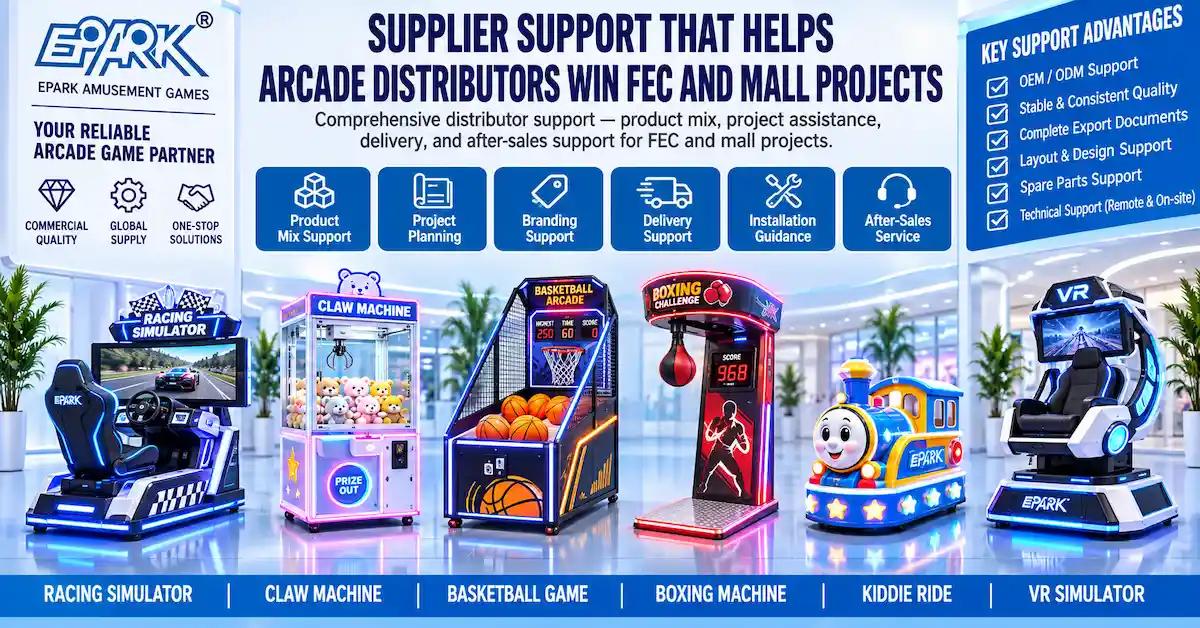
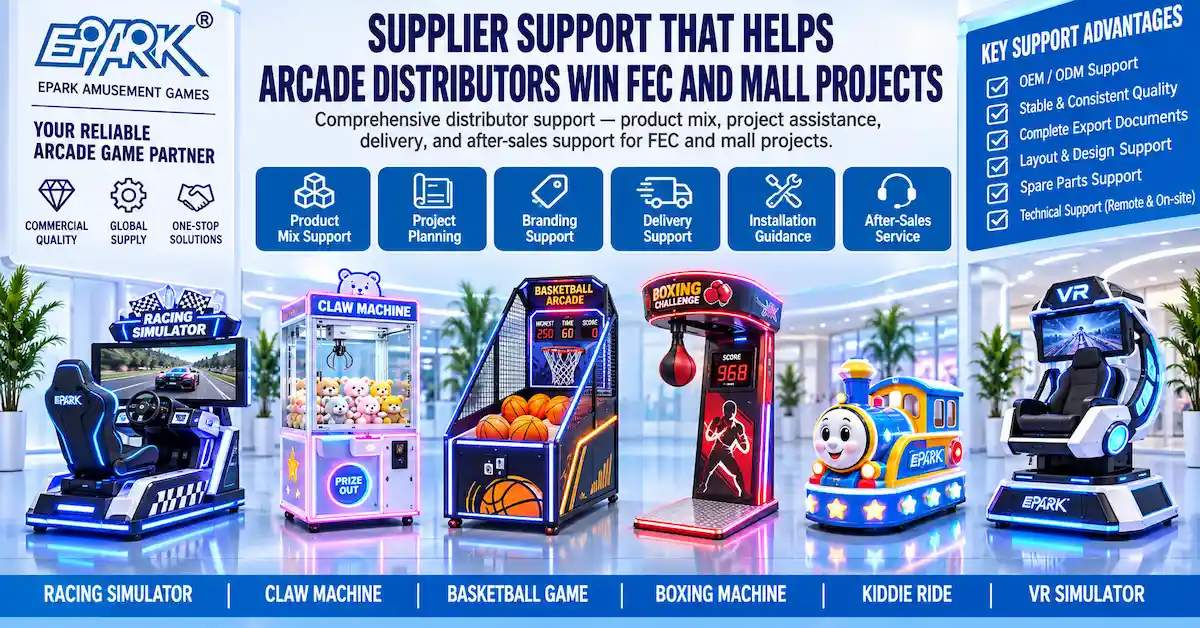
The arcade supplier support for distributors that wins more FEC and mall projects is a practical sales-and-delivery system. It gives the distributor a project-ready machine matrix, a measured layout, a configuration schedule, a commercial quotation that exposes assumptions, sample or demonstration support, quality and packing evidence, installation guidance, and a clear after-sales escalation route. These assets help the distributor answer the venue owner's real questions: Will the equipment fit? Can the mix serve children, families and teens? What is included in the price? Who handles payment integration, commissioning, spare parts and failures after opening?
A catalog alone rarely answers those questions. FEC and mall buyers compare the risk of opening a venue, not just the number of cabinets in a PDF. They need confidence that a proposed machine mix can be reproduced, delivered through the building, installed on time and supported when a cabinet stops earning revenue. A distributor that can present evidence at each stage becomes easier for a contractor, landlord or operator to approve.
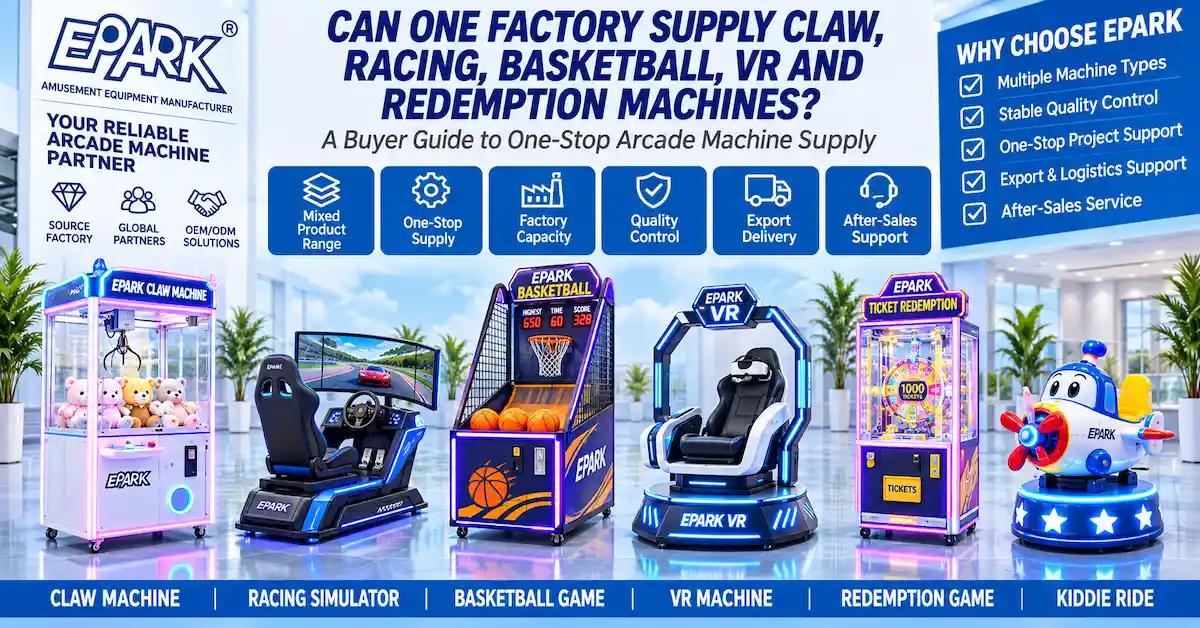
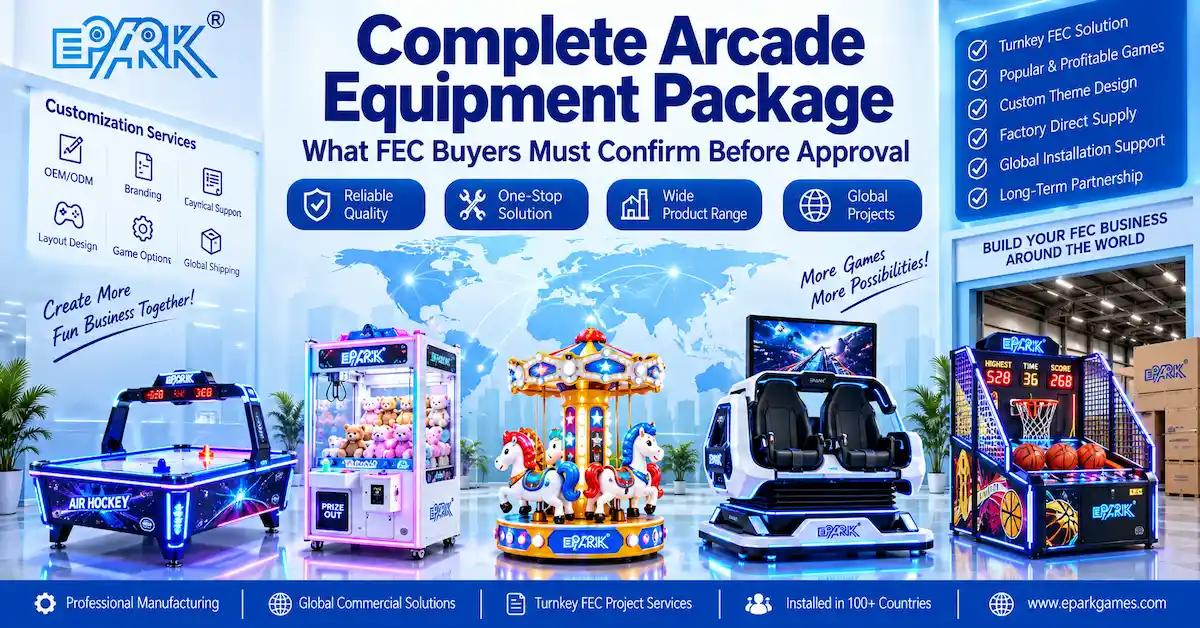
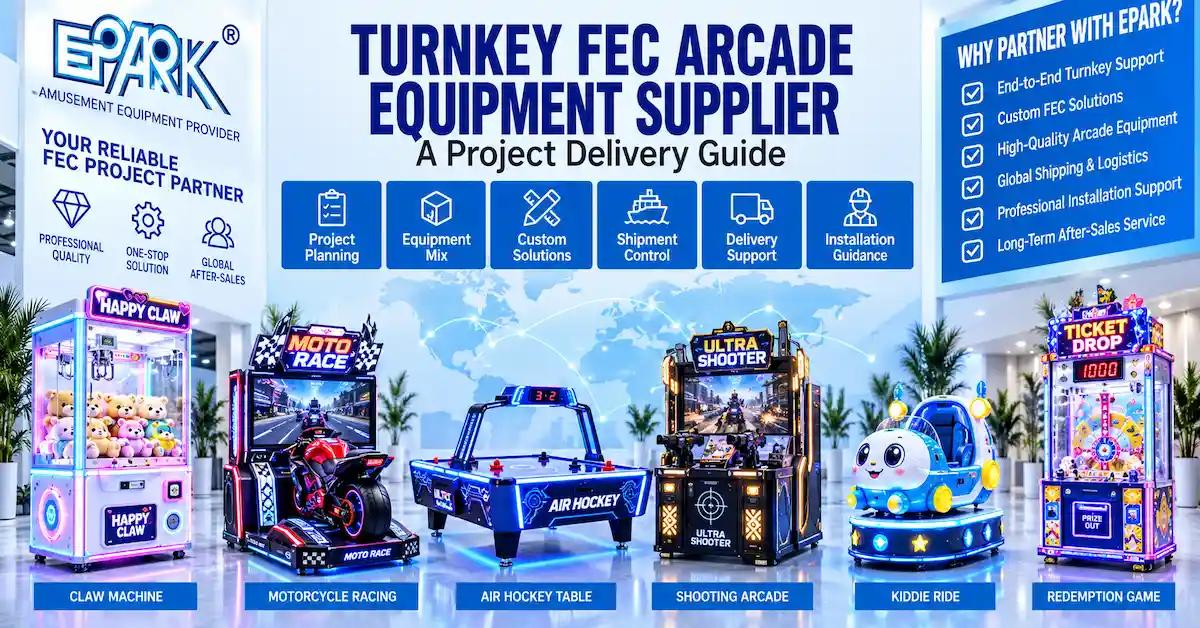
EPARK's public information describes commercial arcade equipment, claw and prize machines, redemption games, sports and skill games, racing and driving simulators, VR attractions and family entertainment equipment. Its service material also describes layout planning, OEM/ODM, production, testing, export packing, installation guidance, technical support and spare-parts supply. These capabilities are useful inputs for a distributor support program; the exact model, scope, timing, territory and commercial terms still need to be confirmed in a project quotation.
What an FEC or mall project buyer is actually approving
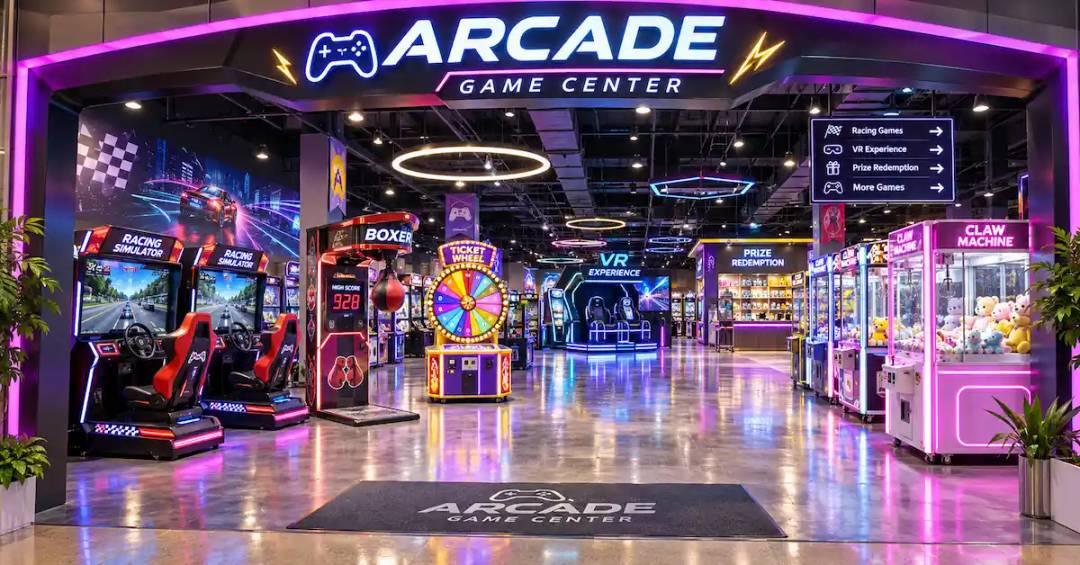
When an operator asks a distributor for an arcade package, the visible request may be “send a price for 40 machines.” The approval decision is broader. The buyer is deciding whether the proposed experience can attract the intended audience, whether the floor can operate safely and efficiently, whether the investment can be installed without hidden work, and whether the supplier will help protect uptime. Distributor support should therefore be organized around the buyer's approval gates rather than around the supplier's internal catalog.
| Buyer approval gate | What the distributor should show | Supplier support required |
|---|---|---|
| Commercial fit | Machine roles, audience fit and a balanced mix | Model matrix, use-case notes and configuration options |
| Site fit | Scaled layout, circulation, queues and service access | 2D/3D layout input and model dimensions |
| Budget control | Included scope, exclusions, freight and local work | Itemized quotation and packed-volume data |
| Opening readiness | Testing, installation sequence and staff handover | Factory test scope, manuals and commissioning guidance |
| Lifecycle risk | Warranty route, spares and response boundaries | Parts list, serial records and escalation process |
Build a project-ready product matrix
The first useful support asset is not a long price list. It is a product matrix that maps each approved model to a job on the venue floor. A distributor can use the matrix in a proposal, while the supplier can use it to prevent configuration drift. Include the factory model reference, machine family, player age or audience, play format, expected dwell behavior, operating dimensions, packed dimensions, gross weight, power and voltage, payment options, ticket or prize interface, language, maintenance clearance and known options.
Separate “core range,” “project option” and “custom development.” Core range items should have a stable reference and a realistic reorder path. Project options may require special artwork, payment hardware, language or layout clearance. Custom development should have a separate approval, sample and change-control process. Mixing these three levels in one list causes a distributor to promise a repeatable product that the factory has never approved for repeat production.
Give every model a commercial role
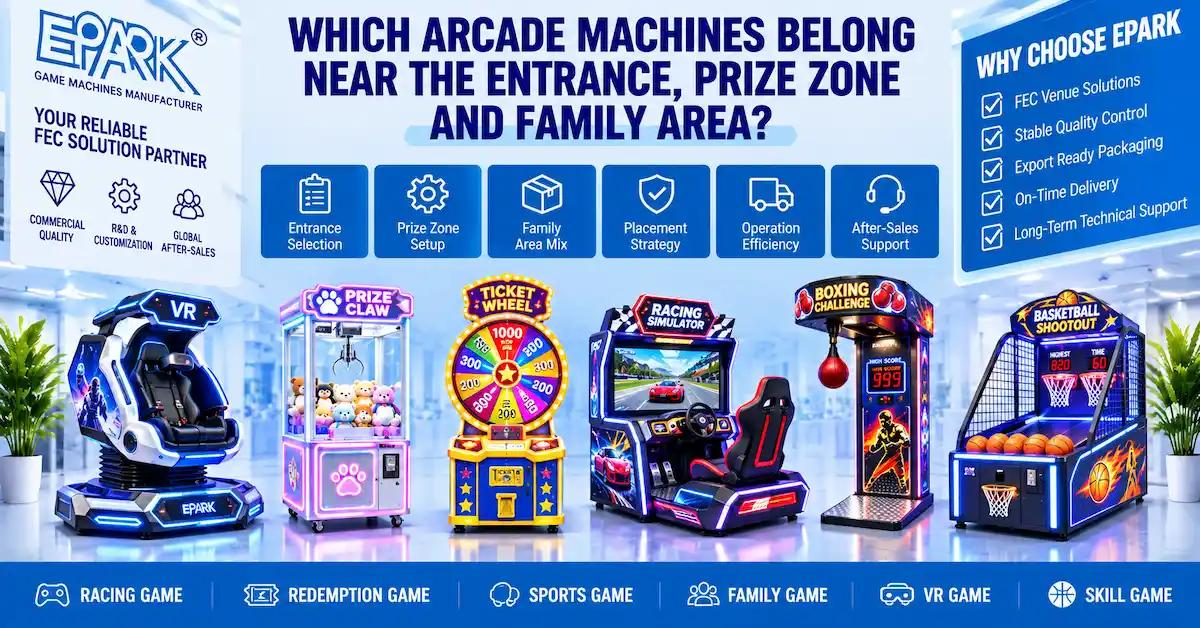
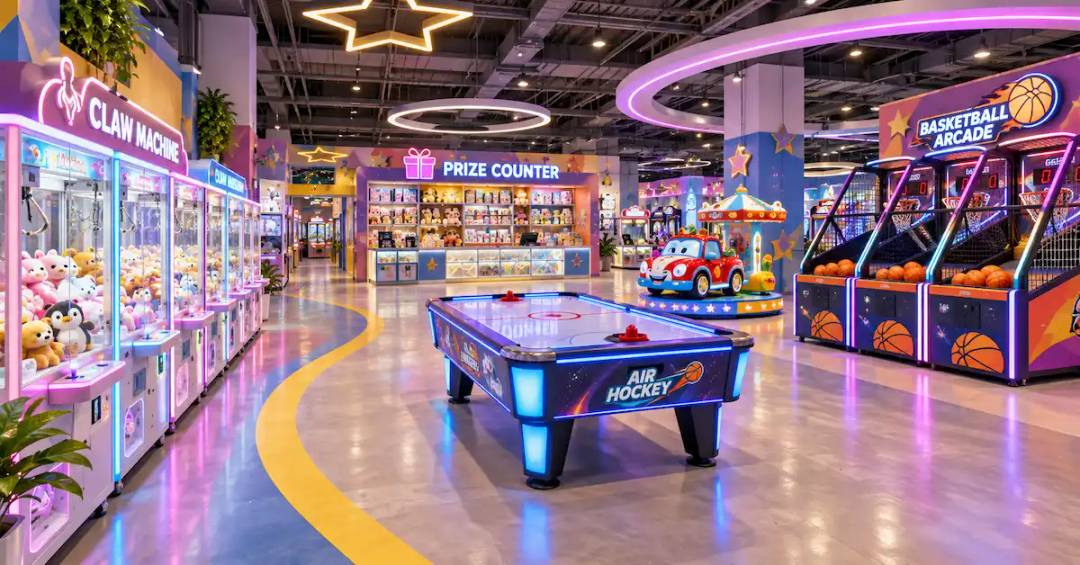
FEC proposals are stronger when the distributor explains why a machine is included. A claw or prize unit may act as a visual traffic builder. A redemption game may connect play to tickets or points. A sports or skill game may create social competition. A racing or VR simulator may provide a premium anchor for older children and adults. Kiddie rides or family formats may widen the age range. The role is not a revenue guarantee; it is a transparent reason for the machine's position in the mix.
Use the EPARK commercial FEC game machine page as a commercial reference point when building a category matrix. It presents a multi-category arcade solution, but the distributor should still request the exact model references and options for the target project.
Turn the venue plan into a buyer-facing layout
A project layout is a sales tool only when it is traceable to the equipment schedule. Ask the distributor to provide the measured floor plan, entry and exit, columns, doors, ceiling height, fire routes, electrical points, service paths and target audience. The supplier can then help test cabinet footprints, queues, parent sightlines, staff routes, payment points and prize or ticket movement. A decorative rendering without these interfaces may create confidence at the presentation stage and problems during installation.
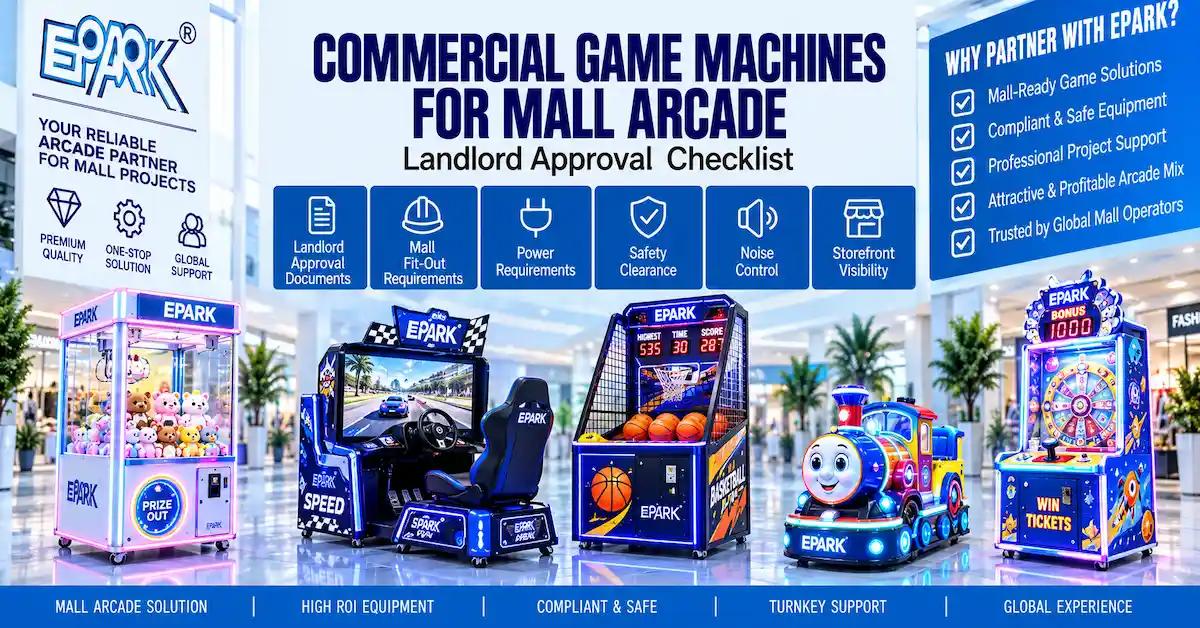
FEC buyers usually want an experience that supports families and different age groups. Mall buyers also care about visibility from public circulation, noise, frontage, landlord requirements and how the entertainment zone supports dwell time. A supplier that can explain these differences gives the distributor more than a generic “one-stop solution.” The proposal should state which assumptions came from the site and which remain to be confirmed.
Show alternative layouts rather than one attractive picture
Offer a base layout and one controlled alternative. The alternative might trade a premium anchor for more compact redemption units, or move prize equipment closer to the exit while preserving staff access. Explain the consequence of each option: queue length, power demand, service path, player age, visual impact and packed-volume change. This helps an operator make a decision instead of asking for endless revisions without understanding what is moving.
EPARK's service and design materials describe 2D/3D layout support and equipment selection. A distributor should ask for the layout version, date and model list that the drawing represents. If a cabinet changes after approval, update the drawing and the quotation. A one-centimeter or one-option change can affect a tight mall storefront, a delivery route or an accessible path.
Make the quotation easy for a project buyer to approve
A distributor often loses a project because two quotations are not comparable. One includes payment readers and installation guidance while another excludes them. One shows packed volume while another quotes only the cabinet. Supplier support should make the quotation an auditable scope, not a single attractive total.
Ask the factory to separate equipment, customization, payment or redemption integration, packing, freight, insurance if requested, installation, training, spare parts and local work. Mark each line as included, optional, excluded or pending confirmation. Add the assumptions behind voltage, plug, language, artwork, game software, delivery point, unloading access and site readiness. This structure helps a distributor protect its margin and gives the venue owner a realistic budget.
Do not use a generic MOQ, lead time or ROI statement in a project proposal. EPARK's public FAQ discusses small trial orders and large-scale production, and public pages describe different shipping windows by order type, but the selected model, customization, quantity and destination determine the commercial answer. Ask for the project-specific trigger for production, expected factory completion, packing status and shipment plan.
Use a scope-gap register
Keep a short register with four columns: open question, owner, due date and effect if unresolved. Typical entries include landlord power approval, cashless payment integration, fire-route clearance, local installation labor, prize stock, network access, import documents, replacement parts and final artwork. The distributor can show the register in a project meeting without pretending that a supplier has answered a question it has not yet received.
Offer sample and demonstration support that reduces buyer doubt
FEC and mall buyers often want to see more than a product photograph. A sample, showroom demonstration or recorded test can answer questions about controls, sound, screen visibility, player posture, payment flow, ticket output, prize access and service panels. The important point is to connect the demonstration to the proposed configuration. A video of a similar-looking cabinet is not proof that the quoted model uses the same board, reader, game mode or artwork.
Agree what the sample must prove. For a mall operator, it may be visual impact, compact footprint and quick play. For an FEC, it may be two-player cooperation, ticket or point integration and family accessibility. For a distributor, it may be repeatability, spare-parts compatibility and the ability to train local staff. Record the sample model, revision, options and open issues. If the sample changes before production, obtain approval instead of silently accepting a substitution.
EPARK's public information describes OEM/ODM and custom support. For a branded distributor proposal, request the artwork proof, cabinet drawing, payment configuration, language and packaging label before presenting a final promise to the end customer. Logo placement is cosmetic; changing a cabinet, board or reader is a technical change and should be priced and tested separately.
Give the distributor evidence for quality, packing and handover
Winning a project creates a second responsibility: proving that the equipment will arrive and open as proposed. The supplier should connect its factory workflow to the approved machine list. Useful evidence includes model-specific photographs or video, a testing checklist, serial-number records, packing details, accessory counts, manuals and a comment log for corrections. EPARK's public process material describes production, testing and export packing, including protective materials for sea shipment, and states that machines undergo a full-operation test before dispatch. The exact test record and packing method should be requested for the order.
Ask what “tested” means. Does the check cover gameplay, payment, tickets or points, lighting, sound, sensors, mechanical movement, electrical safety and the actual language? Does the record identify the machine or only the batch? A distributor can then state the evidence honestly in a project proposal. Avoid converting a general factory claim into a model-specific performance guarantee.
Prepare the handover before the shipment
Installation support should include site readiness, unloading route, tool requirements, assembly sequence, power and network assumptions, payment configuration, test steps and staff training. A distributor should know who signs off each stage. The factory may provide installation guidance, remote assistance or on-site support for some projects; the quotation must identify what is included and what depends on local labor, travel or building access.
Build a handover pack with the final model list, serial numbers, operating manuals, wiring or setup notes, spare-parts references, warranty route and contact procedure. EPARK's FAQ material states that warranty requests should include the serial number, problem description and photos or video. That is useful for a distributor's own service form as well. It does not mean that every repair, freight charge or local labor cost is automatically included.
Make after-sales support part of the sales proposal
When a machine fails in a mall or FEC, the operator does not care which party used the word “supplier.” The operator needs a route to diagnosis, a realistic decision on parts or reset, and a record of what happens next. The arcade supplier support for distributors should define first-line triage, factory escalation, spare-parts ordering, warranty evidence, remote troubleshooting and the boundary between manufacturing defects, consumables, misuse, transport damage and local installation.
EPARK's public service and FAQ materials describe remote technical support, video guidance, spare-parts supply, warranty information and 24/7 technical support language. Other FAQ answers describe a 24-hour response in specific contexts. These statements should not be rewritten as a 24-hour repair or replacement SLA. A distributor should ask the company to state the response channel, diagnostic information required, parts availability assumptions, freight responsibility and local labor treatment for the selected order.
Use a simple escalation ladder
- Collect the model, serial number, order reference, destination and symptom.
- Collect photographs or video of the controls, connections, display, cabinet and visible damage.
- Classify the issue as setup, configuration, consumable, misuse, transport damage or suspected manufacturing defect.
- Send the complete case through the agreed supplier channel and record the date.
- Track diagnosis, approved replacement, shipment, local work and final closure.
This process lets the distributor sell support with confidence without promising a technical outcome that has not been agreed. It also turns service cases into product feedback for the next FEC or mall proposal.
Support the distributor's bid team, not only its service team
Manufacturers often focus on production contacts while the distributor's sales team is preparing a deadline-sensitive proposal. A useful partner supplies reusable materials: current product photos, dimension sheets, model comparison tables, installation assumptions, standard warranty wording, packing examples, test evidence, frequently asked questions and a clear route for custom questions. The distributor should control the version and avoid publishing an old specification after a component change.
Training should use the distributor's real sales scenarios. Practice a mall landlord question about frontage, sound and delivery. Practice an FEC operator question about age bands, payment, tickets and downtime. Practice a procurement question about freight, documents, spare parts and warranty. The objective is not to make sales staff repeat adjectives. It is to help them identify the missing fact and ask the factory for an answer.
Score supplier support before awarding a project
A support scorecard helps a distributor compare suppliers that appear similar on product price. Keep an evidence column and use “open” when a claim is not yet verified. Weight each criterion according to the project, but do not allow a strong catalog to hide a weak handover process.
| Support area | Strong support looks like | Evidence to request |
|---|---|---|
| Proposal enablement | Current model matrix and sales-ready specifications | Versioned sheets and approved images |
| Layout support | Drawing tied to equipment and site assumptions | Dimensioned plan and revision record |
| Commercial scope | Included, optional, excluded and pending items are visible | Itemized quotation and scope-gap register |
| Factory evidence | Testing and packing connect to the approved models | Test record, serial list and packing photos |
| Opening support | Installation, training and commissioning roles are assigned | Handover checklist and contact route |
| Lifecycle service | Parts, warranty and escalation are usable in the market | Model-linked parts file and written terms |
Questions distributors should send with an RFQ
Include the project type, country, venue area, measured plan, target audience, machine categories, expected quantity, payment or redemption system, artwork, voltage, language, delivery point, installation responsibility, opening date, spare-parts request and after-sales expectations. Ask the supplier to return a model matrix, packed-volume estimate, production assumptions, test scope, packing description and support boundary.
A practical request is: “Please separate core models from project-only or custom options. For each proposed machine, provide factory reference, revision, dimensions, packed dimensions, gross weight, power, payment interface, language, maintenance access, test scope, warranty route, spare-parts list and destination documents. Please identify every assumption that is not included in the price and explain how the approved configuration can be reordered.”
This level of detail helps the distributor win responsibly. It avoids the short-term success of an underquoted project that later becomes a margin dispute, delayed opening or unsupported customer account.
Frequently asked questions
What supplier support helps an arcade distributor win more FEC projects?
The most useful support combines a model matrix, layout input, itemized quotation, sample or demonstration evidence, factory testing, packing documentation, installation guidance and a defined after-sales escalation. Each item should connect to the actual project, not a generic catalog claim.
What supplier support helps win mall arcade projects?
Mall projects need strong evidence for frontage visibility, footprint, queue control, sound, delivery access, landlord interfaces, opening schedule and serviceability. A supplier that helps the distributor answer these questions can reduce approval friction with operators, landlords and contractors.
Should a manufacturer provide a 2D or 3D arcade layout?
It can be valuable when the drawing uses measured site inputs and the exact model list. A decorative rendering without dimensions, queues, service clearance and revision control is not enough for procurement or installation approval.
Does EPARK provide support for distributors?
EPARK's public materials describe commercial arcade equipment, OEM/ODM, layout and project support, production, testing, export packing, installation guidance, remote technical support and spare-parts supply. The distributor should confirm the exact scope, model, market and order terms in writing.
Can a distributor promise 24/7 repair service?
No. Public service material uses 24/7 technical-support language and FAQ answers mention response times in specific contexts. That does not automatically mean 24-hour repair, parts dispatch or on-site labor. Use the written commitment for the selected project.
What should be included in a distributor's proposal pack?
Include the machine matrix, venue layout, scope and exclusions, payment assumptions, packed volume, installation responsibilities, factory testing approach, warranty route, spare-parts plan and a list of open questions. Keep every document linked to a model reference and revision.
How can a distributor avoid losing margin on a turnkey project?
Use an itemized quotation and a scope-gap register. Separate equipment, customization, freight, insurance, installation, local work, payment integration, training and spare parts. Do not hide unknown site work inside a single package price.
What information should a distributor provide to get useful support?
Provide the measured plan, entrances, exits, columns, ceiling height, audience, preferred categories, budget range, payment system, opening date, destination, artwork and local installation resources. Better inputs produce a more reliable machine recommendation.
Conclusion
The arcade supplier support for distributors that wins more FEC and mall projects is measurable. It helps the distributor move from a product list to a buyer-ready project: a reasoned machine mix, a versioned layout, an honest quotation, a sample or test path, factory and packing evidence, a commissioning plan and a service process that can be explained to the end customer. EPARK's public capabilities provide a relevant starting point for this model, but the distributor should request model-specific evidence and written commercial boundaries before making a promise.
Prepare the project brief, send the RFQ with site and operating information, and score the supplier on proposal enablement, layout, scope, evidence, opening support and lifecycle service. That discipline gives the distributor a stronger chance of winning the project and a better chance of delivering it profitably.
Disclaimer
The information provided on this website is for general informational purposes only.
While EPARK Arcade Game Machine Manufacturer strives to ensure accuracy and reliability, no warranties—express or implied—are made regarding completeness, performance, or applicability.
Product specifications, designs, and features may vary depending on usage, customization, and customer requirements.
Buyers are responsible for verifying all technical details, compliance certifications, and suitability before procurement.
EPARK shall not be held liable for any direct, indirect, incidental, or consequential damages arising from the use of this website or its content, including but not limited to business losses, data errors, or equipment misuse.
For tailored solutions or further verification, please visit our Contact Us
Intellectual Property Notice
All articles, product images, videos, catalogs, software, and related materials published on this website are the intellectual property of EPARK, unless otherwise stated.
Unauthorized reproduction, distribution, modification, or commercial use of any content is strictly prohibited without prior written consent from EPARK.
EPARK reserves the right to take legal action against any unauthorized use, including but not limited to copyright infringement, misrepresentation, or unfair competition.
Trademarks
The name EPARK, the EPARK logo, and all related brand elements displayed on this website are registered trademarks or trade names of Guangzhou EPARK Electronic Technology Co., Ltd.
Other product names, company names, or logos mentioned on this site may be trademarks of their respective owners.
Unauthorized use of EPARK's trademarks for commercial purposes, including advertising, promotions, or product packaging, is strictly prohibited.
Governing Law
These terms are governed by the laws of the People's Republic of China.