

What should a turnkey FEC arcade equipment supplier deliver?
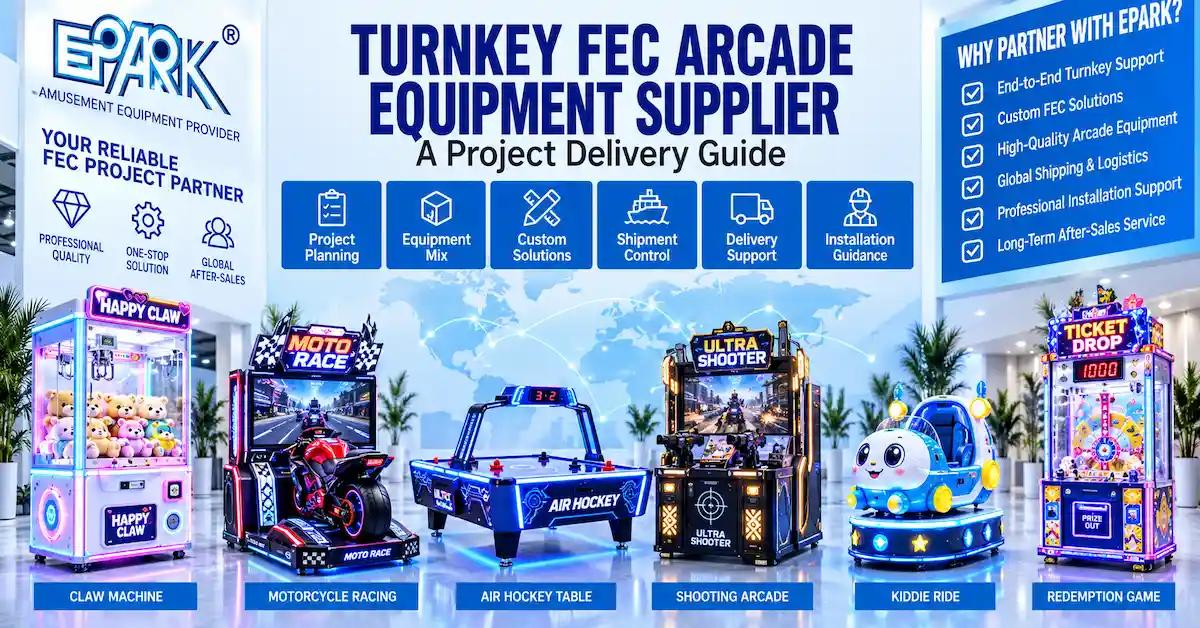
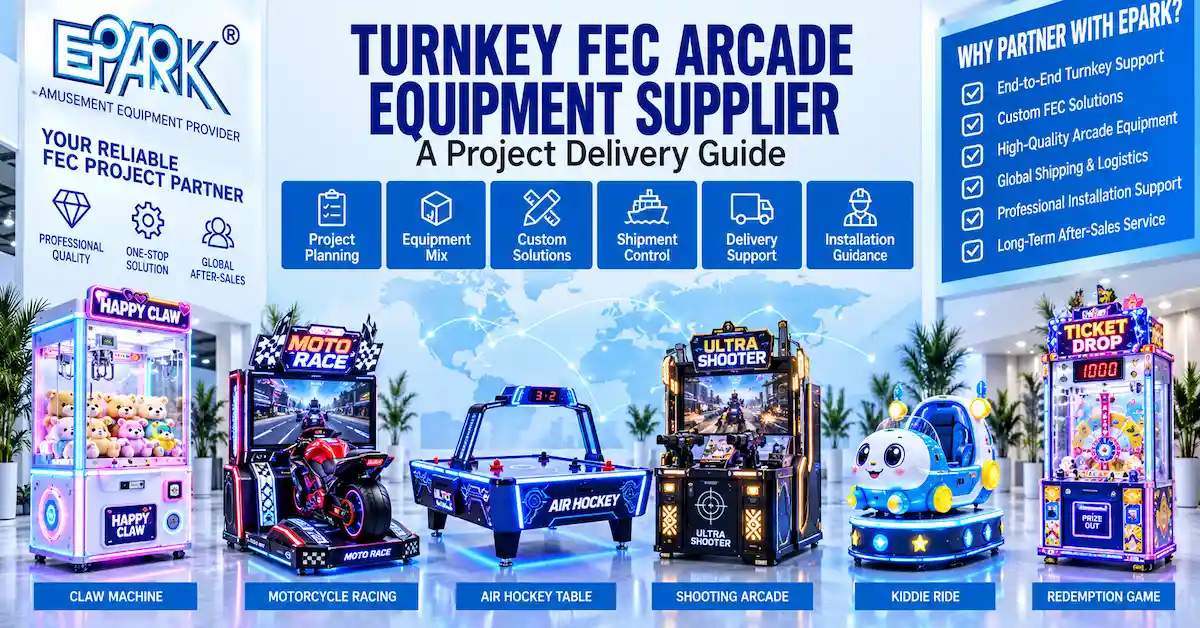
The right turnkey FEC arcade equipment supplier should turn a measured venue brief into an approved equipment schedule, a documented production plan, a coordinated shipment and a usable handover. That means the supplier must connect layout, machine selection, power and network assumptions, payment or redemption systems, manufacturing, testing, packing, installation guidance, training and after-sales support. A catalog of machines alone is not a turnkey project.
This is a commercial-investigation question for FEC investors, mall entertainment operators, indoor playground brands, theme-park teams, contractors and distributors delivering a complete project to a venue owner. The buyer is not only comparing cabinet prices. The buyer is deciding who will own the gaps between design, quotation, factory release, site readiness and opening day. The safest decision is based on a written scope and acceptance path, not on the phrase “one-stop solution” by itself.
A turnkey FEC arcade equipment supplier earns that label only when those handoffs are assigned, priced and tested, including the parts of the project that sit outside the cabinet itself.
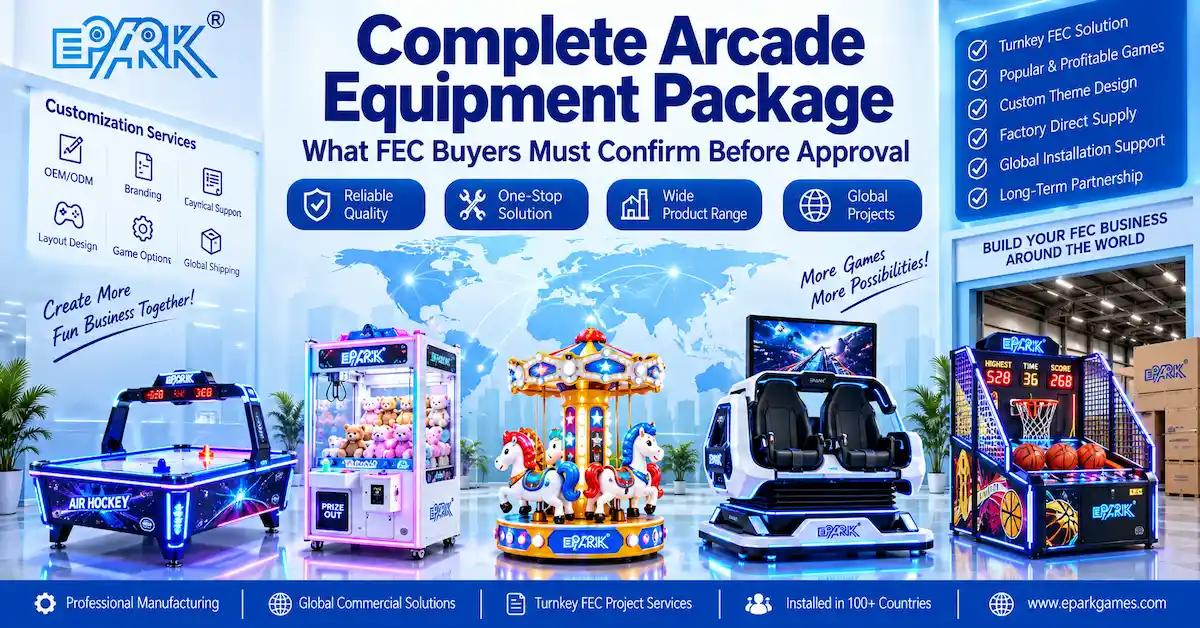
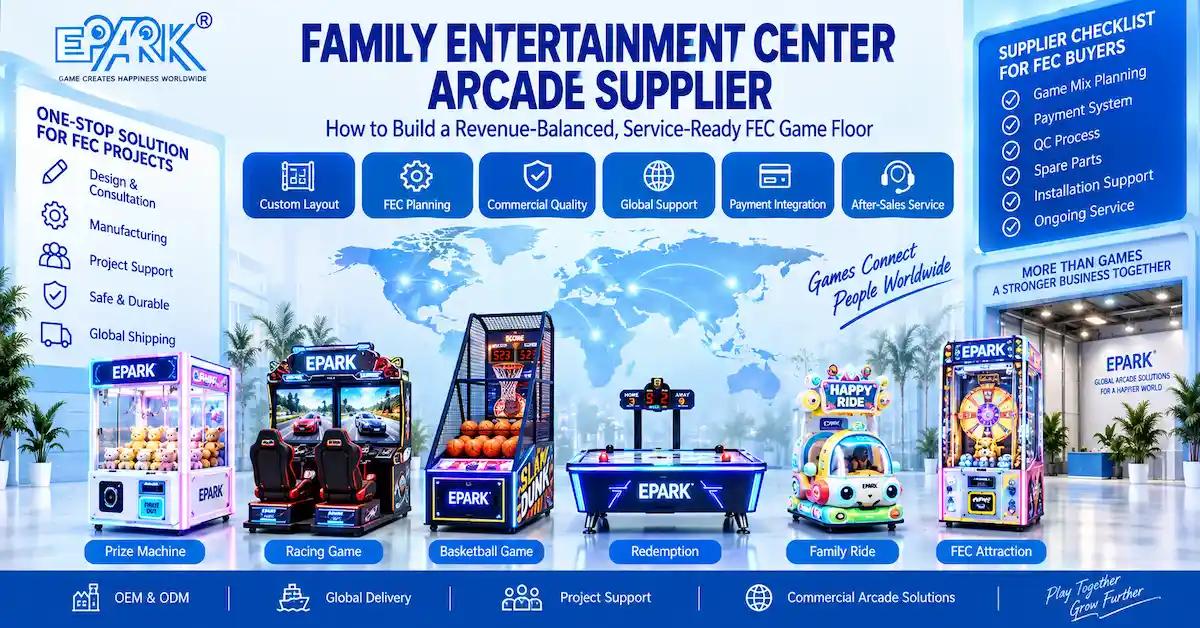
Guangzhou EPARK Electronic Technology Co., Ltd. presents itself as a Guangzhou commercial amusement equipment manufacturer that combines R&D, design, production and sales. Its public range covers claw and prize machines, ticket and redemption games, sports and skill games, racing and driving simulators, VR systems, kiddie rides and family entertainment equipment. The company also describes layout planning, OEM/ODM, export support, installation guidance and technical service. These are relevant capabilities to evaluate; the final project scope still needs a model-specific quotation and written responsibility matrix.
Define the project before choosing machines
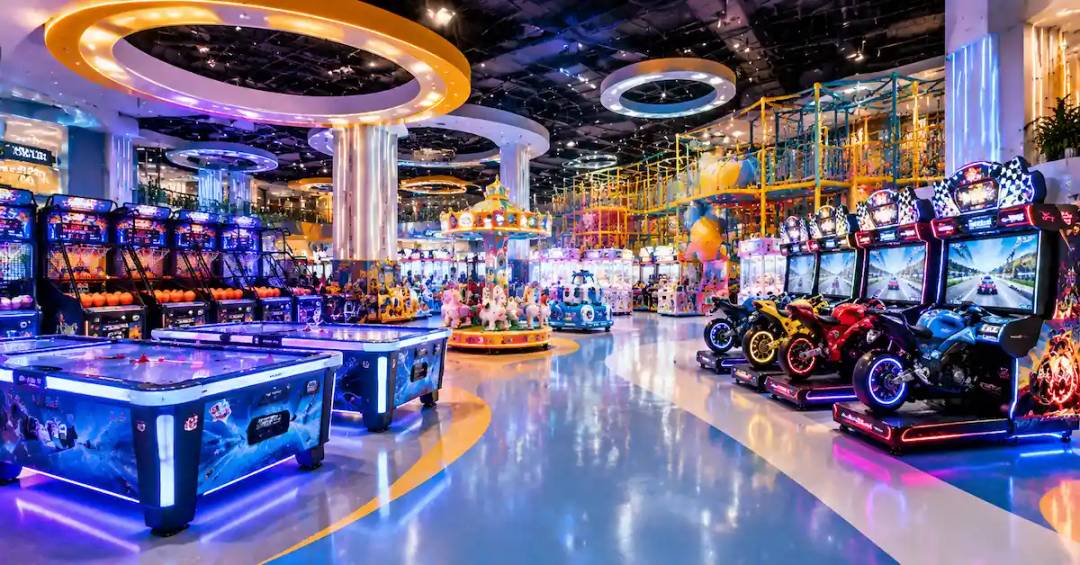
A turnkey proposal starts with the venue rather than with a favorite machine. Send the supplier the measured floor plan, entrances and exits, columns, stairs, fire routes, ceiling height, service access, electrical points, HVAC constraints, landlord rules and photographs or video. Add the opening date, operating hours, staffing model, target audience, ticket or cashless system, prize strategy and local compliance requirements. Without these inputs, a supplier can only produce a concept, not a site-ready plan.
EPARK's public service information asks customers for the venue area, floor plan, entrance and exit locations, target audience, preferred game categories, budget and site photos or video. Treat that list as the minimum brief. Add the fields that affect installation and operations because a machine that fits the drawing may still fail at delivery if the crate cannot reach the site or if the power and network plan was not agreed.
| Project input | What to provide | Why it changes the scope |
|---|---|---|
| Space | Dimensioned plan, columns, ceiling height, doors and service routes | Controls cabinet size, circulation, delivery and maintenance clearance |
| Audience | Age groups, visit purpose, group size and accessibility needs | Influences game mix, supervision, controls and queue design |
| Commercial model | Paid play, tickets, points, membership, prizes or bundled admission | Determines payment, redemption, reporting and replenishment requirements |
| Destination | Country, city, port, voltage, frequency, plug and import requirements | Changes electrical configuration, documents, freight and installation planning |
| Opening plan | Target opening, landlord handover, construction milestones and training date | Separates production time from shipping, site readiness and commissioning |
State what is unknown. For example, “final electrical load to be confirmed after model selection” is a responsible assumption. A proposal that hides unknowns may look more complete but creates a larger change order later.
For a turnkey FEC arcade equipment supplier, a visible assumptions list is part of the deliverable because it tells the venue team what must be confirmed before the design can become a production release.
Use layout planning to test the equipment mix
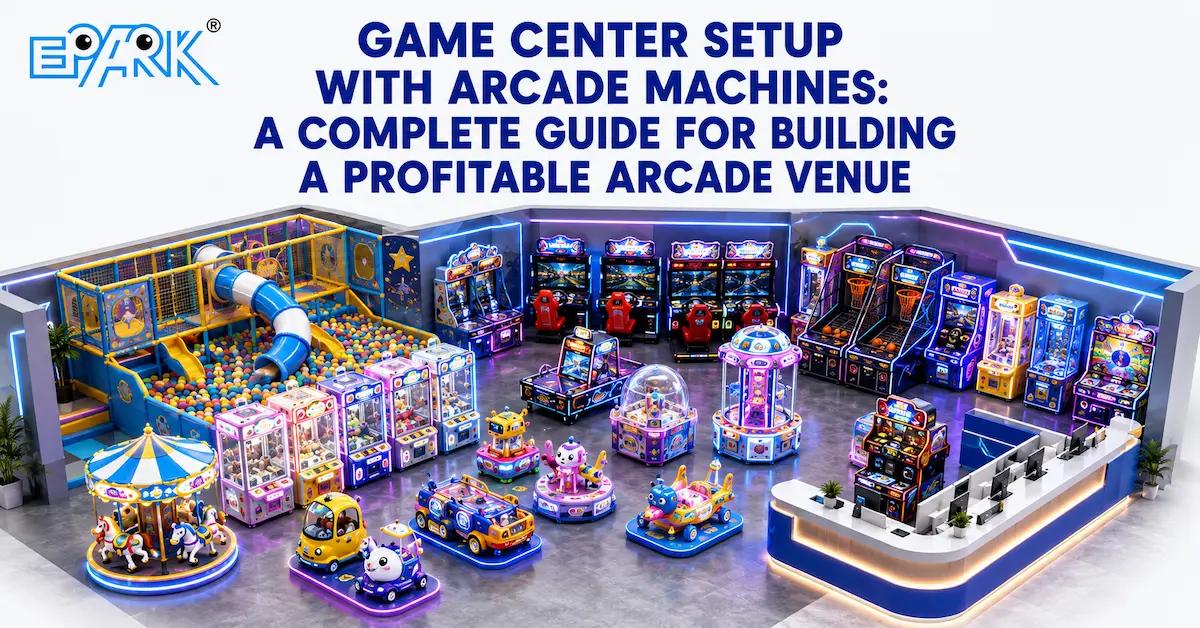
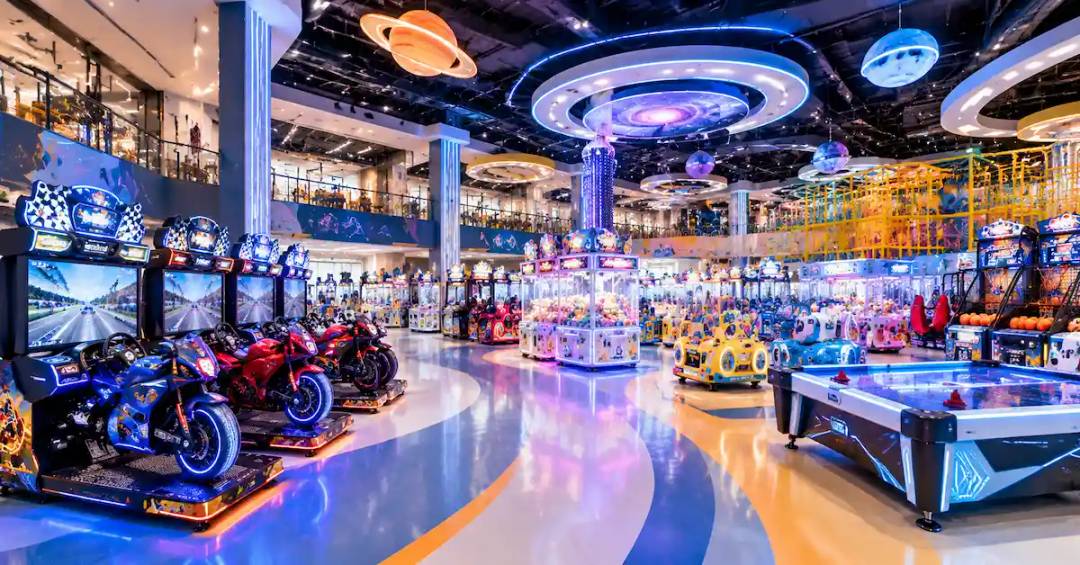
A layout is an operating document, not decorative artwork. It should show machine footprints, player positions, queue zones, prize or redemption counters, staff sightlines, service access, circulation and exits. It should also identify which dimensions are cabinet dimensions and which are recommended clearances. EPARK describes 2D layout planning and also presents 3D layout or rendering as part of its project support. Ask for the assumptions behind both views before approving the design.
Do not calculate the number of machines from gross area alone. A project must reserve space for circulation, queues, reception, prize storage, staff access, cleaning, maintenance and building requirements. A dense plan can increase equipment count while reducing visibility and serviceability. The right mix depends on the audience and commercial model, not on a universal machine-per-square-meter rule.
Share the floor plan, entrance, audience and opening target so the design discussion starts with site conditions.
Separate attraction, participation and redemption roles
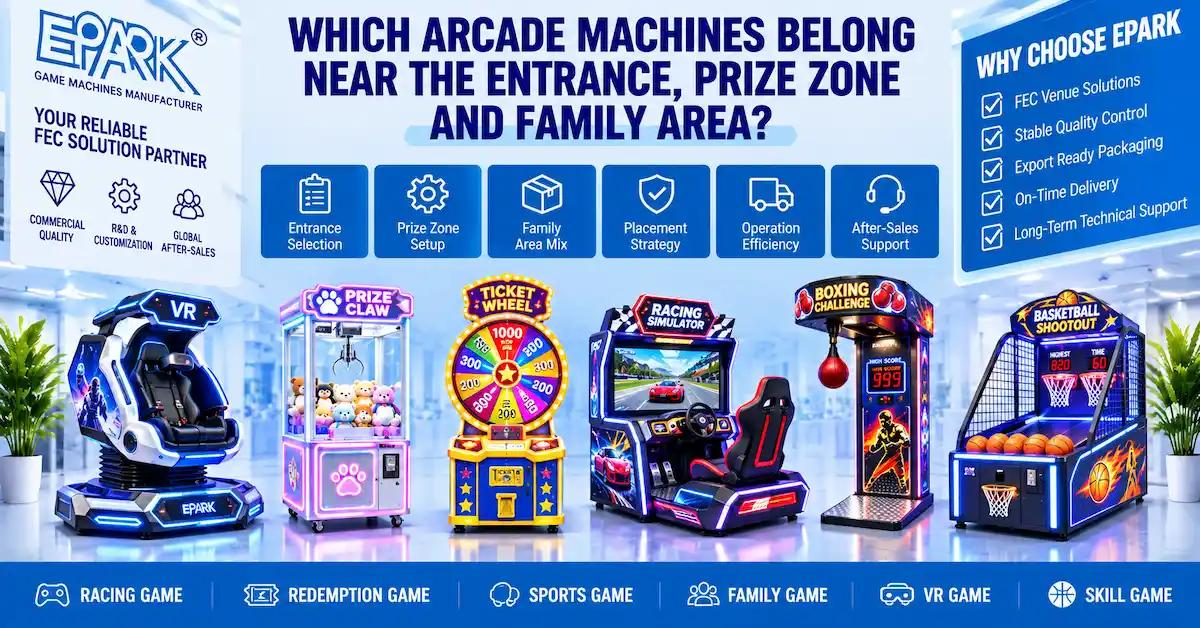
Build the mix by role. A high-visibility racing or VR attraction may draw attention from a mall corridor. Sports, shooting and rhythm games can create short competitive sessions. Claw and prize machines can support a visible gift interaction. Redemption games and a prize counter connect play to a reward process. Kiddie rides and soft-play elements serve younger visitors and require different supervision and safety assumptions. These are planning roles, not guaranteed revenue categories.
For each proposed category, ask what the venue must provide and what the supplier includes. A redemption machine may require ticket or point integration, a prize counter and replenishment procedures. A VR system may require content, network, cleaning and operator supervision. A racing simulator may need a linked configuration, dedicated power and a clear service route. If these dependencies are absent from the quote, the equipment schedule is incomplete.
| Equipment role | Typical EPARK category | Project questions |
|---|---|---|
| Visual anchor | VR, racing or large interactive attraction | Sightline, queue, footprint, power, content and operator access |
| Fast-turn play | Basketball, shooting, rhythm or skill games | Player spacing, noise, score display, controls and repeat-play workflow |
| Reward interaction | Claw, prize and redemption equipment | Prize visibility, ticket or point system, replenishment and counter location |
| Young-family zone | Kiddie rides, soft play and child-focused cabinets | Age guidance, supervision, cleaning, access and destination safety requirements |
Ask the supplier to show what was removed from the first concept and why. A disciplined design process explains exclusions, not only inclusions. This gives the operator a clearer basis for phasing the project or adding equipment later.
Confirm technical and operational assumptions before the quote
A turnkey FEC arcade equipment supplier should identify technical assumptions at the proposal stage. Request a model-level schedule with cabinet dimensions, player positions, rated input, voltage and frequency, plug, estimated power, display and control arrangement, payment interface, network requirement, sound, lighting, packed dimensions and weight. If a value is not yet available, mark it as pending rather than using a generic number.
Payment and management systems need their own scope. EPARK's public materials mention coins, QR codes, cards, tickets, points, redemption and membership systems, as well as card or management system integration. The published pages do not define a universal payment vendor, API, network protocol or data schema. Ask who supplies the reader, who configures the software, what information is reported, which network is required and who supports the system after installation.
| Scope area | Confirm for each relevant model | Owner to identify |
|---|---|---|
| Electrical | Voltage, frequency, plug, rated input, protection and cable route | Supplier, electrician and local inspector |
| Network | Connectivity, ports, Wi-Fi or wired path, management and reporting | Supplier, IT team and venue operator |
| Payment | Coins, QR, cards, tickets, points, membership and settlement process | System supplier and commercial owner |
| Environment | Heat, ventilation, noise, cleaning, light and supervision conditions | Venue, designer and supplier |
| Safety and compliance | Applicable local rules, labels, glass, moving parts and inspection evidence | Buyer, supplier and destination authority |
Certification claims need the same discipline. EPARK's website displays or mentions CE, RoHS, ISO, EMC and SGS-related standards in its public material, while the reviewed pages do not provide a complete certificate number, covered model, issuing body, expiry date and test scope for every machine. Ask for the documents that apply to the selected equipment and destination. A logo on a website is not a substitute for a project compliance file.
Make the quotation auditable
A project quotation should separate equipment, customization, systems, logistics and services. Ask for a line-item equipment schedule with factory references, quantity, configuration, unit price and packed data. Then list layout or design work, artwork, software or payment integration, spare parts, export packing, freight, insurance, customs support, installation, commissioning, training and taxes. This structure lets the buyer compare two proposals without assuming that a missing line is included.
EPARK's public FAQ says small trial orders and large-scale production are accepted, but it does not establish one universal MOQ for every model and customization. The public material also gives general shipping guidance for small orders and larger or customized orders. Use these statements as planning context only. The quotation should state the actual quantity, customization level, production start event, inspection window and shipping assumption for the project.
Request a line-item schedule that distinguishes standard machines, project customization and site services.
Use change control for design and quotation revisions
Freeze the project in stages: brief, concept layout, equipment schedule, technical schedule, quotation, artwork, sample or first article, production release and final acceptance. Every change should show what changed, why, who approved it, and whether price, lead time, power, packing or installation is affected. This is particularly important when the venue owner, designer, contractor and equipment supplier are different companies.
Do not approve a drawing and a quotation that use different model names. Keep the factory reference, reseller or operator name, image, revision and quantity together. A clear schedule prevents a common handover problem: the commercial proposal describes one cabinet while the packing list or installation guide uses another name.
A turnkey FEC arcade equipment supplier should be able to carry those identifiers from the quotation into the factory schedule, packing list and commissioning record.
Verify production, materials and factory testing
Commercial FEC equipment must withstand repeated use, transport, cleaning and service. EPARK's public descriptions mention metal frames, ABS plastic, tempered glass, plywood or high-quality plywood, screens, controls, power supplies, speakers and LED lighting. These are useful material and component categories, not universal specifications for every model. The buyer should request the relevant construction and component details for the approved equipment schedule.
EPARK's Design & Process information describes artwork printing and painting, PCB installation, wiring, LED setup, screen and control integration, final assembly and function testing. It also states that each machine receives a 48-hour full-operation test before shipment, covering gameplay, electrical safety, lighting effects and mechanical durability. Ask how that test applies to the selected model, quantity, payment configuration, custom artwork and software revision, and request an order-linked record before loading.
Production evidence should include more than a finished product photograph. Request progress photographs for the approved cabinet, wiring and controls, a serial-number list, test checklist, deviation record and packing photographs where the project risk justifies them. If a component is substituted, record the approved replacement and its effect on service parts, safety or the venue's customer promise.
Build a model-specific acceptance plan
- Confirm the cabinet, display, controls, lighting, speakers and payment configuration against the approved schedule.
- Run the game function, player inputs, scores, tickets or points and any linked stations included in the quote.
- Check electrical input, grounding, protective devices, accessible edges, glass and moving mechanisms as applicable to the model.
- Record the test duration, serial number, result, corrective action and retest status.
- Photograph the final artwork, labels, model reference, packing and visible condition before loading.
Plan packing, shipping and site delivery together
Transport is part of turnkey delivery because the machine must arrive in a condition that the installation team can use. EPARK's public material describes bubble wrap, thick foam, wooden frame or crate reinforcement and waterproof film for sea shipment. It also discusses customs, insurance, delivery tracking and multi-batch shipping support. Ask which packing method applies to each cabinet, whether the packed dimensions fit the receiving route, and which party handles unloading, storage and damage reporting.
Coordinate the shipping plan with the venue. Confirm delivery window, truck access, lift dimensions, floor protection, storage time, crate disposal, import documents and the sequence in which machines will be installed. A project can be factory-complete and still miss opening if the site is not ready or the shipment arrives before the receiving team.
| Delivery task | Supplier confirmation | Venue or local partner action |
|---|---|---|
| Export file | Commercial invoice, packing list and agreed technical documents | Broker, import and destination requirements |
| Packing | Crate method, labels, serial reference and loading photos | Receiving inspection and damage record |
| Unloading | Packed dimensions, weight and handling points | Truck, lift, labor, storage and floor protection |
| Installation | Assembly instructions, videos, tools and technical contact | Site readiness, electrician, network and local labor |
| Damage or shortage | Case route, photographs and warranty or freight process | Inspection at receipt and prompt notice |
Define installation, commissioning and training
“Installation included” can mean very different things. Ask whether the supplier provides on-site labor, remote video guidance, assembly instructions, electrical connection, network setup, payment configuration, game calibration, operator training and opening-day support. EPARK's service information describes installation guidance, videos or online assistance, operation training, remote technical support, spare parts and, for some projects, on-site installation. The actual scope, travel cost, local labor and site conditions must be written into the project quote.
Commissioning should end with a signed checklist. Test each machine in its final position, not only on a factory floor. Check power, network, payment, tickets or points, audio, lighting, game settings, linked stations, cleaning access, staff controls and emergency or shutdown procedures where applicable. Capture open issues with an owner and due date rather than treating a verbal promise as handover.
Training should cover the people who will operate the FEC after the supplier leaves. Include daily start-up and shutdown, cleaning, prize or ticket replenishment, basic fault isolation, escalation evidence, spare-parts identification, software or settings backup and warranty documentation. The operator should receive manuals, wiring or connection diagrams where supplied, a model list, serial numbers and support contacts.
The handover is where a turnkey FEC arcade equipment supplier proves whether the project is operationally complete or only physically delivered.
Make after-sales support part of the handover
Turnkey delivery is incomplete if the operator cannot obtain help after opening. EPARK's public FAQ states that machines are covered by a two-year warranty from shipment and that manufacturing-defect replacement parts are included during the warranty period, while consumables and misuse damage are excluded. The same public material discusses remote technical support, spare parts, software updates or bug fixes during the warranty period and paid parts after warranty. Confirm the selected order's coverage, freight, local labor, exclusions and escalation route in writing.
Ask how a support case is opened and what evidence is needed. The published FAQ asks for a machine serial number, problem description and photographs or video for a warranty request. Build that requirement into the operator training and handover file. Also ask who supports the payment or management system if it is supplied by another party. A machine warranty does not automatically cover a third-party network, card reader or venue software.
| Document or record | Minimum useful content | Why the operator needs it |
|---|---|---|
| As-built equipment schedule | Model, revision, serial number, location and configuration | Connects a venue asset to service and warranty records |
| Manuals and guides | Operation, cleaning, basic troubleshooting and settings | Reduces avoidable downtime and inconsistent operation |
| Test and acceptance record | Factory test, commissioning result, open issues and closure | Shows what was checked and what remains owned |
| Parts and warranty route | Compatible parts, exclusions, contact channel and evidence needed | Creates a consistent response to service cases |
| System credentials and ownership | Payment or management access, backup and escalation owner | Prevents operational dependency on one undocumented person |
Send an RFQ that exposes turnkey gaps
A useful FEC RFQ asks the supplier to respond to the project, not to send a generic catalog. Include the venue plan, destination, audience, budget range, opening date, preferred categories, payment or redemption model, branding, language, voltage, delivery route, installation expectation, training, spare parts and support. Ask for separate prices and a list of exclusions.
Copy-ready wording: “Please prepare a turnkey FEC equipment proposal for our venue. Use the attached plan and identify the assumed usable area, circulation, queue and service clearances. For every proposed machine, provide the factory reference, dimensions, power, voltage, payment or ticket interface, packed data, quantity, customization, test scope and installation requirement. Separate equipment, design, systems, packing, freight, insurance, customs, local labor, commissioning, training and taxes. Please show the production start event, inspection stage, handover documents, warranty route and all buyer-side site responsibilities.”
Ask the supplier to identify which items are standard, which are custom and which depend on a third-party system. Ask what happens if the landlord changes the plan, if the destination voltage differs, if a selected machine is unavailable or if the opening date moves. The purpose is not to create a complicated contract; it is to make the project assumptions visible before money and schedule are committed.
Frequently asked questions about turnkey FEC suppliers
What is a turnkey FEC arcade equipment supplier?
It is a supplier that coordinates more than equipment sales: venue brief, layout, equipment schedule, customization, production, testing, packing, delivery, installation guidance, commissioning, training and after-sales support. The exact boundary must be stated in the quotation and handover plan.
Does turnkey mean the supplier handles all site work?
No. The term does not automatically include construction, electrical work, network installation, permits, unloading, local labor or landlord approvals. Assign each task to the supplier, venue, contractor or local partner and record dependencies.
Can EPARK design a complete FEC equipment mix?
EPARK publicly describes 2D and 3D layout support, multi-category commercial amusement equipment, OEM/ODM and one-stop project services. The final mix should be based on the actual plan, audience, budget, payment model and destination requirements.
How many machines fit in an FEC?
There is no universal number. The usable area, cabinet footprints, queues, circulation, service access, prize operations, exits and audience determine the schedule. EPARK's category pages show example packages by area, but those examples should not be treated as a fixed configuration for every venue.
What factory evidence should a project buyer request?
Request the approved model and revision, material or component schedule, production photographs, serial list, test scope and result, deviation record, packing evidence and destination documents. EPARK describes a 48-hour full-operation test before shipment; confirm how it is applied to the selected order.
What does EPARK's warranty cover?
EPARK's public FAQ states a two-year warranty from shipment and replacement parts for manufacturing defects during that period, with consumables and misuse excluded. Confirm freight, local labor, system components, exclusions and the exact order terms before publication or purchase.
How should the buyer handle a payment or card system?
Put the reader, software, network, reporting, settlement and support owner in the scope. Public EPARK material mentions coins, QR codes, cards, tickets, points and membership systems but does not define one universal vendor or integration protocol.
Conclusion
Choosing a turnkey FEC arcade equipment supplier is a project-control decision. The supplier should connect a measured venue brief to a defensible layout, a line-item equipment schedule, clear technical assumptions, order-linked production evidence, protected shipping, site commissioning, operator training and a supportable handover file.
EPARK's public information provides a useful starting point: Guangzhou manufacturing identity, multi-category commercial amusement equipment, layout planning, OEM/ODM, production and testing descriptions, export packing, installation guidance, training, spare parts and after-sales support. Convert those public capabilities into a written project scope with model references, owners, dates, exclusions and acceptance evidence. That is what makes a one-stop promise usable after the FEC opens.
Send the floor plan, target audience, equipment categories, destination and opening date for a project-specific discussion.
Disclaimer
The information provided on this website is for general informational purposes only.
While EPARK Arcade Game Machine Manufacturer strives to ensure accuracy and reliability, no warranties—express or implied—are made regarding completeness, performance, or applicability.
Product specifications, designs, and features may vary depending on usage, customization, and customer requirements.
Buyers are responsible for verifying all technical details, compliance certifications, and suitability before procurement.
EPARK shall not be held liable for any direct, indirect, incidental, or consequential damages arising from the use of this website or its content, including but not limited to business losses, data errors, or equipment misuse.
For tailored solutions or further verification, please visit our Contact Us
Intellectual Property Notice
All articles, product images, videos, catalogs, software, and related materials published on this website are the intellectual property of EPARK, unless otherwise stated.
Unauthorized reproduction, distribution, modification, or commercial use of any content is strictly prohibited without prior written consent from EPARK.
EPARK reserves the right to take legal action against any unauthorized use, including but not limited to copyright infringement, misrepresentation, or unfair competition.
Trademarks
The name EPARK, the EPARK logo, and all related brand elements displayed on this website are registered trademarks or trade names of Guangzhou EPARK Electronic Technology Co., Ltd.
Other product names, company names, or logos mentioned on this site may be trademarks of their respective owners.
Unauthorized use of EPARK's trademarks for commercial purposes, including advertising, promotions, or product packaging, is strictly prohibited.
Governing Law
These terms are governed by the laws of the People's Republic of China.