

What Does a Mixed Container Arcade Machine Order Actually Mean?
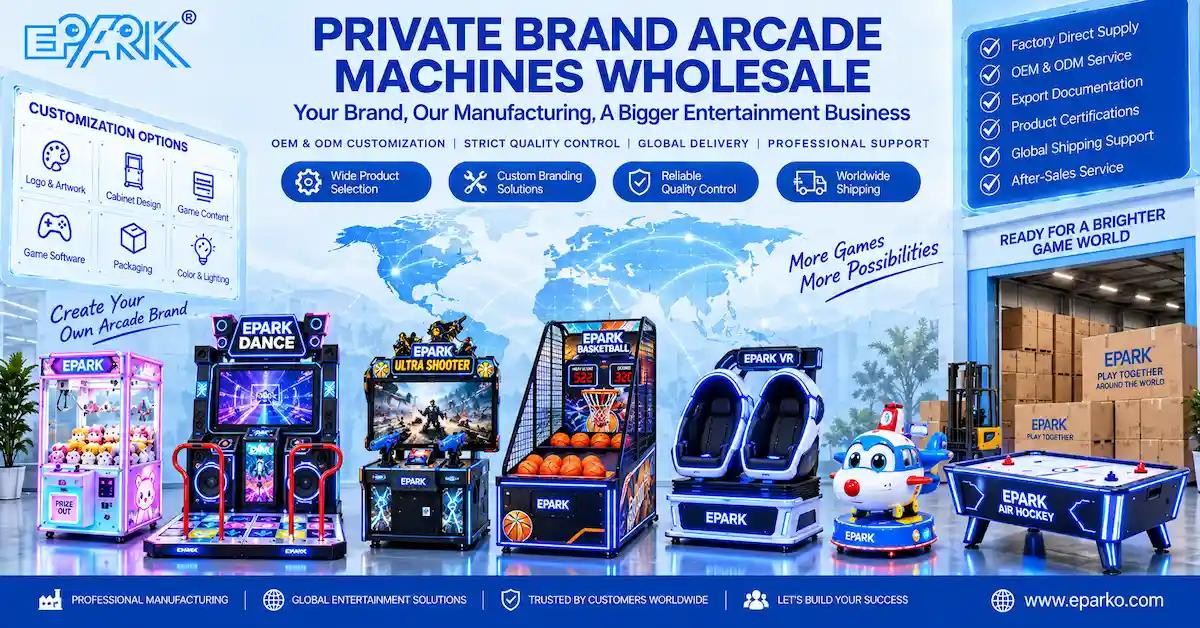
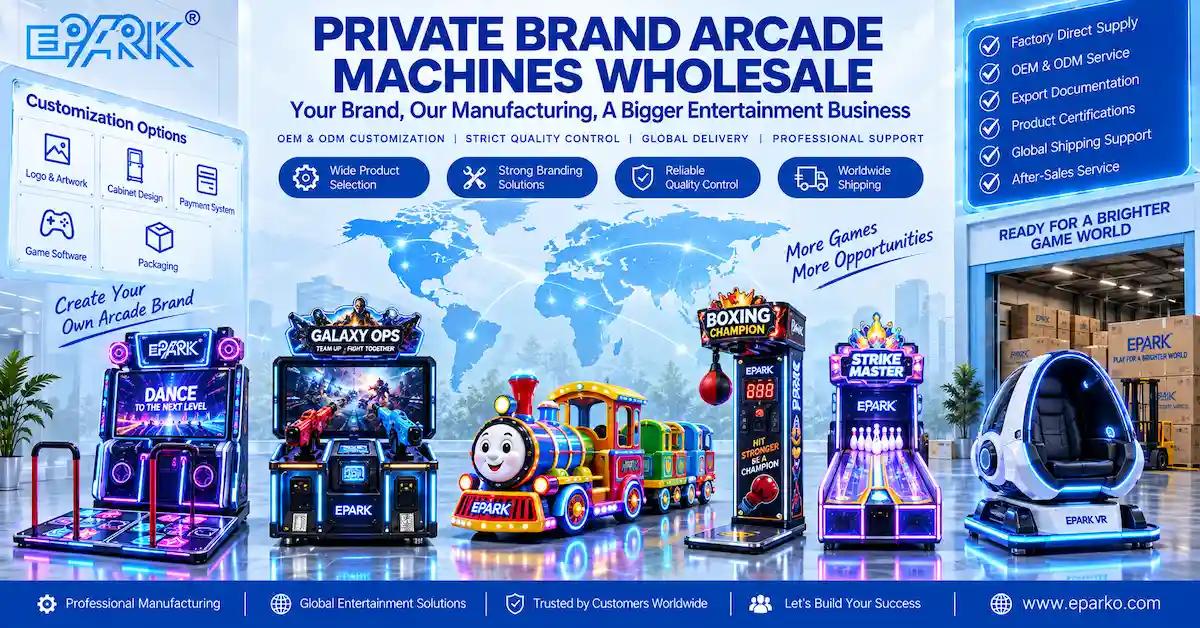
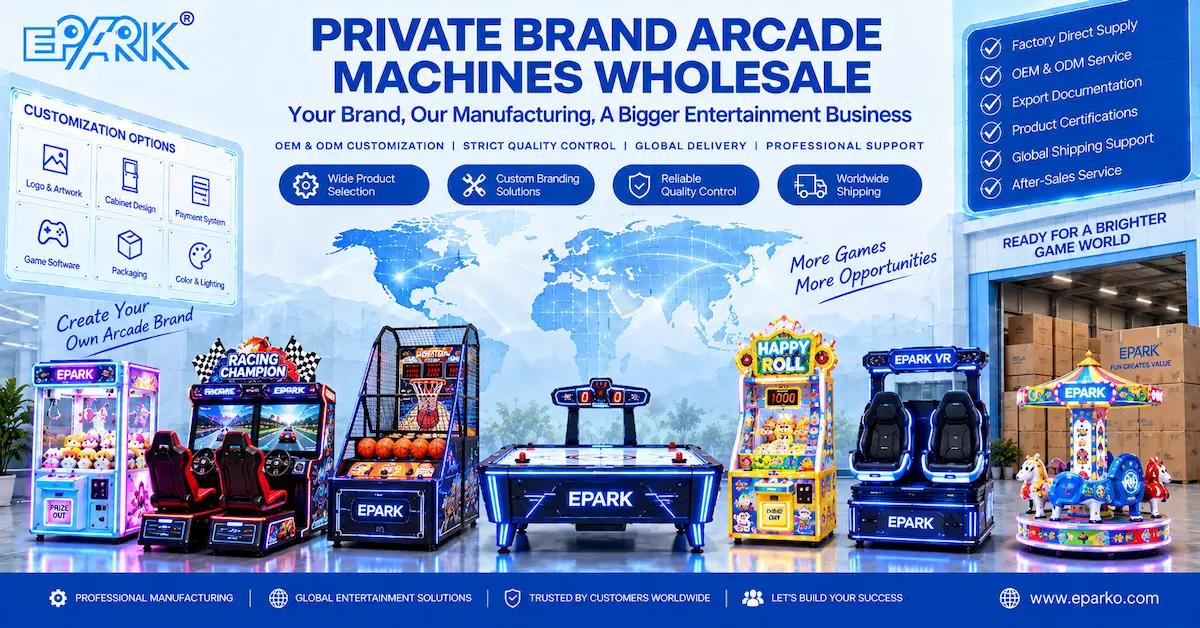
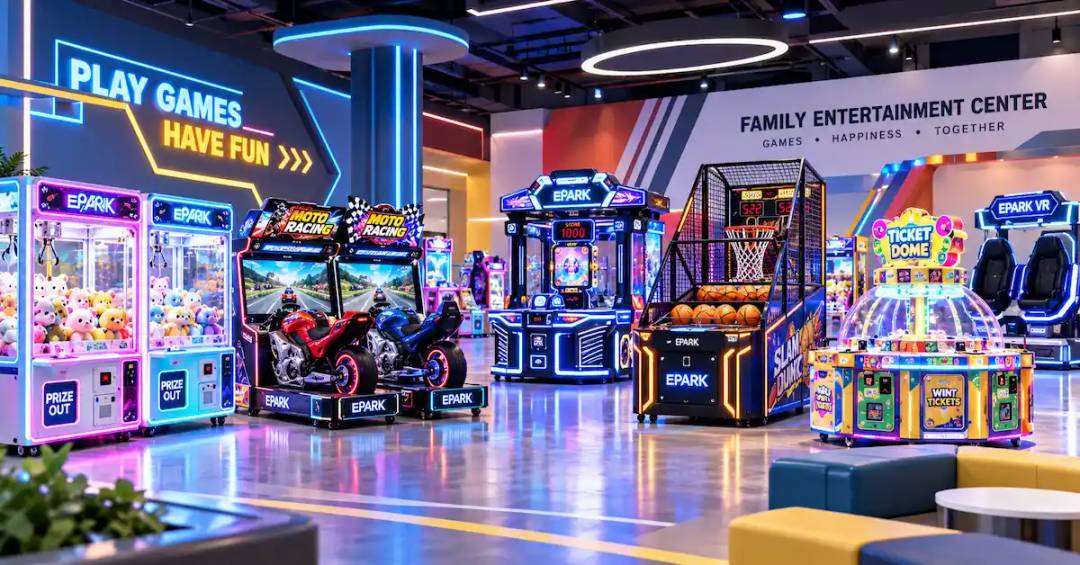
A mixed arcade container normally refers to one shipment containing several arcade machine types or models rather than filling the container with one standardized SKU. An FEC project might combine claw machines, racing games, basketball machines, redemption equipment, shooting games, VR simulators, and kiddie rides in one shipment. A distributor might instead combine trial quantities from several product families so it can test local demand without ordering a full container of each machine.
For buyers sourcing mixed container arcade machines, the commercial challenge is not simply fitting as many cabinets as possible into a container. Different machines have different packed dimensions, weights, fragile areas, detachable structures, accessories, installation sequences, and maintenance requirements. The equipment mix therefore needs to be planned together with packing and receiving.
Buyers can first review EPARK commercial arcade machines and identify the machine categories required for the venue before requesting a mixed-container calculation.
Who Benefits Most From a Mixed Arcade Equipment Container?
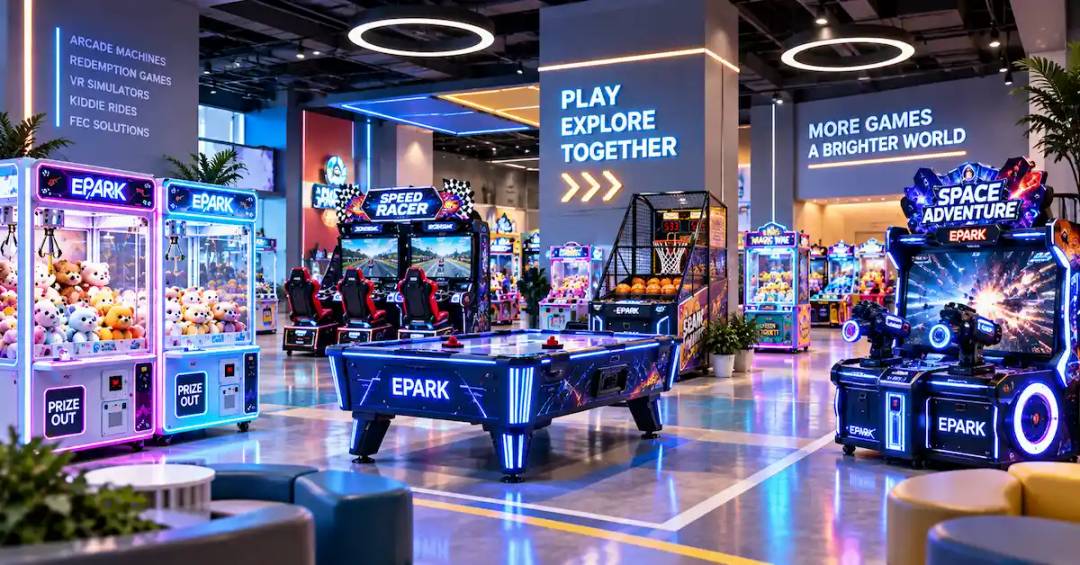
Mixed loading is particularly relevant to new FECs because a complete venue rarely operates with only one game category. A new operator may need prize attractions, competitive games, family products, sports machines, and immersive equipment in one opening shipment.
Distributors can also use mixed containers when building inventory. Instead of carrying a large quantity of one machine before local demand is understood, they can distribute purchasing volume across several categories. Arcade chains may use a mixed shipment for a new location or expansion where only selected quantities from each product family are required.
However, mixed loading is not automatically appropriate for every buyer. If a distributor repeatedly sells one standardized machine in high quantities, a homogeneous shipment may simplify production, warehousing, spare-parts planning, and container loading. The purchasing decision should therefore begin with demand rather than freight utilization alone.
Build the Machine Mix Around the FEC Business Model
A container should not determine the product mix. The venue should determine the product mix, and the loading plan should then be developed around the approved equipment schedule.
| Machine Category | Commercial Role | Important Order Considerations | Mixed-Container Concern |
|---|---|---|---|
| Claw Machines | Prize attraction | Prize area, payment system, refill access | Transparent surfaces and cabinet protection |
| Racing Games | Competitive seated play | Seats, steering, pedals, displays | Seat/cabinet package configuration |
| Redemption Games | Skill and reward play | Scoring, ticket/point system | Accessories and reward-system configuration |
| Basketball Games | Sports entertainment | Frame, sensors, player clearance | Large detachable structures |
| Shooting Games | Interactive skill play | Controllers, displays, calibration | Controller protection |
| VR / Simulators | Premium attraction | Hardware, software, controls | Sensitive components and accessories |
| Kiddie Rides | Family areas | Operating cycle and intended users | Irregular cabinet shapes |
For a new venue, use the EPARK FEC equipment range to shortlist products first. The loading plan should come after model selection.
Create a Mixed Container Equipment Schedule Before Asking “How Many Fit?”
The question “How many arcade machines fit in a container?” cannot be answered accurately from machine count alone. Buyers need package-level information.
Create a planning table containing at least:
| Planning Field | What Should Be Recorded |
|---|---|
| Buyer SKU | Distributor or project product code |
| Factory Model | Manufacturing reference |
| Quantity | Units ordered |
| Assembled Size | Venue planning |
| Packed Size | Container planning |
| Net Weight | Machine reference |
| Gross Weight | Shipping and handling |
| Package Count | One or multiple packages per machine |
| Detachable Parts | Seat, frame, header, etc. |
| Accessories | Keys, cables, hardware, manuals |
| Spare Parts | Service components included |
| Package Number | Receiving traceability |
Do not calculate container requirements using assembled machine dimensions if the supplier ships the equipment in a different packing configuration.
Use Packed Dimensions Instead of Catalog Dimensions
The assembled dimensions shown on a product page describe how the machine occupies a venue. Freight planning needs the actual packed dimensions.
For a rectangular package, nominal package volume can be calculated as:
Length × Width × Height = CBM
when all measurements are converted to meters.
For example, the total nominal volume of a mixed order can be calculated by adding the CBM of every package. However, nominal CBM is not the same as guaranteed usable container capacity. Cabinet shape, package orientation, doors, protective spacing, handling access, weight distribution, and loading restrictions affect the final plan.
This is why a supplier should calculate from the actual packing list rather than advertise a universal number such as “X arcade machines per container.”
EPARK’s arcade machine container loading service guide can be used when discussing package-level loading preparation.
Compare Mixed Container, Single-Model Container, and LCL Purchasing
Different purchasing structures solve different problems.
| Shipping Approach | Typical Use | Main Advantage | Buyer Must Control |
|---|---|---|---|
| Mixed-Model Container | FEC openings or distributor assortment | Several categories in one shipment | Package planning and identification |
| Single-Model Container | High-volume repeat SKU | Simple loading and inventory control | Demand and inventory exposure |
| LCL / Consolidated Cargo | Smaller trial orders | Lower initial shipment quantity | Additional handling and consolidation |
| Staged Shipments | Large projects with different readiness dates | Flexible project scheduling | Multiple freight and receiving events |
The comparison should not be reduced to freight rate alone. Consider receiving complexity, project schedule, inventory, handling, installation sequence, and the commercial value of the machine mix.
Plan the Container Around Packages, Not Machines
A basketball machine may represent one commercial product but several transport packages. A racing machine may ship with its seat separated from the main cabinet. A decorative header or accessory kit may also travel independently.
If ten machines create sixteen packages, the shipping plan should be based on sixteen packages.
Every package should remain connected to:
order → buyer SKU → factory model → machine unit → package number
This is especially important for mixed shipments because visually similar cartons can belong to different machine categories.
A simple package code such as “Model A / Unit 03 / Package 2 of 3” is far more useful during destination receiving than an unidentified carton.
Coordinate Heavy, Fragile, and Irregular Equipment Before Loading
Mixed arcade shipments may combine compact cabinets with taller sports equipment, machines containing transparent panels, heavy seated simulators, and irregularly shaped attractions. These differences need to be considered during packing and professional container loading.
The buyer should ask for confirmation of:
- Final packed dimensions
- Gross weight per package
- Package orientation requirements
- Detachable sections
- Fragile or transparent areas
- Handling requirements
- Loading sequence
- Package identification
The objective is not maximum theoretical volume utilization. The objective is a shipment that can be transported and unloaded without creating unnecessary equipment damage or receiving confusion.
Use One QC Process Before Machines Enter Export Packing
For mixed container arcade machines, quality problems become more expensive after packing because equipment may be positioned deep inside a loaded container and transported internationally before the defect is discovered.
The order should therefore complete functional and configuration checks before final packing.
Functional Testing
Where applicable, test:
- Payment recognition
- Credit registration
- Game startup
- Buttons and controls
- Steering and pedals
- Display
- Audio
- Sensors
- Scoring
- Prize or ticket functions
- Mechanical movements
- Reset behavior
Configuration Verification
Confirm the model, payment hardware, artwork, language, software settings where relevant, accessories, and custom requirements.
Appearance Inspection
Check cabinet surfaces, transparent sections, graphics, lights, doors, locks, and obvious transport-sensitive areas.
EPARK’s Design & Process can be used as the starting point when discussing production and pre-shipment inspection.
Match Spare Parts to the Mixed Equipment List
A mixed FEC shipment creates a more complex spare-parts requirement than a container containing one standardized model.
Do not ask only for “one set of arcade spare parts.” Instead, build the spare list from the actual machine categories.
Potential parts can include:
- Buttons
- Joysticks
- Payment devices
- Sensors
- Switches
- Power supplies
- Control boards
- Cables
- Motors
- Locks
- Machine-specific mechanisms
High-impact or commonly serviceable components can be prioritized according to machine quantity, local technician capability, operational importance, and future replenishment time.
Keep every spare-part reference linked to the compatible machine model. Buyers can discuss service requirements through EPARK Service.
Decide Where Spare Parts and Accessories Will Be Packed
Accessories and service components are easy to lose in a mixed shipment when they are inserted into whichever cabinet has available space.
Before packing, decide where keys, cables, hardware, manuals, spare parts, card readers, detachable decorations, and installation components will be placed.
The packing list can identify:
Machine / Package → Included Accessories → Spare Parts → Quantity
For larger projects, an independent accessory or spare-parts package may be easier to receive than distributing critical items randomly among many cabinets.
The correct solution depends on the actual shipment, but the destination team should know where every important item is located before unloading begins.
Align the Packing List With the Physical Shipment
A mixed container creates more opportunities for documentation errors because several machine models and package types appear in one shipment.
The commercial order, invoice, packing list, and actual packages should use consistent product references and quantities. If one machine has three packages, the packing information should not make it appear to be three separate machines.
A practical packing record may include:
- Buyer SKU
- Product description
- Factory model
- Unit quantity
- Number of packages
- Package dimensions
- Net weight
- Gross weight
- Package identification
For broader documentation planning, buyers can review EPARK’s arcade machine export documentation guide.
Use Package Photos and Loading Records for Receiving Control
Container loading records can help buyers verify what actually entered the shipment.
Depending on the project, useful records can include photos of the finished packages, package labels, loading stages, container condition, final loaded arrangement, and shipment identification.
These records are not substitutes for transport documents or insurance procedures. Their practical value is traceability: when the destination warehouse receives the container, the team has a reference showing the package arrangement and appearance before departure.
For distributor orders, these records can also help reconcile received stock against the purchase order.
Plan the Loading Sequence With Destination Installation in Mind
Container loading is primarily a transport and safety task and should be finalized by competent logistics personnel, but the buyer can still provide useful project information.
If equipment will be delivered directly to an FEC under construction, explain the intended installation sequence. A venue may want certain machines or equipment zones available earlier than others.
However, installation convenience should not override safe loading, weight distribution, package protection, or professional logistics requirements. The final physical arrangement should remain subject to the appropriate loading team.
Understand How OEM Customization Changes Mixed Container Planning
A mixed shipment becomes more complex when the order contains several private-label or OEM versions.
Different machines may carry:
- Distributor SKU
- Customized artwork
- Market-specific payment system
- Different language
- Branded packaging
- Special accessory packs
Keep those revisions clearly identified.
For example, two claw machines with the same factory cabinet but different payment systems should not rely only on exterior appearance for identification. Package labels should connect each machine to the correct commercial configuration.
Buyers considering branded equipment can also review EPARK’s Why Choose Us when defining OEM/ODM requirements.
Estimate Mixed Container Cost Beyond Freight
Freight utilization is important, but the lowest cost per container is not necessarily the lowest project cost.
Consider:
| Cost Area | Buyer Consideration |
|---|---|
| Equipment | Is the machine mix commercially appropriate? |
| Customization | Are branding/configuration charges included? |
| Packing | Does special equipment require additional protection? |
| Spare Parts | Are starter components included? |
| Freight | What transport scope is quoted? |
| Destination Handling | What happens after arrival? |
| Assembly | Which products require reassembly? |
| Technical Support | What setup assistance is available? |
| Inventory | Is each model ordered in a commercially useful quantity? |
Adding an unsuitable machine simply because an empty loading space exists does not automatically create better container economics.
Avoid Filling Empty Space With Low-Priority Machines
One of the biggest commercial mistakes in mixed-container purchasing is allowing container utilization to become the product-selection strategy.
If the initial plan leaves unused space, buyers may be tempted to add unrelated equipment only because it fits. This increases inventory and maintenance complexity while potentially adding machines that do not fit the venue or distributor market.
A better sequence is:
commercial requirement → approved product mix → packing optimization
rather than:
container size → fill every remaining space → hope products sell
A few percentage points of unused volume can be less costly than carrying poorly selected inventory.
How Should Buyers Compare Mixed-Container Suppliers?
| Supplier Area | Weak Approach | Stronger Approach |
|---|---|---|
| Product Mix | “Choose anything from catalog” | Machines matched to venue/business |
| Dimensions | Assembled dimensions only | Final packed dimensions |
| Loading | Estimated machine count | Package-level loading plan |
| Identification | Generic carton labels | SKU/model/package traceability |
| QC | Basic power-on test | Order-specific functional inspection |
| Accessories | Packed wherever convenient | Recorded accessory locations |
| Spare Parts | Generic kit | Model-specific parts plan |
| Documents | Basic machine list | Shipment-aligned packing information |
| OEM | Graphics only | Revision-controlled configuration |
| Receiving | Buyer handles after arrival | Pre-shipment records support receiving |
A good mixed-container supplier should help reduce complexity instead of merely maximizing the number of machines loaded.
What Should You Send EPARK for a Mixed Container Quote?
For an FEC project, prepare the destination, venue area, floor plan where available, target players, desired machine categories, payment system, quantities, branding requirements, local maintenance capability, and target opening schedule.
For a distributor, provide the target market, desired categories, target quantities or budget, private-label requirements where applicable, warehouse constraints, and expected repeat-order strategy.
EPARK can then use the equipment schedule to discuss model selection and packing requirements. Start with EPARK Products, then submit the planned mixed order through Contact Us.
The most useful request is not “How many machines can you put in one container?” It is “Here is the equipment mix we need—how should the models, packages, spare parts, and shipment be organized?”
Frequently Asked Questions
1. What Are Mixed Container Arcade Machines?
The term generally describes a container shipment containing multiple arcade machine models or categories rather than one uniform product. It is commonly relevant to FEC projects and distributors requiring varied equipment.
2. Is a Mixed Container Suitable for a New FEC?
It can be practical because a new FEC often needs several game categories. Machine selection should still follow the venue plan rather than container capacity alone.
3. How Many Arcade Machines Can Fit Into One Container?
There is no reliable universal number. Capacity depends on final packed dimensions, package count, gross weight, machine shape, loading arrangement, and handling requirements.
4. Should I Use Assembled Dimensions to Calculate Container Space?
No. Use final packed dimensions because machines may be partially disassembled or have multiple shipping packages.
5. Can Racing, Claw, Basketball, and VR Machines Ship Together?
Different categories can be considered in one mixed shipment when packing, dimensions, weight, handling, protection, and loading requirements allow it. The actual plan must be based on the selected equipment.
6. How Should Mixed Arcade Machines Be Identified?
Use buyer SKU, factory model, machine/unit reference, and package number. Multi-package products should clearly show which packages belong together.
7. Should Spare Parts Be Included in the Same Container?
For many commercial orders this is practical, but the parts should be selected by machine model and their package location should be recorded.
8. How Should Buyers Inspect Machines Before Container Loading?
Complete functional, configuration, cosmetic, accessory, and packing checks before loading. Any corrected fault should be retested before shipment.
9. Are Mixed Containers Always More Cost Effective?
Not necessarily. They can help combine several required products into one shipment, but buyers should also consider inventory, packing, handling, installation, and operational requirements.
10. How Can I Request a Mixed Arcade Machine Container Plan?
Review EPARK arcade equipment and send the destination, machine categories, quantities, payment requirements, customization, and venue or distribution requirements through EPARK Contact Us.
Conclusion
Planning mixed container arcade machines requires more than calculating how many cabinets can physically fit inside a container. FEC operators and distributors should begin with the commercial equipment mix, obtain actual packed dimensions and package counts, complete machine-level QC, identify accessories and spare parts, align shipment documents with the physical cargo, and maintain clear model and package traceability through destination receiving.
A well-planned mixed shipment can combine different attractions while keeping purchasing, logistics, installation, and maintenance manageable. Review EPARK commercial arcade equipment or contact EPARK with your destination, equipment categories, quantities, payment requirements, customization needs, and project schedule to discuss an order-specific mixed-container arcade equipment plan.
Disclaimer
The information provided on this website is for general informational purposes only.
While EPARK Arcade Game Machine Manufacturer strives to ensure accuracy and reliability, no warranties—express or implied—are made regarding completeness, performance, or applicability.
Product specifications, designs, and features may vary depending on usage, customization, and customer requirements.
Buyers are responsible for verifying all technical details, compliance certifications, and suitability before procurement.
EPARK shall not be held liable for any direct, indirect, incidental, or consequential damages arising from the use of this website or its content, including but not limited to business losses, data errors, or equipment misuse.
For tailored solutions or further verification, please visit our Contact Us
Intellectual Property Notice
All articles, product images, videos, catalogs, software, and related materials published on this website are the intellectual property of EPARK, unless otherwise stated.
Unauthorized reproduction, distribution, modification, or commercial use of any content is strictly prohibited without prior written consent from EPARK.
EPARK reserves the right to take legal action against any unauthorized use, including but not limited to copyright infringement, misrepresentation, or unfair competition.
Trademarks
The name EPARK, the EPARK logo, and all related brand elements displayed on this website are registered trademarks or trade names of Guangzhou EPARK Electronic Technology Co., Ltd.
Other product names, company names, or logos mentioned on this site may be trademarks of their respective owners.
Unauthorized use of EPARK's trademarks for commercial purposes, including advertising, promotions, or product packaging, is strictly prohibited.
Governing Law
These terms are governed by the laws of the People's Republic of China.