

What Should an Arcade Machine Container Loading Service Include?
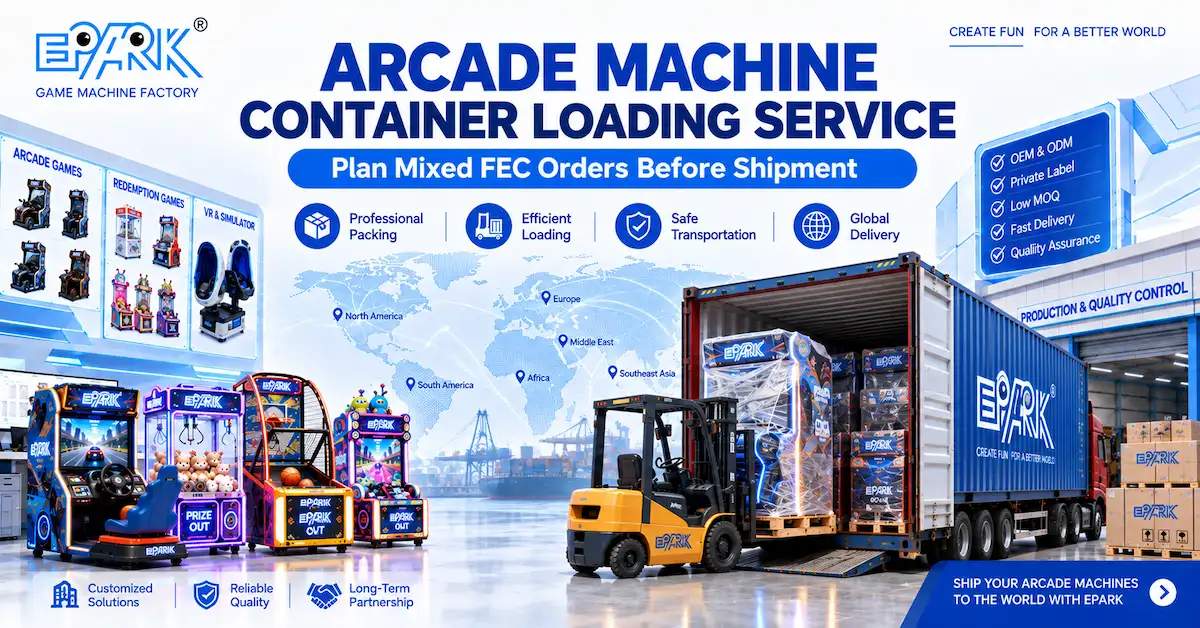
An arcade machine container loading service should connect the approved equipment order with a practical packing plan, loading arrangement, and documented shipment handover. Buyers should expect more than confirmation that the machines have entered a container: the proposal should identify package dimensions, handling requirements, protective materials, responsibility for cargo securing, and the records supplied after loading. EPARK describes export packaging and logistics coordination in its production-to-delivery process. For your order, confirm which activities are included and which require separate arrangements with a freight forwarder or destination contractor. The checkpoints below are purchasing recommendations; the final packaging, handling, and service scope must be agreed for the actual shipment.
Match the Loading Arrangement to Your Buying Situation
For distributors, the priority may be repeatable packaging, identifiable model configurations, and clear allocation of machines to different customers. For a new family entertainment center, or FEC, the priority is coordinating different equipment types with their accessories and installation requirements. A mall expansion may require delivery in phases rather than one complete shipment. These situations call for different loading plans, even when the total machine count is similar. Start with the intended arcade equipment and venue solutions, then discuss the shipping arrangement. For a small trial order, ask your forwarder to compare shared-container and dedicated-container options rather than selecting a full container automatically. For equipment purchased from several suppliers, establish who accepts, inspects, stores, and loads the additional goods; do not assume a factory automatically provides third-party consolidation.
What EPARK’s Published Container Shipment Demonstrates
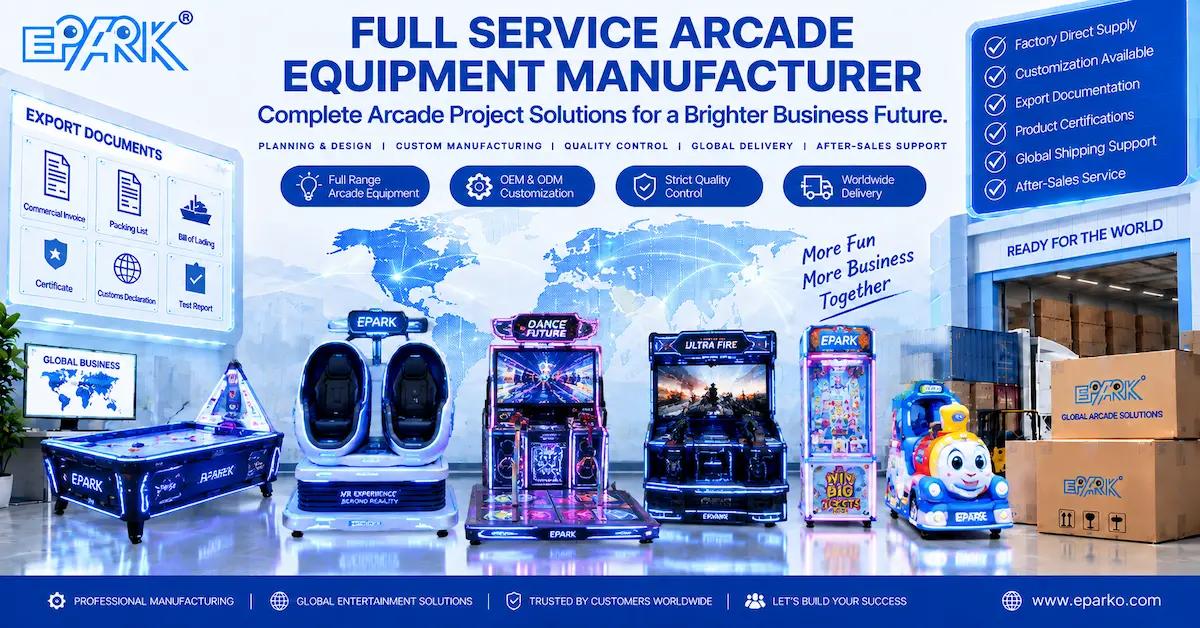
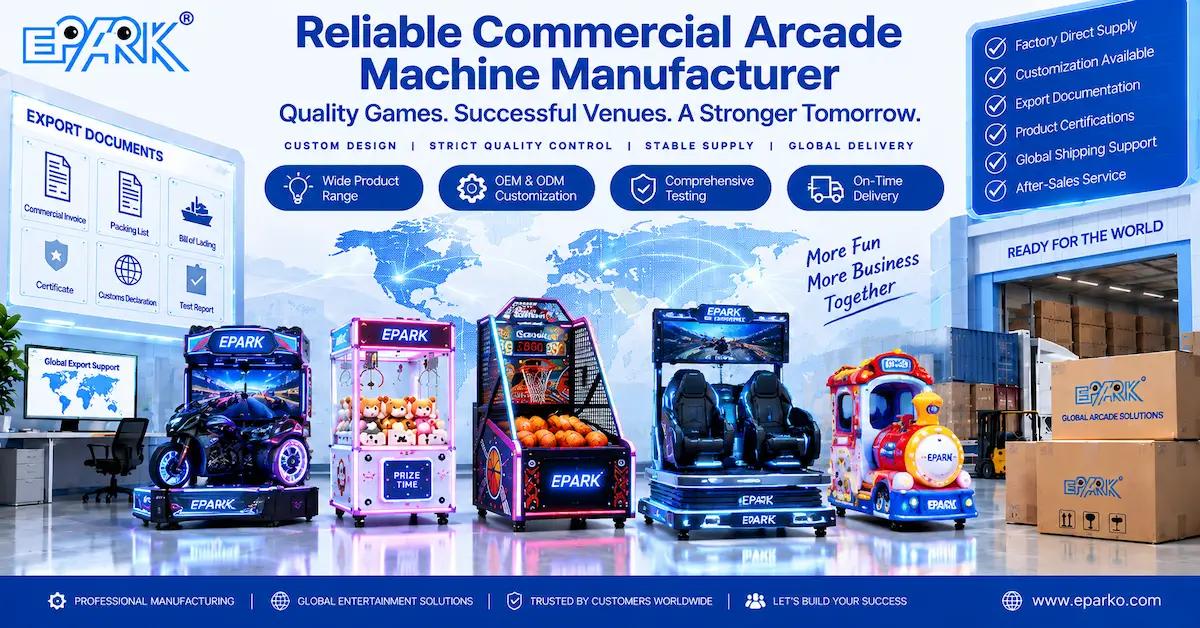
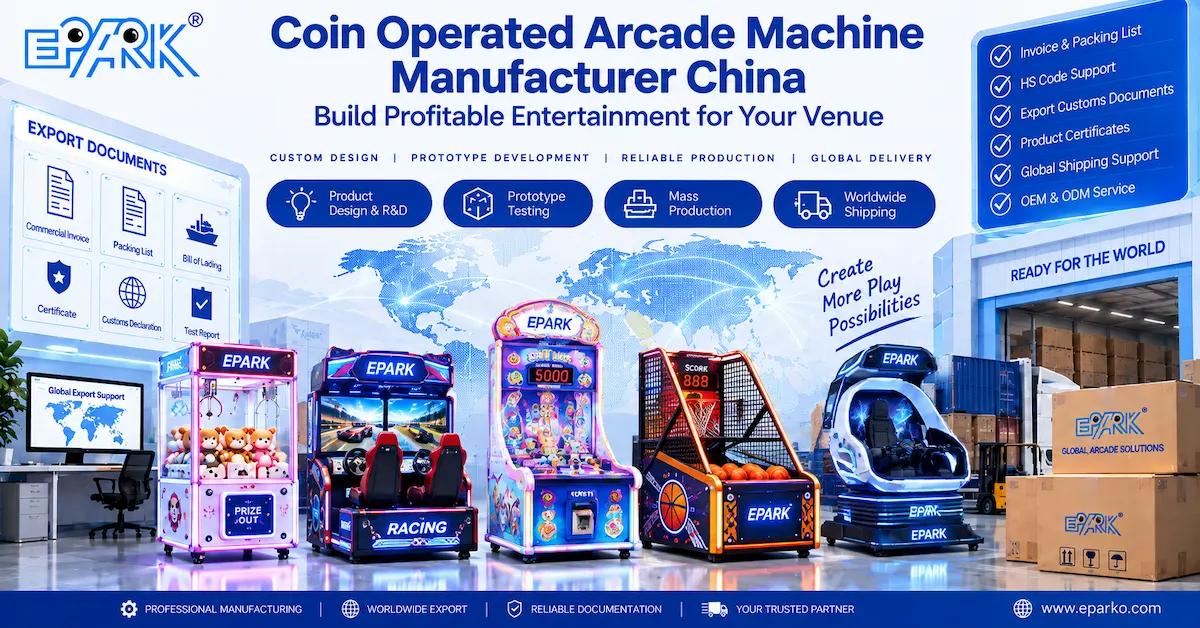
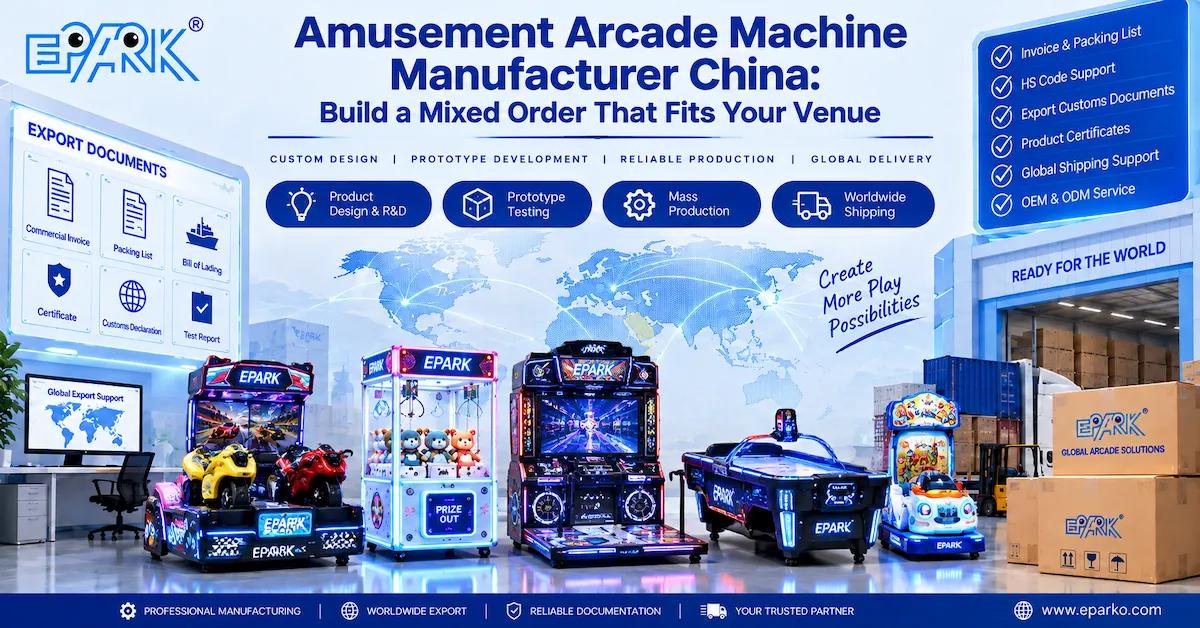
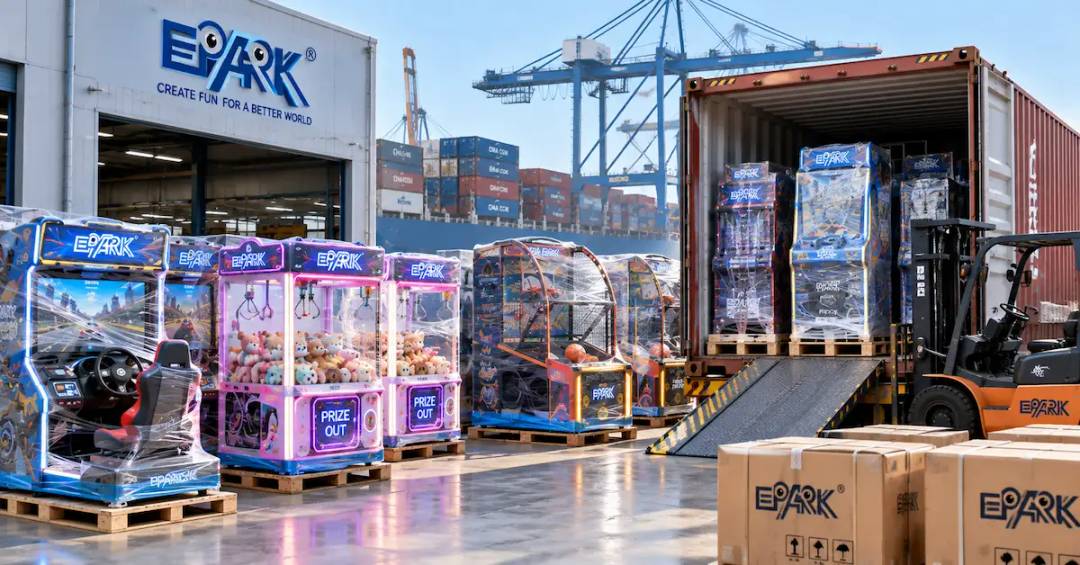
EPARK’s published 40HQ shipment to Qatar provides a specific example of mixed-equipment container loading. The company reports dispatching a container to Hamad Port on November 27, 2025, with an order including shooting games, redemption machines, sports games, claw machines, and driving simulators. Its account describes foam cushioning, moisture-resistant wrapping, outer cartons, wooden frames for fragile units, and recording the loading process through final sealing. For buyers, the useful point is the connection between the equipment mix, packaging, and loading records. This is a company-reported shipment example—not a universal capacity chart, a standard packing specification for every model, or a guarantee that another order will follow the same schedule.
Build a Packed-Machine Specification Sheet Before Selecting a Container
The most useful starting document for an arcade machine container loading service is a packed-equipment schedule, not a showroom catalog. Ask for information corresponding to the exact models, configurations, and packaging approved for your order. A machine’s operating dimensions and shipping dimensions should be recorded separately, particularly when seats, display headers, cages, or other assemblies may be removed for transport. EPARK’s basketball arcade equipment guide specifically recommends confirming packing dimensions, net and gross weights, package counts, and container-loading estimates. Use the worksheet below to organize that discussion; it lists information to obtain rather than unverified EPARK specifications.
| Specification | Order-Specific Information to Confirm | Planning Question It Answers |
|---|---|---|
| Model and configuration | Model reference, approved version, quantity, and customization | Does the loading plan match the purchased equipment? |
| Packed dimensions | Length, width, and height, including the pallet, frame, or crate | What space does each shipping package require? |
| Package count | Number of packages per machine and total packages | Does one machine arrive as one package or several? |
| Weight | Net equipment weight and gross packed weight | What weight must the handling and transport arrangements accommodate? |
| Packed volume | Cubic meters calculated from the external package dimensions | What is the initial volume estimate? |
| Shipping format | Fully assembled or approved partially disassembled configuration | What assembly remains at the destination? |
| Handling information | Approved support points, handling method, and equipment requirements | How should the package be moved without improvisation? |
| Orientation and stacking | Permitted transport position and any documented stacking restrictions | Which loading arrangements are acceptable? |
| Accessories and removed parts | Package references for keys, cables, fixings, manuals, and other supplied items | Can the receiving team locate everything needed for setup? |
| Identification | Package marks linked to the machine, order, and destination | Can each package be reconciled with the packing list? |
Why Cubic Meters Do Not Determine the Final Machine Count
Packed volume is a useful first calculation, but it is not a complete loading plan. For illustration only, a rectangular package measuring 1.00 × 0.90 × 2.10 meters occupies 1.89 cubic meters; ten identical packages total 18.9 cubic meters. These are hypothetical dimensions, not an EPARK model specification. The calculation alone does not establish whether the packages clear the container doorway, fit the available floor arrangement, permit stacking, or leave room for the agreed securing measures. When comparing a 20-foot, 40-foot, or 40-foot high-cube container, request the actual equipment dimensions and loading constraints from the forwarder. Approve a package-by-package arrangement, not a machine-count estimate based only on total volume.
Compare Packing Requirements Across the Equipment Mix
Do not approve a single description such as “standard arcade packaging” without understanding what it means for each selected machine. For a mixed shipment, use the comparison below to identify model-specific questions. These are review points, not claims that every machine includes the listed components or supports the same disassembly method.
| Equipment Type | Components or Structures to Review | Packing Questions to Resolve | Destination Preparation |
|---|---|---|---|
| Claw and prize machines | Display panels, cabinet corners, doors, and internal moving assemblies | What protection and manufacturer-approved transport preparation are required? | Locate keys and instructions for removing any transport restraints |
| Basketball machines | Cage, backboard, ramp, upper frame, and scoreboard | Does the selected model ship assembled or in approved sections? | Match sections, fixings, and assembly instructions |
| Racing machines | Display cabinet, seat, controls, and connecting assemblies | Which parts remain attached, and how are separated parts identified? | Confirm reconnection, positioning, and functional checks |
| VR and motion equipment | Headsets, screens, controllers, seats, and motion components where fitted | What model-specific transport preparation and accessory protection are required? | Follow the approved unpacking and setup procedure |
| Redemption and sports games | Displays, access doors, game mechanisms, and supplied accessories | How are exposed components protected and loose items accounted for? | Reconcile accessories and test the relevant game functions |
Evaluate Packaging Materials and Packing Workmanship Together
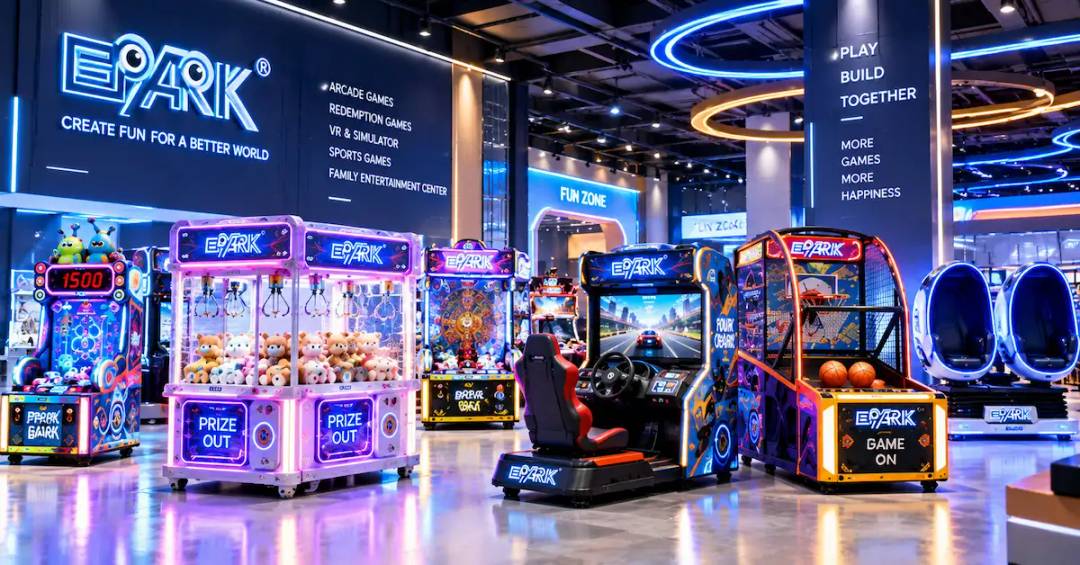
EPARK’s export packaging process describes bubble wrap, foam protection, wooden frame or crate reinforcement, and film wrapping for sea shipment. Confirm the combination proposed for each machine rather than assuming every unit receives identical packaging. Ask for photographs showing the protected equipment before the outer packaging is closed, together with views of the base, corners, and any separately packed assemblies. Review whether the packaging matches the agreed transport orientation and whether handling instructions remain visible. A material list alone does not answer how the package was assembled, what supports the machine, or which areas must remain free from pressure. Have the packing provider explain those details for the selected configuration.
Separate Moisture Protection from Cargo Securing
Ask for two distinct explanations: how the packing arrangement addresses moisture exposure and how the loaded packages are prevented from moving. Do not accept “wrapped for sea freight” as the answer to both questions. Have the responsible packing team assess the route, expected storage conditions, packaging materials, and any additional moisture-control measures. Separately, require competent loading personnel to confirm the securing arrangement, approved contact points, and suitability of the materials used. For wooden packaging, ask the forwarder to confirm destination acceptance and any required supporting documentation before packing is finalized. Avoid prescribing a universal number of straps, wooden braces, or moisture-absorbing packs without a shipment-specific assessment.
Approve the Container and Loading Sequence Before Work Starts
Before the arcade machine container loading service begins, assign responsibility for inspecting the empty container and recording its identification and condition. Ask the loading team to review the floor, doors, visible damage, cleanliness, and suitability for the shipment, then confirm the planned package positions and handling access. Weight distribution, package support, securing arrangements, and safe unloading should be reviewed by personnel competent to assess the actual load. The buyer’s role is to require a documented plan and clear responsibilities, not to design the securing arrangement remotely from product photographs. Any late change to the machine list or packaging should trigger a review before loading continues. Do not prioritize squeezing in another cabinet over the approved handling and securing requirements.
Use Separate Acceptance Checks for Testing, Packing, and Loading
Treat functional testing, packaging inspection, and loading verification as three separate checks. EPARK states that machines undergo a 48-hour full-operation test before shipment, covering gameplay, electrical safety, lighting, and mechanical performance. Request records relevant to your order rather than relying only on the general process description. After testing, verify that the approved configuration and accessories are reflected in the packing records. During loading, verify that the packages correspond to the loading plan and that any changes are documented. Where product conformity documents are required, obtain documents applicable to the selected models and destination. A successful gameplay test does not, by itself, verify the packaging or cargo-securing arrangement.
Request a Loading Record the Receiving Team Can Use
For your arcade machine container loading service, agree on a record set covering package identification, packing-list reconciliation, photographs before closure, relevant loading-stage images, the final arrangement, and container and seal details. Ask who will supply these records and when the buyer can review them. For multiple containers, identify which packages belong to each container rather than issuing only one combined equipment list. Link accessory cartons and removed assemblies to their parent machines. Have the nominated forwarder confirm the transport documents and weight information needed for the booking. A closed-door photograph alone gives the receiving team little help locating a missing component or understanding how the shipment was arranged.
Confirm OEM Changes Before Finalizing Packaging and Timing
EPARK describes OEM and ODM manufacturing support for global brands, distributors, and entertainment-center buyers in its manufacturing and customization FAQ. For a customized order, approve the final configuration before treating the loading estimate as fixed. Ask the team to review changes involving cabinet dimensions, display headers, seat assemblies, payment hardware, or branded accessories for their effect on package size, package count, and assembly requirements. Then coordinate production completion, testing, packing, container availability, and the loading appointment as separate milestones. Request an order-specific schedule rather than assuming a previous shipment’s timing applies. A dispatch target should not be treated as a confirmed delivery or opening date.
Compare the Total Shipping Scope, Not Only the Loading Charge
When comparing quotations for an arcade machine container loading service, request an itemized scope covering the work relevant to your shipment. Separate machine packaging, additional reinforcement, loading labor, handling equipment, securing materials, documentation, freight, and destination services where applicable. Identify who pays for changes, repacking, storage, additional handling, or a rescheduled loading appointment. Also confirm whether insurance is arranged, what coverage is selected, and who handles a claim; logistics support should not be interpreted as automatic insurance inclusion. Assess proposed savings against the work transferred to the receiving team. For example, a partially disassembled format deserves comparison not only by packed volume but also by its additional package count, local assembly requirements, and documentation needs.
Plan Destination Unloading Before the Container Is Sealed
Work backward from the receiving location. Provide the supplier and forwarder with information about delivery access, unloading facilities, available handling equipment, storage space, and the route into the venue. Ask the receiving contractor to review packed dimensions and weights before confirming its resources. For phased installations, discuss whether the loading arrangement can support the preferred unloading sequence without compromising the approved load plan. Send manuals and package maps electronically before arrival, and identify where physical keys and assembly hardware are packed. EPARK’s installation support information describes remote guidance, setup manuals, and operation guides; confirm the assistance appropriate to your equipment order. Unloading, unpacking, reassembly, and operational testing should each have an assigned owner.
Prepare a Shipment-Specific Request for EPARK
To discuss an arcade machine container loading service with EPARK, provide your proposed machine list, quantities, approved or requested customization, destination port or delivery location, target shipping window, and receiving-site conditions. State whether you already have a freight forwarder and whether the order is intended for one venue, several customer locations, or distributor inventory. Request a proposal that separates confirmed packing arrangements, preliminary loading estimates, included services, exclusions, and information still awaiting approval. EPARK’s project service overview can help frame the discussion, but the final shipment scope should be recorded against your actual order. Where equipment selection is still changing, request an initial estimate followed by an updated plan after the configuration is approved.
Frequently Asked Questions
1. What Is an Arcade Machine Container Loading Service?
For procurement purposes, define it as the agreed work connecting packed machines with their container shipment: preparation, loading planning, physical placement, cargo securing, and shipment records. Confirm the scope in writing because packaging, freight, insurance, and destination unloading may be handled separately.
2. Can Different Arcade Machine Types Travel in One Container?
EPARK’s published Qatar shipment is an example of a mixed-machine container order. For a new shipment, request a loading assessment using the actual packed dimensions, weights, handling restrictions, and equipment mix rather than assuming every combination will fit.
3. How Many Arcade Machines Fit in a 40HQ Container?
There is no reliable universal count for mixed arcade equipment. Request a package-level plan using the approved shipping configurations and the actual container constraints. Machine quantity should follow that assessment, not a generic number copied from a different order.
4. Should I Choose a 20-Foot, 40-Foot, or High-Cube Container?
Ask the forwarder and loading team to compare the options against your packed-equipment schedule. Require confirmation of doorway clearance, internal arrangement, weight constraints, securing space, availability, and destination handling before choosing solely on the quoted freight amount.
5. Can Machines Be Partially Disassembled to Save Space?
Ask whether the selected model has a manufacturer-approved shipping configuration that allows it. Request revised packed dimensions, the complete package count, parts identification, and assembly instructions before evaluating the saving. Do not authorize unplanned dismantling merely to complete a load.
6. Does Every Machine Need a Wooden Crate?
Do not assume one packaging format suits every machine. Ask EPARK to specify the proposed protection and reinforcement for each model, taking account of its shipping configuration and route. Confirm the approved packaging in the order documents rather than relying on a general description.
7. Can EPARK Work with My Freight Forwarder?
Include your forwarder’s details in the shipment inquiry and request confirmation of the coordination arrangement. Assign booking communication, container delivery, loading appointments, document preparation, and post-loading handover to named parties before dispatch.
8. Are Shipping Insurance and Customs Clearance Included?
Check the quotation and shipping agreement. Request a clear statement of what is included, optional, or handled by the buyer’s appointed provider. Do not assume that a loading charge includes insurance, destination clearance, taxes, local delivery, or unloading.
9. What Should I Do When the Container Arrives?
Have the receiving team follow the agreed unloading procedure, reconcile the packages with the records, and document visible discrepancies. Retain relevant packaging and photographs when reporting an issue. Coordinate inspection and testing with the supplier before putting affected equipment into operation.
10. What Information Is Needed for a Loading Estimate?
Provide the machine models, quantities, customization details, destination, preferred shipping window, and available receiving facilities. Identify any separately purchased goods proposed for consolidation. Treat the estimate as preliminary until the final packed dimensions, weights, and package counts are confirmed.
Conclusion
A well-defined arcade machine container loading service begins before the container reaches the factory. It connects the approved equipment configuration with suitable packaging, a reviewed loading arrangement, traceable shipment records, and a workable destination handover. For distributors and FEC buyers, the goal is not simply to load more machines; it is to know what is being shipped, how it is prepared, who is responsible, and what the receiving team needs to complete setup. Contact EPARK to discuss your container shipment with your machine list, destination, shipping window, and unloading conditions, and request an order-specific packing and loading proposal.
Disclaimer
The information provided on this website is for general informational purposes only.
While EPARK Arcade Game Machine Manufacturer strives to ensure accuracy and reliability, no warranties—express or implied—are made regarding completeness, performance, or applicability.
Product specifications, designs, and features may vary depending on usage, customization, and customer requirements.
Buyers are responsible for verifying all technical details, compliance certifications, and suitability before procurement.
EPARK shall not be held liable for any direct, indirect, incidental, or consequential damages arising from the use of this website or its content, including but not limited to business losses, data errors, or equipment misuse.
For tailored solutions or further verification, please visit our Contact Us
Intellectual Property Notice
All articles, product images, videos, catalogs, software, and related materials published on this website are the intellectual property of EPARK, unless otherwise stated.
Unauthorized reproduction, distribution, modification, or commercial use of any content is strictly prohibited without prior written consent from EPARK.
EPARK reserves the right to take legal action against any unauthorized use, including but not limited to copyright infringement, misrepresentation, or unfair competition.
Trademarks
The name EPARK, the EPARK logo, and all related brand elements displayed on this website are registered trademarks or trade names of Guangzhou EPARK Electronic Technology Co., Ltd.
Other product names, company names, or logos mentioned on this site may be trademarks of their respective owners.
Unauthorized use of EPARK's trademarks for commercial purposes, including advertising, promotions, or product packaging, is strictly prohibited.
Governing Law
These terms are governed by the laws of the People's Republic of China.