
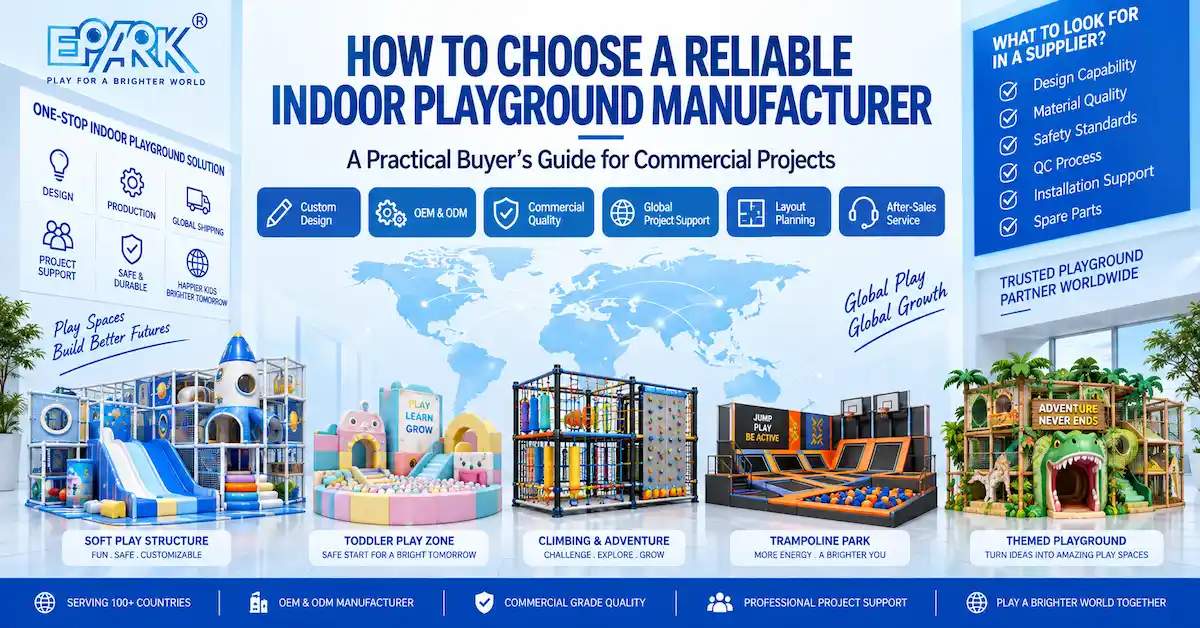
Start With Your Playground Project, Not the Supplier’s Catalog
One of the most common purchasing mistakes is asking manufacturers for a price before defining the project.
Two indoor playgrounds with the same floor area may require very different equipment.
A 150 m² hotel kids' area designed mainly for younger children is different from a 500 m² family entertainment center intended to keep children and parents on-site for several hours. Ceiling height, columns, fire exits, entrances, supervision lines, age groups, expected capacity, and theme all influence the final design.
Before contacting an indoor playground manufacturer, prepare at least:
-
Venue length, width, and ceiling height
-
Accurate floor plan
-
Column and wall positions
-
Entrances and emergency exits
-
Target age groups
-
Expected visitor capacity
-
Preferred activities
-
Theme or brand direction
-
Installation country
-
Desired opening date
-
Approximate project budget
-
Local installation resources
A detailed project brief allows manufacturers to recommend a solution based on actual operating conditions instead of sending a generic equipment list.
Buyers planning a mixed entertainment venue can first review the different EPARK product and project solution categories to understand how playground equipment can be combined with other commercial amusement products.
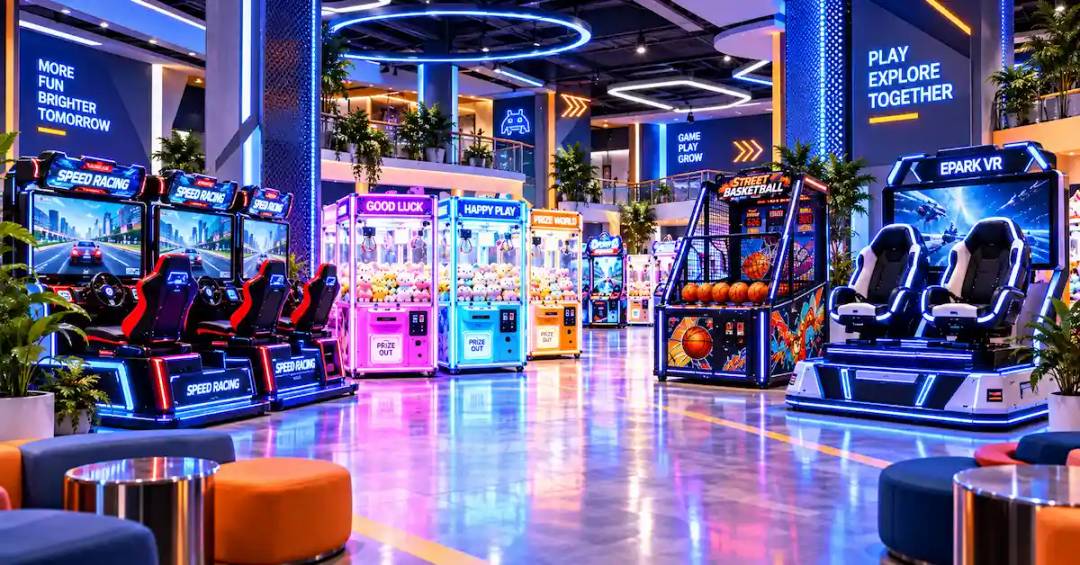
1. Evaluate Design Capability Before Comparing Prices
For customized playground projects, design quality directly affects manufacturing quality.
An attractive rendering is useful, but it should not be the only basis for approving a project. A professional manufacturer should be able to move from concept design to a layout that reflects the actual dimensions and restrictions of the venue.
Check Whether the Manufacturer Designs Around the Real Site
A reliable design process should consider:
-
Actual floor dimensions
-
Ceiling restrictions
-
Structural columns
-
Entrances and exits
-
Player circulation
-
Parent supervision
-
Different age zones
-
Maintenance access
-
Equipment clearances
-
Installation sequence
Ask how the supplier handles changes between the initial concept and final production drawings.
The stronger manufacturers will have a controlled approval process rather than changing specifications informally through chat messages.
Ask for 2D and 3D Information
A 3D rendering helps visualize colors, themes, structures, and the overall customer experience.
However, buyers should also request practical layout information that can support:
-
Equipment positioning
-
Site preparation
-
Installation planning
-
Electrical planning where required
-
Space verification
-
Contractor coordination
If a manufacturer can only provide an attractive visual rendering but cannot explain how the structure will fit the actual venue, further technical verification is needed.
2. Check Whether the Design Matches the Target Age Group
A commercial indoor playground should not be designed as one undifferentiated play area.
A toddler area has different requirements from a zone intended for older children.
For example, a younger-child zone may emphasize:
-
Lower play heights
-
Soft climbing elements
-
Sensory activities
-
Small slides
-
Soft obstacles
-
Clear supervision
-
Separation from faster-moving older children
Older children may require more challenging climbing, obstacle, interactive, or adventure elements.
This distinction matters commercially as well as operationally. If every attraction is designed for the same user group, families with children of different ages may find fewer reasons to stay.
For projects focused specifically on younger users, the EPARK soft play equipment for toddlers guide provides additional considerations for age-appropriate layouts, materials, supervision, and commercial applications.
3. Compare Material Specifications, Not Just Product Photos
Two playgrounds can look nearly identical in photographs but use very different materials underneath the decorative surfaces.
A reliable indoor playground manufacturer should be willing to explain the material specification for important components.
| Component | What Buyers Should Verify | Why It Matters |
|---|---|---|
| Structural frame | Material, dimensions, connections, surface treatment | Influences structural reliability and long-term use |
| Soft padding | Foam type, thickness, covering, stitching | Affects protection, appearance, and maintenance |
| Netting | Material, mesh design, connection method | Important for containment and routine inspection |
| Plastic components | Material, finish, wall quality | Influences durability and appearance |
| Slides | Material, finish, connection details | Affects user experience and maintenance |
| Flooring | Type, cushioning, joining method | Important for frequently used activity zones |
| Hardware | Fasteners, connectors, covers | Influences assembly and maintenance |
| Decorative elements | Material and mounting method | Affects theme durability and replacement |
Do not accept descriptions such as “high-quality material” without asking what that means for the actual project.
A better quotation or specification should make the agreed material level traceable before production begins.
4. Verify Safety Requirements for the Destination Market
Safety should be treated as a technical verification process, not as a marketing statement.
Different countries and project types may have different standards, regulations, building requirements, fire requirements, accessibility rules, and inspection practices.
For example, ASTM F1918 is a recognized safety performance specification for soft contained play equipment in the U.S. market. Other destinations may apply different standards or additional local requirements.
The purchasing question should therefore not be:
“Is your playground certified?”
It should be:
“Which standard applies to this project, which version is being used, what product scope does it cover, and what supporting documentation can you provide?”
Ask the manufacturer to clarify:
-
Applicable standard or regulation
-
Product scope covered
-
Test report scope
-
Material documentation
-
Structural requirements
-
Age or user limitations
-
Fire-related requirements where applicable
-
Installation requirements
-
Inspection responsibilities
-
Local approvals that remain the buyer’s responsibility
Be cautious with broad claims such as “CE approved,” “ASTM approved,” or “internationally certified” when there is no clear relationship between the document, product configuration, test scope, and destination market.
A reliable supplier should be comfortable discussing what its documentation does and does not cover.
5. Review Manufacturing Capability, Not Only the Sales Team
An indoor playground project can involve many different processes and components.
The buyer should understand how an approved design becomes a finished shipment.
A typical workflow may include:
Design Approval → Material Preparation → Component Production → Structural Processing → Soft-Part Production → Trial Assembly or Verification → QC → Packaging → Loading Preparation
Ask the manufacturer to explain:
-
Which processes are completed in-house?
-
Which components are outsourced?
-
How incoming materials are checked
-
How design revisions reach production
-
How components are identified
-
What is inspected during production
-
What is checked before packing
-
How missing or incorrect parts are prevented
-
How repeat-order specifications are controlled
EPARK describes its business as integrating R&D, design, production, and sales while also providing customization and project support. Buyers who want to understand the broader manufacturing and service structure can review About EPARK and its manufacturer selection information.
6. Ask for a Defined Quality-Control Process
“Strict quality control” is not enough information for a commercial buyer.
You need to know what is inspected, when it is inspected, and how problems are recorded.
A useful QC plan should cover relevant areas such as:
Incoming Material Verification
Confirm whether important materials match the approved specification before production.
Structural and Component Inspection
Check dimensions, connections, finishing, padding, stitching, netting, hardware, and component consistency.
Design Verification
Confirm that produced components correspond with the approved layout, colors, theme, equipment list, and revision.
Pre-Shipment Inspection
Verify quantities, appearance, accessories, installation components, package labels, documents, and spare parts before loading.
For large customized projects, buyers may also request photos, videos, inspection records, or third-party inspection depending on order value and risk.
The objective is not to create unnecessary paperwork. It is to prevent a problem discovered during installation thousands of kilometers away.
7. Evaluate OEM and Customization Capability Carefully
Customization can be valuable for:
-
FEC chains
-
Shopping mall projects
-
Indoor playground brands
-
Distributors
-
Hotels and resorts
-
Franchise concepts
-
Themed entertainment venues
However, “customization” can mean anything from changing colors to redesigning an entire venue.
Before selecting an OEM indoor playground manufacturer, identify exactly what can be customized.
Common areas include:
-
Theme
-
Color palette
-
Layout
-
Activity combination
-
Entrance design
-
Decorative graphics
-
Brand logo
-
Zone design
-
Age-group configuration
-
Selected structural elements
-
Combination with other amusement equipment
A reliable manufacturer should also establish a design freeze or final approval point before production.
Late design changes can affect materials, production schedules, package plans, installation instructions, and cost.
Buyers requiring extensive private-label or project customization can also review the OEM indoor playground manufacturer guide before preparing their inquiry.
8. Check Installation Support Before You Place the Order
Installation problems are often created much earlier than the installation stage.
Poor package identification, unclear drawings, undocumented design changes, or missing hardware can turn an otherwise acceptable playground into a difficult site project.
Before production is completed, confirm:
-
Installation drawing format
-
Assembly instructions
-
Component numbering
-
Package numbering
-
Hardware identification
-
Required tools
-
Installation sequence
-
Site preparation responsibilities
-
Remote technical support
-
Whether on-site support is available
-
Expected local labor requirements
Large playground components should be packed so that the installation team can identify where each part belongs.
Ask whether package labels correspond with drawings or component codes. This can save significant time when dozens or hundreds of components arrive at the site.
9. Evaluate Maintenance and Spare-Part Support
Commercial playground equipment is not maintenance-free.
Daily use means operators need a practical inspection and maintenance routine.
Areas requiring regular attention may include:
-
Netting
-
Ropes or webbing
-
Soft covers
-
Flooring
-
Fasteners
-
Connections
-
Slides
-
Moving or interactive elements
-
High-wear entry points
-
Decorative components
The supplier should help buyers identify common wear parts and explain how replacements can be ordered.
Before purchasing, ask:
Can replacement components be matched to the original project several years later?
This is particularly important for distributors and multi-location operators.
A supplier that keeps project drawings, component references, colors, material specifications, and revision information can make future maintenance much easier than one that relies only on photographs of the original project.
10. Compare the Total Project Cost, Not Only the Equipment Price
The lowest quotation is not always the lowest-cost project.
Commercial buyers should compare the complete cost structure.
| Cost Area | Questions to Ask |
|---|---|
| Equipment | What structures and activities are included? |
| Design | Is layout or theme development included? |
| Customization | Which changes create additional cost? |
| Materials | Are quoted material levels comparable? |
| Packaging | How are large and small components protected and identified? |
| Shipping | What volume and loading assumptions are used? |
| Installation | What local labor, tools, or technicians are required? |
| Spare parts | Are initial replacement items included or recommended? |
| Maintenance | Which materials or components may require periodic replacement? |
| After-sales | What support is included after delivery? |
A cheaper quotation can become expensive if it excludes important structures, requires extensive local modification, creates higher freight volume, or lacks installation support.
For importers comparing Chinese suppliers, the indoor playground supplier guide provides additional guidance on specifications, packaging, shipping, installation, and purchasing risks.
11. Test the Manufacturer’s Communication Before Ordering
Communication quality is part of manufacturing quality.
Customized playground projects involve many decisions. Sales, design, production, QC, logistics, installation, and the customer may all need to work from the same information.
Before placing a deposit, observe how the supplier handles questions.
A reliable partner should be able to:
-
Identify missing project information
-
Explain technical limitations
-
Distinguish confirmed specifications from suggestions
-
Record design revisions
-
Answer questions with specific information
-
Explain what requires additional confirmation
-
Avoid promising unsupported capabilities
-
Provide realistic next steps
One useful test is to change one project requirement—such as ceiling height, age group, capacity, or theme—and see whether the manufacturer explains the consequences rather than simply saying “no problem.”
Good manufacturers do not agree with everything. They identify constraints before those constraints become expensive problems.
12. Use a Manufacturer Evaluation Scorecard
Instead of choosing a supplier based on one factor, compare candidates using a weighted evaluation.
| Evaluation Area | Suggested Weight |
|---|---|
| Design and layout capability | 15% |
| Safety and compliance understanding | 15% |
| Material specification | 15% |
| Manufacturing and QC | 15% |
| Project experience | 10% |
| Customization capability | 10% |
| Installation support | 8% |
| Packaging and logistics | 5% |
| After-sales and spare parts | 5% |
| Price | 2% |
The exact weights can change depending on the project.
For a distributor, manufacturing consistency and repeat orders may deserve more weight. For a new FEC investor, design, project planning, and installation may be more important. For a branded chain, customization and specification control may become critical.
The important principle is simple:
Price should be part of supplier evaluation, not the entire evaluation.
13. Red Flags When Choosing an Indoor Playground Manufacturer
Several warning signs deserve further investigation.
Be cautious when a supplier:
-
Quotes without asking for venue dimensions
-
Cannot explain material specifications
-
Provides only renderings without practical layout information
-
Makes broad safety claims without defining scope
-
Cannot explain its QC process
-
Frequently changes technical answers
-
Has no clear drawing approval process
-
Cannot explain packaging identification
-
Gives an unrealistic production schedule without reviewing complexity
-
Does not discuss installation until after production
-
Cannot explain future spare-part support
One red flag alone does not automatically disqualify a supplier. But several combined usually indicate that project control may be weak.
14. What Should You Send an Indoor Playground Manufacturer for a Serious Quote?
A useful RFQ should allow the manufacturer to understand the project rather than guess.
Send:
-
Country and project location
-
Venue type
-
Floor plan with dimensions
-
Ceiling height
-
Columns, entrances, and exits
-
Target age groups
-
Expected visitor capacity
-
Preferred playground activities
-
Theme or brand requirements
-
Budget range if available
-
Required compliance information
-
Target installation or opening date
-
Delivery destination
-
Available local installation resources
If you are still in the early planning stage, that is acceptable. Clearly identify which information is confirmed and which remains flexible.
EPARK's published project examples include indoor playground and mixed soft-play concepts at different venue sizes, while its service model includes layout and project planning. Buyers with an active project can submit the floor plan and project requirements through the EPARK contact page for a more specific proposal.
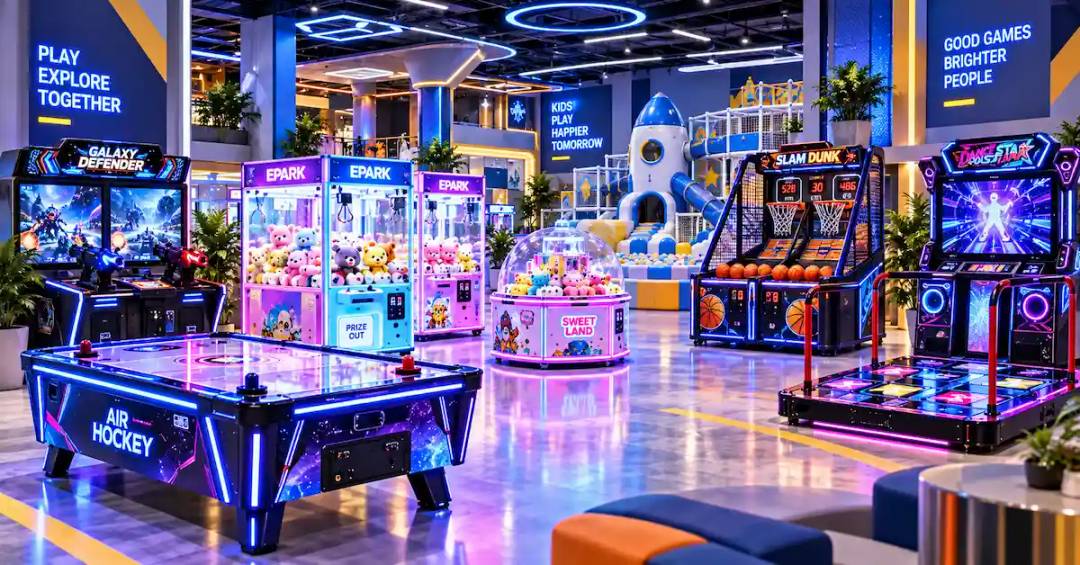
Frequently Asked Questions
1. What Does an Indoor Playground Manufacturer Do?
An indoor playground manufacturer can support the design, material preparation, production, customization, quality inspection, packaging, and delivery preparation of commercial indoor playground equipment. Depending on the supplier, services may also include layout planning, installation guidance, branding, and after-sales support.
2. How Do I Know if an Indoor Playground Manufacturer Is Reliable?
Evaluate the supplier's design process, material specifications, safety knowledge, manufacturing capability, quality-control procedures, project documentation, installation support, spare parts, and communication. Do not evaluate reliability based on price or product photos alone.
3. What Information Should I Provide Before Requesting a Quote?
Provide the floor plan, dimensions, ceiling height, target age group, expected capacity, preferred activities, theme, destination market, budget range, target schedule, and installation requirements.
4. Can Indoor Playground Equipment Be Customized?
Yes. Depending on the manufacturer, customization may include layout, colors, themes, branding, entrances, decorative elements, equipment combinations, and selected structural features.
5. What Materials Should Buyers Check?
Important areas include the structural frame, soft padding, protective covers, netting, plastic components, slides, flooring, hardware, and decorative parts. Request actual specifications rather than accepting generic claims such as “premium materials.”
6. What Safety Standards Apply to Indoor Playground Equipment?
Requirements depend on the type of playground and destination market. For example, ASTM F1918 covers soft contained play equipment within its defined scope in the U.S. Buyers should confirm the applicable standard, version, test scope, local regulations, and documentation for their specific project.
7. How Long Does an Indoor Playground Project Take?
There is no single standard timeline. Project duration depends on design complexity, drawing approval, customization, materials, production capacity, inspection, packaging, shipping, and installation. Buyers should request a project-specific schedule rather than relying on a generic lead-time promise.
8. Should Buyers Visit the Factory Before Ordering?
A factory visit can be useful for larger projects because it helps buyers understand production processes, QC, materials, communication, and manufacturing capacity. When a visit is not practical, buyers can request factory videos, project records, inspection documentation, video meetings, or third-party inspections.
9. What Spare Parts Should Be Ordered With a Playground?
The answer depends on the equipment configuration. Buyers should ask the manufacturer to identify high-wear or easily replaceable components, matching soft materials, hardware, decorative elements, and other parts that may be useful for future maintenance.
10. Is the Cheapest Indoor Playground Manufacturer a Good Choice?
Not necessarily. Commercial buyers should compare total project value, including design quality, materials, compliance support, manufacturing consistency, QC, packaging, shipping, installation, maintenance, and after-sales service. A lower initial equipment price can lead to higher total costs if important project requirements are omitted.
Conclusion
Choosing a reliable indoor playground manufacturer means evaluating the complete project system—not just playground appearance or unit price. The strongest purchasing decisions are based on verified design capability, clear material specifications, market-appropriate safety requirements, controlled manufacturing and QC, organized packaging, installation support, and long-term maintenance planning.
Before requesting a final quotation, prepare your floor plan, ceiling height, target age groups, capacity, theme, destination, timeline, and installation requirements. If you are planning a commercial indoor playground, FEC, shopping mall kids' zone, hotel play area, or customized family entertainment project, you can contact EPARK with these details to evaluate a suitable layout and equipment solution.
Disclaimer
The information provided on this website is for general informational purposes only.
While EPARK Arcade Game Machine Manufacturer strives to ensure accuracy and reliability, no warranties—express or implied—are made regarding completeness, performance, or applicability.
Product specifications, designs, and features may vary depending on usage, customization, and customer requirements.
Buyers are responsible for verifying all technical details, compliance certifications, and suitability before procurement.
EPARK shall not be held liable for any direct, indirect, incidental, or consequential damages arising from the use of this website or its content, including but not limited to business losses, data errors, or equipment misuse.
For tailored solutions or further verification, please visit our Contact Us
Intellectual Property Notice
All articles, product images, videos, catalogs, software, and related materials published on this website are the intellectual property of EPARK, unless otherwise stated.
Unauthorized reproduction, distribution, modification, or commercial use of any content is strictly prohibited without prior written consent from EPARK.
EPARK reserves the right to take legal action against any unauthorized use, including but not limited to copyright infringement, misrepresentation, or unfair competition.
Trademarks
The name EPARK, the EPARK logo, and all related brand elements displayed on this website are registered trademarks or trade names of Guangzhou EPARK Electronic Technology Co., Ltd.
Other product names, company names, or logos mentioned on this site may be trademarks of their respective owners.
Unauthorized use of EPARK's trademarks for commercial purposes, including advertising, promotions, or product packaging, is strictly prohibited.
Governing Law
These terms are governed by the laws of the People's Republic of China.