

Quick answer: test a balanced portfolio, not a catalogue
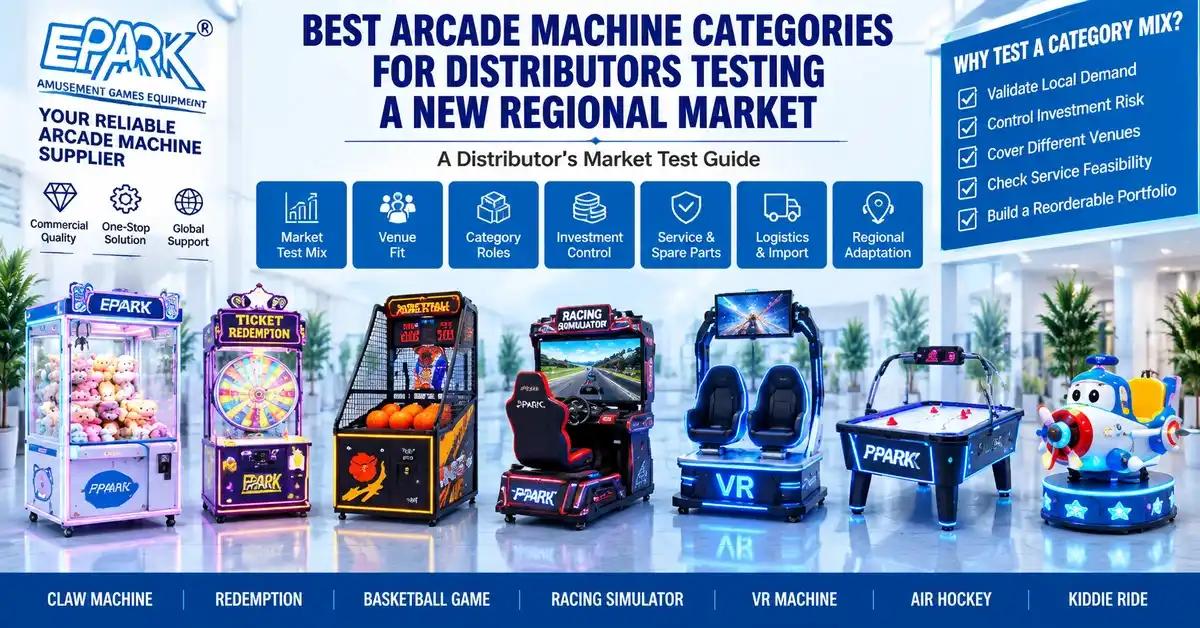
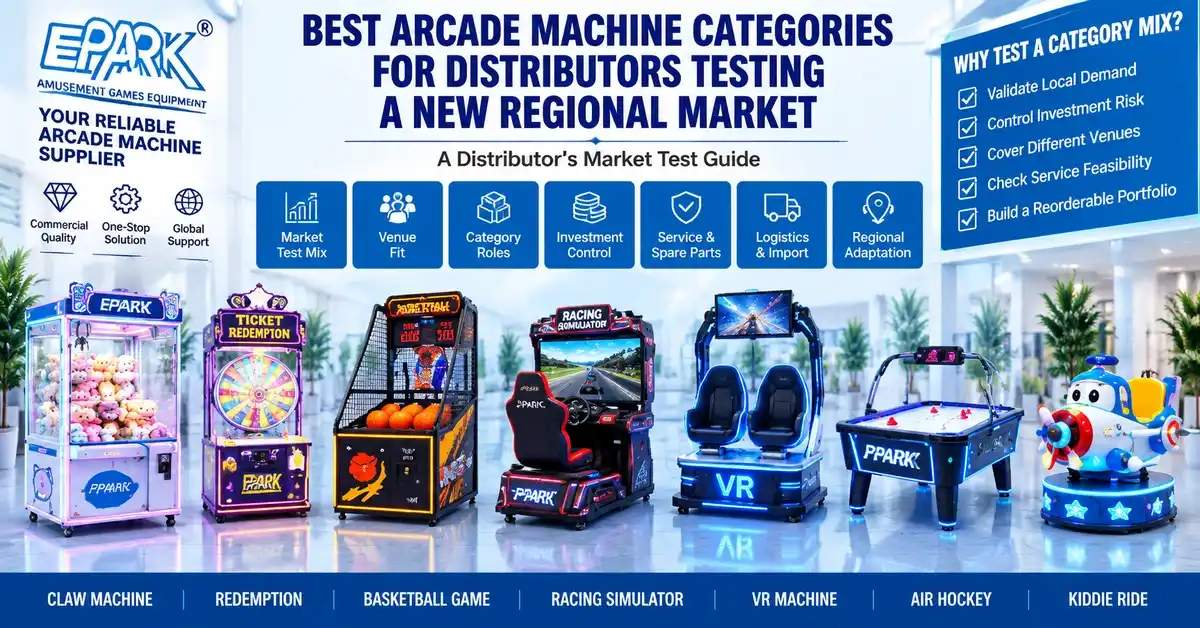
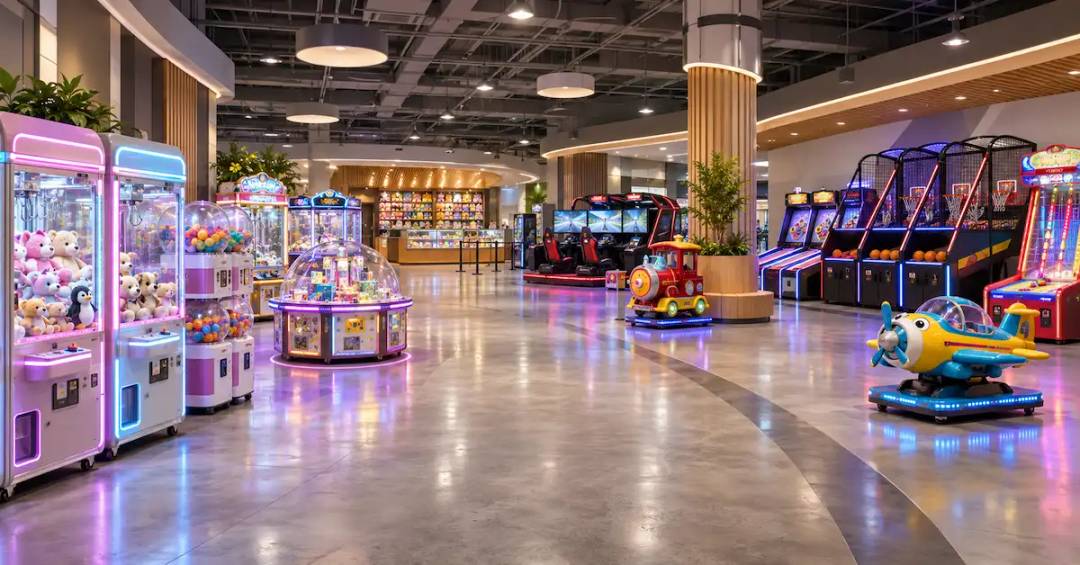
The best arcade machine categories for distributors testing a new regional market are the categories that let you learn demand, price sensitivity, service burden and venue fit without locking cash into one unproven format. A practical first-market portfolio usually combines a visible, easy-to-explain category such as claw or prize machines; a repeat-play category such as redemption; a social skill category such as basketball or air hockey; and one attention anchor such as racing or VR when the region can support the space, power and technical service. The exact mix should be adjusted to the target venues, age groups, payment habits, import rules and local repair capability.
A new-market distributor does not need the largest catalogue. It needs a controlled test that answers commercial questions: Which category attracts operators? Which cabinet fits local sites? Which payment method is accepted? Which parts can be serviced locally? Which machines can be reordered without changing the configuration? The first order should therefore be designed as a learning portfolio, not as a miniature version of a mature arcade.
Define what the market test must prove
Before choosing categories, write down the decisions the first shipment must support. A distributor may be testing whether independent arcades will buy equipment, whether shopping malls will accept a compact entertainment zone, whether FEC operators want a family mix, or whether local resellers can sell a repeatable cabinet package. Each question points to a different portfolio.
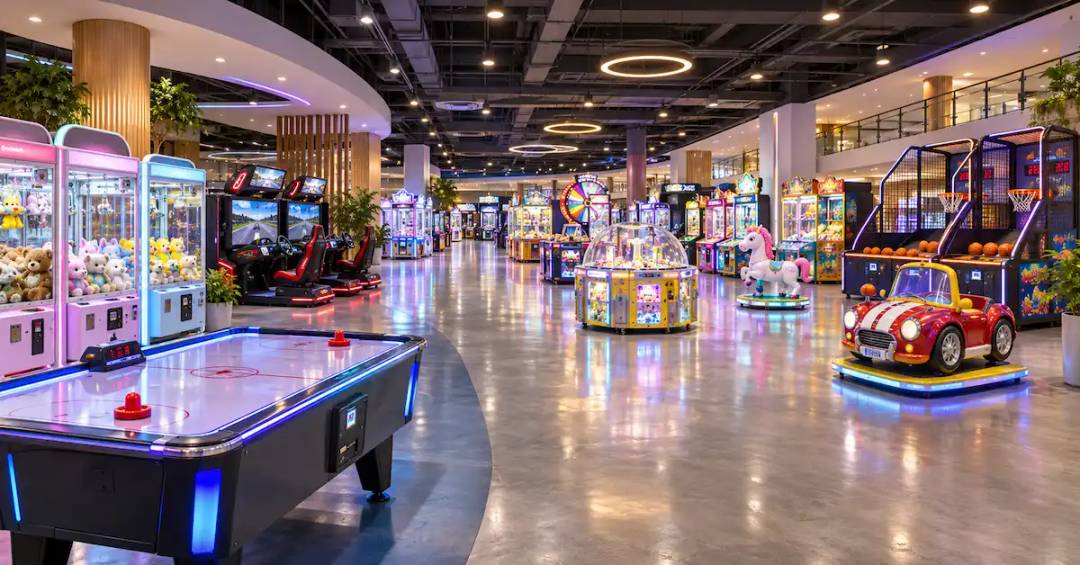
For example, a distributor testing a mall market needs equipment that is visually legible from a public corridor, compact enough for retail footprints and easy for a landlord to understand. A distributor testing independent FECs may need a broader mix, more ticket or point integration and a service plan for longer operating hours. A distributor testing a reseller channel may prioritize standard SKUs, packed dimensions, consistent photographs, spare parts and reorderability over custom themes.
Use a market-test brief
Prepare a one-page brief with target country or region, likely venue types, floor-size bands, target age groups, local voltage and plug, payment methods, import route, expected opening season, service partners and the commercial question to be answered. Include the maximum test budget and the cash you want to preserve for the second order. A supplier can recommend equipment more accurately when the brief describes the market rather than only listing game categories.
Ask prospective operators what they already buy, what fails most often, what payment system they use, how they obtain prizes or tickets, and whether they prefer a standard machine or a branded cabinet. This is not a promise of demand. It is a way to avoid selecting categories because they look attractive in a supplier catalogue.
Start with categories that generate clear market signals
The first portfolio should make buyer reactions easy to interpret. If every machine has a different cabinet, payment system and service method, a weak response may be caused by complexity rather than by category demand. Use a core set of categories with distinct commercial roles and a controlled number of options.
| Category | What it helps test | Main risk to verify |
|---|---|---|
| Claw and prize | Visibility, impulse play, prize preferences and compact-site demand | Prize economics, settings, replenishment and payment fit |
| Redemption | Ticket or point acceptance, repeat play and prize-counter workflow | System integration, consumables and local operating rules |
| Basketball or skill | Social competition, fast turnover and sports appeal | Clearance, ball return, scoring and wear parts |
| Racing | Premium attraction, multiplayer interest and older-player demand | Floor space, power, content, motion and service complexity |
| VR | Demand for immersive experiences and higher-value sessions | Supervision, hygiene, software, tracking and technical support |
This table is a decision framework, not a fixed starter pack. A region with limited technical support may begin with claw, redemption and basketball. A region with strong FEC operators and service partners may add racing or VR earlier. Use the category role to explain why a machine is in the test and what evidence would justify a reorder.
Claw and prize machines: the clearest compact-market test
Claw machines are often useful in a regional test because operators can understand the play loop quickly and the cabinet can fit retail entertainment zones, gift stores, malls and FECs. EPARK's public product range includes claw, prize, mini claw, toy and capsule-style equipment, with transparent prize display, LED lighting and themed cabinet options described on relevant pages.
For a distributor, the important test is not whether the cabinet looks attractive. It is whether local operators can choose prizes, set a price, refill the machine, explain the game and service the mechanism. Ask the manufacturer for prize-size limits, adjustable settings, payment options, service clearance, compatible parts, packed dimensions and a recommended test configuration. Do not publish a universal payout rate; behavior depends on prize, settings, price and operation.
What a claw-machine test should measure
Record operator questions, preferred cabinet size, payment failures, refill time, jam incidents, prize stockouts, cleaning time, service cases and the reasons prospects decline. Track whether buyers want a standard cabinet, a brand wrap, a different reader or a compact footprint. These observations tell the distributor which version to stock and which options should remain made-to-order.
A claw machine can be a strong lead category, but it should not become the entire market thesis. If prospects ask for a prize counter, tickets or family games, the distributor should test whether a redemption category belongs beside it.
Redemption games: test the operating system, not only the cabinet
Redemption machines help a distributor test whether local venues understand ticket, point or prize-based play. EPARK's public materials mention ticket redemption games, ticket dispensers, prize counters and point or redemption systems. These machines can expose the real operating requirements of a market: prize sourcing, ticket handling, membership or card systems, staff training and local rules.
Ask operators whether they already use paper tickets, stored points or a cashless management system. Confirm who supplies the reader, ticket dispenser or software interface. Ask the manufacturer to separate the machine from the redemption system in the quotation. “Redemption ready” should identify the actual output, connector, reader and test method.
For a first test, choose one or two redemption formats with different operating roles rather than many similar units. A fast skill game may test throughput; a prize-oriented game may test family appeal; a ticket blaster or dispenser may test the venue's prize workflow. The distributor should not assume a successful cabinet demo proves that a local prize program is ready.
Basketball and skill games: test social play and local service
Basketball, air hockey, boxing, shooting and other skill categories can reveal whether a region responds to short competitive sessions. They are visible, easy to demonstrate and useful for malls, FECs, sports venues and family entertainment areas. EPARK's public product information includes basketball, boxing, shooting, rhythm, soccer and air hockey categories.
These games also make service issues visible. Ask about ball return, scoring sensors, buttons, joysticks, display, lighting, sound, access panels and common wear parts. Confirm operating and service footprints because a social game needs queue and player clearance. A distributor should be able to explain what a local technician can repair and which parts require factory support.
Use skill games as a price and throughput comparison
Compare how prospects react to price per play, session length, two-player interaction and visual size. Do not turn a demonstration into a revenue guarantee. Instead, record whether operators see a fit for malls, FECs, bars, sports centers or family zones. A category with strong demonstrations but no suitable local site may not belong in opening inventory.
Ask whether the machine can use the same coin, card or QR solution as the claw and redemption units. Standardizing the payment method reduces sales friction, but compatibility must be confirmed by model and local provider.
Racing machines: a controlled premium anchor
Racing and driving simulators can help a distributor test demand for higher-visibility, social and premium attractions. EPARK's public materials describe racing simulators, car and motorcycle formats, motion seats and motion simulation. Some single-page venue examples describe larger screen or hydraulic configurations; those examples should not be generalized to every racing model.
Racing is a higher-commitment test because the cabinets can need more floor area, power, clearance, content configuration and service knowledge. Ask for packed dimensions, weight, power, screen or display configuration, motion limits, seat adjustment, software or content scope, payment interface and service access. A mall or FEC buyer may need a layout showing queues, sightlines, emergency routes and technician clearance.
Start with a standard, non-customized configuration unless the market signal specifically concerns branding or theme. A distributor should first learn whether operators accept the footprint, price and service model before adding expensive artwork, motion options or content changes.
VR machines: test capability before stocking complexity
VR can attract attention and create a differentiated offer, but it introduces a technical and operational layer that a new distributor must be ready to support. Ask about headset type, tracking area, hygiene procedure, session reset, content or software licensing, staff supervision, network dependency, replacement parts and remote diagnosis. EPARK's public materials describe VR game machines, VR experience stations, VR pods and motion simulation, while specific content, hardware and update terms vary by model.
A VR test should include operator training, headset cleaning, play boundary, customer onboarding, content launch, reset after interruption and fault reporting. Ask whether the supplier's support covers hardware only or also software and content. Confirm what the buyer may change locally and what requires factory approval.
VR should usually be a measured anchor rather than the default first category. Add it when the distributor has an identified operator, a suitable venue, a local technical partner and a clear answer to content and hygiene questions. A small pilot can generate better evidence than a large speculative VR stock order.
Build the first order around testable roles
Instead of asking “which games sell best,” assign each proposed machine a role: traffic builder, family repeat-play unit, social skill unit, premium anchor, prize conversion unit or reseller demonstration model. Then define the evidence needed to keep it in the range. This keeps the test commercial and prevents a colourful product mix from becoming dead inventory.
Use a core-and-option structure. Core models should have stable references, standard payment, known dimensions, a reorder path and a practical parts list. Options such as artwork, language, lighting, custom readers or cabinet changes should be priced and tested separately. Custom development belongs in a later stage unless the regional market signal is specifically about a branded concept.
Do not confuse demand with distributor curiosity
Trade-show attention, social-media likes and a supplier's recommendation are useful leads, not purchase evidence. Ask prospects for a site, budget range, quantity, opening date and payment requirement. A category becomes a market signal when several qualified operators ask similar questions and can move toward a scoped quotation.
Record lost opportunities as carefully as wins. “Too large,” “no local parts,” “payment not compatible,” “prize supply unavailable” and “price outside site economics” are actionable findings. They may justify a smaller model, a different category or a local service partnership.
Plan the mixed test shipment and cash exposure
A market test should limit the number of unknowns in one shipment. If every unit has a different board, reader, voltage option and artwork, it becomes difficult to identify why a site failed. Group machines by common configuration where possible and label the experimental variables.
Ask the supplier for operating and packed dimensions, gross weight, power, accessories, container or truck loading assumptions, delivery term, insurance if requested and spare-part recommendations. EPARK's public process describes export packing, customs and delivery support, but the actual freight basis, destination charges and local unloading must be confirmed for the order.
Reserve part of the budget for samples, demonstrations, local installation, payment integration, prize stock, replacement parts and customer training. A test that spends the entire budget on cabinets cannot answer whether the market can operate them.
Measure market-test evidence before reordering
The purpose of the first order is to create a reorder decision. Define a review date and collect comparable evidence by category. Useful fields include qualified leads, quotation requests, sample approvals, units placed, payment failures, downtime, service cases, parts used, operator feedback, site constraints, reorder requests and reasons for lost deals.
Do not compare a busy tourist mall with a small neighborhood FEC as though they were the same test. Segment by venue, audience, price, operating hours and service model. The distributor needs to know whether a category is broadly viable or only works under one unusual condition.
| Evidence area | What to record | Decision it supports |
|---|---|---|
| Commercial demand | Qualified enquiries, quotes, objections and deposits | Keep, revise or remove category |
| Site fit | Footprint, power, access, queue and landlord constraints | Stock standard or compact version |
| Operating burden | Cleaning, refill, payment, training and service cases | Set parts and support requirements |
| Supply repeatability | Model revision, lead-time communication and parts response | Approve reorder or keep made-to-order |
| Customer proof | Installed references, operator feedback and acceptance records | Build a credible sales package |
When to keep a category made-to-order
Not every category belongs in warehouse stock. Keep a category made-to-order when demand is concentrated in a few large projects, the cabinets need significant floor space, the parts are highly specialized, the content or payment system varies by customer, or the distributor lacks a local service partner. A made-to-order category can still be part of the sales range if its quotation, sample and support process are clear.
Stock standard units when several qualified customers ask for the same configuration, the cabinet has predictable packed data, the payment method is common, the service burden is manageable and the supplier can reproduce the model. The decision should be based on evidence, not on the number of categories a factory lists.
Questions to send an arcade manufacturer before the market-test order
Use this RFQ wording: “We are testing a new regional market and need a controlled equipment portfolio. Please recommend standard models across claw/prize, redemption, sports or skill, racing and VR where suitable. For each model provide factory reference and revision, operating and service dimensions, packed dimensions, gross weight, power and voltage, payment or ticket interface, software or content dependency, test scope, installation guidance, opening spare-parts list, warranty route, repeat-order conditions and which options require sample approval. Separate standard, optional, custom and pending items.”
Attach the target venues, floor-size bands, audience, payment methods, delivery destination, service capability and test budget. Ask for a model matrix rather than a long catalogue. The response will show whether the supplier can support a distributor's learning process, not only sell individual cabinets.
Frequently asked questions
Which arcade machine categories are best for a distributor testing a new regional market?
A balanced starting point often includes claw or prize, redemption, one social skill category and one optional premium anchor such as racing or VR. The right mix depends on target venues, space, payment, service capability and local demand evidence.
Should a new distributor start with claw machines only?
Claw machines can be a useful compact-market test, but a claw-only portfolio may not reveal demand for tickets, sports play or premium attractions. Add a small number of controlled complementary categories when qualified operators request them.
How many categories should be in a first order?
Use enough categories to test distinct commercial roles, but keep configurations controlled. Three core categories plus one made-to-order premium category is often easier to learn from than a large shipment of unrelated models.
Should racing or VR be included in a regional test?
Include them when you have a suitable site, technical support, power and a qualified operator. Otherwise, use a demonstration or sample path before committing inventory to larger or more complex cabinets.
How do distributors measure whether a category works?
Track qualified enquiries, quotes, objections, deposits, site fit, payment issues, service cases, parts used, operator feedback and reorder requests. Segment results by venue and audience instead of using one universal benchmark.
Can EPARK help plan a market-test equipment mix?
EPARK's public service information describes equipment selection, layout planning, OEM/ODM, testing, logistics and technical support. Send the target region, venue brief and test budget to confirm the models and scope available for your project.
What should be standardized before the first shipment?
Standardize model references, payment method, artwork version, voltage, packed data, test checklist, parts references and warranty route. Keep experimental options visible and separate from the core configuration.
Is a mixed container the best way to test a new market?
It can improve category coverage, but it also increases configuration and service complexity. Ask for a loading plan, model matrix, spare-parts list and receiving test before choosing a mixed shipment.
The strongest test portfolios also create a sales story that a distributor can repeat. A reseller should be able to explain which category brings traffic, which one supports repeat play, which one needs a larger site and which support resources are included. That clarity improves operator conversations and makes the second-order decision easier to defend internally.
Conclusion
The best arcade machine categories for distributors testing a new regional market are not simply the most popular categories in a catalogue. They are the categories that produce clear demand signals while keeping space, payment, service, parts and cash exposure manageable. Use claw or prize for visibility, redemption for operating-system learning, skill games for social play, and racing or VR as measured premium tests when the local conditions support them.
EPARK's public range and project services provide a useful starting point for a controlled regional portfolio. Submit your target venues, floor-size bands, destination, payment requirements and test budget to request a model matrix, layout input and scoped quotation.
Disclaimer
The information provided on this website is for general informational purposes only.
While EPARK Arcade Game Machine Manufacturer strives to ensure accuracy and reliability, no warranties—express or implied—are made regarding completeness, performance, or applicability.
Product specifications, designs, and features may vary depending on usage, customization, and customer requirements.
Buyers are responsible for verifying all technical details, compliance certifications, and suitability before procurement.
EPARK shall not be held liable for any direct, indirect, incidental, or consequential damages arising from the use of this website or its content, including but not limited to business losses, data errors, or equipment misuse.
For tailored solutions or further verification, please visit our Contact Us
Intellectual Property Notice
All articles, product images, videos, catalogs, software, and related materials published on this website are the intellectual property of EPARK, unless otherwise stated.
Unauthorized reproduction, distribution, modification, or commercial use of any content is strictly prohibited without prior written consent from EPARK.
EPARK reserves the right to take legal action against any unauthorized use, including but not limited to copyright infringement, misrepresentation, or unfair competition.
Trademarks
The name EPARK, the EPARK logo, and all related brand elements displayed on this website are registered trademarks or trade names of Guangzhou EPARK Electronic Technology Co., Ltd.
Other product names, company names, or logos mentioned on this site may be trademarks of their respective owners.
Unauthorized use of EPARK's trademarks for commercial purposes, including advertising, promotions, or product packaging, is strictly prohibited.
Governing Law
These terms are governed by the laws of the People's Republic of China.