
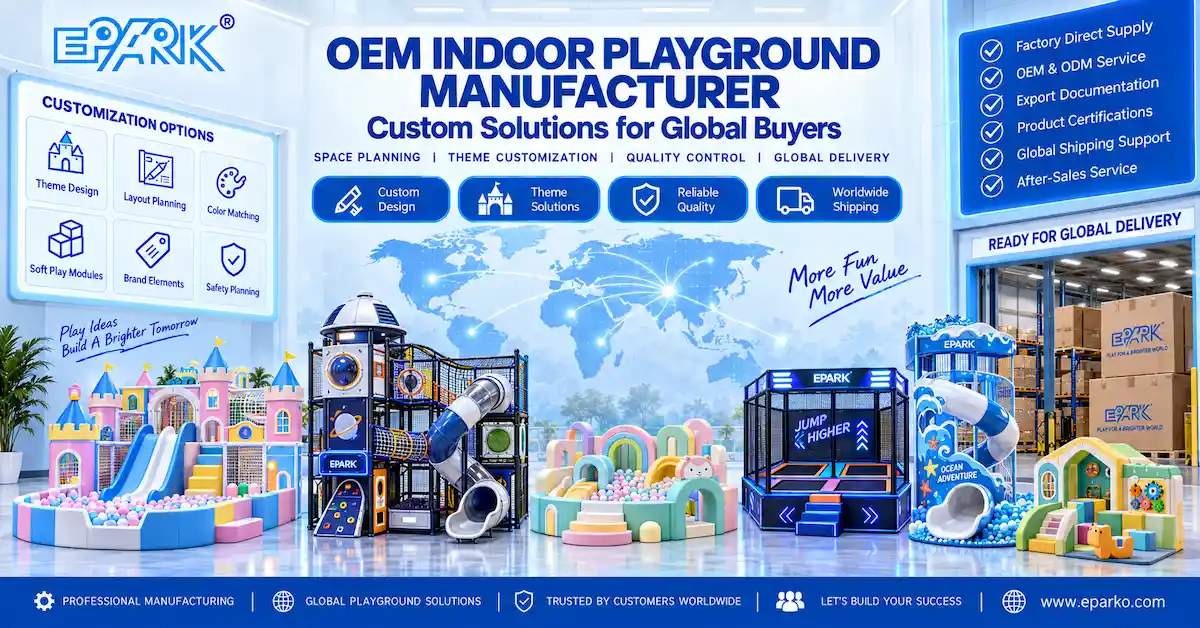
What Does an OEM Indoor Playground Manufacturer Provide?
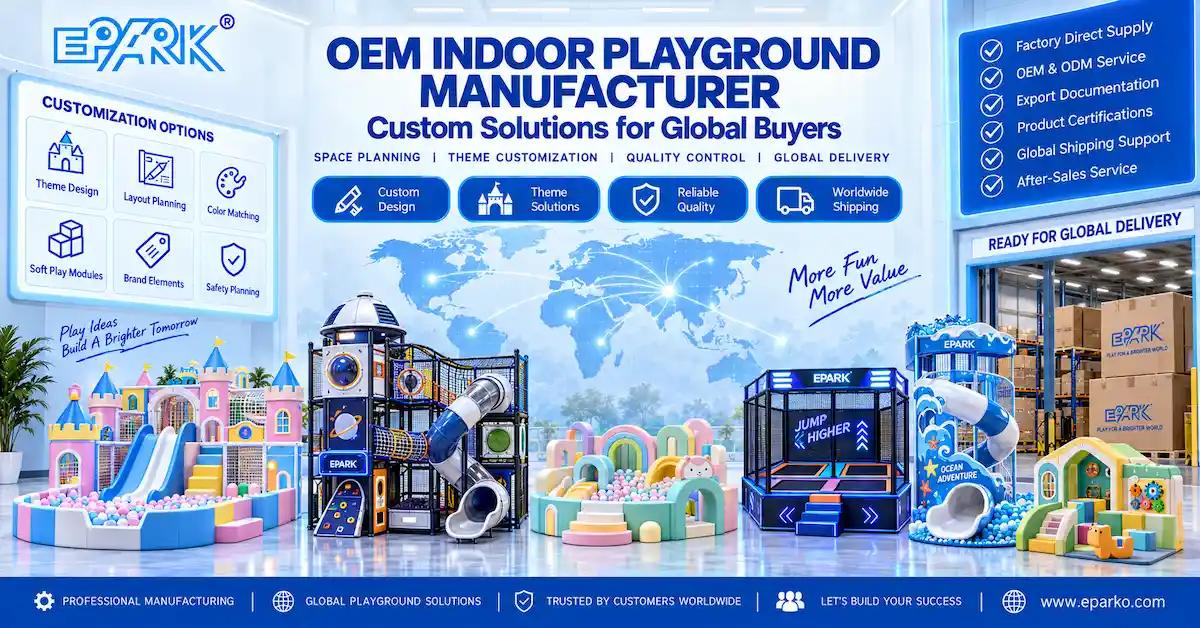
For global buyers, working with an OEM indoor playground manufacturer means more than purchasing existing playground equipment with a different logo. A professional OEM partnership helps transform a buyer’s concept, venue requirement, brand identity, or market demand into a customized indoor playground solution.
Commercial playground projects usually involve multiple elements:
- Playground structure design
- Theme development
- Equipment combination
- Material selection
- Color customization
- Safety considerations
- Manufacturing production
- Quality inspection
- Export packaging
- Installation support
Unlike standard catalog purchasing, OEM projects require closer communication between the buyer and manufacturer. The supplier needs to understand where the playground will be installed, who will use it, what space is available, and what business goals the project needs to achieve.
For buyers planning family entertainment centers, shopping malls, children’s activity centers, or indoor amusement venues, selecting the right OEM partner can directly affect project quality and long-term operation.
Buyers can review EPARK products to understand available amusement equipment categories and project solutions before discussing customization requirements.
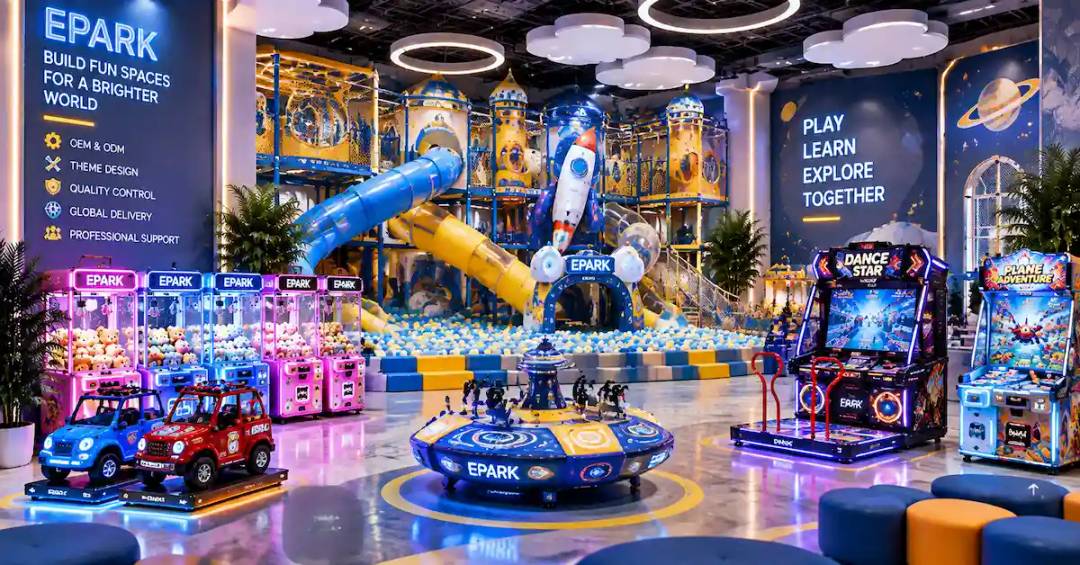
Who Should Work With an OEM Indoor Playground Manufacturer?
OEM solutions are especially suitable for buyers who need differentiated playground products instead of standard equipment.
Family Entertainment Center Operators
FEC operators often require playground designs that match their venue positioning.
Typical requirements include:
- Unique themes
- Space optimization
- Multiple age groups
- Combined entertainment zones
- Brand-consistent appearance
An OEM supplier can help develop equipment combinations that fit the available venue rather than forcing the project into a fixed product model.
Playground Distributors
Distributors often need customized products for regional markets.
Their priorities may include:
- Private branding
- Product differentiation
- Stable production
- Repeat-order consistency
- Regional customer requirements
An experienced OEM manufacturer can help distributors build their own product portfolio while maintaining production support.
Commercial Project Contractors
Contractors and designers may require:
- Custom layouts
- 3D concepts
- Theme-based playgrounds
- Equipment coordination
- Manufacturing support
For these projects, the supplier’s design capability becomes as important as manufacturing capability.
OEM vs Standard Indoor Playground Equipment: What Is the Difference?
Before starting an OEM project, buyers should understand whether customization is actually required.
| Option | Characteristics | Suitable For |
|---|---|---|
| Standard Equipment | Existing designs and configurations | Buyers needing faster purchasing |
| Customized OEM | Existing platform with buyer-specific changes | Brands and distributors |
| Full Custom Playground | New design, layout, theme, and structure | Large commercial projects |
OEM does not always mean creating every component from zero. In many cases, buyers can start from existing playground solutions and customize important elements such as:
- Theme
- Colors
- Layout
- Branding
- Equipment combination
- Decorative elements
This approach can reduce unnecessary development cost while still creating a differentiated project.
Define the OEM Indoor Playground Requirements Before Development
A successful OEM project starts with a detailed requirement document.
Before requesting a quotation, buyers should prepare:
| Requirement | Why It Matters |
|---|---|
| Venue size | Determines playground scale |
| Floor plan | Supports layout planning |
| Ceiling height | Affects structure design |
| Target age group | Influences equipment selection |
| Theme preference | Defines visual direction |
| Capacity requirement | Affects equipment quantity |
| Installation location | Impacts material and structure decisions |
| Market requirements | Helps determine compliance needs |
| Delivery destination | Supports logistics planning |
A clear project brief helps the OEM manufacturer understand the actual application instead of only providing a general playground quotation.
How Does Custom Indoor Playground Design Work?
Design is one of the most important differences between OEM and standard purchasing.
A professional OEM process usually includes:
Concept Development
The buyer communicates:
- Theme ideas
- Brand direction
- Target customers
- Space requirements
The supplier then develops a design concept based on those requirements.
Layout Planning
The layout should consider:
- Equipment placement
- Walking paths
- Safety zones
- Player flow
- Maintenance access
3D Visualization
3D design helps buyers understand:
- Final appearance
- Color combinations
- Equipment arrangement
- Space utilization
Production Drawing Approval
Before manufacturing begins, the buyer should confirm:
- Final structure
- Materials
- Colors
- Equipment list
- Installation details
A documented approval process helps reduce misunderstandings during production.
Evaluate Materials Used by an OEM Playground Manufacturer
Material selection directly affects durability, appearance, maintenance, and user experience.
Important areas include:
| Component | Buyer Should Review |
|---|---|
| Steel Structure | Strength, welding quality, surface treatment |
| Soft Padding | Thickness, covering material, stitching |
| Plastic Parts | Shape, finishing, durability |
| Slides | Smooth surface and structure |
| Flooring | Impact protection and installation |
| Decorative Parts | Theme consistency and durability |
For commercial playgrounds, materials should be selected according to expected usage frequency.
A playground inside a busy entertainment center requires different durability considerations compared with a small private installation.
Review Manufacturing Capability Before Selecting an OEM Partner
A good design needs reliable manufacturing support.
When evaluating an OEM indoor playground manufacturer, buyers should understand:
- Production process
- Manufacturing experience
- Quality inspection system
- Custom project experience
- Production capacity
- Communication process
A supplier should be able to explain how an approved design becomes a finished product.
Important production steps may include:
- Material preparation
- Component manufacturing
- Structure assembly
- Surface treatment
- Soft-part production
- Quality inspection
- Packing preparation
EPARK provides information about its Design & Process approach for buyers evaluating manufacturing capability.
How Should Buyers Control OEM Playground Quality?
Quality control should cover the entire production process instead of only checking finished appearance.
Material Inspection
Verify incoming materials meet project requirements.
Production Inspection
Check:
- Structure processing
- Welding
- Surface treatment
- Component assembly
Final Inspection
Before shipment, review:
- Equipment completeness
- Appearance
- Structure
- Accessories
- Installation requirements
- Packing condition
| QC Stage | Inspection Focus |
|---|---|
| Material QC | Raw material condition |
| Production QC | Manufacturing consistency |
| Assembly QC | Component matching |
| Appearance QC | Finishing quality |
| Final QC | Complete project review |
| Packing QC | Shipping protection |
For OEM projects, quality inspection should also confirm that the final product matches the approved design.
Customization Options Available From OEM Playground Suppliers
OEM customization can involve different levels depending on project requirements.
Theme Customization
Examples:
- Space theme
- Ocean theme
- Jungle theme
- Fantasy theme
Visual Customization
Including:
- Colors
- Logos
- Decorative elements
- Brand identity
Layout Customization
Including:
- Multi-level structures
- Compact designs
- Large playground systems
- Mixed play areas
Equipment Combination
A custom playground may combine:
- Slides
- Climbing areas
- Ball pools
- Interactive games
- Soft play sections
- Role-play areas
The customization scope should be confirmed before production because different changes affect development time and cost.
Compare OEM Playground Suppliers Before Placing an Order
Importers should evaluate suppliers based on more than quotation price.
| Evaluation Area | Questions Buyers Should Ask |
|---|---|
| Design | Can the supplier develop custom concepts? |
| Manufacturing | Does the supplier control production processes? |
| Materials | Are material requirements clearly defined? |
| QC | Are inspections performed before shipment? |
| Communication | Are revisions documented? |
| Support | Is installation guidance available? |
| Experience | Has the supplier handled similar projects? |
A reliable OEM partner should reduce project uncertainty and provide clear communication throughout development.
Understand OEM Playground Cost Factors
OEM pricing depends on multiple factors.
| Cost Factor | Impact |
|---|---|
| Playground Size | Larger structures require more materials |
| Design Complexity | Custom themes increase development work |
| Materials | Different materials affect durability and cost |
| Equipment Quantity | Influences production requirements |
| Custom Components | Adds manufacturing requirements |
| Packaging | Affects export preparation |
| Installation | Depends on project location |
Buyers should compare complete project value rather than only comparing the initial equipment quotation.
Plan Production and Delivery for Custom Projects
OEM playground projects usually require several stages:
- Requirement confirmation
- Design development
- Drawing approval
- Material preparation
- Production
- Quality inspection
- Packing
- Shipping preparation
- Installation support
The final timeline depends on customization level, project size, approval speed, and production requirements.
Early communication helps prevent delays caused by late design changes.
Shipping and Installation Preparation for OEM Playgrounds
Indoor playground equipment often contains many components, so packaging organization is important.
Buyers should confirm:
- Package identification
- Installation instructions
- Hardware classification
- Component labeling
- Loading information
A clear packing system helps installation teams quickly identify:
- Main structures
- Accessories
- Hardware
- Decorative components
EPARK provides service information through Service for buyers reviewing project support requirements.
How Can Global Buyers Start an OEM Playground Project?
A complete OEM inquiry should include:
- Project location
- Venue size
- Floor plan
- Target customers
- Theme requirements
- Equipment preferences
- Budget expectations
- Delivery schedule
- Installation requirements
The supplier can then evaluate:
- Design direction
- Equipment combination
- Production requirements
- Customization scope
Buyers can review EPARK products and submit project information through Contact Us.
Frequently Asked Questions
1. What Is an OEM Indoor Playground Manufacturer?
An OEM indoor playground manufacturer develops and produces customized playground solutions based on buyer requirements, including design, branding, equipment combinations, and production support.
2. Can OEM Playground Equipment Be Fully Customized?
Yes. Customization can include themes, layouts, colors, branding, structures, and equipment combinations depending on project requirements.
3. What Information Should Buyers Provide Before Requesting OEM Design?
Provide venue size, floor plan, target users, theme preference, capacity requirements, delivery location, and customization expectations.
4. How Long Does an OEM Indoor Playground Project Take?
The timeline depends on design complexity, approval speed, production requirements, inspection, and shipping arrangements.
5. What Should Buyers Check When Choosing an OEM Supplier?
Review design capability, manufacturing experience, materials, QC procedures, communication process, and project support.
6. Can OEM Suppliers Produce Different Playground Themes?
Yes. Many OEM projects use different themes such as ocean, jungle, space, fantasy, or brand-specific concepts.
7. How Do Buyers Control OEM Playground Quality?
Use approved drawings, material requirements, production inspections, final inspection, and packing verification.
8. Does OEM Mean Higher Cost?
OEM projects may require additional design and development work, but costs depend on customization scope, materials, size, and production requirements.
9. Can OEM Playground Suppliers Support International Shipping?
Many suppliers support export packaging and international delivery preparation. Buyers should confirm shipping scope and documentation requirements.
10. How Can I Request an OEM Playground Proposal?
Prepare project details including venue size, design requirements, target users, and delivery information, then contact the supplier for evaluation.
Conclusion
Choosing an OEM indoor playground manufacturer requires evaluating more than customization capability. Global buyers should review design support, material selection, manufacturing processes, quality control, project communication, shipping preparation, and long-term support before selecting a supplier.
A reliable OEM partner can help transform a playground concept into a commercial solution that matches the buyer’s brand, venue requirements, and market expectations. Review EPARK indoor amusement solutions or contact EPARK with your project size, design ideas, target users, and delivery requirements to discuss a customized indoor playground solution.
Disclaimer
The information provided on this website is for general informational purposes only.
While EPARK Arcade Game Machine Manufacturer strives to ensure accuracy and reliability, no warranties—express or implied—are made regarding completeness, performance, or applicability.
Product specifications, designs, and features may vary depending on usage, customization, and customer requirements.
Buyers are responsible for verifying all technical details, compliance certifications, and suitability before procurement.
EPARK shall not be held liable for any direct, indirect, incidental, or consequential damages arising from the use of this website or its content, including but not limited to business losses, data errors, or equipment misuse.
For tailored solutions or further verification, please visit our Contact Us
Intellectual Property Notice
All articles, product images, videos, catalogs, software, and related materials published on this website are the intellectual property of EPARK, unless otherwise stated.
Unauthorized reproduction, distribution, modification, or commercial use of any content is strictly prohibited without prior written consent from EPARK.
EPARK reserves the right to take legal action against any unauthorized use, including but not limited to copyright infringement, misrepresentation, or unfair competition.
Trademarks
The name EPARK, the EPARK logo, and all related brand elements displayed on this website are registered trademarks or trade names of Guangzhou EPARK Electronic Technology Co., Ltd.
Other product names, company names, or logos mentioned on this site may be trademarks of their respective owners.
Unauthorized use of EPARK's trademarks for commercial purposes, including advertising, promotions, or product packaging, is strictly prohibited.
Governing Law
These terms are governed by the laws of the People's Republic of China.