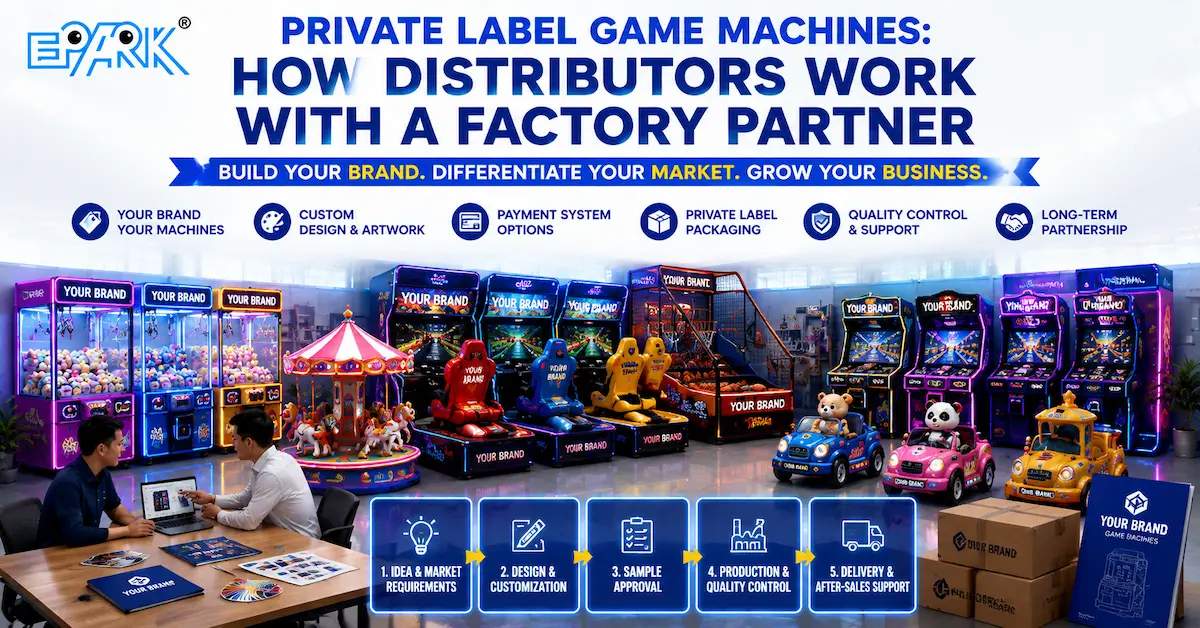
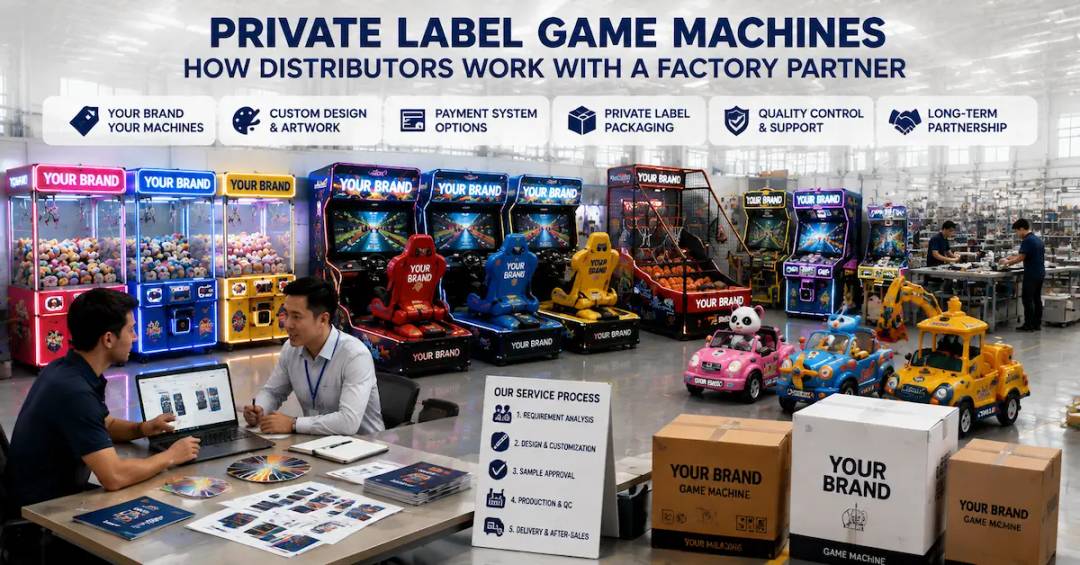
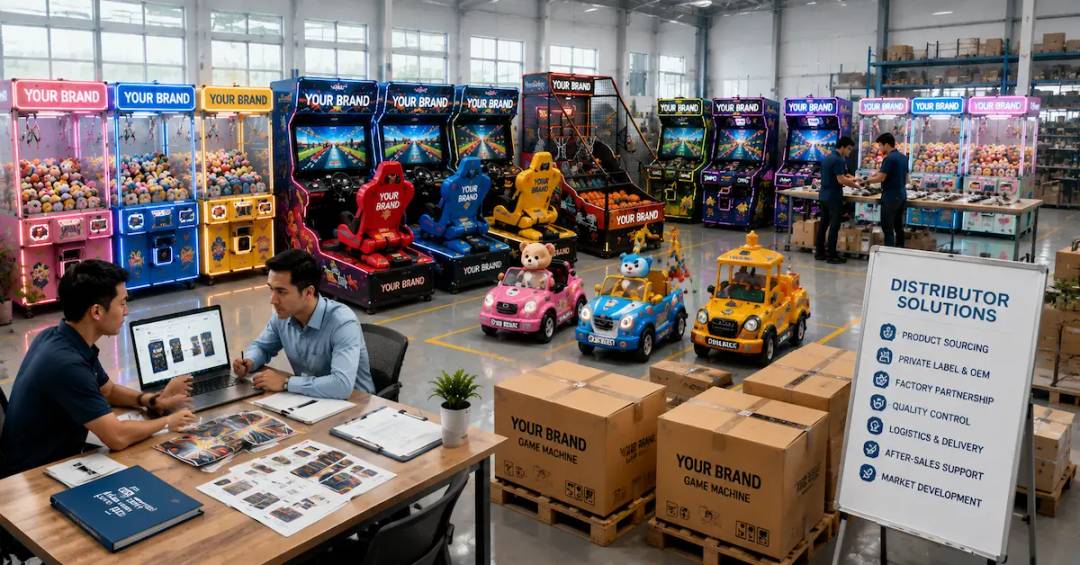
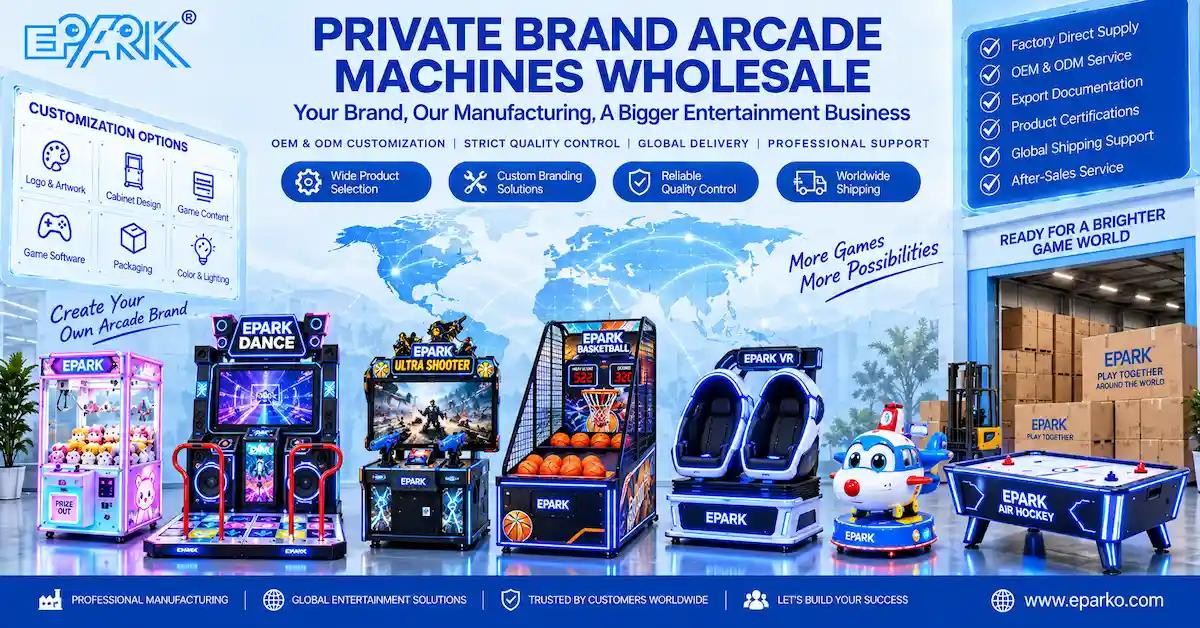
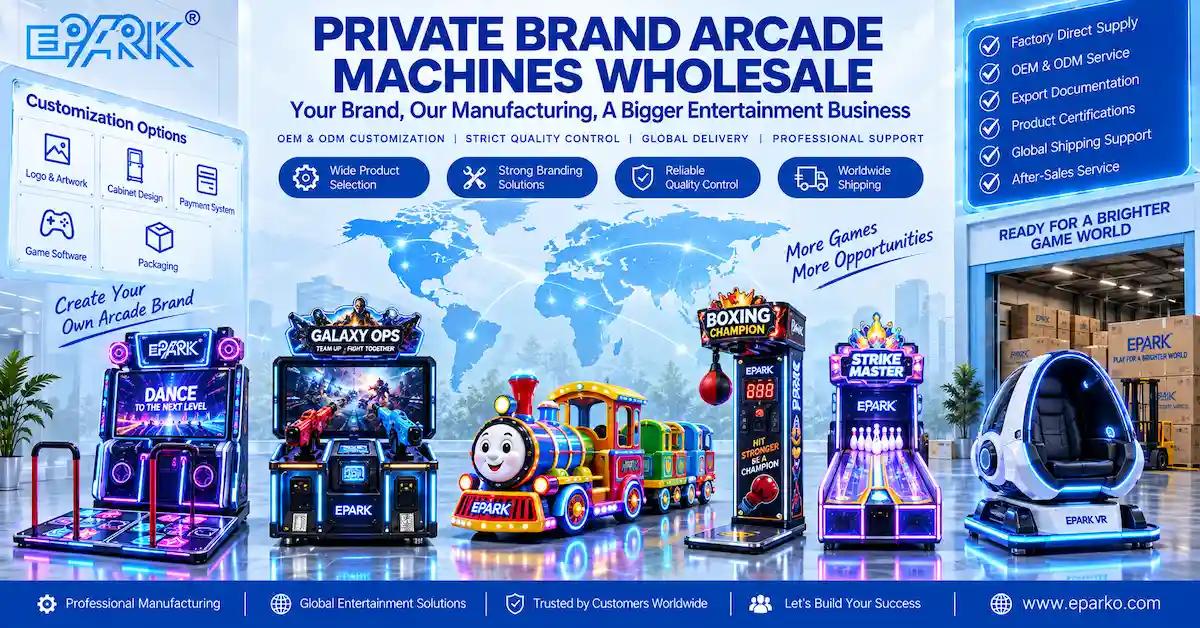
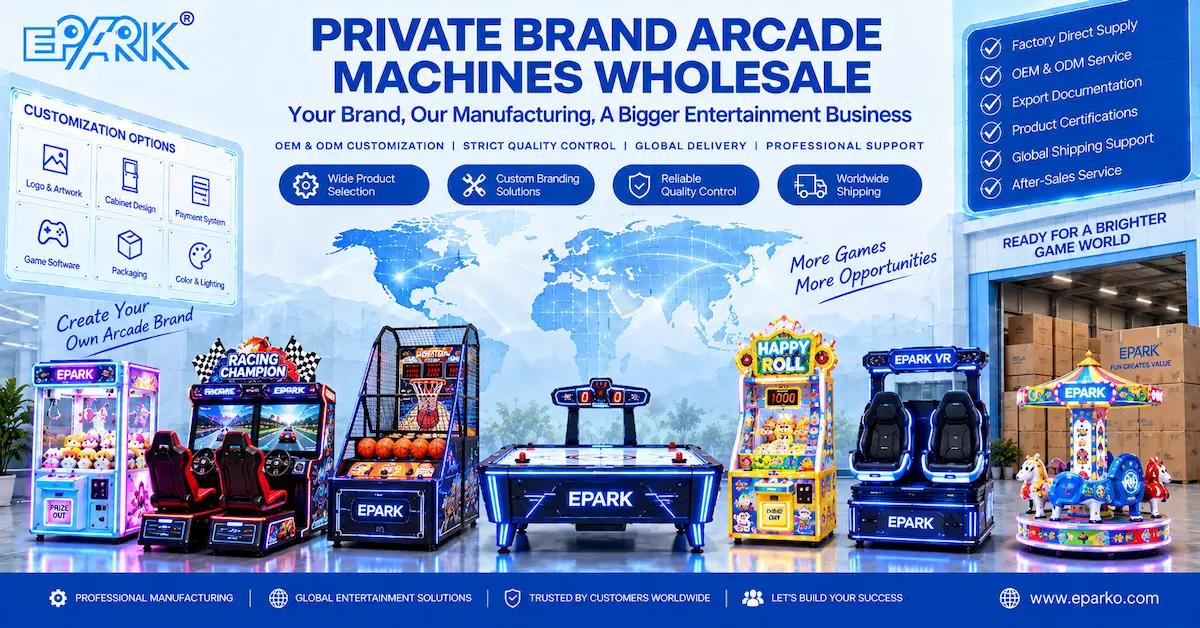
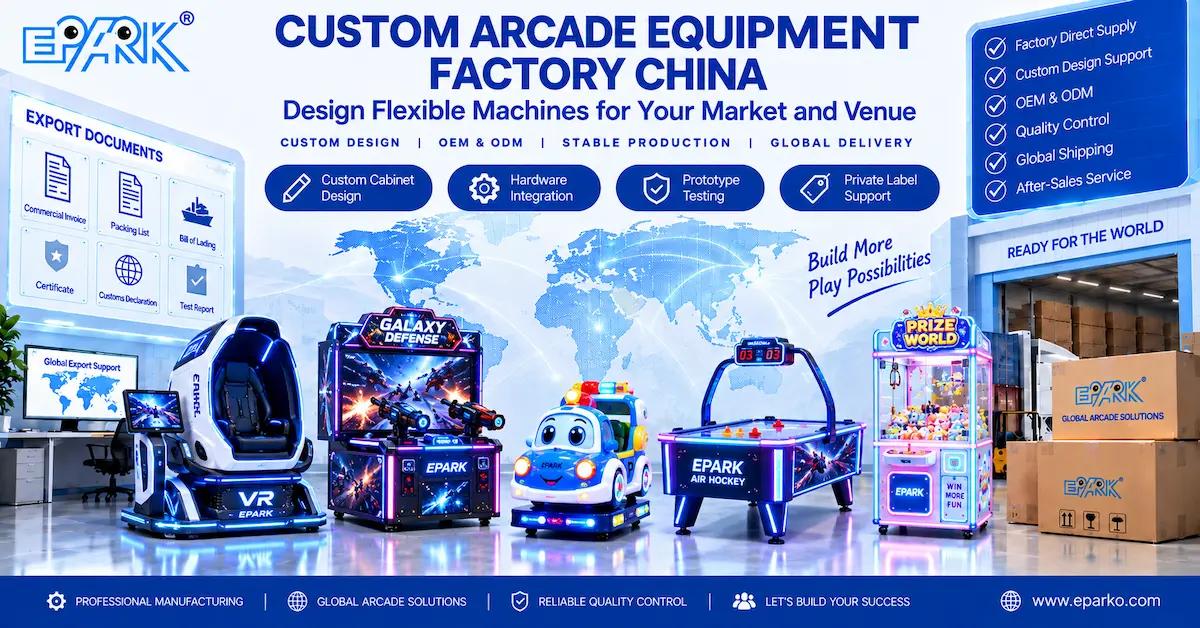
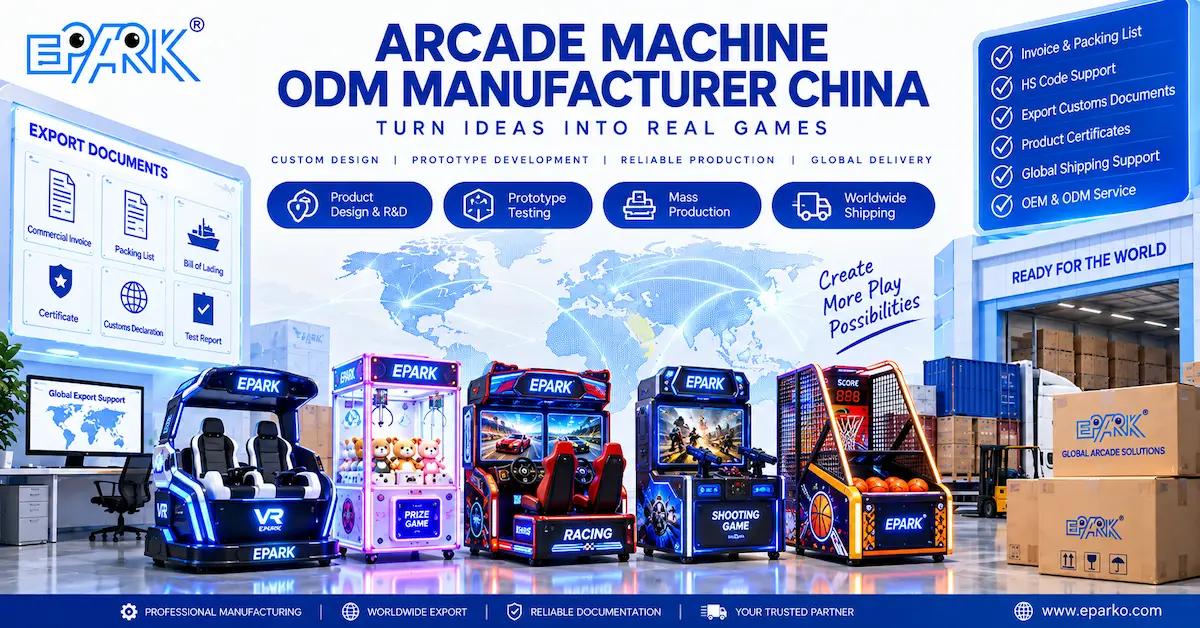
For distributors exploring private label game machines, the practical starting point is to define the target market and the product categories they want to develop.
From there, the factory and distributor can evaluate which existing platforms can be adapted, what branding is required, which configurations need to be localized, and how repeat orders should be controlled.
Distributors can review EPARK's arcade equipment products or contact EPARK with information about market, product categories, quantities, branding requirements, and payment-system needs.
FAQ About Private Label Game Machines
What are private label game machines?
Private label game machines are arcade or amusement machines manufactured by a factory but sold under a distributor's or brand owner's commercial identity, usually with customized branding and selected configurations.
Can a distributor put its own logo on arcade machines?
Yes, subject to the factory's customization capabilities and agreed order requirements. Branding may include cabinet logos, artwork, labels, packaging, and other visual elements.
Is private label the same as OEM?
They overlap, but they are not always identical. Private label often focuses on selling an existing or adapted product under the buyer's brand, while OEM/ODM cooperation may involve deeper engineering or product development.
Which game machines are suitable for private labeling?
Suitability depends on the factory and market, but distributors may consider claw machines, redemption games, racing machines, basketball games, kiddie equipment, and other commercial arcade categories.
Do private label machines require a high MOQ?
MOQ depends on the machine, customization level, materials, packaging, and production requirements. Buyers should obtain project-specific terms instead of assuming one standard MOQ.
How should distributors control private label quality?
Use documented specifications, approved artwork, an agreed sample where appropriate, pre-shipment testing, and clear acceptance requirements for appearance, operation, payment systems, accessories, and packaging.
Can payment systems be customized?
Depending on the machine and system compatibility, factories may support different coin, card, or cashless configurations. The final system should be confirmed before production and verified before shipment.
Should distributors ask for exclusivity?
Exclusivity can be commercially useful in some markets, but it should not be assumed. Product scope, territory, duration, minimum commitments, and ownership should be defined in a written agreement.
What should distributors prepare before contacting a factory?
Look for manufacturing control, product consistency, clear customization procedures, quality verification, technical communication, spare-parts support, realistic schedules, and the ability to manage repeat orders.
Conclusion
Private label game machines can help arcade equipment distributors evolve from reselling generic products into building recognizable product portfolios.
The strongest strategy is not to customize everything. It is to identify which changes create value for the target market, standardize those configurations, protect brand consistency, control quality, and build a repeatable supply relationship.
For distributors, the factory partner affects far more than manufacturing. It influences product consistency, delivery reliability, service capability, spare-parts availability, and how easily successful machines can be reordered.
A well-managed partnership therefore combines the distributor's market knowledge with the factory's manufacturing and technical capabilities.
When those two sides work together effectively, private labeling becomes more than placing a logo on a cabinet—it becomes a practical platform for building a long-term arcade equipment brand.