

How Ticket Pusher Machine Engineering and Floor Strategy Shape Arcade Profitability
1. Ticket Pusher Machines Earn Through Rhythm, Not Chance
Unlike crane or capsule-based games, a ticket pusher machine does not rely on novelty or one-time wins.
Its earning model is built on continuous micro-engagement: steady movement, visible progress, and predictable tension.
Field data collected from shopping mall arcades and FEC projects shows that pusher-style games generate 25–40% more repeat insertions per player session than single-attempt redemption games, provided mechanical rhythm remains stable.
This makes engineering quality and layout decisions far more important than theme or cabinet appearance.
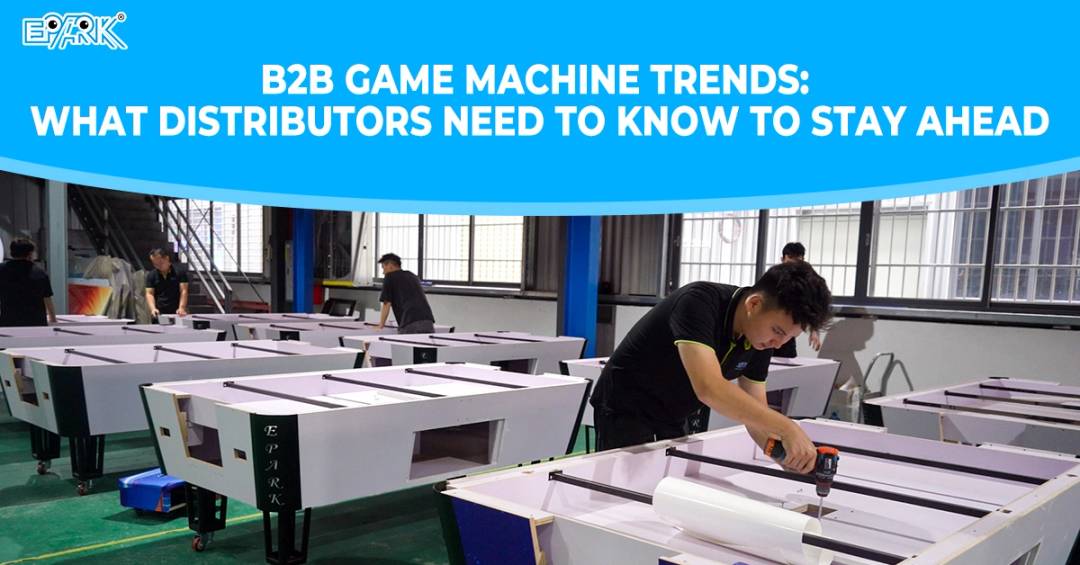
2. Structural Design: Why Frame Stability Directly Affects Revenue
The cabinet structure defines how consistently the pusher platform behaves over time. Even minor frame deformation can alter ticket movement, reducing perceived fairness and lowering replay rates.
Key structural elements that matter commercially
| Structural Component | Engineering Detail | Operational Impact |
|---|---|---|
| Cabinet frame | 1.0–1.2 mm reinforced steel with internal bracing | Prevents tilt and vibration drift |
| Base platform | Weighted lower center of gravity | Reduces shake exploitation |
| Pusher plate | CNC-cut aluminum | Smooth, repeatable forward motion |
| Rail system | Precision linear guides | Prevents lateral deviation |
| Viewing panels | Tempered glass or PMMA | Maintains clarity under heavy use |
In EPARKO project audits, machines with reinforced frames experienced over 30% fewer ticket jam incidents within the first six months of operation.
3. Mechanical Dynamics: How Micro-Motion Drives Player Behavior
Pusher games are not about speed; they are about tempo.
Players stay engaged when ticket movement appears slow but inevitable. This is controlled by motor torque, cycle timing, and load tolerance.
Core mechanical parameters operators should evaluate
| Parameter | Typical Operating Range | Revenue Relevance |
|---|---|---|
| Pusher cycle speed | 27–33 cycles/min | Too fast reduces anticipation |
| Motor torque | 0.28–0.35 N·m | Maintains motion under heavy ticket load |
| Platform load tolerance | ≥ 6 kg | Prevents slowdown during peak play |
| Edge drop angle | 15°–22° | Controls ticket fall probability |
| Sensor response latency | < 60 ms | Ensures accurate ticket dispensing |
Operational data indicates that slower, heavier push cycles increase average session length by 12–18%, as players feel they are “close to winning” for longer periods.
4. Ticket Flow Physics: Density, Friction, and Perceived Control
The profitability of a ticket pusher machine depends on how tickets behave as a mass.
Three ticket zones must be engineered and maintained:
-
Compression zone (rear) – builds pressure and anticipation
-
Drift zone (center) – maintains visible motion
-
Edge zone (front) – converts tension into payout
Ticket density benchmarks from multi-venue observations
| Zone | Recommended Fill Ratio | Effect on Revenue |
|---|---|---|
| Rear compression | 70–80% | Encourages continued feeding |
| Center drift | 55–65% | Maintains visible progress |
| Edge zone | 25–35% | Prevents excessive payouts |
Adjusting ticket density by as little as 5% can change hourly revenue by 10–15%, without altering payout settings.
5. Floor Layout Strategy: Where Ticket Pushers Actually Perform
A ticket pusher machine attracts attention through sound, movement, and bright ticket visuals—but only within a limited radius. Placement determines whether that attraction converts into play.
Data-backed placement outcomes
| Placement Decision | Observed Effect |
|---|---|
| Near main circulation aisles | +20–25% walk-by interaction |
| Adjacent to redemption counters | Higher perceived ticket value |
| Semi-circular clustering | Increases group participation |
| Wall-flush placement | Lower engagement due to narrow sightlines |
| Corner isolation | Reduced sound reach and visibility |
In large FEC layouts, relocating pushers from wall lines to angled, semi-open formations resulted in 30–40% revenue uplift within two weeks, without changing machine settings.
6. Operational Optimization Beyond the Machine
Instead of focusing on procurement quantity, experienced operators focus on tuning and control.
High-impact operational adjustments
-
Cycle calibration tests every 2–3 weeks
-
Ticket weight consistency checks to prevent uneven drift
-
Angle alignment verification after floor rearrangements
-
Lighting intensity tuning to maintain visibility without glare
These adjustments reduce downtime and stabilize income across peak and off-peak hours.
7. Technical Evaluation Checklist for Buyers
When evaluating ticket pushers, operators should prioritize:
Reliability
-
Motor lifespan ≥ 5,000 hours
-
Reinforced anti-tilt frame
-
Low-friction pusher rails
Serviceability
-
Tool-free access panels
-
Modular motor and sensor replacement
-
Independent wiring for ticket dispensers
Revenue Control
-
Adjustable pusher speed
-
Configurable ticket drop logic
-
Anti-jam detection mechanisms
Machines lacking these features typically show higher maintenance frequency and unstable payout behavior after 3–6 months.
FAQ
Can ticket pusher machines generate stable income in low-traffic venues?
Yes, when placed near natural waiting areas and tuned for slower cycles, they perform consistently even in moderate traffic environments.
How often should ticket density be adjusted?
Most operators adjust density every 7–14 days, depending on play volume.
Are ticket pushers suitable for family-focused locations?
Yes. Their visible progress and low skill barrier attract mixed-age participation.
Ticket Pushers Are Profitable Only When Treated as a System
A ticket pusher machine becomes a long-term revenue asset only when engineering quality, ticket flow physics, layout placement, and operational tuning are aligned.
At EPARKO, we support arcade and FEC operators through:
-
Integrated layout and traffic planning
https://www.eparko.com/design-process -
Reliable project delivery and technical service
https://www.eparko.com/service -
Data-validated arcade equipment solutions
https://www.eparko.com/products
Disclaimer
The information provided on this website is for general informational purposes only.
While EPARK Arcade Game Machine Manufacturer strives to ensure accuracy and reliability, no warranties—express or implied—are made regarding completeness, performance, or applicability.
Product specifications, designs, and features may vary depending on usage, customization, and customer requirements.
Buyers are responsible for verifying all technical details, compliance certifications, and suitability before procurement.
EPARK shall not be held liable for any direct, indirect, incidental, or consequential damages arising from the use of this website or its content, including but not limited to business losses, data errors, or equipment misuse.
For tailored solutions or further verification, please visit our Contact Us
Intellectual Property Notice
All articles, product images, videos, catalogs, software, and related materials published on this website are the intellectual property of EPARK, unless otherwise stated.
Unauthorized reproduction, distribution, modification, or commercial use of any content is strictly prohibited without prior written consent from EPARK.
EPARK reserves the right to take legal action against any unauthorized use, including but not limited to copyright infringement, misrepresentation, or unfair competition.
Trademarks
The name EPARK, the EPARK logo, and all related brand elements displayed on this website are registered trademarks or trade names of Guangzhou EPARK Electronic Technology Co., Ltd.
Other product names, company names, or logos mentioned on this site may be trademarks of their respective owners.
Unauthorized use of EPARK's trademarks for commercial purposes, including advertising, promotions, or product packaging, is strictly prohibited.
Governing Law
These terms are governed by the laws of the People's Republic of China.