
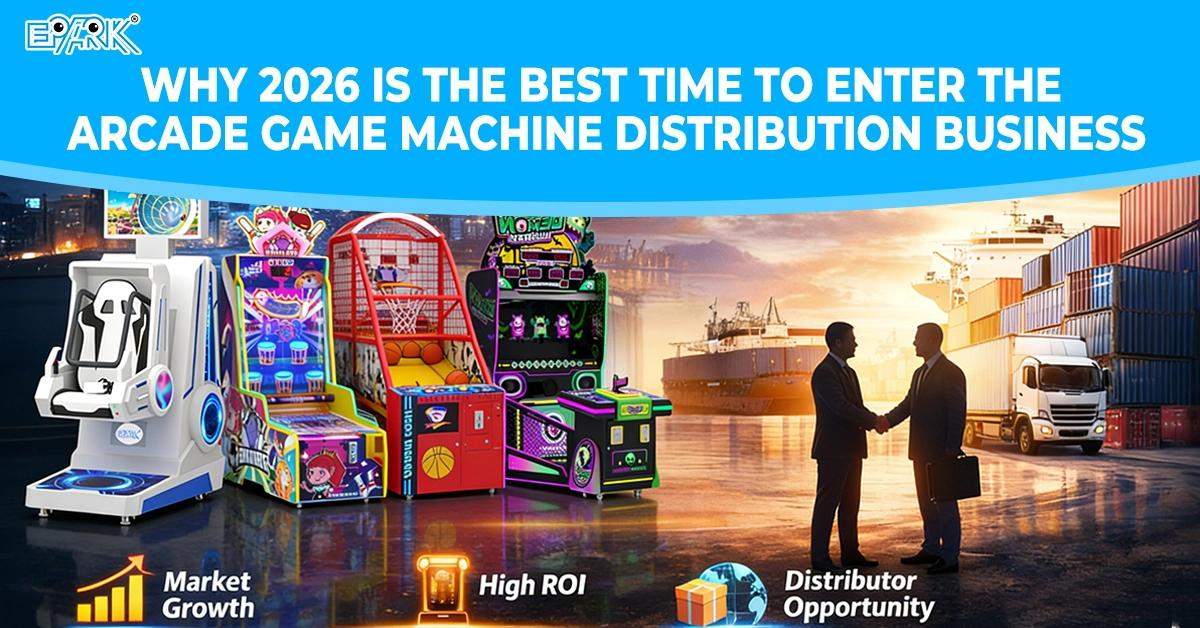
Introduction: Why Arcade Game Machine Distribution Matters More Than Ever
The global arcade and location-based entertainment (LBE) industry is entering a decisive new growth cycle. After years of disruption, consumer demand for offline, interactive, and social entertainment experiences has rebounded strongly, creating renewed opportunities across amusement centers, shopping malls, family entertainment centers (FECs), and leisure complexes. For B2B buyers, wholesalers, and investors, this shift is not just a recovery—it represents a structural upgrade of the arcade business model.
Unlike traditional arcade operations that rely on single-location revenue, arcade game machine distribution offers scalable, asset-light, and repeat-order potential. Distributors play a critical role in connecting manufacturers with operators, tailoring product mixes to local markets, and providing after-sales technical support. As the industry evolves toward smarter machines, immersive gameplay, and higher return-on-investment (ROI) models, distributors are becoming strategic partners rather than simple resellers.
Among all upcoming years, 2026 stands out as the most advantageous entry point. Market timing, technology maturity, global supply chain stabilization, and demand from emerging regions are aligning simultaneously. This article provides a comprehensive, data-driven analysis to help B2B decision-makers understand why 2026 is the optimal moment to enter the arcade game machine distribution business—and how to do it successfully.
Global Arcade Industry Outlook Heading into 2026
The global arcade game machine market is experiencing a sustained rebound driven by both consumer behavior changes and commercial venue expansion. Industry research indicates that the global arcade and amusement machine market is expected to grow at a steady CAGR of approximately 6–8% between 2024 and 2028, with particularly strong momentum in developing economies and urban commercial centers.
Several structural factors support this growth. First, consumers—especially Gen Z and young families—are increasingly seeking experiential entertainment that cannot be replicated at home. Second, shopping malls and mixed-use developments are actively introducing arcade zones to increase dwell time and foot traffic. Third, arcade machines are now viewed less as entertainment expenses and more as revenue-generating commercial equipment with predictable payback periods.
By 2026, many arcade operators will also reach the end of their previous equipment lifecycle. Machines purchased between 2018 and 2021 are approaching replacement due to wear, outdated software, or changing player preferences. This replacement cycle alone creates substantial wholesale demand, directly benefiting distributors with strong supplier relationships.
Key Markets Driving Growth
Growth in the arcade industry is no longer limited to traditional markets such as Japan or the United States. Emerging regions are now the primary growth engines, especially Southeast Asia, the Middle East, Africa, and Latin America. Rapid urbanization, expanding middle classes, and increased investment in retail and entertainment infrastructure are driving demand for arcade machines in these regions.
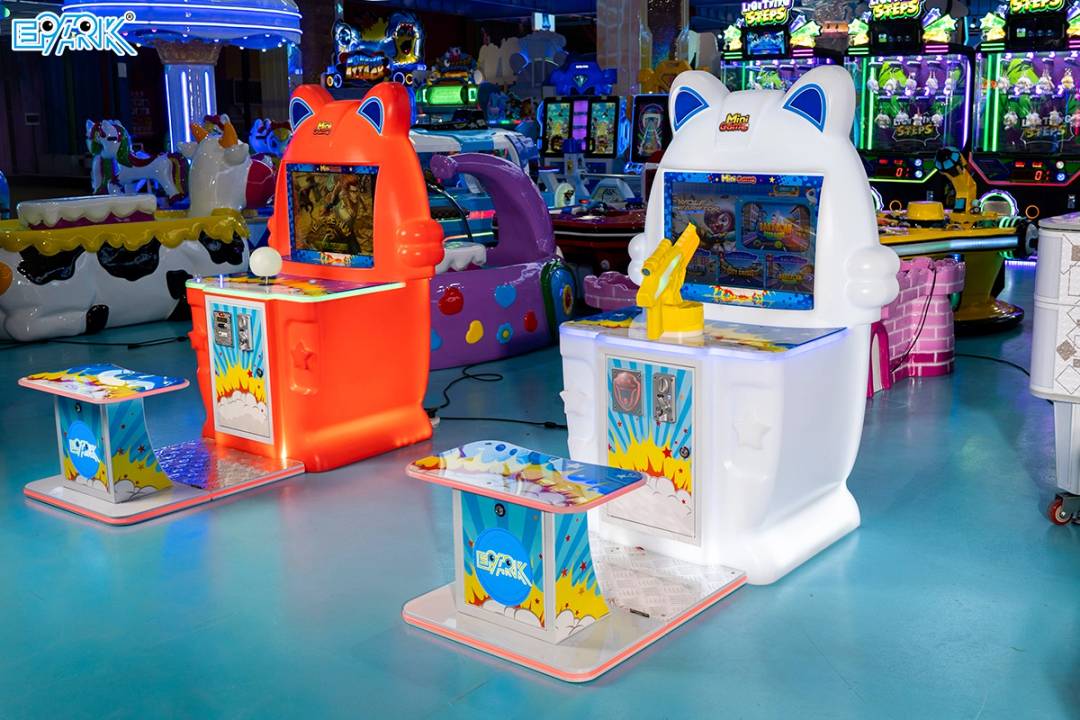
At the same time, mature markets such as North America and Europe are entering an upgrade phase rather than an expansion phase. Operators in these regions are replacing traditional cabinets with redemption games, motion simulators, and VR-based attractions to improve profitability per square meter. This creates strong opportunities for distributors who understand both legacy equipment and next-generation arcade solutions.
Distributors act as a bridge between global manufacturers and local operators. Their ability to adapt product portfolios, comply with regional regulations, and provide localized service makes them indispensable in both emerging and mature markets.
Why 2026 Is a Strategic Entry Year for Distributors
Timing is critical in any distribution business, and 2026 offers a rare convergence of favorable conditions. One of the most important factors is the global supply chain normalization following years of disruption. Shipping costs, component availability, and production lead times have largely stabilized, enabling more predictable inventory planning and pricing strategies.
Additionally, market saturation remains relatively low in many fast-growing regions. Unlike earlier boom periods when competition was intense and margins were compressed, 2026 offers room for new distributors to establish regional presence without immediately facing price wars. Manufacturers are also actively seeking reliable partners to expand into new territories, offering exclusive or semi-exclusive distribution agreements.
Another key advantage is the maturity of arcade machine technology. By 2026, most mainstream machines will feature stable hardware platforms, modular components, and proven software systems. This reduces technical risk for distributors and simplifies after-sales support.
Lower Entry Barriers Compared to the Past
Historically, entering arcade distribution required significant capital, large minimum order quantities (MOQs), and strong industry connections. Today, these barriers are significantly lower. Many manufacturers now offer OEM and ODM services, allowing distributors to build private-label brands or customize machine designs for local markets.
Digital transformation has also changed how distributors acquire customers. Online B2B platforms, professional websites, and video-based marketing enable new entrants to reach arcade operators globally without large sales teams. Combined with flexible payment terms and modular product lines, these factors make 2026 an unusually accessible entry point.
Product Trends That Favor New Arcade Distributors
The modern arcade industry has moved far beyond traditional joystick cabinets. Current demand is driven by interaction, competition, and reward mechanisms. Distributors entering the market in 2026 benefit from a product landscape that is both diversified and data-proven.
Operators increasingly favor machines with short payback periods, high replay rates, and minimal maintenance requirements. This aligns well with distributor-led sales models, as machines are often purchased in bulk or as part of full arcade solutions.
High-Demand Arcade Machine Categories in 2026
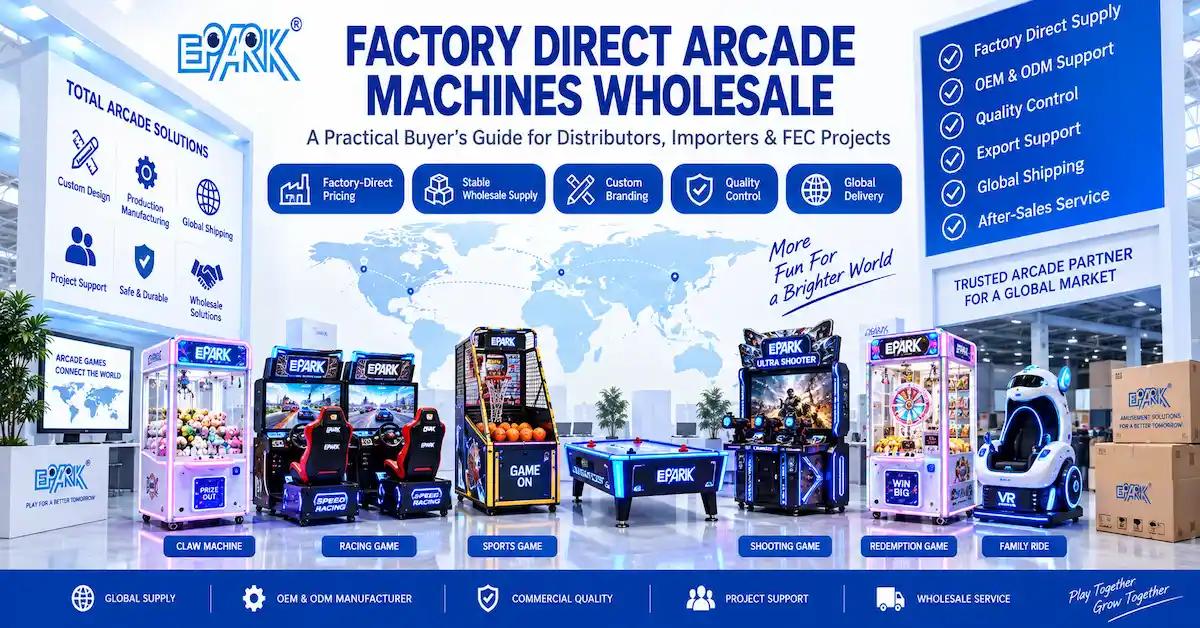
The following table summarizes key product categories and their commercial advantages:
| Machine Category | Typical Application | Key Advantages | Average Payback Period |
|---|---|---|---|
| Redemption Games | FECs, Malls | High replay rate, family-friendly | 6–12 months |
| Sports Games | Arcades, Game Centers | Competitive gameplay, durable design | 8–14 months |
| Shooting Games | Youth-focused venues | Immersive experience, strong visuals | 10–16 months |
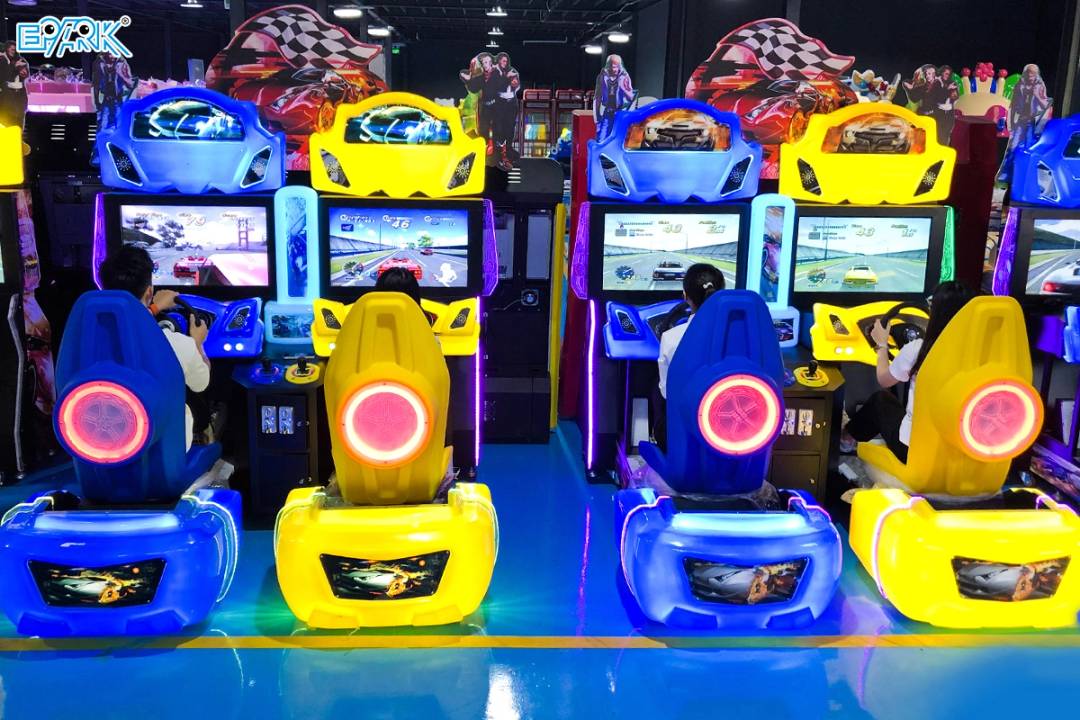
| Racing Simulators | Premium arcades | High ticket value, strong attraction | 12–18 months |
| VR Arcade Machines | Malls, Resorts | High novelty, premium pricing | 12–24 months |
| Kids Arcade Rides | Indoor playgrounds | Stable demand, low maintenance | 6–10 months |
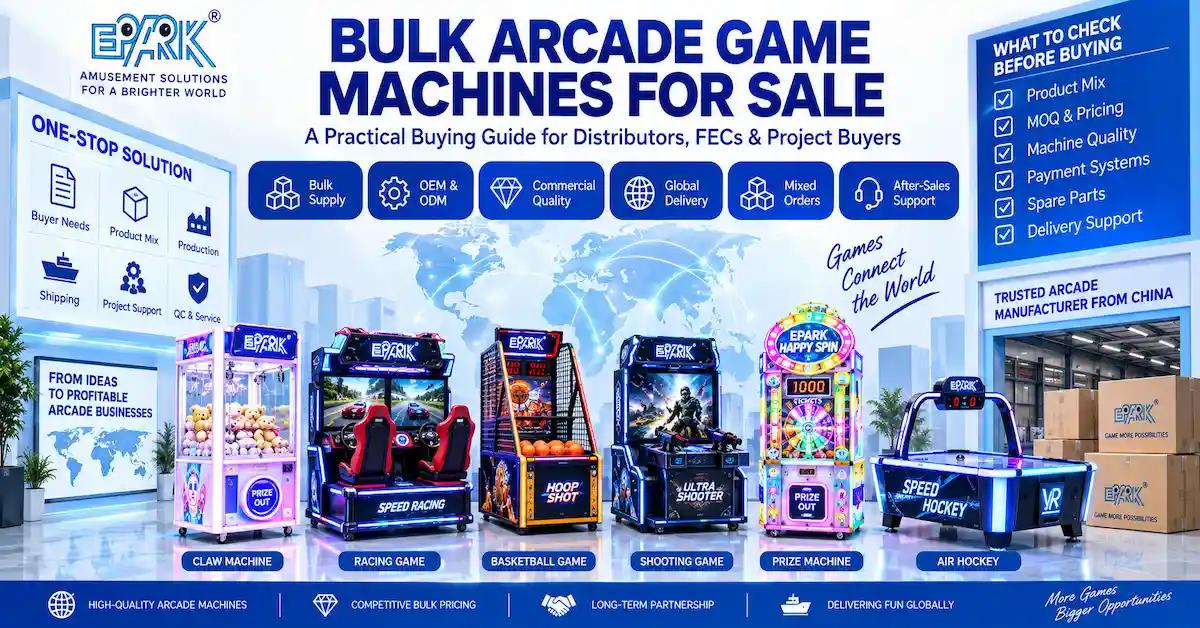
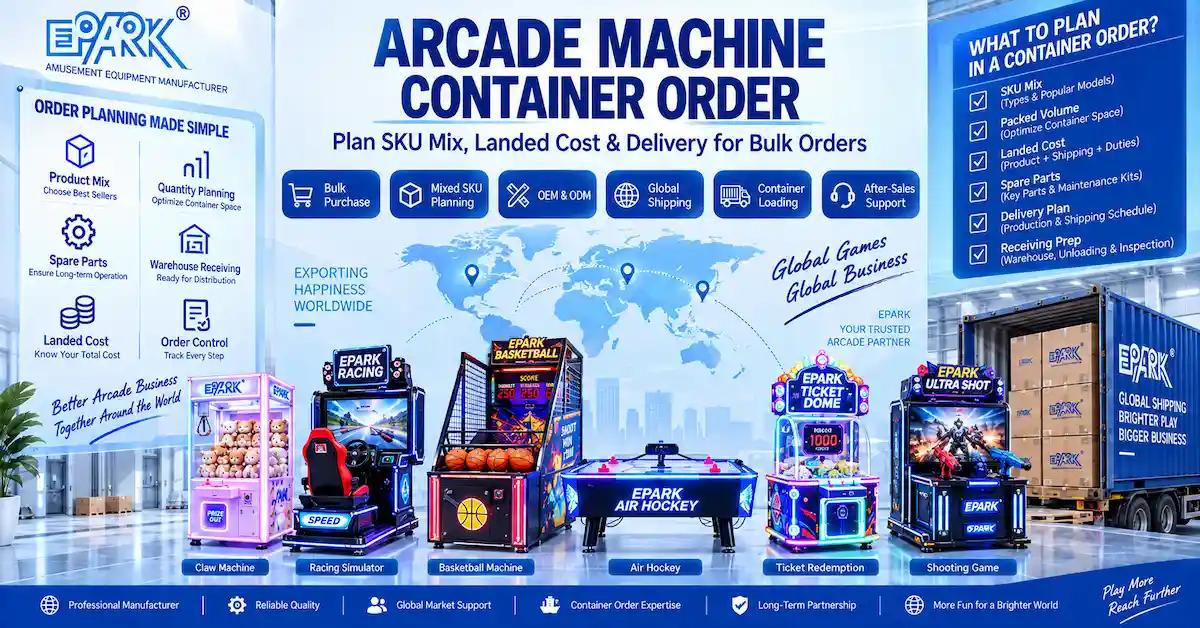
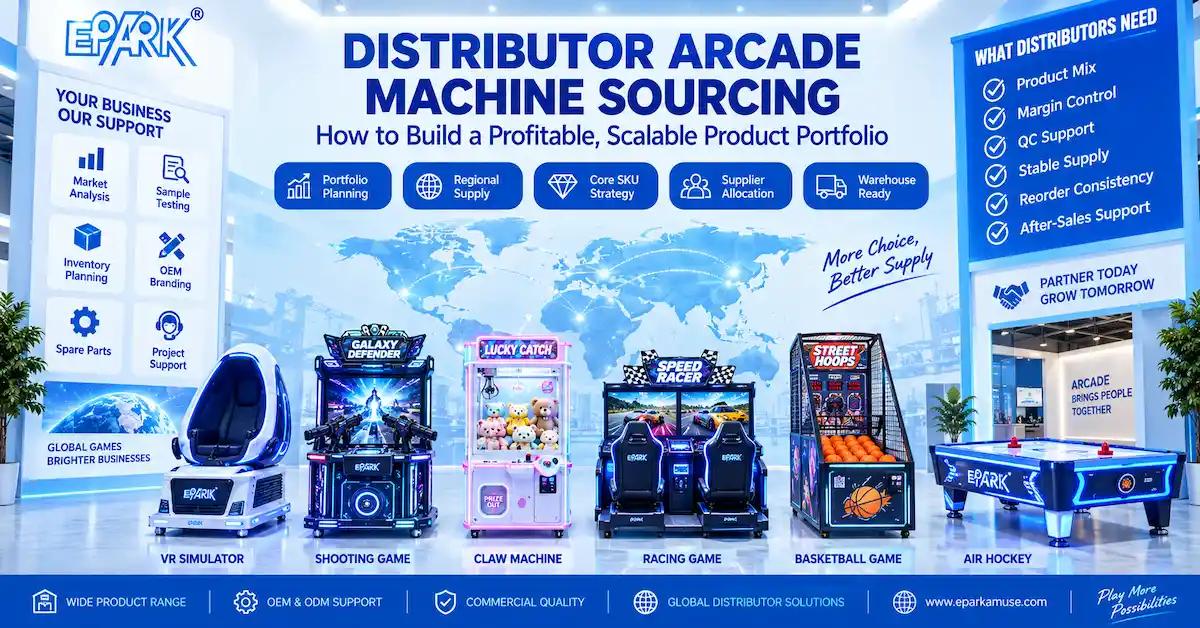
For distributors, offering a balanced product mix across these categories reduces risk and increases average order value. Many manufacturers also provide bundled solutions, enabling distributors to sell complete arcade layouts rather than individual machines.
Profitability Analysis: Distribution vs. Operating Arcades
A common question among investors is whether to operate arcades directly or focus on distribution. While both models can be profitable, distribution offers superior scalability and risk diversification. Operating a single arcade ties revenue to one location, one lease, and one local market. Distribution, by contrast, spreads revenue across multiple clients and regions.
From a financial perspective, distributors typically achieve gross margins ranging from 15% to 35%, depending on product category, order volume, and value-added services. Importantly, distributors can generate recurring revenue through repeat orders, spare parts, upgrades, and technical support contracts.
Revenue Streams for Arcade Game Machine Distributors
Successful distributors rarely rely on machine sales alone. Their revenue structure often includes:
-
Wholesale and bulk machine supply
-
Turnkey arcade and FEC project solutions
-
Spare parts and consumables
-
Software updates and machine upgrades
-
After-sales service and maintenance
-
Regional exclusivity or agency agreements
This diversified income model improves long-term stability and makes the business more resilient to market fluctuations.
How to Choose the Right Arcade Game Machine Manufacturer
The success of an arcade distribution business depends heavily on supplier selection. A reliable manufacturer does more than produce machines; they provide technical documentation, compliance support, and long-term product continuity.
Low-quality suppliers may offer attractive pricing initially but often create hidden costs through high failure rates, inconsistent components, and poor after-sales support. For distributors, these issues can damage reputation and increase operational risk.
Key Criteria for Evaluating Suppliers
When selecting a manufacturing partner, distributors should evaluate the following factors:
-
Manufacturing Experience: At least 8–10 years of industry presence indicates stability and process maturity.
-
Certifications: Compliance with CE, FCC, RoHS, and ISO standards ensures global market access.
-
Product Range: A diversified catalog allows flexible market positioning.
-
Customization Capability: OEM/ODM options support branding and localization.
-
Technical Support: Availability of manuals, remote diagnostics, and spare parts.
-
Export Experience: Familiarity with international shipping, packaging, and customs requirements.
A strong manufacturer-distributor partnership is essential for long-term growth, particularly as technology cycles accelerate.
Common Challenges New Distributors Face — and How to Avoid Them
Entering the arcade distribution business without adequate preparation can lead to costly mistakes. One common issue is overstocking niche machines that lack broad market demand. Another is failing to account for local regulations, such as voltage standards, safety certifications, or import restrictions.
Additionally, some new distributors underestimate the importance of after-sales service. Arcade operators expect fast technical response times, and distributors who cannot provide this support risk losing repeat business.
Smart Entry Strategies for 2026
To mitigate these risks, new distributors should adopt proven entry strategies:
-
Start with best-selling, standardized models
-
Test market response before large inventory commitments
-
Work with manufacturers offering training and technical support
-
Focus on long-term partnerships rather than one-time sales
By aligning product selection, service capability, and market knowledge, distributors can build sustainable operations from the outset.
Conclusion: 2026 Is the Right Time to Act
The arcade game machine industry is entering a new phase defined by technology maturity, diversified demand, and global expansion. For B2B buyers and investors, distribution offers a scalable, flexible, and resilient business model. Market conditions in 2026—ranging from supply chain stability to equipment replacement cycles—create an optimal environment for new entrants.
Those who act early will benefit from stronger manufacturer relationships, regional market positioning, and growing demand across both emerging and mature markets. As competition intensifies in later years, the advantages of early entry will become increasingly difficult to replicate.

Disclaimer
The information provided on this website is for general informational purposes only.
While EPARK Arcade Game Machine Manufacturer strives to ensure accuracy and reliability, no warranties—express or implied—are made regarding completeness, performance, or applicability.
Product specifications, designs, and features may vary depending on usage, customization, and customer requirements.
Buyers are responsible for verifying all technical details, compliance certifications, and suitability before procurement.
EPARK shall not be held liable for any direct, indirect, incidental, or consequential damages arising from the use of this website or its content, including but not limited to business losses, data errors, or equipment misuse.
For tailored solutions or further verification, please visit our Contact Us
Intellectual Property Notice
All articles, product images, videos, catalogs, software, and related materials published on this website are the intellectual property of EPARK, unless otherwise stated.
Unauthorized reproduction, distribution, modification, or commercial use of any content is strictly prohibited without prior written consent from EPARK.
EPARK reserves the right to take legal action against any unauthorized use, including but not limited to copyright infringement, misrepresentation, or unfair competition.
Trademarks
The name EPARK, the EPARK logo, and all related brand elements displayed on this website are registered trademarks or trade names of Guangzhou EPARK Electronic Technology Co., Ltd.
Other product names, company names, or logos mentioned on this site may be trademarks of their respective owners.
Unauthorized use of EPARK's trademarks for commercial purposes, including advertising, promotions, or product packaging, is strictly prohibited.
Governing Law
These terms are governed by the laws of the People's Republic of China.