

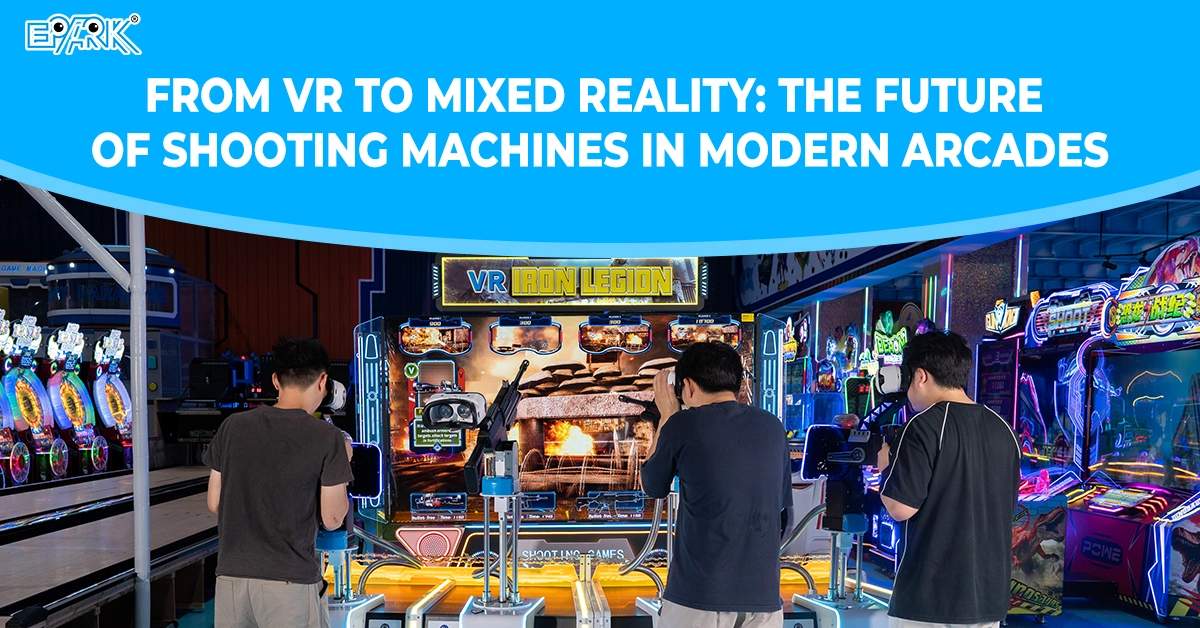
Over the past decade, the arcade entertainment industry has undergone a dramatic transformation driven by immersive technologies. While traditional shooting machines have long been a core attraction in arcades and FECs (Family Entertainment Centers), the rise of VR (Virtual Reality) and now MR (Mixed Reality) is reshaping how players interact with digital environments. For B2B buyers, distributors, arcade owners, and investors, understanding this evolution is crucial for strategic purchasing and long-term profitability.
Today’s customers demand deeper immersion, more realistic interaction, and socially engaging experiences—expectations that VR and MR shooting machines are uniquely positioned to meet. As competition among amusement venues grows globally, choosing the right shooting machine technology is no longer optional but essential for maximizing ROI and maintaining customer flow.
This article provides a comprehensive look at how shooting machines evolved, what VR and MR technologies mean for modern arcades, how to choose the right equipment, and which machines are best suited for different business models.
The Evolution of Arcade Shooting Machines
From Light-Gun Classics to Modern Motion Systems
Classic arcade shooting machines—such as Time Crisis, House of the Dead, and Point Blank—laid the foundation for the modern shooting genre. These machines used optical light-gun technology and stationary screens, offering straightforward, fast-paced gameplay. Although simple by today’s standards, they delivered high repeat-play value and intuitive controls.
As sensors and processors improved, shooting machines began incorporating motion platforms, recoil systems, and high-definition displays. The introduction of haptic guns and motion sensing elevated realism, while larger cabinets created more immersive experiences. Yet these systems still lacked full environmental presence, which set the stage for VR integration.
The Rise of VR Shooting Game Machines
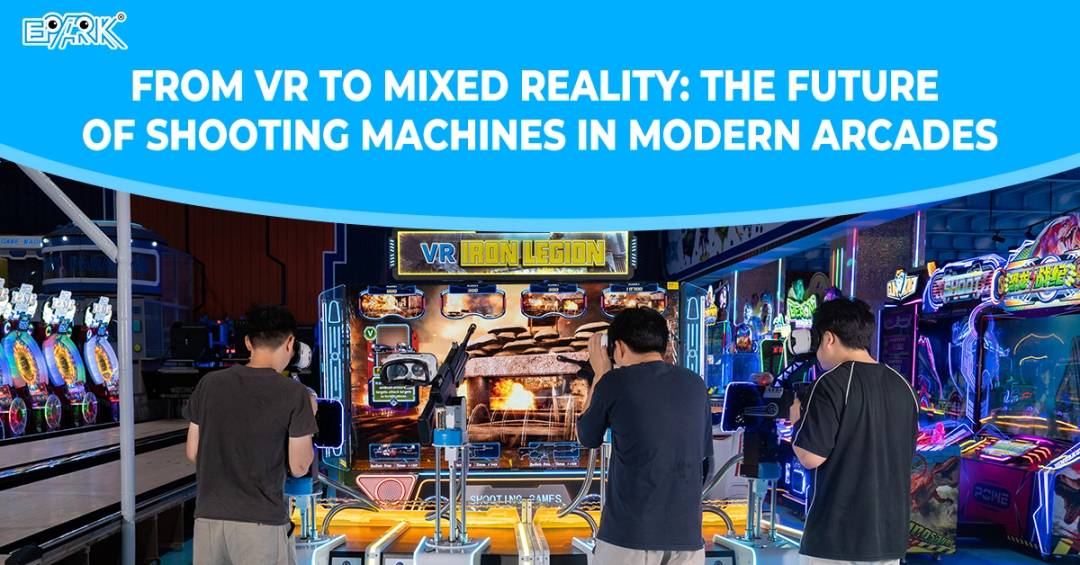
VR shooting machines represented the industry’s first major step into fully immersive gameplay. By placing players inside 360° virtual worlds, VR shooting systems created experiences that traditional screens could not match. VR headsets, motion controllers, and positional tracking allowed players to aim, move, and interact naturally.
Key advantages included:
-
Total immersion through high-resolution VR headsets
-
Dynamic environments with 360° threats and exploration
-
Advanced replay value due to diversified missions and adaptive AI
-
Multiplayer engagement allowing cooperative or competitive play
For FECs and large arcades, VR shooting machines quickly became revenue-generating showpieces, often ranking among the top-earning arcade attractions.
The Shift Toward Mixed Reality (MR)
Mixed Reality shooting machines represent the next major leap in immersive entertainment. Unlike VR, MR blends real-world surroundings with digital overlays. Players still interact with physical props—walls, obstacles, guns—but see additional digital elements rendered through projectors, AR glasses, or MR-compatible headsets.
MR delivers benefits VR cannot fully achieve:
-
Lower motion sickness because the real world remains visible
-
Physical props and spatial mapping create more tactile gameplay
-
Better social engagement since players see each other and share space
-
Flexible gameplay zones that do not require enclosed VR cabins
As MR technology improves, more arcades are adopting MR shooting zones to attract new audiences seeking both immersion and physical activity.
VR vs. MR Shooting Machines — A Professional Comparison
The table below provides a clear technical comparison for buyers evaluating VR vs. MR systems.
VR vs. MR Shooting Machine Comparison Table
| Category | VR Shooting Machines | MR Shooting Machines |
|---|---|---|
| Immersion Level | Full 360° virtual environment | Real world + digital overlays |
| Hardware | VR headset, base stations, controllers | MR glasses/projection, spatial sensors |
| Player Movement | Limited within cabin | Freer movement within mapped space |
| Social Interaction | Often isolated | Highly social; players see each other |
| Motion Sickness Risk | Moderate | Very low |
| Space Requirements | Enclosed cabin (3–5 m²) | Open zone (4–12 m²) |
| Cost | Medium to High | Medium |
| Maintenance | Higher (headset hygiene, sensors) | Lower (fewer wearable parts) |
| Best For | High-end FECs, VR zones | Malls, arcades, events, kids’ areas |
Technology Differences: A Deeper Look
VR relies heavily on high-resolution headsets and infrared or laser-based tracking. Premium systems feature:
-
6DoF (six degrees of freedom) tracking
-
Low-latency wireless communication
-
Haptic guns with interactive recoil
-
Full-body motion capture in some models
MR, on the other hand, uses depth sensors, LIDAR mapping, projection systems, and AR-compatible glasses. Instead of transporting players to a new world, MR dynamically integrates digital characters, scoring interfaces, and targets into the environment.
Both require stable computing hardware, but MR tends to have simpler maintenance because it avoids external wearable devices.
Player Experience and Entertainment Value
VR delivers unmatched immersion, but it can sometimes feel isolating because players cannot see the physical space around them. MR solves this by maintaining real-world visibility, enabling cooperative gameplay where players communicate, strategize, and move freely.
Games incorporating MR-style dodging, hiding behind physical barriers, and real-world movement often attract young families and group players, providing broader accessibility than VR.
Cost and Maintenance Considerations
VR systems require:
-
Frequent lens cleaning
-
Headset foam replacement
-
More sensitive electronic components
MR systems, using projection or AR glasses, reduce hygiene concerns and lower long-term upkeep costs.
Estimated Maintenance Frequency:
| System Type | Typical Maintenance | Estimated Yearly Cost |
|---|---|---|
| VR | High | $800–$1,500 |
| MR | Low–Medium | $400–$900 |
Market Trends Driving VR and MR Shooting Machines
Global Demand for Hyper-Immersive Entertainment
As younger generations prefer interactive experiences over passive entertainment, arcades worldwide are integrating next-gen shooting machines into their attractions. Surveys from IAAPA reports indicate:
-
73% of FEC visitors prefer immersive attractions
-
VR and MR games deliver 2–3x higher repeat-play rates
-
Shooting games remain top-earning genres globally
FEC Expansion in North America, Middle East, and Asia
-
North America: VR arenas and esports lounges are increasingly added to FECs.
-
Middle East: Megamalls are investing heavily in large-scale VR and MR attractions.
-
Southeast Asia: Compact MR systems are popular due to smaller arcade space and high mall foot traffic.
Rapid Innovation from Arcade Machine Manufacturers
New technologies appearing in 2025 and beyond include:
-
AI-powered adaptive enemy behavior
-
Wireless haptic rifles with multi-mode recoil
-
MR projection systems with 4K rendering
-
Cloud-based scoreboards and remote update capability
These advancements are pushing operators to regularly upgrade equipment to stay competitive.
Buying Guide: How B2B Buyers Should Choose Shooting Machines
Define Your Project and Audience
Before selecting VR or MR shooting machines, buyers should specify:
-
Space size
-
Target age group
-
Revenue expectations
-
Play duration and turnover rate
-
Experience theme (military, sci-fi, horror, casual)
For example, VR tends to attract teens and young adults, while MR appeals broadly to families.
Evaluate Machine Performance and Technical Specifications
Important specifications include:
-
Display resolution (4K per eye for VR, 4K projection for MR)
-
Tracking system accuracy (<5 ms latency for premium experience)
-
Gun haptic quality (feedback intensity, durability, sensor reliability)
-
Multiplayer capability (2–6 players recommended for FECs)
-
Cabinet or zone design (open vs. enclosed)
Higher-spec machines often produce better ROI due to longer play times and higher customer satisfaction.
ROI Factors That Matter Most
For B2B buyers, ROI is paramount. The following table shows typical revenue and cost projections:
| Factor | VR Shooting Machine | MR Shooting Machine |
|---|---|---|
| Avg. Ticket Price | $5–$10 per play | $3–$8 per play |
| Plays per Day (FEC) | 80–150 | 100–200 |
| Monthly Revenue Range | $12,000–$30,000 | $8,000–$25,000 |
| Payback Period | 4–9 months | 3–8 months |
High-traffic arcades often recoup investment within the first financial cycle.
Space and Safety Requirements
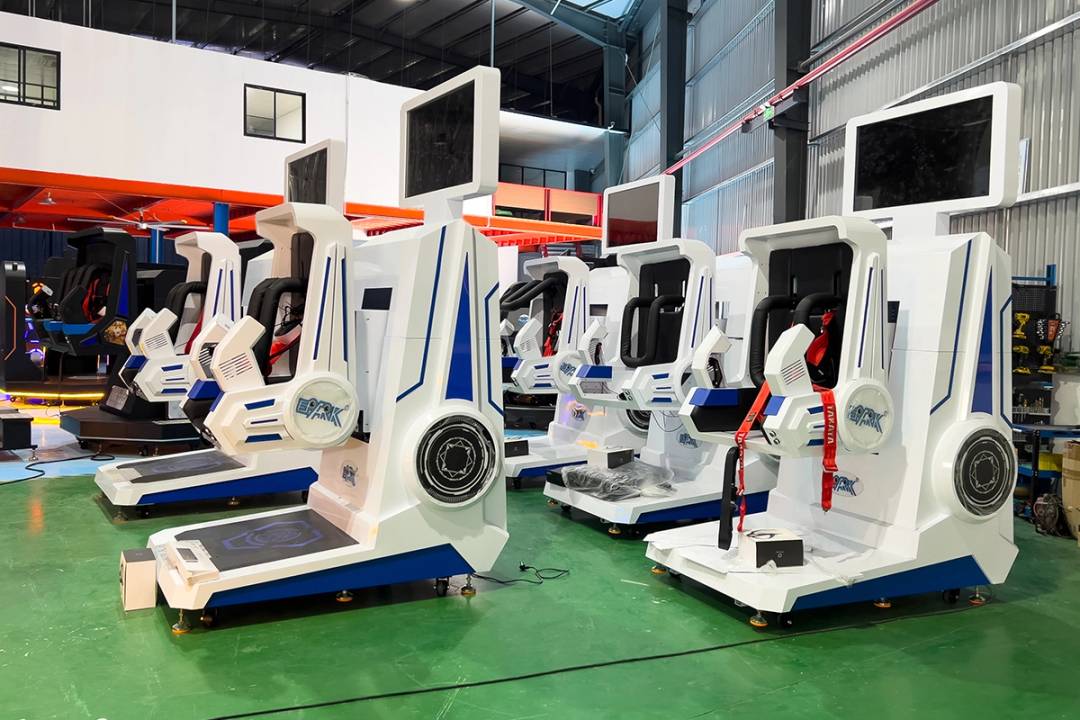
VR cabins require safe surroundings to prevent collisions during body movements. MR zones require well-lit areas and reliable mapping accuracy.
General guidelines:
-
VR Minimum Space: 3m × 3m per cabin
-
MR Play Zone: 4m × 6m for 2–4 players
-
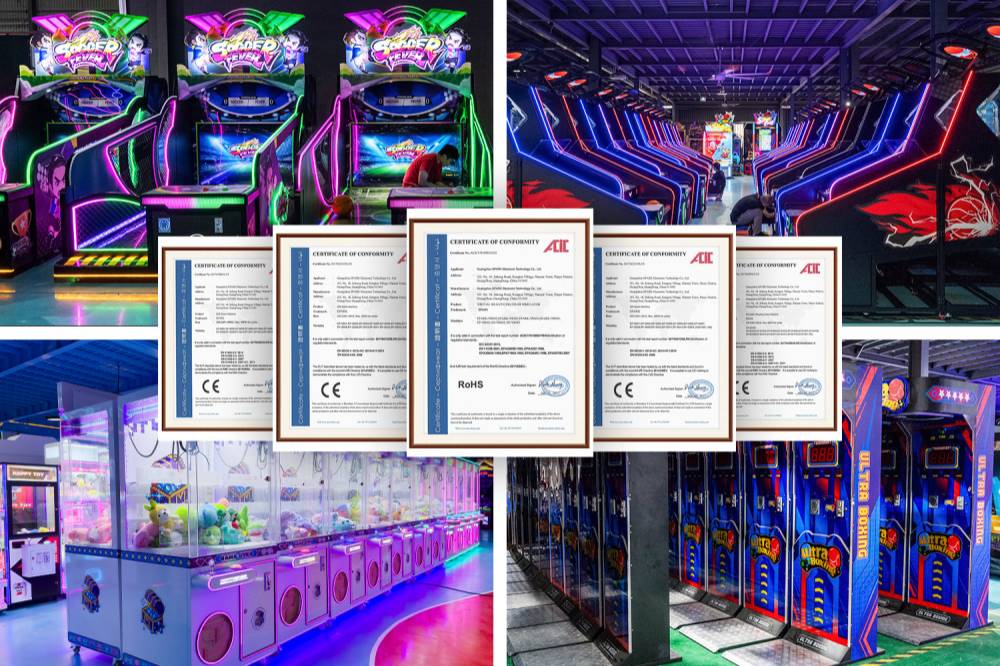
Certifications: CE, RoHS, FCC, and safety compliance with venue regulations
Recommended Shooting Machines for 2025
VR Elite Force – VR Shooting Game Machine
VR Elite Force offers a deep immersive experience featuring:
-
High-resolution dual-lens VR headset
-
Realistic gun recoil and haptic feedback
-
Cooperative squad missions
-
Multi-language interface for global venues
Suitable for: FECs, theme parks, VR experience centers.
Battle Arena X – Multiplayer Shooting Machine
Battle Arena X focuses on fast-paced group gameplay with:
-
Precision motion-sensing rifles
-
Multi-level combat simulations
-
High durability components for heavy use
-
Ultra-fast player turnover rate
-
Attractive LED-lit cabinet design
Suitable for: Arcades, malls, redemption centers.
MR Ghost Hunter – Mixed Reality Shooting System
MR Ghost Hunter blends real-world physical props with digital overlays:
-
Spatial mapping for dynamic target placement
-
Open-zone gameplay supporting up to 6 players
-
Low maintenance hardware
-
Family-friendly themes and cartoon or fantasy modes
Suitable for: Shopping malls, children’s entertainment zones, compact arcades.
Conclusion
VR and MR shooting machines are redefining the future of arcade entertainment by delivering interactive, immersive, and high-value experiences. While VR shooting machines provide unmatched 360° immersion, MR shooting systems offer socially engaging, movement-based gameplay that appeals to broader audiences.
For B2B buyers, the right choice depends on budget, space, target customers, and long-term business goals. Both technologies have strong earning potential, but understanding their differences and strengths is essential to maximizing ROI.
As global FEC development accelerates and customer expectations rise, investing in VR or MR shooting machines is no longer just a trend—it is a strategic advantage.
CTA — Contact Us for Wholesale Pricing & Custom Solutions
We are a professional manufacturer and wholesale supplier specializing in:
-
VR shooting game machines
-
Mixed reality shooting systems
-
OEM/ODM customization for distributors and FEC developers
Contact us today for catalogs, quotations, and project consultation.
Your next best-selling shooting machine is ready to launch.

Disclaimer
The information provided on this website is for general informational purposes only.
While EPARK Arcade Game Machine Manufacturer strives to ensure accuracy and reliability, no warranties—express or implied—are made regarding completeness, performance, or applicability.
Product specifications, designs, and features may vary depending on usage, customization, and customer requirements.
Buyers are responsible for verifying all technical details, compliance certifications, and suitability before procurement.
EPARK shall not be held liable for any direct, indirect, incidental, or consequential damages arising from the use of this website or its content, including but not limited to business losses, data errors, or equipment misuse.
For tailored solutions or further verification, please visit our Contact Us
Intellectual Property Notice
All articles, product images, videos, catalogs, software, and related materials published on this website are the intellectual property of EPARK, unless otherwise stated.
Unauthorized reproduction, distribution, modification, or commercial use of any content is strictly prohibited without prior written consent from EPARK.
EPARK reserves the right to take legal action against any unauthorized use, including but not limited to copyright infringement, misrepresentation, or unfair competition.
Trademarks
The name EPARK, the EPARK logo, and all related brand elements displayed on this website are registered trademarks or trade names of Guangzhou EPARK Electronic Technology Co., Ltd.
Other product names, company names, or logos mentioned on this site may be trademarks of their respective owners.
Unauthorized use of EPARK's trademarks for commercial purposes, including advertising, promotions, or product packaging, is strictly prohibited.
Governing Law
These terms are governed by the laws of the People's Republic of China.