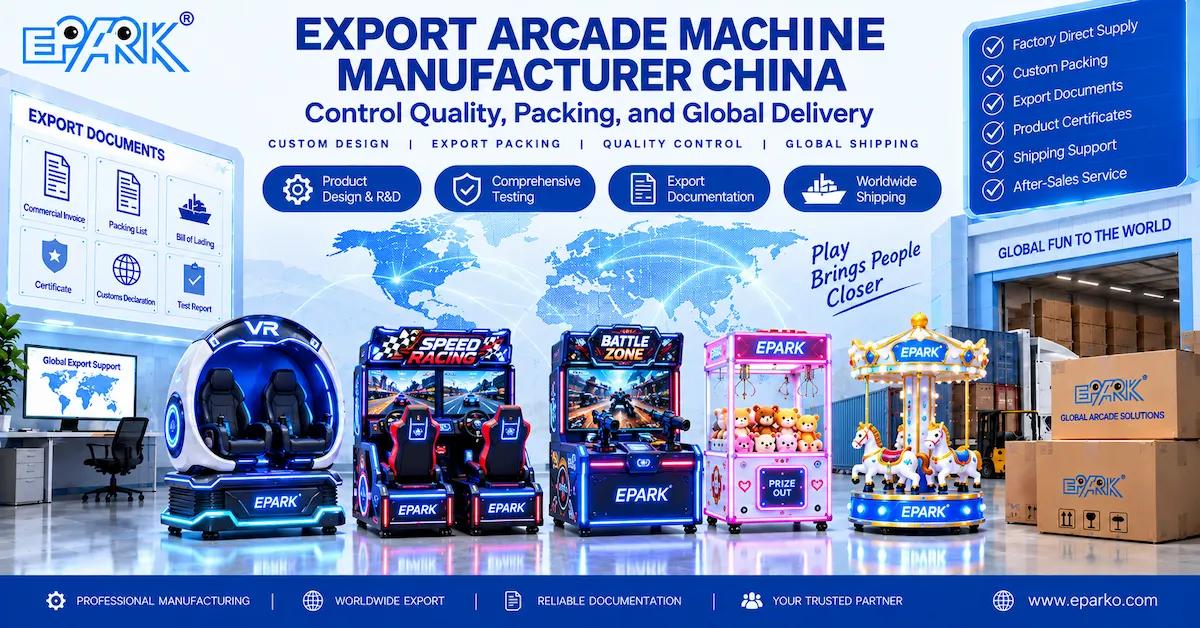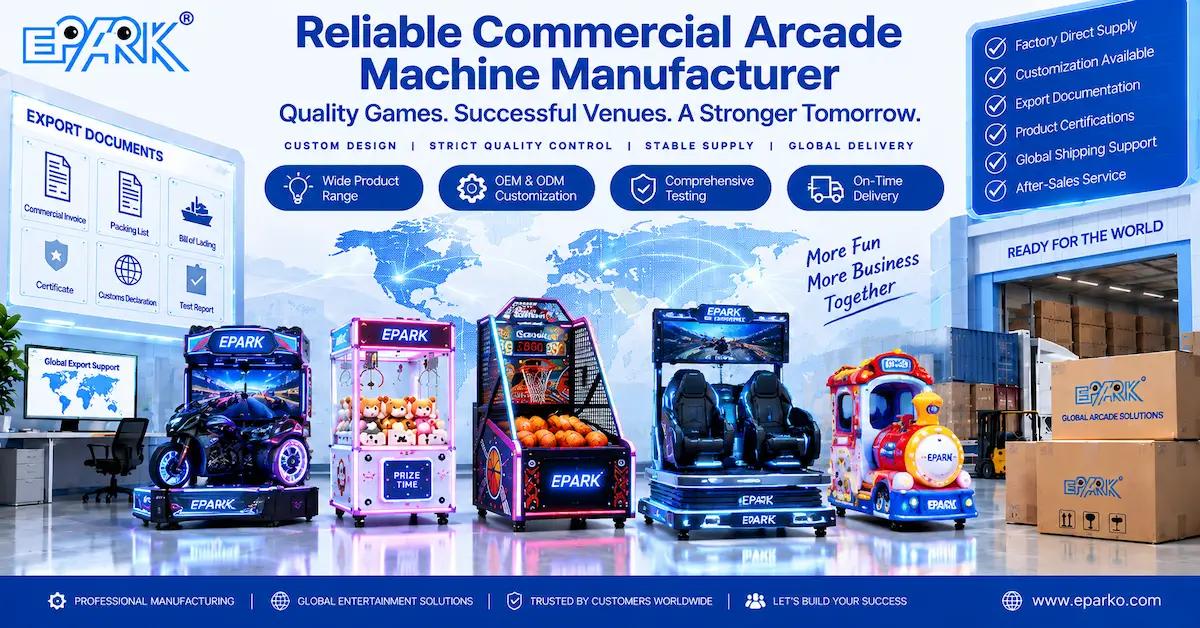


What Should an Export Arcade Machine Manufacturer China Supplier Actually Provide?
Buyers searching for an export arcade machine manufacturer China supplier usually need more than machines that can leave a factory and enter a container. An international commercial order has to connect product selection, destination-specific configuration, production, inspection, export packing, commercial documentation, freight coordination, destination receiving, and long-term technical support. EPARK describes this sequence in its international order process, where international arcade purchasing is treated as a controlled project rather than a simple inquiry-payment-shipment transaction.
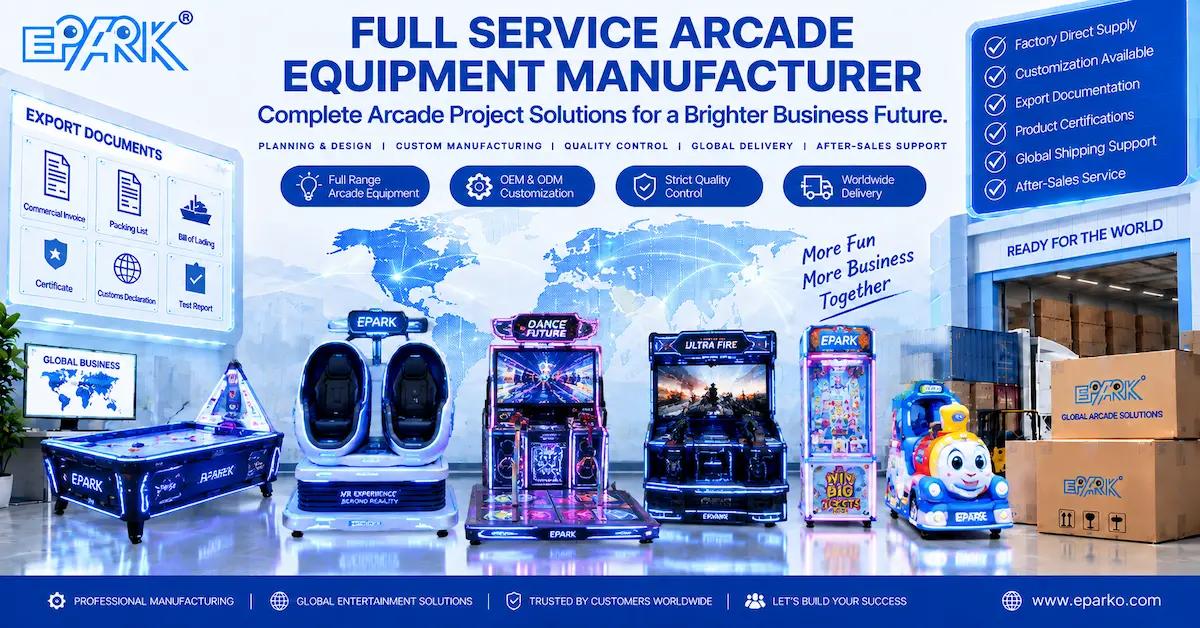
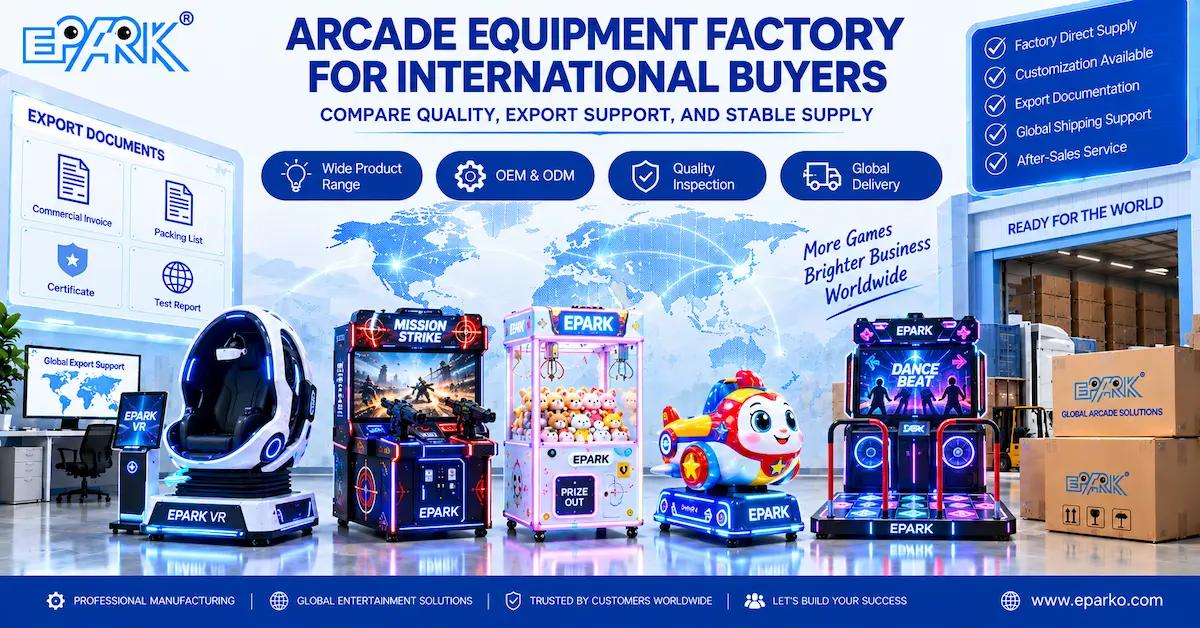
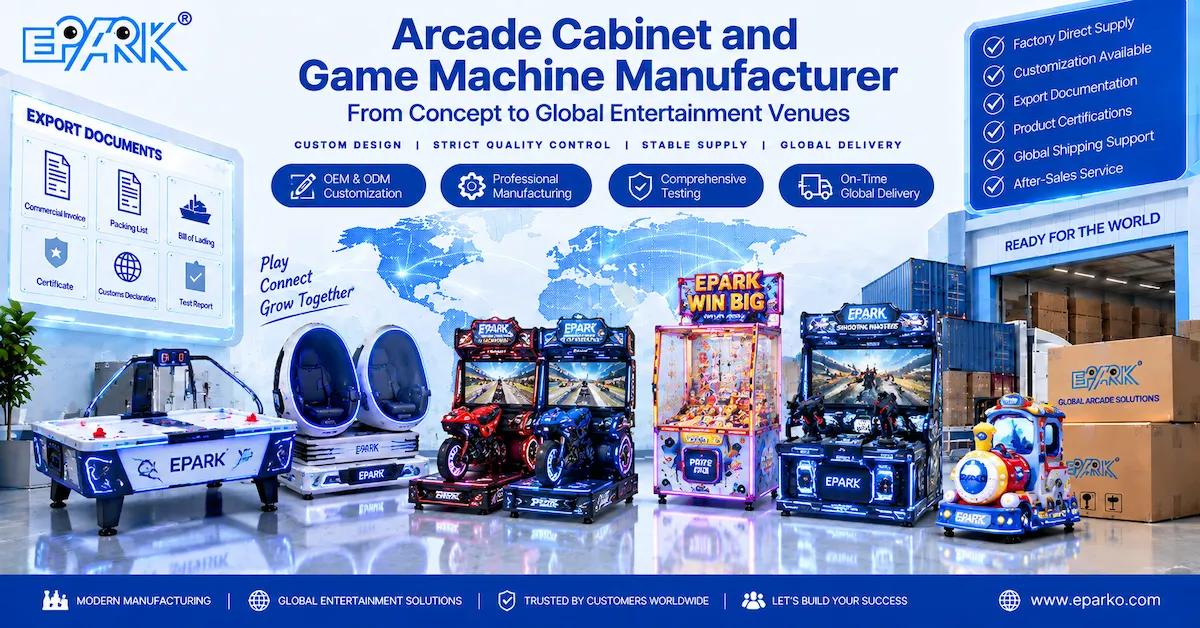
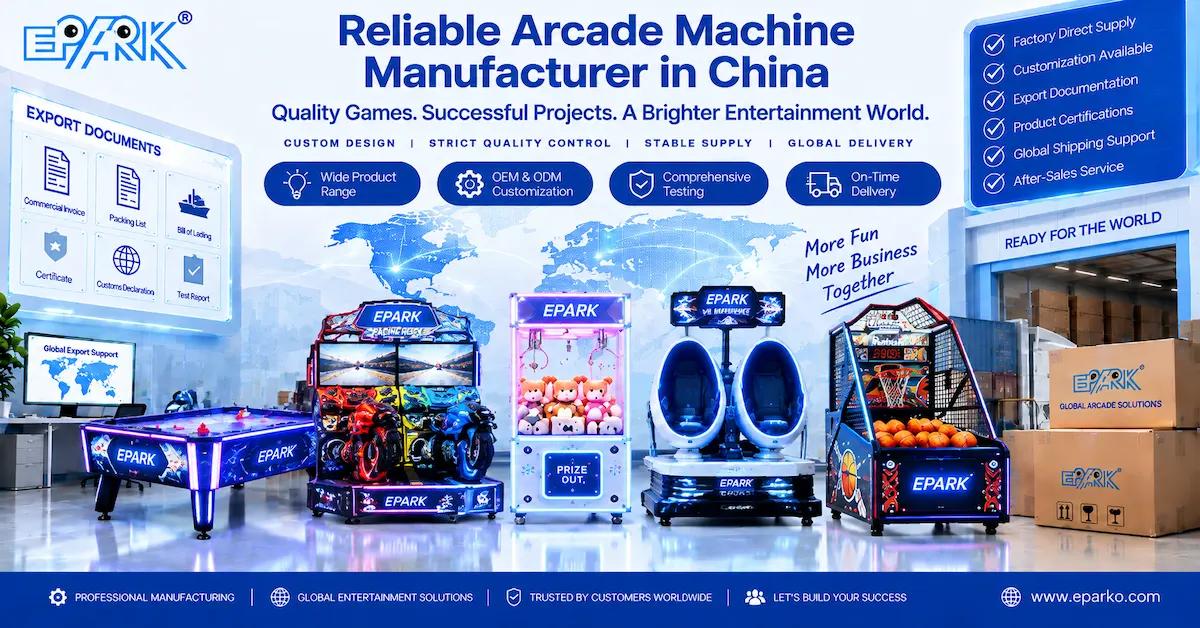
EPARK’s About Us page describes the company as a commercial amusement-equipment provider integrating R&D, design, production, and sales, with product directions including coin-operated arcade machines, VR simulators, kiddie rides, and gift machines, together with OEM customization, venue consulting, and technical assistance. Overseas buyers should convert those broad capabilities into an order-specific scope: exact models, quantities, configurations, inspection criteria, packing information, documentation, and service responsibilities.
Who Needs a Manufacturer With Real Export Capability?
An overseas distributor importing inventory for several customers has different priorities from an investor opening one complete FEC. The distributor needs repeatable product versions, identifiable packages, commercial documentation, spare-parts traceability, and predictable repeat orders. An FEC operator must coordinate multiple machine categories with floor planning, payment systems, installation resources, and a target opening schedule. Arcade chains may need identical configurations across several locations, while private-label brands may also require artwork, product codes, and packaging control.
For those buyers, “export experience” should mean more than being willing to arrange sea freight. The manufacturer should understand that international orders require market-specific configuration, export packaging, shipment preparation, document coordination, spare-parts planning, and remote technical support. EPARK’s factory capability guide describes these areas as part of international-order support.
Start With the Destination Market Before Selecting Machines
A machine suitable for one market should not automatically be copied into another order without reviewing destination conditions. Before the final equipment list is approved, provide the destination country, venue type, electrical requirements, preferred payment system, language requirements where applicable, local technical resources, delivery location, and any documentation requested by the importer or project owner.
For an FEC, add the floor plan and target player groups. For distributors, explain whether the equipment will go into stock or directly to named customer projects. This makes the quotation more useful because the manufacturer can evaluate the equipment in the context in which it will actually be used.
EPARK’s arcade machines for overseas buyers guide similarly recommends confirming specifications, configuration, testing, packing, installation, and maintenance requirements against the destination market rather than choosing equipment only from cabinet appearance.
Build a Mixed Equipment List Around Commercial Applications
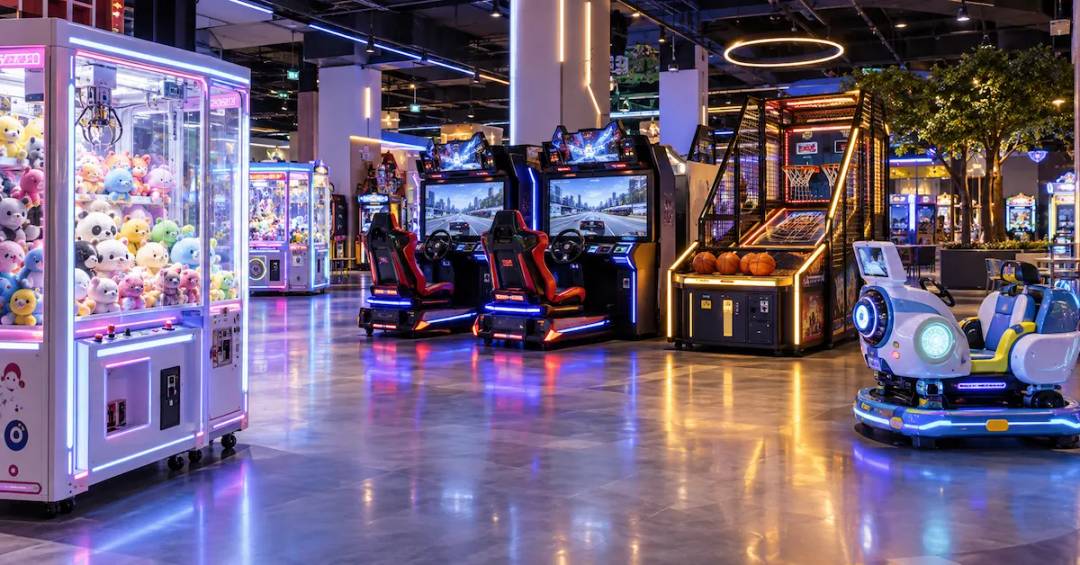
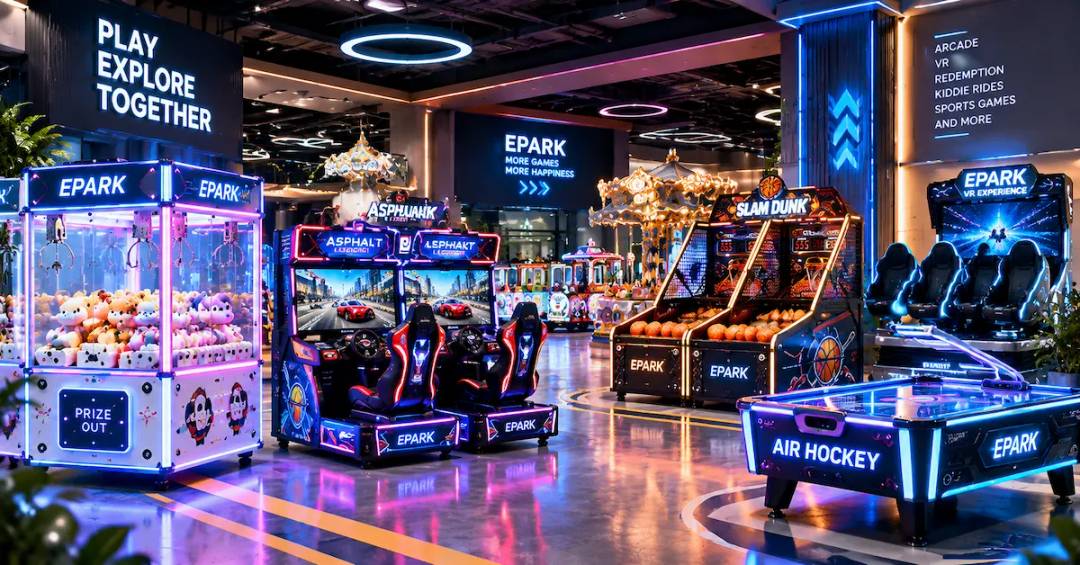
A commercial export order may combine different arcade categories, but every category creates different operating, packing, and maintenance requirements.
| Equipment Category | Typical Commercial Application | What Overseas Buyers Should Confirm | Export / Service Concern |
|---|---|---|---|
| Claw machines | Prize zones, shopping malls, mixed arcades | Prize capacity, grab system, payment configuration, refill access | Transparent-panel protection, locks and service parts |
| Racing machines | Competitive arcade and FEC zones | Steering, pedals, displays, seats, linking where applicable | Seat/cabinet package structure and control spares |
| Redemption games | Ticket or point-based FEC operation | Scoring, reward output, payment interface | Ticket/point integration and service components |
| Basketball games | Sports and social-play zones | Sensor system, scoring, player clearance | Cage/frame packing and destination assembly |
| Shooting games | Skill-based entertainment | Controllers, displays, sensors, game configuration | Controller protection and calibration |
| VR / simulators | Immersive attraction zones | Hardware, software, motion where applicable | Accessories, software, setup and operator support |
| Kiddie rides | Family areas | Operating cycle and intended use | Mechanical inspection and installation conditions |
Buyers should shortlist product families first, then request actual model numbers and model-specific data from EPARK Products. A category name is not a substitute for an approved configuration.
Create an Export Specification Sheet Before Comparing Quotations
A professional export arcade machine manufacturer China proposal should identify what is actually being supplied. Two cabinets that look similar can contain different controls, payment hardware, software, accessories, or packing formats. If the specifications are not aligned, factory prices are not directly comparable.
| Specification Area | What the Buyer Should Confirm | Why It Matters |
|---|---|---|
| Machine identity | Model, revision and quantity | Production and repeat-order control |
| Operating dimensions | Final assembled size | Venue layout |
| Packed dimensions | Size of each export package | Freight and container planning |
| Net / gross weight | Machine and packed weight | Handling and unloading |
| Electrical requirements | Model-specific supply information | Destination preparation |
| Payment system | Coin, token, card or approved system | Commercial operation |
| Controls | Joystick, steering, sensors, buttons or other interfaces | Inspection and maintenance |
| Software | Version, language and licensing where relevant | Operation and repeat orders |
| Reward functions | Ticket, point or prize system | FEC integration |
| Accessories | Keys, cables, hardware and manuals | Receiving inspection |
| Spare parts | Agreed opening/service kit | Maintenance readiness |
| Packaging | Shipping configuration and materials | Transport protection |
| Documents | Commercial and applicable technical documents | Import and project handover |
Keep unresolved fields visible. Do not allow unanswered questions to turn automatically into factory defaults.
Check Manufacturing Capability Through the Actual Order
A factory tour or production video is useful, but buyers should connect factory evidence to the machines being purchased. Ask which products are manufactured or assembled by the supplier, which critical systems are integrated internally, how customization instructions reach production, and who approves component substitutions.
EPARK’s factory capabilities guide states that commercial machine production requires coordination across materials, assembly, customization, quality control, packaging, and shipment preparation, especially when an order contains multiple categories.
Review Cabinet and Assembly Workmanship
Check doors, locks, panel alignment, graphics, surface condition, fasteners, visible wiring, control mounting, service openings, and the parts relevant to the selected machine. “Good workmanship” should become a list of observable inspection points.
Review Electronics and Service Parts
Ask how the payment device, power supply, controller, displays, sensors, controls, motors, or other service-critical components can be identified later. This is particularly important for distributors because the person requesting a replacement part in the future may not have participated in the original purchase.
Make Quality Control Specific to the Export Order
International shipping makes post-delivery corrections more difficult, so the buyer should define acceptance before equipment is packed. EPARK’s Design & Process describes assembly, electrical/control integration, functional testing, packaging, and delivery preparation as connected production stages.
Functional Inspection
Where applicable, verify payment recognition, credit registration, game start, player controls, display, audio, scoring, sensors, reward output, mechanical movement, and reset behavior.
Configuration Inspection
Check the approved payment system, artwork, language, software/version information, accessories, and buyer-specific options.
Cosmetic Inspection
Review surfaces, graphics, lighting, cabinet alignment, transparent panels, doors, labels, and visible damage.
Packing Inspection
Confirm machine identity, package count, accessories, keys, manuals, service parts, and any separated structures before shipment.
For bulk orders, inspection should also consider consistency between machines rather than proving only that one sample works.
Separate Machine Testing From Export Packaging
A machine that passes gameplay testing can still arrive with shipping damage if packing is poorly planned. Export packaging should therefore be treated as a separate acceptance stage.
EPARK’s container loading guide recommends planning from package-level dimensions, weights, package counts, handling requirements, protective materials, and loading records instead of estimating shipment capacity from machine count alone.
Ask the supplier to identify whether each machine ships fully assembled or in approved sections. Racing seats, basketball structures, decorative headers, accessories, or other elements may create multiple packages. Each separated package should remain traceable to its parent machine so the receiving team does not have to identify parts after opening the container.
Use Actual Packed Data for Container Planning
“Ten machines fit into one container” has little value without knowing which machines and how they are packed. Container utilization should use the final packed dimensions, package count, gross weight, handling restrictions, and competent loading assessment.
For mixed orders, also decide whether the unloading sequence matters. Equipment required first during venue installation may need to be considered during planning, provided that the final arrangement remains safe and technically appropriate.
EPARK’s published container loading service article describes a company-reported mixed 40HQ shipment involving several machine categories and emphasizes the relationship between equipment mix, protective packing, loading, and shipment records. That example should be treated as a case reference, not a universal machine-capacity formula.
Control Export Documents Against the Physical Shipment
An export order should maintain consistent model names, quantities, package counts, weights, buyer/consignee information, and shipment references. EPARK’s export documentation guide specifically emphasizes consistency between commercial orders, packing information, and shipment records.
Commercial Invoice
Review the seller, buyer, goods description, quantity, value, currency, and other agreed commercial information before final issuance.
Packing List
Use the actual packed packages rather than only catalog dimensions. Record package counts, gross weights, dimensions, and identification as required.
Transport Documents
Carrier or forwarder documents should be reviewed against the agreed shipper, consignee, route, and cargo information.
Product Documents
Keep product-related technical or conformity files separate from ordinary shipping paperwork. A commercial invoice does not prove technical compliance, and a product certificate does not replace a packing list.
The importer or its qualified customs/logistics advisers should confirm destination-specific requirements.
Clarify Freight Responsibilities Before Booking Shipment
An export arcade machine manufacturer China supplier may support export preparation or freight coordination, but this does not automatically mean the factory is responsible for every logistics activity.
Confirm who manages:
- Factory-to-port transportation
- Freight booking
- Container coordination
- Cargo insurance, if selected
- Commercial documents
- Customs-related procedures
- Destination charges
- Import clearance
- Inland delivery
- Unloading
- Venue installation
EPARK’s international arcade machine shipping guide similarly distinguishes machine packing and shipment coordination from destination activities and advises buyers to define the scope in the quotation.
Compare Total Delivered Cost Instead of Factory Price Alone
For international purchasing, the lowest EXW or factory quotation does not necessarily create the lowest delivered cost. Compare equivalent configurations first, then include the activities required to put the equipment into operation.
Potential cost items include the machine, customized hardware, payment system, branding, spare parts, packing, freight, insurance if applicable, destination charges, duties/taxes where applicable, local delivery, unloading, assembly, installation, and technical work.
A useful supplier comparison separates:
| Cost Area | Question to Ask |
|---|---|
| Equipment | Is the machine configuration identical? |
| Payment | Which hardware/settings are included? |
| OEM/ODM | Which customization is standard or separately charged? |
| Packing | What export protection is included? |
| Documentation | Which supplier-side records are provided? |
| Freight | Which route and logistics services are included? |
| Spare parts | What service items are supplied? |
| Installation | What assistance is included? |
| After-sales | What warranty/support responsibilities apply? |
This prevents a low base price from hiding work that will later be transferred to the importer.
Handle OEM and ODM Requirements Before Production Starts
Export distributors frequently need brand-specific equipment. EPARK publishes OEM/ODM support through its About Us and Why Choose Us pages. Buyers should separate cosmetic changes from technical changes.
Brand logos, artwork, colors, product labels, and packaging may be handled as controlled OEM requirements. Changes to payment hardware, structures, controls, software, or game functionality may require deeper technical evaluation. Keep the buyer’s private-label model code connected to the factory’s underlying product version so future spare parts and repeat orders remain traceable.
For deeper development, use a prototype or first-unit approval rather than releasing mass production from a rendering alone.
Build Spare Parts Into the Export Order
International downtime can be expensive because a small replacement component may require cross-border shipping. Spare-parts planning should therefore happen before the first shipment.
Potential parts depend on the selected machine but may include controls, switches, sensors, payment devices, cables, power supplies, boards, motors, locks, or machine-specific mechanisms. Do not simply purchase the same kit for every machine.
The buyer should ask which components are suitable for local replacement, which require technical guidance, and how future parts will be matched to machine versions. EPARK’s Service page can be used as the starting point for discussing technical and parts support.
Prepare Installation Before the Container Arrives
The shipment arriving at the destination is not the end of the project. Before dispatch, assign responsibility for unloading, internal transportation, approved assembly work, electrical preparation, network requirements, payment-system setup, commissioning, and staff training.
EPARK’s FAQ describes remote setup guidance and operating information. Buyers should confirm which support applies to their actual order and what work remains with local technicians or other contractors.
After installation, repeat the important operational tests using the destination configuration rather than assuming that a machine that passed factory QC remains ready for public operation immediately after transport and assembly.
How to Compare Export Arcade Machine Manufacturers
A structured evaluation makes supplier selection more objective.
| Evaluation Area | Weak Evidence | Better Buyer Evidence |
|---|---|---|
| Product selection | Large catalog | Specific models matched to the project |
| Factory capability | General factory photos | Process related to the actual machines |
| Specification | Product name only | Controlled model/configuration sheet |
| QC | “100% tested” | Defined order-specific acceptance checks |
| Packing | “Export standard” | Package dimensions, records and identification |
| Documents | General document claim | Shipment-specific commercial records |
| Shipping | “Worldwide delivery” | Defined logistics responsibilities |
| OEM/ODM | Logo capability only | Version-controlled customization process |
| Spare parts | “Parts available” | Model-linked parts identification |
| Repeat orders | “Same model” | Revision and change-control process |
A strong manufacturer should reduce uncertainty at every stage from quotation to future maintenance.
What Should You Send EPARK for an Export Arcade Machine Quote?
Prepare the destination country, buyer type, venue or distribution plan, selected machine categories, quantities, payment method, branding requirements, target shipment period, and logistics preference. For an FEC, also send the measured floor plan and target visitors. For a distributor, explain whether the machines are for inventory, a specific customer project, or a repeat product program.
Review EPARK Products and submit the purchasing brief through Contact Us. Ask the quotation to separate machine configuration, customization, spare parts, export packing, freight scope, optional services, and items still requiring confirmation.
Frequently Asked Questions
1. What Makes an Arcade Machine Manufacturer Suitable for Export Orders?
A suitable manufacturer should be able to connect machine specifications with production, QC, export packing, commercial documents, shipment preparation, spare-parts identification, and after-sales support. Buyers should confirm the exact scope for the actual order.
2. What Specifications Should Overseas Buyers Confirm First?
Confirm the exact model, configuration, operating dimensions, packed dimensions, weight, electrical requirements, payment system, accessories, software where applicable, packaging, and relevant product documentation.
3. Can Different Arcade Machine Categories Ship in One Container?
They can be considered for mixed shipment, but the loading plan should use actual packed dimensions, weights, package counts, and handling requirements. Do not rely on a generic machine quantity.
4. What Documents Should an Export Arcade Machine Supplier Provide?
Common supplier-side records may include commercial invoices, packing lists, product/order information, and packing or loading information. Other documents depend on the shipment and destination; confirm requirements with the appropriate logistics and customs professionals.
5. How Should I Verify Quality Before International Shipment?
Use an order-specific checklist and request relevant testing evidence. Check function, configuration, appearance, accessories, payment, customization, and packing separately.
6. Can EPARK Customize Machines for Overseas Distributors?
EPARK publishes OEM/ODM and customization capabilities. The specific branding, hardware, payment, packaging, or design scope should be confirmed for the selected models before production.
7. Should Spare Parts Be Included With the First Export Order?
Discuss a model-specific starter spare plan. Prioritize parts according to the equipment mix, operational importance, local maintenance resources, and future replenishment time.
8. Does Shipping Support Include Customs Clearance and Local Delivery?
Not automatically. Define which party handles freight, insurance where applicable, customs-related processes, destination charges, local transport, unloading, and installation.
9. How Can Distributors Maintain Consistency on Repeat Orders?
Retain approved model references, configuration records, artwork, payment settings, QC criteria, packaging information, and relevant service-part references. Request a documented change review before repeat production.
10. Where Can I Request an Export Arcade Machine Proposal?
Review EPARK’s commercial arcade equipment and send your destination, equipment list, quantities, payment requirements, customization, and shipment requirements through EPARK Contact Us.
Conclusion
Choosing an export arcade machine manufacturer China partner should be treated as an international supply-chain decision rather than a simple machine-price comparison. Overseas FEC operators, distributors, arcade chains, and project buyers should connect specifications, manufacturing, QC, OEM/ODM requirements, export packing, shipment documents, logistics responsibilities, spare parts, and installation preparation into one controlled purchasing process.
EPARK combines commercial arcade equipment manufacturing with international-order, customization, and project-support capabilities, while the exact product configuration, documentation, shipment scope, and technical responsibilities should still be confirmed for each order. Review EPARK commercial arcade solutions or contact EPARK with your destination, machine list, quantities, payment configuration, customization requirements, and shipping plan to discuss an export-ready arcade equipment proposal.
Disclaimer
The information provided on this website is for general informational purposes only.
While EPARK Arcade Game Machine Manufacturer strives to ensure accuracy and reliability, no warranties—express or implied—are made regarding completeness, performance, or applicability.
Product specifications, designs, and features may vary depending on usage, customization, and customer requirements.
Buyers are responsible for verifying all technical details, compliance certifications, and suitability before procurement.
EPARK shall not be held liable for any direct, indirect, incidental, or consequential damages arising from the use of this website or its content, including but not limited to business losses, data errors, or equipment misuse.
For tailored solutions or further verification, please visit our Contact Us
Intellectual Property Notice
All articles, product images, videos, catalogs, software, and related materials published on this website are the intellectual property of EPARK, unless otherwise stated.
Unauthorized reproduction, distribution, modification, or commercial use of any content is strictly prohibited without prior written consent from EPARK.
EPARK reserves the right to take legal action against any unauthorized use, including but not limited to copyright infringement, misrepresentation, or unfair competition.
Trademarks
The name EPARK, the EPARK logo, and all related brand elements displayed on this website are registered trademarks or trade names of Guangzhou EPARK Electronic Technology Co., Ltd.
Other product names, company names, or logos mentioned on this site may be trademarks of their respective owners.
Unauthorized use of EPARK's trademarks for commercial purposes, including advertising, promotions, or product packaging, is strictly prohibited.
Governing Law
These terms are governed by the laws of the People's Republic of China.