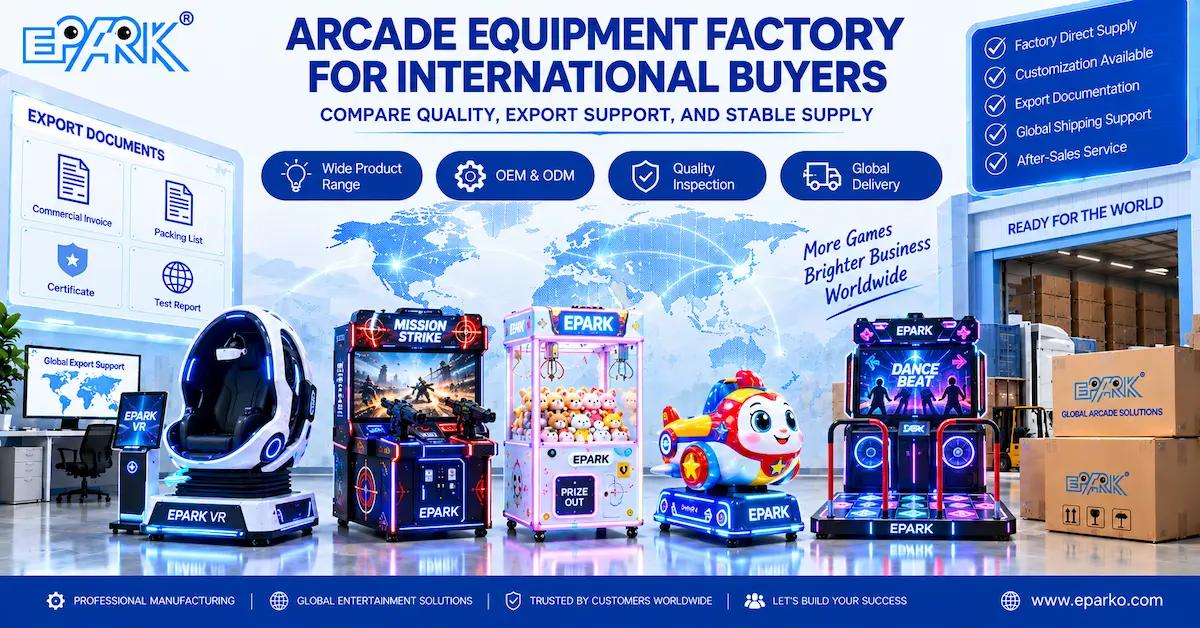


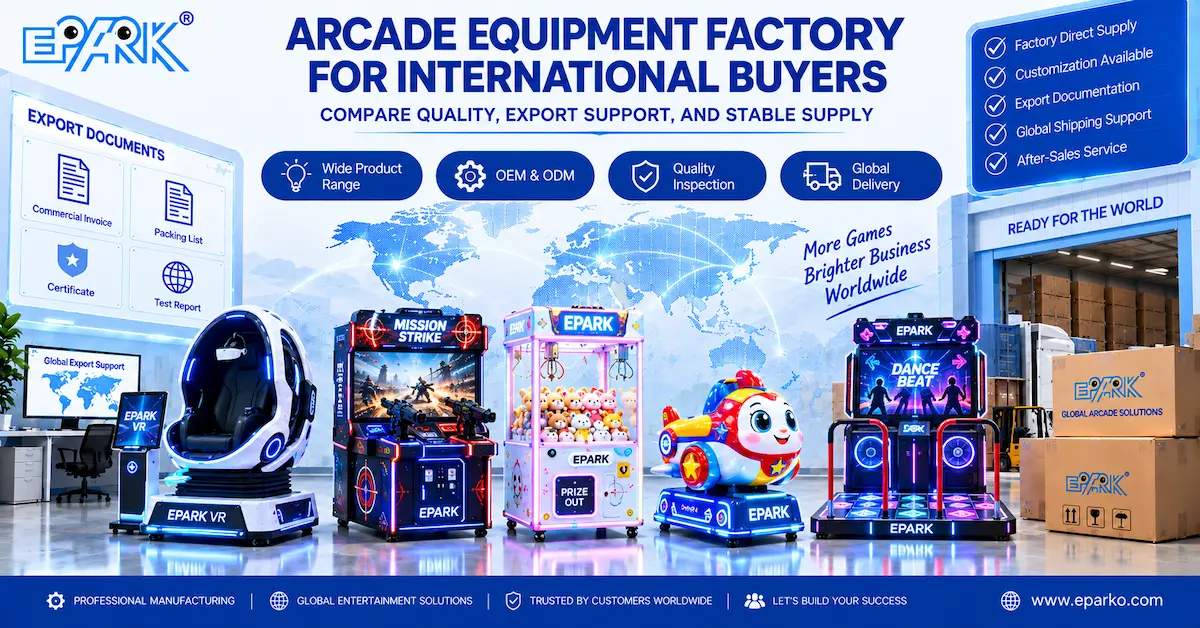
What Should an Arcade Equipment Factory for International Buyers Actually Provide?
An arcade equipment factory for international buyers should do more than manufacture attractive game cabinets and arrange international delivery. Overseas distributors, FEC operators, arcade chains, and project buyers need a supplier that can connect product selection, destination-specific configuration, production, inspection, export packing, shipment preparation, installation support, and future maintenance into one controlled purchasing process.
For example, a racing cabinet selected for one market may require a different payment configuration, electrical setup, language, packaging arrangement, or documentation package when sold into another region. A reliable factory should therefore help buyers define the actual machine version before production rather than leaving important decisions until the equipment is ready to ship.
EPARK’s Products, Design & Process, and Service pages provide useful starting points for discussing product categories, manufacturing, testing, delivery, and technical support. International buyers should turn those general capabilities into a written order-specific specification.
Which International Buyers Benefit Most From Factory-Direct Sourcing?
Factory-direct sourcing is particularly relevant when the buyer requires multiple machines, customization, repeat orders, or an entire entertainment project. A distributor may prioritize stable model references and production consistency. A new FEC investor may need machine selection, layout coordination, payment planning, shipping information, and technical support. Arcade chains may need the same approved configuration reproduced across several locations.
Private-label brands have an additional requirement: they must preserve the relationship between their own product code and the manufacturer’s underlying machine version so future spare-parts orders remain traceable.
Factory-direct purchasing is not automatically ideal for every case. A venue that needs one replacement machine immediately may benefit more from local stock. A buyer without local maintenance resources may also value a domestic service partner. The purchasing route should therefore be selected according to volume, customization, delivery urgency, technical capability, and long-term service requirements.
Start With the Destination Market Before Selecting the Equipment
International sourcing should begin with destination conditions rather than machine appearance. Provide the factory with the destination country, venue type, available space, target players, intended payment method, electrical conditions, branding requirements, local technical capability, and expected shipment period.
For FEC projects, a measured floor plan is particularly useful because equipment size alone does not represent the real operating footprint. Players need standing or seating space, staff need maintenance access, prize machines require refill access, and larger sports equipment needs adequate clearance.
International distributors should also explain whether machines are being purchased for warehouse stock or for a specific customer project. A stock order generally prioritizes broadly usable configurations and repeatability, while project-specific orders can be adapted more closely to a venue.
Buyers can review the available commercial categories through EPARK Products before preparing the final inquiry.
Compare the Arcade Equipment Mix Before Placing a Bulk Order
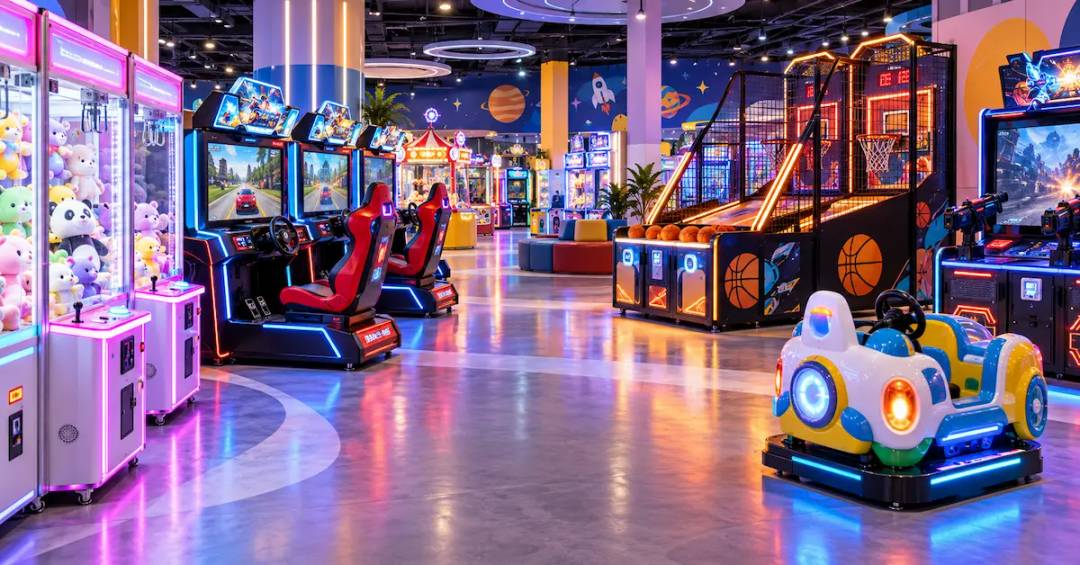
A complete international order can include several machine families. Each category creates different operating, maintenance, packaging, and installation requirements.
| Equipment Category | Typical Commercial Application | What Buyers Should Confirm | International Project Concern |
|---|---|---|---|
| Claw machines | Prize zones, malls, arcades | Grab mechanism, prize space, payment setup, refill access | Transparent panel protection and mechanism spares |
| Racing machines | Competitive arcade and FEC zones | Display, steering, pedals, seat, linking where applicable | Shipping configuration and control maintenance |
| Redemption games | Ticket/point-based FEC zones | Scoring, reward output, payment interface | Redemption-system compatibility |
| Basketball games | Sports and social-play zones | Sensors, scoring, structure, operating clearance | Frame packing and destination assembly |
| Shooting games | Skill-based entertainment | Controllers, display, sensors, game version | Controller protection and calibration |
| VR / simulators | Immersive attraction zones | Hardware, software, controls, motion where applicable | Setup, software and technical assistance |
| Kiddie rides | Family and children’s areas | Operating cycle, controls and intended application | Placement, assembly and maintenance |
The objective is not to maximize the number of product categories. A better machine mix gives each category a commercial role and remains manageable for venue staff.
Create an Order Specification Before Comparing Factory Prices
When evaluating an arcade equipment factory for international buyers, require a model-level specification before comparing quotations. Similar-looking machines can contain different controls, payment systems, electronics, software configurations, accessories, and packaging.
The following table is a buyer-side specification framework. Exact values should be confirmed for the selected EPARK equipment rather than assumed across all machines.
| Specification Area | Information to Confirm | Why International Buyers Need It |
|---|---|---|
| Machine identity | Model, revision, quantity | Repeat-order and QC control |
| Assembled dimensions | Final L × W × H | Venue planning |
| Operating clearance | Player and service space | Layout accuracy |
| Packed dimensions | Package size and quantity | Freight planning |
| Weight | Net and gross weight | Handling and unloading |
| Electrical requirements | Model-specific voltage, frequency and power | Destination preparation |
| Payment system | Coin, token, card or approved system | Operating compatibility |
| Controls | Buttons, joysticks, steering, sensors, etc. | QC and spare-parts planning |
| Display / audio | Approved configuration | Supplier comparison |
| Software | Version, language and licenses where relevant | Operation and repeat orders |
| Rewards | Ticket, points or prize functions where applicable | FEC system integration |
| Accessories | Keys, cables, hardware and manuals | Receiving inspection |
| Spare parts | Agreed service components | Maintenance readiness |
| Packaging | Shipping configuration | International delivery |
| Documentation | Applicable technical and commercial files | Handover and import preparation |
Unresolved items should remain clearly marked instead of silently becoming factory defaults.
Evaluate Materials and Components at the Machine Level
General statements such as “premium cabinet” or “high-quality components” are not enough for B2B purchasing. Different game categories can use different cabinet structures, exterior panels, transparent parts, electronics, controls, motors, sensors, displays, lighting, and payment components.
The buyer should therefore ask which construction and components apply to the selected machine and which items are important for long-term service.
Cabinet Construction
Check the structural frame, external panels, service doors, locks, control areas, graphics, and transparent surfaces where applicable. Commercial equipment should be evaluated according to its intended operating environment.
Player Controls
Buttons, joysticks, steering assemblies, pedals, shooting controllers, or other inputs should match the approved production version and remain accessible for authorized servicing.
Electronic Components
Power supplies, boards, displays, wiring assemblies, sensors, and payment hardware should be identifiable where they affect future replacement or compatibility.
Mechanical Systems
Prize mechanisms, motors, ball-return systems, moving seats, or other assemblies should be evaluated according to the selected machine rather than through one generic inspection process.
Inspect Factory Workmanship With Observable Criteria
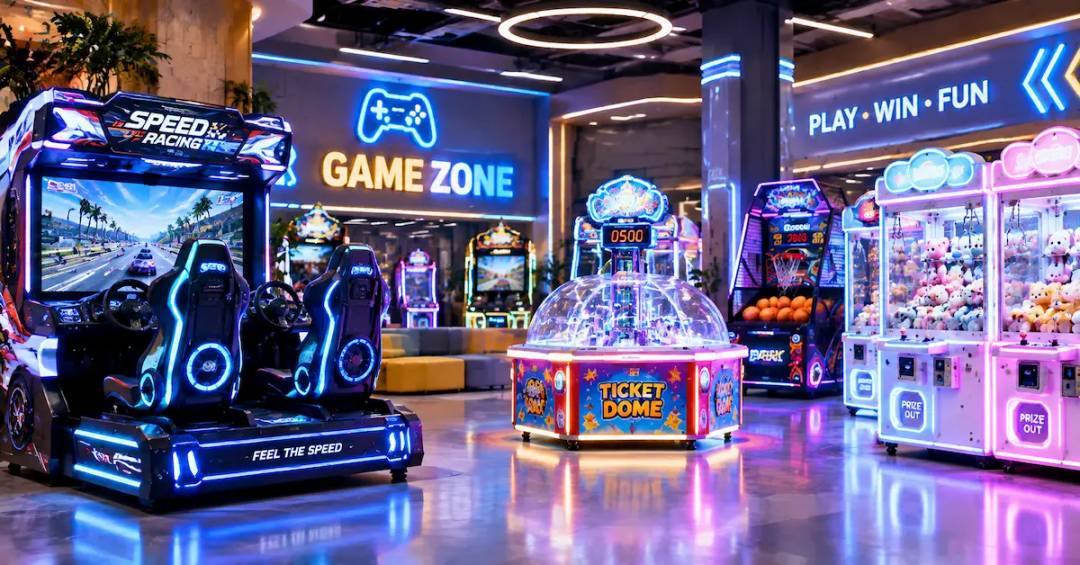
“Strict workmanship” becomes useful only when it is translated into specific checks. International buyers should define observable criteria that can be inspected before machines enter international logistics.
Cabinet inspection can cover alignment, graphics, lighting, doors, locks, surface condition, labels, and visible fasteners. Internal inspection can review relevant cable routing, component mounting, connector security, and service access. Player controls should be securely mounted and operate according to the approved configuration.
For identical machines in a bulk order, consistency should also be inspected. A batch in which every cabinet looks similar but uses different payment settings or undocumented hardware revisions can create problems after installation.
EPARK’s Design & Process can be used to discuss how the selected equipment progresses through manufacturing and testing.
Turn Factory QC Into an International Buyer Acceptance Plan
International transport makes correction more difficult, so quality acceptance should happen before packing.
Functional Testing
The applicable complete operating sequence should be tested:
payment recognition → credit registration → game start → controls → gameplay → score/reward → reset
Additional checks depend on the machine and can include displays, sound, lighting, sensors, steering, pedals, ticket output, prize mechanisms, shooting controls, or simulator functions.
Configuration Testing
Verify payment hardware, language, software/version information where relevant, artwork, custom options, and accessories.
Cosmetic Inspection
Inspect visible cabinet condition, graphics, transparent areas, controls, lights, doors, and labels.
Packing Inspection
Confirm package identity, accessories, manuals, keys, spare parts, and separated machine sections.
A machine can pass gameplay testing but still have the wrong artwork, payment device, or packaging. These inspection stages should therefore remain separate.
Handle Certifications and Product Documents Before Shipment
International buyers should determine which product documentation is required for their destination before the order is finalized. Requirements may vary by product category, market, project owner, importer, or configuration.
Do not assume that every document associated with a supplier automatically covers every machine. Ask which documents relate to the selected model or product family and whether technical customization affects their scope.
Commercial shipping paperwork should also be treated separately from product-related technical documents. A packing list describes the shipment; a manual explains operation; a technical report serves another purpose.
Buyers can review general purchasing and support information through EPARK FAQs, while destination-specific requirements should be confirmed by the relevant importing or project professionals.
Compare Factory Capacity Using Your Actual Order Mix
Overall factory capacity does not tell an international buyer when a specific order will be ready. A bulk batch of standard claw machines can require a very different production sequence from a customized shipment containing racing simulators, sports games, redemption equipment, and VR machines.
Ask for a schedule covering specification approval, customization approval, production, testing, corrections, packing, and shipment readiness.
Keep the factory-ready date separate from international transit, customs-related procedures, local delivery, unloading, installation, and commissioning.
This distinction is particularly important when an FEC is planning around an opening date. The manufacturing schedule and the venue-opening schedule are related, but they are not the same timeline.
Compare Total International Sourcing Cost, Not Only Factory Price
A quotation from an arcade equipment factory for international buyers should be evaluated according to the total commercial scope.
| Cost Area | Buyer Question |
|---|---|
| Machine | What exact configuration is included? |
| Payment system | Is the required reader or acceptor included? |
| Customization | What artwork or hardware changes are included? |
| Software | Are licenses or accounts required? |
| Spare parts | What is included with the first shipment? |
| Packaging | What export protection is supplied? |
| Freight | Which logistics services are included? |
| Documentation | Which factory-side files are supplied? |
| Installation | What technical support is included? |
| Destination work | What remains the buyer’s responsibility? |
One factory may quote a lower equipment price but exclude export packing, payment hardware, spare parts, or technical work. Another quotation may include those items. The buyer should normalize the scope before comparing the totals.
Separate Standard Supply, OEM, and ODM Requirements
Not every international project needs a custom machine.
| Purchasing Route | Typical Scope | Suitable Buyer | Main Control Point |
|---|---|---|---|
| Standard machine | Existing production configuration | Fast commercial sourcing | Exact included specification |
| OEM branding | Logo, artwork, colors, labels | Distributors and private-label brands | Artwork revision |
| Configured OEM | Existing machine plus approved market-specific changes | Regional distributors and chains | Compatibility |
| ODM development | Deeper cabinet or functional development | Differentiated product programs | Prototype and technical validation |
| FEC project solution | Multiple equipment categories plus planning | New venues and expansions | Equipment mix and responsibility scope |
EPARK presents customization and project-support capabilities through Why Choose Us. International buyers should distinguish visual branding from changes that affect structures, controls, software, payment systems, or machine functionality.
Plan Export Packaging Around the Final Machine Version
International packing should be planned from the final approved machine rather than an early catalog specification. Custom headers, seats, basketball structures, simulator assemblies, accessories, or control systems can alter the package size and number of shipping units.
Before shipment, request the final packed dimensions, gross weights, package counts, package identification, locations of accessories, and identification of any separated machine structures.
For a mixed FEC order, every separate package should remain connected to the corresponding machine. This allows the receiving team to understand what belongs together before opening and assembling the equipment.
Broader shipping and delivery responsibilities can be discussed through EPARK’s Service process.
Prepare Installation Before International Delivery
An overseas equipment order is not complete when the machines leave the factory. Buyers should determine who will handle unloading, internal transport, assembly, electrical preparation, network requirements, payment configuration, functional commissioning, and staff preparation.
Remote guidance can be appropriate for some standard machines, while larger projects may require stronger coordination between the factory, local contractor, venue team, and payment-system provider.
Do not interpret “installation support” as an automatic commitment to perform every on-site task. Ask for the support scope in writing before shipment.
Build Spare Parts and After-Sales Support Into the Original Order
International buyers should discuss maintenance before the first container is shipped. A low-cost component can create significant downtime if it has to be identified and transported internationally after a failure.
Potential service items may include controls, sensors, payment components, power supplies, control boards, motors, cables, switches, locks, and machine-specific mechanisms.
The actual spare-parts list should be based on the selected equipment rather than a generic universal package.
For future service requests, retain the machine model, order reference, production version, relevant component identification, fault description, and supporting photographs or video. This gives technical support staff a much stronger starting point than a message saying only that a machine has stopped working.
How Should International Buyers Compare Arcade Equipment Factories?
A factory should be evaluated on the evidence it can provide for the actual purchase.
| Evaluation Area | Weak Evidence | Stronger Evidence |
|---|---|---|
| Product capability | Large catalog | Model proposal matched to buyer requirements |
| Factory capability | General production photos | Workflow connected to selected machines |
| Specifications | Product names | Controlled machine configurations |
| Quality | “Strict QC” | Order-specific acceptance checklist |
| Documentation | General certificate list | Model/project-specific document review |
| OEM/ODM | “Customization available” | Controlled approval process |
| Packaging | “Export standard” | Package-level shipping information |
| Logistics | “Worldwide shipping” | Clearly assigned responsibilities |
| Spare parts | “Parts available” | Model-linked replacement support |
| Repeat orders | Same product name | Revision and change-control records |
When choosing an arcade equipment factory for international buyers, the strongest supplier is usually the one that reduces uncertainty throughout the order rather than simply presenting the longest product list.
What Should You Send EPARK for an International Arcade Equipment Quote?
To request a useful proposal from an arcade equipment factory for international buyers, prepare the destination country, buyer type, venue or distribution model, equipment categories, quantities, payment requirements, branding needs, target shipping period, and local technical resources.
For a complete FEC, include a measured floor plan, player groups, and desired machine mix. For a distributor, explain whether the purchase is for stock, a specific project, or a repeat product program.
Review EPARK Products, Design & Process, and Service, then submit the final purchasing requirements through Contact Us. A structured inquiry is more likely to produce a usable quotation than a general request for an arcade machine price list.
Frequently Asked Questions
1. What Should International Buyers Check First When Choosing an Arcade Equipment Factory?
Start with the destination, venue type, machine categories, quantities, payment requirements, electrical conditions, customization needs, and local service resources. These factors determine which products and factory capabilities matter most.
2. Is Buying Directly From an Arcade Factory Always Better?
Not always. Factory-direct purchasing is useful for bulk orders, customization, repeat purchasing, and project coordination. Local inventory or service may be more important for urgent single-unit purchases or buyers requiring immediate on-site support.
3. What Specifications Should Overseas Buyers Confirm Before Production?
Confirm model, dimensions, packed dimensions, electrical requirements, payment system, controls, software where applicable, accessories, spare parts, packaging, and applicable documentation.
4. Can Different Arcade Machine Categories Be Ordered Together?
Yes, a commercial order can contain multiple categories, but each machine should retain its own specification, QC requirements, packaging information, and service records.
5. How Should Buyers Verify Arcade Equipment Quality Before Shipping?
Use an order-specific acceptance checklist covering appearance, gameplay, controls, payment, relevant sensors or mechanisms, configuration, accessories, and packing. Retest any function that required correction.
6. Can EPARK Customize Equipment for International Markets?
EPARK provides customization and project-support information through its Why Choose Us page. Buyers should submit the exact branding, payment, configuration, or development requirements for the selected models.
7. Should Spare Parts Be Ordered With the First International Shipment?
For many FEC and distributor projects, a model-specific starter spare-parts plan is useful. The appropriate parts depend on the machine mix, maintenance capability, availability, and likely downtime impact.
8. Does International Shipping Include Installation?
Not automatically. Freight, customs-related processes, local delivery, unloading, assembly, electrical work, payment integration, and commissioning should be assigned separately in the project scope.
9. How Can Distributors Control Repeat-Order Consistency?
Retain the approved model/version, artwork, payment configuration, hardware options, software information where relevant, QC criteria, packaging, and spare-parts references. Ask the factory to identify changes before repeat production.
10. Where Can I Request an International Arcade Equipment Proposal?
Review EPARK commercial arcade equipment and submit your destination, equipment categories, quantities, payment system, customization, and project requirements through EPARK Contact Us.
Conclusion
Choosing an arcade equipment factory for international buyers is an international procurement and lifecycle decision rather than simply a search for the lowest equipment quotation. Distributors, FEC operators, arcade chains, and project buyers should evaluate destination configuration, technical specifications, manufacturing control, workmanship, QC, documentation, OEM/ODM capability, packaging, delivery responsibilities, spare parts, and after-sales support as one connected system.
A well-controlled purchasing process makes equipment easier to compare before ordering and easier to receive, install, maintain, and reorder after delivery. Review EPARK commercial arcade equipment or contact EPARK with your destination, venue or distribution plan, machine categories, quantities, payment requirements, customization needs, and target schedule to discuss an international arcade equipment proposal.
Disclaimer
The information provided on this website is for general informational purposes only.
While EPARK Arcade Game Machine Manufacturer strives to ensure accuracy and reliability, no warranties—express or implied—are made regarding completeness, performance, or applicability.
Product specifications, designs, and features may vary depending on usage, customization, and customer requirements.
Buyers are responsible for verifying all technical details, compliance certifications, and suitability before procurement.
EPARK shall not be held liable for any direct, indirect, incidental, or consequential damages arising from the use of this website or its content, including but not limited to business losses, data errors, or equipment misuse.
For tailored solutions or further verification, please visit our Contact Us
Intellectual Property Notice
All articles, product images, videos, catalogs, software, and related materials published on this website are the intellectual property of EPARK, unless otherwise stated.
Unauthorized reproduction, distribution, modification, or commercial use of any content is strictly prohibited without prior written consent from EPARK.
EPARK reserves the right to take legal action against any unauthorized use, including but not limited to copyright infringement, misrepresentation, or unfair competition.
Trademarks
The name EPARK, the EPARK logo, and all related brand elements displayed on this website are registered trademarks or trade names of Guangzhou EPARK Electronic Technology Co., Ltd.
Other product names, company names, or logos mentioned on this site may be trademarks of their respective owners.
Unauthorized use of EPARK's trademarks for commercial purposes, including advertising, promotions, or product packaging, is strictly prohibited.
Governing Law
These terms are governed by the laws of the People's Republic of China.