
What Does a Factory Direct Arcade Machine Supplier Mean for Commercial Buyers?
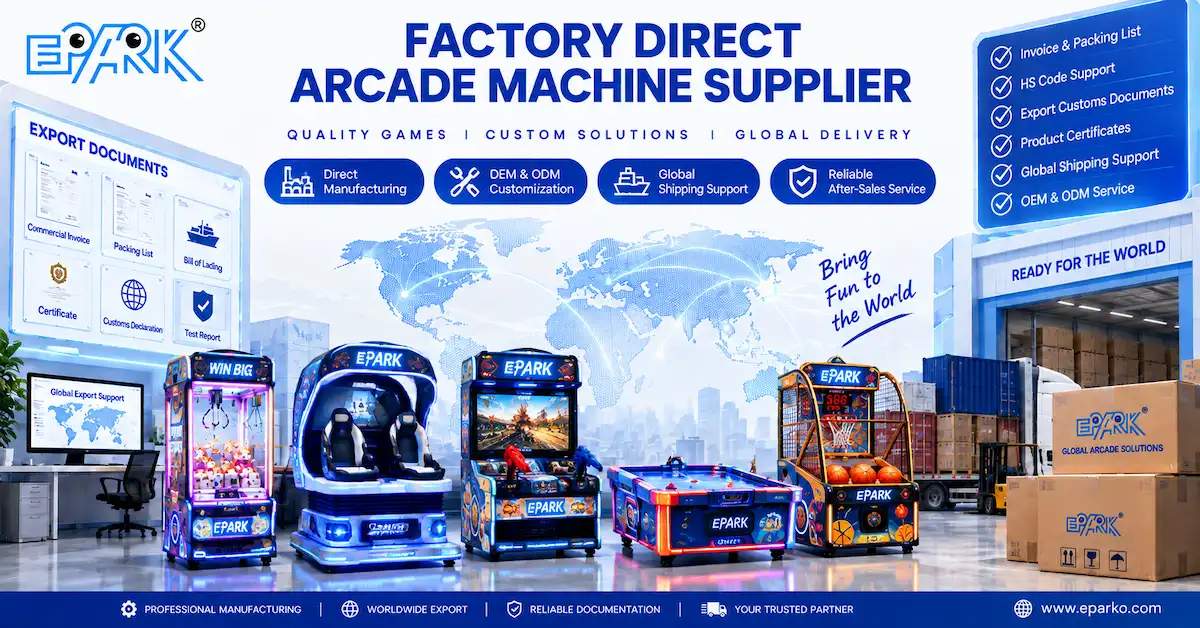
A factory direct arcade machine supplier should give a commercial buyer more control over product configuration, production communication, quality inspection, customization, packaging, and future technical support. The value is not simply removing an intermediary. For an FEC operator or distributor, factory-direct sourcing is useful when the manufacturer can connect the original machine specification to production records, testing, spare parts, and repeat orders.
EPARK positions its business around commercial arcade equipment manufacturing, customization, and complete entertainment-center solutions. Buyers can review the company’s manufacturing and service direction through EPARK About Us and its commercial arcade product range. The more important procurement question, however, is whether the factory can document and reproduce the configuration you approve.
A direct quotation without technical control is still a weak sourcing process.A professional buyer should therefore evaluate product fit, production capability, QC, commercial terms, and lifecycle support together.
Who Benefits Most From Factory-Direct Arcade Sourcing?
A factory direct arcade machine supplier is particularly relevant when purchasing decisions involve multiple machines, customized configurations, repeated orders, or an entire venue rather than one isolated cabinet. Typical buyers include FEC investors, arcade operators, regional distributors, importers, amusement-equipment wholesalers, mall entertainment projects, private-label brands, and multi-location arcade chains.
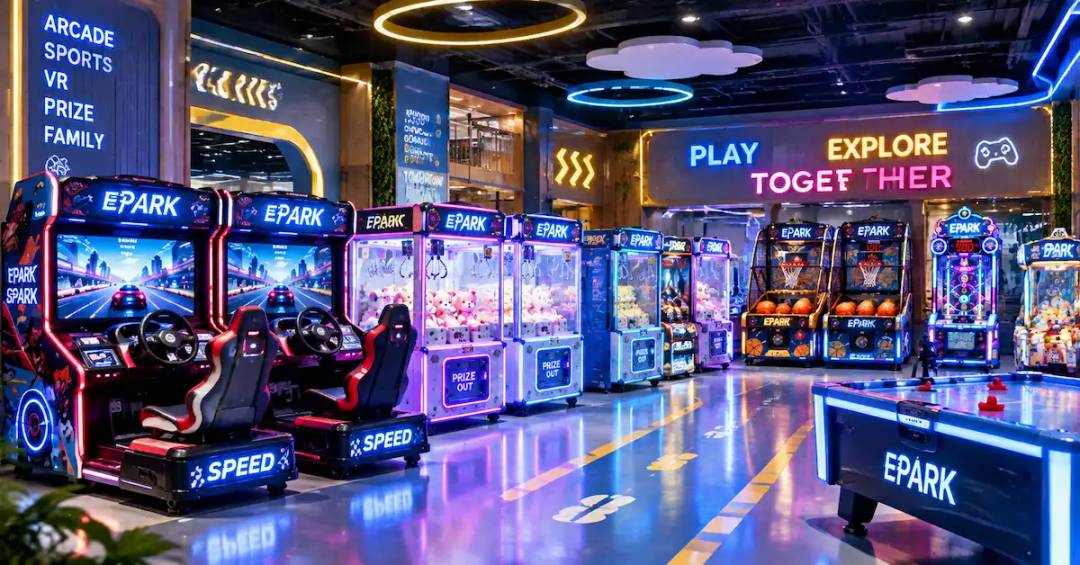
A new FEC may need claw machines, racing games, basketball machines, redemption equipment, simulators, and family attractions in one project. A distributor may need consistent configurations that can be reordered several months later. A private-label company may care about cabinet artwork, branding, payment hardware, packaging, and parts identification. These requirements benefit from direct technical communication with the manufacturing side.
Factory sourcing is not automatically the best route for every situation. A buyer needing one machine immediately from local stock may value a domestic distributor’s short delivery distance more. A venue without technicians may prefer a local service partner even when the equipment itself comes from a factory. The correct purchasing route depends on volume, customization, local support, destination requirements, and internal technical capability.
Verify Factory Capability Instead of Relying on the Word “Factory”
The term “factory direct” should be verified through the supplier’s actual workflow. Ask how a machine moves from requirement confirmation into design, component preparation, assembly, testing, packing, and shipment. Request information that helps you understand where configuration decisions are made and how production changes are controlled.
EPARK describes its workflow through the Design & Process page, covering project requirements, design, production, testing, packing, and technical support. For a specific order, buyers should go one level deeper and confirm which parts of that workflow apply to the selected machines.
Useful evidence can include an approved configuration sheet, production photos, inspection records, test videos, package information, machine labels, and clear communication between sales and technical teams. For large international projects, also confirm which company handles the commercial contract, production, shipment coordination, and after-sales communication so responsibilities remain clear throughout the project.
Choose Equipment According to the Venue Instead of Buying the Factory’s Largest Catalog
A wide product range is useful only when the machines fit the operating concept. EPARK provides solutions ranging from smaller arcade projects to larger FEC configurations through its arcade solutions. Buyers should first determine the audience, available area, payment model, maintenance resources, and desired entertainment mix before requesting a final machine list.
| Equipment Type | Common Commercial Role | What Buyers Should Compare | Project Considerations |
|---|---|---|---|
| Claw machines | Prize-focused arcade and mall zones | Cabinet configuration, claw system, payment hardware, service access | Prize management, machine density,replenishment |
| Redemption games | Ticket or points-based FEC areas | Scoring, reward interface, controls, game format | Prize counter and management system |
| Racing machines | Competitive and simulator zones | Display, steering, pedals, seat, linking where applicable | Floor area, electrical supply, maintenance access |
| Shooting games | Skill and interactive zones | Controller type, display, sensors, player configuration | Operating space and control maintenance |
| Basketball games | Sports and social play | Scoring, sensor system,structure and operating space | Assembly, ceiling height, ball management |
| VR / simulators | Immersive entertainment | Display/headset, controls, motion features where applicable | Staff support, setup, cleaning and service space |
| Kiddie rides | Family and children’s zones | Operating format, controls, structure | Placement and supervision requirements |
This comparison should narrow the sourcing discussion. It is more useful to request 15 machines selected for a specific FEC concept than to ask a supplier for a catalog containing hundreds of unrelated products.
Create a Controlled Specification Before Asking for the Final Price
A factory direct arcade machine supplier should be able to quote against a defined configuration.If two suppliers are quoting different payment systems, monitors, artwork, accessories, or shipping formats, the prices are not directly comparable.
Use a specification sheet like the following before approving production. The table identifies information to confirm; it does not represent universal specifications for every EPARK machine.
| Specification Area | Information to Confirm | Why It Matters |
|---|---|---|
| Product identity | Exact model and version | Controls repeat orders |
| Quantity | Units by model | Production and shipping planning |
| Machine dimensions | Final operating dimensions | Venue layout |
| Packed dimensions | Shipping dimensions and package count | Freight planning |
| Electrical information | Model-specific voltage, frequency and power requirements | Destination preparation |
| Payment system | Coin, token, card or configured cashless system | Operational compatibility |
| Language | Required interface or instructions where applicable | Market usability |
| Control configuration | Buttons, joystick, steering,sensors or other controls | Maintenance planning |
| Accessories | Cables, keys, hardware and manuals | Receiving inspection |
| Artwork | Logo, graphics, colors and labels | OEM approval |
| Packaging | Shipping format and protection method | Export handling |
| Spare parts | Initial kit or selected service components | Maintenance preparation |
| Documentation | Manuals,test records and applicable files | Installation and technical review |
Once this document is approved, production, inspection, packing, and future reorder discussions should refer back to the same version.
Inspect Materials and Components at Machine Level
Statements such as “high-quality materials” do not provide enough information for B2B procurement. Different arcade categories use different frames, panels, electronic assemblies, displays, controls, mechanisms, and decorative structures. Buyers should ask what applies to the actual machine they are purchasing.
For frequently serviced equipment, accessibility can be as important as the material itself. Ask where the control board, power supply, payment device, sensors, locks, and other serviceable components are located. Determine whether technicians can identify components without dismantling unrelated assemblies.
For moving equipment, review the applicable motors, actuators, sensors, mechanical assemblies, and control systems. For claw machines, pay attention to the grabbing mechanism and movement system. For racing equipment, steering, pedals, seats, display components, and electronics may all affect future maintenance.
The purchasing objective is not to collect the longest component list. It is to understand which parts define the approved machine and which parts may require future service.
Evaluate Workmanship Through Repeatable Inspection Points
A strong factory process converts product drawings and component specifications into repeatable machines. Look at wiring organization, connector identification, panel fit, fasteners, control installation, accessible service areas, cabinet finishing, lighting, and other model-specific assembly points.
The most useful inspection standard is measurable or observable. “Good wiring” is subjective; “connectors secured and labeled according to the approved machine configuration” is easier to inspect. “Good cabinet quality” is vague; checking alignment, visible damage, door operation, locks, panel mounting, and finish condition creates a more usable standard.
For repeat orders, preserve photographs and records from the approved production version. If a component changes, ask the manufacturer whether the difference affects installation, operation, spare parts, software, or existing service documentation.
Use Factory QC as a Purchasing Control Point
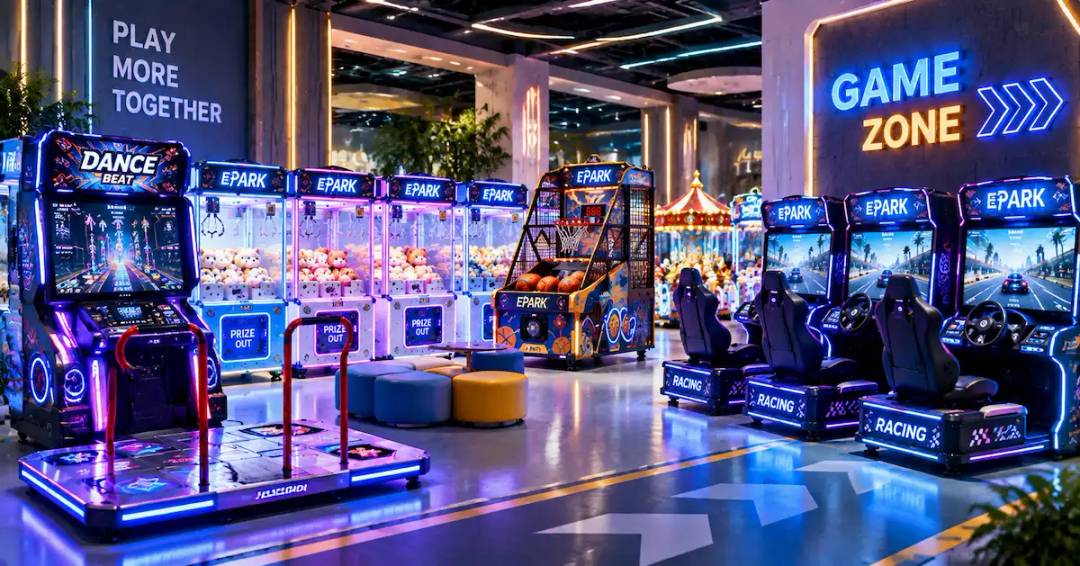
A factory direct arcade machine supplier should allow quality expectations to be discussed before shipment rather than after the machines reach the buyer’s country. EPARK’s Design & Process describes functional testing as part of its manufacturing workflow. Buyers should convert the general factory process into an order-specific inspection checklist.
Testing can cover the applicable gameplay sequence, controls, displays, lights, sound, payment recognition, scoring, reward functions, sensors, moving systems, and approved customization. For a card-based FEC, testing should include the configured reader and game-credit process. For a linked racing setup, test the functions actually included in that order rather than assuming that every racing machine has identical capabilities.
Keep three acceptance stages separate: machine testing, packing inspection, and shipment verification. Passing gameplay testing does not prove that the correct accessories were packed, and a well-packed cabinet does not prove that its payment settings are correct.
Review Certifications and Documents by Model and Destination
International buyers should not accept a general certificate folder as proof that every arcade product meets every destination requirement. Requirements vary by country, product type, electrical configuration, project owner, and machine design.
Before production, identify which technical or compliance documents are required for the destination. Then ask the supplier to show which documents apply to the selected model or product family and whether customization affects their scope.
For shipping paperwork, buyers should separately define commercial invoices, packing lists, transport information, and any destination-specific documentation requirements. EPARK buyers can review general purchasing and export questions through the FAQ page, but final documentation should always be checked against the individual order.
Compare Standard Supply, OEM, and ODM Purchasing Routes
A direct factory relationship becomes especially useful when the buyer needs customization. However, not every customization request requires a completely new machine.
| Purchasing Route | Typical Requirement | Buyer Advantage | What Must Be Controlled |
|---|---|---|---|
| Standard machine | Existing configuration is suitable | Simpler approval and purchasing | Exact model and included configuration |
| Branded OEM | Logo, artwork,labels or packaging changes | Faster private-label development | Artwork versions and branding scope |
| Configured OEM | Existing platform plus approved hardware or interface changes | Better market fit | Technical changes and compatibility |
| Deeper ODM project | More significant structural or functional development | Higher differentiation potential | Development scope, testing, cost and revisions |
| Complete FEC solution | Multiple equipment categories plus venue planning | Coordinated project sourcing | Layout, machine mix,system and installation responsibilities |
EPARK offers customization and project services described on its Why Choose Us page. Buyers should identify exactly which requested changes are standard options and which require additional engineering or confirmation.
Factory-Direct Pricing Should Be Compared on the Same Configuration
A lower ex-factory machine price does not automatically mean a lower purchasing cost. When comparing a factory direct arcade machine supplier with other sourcing options, make sure every quotation covers the same machine configuration and commercial scope.
Consider equipment price, customization, payment hardware, packaging, spare parts, inland transport, international freight, insurance where selected, destination charges, duties or taxes applicable to the buyer’s market, unloading, installation, technical work, and future service requirements.
A supplier quoting a lower cabinet price but excluding key payment components, packaging, or support may ultimately create a higher project cost.For this reason, request a quotation with inclusions, exclusions, and optional services separated rather than relying on one headline price.
Do Not Treat Production Capacity as a Marketing Number
For a distributor or multi-location FEC project, the relevant question is not simply “How many machines can your factory produce per month?” Buyers need to know whether the factory can deliver the specific equipment mix within the project schedule while maintaining the approved configuration.
Ask about production scheduling, customization approval, sample or first-unit confirmation when appropriate, QC timing, packaging, and shipment readiness. Capacity for a standardized claw machine may not be identical to capacity for customized simulators or a mixed FEC order.
EPARK provides general order and timing information through its FAQ. Use that information as a starting reference, then request a schedule based on your actual models, quantities, customization, and planned shipment rather than applying a general website lead time as a guaranteed delivery date.
Connect Factory Production With Export Packing and Shipping
Factory-direct purchasing has an additional advantage when production and export preparation can communicate directly. Packed dimensions, gross weights, removable structures, and package counts should come from the final machine configuration rather than generic catalog information.
For mixed FEC orders, buyers should prepare a shipping schedule showing each machine and each package. Large basketball frames, racing seats, VR accessories, and service parts may create separate packages that need clear identification.
EPARK’s Service page describes support across the project and delivery process. Before shipment, clarify whether the factory is only handing cargo to your nominated forwarder or coordinating a broader shipping arrangement. Freight, customs, destination unloading, and installation responsibilities should be written into the commercial plan rather than assumed.
Include Spare Parts in the Original Sourcing Strategy
A good factory direct arcade machine supplier should support the machine after the first sale. This becomes particularly important for overseas FECs and distributors because replacement components may need to travel internationally.
Before the first shipment, ask for a spare-parts plan matched to the purchased models. Useful categories can include controls, payment components, sensors, power supplies, selected boards, motors, cables, switches, and machine-specific components, but the appropriate list depends on the actual equipment.
Do not buy equal quantities of every possible part. Prioritize components according to likely service impact, replacement frequency, local technician capability, storage requirements, and replenishment time.
A strong factory relationship also preserves part and revision information, making it easier to identify a replacement several years later than relying only on a photograph of an unidentified component.
Define Installation and Technical Support Before the Equipment Ships
Commercial buyers should determine who will unload, assemble, connect, configure, test, and commission the equipment before it reaches the destination. EPARK explains technical and service support through its Service and FAQ pages.
For a simple cabinet, local personnel may be able to complete setup using factory documentation and remote assistance. A larger FEC involving payment-system integration, multiple machine categories, or more complex simulators may require a broader support plan.
The quotation should therefore distinguish machine supply from remote guidance, local contractor work, on-site supervision where separately agreed, network preparation, electrical preparation, payment-system work, and final commissioning.
How Can Buyers Compare a Factory With a Trading or Distribution Supplier?
The correct comparison is not “factory good, trader bad.” Different sourcing models solve different problems. A distributor may offer local stock and service, while a factory can offer direct manufacturing communication and customization. Buyers should choose according to project requirements.
| Evaluation Point | Factory-Direct Route | Distributor / Intermediary Route | Buyer Question |
|---|---|---|---|
| Product configuration | Closer access to manufacturing decisions | Depends on supplier relationship | Who confirms the final specification? |
| Customization | Often more direct | May require another communication layer | Who controls the design revision? |
| Local inventory | Often international shipment required | May have local stock | How urgent is delivery? |
| Local service | Depends on project arrangement | May offer domestic support | Who performs physical maintenance? |
| Factory QC access | More direct discussion possible | May rely on upstream supplier | What evidence will I receive? |
| Spare parts | Linked directly to manufacturing records | May hold local parts inventory | Which route restores equipment faster? |
| Pricing | Fewer supply-chain layers in some projects | Includes local service and inventory costs | Are the quotations truly like-for-like? |
For large B2B buyers, the best arrangement can also combine both approaches: factory-direct procurement supported by a qualified local technical or logistics partner.
A Practical Factory-Direct Purchasing Workflow
A disciplined sourcing process can follow these stages: define the venue and buyer requirements; select the machine categories; confirm the product and payment configuration; freeze artwork and customization; approve the commercial quotation; begin production; review order-specific QC evidence; verify accessories and spare parts; confirm export packing; reconcile shipping documents; arrange delivery; complete installation and commissioning; and retain machine records for future maintenance.
This workflow reflects the wider approach described on EPARK’s Design & Process page. The value of factory-direct purchasing comes from maintaining one traceable equipment definition throughout these stages rather than allowing the specification to change informally between sales, production, logistics, and after-sales teams.
What Should You Send a Factory Direct Arcade Machine Supplier for a Quote?
A useful inquiry should provide the destination country, buyer type, venue type, available area where relevant, target players, required machine categories, quantities, preferred payment method, branding or customization requirements, desired shipping period, and whether you already have a freight forwarder or local technician.
For a complete FEC, include a measured floor plan and explain the desired entertainment mix. For a distributor order, identify whether the purchase is for stock, a customer project, or a trial batch. For repeat orders, reference the previous approved machine version instead of requesting only “the same model.”
You can review EPARK arcade machines and then contact EPARK with your equipment list and project information so the factory can evaluate the required configuration rather than returning an overly general price list.
Frequently Asked Questions
1. What Is a Factory Direct Arcade Machine Supplier?
A factory direct arcade machine supplier manufactures or directly controls the production of the commercial arcade equipment it sells. For B2B buyers, the practical benefit should be stronger access to configuration, manufacturing, QC, customization, spare-parts, and repeat-order information. Buyers should verify these capabilities rather than relying on the description alone.
2. Is Buying Arcade Machines Directly From a Factory Always Cheaper?
Not necessarily in total project cost.Direct purchasing may reduce some supply-chain layers, but buyers still need to consider freight, customs-related costs, destination delivery, installation, spare parts, technical support, and internal purchasing effort. Compare equivalent configurations and services.
3. What Arcade Machines Can an FEC Source Directly From EPARK?
EPARK’s Products page presents commercial entertainment solutions covering different arcade and FEC requirements. Buyers should build the final equipment mix around venue size, target customers, payment system, and operating concept.
4. How Can I Verify an Arcade Machine Factory Before Placing a Bulk Order?
Review the factory workflow, product documentation, customization process, QC procedure, production communication, and after-sales capability. Ask for evidence linked to the actual products being considered instead of relying only on general factory photographs.
5.Can a Factory Direct Supplier Customize Arcade Machines With My Brand?
EPARK describes OEM/ODM and customization services for commercial customers. Confirm the exact scope—such as logo, artwork, cabinet styling, labels, payment hardware, or functional changes—and approve the final version before production. See Why Choose EPARK for its broader customization and service direction.
6. What Should I Inspect Before Arcade Machines Are Shipped?
Check the approved model and configuration, appearance, gameplay, controls, payment setup, display, audio, relevant mechanical functions, accessories, customization, and packaging. Use an order-specific checklist rather than a generic statement that the machines passed QC.
7. Should I Buy Spare Parts With My First Factory Order?
For international FEC and distributor purchases, discussing a model-matched starter spare kit is useful. The appropriate parts and quantities depend on your equipment mix, maintenance capability, and replacement priorities rather than one universal kit.
8. Can a Factory Help With International Arcade Machine Shipping?
EPARK provides project and shipping-related support, but buyers should confirm the exact scope for each order. Define who handles packing, freight booking, insurance where applicable, customs processes, destination delivery, unloading, and installation instead of assuming they are all included.
9. How Should I Handle Repeat Arcade Machine Orders?
Retain the approved model, revision, artwork, payment configuration, packing details, and service records from the first order. Ask whether any components or specifications have changed before releasing repeat production.
10. What Information Should I Send EPARK to Get an Accurate Factory Quote?
Provide destination, machine categories, quantities, venue or distribution use, payment requirements, customization, target schedule, and shipping needs. For an FEC project, include your floor plan. Submit the information through EPARK Contact Us so the quotation can be based on a defined purchasing requirement.
Conclusion
Choosing a factory direct arcade machine supplier should give FEC operators, distributors, arcade chains, and project buyers greater visibility from machine specification through production, QC, customization, packing, shipment, installation, and future maintenance. The real advantage is not simply obtaining a factory price; it is creating a controlled supply chain in which the approved machine can be inspected, documented, supported, and reproduced for future orders. EPARK combines commercial arcade equipment manufacturing with customization and FEC project support, while individual capabilities, configurations, schedules, and service responsibilities should still be confirmed for each purchase. Review the EPARK product range or contact EPARK with your destination, venue or distribution requirements, machine categories, quantities, payment system, and customization needs to prepare an order-specific factory-direct sourcing plan.
Disclaimer
The information provided on this website is for general informational purposes only.
While EPARK Arcade Game Machine Manufacturer strives to ensure accuracy and reliability, no warranties—express or implied—are made regarding completeness, performance, or applicability.
Product specifications, designs, and features may vary depending on usage, customization, and customer requirements.
Buyers are responsible for verifying all technical details, compliance certifications, and suitability before procurement.
EPARK shall not be held liable for any direct, indirect, incidental, or consequential damages arising from the use of this website or its content, including but not limited to business losses, data errors, or equipment misuse.
For tailored solutions or further verification, please visit our Contact Us
Intellectual Property Notice
All articles, product images, videos, catalogs, software, and related materials published on this website are the intellectual property of EPARK, unless otherwise stated.
Unauthorized reproduction, distribution, modification, or commercial use of any content is strictly prohibited without prior written consent from EPARK.
EPARK reserves the right to take legal action against any unauthorized use, including but not limited to copyright infringement, misrepresentation, or unfair competition.
Trademarks
The name EPARK, the EPARK logo, and all related brand elements displayed on this website are registered trademarks or trade names of Guangzhou EPARK Electronic Technology Co., Ltd.
Other product names, company names, or logos mentioned on this site may be trademarks of their respective owners.
Unauthorized use of EPARK's trademarks for commercial purposes, including advertising, promotions, or product packaging, is strictly prohibited.
Governing Law
These terms are governed by the laws of the People's Republic of China.