

What Should Buyers Know About Soft Play Equipment for Toddlers?
When planning a toddler play area, selecting the right soft play equipment for toddlers requires careful consideration of safety, age suitability, materials, space planning, and long-term operation. Unlike general playground equipment, toddler-focused soft play solutions are designed around younger children’s physical abilities, movement patterns, exploration needs, and supervision requirements.
For commercial buyers such as family entertainment centers, shopping malls, childcare facilities, indoor playground operators, and project developers, the goal is not simply to create a colorful space. A successful toddler play area should provide:
- Safe movement opportunities
- Age-appropriate challenges
- Comfortable interaction areas
- Easy supervision
- Durable materials
- Efficient maintenance
A professional supplier should help buyers balance children’s experience with commercial requirements such as capacity, cleaning, replacement, durability, and installation efficiency.
Buyers can review EPARK products to understand available indoor amusement and playground equipment solutions before planning a customized toddler play area.
Why Is Toddler Soft Play Different From General Playground Equipment?
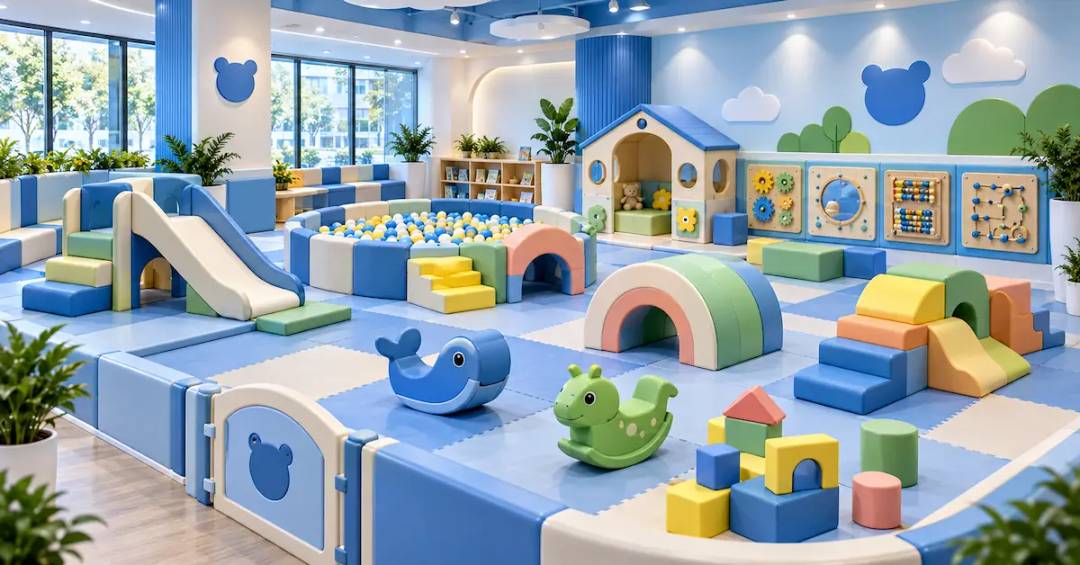
Toddlers have different physical development characteristics compared with older children. Their balance, coordination, climbing ability, and risk awareness are still developing, so equipment selection needs to focus on controlled challenges rather than high-intensity activities.
Toddler soft play equipment usually emphasizes:
- Low-height structures
- Soft impact protection
- Easy climbing activities
- Interactive exploration
- Simple movement challenges
- Parent supervision visibility
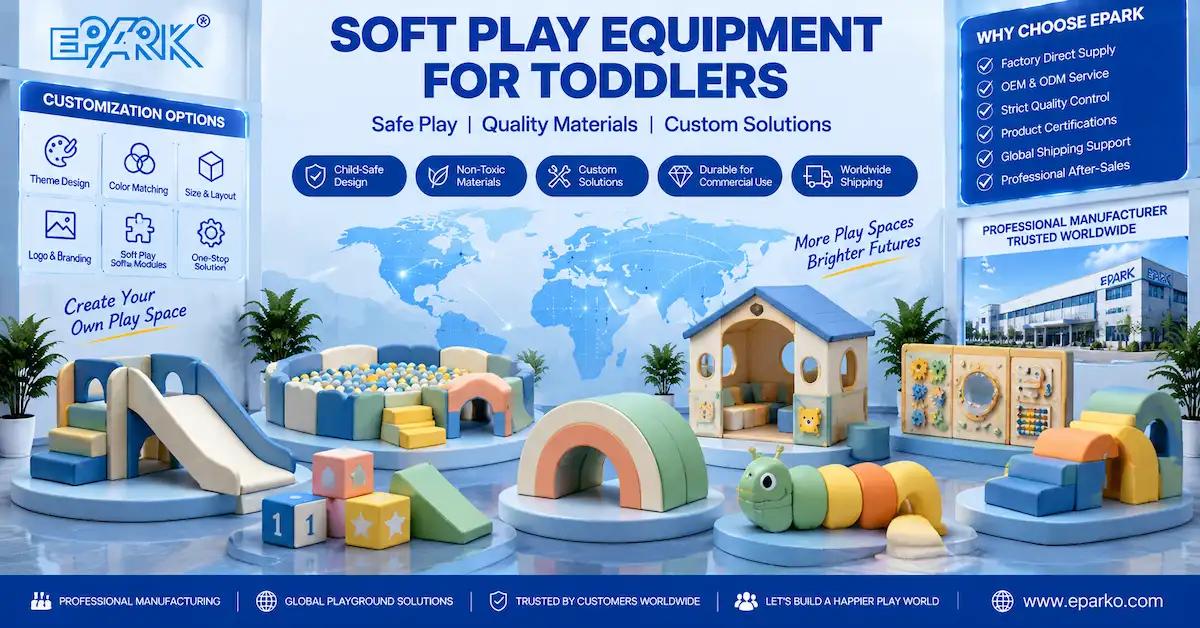
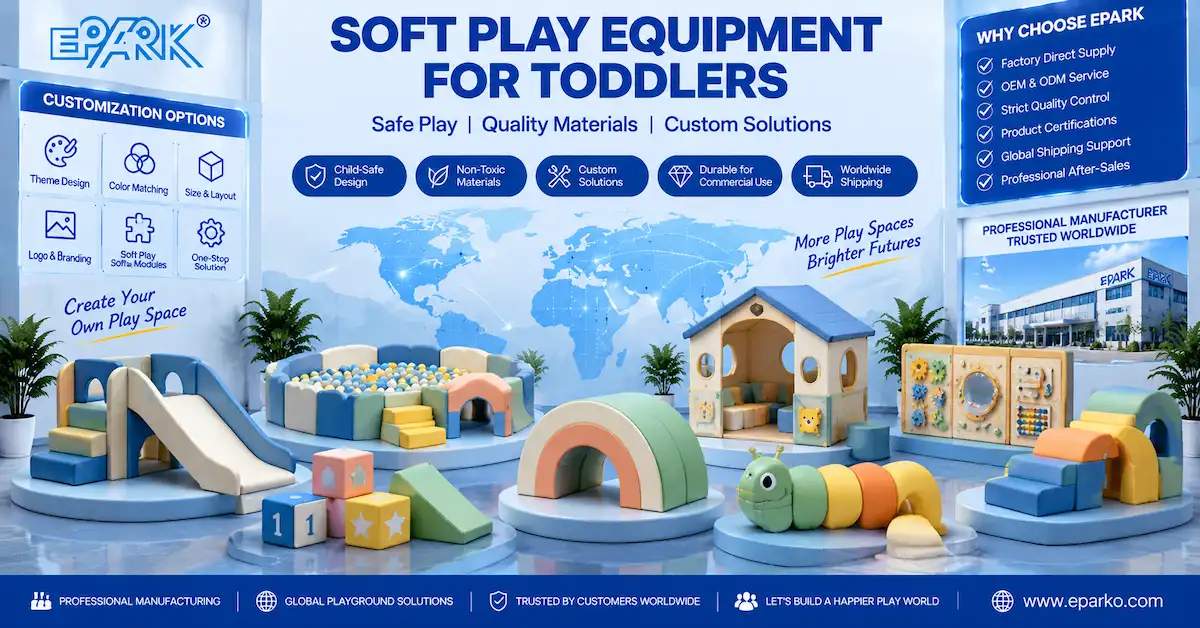
A toddler area may include:
- Soft climbing blocks
- Mini slides
- Ball pools
- Crawl tunnels
- Foam obstacles
- Interactive play panels
- Role-play areas
The equipment combination should encourage exploration while maintaining a comfortable environment for both children and supervising adults.
Who Usually Purchases Soft Play Equipment for Toddlers?
Different buyers have different requirements when developing toddler play spaces.
Family Entertainment Centers
FEC operators usually need toddler zones as part of a larger entertainment environment. Their priorities often include:
- Attractive themes
- Different age zones
- High customer engagement
- Easy cleaning
- Durable commercial use
Toddler areas can complement arcade machines, larger playground structures, and family attractions.
Shopping Malls and Commercial Spaces
Mall operators often require compact but attractive play zones that can increase customer stay time.
Important considerations include:
- Limited available space
- Visual appeal
- Safety management
- Easy maintenance
- Brand integration
Childcare Centers and Early Education Facilities
These buyers usually focus more on developmental value and daily usability.
They may prioritize:
- Simple layouts
- Safe movement
- Easy supervision
- Comfortable materials
- Cleaning convenience
Playground Distributors
Distributors need products that can fit different customer projects.
Their concerns include:
- Supplier consistency
- Custom options
- Production capability
- Repeat-order management
- Regional market requirements
How Should Buyers Evaluate Toddler Soft Play Safety?
Safety should be considered during design, material selection, manufacturing, installation, and daily operation.
A reliable supplier should help buyers review several safety-related factors.
Equipment Height and Movement Difficulty
Toddler equipment should match the intended age group. Excessively high platforms, complicated climbing routes, or unsuitable challenges can create unnecessary risks.
Soft Impact Protection
Soft materials should reduce impact during normal play activities.
Buyers should evaluate:
- Padding thickness
- Surface covering
- Edge protection
- Cushioning areas
Visibility and Supervision
A good toddler layout allows parents, staff, or caregivers to observe children easily.
Avoid designs that create:
- Hidden corners
- Poor visibility areas
- Difficult access points
Material Safety
Materials should be selected according to commercial usage requirements, cleaning frequency, and expected durability.
What Materials Are Used in Soft Play Equipment for Toddlers?
Material selection directly affects comfort, durability, appearance, and maintenance.
| Component | Common Material Considerations |
|---|---|
| Soft Padding | Foam density, thickness, recovery ability |
| Cover Material | Wear resistance, cleaning convenience |
| Structure Frame | Strength and stability |
| Plastic Components | Surface finishing and durability |
| Flooring | Cushioning and impact protection |
| Decorative Parts | Appearance and durability |
For commercial projects, buyers should consider not only how materials look when new but also how they perform after repeated daily use.
A playground inside a busy FEC requires stronger durability considerations than a small private play area.
How Should Buyers Plan a Toddler Soft Play Layout?
Layout design affects both children’s experience and operational efficiency.
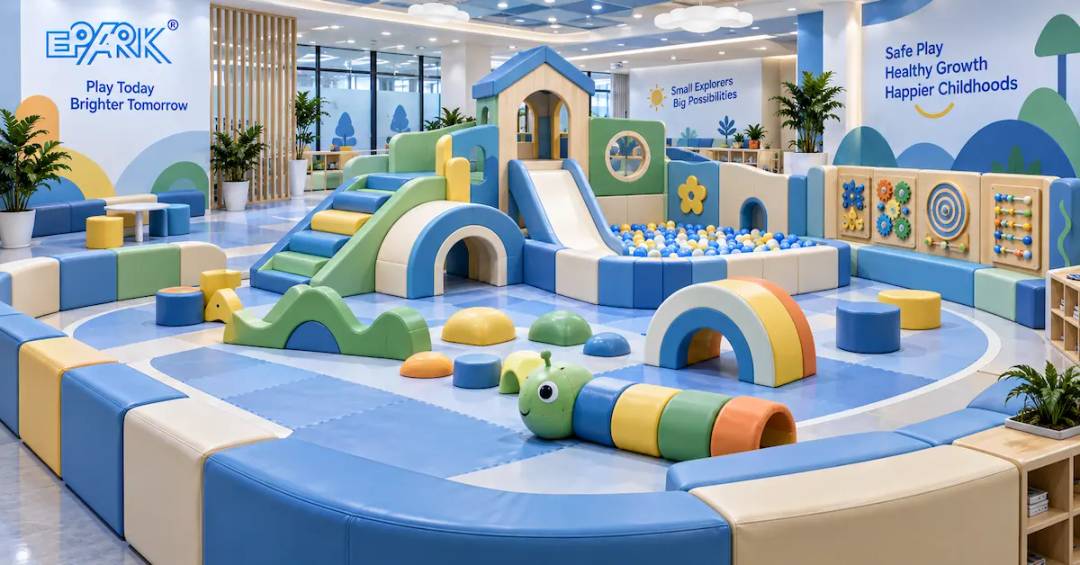
A professional toddler play layout should consider:
- Available floor area
- Equipment placement
- Child movement flow
- Parent viewing areas
- Entry and exit points
- Cleaning access
- Maintenance space
A practical layout often separates different activity zones.
| Zone | Purpose |
|---|---|
| Exploration Zone | Crawling, climbing, movement activities |
| Interactive Zone | Sensory and learning activities |
| Soft Landing Zone | Safe movement and rest areas |
| Parent Observation Zone | Supervision and waiting |
| Access Zone | Entry, exit and maintenance |
EPARK provides design-related information through Design & Process, helping buyers understand how project requirements can be developed into equipment solutions.
How Can Buyers Customize Toddler Soft Play Equipment?
Customization allows businesses to create a unique play environment.
Common customization options include:
Theme Design
Examples:
- Ocean themes
- Jungle themes
- Space themes
- Fantasy themes
- Brand-specific concepts
Color Customization
Colors can match:
- Brand identity
- Interior design
- Customer positioning
Layout Customization
Suppliers can adjust:
- Equipment arrangement
- Structure size
- Activity combinations
Functional Customization
Projects may combine:
- Soft play
- Interactive elements
- Role-play areas
- Educational activities
Before requesting customization, buyers should define the target users, available space, and business purpose.
Evaluate Soft Play Equipment Manufacturing Capability
A capable soft play equipment supplier should provide more than design images.
Buyers should evaluate:
- Manufacturing experience
- Material control
- Production process
- Quality inspection
- Custom project experience
- Export preparation
The manufacturing process may include:
- Design confirmation
- Material preparation
- Component production
- Assembly
- Appearance inspection
- Final quality check
- Packaging
A clear production process reduces differences between approved designs and delivered products.
How Should Buyers Control Soft Play Quality Before Shipment?
Quality control should cover both appearance and practical performance.
Material Inspection
Check:
- Foam quality
- Cover materials
- Structural components
- Decorative parts
Production Inspection
Review:
- Assembly accuracy
- Component matching
- Surface finishing
Final Inspection
Confirm:
- Complete equipment
- Correct colors
- Approved design
- Accessories
- Packaging condition
| QC Stage | Inspection Focus |
|---|---|
| Material QC | Incoming material quality |
| Production QC | Manufacturing consistency |
| Assembly QC | Component installation |
| Appearance QC | Visual quality |
| Final QC | Complete project verification |
| Packing QC | Shipping protection |
For customized projects, buyers should compare finished products against approved drawings or samples.
Compare Soft Play Equipment Suppliers Before Ordering
Price should not be the only supplier selection factor.
| Evaluation Area | Buyer Questions |
|---|---|
| Design Capability | Can the supplier create suitable layouts? |
| Materials | Are material details clearly explained? |
| Manufacturing | Can the supplier handle commercial projects? |
| Customization | Can themes and layouts be modified? |
| QC | Are inspection procedures defined? |
| Support | Is installation guidance available? |
A suitable supplier should help reduce project risks from design through installation.
Understand Soft Play Equipment Cost Factors
The final project cost depends on multiple factors.
| Cost Factor | Influence |
|---|---|
| Equipment Size | Larger areas require more materials |
| Design Complexity | Custom themes require additional development |
| Materials | Different quality levels affect durability |
| Custom Components | Special elements affect production |
| Packaging | Export protection requirements |
| Installation | Depends on project location |
A lower quotation may not represent the best long-term value if it reduces durability, customization quality, or support.
Prepare Shipping and Installation Before Production
Soft play equipment often contains many separate components.
Before shipment, buyers should confirm:
- Package identification
- Installation instructions
- Hardware organization
- Component labels
- Loading information
Clear packaging helps installation teams quickly identify:
- Main structures
- Soft components
- Accessories
- Hardware
- Replacement parts
EPARK provides service information through Service for buyers evaluating project support requirements.
What Should Buyers Send to a Soft Play Supplier Before Requesting a Quote?
A detailed inquiry helps suppliers create a more accurate solution.
Prepare:
- Venue size
- Floor plan
- Target age group
- Expected capacity
- Theme preference
- Equipment requirements
- Installation location
- Delivery destination
- Project timeline
For distributors, also provide:
- Target market
- Expected quantities
- Customization requirements
- Repeat-order expectations
Buyers can review EPARK products and submit project information through Contact Us.
Frequently Asked Questions
1. What Is Soft Play Equipment for Toddlers?
Soft play equipment for toddlers is designed for younger children using cushioned structures and age-appropriate activities that encourage movement, exploration, and interaction.
2. What Should Buyers Check When Choosing Toddler Soft Play Equipment?
Buyers should review safety design, materials, layout, durability, customization options, manufacturing capability, and supplier support.
3. Can Toddler Soft Play Areas Be Customized?
Yes. Customization can include themes, colors, layouts, structures, and interactive elements.
4. What Materials Are Used in Toddler Soft Play Equipment?
Common materials include foam padding, covered soft surfaces, structural frames, plastic components, and protective flooring.
5. How Should a Toddler Play Area Be Designed?
A good layout considers movement flow, supervision visibility, activity zones, safety areas, and maintenance access.
6. Are Soft Play Areas Suitable for Commercial FEC Projects?
Yes. Commercial soft play areas are commonly used in FECs, malls, indoor playgrounds, and family entertainment venues.
7. How Can Buyers Check Soft Play Quality Before Shipment?
Review materials, production quality, appearance, approved designs, accessories, and final inspection records.
8. Can Suppliers Create Different Playground Themes?
Yes. Many suppliers support ocean, jungle, space, fantasy, and customized brand themes.
9. Should Buyers Order Spare Parts for Soft Play Equipment?
For commercial projects, preparing replacement materials and commonly used components can simplify future maintenance.
10. How Can I Request a Soft Play Equipment Proposal?
Provide your venue information, target users, layout requirements, equipment preferences, and delivery details to request a customized solution.
Conclusion
Choosing soft play equipment for toddlers requires evaluating more than appearance and price. Commercial buyers should consider safety, materials, layout planning, customization capability, manufacturing quality, shipping preparation, and long-term supplier support.
A reliable soft play equipment partner can help create toddler play spaces that balance child-friendly experiences with commercial operation requirements. Review EPARK indoor playground solutions or contact EPARK with your project size, target age group, design requirements, and delivery plan to discuss a suitable toddler soft play solution.
Disclaimer
The information provided on this website is for general informational purposes only.
While EPARK Arcade Game Machine Manufacturer strives to ensure accuracy and reliability, no warranties—express or implied—are made regarding completeness, performance, or applicability.
Product specifications, designs, and features may vary depending on usage, customization, and customer requirements.
Buyers are responsible for verifying all technical details, compliance certifications, and suitability before procurement.
EPARK shall not be held liable for any direct, indirect, incidental, or consequential damages arising from the use of this website or its content, including but not limited to business losses, data errors, or equipment misuse.
For tailored solutions or further verification, please visit our Contact Us
Intellectual Property Notice
All articles, product images, videos, catalogs, software, and related materials published on this website are the intellectual property of EPARK, unless otherwise stated.
Unauthorized reproduction, distribution, modification, or commercial use of any content is strictly prohibited without prior written consent from EPARK.
EPARK reserves the right to take legal action against any unauthorized use, including but not limited to copyright infringement, misrepresentation, or unfair competition.
Trademarks
The name EPARK, the EPARK logo, and all related brand elements displayed on this website are registered trademarks or trade names of Guangzhou EPARK Electronic Technology Co., Ltd.
Other product names, company names, or logos mentioned on this site may be trademarks of their respective owners.
Unauthorized use of EPARK's trademarks for commercial purposes, including advertising, promotions, or product packaging, is strictly prohibited.
Governing Law
These terms are governed by the laws of the People's Republic of China.