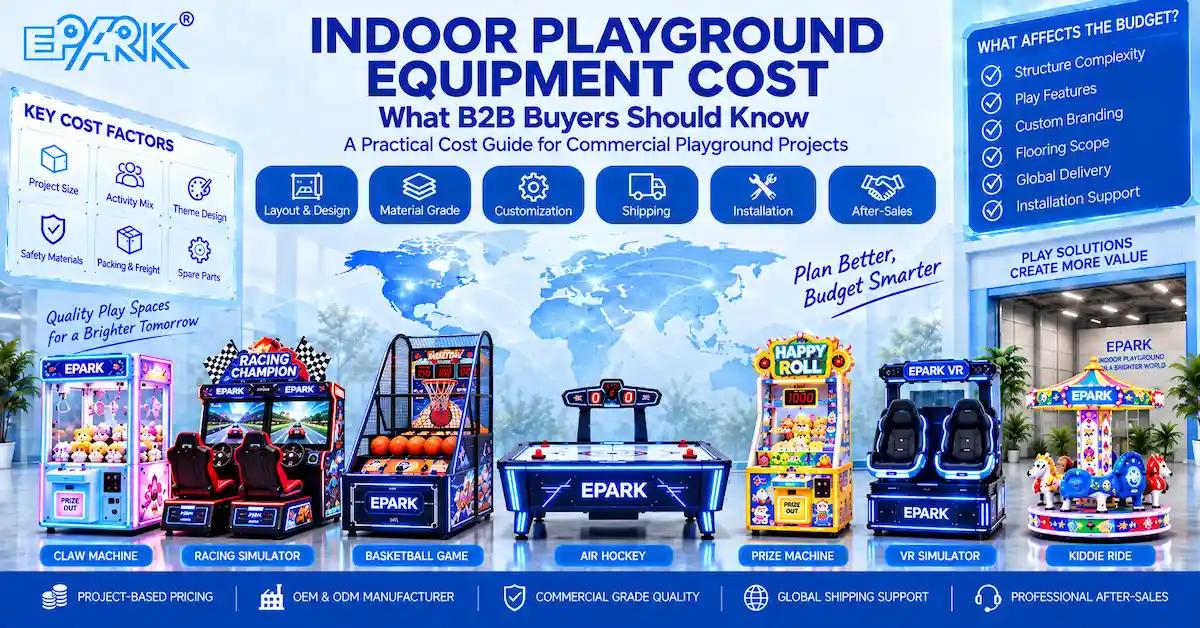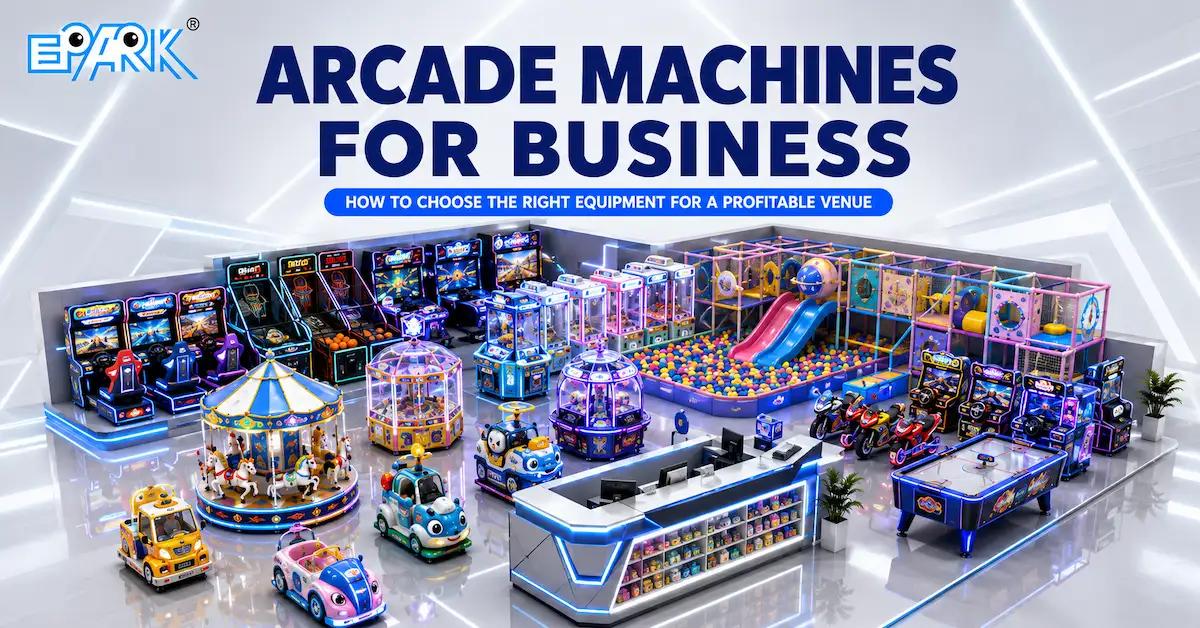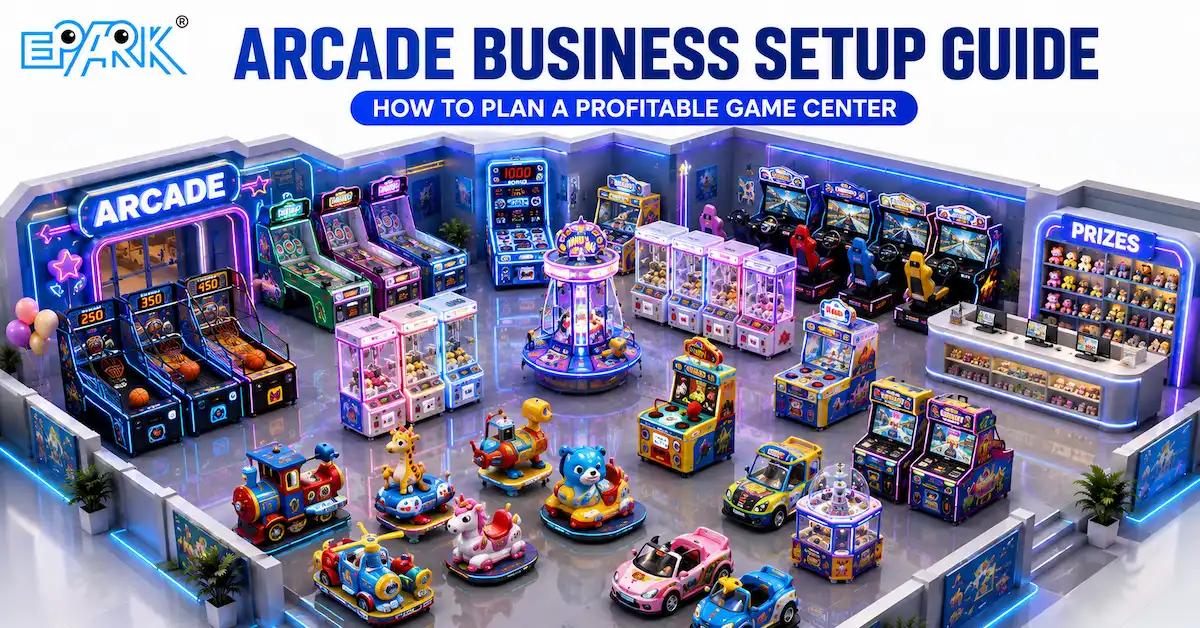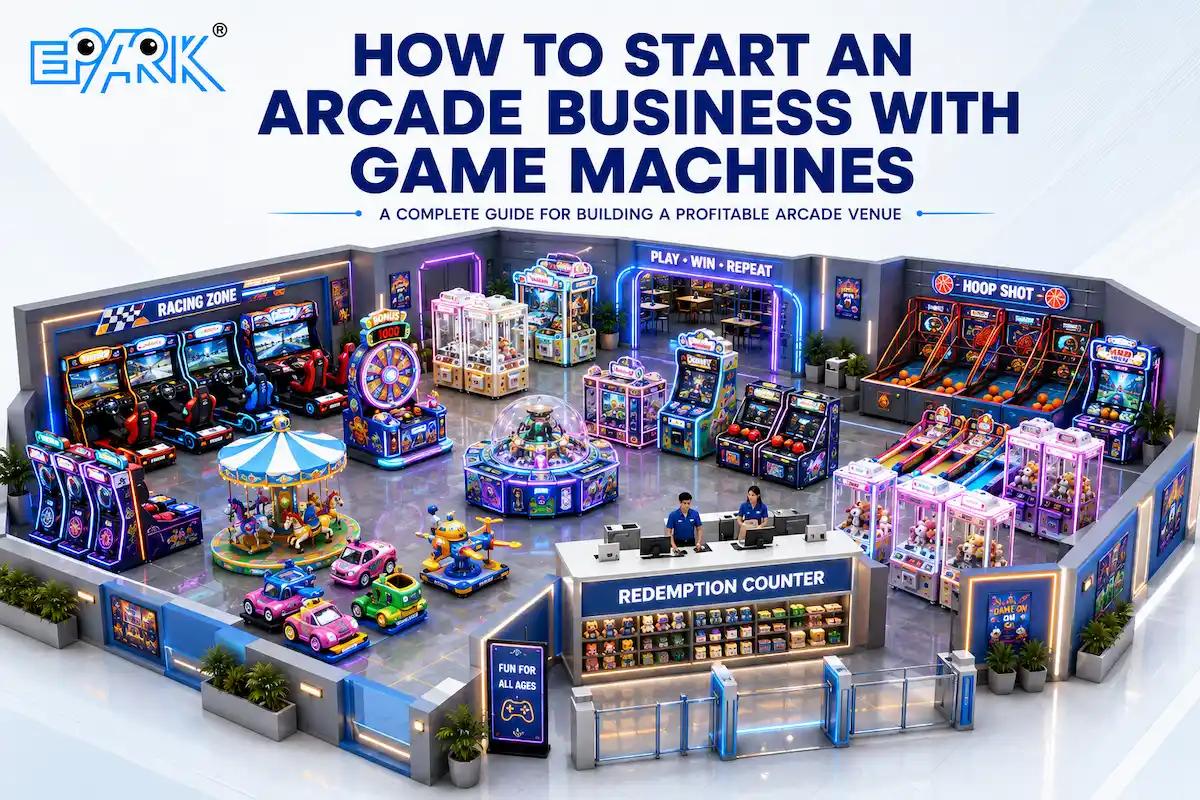

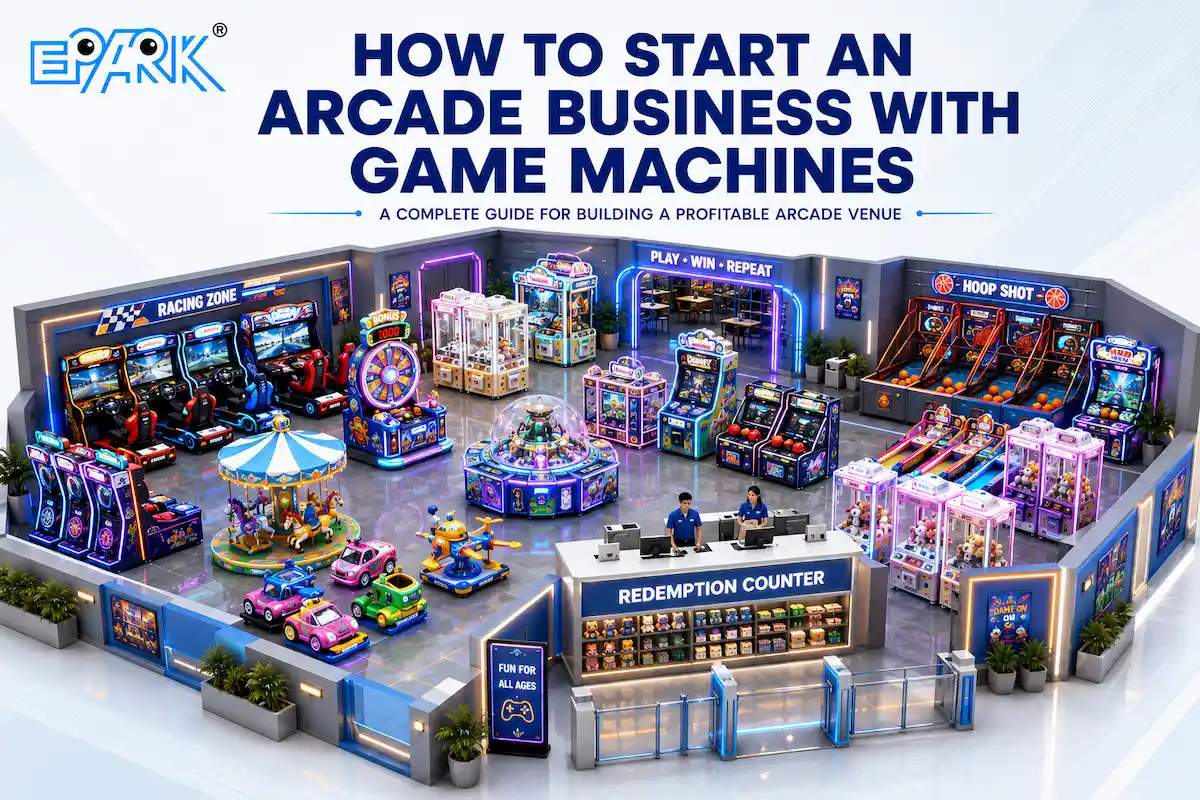
Learning how to start an arcade business with game machines begins with developing a clear business model. Buying attractive equipment without understanding the venue, customers, payment method, or operating costs can lead to an unbalanced arcade that looks exciting but performs poorly.
A successful game center needs the right combination of machines, customer flow, prize strategy, payment system, staff support, and maintenance planning. Every part of the project should contribute to customer attraction, repeat play, and long-term revenue.
Before ordering equipment, arcade investors should define:
- Venue location and usable floor area
- Target customer age groups
- Arcade concept and positioning
- Initial equipment budget
- Payment and redemption model
- Expected opening schedule
- Staffing and maintenance requirements
- Future expansion plans
The objective is not simply to fill the venue with machines. It is to build a commercial entertainment environment that customers want to visit repeatedly.
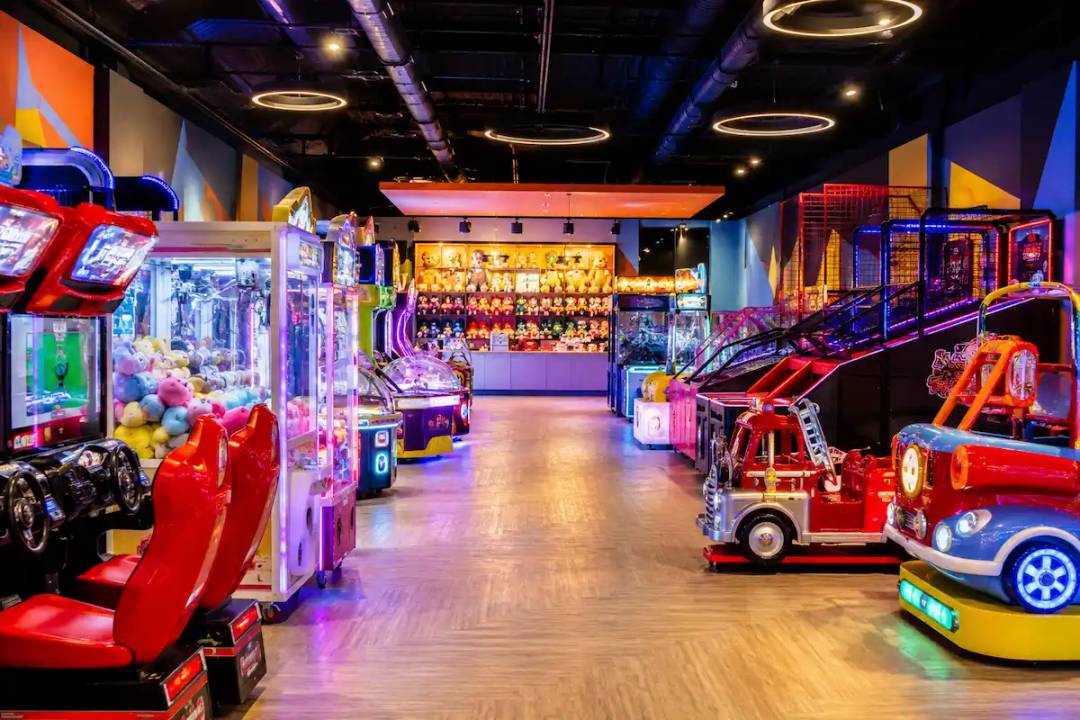
1. Choose the Right Arcade Business Model
Different arcade concepts require different equipment and operating strategies.
Shopping Mall Arcade
Shopping mall arcades depend heavily on walk-in traffic. Bright claw machines, prize games, basketball machines, kiddie rides, and compact racing games can help attract customers quickly.
Family Entertainment Center
A family entertainment center serves children, teenagers, parents, and groups. It normally needs a wider machine mix, including redemption games, kiddie rides, sports games, racing simulators, prize machines, and a redemption counter.
Teen and Adult Game Center
A venue focused on teenagers and adults may prioritize racing simulators, shooting games, rhythm machines, basketball games, air hockey, and immersive attractions.
Indoor Playground Arcade Zone
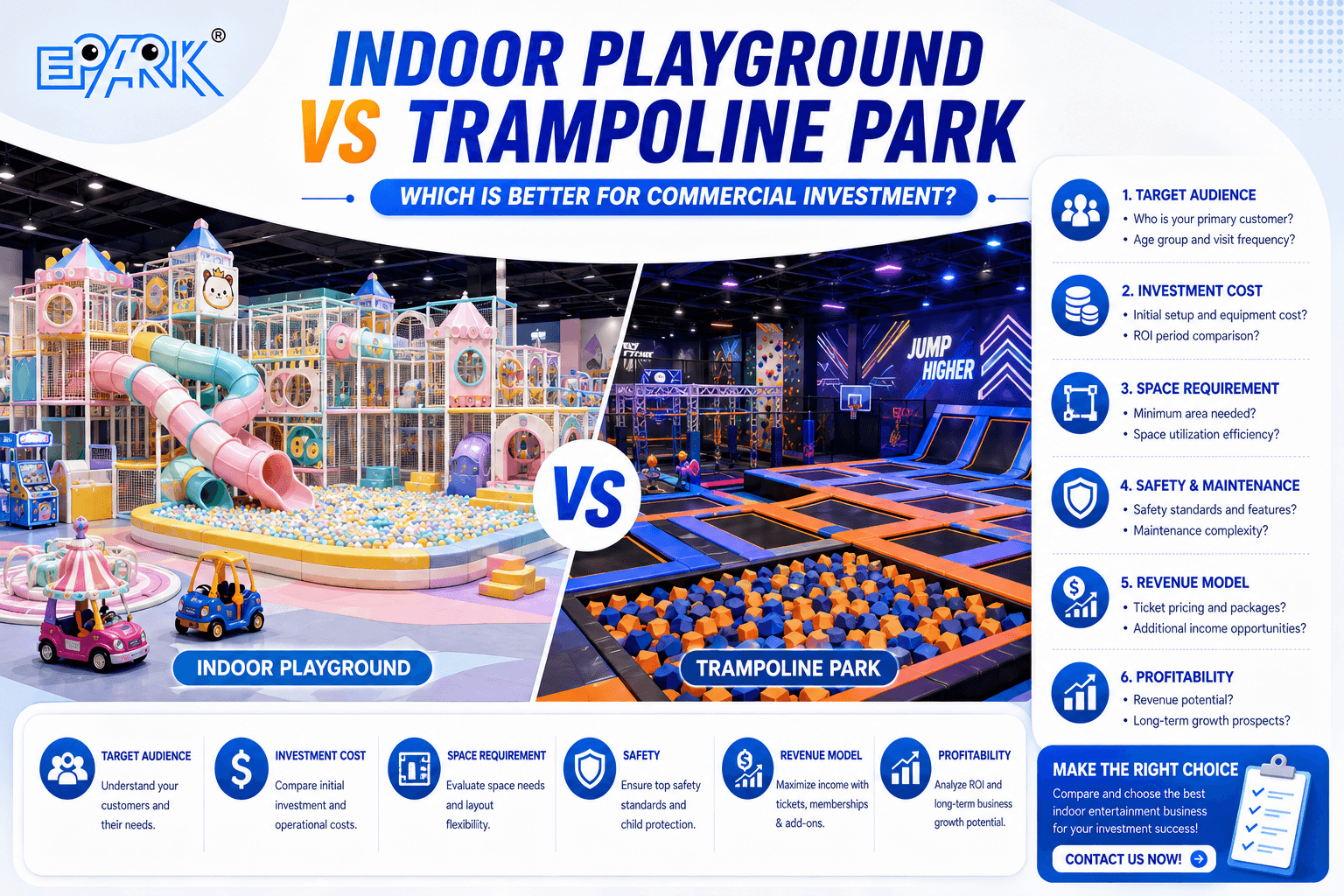
An indoor playground can add compact arcade machines, kiddie rides, mini claw machines, and simple redemption games to create revenue beyond entrance fees.
Your business model determines which customer groups you serve and where the equipment budget should be allocated.
2. Research the Local Market Before Investing
Before selecting machines, study the local entertainment market.
Useful questions include:
- Who are the main customers in the area?
- Are there competing arcades nearby?
- Which age groups visit the shopping mall or commercial district?
- What price per game is acceptable locally?
- Are customers familiar with coins, tokens, or game cards?
- Which prize types are popular?
- Are weekends, holidays, or evening hours the main traffic periods?
Visit competing venues and observe which machines attract queues, which areas remain empty, and how customers move through the space.
Market research helps investors avoid copying a machine mix that may work in another country or city but not in their own location.
3. Select a Suitable Venue
The location influences visibility, foot traffic, rent, operating hours, and customer acquisition costs.
Common arcade locations include:
- Shopping malls
- Family entertainment complexes
- Cinemas
- Tourist destinations
- Resorts and hotels
- Indoor playgrounds
- Commercial streets
- Community entertainment centers
When inspecting a venue, check:
- Usable floor area
- Ceiling height
- Entrance visibility
- Electrical capacity
- Network access
- Fire exits
- Loading access
- Storage space
- Staff area
- Noise restrictions
- Parking and public transport
A location with strong traffic may justify higher rent, but investors should still calculate whether expected revenue can support the total operating cost.
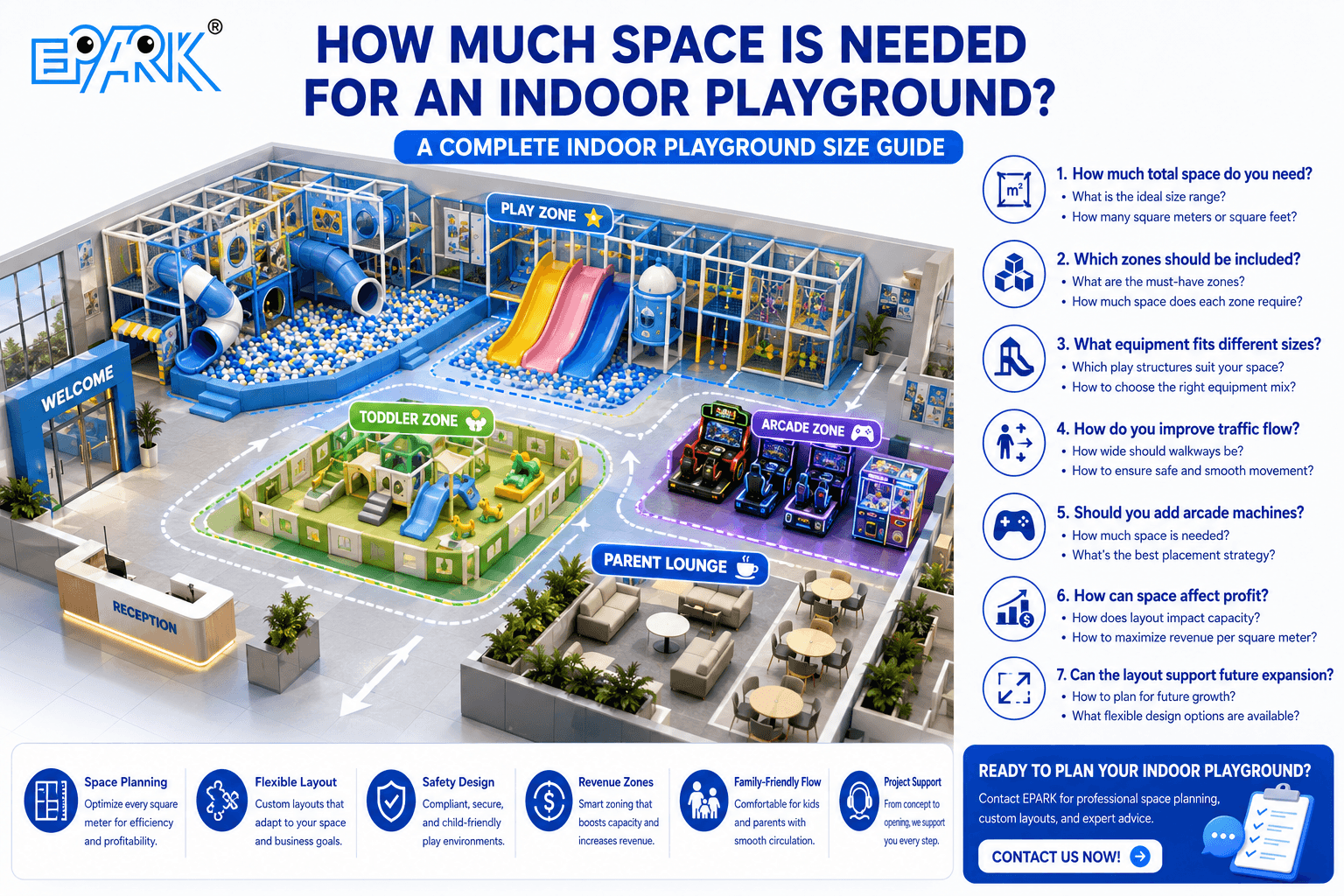
4. Create a Floor Plan Before Selecting Machines
A floor plan should be prepared before confirming the final equipment order.
The plan should show:
- Entrance and exit positions
- Columns and fixed walls
- Electrical outlets
- Main walking paths
- Payment or recharge counter
- Prize redemption area
- Staff and storage rooms
- Rest areas
- Emergency access
- Machine zones
Large machines require more than their listed dimensions. Players need standing or seating space, and technicians need access for maintenance.
EPARK can review venue dimensions and recommend suitable equipment from its arcade machine product range.
5. Build a Balanced Arcade Machine Mix
One of the most important steps when planning to start an arcade business with game machines is creating a balanced equipment mix.
A venue filled with only one machine category may attract limited customer groups. A stronger setup combines quick-play, repeat-play, family, competitive, and premium machines.
| Machine Category | Examples | Commercial Role |
|---|---|---|
| Quick-Play Games | Claw and prize machines | Generate impulse spending |
| Redemption Games | Ticket and point games | Encourage repeat play |
| Competitive Games | Racing, basketball, shooting | Attract teens and groups |
| Family Games | Kiddie rides and interactive games | Serve children and parents |
| Premium Games | VR and large simulators | Support higher play prices |
| Social Games | Air hockey and multiplayer machines | Increase group participation |
The exact percentage of each category should depend on the venue concept and customer profile.
6. Divide the Arcade into Revenue Zones
Machine placement affects visibility and performance.
Entrance Zone
Place visually attractive claw machines, prize machines, and quick-play games near the entrance. These machines should make the venue look active and easy to enter.
Children’s Zone
Use kiddie rides, mini machines, and simple interactive games. Keep this zone visible to parents and away from intense competition areas.
Family Zone
Redemption games and parent-child machines can encourage shared participation and longer visits.
Competition Zone
Group racing simulators, basketball machines, shooting games, and sports equipment together to create excitement.
Prize Zone
Place the redemption counter where customers can see prizes while playing ticket games.
Premium Zone
Use VR systems or large simulators in areas with enough operating and supervision space.
Good zoning helps customers understand the venue naturally and encourages them to explore more than one category.
7. Plan the Payment System Early
Payment infrastructure should be confirmed before production because it affects cabinet configuration, wiring, software, and daily operation.
Common options include:
- Coins
- Tokens
- Prepaid game cards
- Membership cards
- Cashless readers
- QR payment
- Paper tickets
- Electronic ticket points
A small arcade may use coins or tokens because they are simple to operate. A larger venue may benefit from a card system that supports stored value, bonus credits, electronic tickets, memberships, and centralized management.
Confirm the following with the supplier:
- Local coin or token specifications
- Credits required per game
- Card reader compatibility
- Ticket or point output
- Recharge station requirements
- Replacement payment components
- Future system upgrade options
8. Develop a Prize and Redemption Strategy
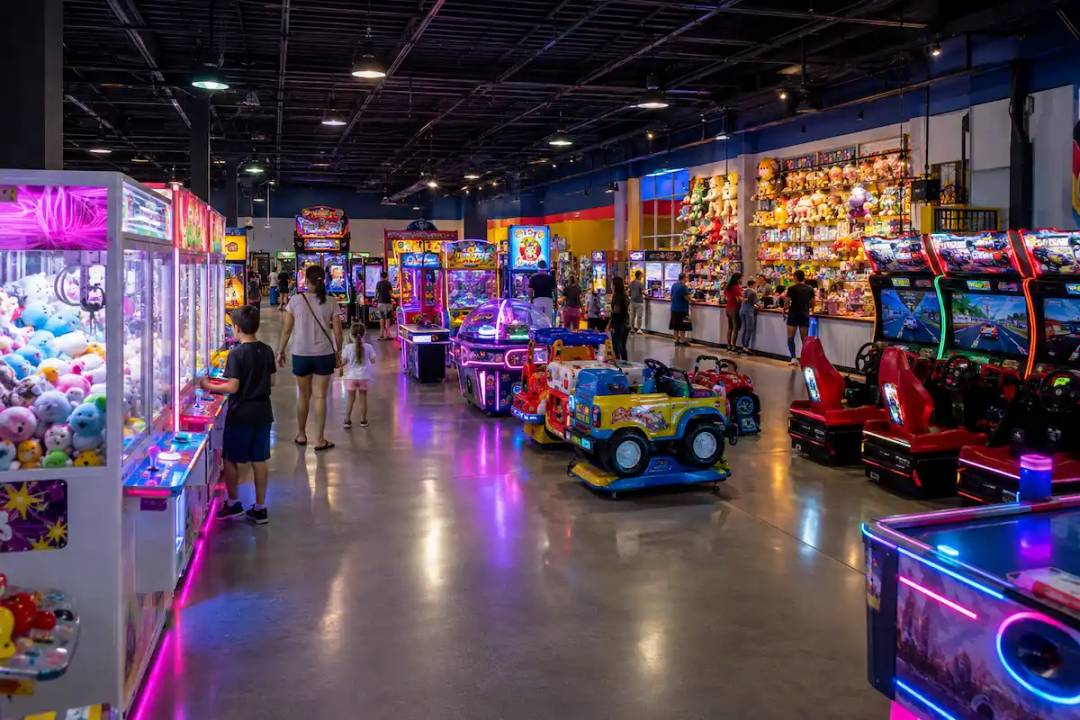
Redemption games can become an important source of repeat spending, but their performance depends on the prize system.
A practical prize counter should include:
- Low-point prizes for immediate rewards
- Mid-level prizes for repeat players
- High-value prizes for long-term goals
- Clear ticket or point labels
- Attractive product displays
- Easy inventory access
- Regular prize updates
The basic customer cycle is:
Play → Earn points → Choose prizes → Continue playing
The prize counter should be visible from the redemption zone so players can connect games with rewards.
9. Prepare an Arcade Business Budget
The equipment purchase is only one part of the total investment.
A startup budget may include:
| Budget Area | Typical Items |
|---|---|
| Venue | Rent, deposit and renovation |
| Equipment | Machines, payment system and prize counter |
| Logistics | Export packaging, freight and customs |
| Installation | Positioning, electrical work and testing |
| Operations | Staff, utilities and maintenance |
| Marketing | Opening promotion and local advertising |
| Inventory | Prizes, spare parts and consumables |
| Reserve Fund | Unexpected repairs and delayed opening costs |
Avoid spending the entire budget on machines. Keep sufficient funds for installation, prizes, marketing, staff training, and early-stage operations.
10. Choose a Reliable Arcade Machine Supplier
The supplier affects product quality, delivery time, customization, technical support, and long-term maintenance.
Before ordering, ask:
- What machine categories do you supply?
- Can you recommend a mix based on my floor plan?
- Are machines tested before shipment?
- Can you support local voltage and payment systems?
- Are OEM/ODM services available?
- What export packaging is used?
- Are manuals and installation videos provided?
- Are spare parts available?
- What warranty and technical support are included?
A good supplier should understand the full project instead of only sending a price list.
Learn more about EPARK’s manufacturing and project capabilities on the About EPARK page.
11. Confirm Customization Before Production
Customization can make the venue look more professional and consistent.
Available options may include:
- Logo placement
- Cabinet colors
- Side-panel artwork
- Interface language
- Voltage and plug
- Coin or card system
- Difficulty settings
- Prize display design
- Packaging labels
- Matching machine series
Before production, confirm artwork files, color references, electrical specifications, payment requirements, machine quantities, and delivery dates in writing.
12. Inspect Machines Before Shipment
Commercial equipment should be tested before packing.
The inspection should cover:
- Gameplay stability
- Screens and sound
- Buttons and joysticks
- Steering wheels and pedals
- Lighting systems
- Coin, token, or card readers
- Ticket or point output
- Cabinet finish
- Customized artwork
- Keys, manuals, and accessories
Request testing videos, machine photos, packing photos, and a final packing list when appropriate.
13. Coordinate Shipping, Installation, and Opening
The project schedule should allow time for more than production and shipping.
A practical sequence is:
- Confirm the venue concept
- Approve the floor plan
- Select the equipment mix
- Confirm customization and payment systems
- Complete production and inspection
- Arrange export packing and shipping
- Complete customs clearance and delivery
- Position and connect the machines
- Configure payment and redemption systems
- Train staff and run a soft opening
Installation manuals and remote technical guidance can make the setup process more efficient.
Answers to common shipping, installation, and warranty questions are available on the EPARK FAQ page.
14. Plan Operations After Opening
The first month of operation provides valuable performance data.
Track:
- Revenue by machine
- Plays per day
- Machine downtime
- Prize cost
- Customer age groups
- Peak visiting hours
- Payment system usage
- Frequently requested games
- Maintenance frequency
Use the data to reposition machines, change game prices, adjust difficulty, refresh prizes, or replace weak-performing equipment.
An arcade should continue evolving after opening. Regular updates help maintain customer interest and improve revenue.
15. Why Work with EPARK for an Arcade Business Project?
EPARK supports arcade investors, FEC operators, shopping mall projects, indoor playgrounds, and equipment distributors with commercial entertainment solutions.
Project support can include:
- Machine recommendations
- Equipment mix planning
- Venue zoning suggestions
- Claw and redemption games
- Racing and sports machines
- Kiddie rides
- Prize zone planning
- OEM/ODM customization
- Payment system configuration
- Quality inspection
- Export packaging and shipping
- Installation guidance
- Spare parts and technical support
Buyers can submit a floor plan, target customer profile, preferred machine categories, and project budget through the EPARK Contact page.
FAQ
1. How much space is needed to start an arcade business?
The required area depends on the business model, machine dimensions, aisle space, prize counter, seating, and local safety requirements. A floor-plan review should be completed before selecting equipment.
2. Which game machines should a new arcade buy first?
A new arcade usually benefits from a mix of claw machines, redemption games, racing machines, basketball games, kiddie rides, and several premium or interactive attractions.
3. Is an arcade business suitable for a shopping mall?
Yes. Shopping malls can provide strong foot traffic, but the machine mix should focus on visual attraction, family participation, quick play, and compact use of space.
4. Should an arcade use coins, tokens, or game cards?
Coins and tokens are simple for smaller venues. Game cards can support stored value, membership, ticket points, promotions, and centralized management for larger centers.
5. Can arcade machines be customized?
Yes. Many machines can be customized with logos, cabinet colors, artwork, language settings, voltage, payment systems, and selected game settings.
6. How can EPARK help buyers start an arcade business?
EPARK can support floor-plan review, machine selection, layout planning, OEM/ODM customization, payment systems, export packaging, shipping, installation guidance, spare parts, and after-sales service.
Conclusion
To start an arcade business with game machines, investors need more than attractive equipment. The venue concept, market demand, floor plan, machine mix, revenue zones, payment system, prize strategy, quality control, and operating plan must work together.
Careful preparation reduces investment risk and creates a better experience for customers. Working with an experienced supplier can also simplify equipment sourcing, customization, delivery, and technical support.
Contact EPARK today to receive arcade machine recommendations, layout planning support, payment system options, and a tailored quotation for your new game center project.
Disclaimer
The information provided on this website is for general informational purposes only.
While EPARK Arcade Game Machine Manufacturer strives to ensure accuracy and reliability, no warranties—express or implied—are made regarding completeness, performance, or applicability.
Product specifications, designs, and features may vary depending on usage, customization, and customer requirements.
Buyers are responsible for verifying all technical details, compliance certifications, and suitability before procurement.
EPARK shall not be held liable for any direct, indirect, incidental, or consequential damages arising from the use of this website or its content, including but not limited to business losses, data errors, or equipment misuse.
For tailored solutions or further verification, please visit our Contact Us
Intellectual Property Notice
All articles, product images, videos, catalogs, software, and related materials published on this website are the intellectual property of EPARK, unless otherwise stated.
Unauthorized reproduction, distribution, modification, or commercial use of any content is strictly prohibited without prior written consent from EPARK.
EPARK reserves the right to take legal action against any unauthorized use, including but not limited to copyright infringement, misrepresentation, or unfair competition.
Trademarks
The name EPARK, the EPARK logo, and all related brand elements displayed on this website are registered trademarks or trade names of Guangzhou EPARK Electronic Technology Co., Ltd.
Other product names, company names, or logos mentioned on this site may be trademarks of their respective owners.
Unauthorized use of EPARK's trademarks for commercial purposes, including advertising, promotions, or product packaging, is strictly prohibited.
Governing Law
These terms are governed by the laws of the People's Republic of China.