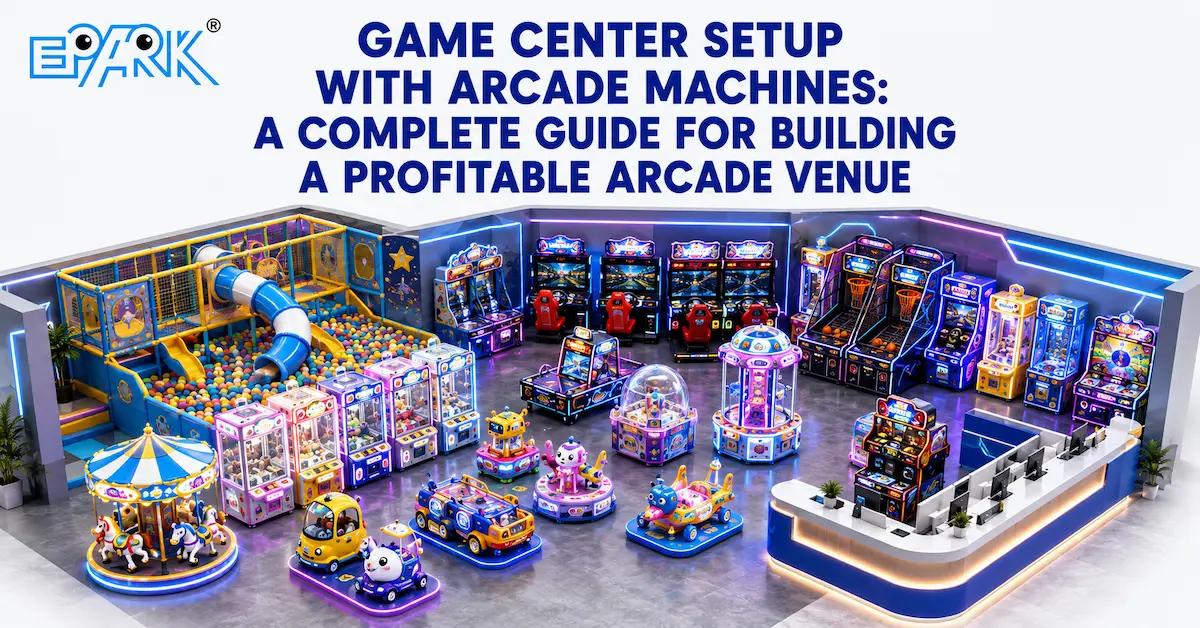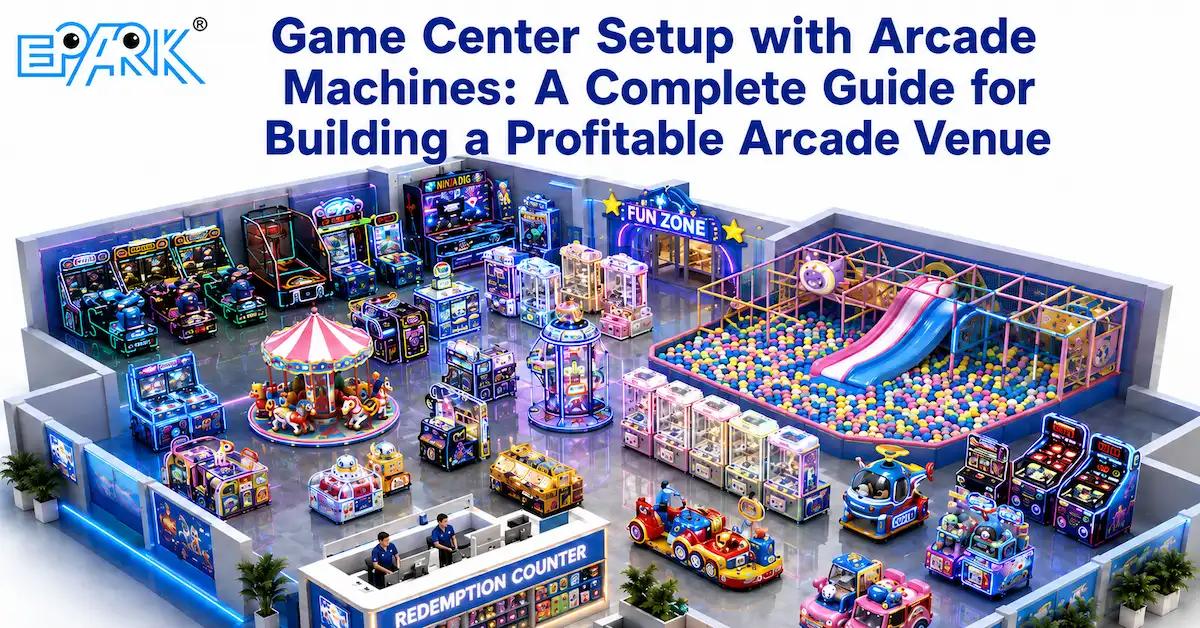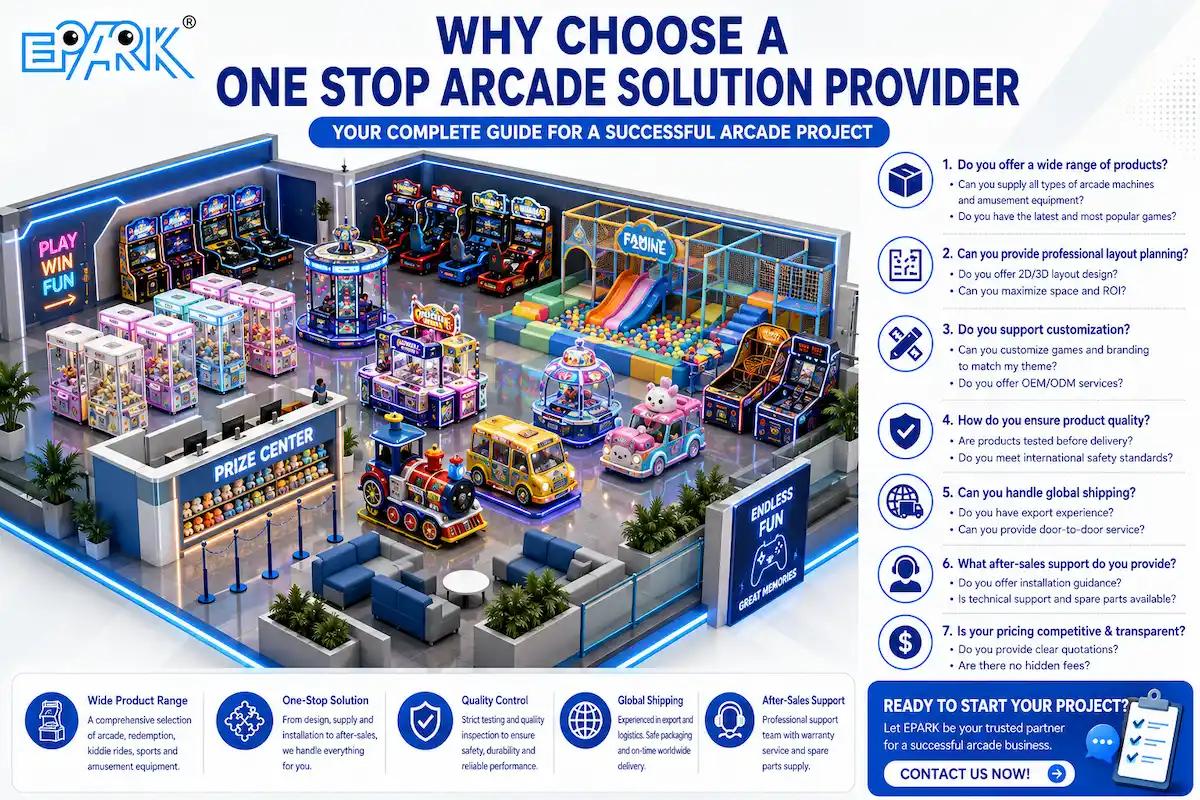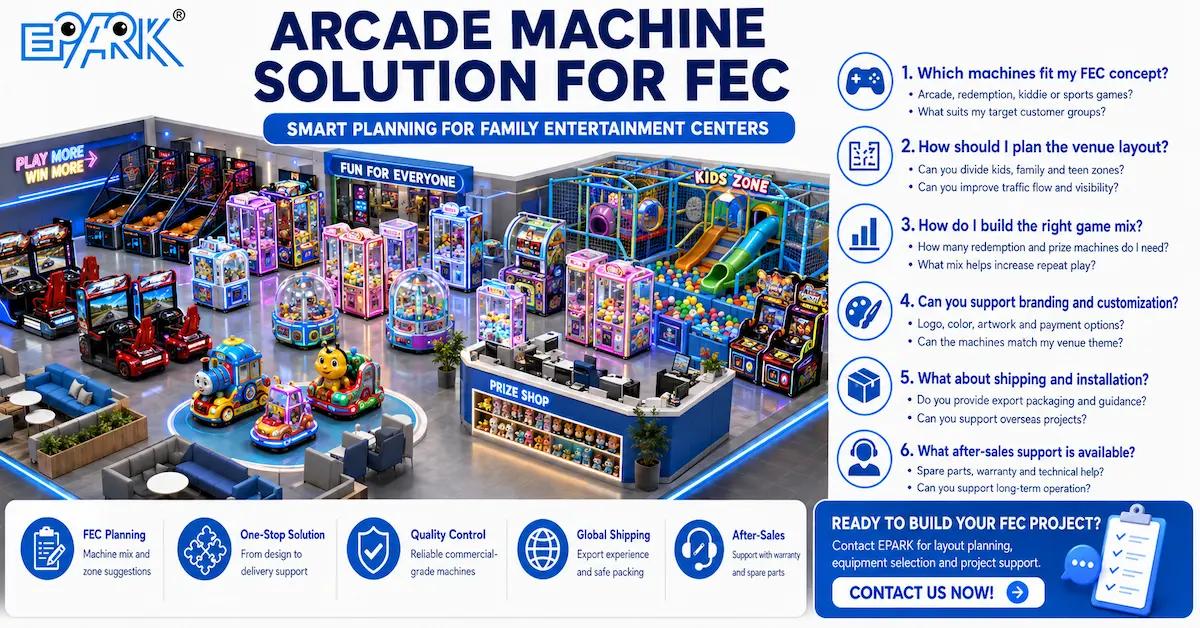

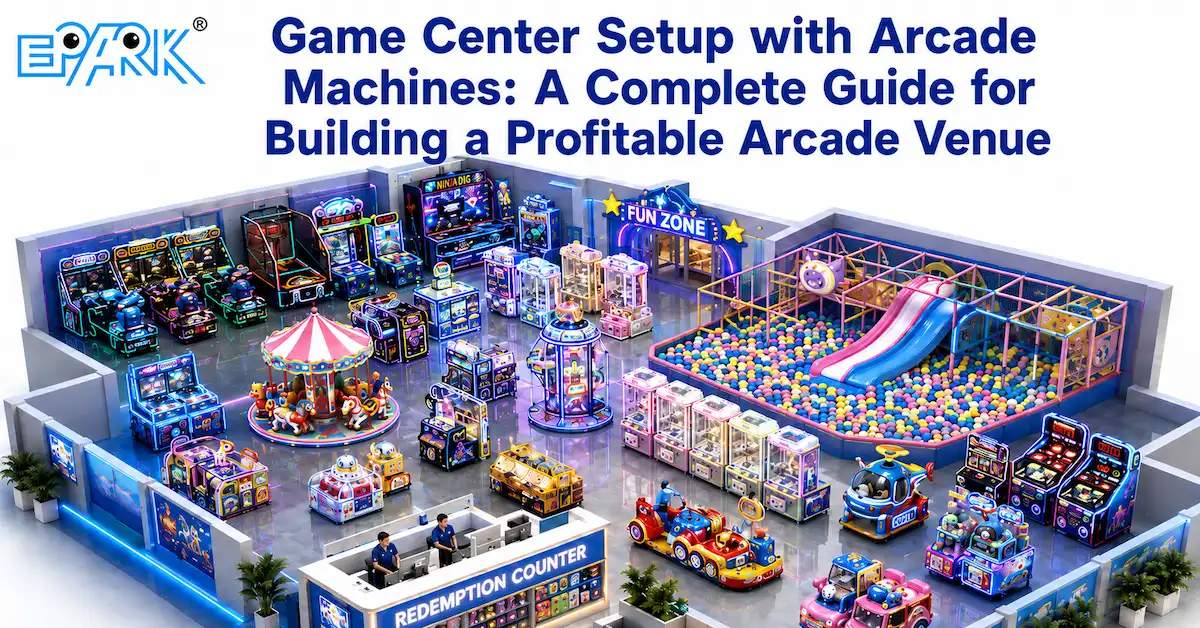
When investors search for game center setup with arcade machines, they are usually preparing a commercial entertainment project rather than simply buying individual machines.
A successful arcade venue needs the right combination of equipment, attractive layout, smooth customer flow, and reliable operation support. Poor planning can lead to unused space, unbalanced machine categories, low customer engagement, and unnecessary maintenance costs.
A professional arcade setup should consider:
- Venue size and floor plan
- Target customer groups
- Machine categories
- Revenue zones
- Payment systems
- Prize redemption strategy
- Branding requirements
- Installation process
- After-sales support
For arcade investors, shopping mall operators, FEC owners, and entertainment project developers, choosing the right setup strategy is the foundation of long-term business performance.
1. What Equipment Is Needed for a Game Center Setup?
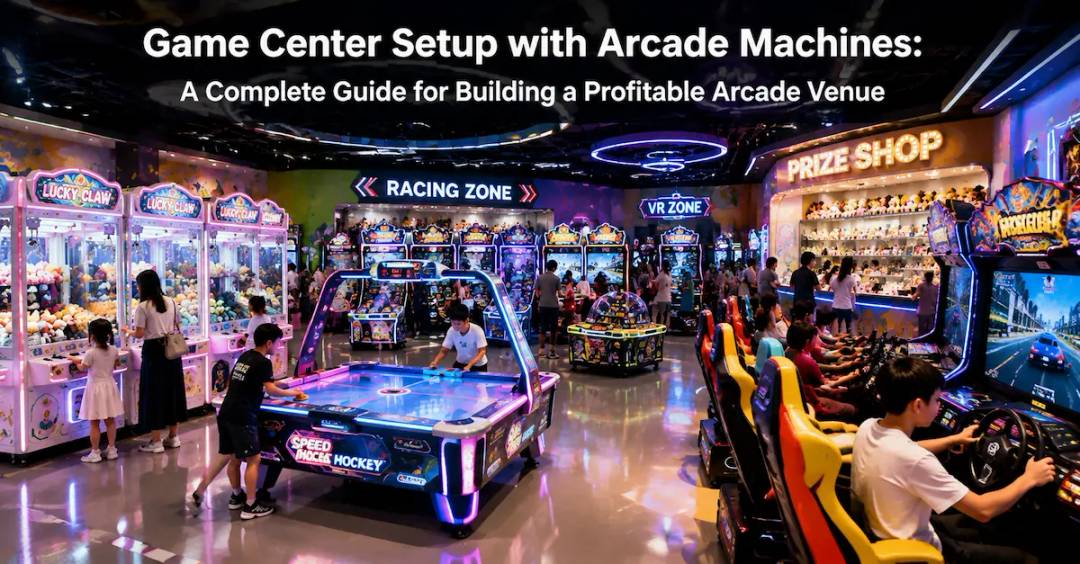
A complete arcade setup usually requires multiple machine categories to attract different customer groups.
Common arcade machines include:
- Claw machines
- Prize machines
- Redemption games
- Racing simulators
- Basketball arcade machines
- Shooting games
- Kiddie rides
- Sports arcade machines
- VR arcade games
- Air hockey tables
- Coin operated arcade machines
- Interactive family games
Different machines serve different purposes. Claw machines attract quick-play customers, redemption games encourage repeat visits, racing and sports games create competitive experiences, and kiddie rides help attract families with younger children.
A professional supplier should recommend machines based on:
- Venue size
- Customer age range
- Local market preferences
- Investment budget
- Expected revenue model
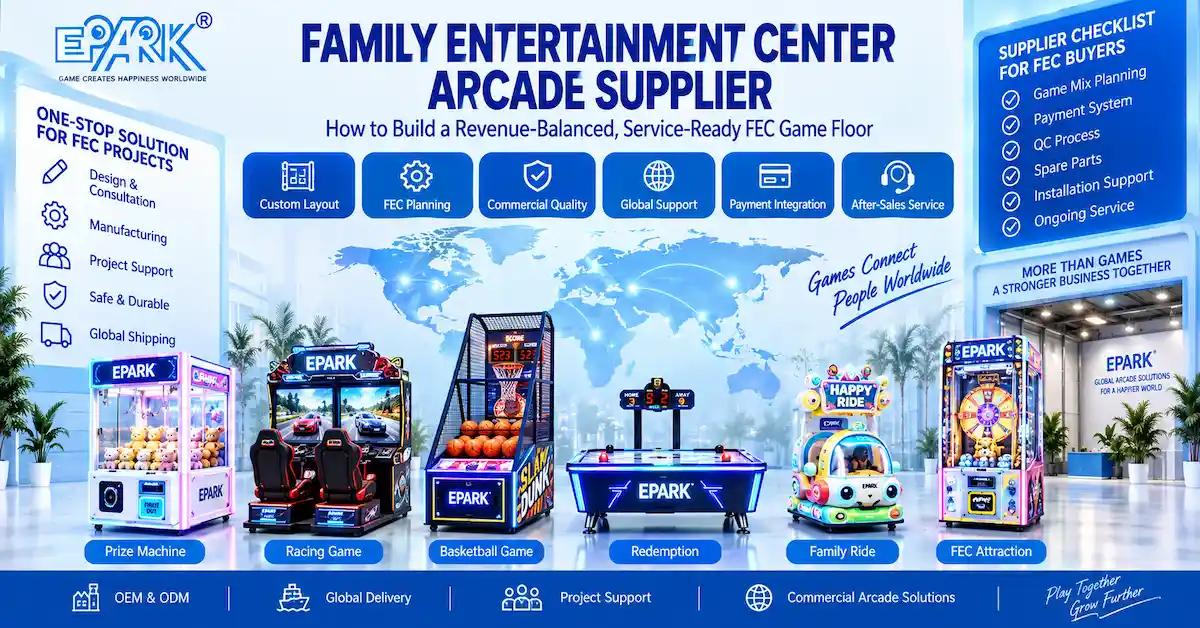
EPARK provides different arcade machines and commercial entertainment equipment solutions. Buyers can explore related products on the EPARK Products page.
2. Choose Arcade Machines Based on Your Target Customers
A successful game center should serve different customer groups instead of focusing on only one audience.
Customer Group and Recommended Machines
| Customer Group | Suitable Machines | Business Purpose |
|---|---|---|
| Young Children | Kiddie rides, mini claw machines | Safe and simple entertainment |
| Families | Redemption games, interactive games | Parent-child activities |
| Teenagers | Racing, shooting, basketball games | Competition and repeat play |
| Adults | Racing simulators, VR games | Premium entertainment |
| Groups | Multiplayer games and sports machines | Social experience |
Understanding customer groups helps operators create a balanced arcade environment.
For example:
- A shopping mall arcade may need more claw machines and quick-play games.
- A family entertainment center may require kiddie rides, redemption games, sports games, and prize areas.
- A professional arcade center may focus on racing simulators, VR, and competitive games.
3. Plan the Arcade Layout Before Installation
A good game center setup depends heavily on layout planning. Machine placement affects customer movement, visibility, and revenue performance.
A professional arcade layout should consider:
- Entrance attraction
- Walking paths
- Machine spacing
- Safety areas
- Prize counter location
- Family rest zones
- High-traffic areas
- Future expansion space
Example Arcade Zone Planning
| Zone | Recommended Equipment | Purpose |
|---|---|---|
| Entrance Zone | Claw machines, prize machines | Attract visitors immediately |
| Family Zone | Redemption games, kiddie rides | Increase family engagement |
| Competition Zone | Racing, basketball, shooting games | Encourage repeat play |
| Prize Zone | Redemption counter and prizes | Increase ticket value |
| Premium Zone | VR and simulator games | Create higher-value experiences |
A professional arcade machine supplier should help buyers optimize space instead of only providing a product catalog.
EPARK can support arcade project planning and equipment recommendations through complete entertainment solutions.
4. Create Revenue-Focused Arcade Zones
A profitable arcade center should be designed around customer behavior.
Different machines create different revenue patterns:
Quick Play Machines
Examples:
- Claw machines
- Prize machines
- Mini games
Advantages:
- Easy to understand
- Suitable for impulse play
- Good for entrance areas
Repeat Play Machines
Examples:
- Redemption games
- Sports games
- Racing machines
Advantages:
- Encourage multiple plays
- Improve customer retention
- Increase visit frequency
Premium Experience Machines
Examples:
- VR games
- Large racing simulators
- Interactive machines
Advantages:
- Higher customer value
- Create unique experiences
- Improve venue competitiveness
Combining different machine types helps create a stronger business model.
5. Payment System Planning for Arcade Machines
Payment systems are an important part of arcade operation.
Depending on the market, arcade machines may use:
- Coins
- Tokens
- Game cards
- Membership cards
- Cashless payment systems
Before installation, buyers should confirm:
- Local currency requirements
- Coin acceptor compatibility
- Card system support
- Credit settings
- Ticket output system
- Future payment upgrades
For larger arcade centers, card-based systems can improve customer convenience and support membership programs.
6. Customize Arcade Machines for Branding
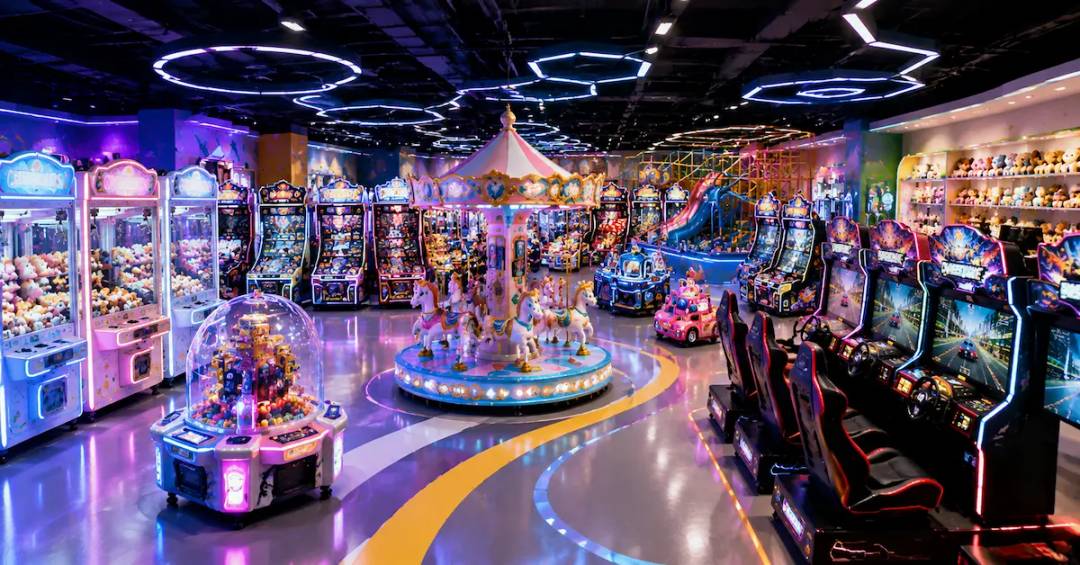
Many arcade operators want their venue to have a unique identity. Customization helps machines match the overall theme.
Common customization options include:
- Logo printing
- Cabinet colors
- Artwork design
- Theme customization
- Language settings
- Payment system configuration
- Packaging customization
OEM/ODM customization is especially useful for:
- Arcade chains
- Shopping mall projects
- Private-label businesses
- Entertainment brands
- Distributors
A consistent machine appearance can improve brand recognition and create a more professional customer experience.
7. Quality Control Before Opening Your Game Center
Arcade machines are commercial equipment that operate frequently every day. Quality control is important before shipment and installation.
Buyers should check:
- Machine function testing
- Screen performance
- Button and joystick response
- Lighting system
- Sound quality
- Payment system operation
- Cabinet durability
- Spare parts availability
Arcade Machine Quality Checklist
| Area | What to Check |
|---|---|
| Gameplay | Stable operation |
| Electronics | Reliable components |
| Cabinet | Commercial durability |
| Payment | Correct payment recognition |
| Appearance | Accurate customization |
| Packaging | Safe international shipping |
Reliable quality control helps reduce downtime after opening.
8. Shipping and Installation Support for Arcade Projects
International arcade projects require professional logistics support.
A complete supplier should assist with:
- Export packaging
- Loading arrangements
- Shipping documents
- Installation guidance
- Setup videos
- Spare parts preparation
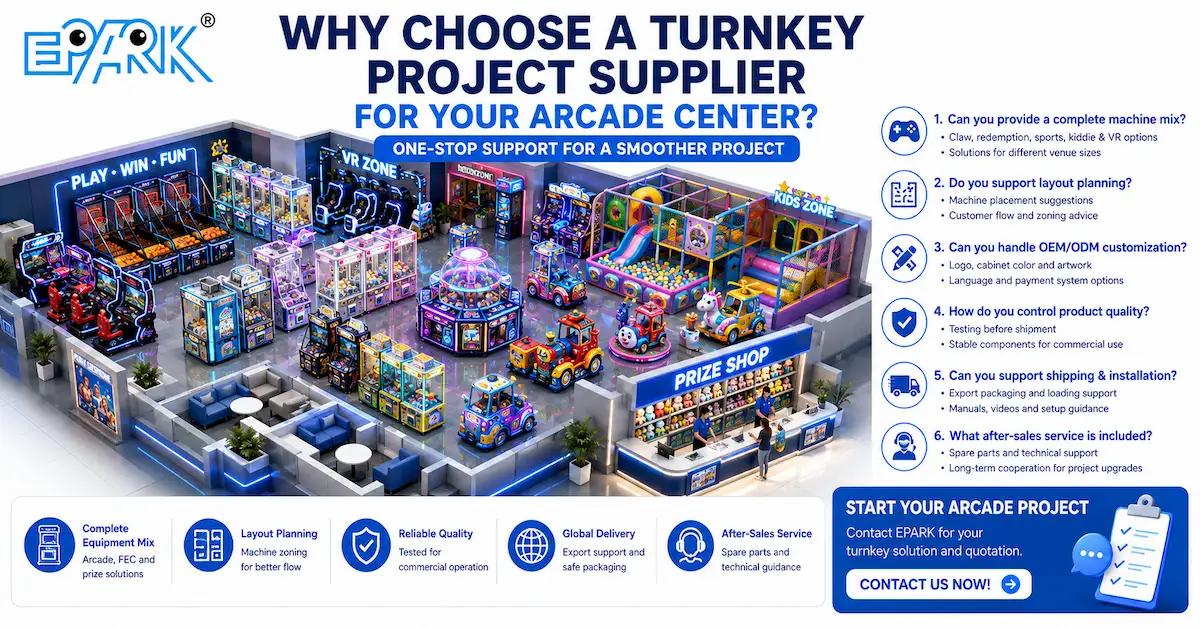
Before ordering, buyers should ask:
- How are machines packaged?
- Are fragile components protected?
- Are installation instructions provided?
- Is technical support available after delivery?
Proper preparation can make the opening process faster and reduce unexpected problems.
9. Why Choose EPARK for Game Center Setup with Arcade Machines?
EPARK is a one-stop arcade machine manufacturer and commercial amusement solution provider based in Guangzhou, China.
For global arcade investors and FEC operators, EPARK supports:
- Arcade machine selection
- Complete game center setup planning
- Equipment mix recommendations
- Layout planning
- OEM/ODM customization
- Quality inspection
- Export packaging
- Shipping support
- Installation guidance
- Spare parts and after-sales service
Whether you are opening a new arcade center, upgrading an existing entertainment venue, building an FEC project, or sourcing machines for wholesale, EPARK can provide complete project support.
Learn more about EPARK through the About Us page, explore equipment options on the Products page, review common questions on the FAQ page, or contact EPARK for a customized arcade project solution.
FAQ
1. How do I start a game center setup with arcade machines?
Start by analyzing your venue size, customer groups, budget, and revenue goals. Then select suitable machines, create a layout plan, confirm payment systems, and work with a reliable arcade supplier.
2. What arcade machines are best for a new game center?
Popular choices include claw machines, redemption games, racing simulators, basketball games, kiddie rides, shooting games, and VR machines.
3. How many arcade machines do I need for a game center?
The number depends on venue size, customer flow, investment budget, and business model. A professional supplier can recommend a suitable machine mix.
4. Can arcade machines be customized?
Yes. Arcade machines can be customized with logos, colors, artwork, payment systems, languages, and cabinet designs.
5. Why is arcade layout planning important?
A good layout improves customer movement, machine visibility, safety, and revenue performance.
6. Can EPARK support complete arcade projects?
Yes. EPARK supports machine selection, layout planning, customization, shipping, installation guidance, and after-sales service.
Conclusion
Building a successful game center setup with arcade machines requires careful planning, the right equipment mix, professional layout design, reliable machines, and strong supplier support.
A complete arcade project partner can help reduce risks and make the setup process easier from initial planning to final operation.
For investors, FEC operators, and entertainment businesses, choosing the right arcade solution provider is an important step toward building a profitable and attractive game center.
Contact EPARK today to get professional arcade machine recommendations, layout planning support, and a complete solution for your game center project.
Disclaimer
The information provided on this website is for general informational purposes only.
While EPARK Arcade Game Machine Manufacturer strives to ensure accuracy and reliability, no warranties—express or implied—are made regarding completeness, performance, or applicability.
Product specifications, designs, and features may vary depending on usage, customization, and customer requirements.
Buyers are responsible for verifying all technical details, compliance certifications, and suitability before procurement.
EPARK shall not be held liable for any direct, indirect, incidental, or consequential damages arising from the use of this website or its content, including but not limited to business losses, data errors, or equipment misuse.
For tailored solutions or further verification, please visit our Contact Us
Intellectual Property Notice
All articles, product images, videos, catalogs, software, and related materials published on this website are the intellectual property of EPARK, unless otherwise stated.
Unauthorized reproduction, distribution, modification, or commercial use of any content is strictly prohibited without prior written consent from EPARK.
EPARK reserves the right to take legal action against any unauthorized use, including but not limited to copyright infringement, misrepresentation, or unfair competition.
Trademarks
The name EPARK, the EPARK logo, and all related brand elements displayed on this website are registered trademarks or trade names of Guangzhou EPARK Electronic Technology Co., Ltd.
Other product names, company names, or logos mentioned on this site may be trademarks of their respective owners.
Unauthorized use of EPARK's trademarks for commercial purposes, including advertising, promotions, or product packaging, is strictly prohibited.
Governing Law
These terms are governed by the laws of the People's Republic of China.