

What Should an Arcade Supplier with Installation Support Deliver?
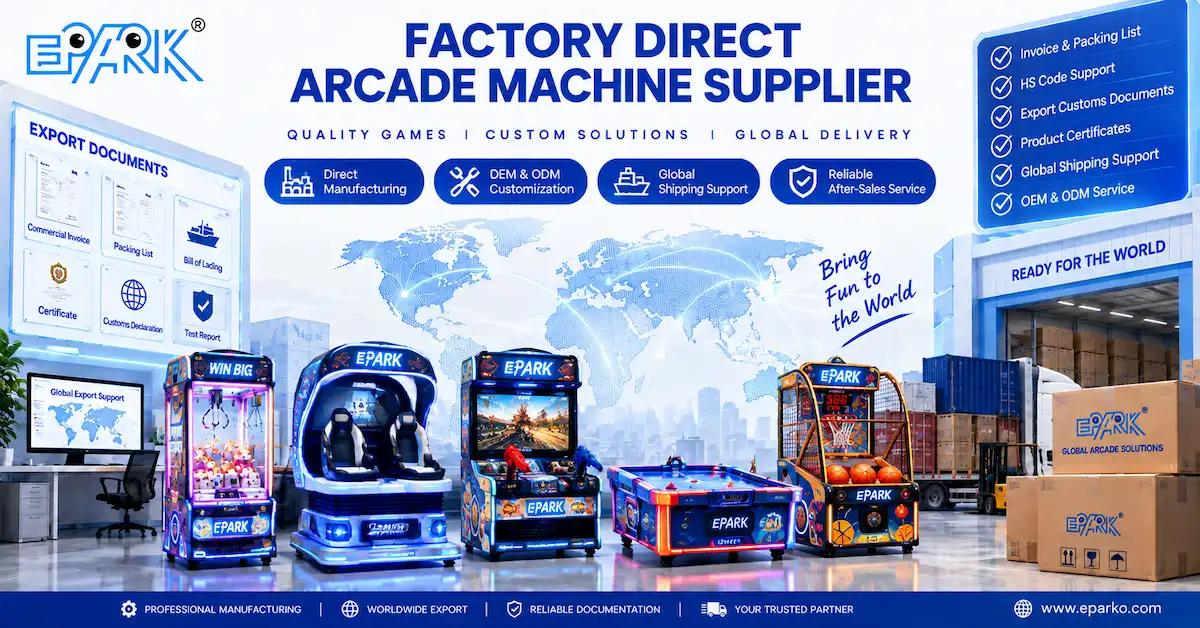
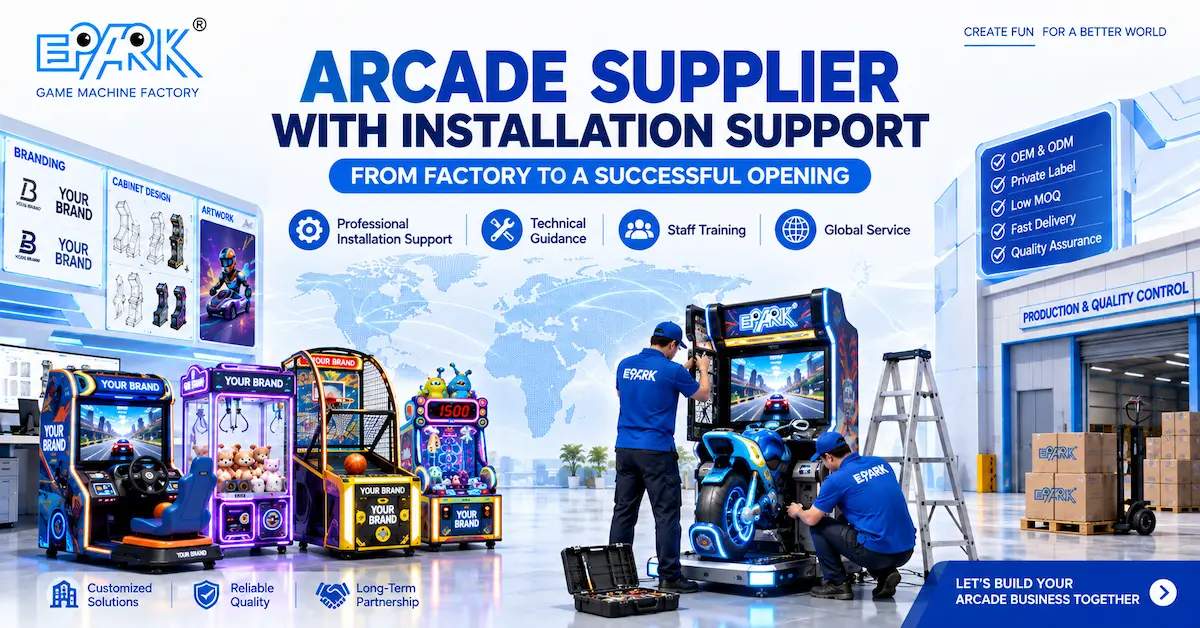
Choose an arcade supplier with installation support that can explain how your order moves from delivered equipment to tested, usable machines—not simply promise assistance after shipping. Before ordering, request a defined scope covering setup documents, technical guidance, operational testing, staff training, and unresolved issues. EPARK’s installation and technical support FAQ confirms remote guidance through video calls and messaging, alongside setup manuals and operation guides. Treat that as a starting point for discussing your order, rather than assuming every project includes an engineer at the venue. The practical question is: who completes each installation task, and what confirms that the work is finished?
Match the Support Level to Your Venue and Local Team
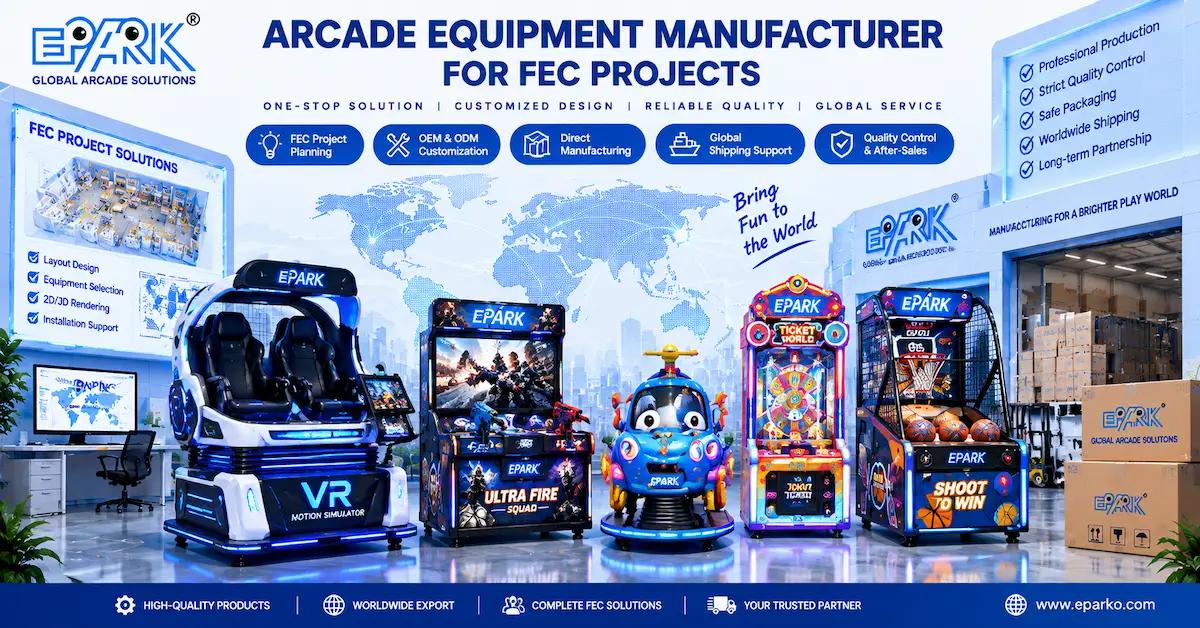
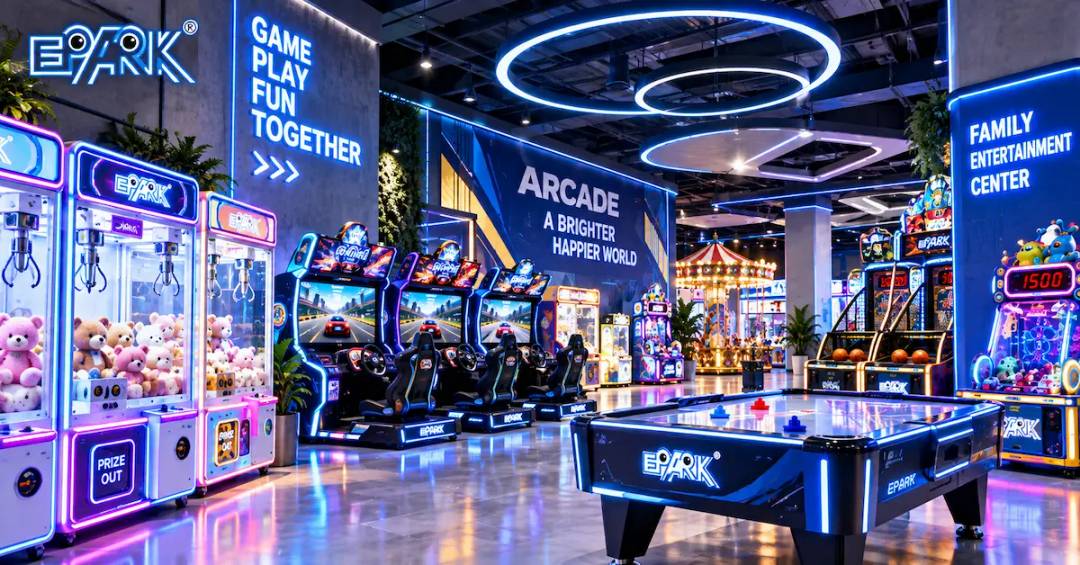
For a first family entertainment center (FEC) opening, request coordinated assistance across the equipment list, layout, payment setup, and staff preparation. For an established arcade replacing familiar cabinets, discuss whether your existing technician can handle installation with model-specific factory guidance. For a distributor supplying several customers, prioritize repeatable instructions, technician training, and identifiable replacement parts. EPARK’s commercial arcade solutions include full FEC configurations and VR-focused concepts, providing different starting points for these conversations. Do not select the most extensive support arrangement automatically: compare the actual work required with the skills available locally. Equally, avoid a remote-only plan when nobody on site can perform the agreed assembly and checks.
Compare Remote Guidance, On-Site Supervision, and Turnkey Installation
When comparing an arcade supplier with installation support, separate advice, supervision, and hands-on work. EPARK’s custom arcade game-center solution describes assembly videos, manuals, and engineer visits for installation guidance on larger projects. Confirm destination availability, scheduling, responsibilities, and travel charges for your proposal. The comparison below is a purchasing framework, not a list of fixed EPARK packages; each arrangement needs a project-specific scope.
| Support Arrangement | Project Conditions to Discuss | Responsibility to Clarify | Costs to Itemize |
|---|---|---|---|
| Remote-guided setup | Suitable local personnel can complete the work | Who assembles, tests, and reports results while the supplier advises | Included sessions, additional assistance, local labor |
| Local installer with factory support | A local contractor needs machine-specific guidance | Who coordinates the installer, supplier, and system providers | Contractor work, technical coordination, retesting |
| Supplier on-site supervision | The project needs direct technical oversight | Whether visiting engineers supervise or also perform installation | Travel, accommodation, working days, overtime |
| Agreed turnkey installation | The buyer requests a coordinated installation package | Which equipment, site works, testing, and training are included or excluded | Defined project scope, exclusions, changes, additional visits |
Confirm Site and Machine Specifications Before Shipment
Give your arcade supplier with installation support a measured floor plan rather than only a total area figure. EPARK’s planning process starts with the space, entrances and exits, audience, preferred games, and budget, with site photos or videos used to support the review. For procurement, extend that discussion to the delivery route, final machine configuration, and local services. Use the following worksheet to request actual order-specific values; it is not a universal specification sheet for arcade equipment.
| Specification Area | Information to Request or Provide | Installation Question It Resolves |
|---|---|---|
| Model and configuration | Exact model, quantity, revision, and approved options | Do the instructions match the delivered machines? |
| Dimensions | Packed, assembled, and operating dimensions in millimeters | Can the equipment reach its position and be used there? |
| Weight and handling | Net weight, shipping weight, packing arrangement, and handling instructions | What unloading and moving resources must be arranged? |
| Electrical requirements | Model-specific voltage, frequency, power, connector, and installation documentation | What must the local electrical professional verify before connection? |
| Assembly requirements | Shipped sections, supplied fixings, tools, and personnel requirements | Which tasks remain after unpacking? |
| Payment and redemption | Reader/provider details, credit settings, and ticket or points configuration | Who confirms compatibility and tests the complete transaction? |
| Network and software | Required connections, accounts, licenses, and supported offline behavior | What needs to be available before commissioning? |
| Access and environment | Doorways, turns, lifts, service access, and permitted operating conditions | Is the proposed location appropriate for the selected model? |
| Documents and support | Matching manuals, diagrams where applicable, support language, and contact schedule | Can the local team follow instructions and obtain help? |
Adapt Installation Checks to the Selected Machines
Claw Machines and Redemption Games
Ask for a complete demonstration of payment recognition, game start, player controls, and the applicable prize or ticket sequence. Confirm which operational settings your staff may adjust and how the agreed settings will be recorded. For an existing venue, name the payment-system provider before approving the machine configuration. EPARK describes both self-developed and third-party card and management systems in its operator support services; that is a reason to identify the actual system in your quotation, not to assume universal compatibility.
Racing, Linked Games, and VR Equipment
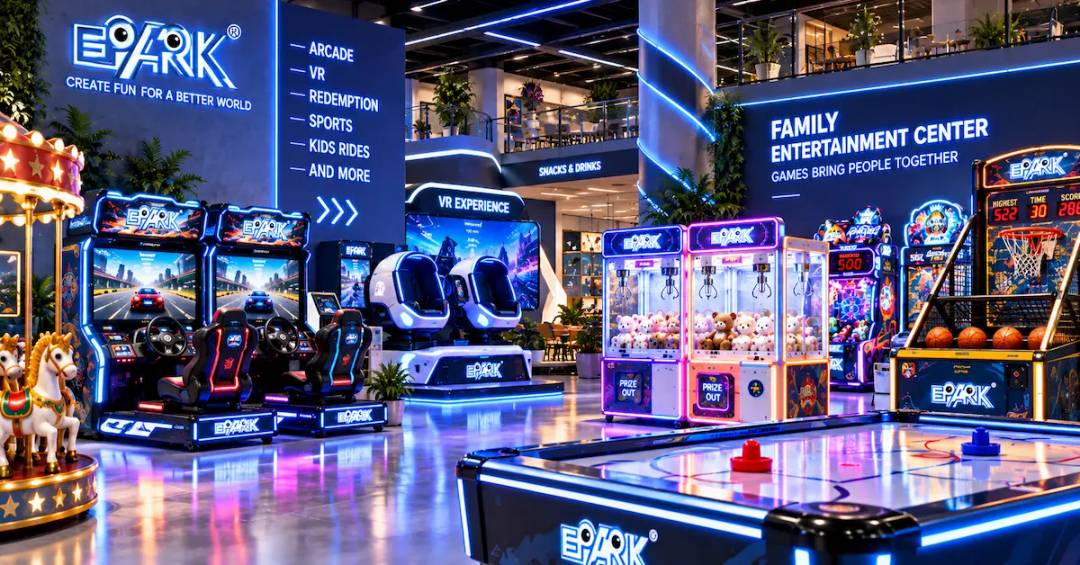
Ask whether the selected model includes linked play, force feedback, headsets, or a motion system, then request the relevant setup and test procedure for those features. Do not infer technical configuration from the word “simulator.” EPARK’s VR racing and entertainment-zone concept includes multiple experience stations and an operator counter for customer guidance and headset sanitation. For a similar project, include that service area in the installation brief rather than measuring only the equipment footprints. Confirm operator training and model-specific use restrictions before public operation.
Cabinet Materials, Components, and Assembly Details
Request the specified cabinet and panel materials for each model, together with details of any parts removed for transport. Ask for identification of matching connectors, supplied hardware, service openings, and reassembly instructions. For approval photos, request views that show the relevant fixings and access points—not only illuminated front panels. Keep cosmetic acceptance, assembly completion, and functional testing as separate checks so that an attractive exterior does not become the only basis for handover.
Assign Responsibilities Before the Equipment Arrives
Before booking delivery, ask your arcade supplier with installation support to review a written responsibility schedule with the venue manager and local contractors. Put one named owner against every major task: site readiness, unloading, movement into position, assembly, building electrical work, network preparation, payment integration, testing, and training. For example, write “the local installer mounts the agreed reader; the system provider activates the account; the supplier supports machine settings; the operator witnesses the test,” rather than “payment setup included.” Treat this as an illustrative responsibility split, not a predetermined EPARK service arrangement. An installation guide should not be interpreted as a commitment to carry out building work, supply lifting equipment, or complete tasks omitted from the quotation.
Separate Factory Testing from Site Acceptance
Ask your arcade supplier with installation support for both pre-shipment evidence and a site-acceptance plan. EPARK’s design and manufacturing process describes a 48-hour full-operation test before shipment, covering gameplay, electrical safety, lighting, and mechanical performance. Request records relevant to your machines, then agree on commissioning: testing the installed equipment and its connections against agreed requirements. For each unit, record its identity, approved configuration, test results, unresolved items, responsible person, and retest status. Where certification or conformity documents are relevant, request documents matched to the selected model and destination rather than relying only on general website badges. Keep equipment receipt and operational acceptance as separate records.
Approve OEM Changes Before Production and Installation Planning
EPARK’s company profile identifies OEM customization, venue layout consulting, branding support, and ongoing technical assistance among its services. For your order, divide requested changes into appearance, physical configuration, controls, payment, and software requirements. Ask which are standard options and which require separate development or confirmation. Before production, approve a configuration document showing the agreed version and any effect on dimensions, assembly, manuals, testing, or service parts. A revised cabinet or reader arrangement should trigger a review of the installation documents. For repeat orders, reference the approved configuration rather than assuming that an identical product name guarantees an identical setup.
Build the Opening Schedule Around Confirmed Milestones
Do not treat a shipping estimate as an opening date. Ask the arcade supplier with installation support to identify the production slot for your equipment list and the dependencies for factory inspection, packing, dispatch, delivery, and technical attendance. Build your own schedule backward from the planned opening, allowing separate stages for site readiness, setup, commissioning, training, and correction of outstanding issues. Confirm who authorizes each stage and how changes will be communicated. For a phased delivery, identify which equipment and system components must arrive together to complete testing. Avoid booking an engineer solely against an estimated vessel arrival; first agree on the conditions under which the venue will be ready for productive installation work.
Compare the Installed Cost, Not Just the Machine Price
Request an itemized proposal from each arcade supplier with installation support. Separate equipment and customization from freight, unloading, local installation labor, technical attendance, travel, system fees, testing, and training wherever these apply. Ask what is included, what is optional, and what could create additional charges, such as extra visits or changes after approval. For post-installation service, confirm warranty coverage, exclusions, claim evidence, replacement-part charges, shipping responsibility, and local labor arrangements. Also distinguish the time to acknowledge a support request from the time needed to diagnose or resolve it. Compare quotations against the same agreed task list; a lower equipment price alone does not establish which proposal provides the better installation arrangement.
Make Training and Technical Handover Part of Completion
Define the training outcome before installation begins: your designated staff should demonstrate the agreed startup, shutdown, approved settings, routine checks, and fault-reporting procedures using the delivered equipment. Ask which tasks operators can perform and which should be escalated to qualified technical personnel. At handover, request matching manuals, configuration records, support contacts, and a recommended parts list with identifiable references. Decide how open issues will be logged and who confirms their closure. EPARK’s arcade machine after-sales support guide discusses documentation, spare parts, remote troubleshooting, and warranty questions that can inform this discussion. Make the final handover record useful to the team running the venue, not just the purchasing department.
Prepare an Installation-Focused Brief for EPARK
EPARK presents installation, remote diagnostics, and technical assistance within its project service offering. To discuss an arrangement for your venue, provide the location, measured plan, delivery access, proposed equipment list, target audience, payment-system details, available local technicians, and planned opening window. Specify whether you need remote guidance, on-site supervision, or a broader installation scope. Ask for the response to separate confirmed services, buyer responsibilities, exclusions, and items awaiting technical review. This gives the proposal a concrete basis and lets you assess the machines and support together, rather than discovering installation requirements after the order has been approved.
Frequently Asked Questions
1. Does Installation Support Include Engineers at My Venue?
Do not assume that it does. EPARK describes remote guidance in its FAQ and engineer visits for larger projects in its game-center solution. Confirm which arrangement applies to your order, including destination availability, engineer duties, scheduling, and expenses.
2. Can a Small Arcade Use Remote Installation Guidance?
Discuss remote guidance when suitable local personnel can carry out the required tasks. Ask the supplier to review the selected machines, assembly work, system connections, and your team’s experience before confirming that this approach fits the project.
3. What Should I Send Before Requesting an Installation Quote?
Provide a measured layout, venue address, delivery-route information, equipment list, payment requirements, available local personnel, and opening target. Add site photos and flag unresolved building or network work so the proposal can identify dependencies.
4. How Long Will Arcade Installation Take?
Request an estimate for the defined equipment list and site conditions rather than a universal day count. Ask the proposal to separate assembly, configuration, testing, training, and any supplier attendance from manufacturing and transport time.
5. Who Should Handle the Venue’s Electrical Preparation?
Assign building electrical preparation and verification to an appropriately qualified local professional. Request the exact machine requirements from the supplier and identify where the supplier’s equipment guidance ends and the local contractor’s work begins.
6. Can New Machines Use My Existing Card System?
Ask for compatibility confirmation using the actual machine configuration and card-system details. Identify who supplies the reader, activates the account, configures credits, and checks tickets or points. Include a witnessed transaction test in the agreed acceptance plan.
7. Are Installation Charges Included in the Equipment Price?
Check the written quotation. Ask it to identify included guidance, optional attendance, local labor, travel, training, and additional-session charges where relevant. Do not interpret “support included” as confirmation that every installation expense is covered.
8. What Tests Should Be Completed Before Opening?
Agree on model-specific checks for assembly, startup, controls, payment recognition, gameplay, and applicable prize, ticket, network, or motion functions. Record results by machine and resolve any issue that prevents safe, intended operation before making that unit available.
9. What Information Helps with a Post-Installation Fault?
Keep the model, serial or order reference, configuration, symptom description, error message, and relevant photos or video together. Follow the supplier’s reporting procedure and avoid making undocumented changes while a fault is being investigated.
10. What Should Distributors Request Beyond Venue Installation?
Request a repeatable training and documentation package for the models being purchased, with parts identification, configuration records, warranty procedures, and escalation contacts. Confirm permission to use customer-facing technical materials and the language options actually available.
Conclusion
The right arcade supplier with installation support should give you a clear path from approved equipment and a prepared site to tested machines and trained staff. Evaluate the actual scope, technical documents, responsibilities, costs, and acceptance process—not the word “turnkey” alone. For an EPARK project, start with your floor plan, equipment requirements, local installation resources, and opening target, then confirm the support arrangement in writing. Contact EPARK to discuss your arcade installation requirements and request a proposal that separates equipment supply, installation assistance, site responsibilities, and handover deliverables.
Disclaimer
The information provided on this website is for general informational purposes only.
While EPARK Arcade Game Machine Manufacturer strives to ensure accuracy and reliability, no warranties—express or implied—are made regarding completeness, performance, or applicability.
Product specifications, designs, and features may vary depending on usage, customization, and customer requirements.
Buyers are responsible for verifying all technical details, compliance certifications, and suitability before procurement.
EPARK shall not be held liable for any direct, indirect, incidental, or consequential damages arising from the use of this website or its content, including but not limited to business losses, data errors, or equipment misuse.
For tailored solutions or further verification, please visit our Contact Us
Intellectual Property Notice
All articles, product images, videos, catalogs, software, and related materials published on this website are the intellectual property of EPARK, unless otherwise stated.
Unauthorized reproduction, distribution, modification, or commercial use of any content is strictly prohibited without prior written consent from EPARK.
EPARK reserves the right to take legal action against any unauthorized use, including but not limited to copyright infringement, misrepresentation, or unfair competition.
Trademarks
The name EPARK, the EPARK logo, and all related brand elements displayed on this website are registered trademarks or trade names of Guangzhou EPARK Electronic Technology Co., Ltd.
Other product names, company names, or logos mentioned on this site may be trademarks of their respective owners.
Unauthorized use of EPARK's trademarks for commercial purposes, including advertising, promotions, or product packaging, is strictly prohibited.
Governing Law
These terms are governed by the laws of the People's Republic of China.