
What Should Overseas Buyers Confirm Before Ordering Arcade Machines?
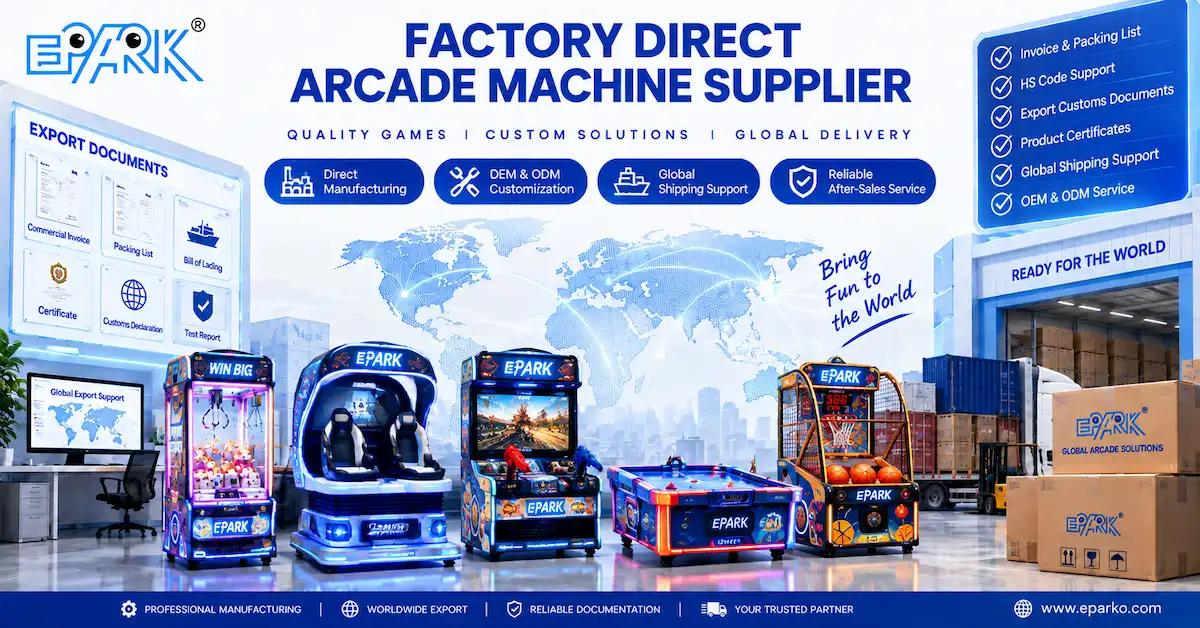
When sourcing arcade machines for overseas buyers, the first decision should not be which cabinet looks most attractive. International buyers need to confirm whether the selected machines can be manufactured, configured, tested, packed, shipped, installed, and maintained under the conditions of the destination market. A reliable order therefore follows a controlled sequence: project requirements → machine selection → specification confirmation → customization approval → production → quality inspection → export packaging → shipment preparation → installation support → after-sales service. EPARK describes a similar international-order workflow in its international arcade machine order guide, while its company profile identifies coin-operated arcade machines, VR simulators, kiddie rides, gift machines, OEM customization, venue planning, and technical support as core business areas. For overseas buyers, the practical goal is not simply to purchase equipment from China; it is to receive the same configuration that was approved before production and to have enough documentation and service information to operate it after arrival.
Who Is This Buying Process Designed For?
This purchasing method is particularly useful for regional distributors importing multiple machine categories, FEC investors building a new venue, arcade chains standardizing equipment across locations, amusement-equipment importers, mall entertainment operators, and contractors purchasing machines for customer projects. These buyers normally care about more than one machine: they need batch consistency, usable technical information, export preparation, parts support, and a supplier that can reproduce approved configurations. EPARK’s wholesale guidance similarly identifies distributors, FEC operators, contractors, and chain entertainment businesses as typical bulk-purchase buyers. A consumer looking for one home-use machine, or a buyer who has not yet defined the destination country, venue type, payment method, or available space, may not be ready for a full international procurement process; defining those conditions first generally produces a more useful quotation than simply requesting “your best arcade machine price.”
Choose the Machine Mix According to the Venue, Audience, and Business Model
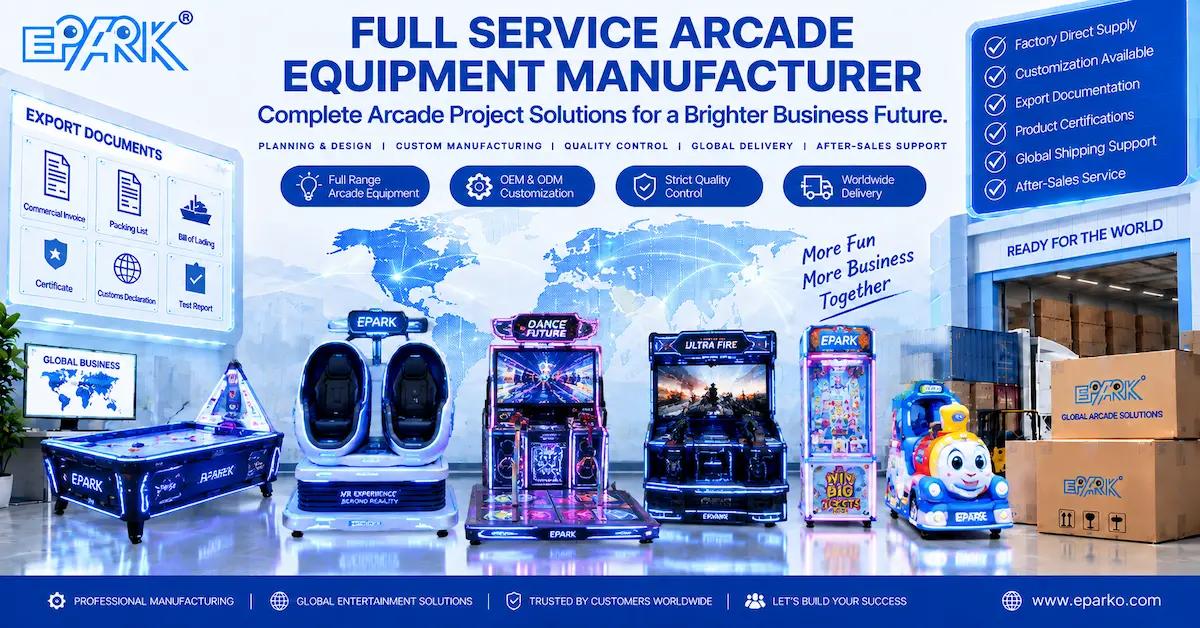
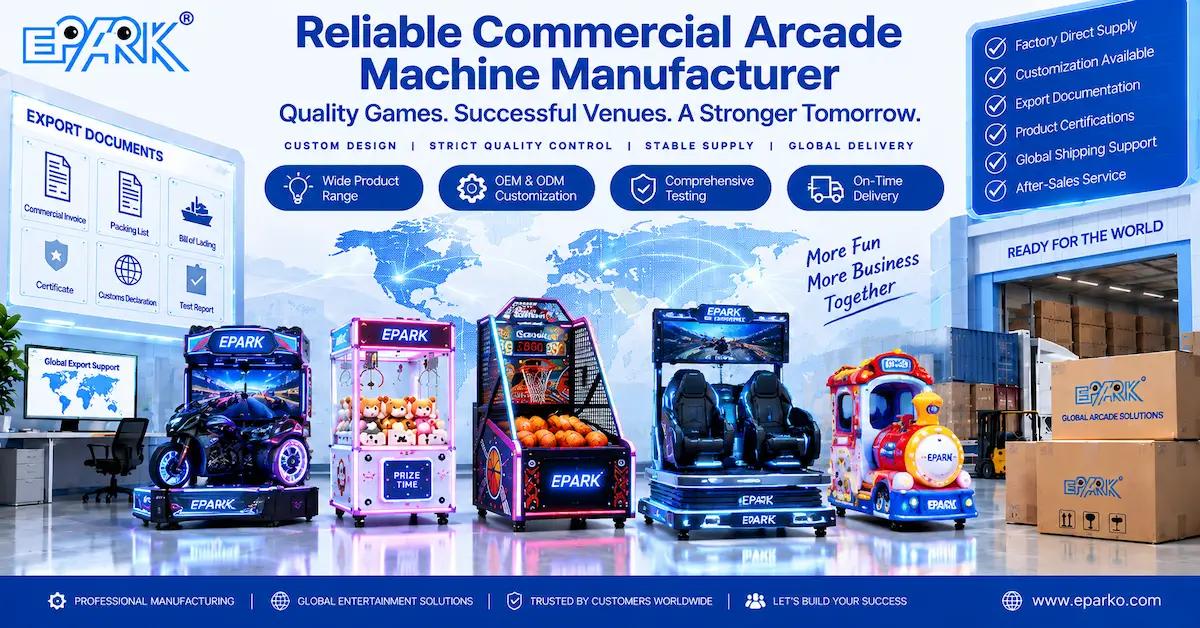
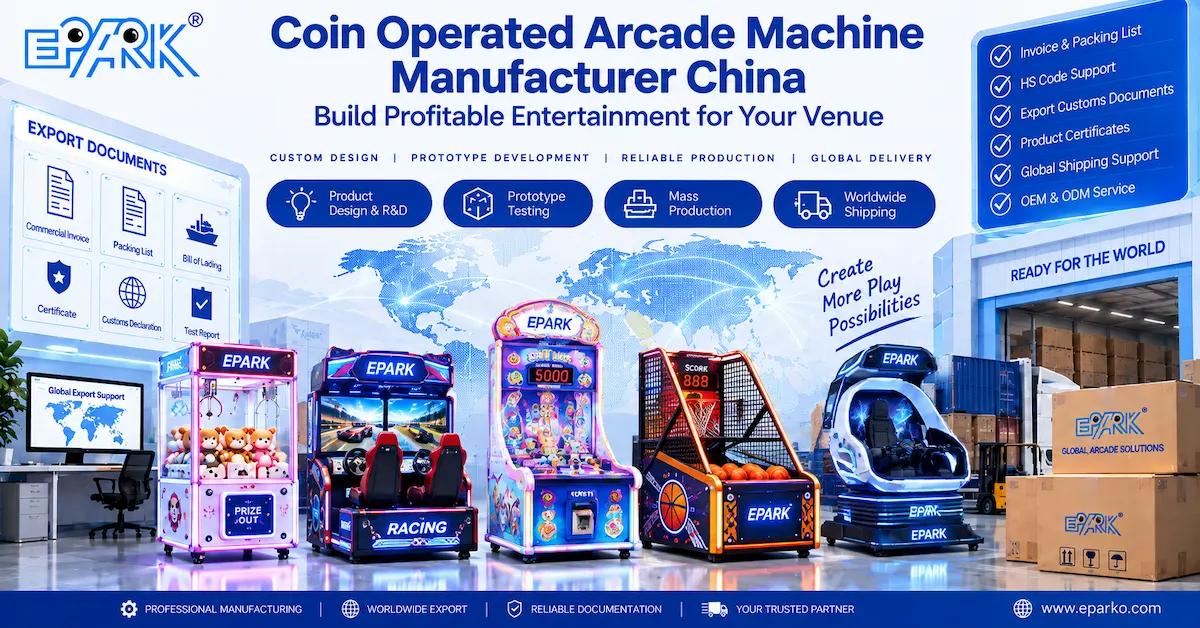
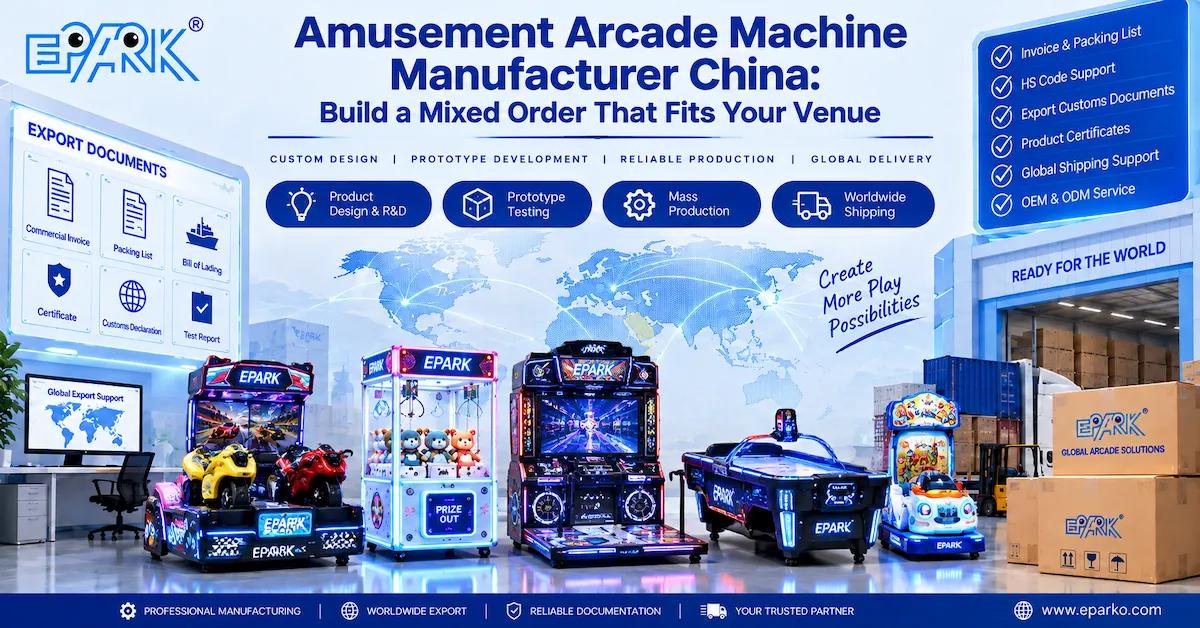
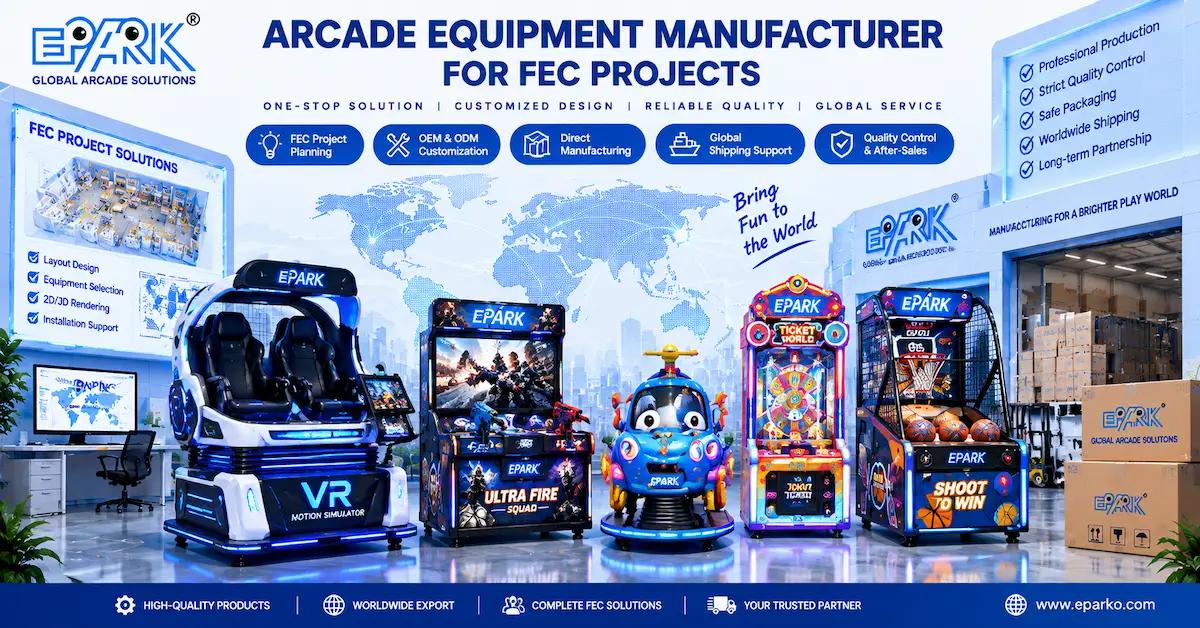
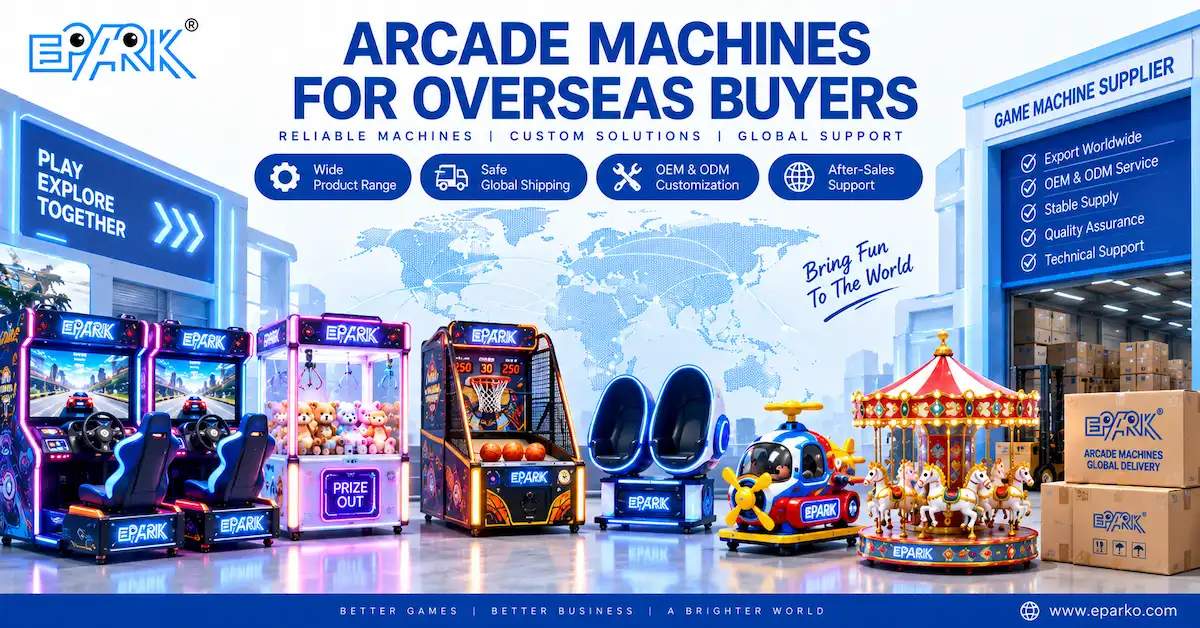
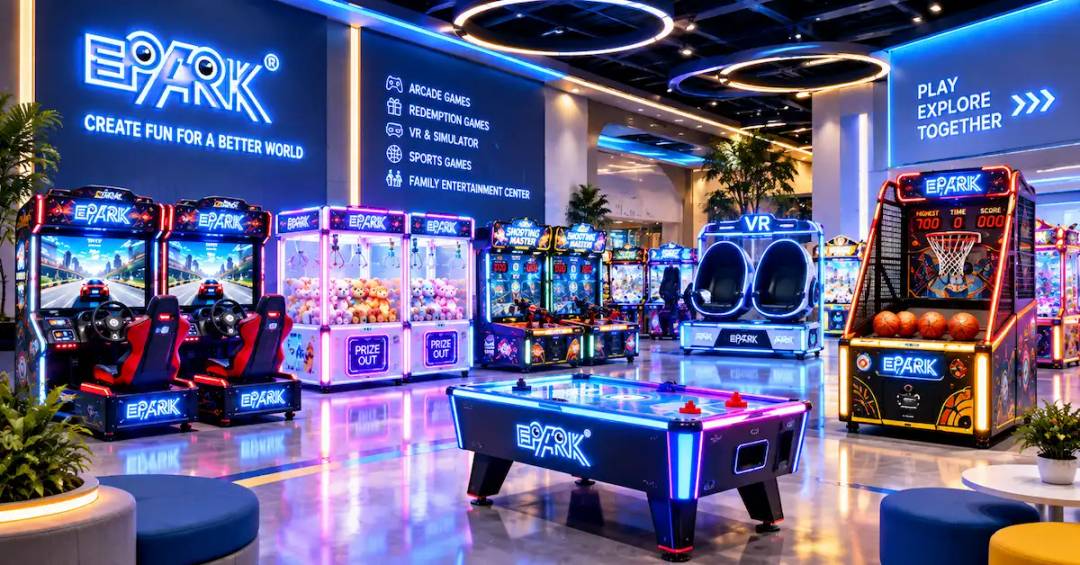
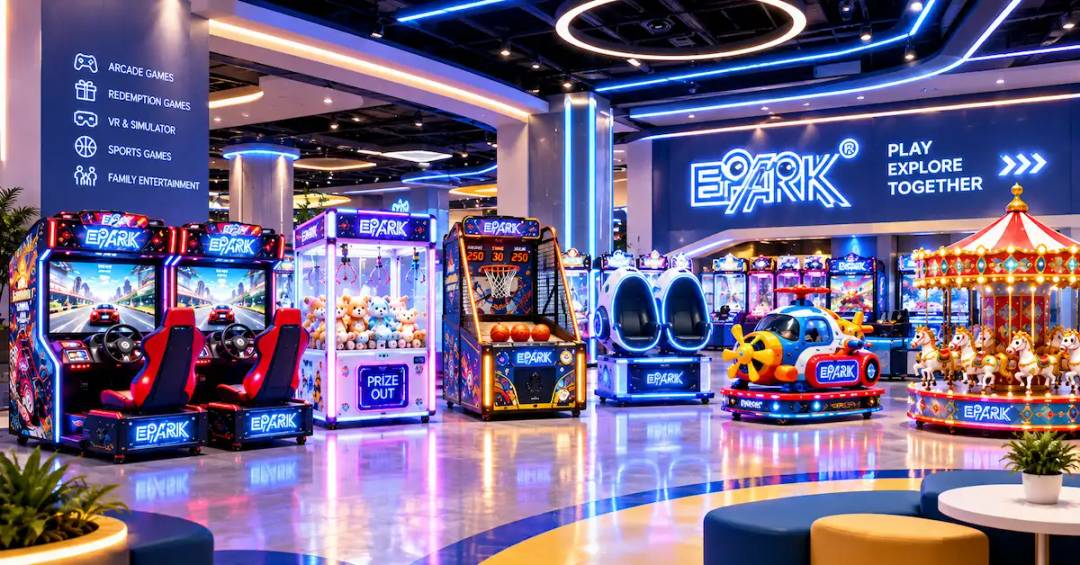
EPARK’s arcade machine range covers different commercial entertainment directions rather than one standardized cabinet type. Its FAQ lists claw machines, ticket redemption games, kiddie rides, family games, racing machines, shooting machines, basketball equipment, gift dispensers, interactive skill games, and VR or simulator products. The correct equipment mix depends on whether the buyer is operating a small arcade, family entertainment center, mall game zone, distributor showroom, or larger entertainment project. Instead of selecting machines only from catalog photographs, define the target players, usable area, payment model, expected staffing, maintenance capability, and desired balance between prize, skill, sports, simulator, and family attractions. EPARK also provides arcade layout planning, including machine placement and traffic-flow support, which can be useful when the purchasing decision is part of a complete venue rather than a standalone equipment order.
| Equipment Category | Typical Commercial Role | What Overseas Buyers Should Confirm | Service / Logistics Considerations |
|---|---|---|---|
| Claw & gift machines | Prize play, mall and arcade zones | Claw mechanism, prize space, controls, payment configuration | Glass/acrylic protection, locks, keys,spare mechanism parts |
| Redemption games | Ticket or points-based entertainment | Reward system, scoring, payment interface, settings | Ticket/point integration and replacement components |
| Racing machines | Competitive and simulator-style play | Steering, pedals, display, seat, link function if required | Packed dimensions, removable sections, control parts |
| Shooting machines | Skill and interactive gameplay | Controller type, screen, sensors, player configuration | Gun/controller protection and calibration requirements |
| Basketball & sports games | Competitive physical play | Scoring system, dimensions,operating space | Frame or cage packing, assembly and sensor checks |
| Kiddie rides | Family and younger-player areas | Intended use, controls, operating restrictions | Moving assemblies, setup and model-specific safety information |
| VR & simulators | Immersive attractions | Headset/display, controls, motion configuration where applicable | Software, accessories, service area and technical setup |
Create an Export Specification Sheet Before Approving the Quotation
A professional order for arcade machines for overseas buyers needs a controlled specification sheet that becomes the reference for purchasing, production, inspection, packing, and later maintenance.Do not rely on product names alone because similar cabinets can be supplied with different payment hardware, electrical configurations, artwork, controllers, or accessories. The following table is a buyer checklist rather than a set of universal EPARK specifications; the actual values should be supplied and confirmed for each ordered model.
| Specification Area | Information to Confirm Before Production | Why Overseas Buyers Need It |
|---|---|---|
| Product identity | Model, version,quantity and approved configuration | Prevents shipment of the wrong version |
| Machine dimensions | Operating L × W × H | Venue and layout planning |
| Packed dimensions | Shipping L × W × H and package count | Freight and container planning |
| Weight | Net and packed weight | Handling and delivery preparation |
| Electrical requirements | Voltage, frequency, power and relevant connection requirements | Destination-site preparation |
| Payment system | Coin, token,card or configured cashless system | Local operating compatibility |
| Language/settings | Required language and machine settings | Market usability |
| Player configuration | Number of players and linked functions where applicable | Venue planning |
| Network/software | Connectivity, account or software requirements where applicable | Installation and operation |
| Accessories | Keys, cables, manuals, separated assemblies and supplied spares | Receiving inspection |
| Branding | Logo, artwork,colors and labels where customized | OEM/private-label approval |
| Documentation | Manuals, packing list and applicable product documents | Import, setup and service |
Treat unresolved fields as unresolved rather than silently replacing them with supplier defaults. A version-controlled specification makes it easier to compare quotations from different factories and creates an objective reference for pre-shipment inspection.
Confirm Electrical, Payment, and Market Configuration Before Production
International equipment becomes difficult to correct after shipment, so destination-specific configuration should be agreed before production begins. Buyers should identify the destination country, venue electrical supply, required plug or connection arrangement, preferred payment system, currency or token requirements, display language, and any existing arcade management system that new machines must work with.EPARK’s FAQ explicitly addresses different currencies and tokens, system integration, payment configuration, and manufacturing for different voltage standards, but the applicable configuration should still be confirmed for the particular machines in the order. A supplier saying “we export worldwide” is not a substitute for a model-level configuration document. The purchase order should show the approved settings clearly enough that the factory’s final inspection team can verify them before packing.
Review Materials, Components, and Serviceability—Not Just Cabinet Appearance
A colorful cabinet can attract players, but overseas operators also need machines that can be inspected and maintained after installation. EPARK’s FAQ describes metal frames, durable ABS plastic, and tempered glass among materials used in its machines; because construction differs between equipment categories, buyers should still request the material and structural details that apply to the selected model. More importantly, review service access, control boards, power supplies, buttons, joysticks, sensors, motors, payment components, wiring, displays, and moving assemblies where applicable. Ask whether commonly serviced components can be identified by part number, whether connectors and wiring are documented, and whether the supplier can provide approved replacement components later.This converts “good quality” from a marketing phrase into a set of maintainable product requirements.
Use Pre-Shipment Quality Control as an Acceptance Point
For arcade machines for overseas buyers, correcting a configuration error before shipment is normally easier than discovering it after customs clearance and venue installation. EPARK’s recent game machine quality-control guide describes a sequence covering component inspection, production control, functional testing, final inspection, and packaging verification. Its buyer guidance recommends checking gameplay, controls, display and audio, payment configuration, customization, accessories, and export packaging, while larger orders can also use photos, testing videos, inspection records, and packaging confirmation as pre-shipment evidence. Buyers should convert those general checks into an order-specific acceptance sheet. “Test the machine” is too vague; “confirm the configured card reader registers credit, starts the approved game version, and completes the intended reward sequence” creates a test that can actually be witnessed and recorded.
Quality Control for Bulk Orders Should Focus on Consistency
A single approved sample does not prove that fifty machines have been produced to the same configuration. Distributor and chain orders require batch-level control of artwork, components, payment settings, software or operating configuration, supplied accessories, and packaging. EPARK’s factory quality-control guidance specifically highlights production consistency for distributors, arcade chains, and multi-location FEC projects. For repeat orders, preserve the approved model/version, photos, artwork, component references where relevant, and configuration records from the first accepted batch. If a component or design changes, ask the supplier to identify the change before production rather than discovering it during maintenance months later. Repeatability is particularly important for distributors because their own customers may expect replacement units and spare parts to remain compatible with equipment already installed in the market.
Treat Export Packaging as Part of the Product
Arcade machines can include displays, decorative panels, electronic components, seats, controls, transparent panels, moving structures, and detachable accessories, so international transport requires more than placing a finished cabinet in a carton. EPARK’s quality-control content discusses screen protection, cabinet-corner protection, internal fixing, moisture prevention, and labeling, while its container loading guide recommends working from actual packed dimensions, package counts, handling requirements, and the approved machine mix. Overseas buyers should ask how each model will be shipped, which assemblies are removed, how separate parts are labeled, and whether the receiving team will have the instructions and hardware needed to reassemble them. Packing photographs, package references, and a final packing list make destination receiving more manageable than a single photograph of a sealed container.
Separate Factory Lead Time, International Transit, and Venue Opening
EPARK’s FAQ currently states that small orders typically ship within 7–15 days while larger or customized orders may take 20–40 days, but these are general website lead-time statements rather than guaranteed schedules for every order. Buyers should request an order-specific production and dispatch plan covering specification approval, customization approval, production, inspection, packing, and shipment readiness. International transit, customs processing, local delivery, unloading, installation, and trial operation should be scheduled separately. An estimated factory shipment date is therefore not the same as a venue opening date. EPARK’s game-center planning guidance also recommends allowing time after international shipment for customs clearance, positioning, electrical connection, testing, staff preparation, and trial operation.
Compare Total Import Cost Instead of Only the Factory Price
A lower machine quotation does not automatically mean a lower project cost.Overseas buyers should compare the same commercial scope: machine configuration, customization, packaging, export handling, freight arrangement, insurance if applicable, destination charges, customs and taxes applicable to the buyer’s market, local transport, unloading, installation, payment-system work, spare parts, and technical support. Ask which items are included in the factory quotation and which are handled by the freight forwarder, broker, venue contractor, or buyer. Different suppliers can quote similar-looking machines while transferring very different responsibilities to the customer. For this reason, a useful quotation comparison should include exclusions and assumptions rather than only unit prices. The correct question is not “Which supplier has the cheapest racing machine?” but “What will it take to receive, install, operate, and maintain the approved configuration in my market?”
Use OEM and Private Label Only After the Base Configuration Is Controlled
EPARK states that it provides OEM and ODM services for global brands, distributors, and entertainment centers, while its company information also lists OEM customization and branding support. For an overseas private-label order, separate branding changes from technical configuration: record the logo, cabinet artwork, colors, labels, packaging requirements, language, payment configuration, and any requested functional changes individually.Approve artwork and machine configuration before mass production, and retain the version used for future repeat orders. Buyers should also ask whether a requested modification changes machine dimensions, component selection, documentation, inspection requirements, packaging, lead time, or applicable compliance documents. Customization works best when it is controlled as a documented product revision rather than a collection of informal messages sent during production.
Confirm Compliance Documents for the Exact Model and Destination
Overseas buyers should identify market requirements before ordering rather than assuming that a certificate displayed on a website automatically applies to every machine and every destination. EPARK publishes certification and safety information on its website, but the purchasing team should request the actual documents relevant to the ordered product, configuration, and market and verify their scope before relying on them for import or project approval. This is particularly important for customized equipment because changes to electrical components, cabinet design, moving systems, or other controlled elements may affect which documents remain applicable. Record required documentation in the specification sheet and make document review part of the order process rather than a question raised after the machine has already been manufactured.
Build Spare Parts and Technical Support Into the Original Order
After-sales planning should begin before shipment. Ask which parts the supplier recommends for the actual machine mix, how each spare is identified, which items are commonly replaced by trained venue technicians, which repairs require specialist support, and how future replacement orders are matched to old machine versions. EPARK’s FAQ states that it provides remote installation guidance through video calls and messaging along with setup and operation guides, while its service material includes technical and parts support. For overseas buyers, keep the machine model, order reference, component photographs, settings, and fault information available when requesting assistance. The usefulness of an after-sales program depends on accurate identification: “I need a racing machine board” is much weaker than a request linked to a specific supplied model, version, original component, and observed fault.
Plan Installation Before the Container Arrives
International buyers should determine who will unload, position, assemble, connect, configure, and test the machines at the destination.EPARK’s FAQ confirms remote guidance, setup manuals, and operation guides, while its company profile describes support extending through delivery, installation, and operation. The exact level of on-site or remote service should nevertheless be confirmed for each project rather than assumed from a general service description. Provide local technicians with the equipment list and manuals before arrival, identify special handling requirements, prepare power and network conditions, and agree on a commissioning checklist. A useful opening test covers not just whether a screen turns on but the complete player sequence: payment → game start → controls → gameplay → scoring or reward → reset and readiness for the next player.
How Overseas Buyers Should Compare Arcade Machine Suppliers
A sourcing decision should compare manufacturing and support capability using the same questions for each candidate rather than relying on catalog size or promotional language. EPARK positions itself as a manufacturer and commercial amusement solution provider integrating R&D, design, production, sales, OEM customization, venue planning, and technical assistance. The evaluation table below converts those capabilities into buyer-side evidence requirements.
| Supplier Evaluation Area | Weak Buying Question | Better Overseas Buyer Requirement |
|---|---|---|
| Product range | “Do you have many games?” | Define the categories and models needed for the project |
| Configuration | “Can you export this?” | Confirm destination voltage, payment,language and approved version |
| Quality | “Is the quality good?” | Define inspection points and request relevant pre-shipment evidence |
| Customization | “Can you add my logo?” | Approve artwork, configuration, labels and revision |
| Packing | “Is the packing safe?” | Confirm package dimensions, protection, labels and separated assemblies |
| Shipping | “Can you ship worldwide?” | Define responsibilities, documents,destination and shipment arrangement |
| Spare parts | “Do you have spare parts?” | Request model-matched initial and future parts support |
| Installation | “Do you help install?” | Define remote/on-site scope and local responsibilities |
| Repeat orders | “Can I buy again later?” | Preserve model/version and control approved changes |
| Commercial terms | “What is your best price?” | Compare included scope,exclusions and total project requirements |
What Information Should You Send EPARK for an Overseas Arcade Machine Quote?
A useful inquiry should contain the destination country, buyer type, venue type, available floor area or distributor requirement, desired machine categories, quantity, target audience, payment method, branding requirements, expected shipping window, and any existing layout or local system that the machines must connect to. For a complete FEC, attach a measured floor plan and explain whether you need equipment supply only or broader layout, installation, and operational support. For wholesale purchasing, indicate whether the order is a trial batch, regular distribution inventory, or a customer-specific project. EPARK allows buyers to review its commercial arcade products, project and technical services, and common purchasing questions before sending project details through the contact page. Providing this information allows the quotation to be built around a defined commercial requirement instead of an undefined request for “popular machines.”
Frequently Asked Questions
1. What Should Overseas Buyers Check First When Buying Arcade Machines?
Start with the destination market, venue type, target players, available space, machine categories, electrical conditions, payment method, and purchasing quantity. Once these are clear, compare models and suppliers against the same requirement rather than choosing equipment only from photos or price lists.
2. Can Different Types of Arcade Machines Be Ordered Together?
Yes, mixed machine purchasing is relevant to many FEC, distributor, and commercial arcade projects, and EPARK’s product range covers several machine categories. The final order should still be checked by model, configuration, packed dimensions, accessories, and shipment arrangement rather than treated as one generic group of arcade equipment.
3. What Specifications Should I Confirm for Export Arcade Machines?
Confirm the exact model and version, dimensions, packed dimensions, weight, electrical requirements, payment system, language and settings, supplied accessories, shipping format, packaging, and documentation applicable to your order. Add model-specific technical details for VR, motion, redemption, or linked machines where required.
4. How Can Overseas Buyers Verify Quality Before Shipment?
Use an approved specification and inspection checklist, then request appropriate evidence such as machine photographs, operating-test videos, configuration checks, accessory confirmation, and packaging records. EPARK’s published QC guidance emphasizes inspection from components and production through functional testing and final packaging.
5. Can EPARK Customize Machines for Overseas Distributors?
EPARK states that it supports OEM and ODM services for global brands, distributors, and entertainment centers.Buyers should define the exact customization—such as artwork, branding, configuration, or other requested changes—and obtain approval of the final production version before bulk manufacturing.
6. How Long Does an International Arcade Machine Order Take?
EPARK’s FAQ gives general shipment-preparation ranges of 7–15 days for small orders and 20–40 days for larger or customized orders, but buyers should request a project-specific schedule. International transit, customs, local delivery, installation, and opening preparation are separate stages and should not be included automatically in the factory lead time.
7. How Should Arcade Machines Be Packed for International Shipping?
Packing should be matched to the actual machine and shipping configuration, protecting vulnerable areas such as screens, cabinet surfaces, electronic components, controls, and separately shipped assemblies. Ask for packed dimensions, package counts, identification, packing records, and instructions for reassembly where applicable.
8.Should Overseas Buyers Purchase Spare Parts With the Machines?
Discuss a model-specific initial spare-parts package before shipment, particularly for FEC, distributor, and chain orders. The quantity and part types should reflect the actual equipment mix and local maintenance capabilities rather than using one universal spare kit for every project.
9. Does EPARK Provide Installation Support for International Buyers?
EPARK’s FAQ states that it provides remote installation guidance through video calls and messaging along with setup manuals and operation guides. The exact support scope for a project, including any on-site requirements, local labor, electrical work, and system integration, should be confirmed in the quotation.
10. How Can a Distributor Reduce Risk on Repeat Arcade Machine Orders?
Keep the approved model, configuration, artwork, payment setup, component or version references where relevant, inspection criteria, and packaging requirements from the first accepted order. Before every repeat order, ask the supplier to identify any changes rather than assuming the same product name guarantees an identical production configuration.
Conclusion
Buying arcade machines for overseas buyers is a supply-chain and operational decision, not simply a catalog purchase. Distributors, FEC operators, arcade chains, and project buyers should control the machine specification first, then connect that specification to customization, quality inspection, packaging, logistics, documentation, spare parts, installation, and repeat-order management. The strongest procurement process creates evidence at each stage so that what arrives at the destination can be compared with what was originally approved. EPARK provides commercial arcade machines, OEM/ODM support, venue planning, manufacturing, export preparation, and technical assistance for international entertainment projects; buyers should still confirm the exact scope and configuration for their individual order. Review EPARK arcade machines or contact EPARK with your destination, venue or distribution plan, machine requirements, quantities, payment configuration, and customization needs to prepare an order-specific proposal.
Disclaimer
The information provided on this website is for general informational purposes only.
While EPARK Arcade Game Machine Manufacturer strives to ensure accuracy and reliability, no warranties—express or implied—are made regarding completeness, performance, or applicability.
Product specifications, designs, and features may vary depending on usage, customization, and customer requirements.
Buyers are responsible for verifying all technical details, compliance certifications, and suitability before procurement.
EPARK shall not be held liable for any direct, indirect, incidental, or consequential damages arising from the use of this website or its content, including but not limited to business losses, data errors, or equipment misuse.
For tailored solutions or further verification, please visit our Contact Us
Intellectual Property Notice
All articles, product images, videos, catalogs, software, and related materials published on this website are the intellectual property of EPARK, unless otherwise stated.
Unauthorized reproduction, distribution, modification, or commercial use of any content is strictly prohibited without prior written consent from EPARK.
EPARK reserves the right to take legal action against any unauthorized use, including but not limited to copyright infringement, misrepresentation, or unfair competition.
Trademarks
The name EPARK, the EPARK logo, and all related brand elements displayed on this website are registered trademarks or trade names of Guangzhou EPARK Electronic Technology Co., Ltd.
Other product names, company names, or logos mentioned on this site may be trademarks of their respective owners.
Unauthorized use of EPARK's trademarks for commercial purposes, including advertising, promotions, or product packaging, is strictly prohibited.
Governing Law
These terms are governed by the laws of the People's Republic of China.