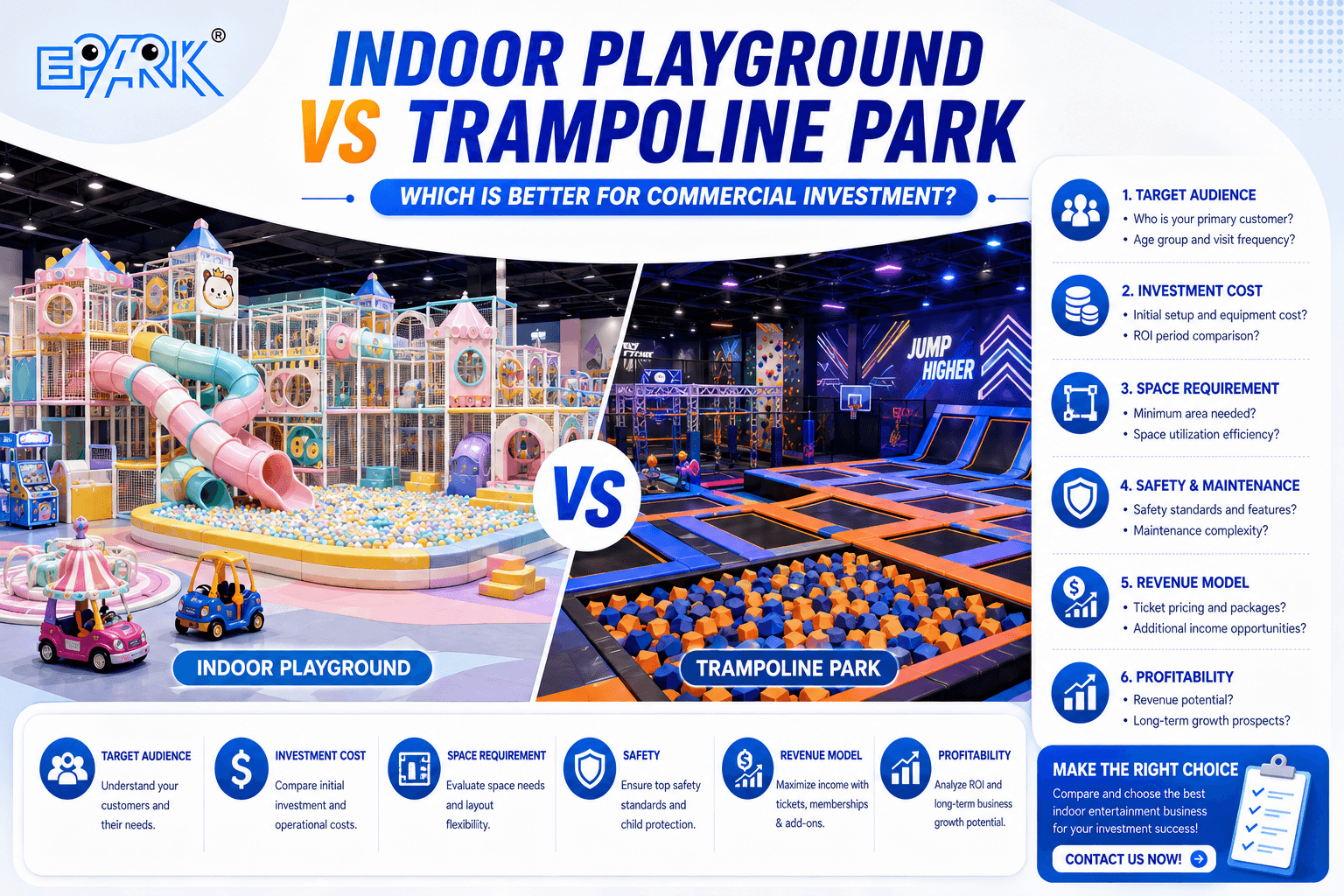

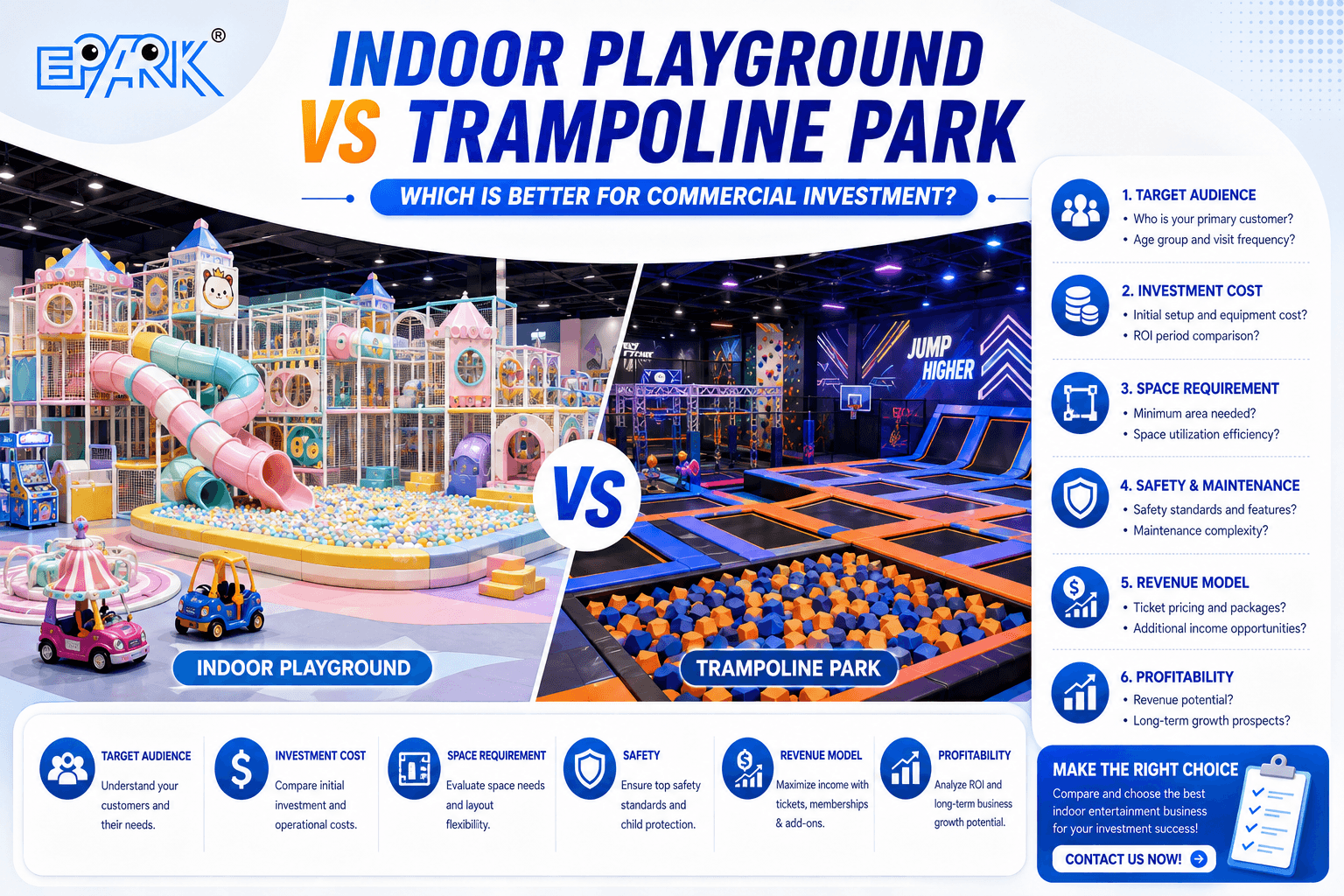
For investors planning a family entertainment business, two of the most common choices are indoor playgrounds and trampoline parks.
Both models are widely used in shopping malls, commercial centers, and FEC venues. However, they serve different audiences, require different investment structures, and generate revenue in different ways.
Understanding the difference between indoor playground vs trampoline park is essential before making a commercial investment decision. When evaluating indoor playground vs trampoline park, investors should consider customer demographics, available space, operating costs, and long-term profitability. The indoor playground vs trampoline park comparison is one of the most important steps in selecting the right entertainment business model.
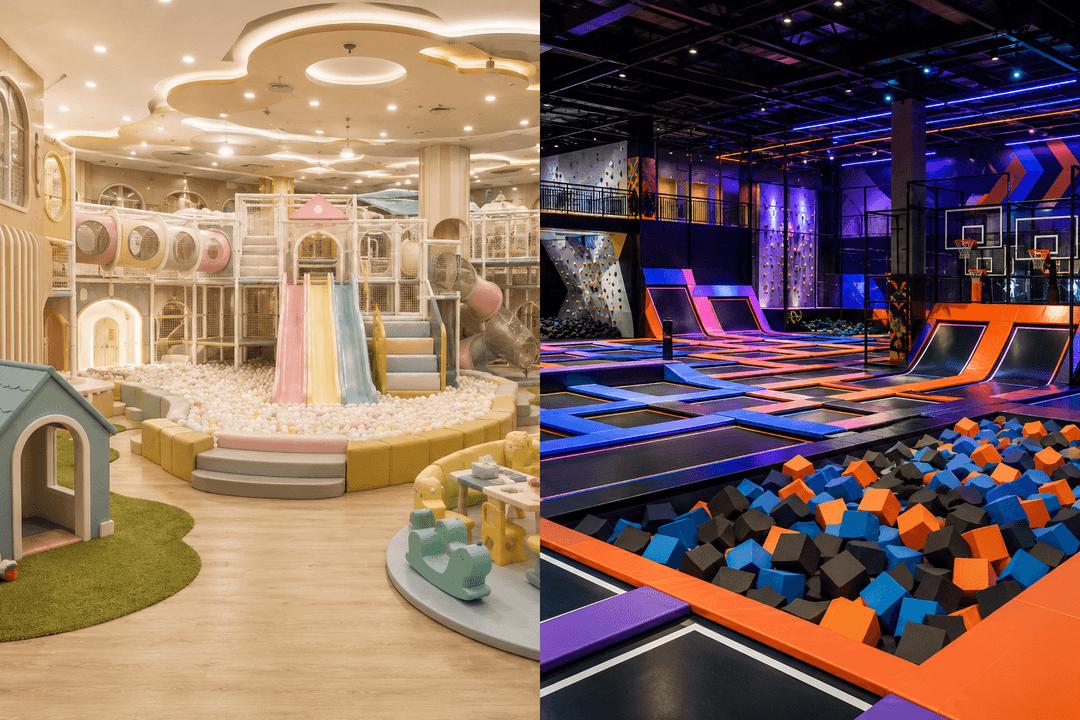
Target Audience Comparison
Indoor Playground
Indoor playgrounds mainly target:
- Toddlers (1–6 years old)
- Young children (3–10 years old)
- Families with parents
- Birthday party groups
They are designed for safe, low-impact, and parent-supervised play.
Trampoline Park
Trampoline parks mainly target:
- Teenagers
- Young adults
- Fitness-oriented users
- Group activities
They focus on high-energy jumping, sports activities, and physical exercise.
Key Difference
| Model | Main Audience | Experience Type |
|---|---|---|
| Indoor Playground | Kids & families | Safe, soft, exploratory play |
| Trampoline Park | Teens & adults | High-energy physical activity |
In the indoor playground vs trampoline park comparison, indoor playgrounds are more family-oriented, while trampoline parks are more sport-oriented.
Space Requirements Comparison
Indoor Playground Space
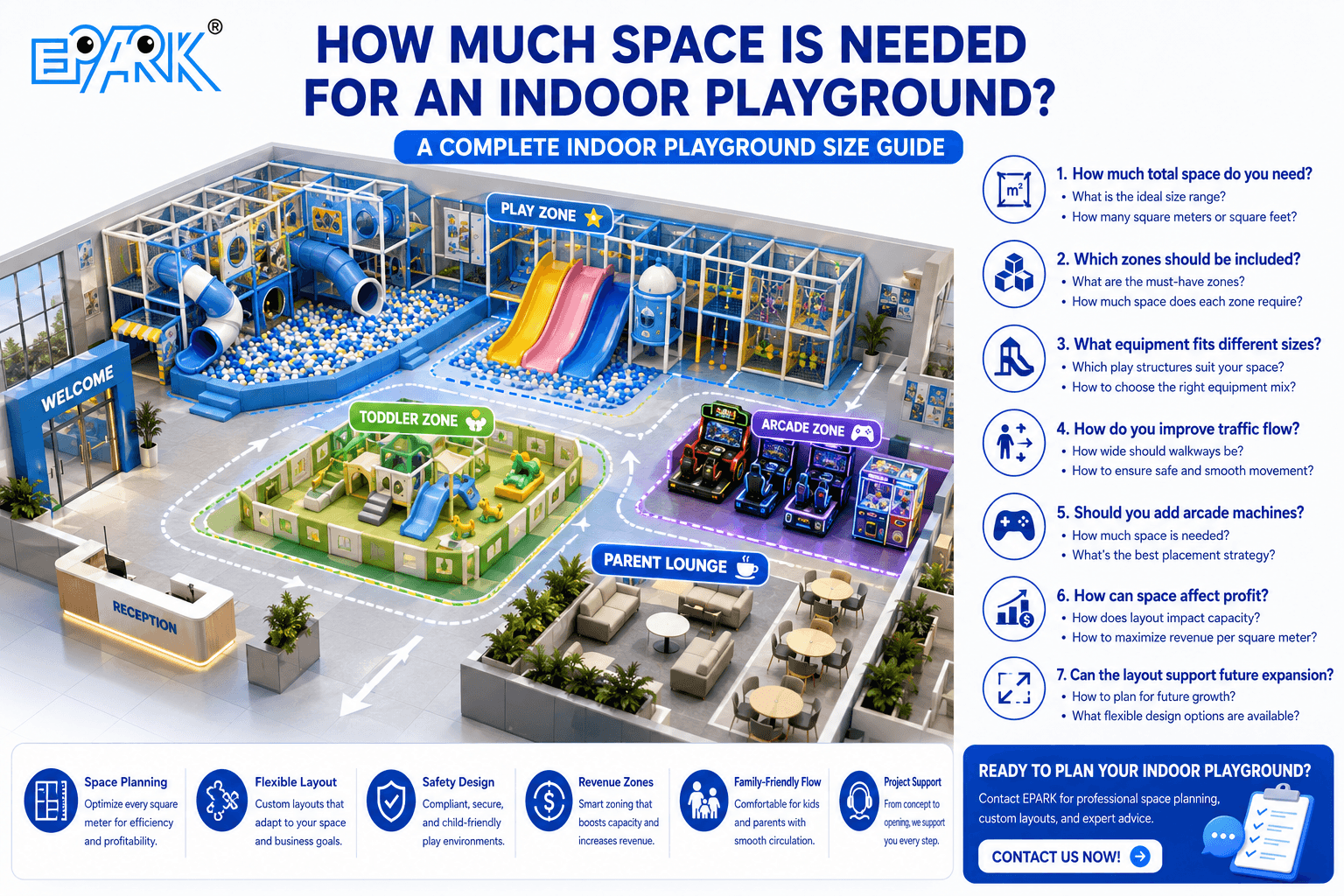
Indoor playgrounds are flexible and can operate in smaller spaces.
- Small setup: 80–150㎡
- Medium setup: 150–500㎡
- Large FEC: 500–1500㎡+
They can be customized based on venue shape and mall layout.
Trampoline Park Space
Trampoline parks require more continuous open space.
- Minimum viable: 300–500㎡
- Standard commercial: 500–1500㎡
- Large park: 1500㎡+
They need vertical clearance and safety buffer zones.
Key Difference
| Model | Space Flexibility | Layout Type |
| Indoor Playground | High | Modular zones |
| Trampoline Park | Medium | Open jumping fields |
When comparing indoor playground vs trampoline park, indoor playgrounds are easier to adapt to mall corners or irregular spaces.
Investment Cost Comparison
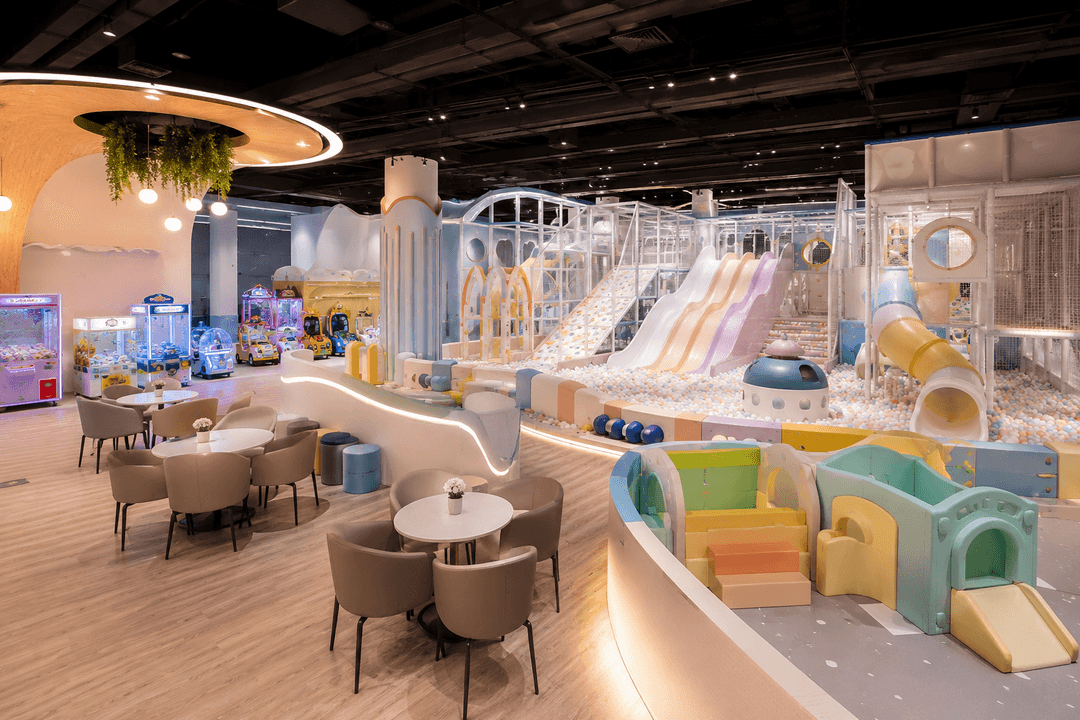
Indoor Playground
Costs depend on equipment type:
- Soft play structures
- Slides and ball pits
- Kiddie rides
- Arcade machines (optional add-on)
Investment level: Low to medium
Trampoline Park
Higher infrastructure requirements:
- Steel frame systems
- Safety padding
- Large open trampoline zones
- Professional installation
Investment level: Medium to high
Key Insight
In an indoor playground vs trampoline park investment analysis, trampoline parks usually require higher upfront construction cost, while indoor playgrounds allow more flexible scaling.
Revenue Model Comparison
Indoor Playground Revenue Sources
- Entry tickets (hourly/day passes)
- Memberships
- Birthday parties
- Arcade machines
- Prize redemption games
- Food & drinks
- Seasonal events
Indoor playgrounds have multiple diversified income streams.
Trampoline Park Revenue Sources
- Jump tickets
- Group bookings
- Birthday parties
- Fitness classes
- Event hosting
Trampoline parks rely more on time-based ticket revenue.
Key Difference
| Model | Revenue Diversity | Stability |
| Indoor Playground | High | More stable |
| Trampoline Park | Medium | Seasonal variation |
In the indoor playground vs trampoline park debate, indoor playgrounds usually generate more stable year-round income.
Safety & Operation Complexity
Indoor Playground Safety
- Soft materials
- Low-height structures
- Age-separated zones
- Easier supervision
- Lower injury risk
Trampoline Park Safety
- Higher injury risk
- Requires strict supervision
- Safety rules enforcement
- Staff training critical
- Insurance requirements higher
Key Difference
Indoor playgrounds are easier to operate safely for beginners.
Equipment Flexibility & Expansion
Indoor Playground
Highly flexible:
- Soft play structures
- Slides, tunnels, climbing zones
- Arcade machines integration
- VR and kiddie rides (optional)
Easy to expand or upgrade over time.
Trampoline Park
Less flexible:
- Fixed trampoline systems
- Limited layout modification
- Expansion requires structural changes
Indoor playgrounds offer better long-term scalability.
Profitability Comparison
| Factor | Indoor Playground | Trampoline Park |
| Initial ROI Speed | Faster | Moderate |
| Peak Season Impact | Low | High |
| Daily Foot Traffic Dependence | Medium | High |
| Add-on Revenue Potential | High | Low |
| Long-term Stability | High | Medium |
Indoor playgrounds often perform better in malls and family venues due to diversified income sources.
Which One Is Better for Investors?
Choose Indoor Playground If:
- You target families and children
- You want flexible space usage
- You prefer stable long-term income
- You want multiple revenue streams
- You are new to FEC business
Choose Trampoline Park If:
- You target teenagers and young adults
- You have large open space
- You focus on sports/fitness entertainment
- You can manage higher safety requirements
Hybrid Model: Best of Both Worlds
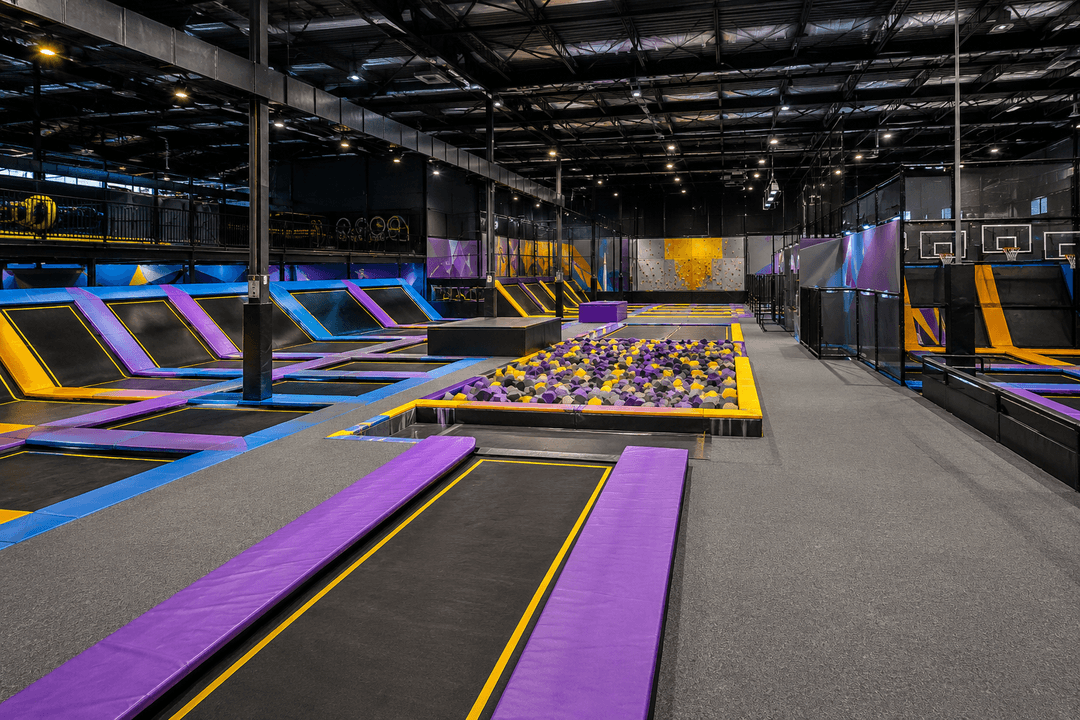
Many modern FEC projects now combine both:
- Indoor playground for kids
- Trampoline zone for teens
- Arcade machines for all ages
- Party rooms for groups
This hybrid model increases:
- Customer retention
- Revenue diversity
- Venue attractiveness
- Cross-age engagement
EPARK supports arcade machines, kiddie rides, and FEC equipment solutions that can integrate into indoor playground projects to build hybrid entertainment venues.
You can explore equipment on the EPARK Products page.
FAQ
1. Which is more profitable: indoor playground or trampoline park?
Indoor playgrounds are usually more stable due to diversified revenue streams.
2. Which needs more space?
Trampoline parks require larger open space and higher ceilings.
3. Which is safer for kids?
Indoor playgrounds are safer due to soft materials and low-impact design.
4. Can both be combined?
Yes, many modern FEC projects combine both models.
5. Which is better for mall investment?
Indoor playgrounds are more suitable for shopping malls.
6. Which has higher setup cost?
Trampoline parks generally require higher construction investment.
7. Can arcade machines be added?
Yes, especially in indoor playgrounds to increase revenue.
8. Which is better for beginners?
Indoor playgrounds are easier to operate for new investors.
9. Which has higher daily traffic dependency?
Trampoline parks rely more on peak traffic periods.
10. Can EPARK help with setup?
Yes, EPARK provides arcade machines and FEC equipment solutions for indoor playground projects.
Conclusion
The choice between indoor playground vs trampoline park depends on your target market, space, and investment strategy.
- Indoor playgrounds are safer, more flexible, and more family-oriented
- Trampoline parks are more active, sport-focused, and space-demanding
For most commercial investors, especially in shopping malls and FEC projects, indoor playgrounds provide more stable long-term profitability.
Contact EPARK today to get professional indoor playground size planning guidance, commercial layout solutions, arcade equipment recommendations, and a tailored quotation for your FEC or indoor playground project. Our team can help you turn your available space into a safer, more efficient, and more profitable family entertainment venue.
Disclaimer
The information provided on this website is for general informational purposes only.
While EPARK Arcade Game Machine Manufacturer strives to ensure accuracy and reliability, no warranties—express or implied—are made regarding completeness, performance, or applicability.
Product specifications, designs, and features may vary depending on usage, customization, and customer requirements.
Buyers are responsible for verifying all technical details, compliance certifications, and suitability before procurement.
EPARK shall not be held liable for any direct, indirect, incidental, or consequential damages arising from the use of this website or its content, including but not limited to business losses, data errors, or equipment misuse.
For tailored solutions or further verification, please visit our Contact Us
Intellectual Property Notice
All articles, product images, videos, catalogs, software, and related materials published on this website are the intellectual property of EPARK, unless otherwise stated.
Unauthorized reproduction, distribution, modification, or commercial use of any content is strictly prohibited without prior written consent from EPARK.
EPARK reserves the right to take legal action against any unauthorized use, including but not limited to copyright infringement, misrepresentation, or unfair competition.
Trademarks
The name EPARK, the EPARK logo, and all related brand elements displayed on this website are registered trademarks or trade names of Guangzhou EPARK Electronic Technology Co., Ltd.
Other product names, company names, or logos mentioned on this site may be trademarks of their respective owners.
Unauthorized use of EPARK's trademarks for commercial purposes, including advertising, promotions, or product packaging, is strictly prohibited.
Governing Law
These terms are governed by the laws of the People's Republic of China.