

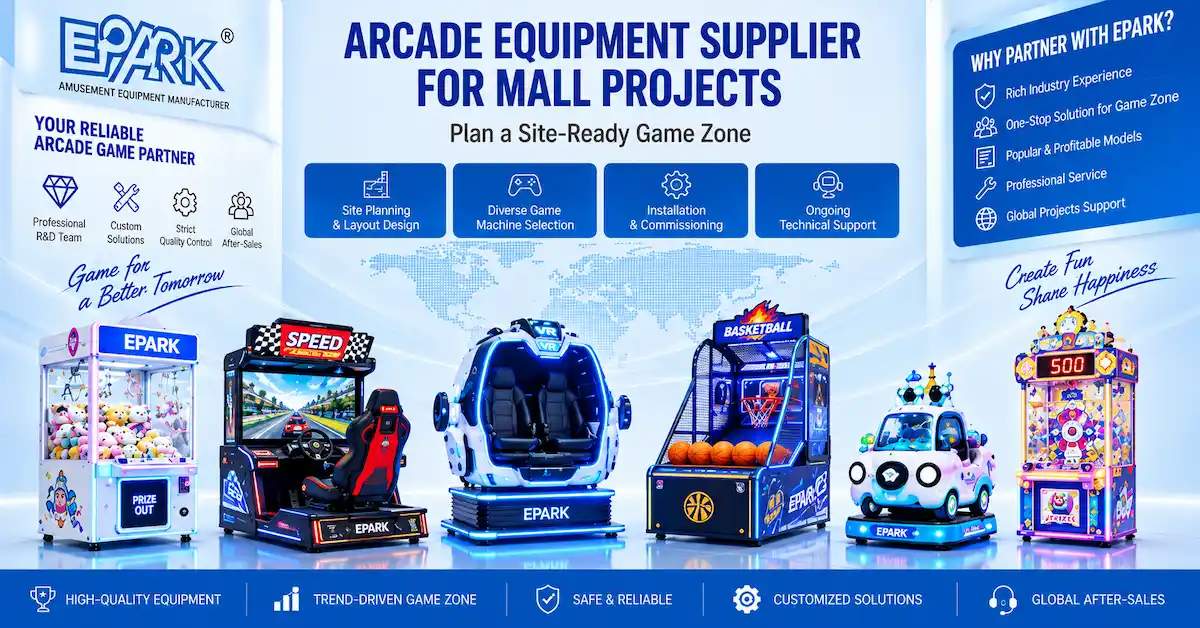
How should a mall buyer choose an arcade equipment supplier?
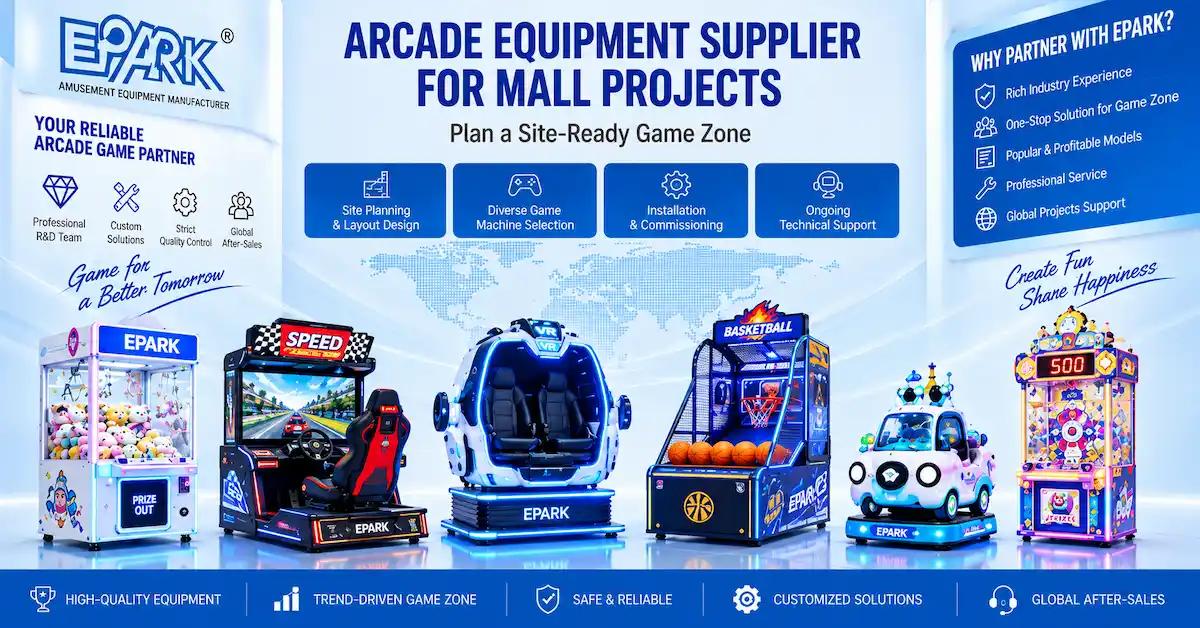
Choose an arcade equipment supplier for mall projects by testing whether the supplier can convert a mall unit into an operating game zone, not by comparing cabinet prices from a catalog. The review should cover usable floor area, tenant and landlord requirements, visitor flow, equipment mix, payment setup, power and service access, delivery restrictions, testing, packing, installation and repeat-location support. A supplier is commercially suitable only when its proposed package fits the approved site and the mall's operating conditions.
This article addresses a specific procurement situation: a mall developer, tenant, entertainment contractor or distributor is evaluating suppliers for a new or renovated arcade area. It is not a general list of the best arcade machines and it does not assume that every mall project needs the same number of cabinets. The correct comparison starts with the unit, the approved plan and the responsibilities that remain after delivery.
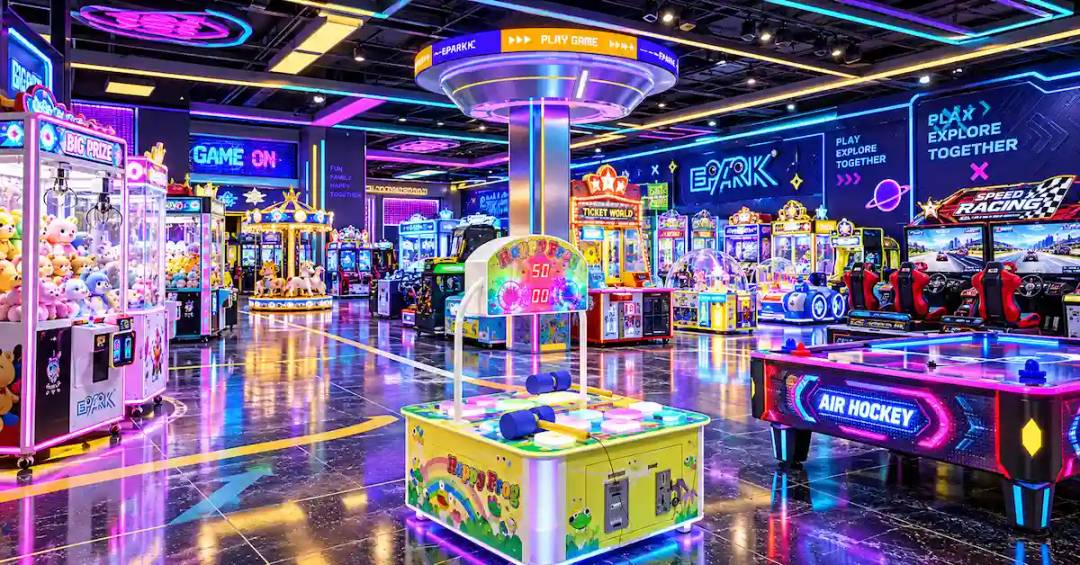
Start with the mall unit, not the gross building area
A mall may describe a location as a 300 square meter unit, but the arcade cannot necessarily use all 300 square meters for machines. Reception, payment points, prize storage, staff access, queue space, fire routes, columns, doors, electrical panels and service clearances all compete for the same footprint. The supplier should therefore receive the measured lease plan and a clear distinction between gross leased area, usable arcade area and restricted area.
Ask the project team to mark the entrance, exit, fixed walls, columns, emergency paths, low ceilings, loading route and any area shared with another tenant. If the game zone is inside a department store, cinema, family entertainment center or mixed retail floor, mark the relationship with nearby food, seating and children's areas. These relationships affect where high-visibility attractions can be placed and where queues can safely form.
Separate a concept plan from an approved tenant plan
A supplier's concept drawing is useful for discussing machine roles and visual balance. It is not automatically the final tenant improvement drawing. The mall may require separate review for signage, electrical load, noise, fire access, ceiling work, floor loading, branding and operating hours. Keep the supplier's layout revision linked to the mall's approved plan so that a late change does not silently remove a service path or shrink an emergency route.
EPARK's Design & Process page says its team starts with space size, floor plan, entrance and exit locations, target audience, preferred games and budget range. It then describes a 2D layout and a preliminary quotation after the layout is confirmed. For a mall project, those inputs should be supplemented with landlord rules, tenant handbook requirements, loading restrictions and the opening schedule. The public process explains the planning sequence; it does not approve a specific mall site.
Define the mall audience and the commercial role of each zone
Mall visitors do not behave like one uniform arcade audience. A location next to a cinema may have short, concentrated arrival windows. A family dining level may need clear sightlines for parents. A department-store corridor may depend on visual attraction from outside the leased unit. A destination FEC inside the mall may support longer visits, prize redemption and a wider age range. The supplier's equipment recommendation should explain the role of each zone instead of filling the plan with unrelated machines.
Describe the intended audience in operational terms: young children with parents, school-age players, teenagers, young adults, mixed family groups, tourists, birthday-party visitors or repeat local customers. Then connect each audience to a zone, supervision need, game duration, payment method and service requirement. This makes the equipment list reviewable by the mall team and by the operator who will manage the floor.
| Zone role | Possible equipment direction | Mall project question | Supplier evidence to request |
|---|---|---|---|
| Front-of-store attraction | Claw, gift, prize or visually distinctive interactive equipment | Can the attraction be seen from the mall circulation path without creating an unsafe queue? | Proposed placement, access route and approved visual treatment |
| Family play zone | Kiddie rides, family games, soft-play or simple skill games | Can parents supervise and can staff reach the equipment without crossing the play area? | Age and supervision assumptions, layout and service clearance |
| Competitive social zone | Racing, basketball, shooting, air hockey or multiplayer games | Will spectators and waiting players block the main circulation path? | Player arrangement, queue assumption and operating sequence |
| Redemption zone | Ticket, point, prize or skill-based games | How will the reward process connect to the prize counter or venue system? | Payment, ticket or point interface and operator responsibility |
| Immersive feature zone | VR, racing simulation or larger interactive equipment | What supervision, power, content and maintenance conditions apply? | Exact model configuration and site requirements for the selected unit |
The purpose of this table is not to prescribe a fixed mall mix. It gives a buyer a way to ask why a product belongs in the plan. Remove a category when it does not fit the audience, site visibility or local operating capability. A broad catalog is useful only when the supplier can also explain what not to include.
Check whether the quotation reflects mall operating constraints
A mall project has costs and risks that may not appear in a simple equipment quotation. Delivery may be allowed only during a night receiving window. The loading dock may require booking, vehicle dimensions or a route survey. Equipment may need to travel through a service elevator before it reaches the unit. The operator may need to complete electrical, network and payment work before the supplier can test the final experience. These are project interfaces, not automatic inclusions.
Ask the arcade equipment supplier for mall projects to list the assumptions behind the offer. The response should identify whether the price covers equipment only, customization, payment hardware, packaging, freight, unloading, internal movement, assembly, commissioning, training and on-site attendance. If the supplier provides remote installation guidance, record what the local team must do before the video call.
Do not hide mall-specific work in a general contingency. Create an interface register with an owner and a due date. For example, the mall may own access approval, the tenant may own electrical preparation, the payment provider may own account setup and the equipment supplier may own machine-side configuration. The precise allocation depends on the project, but the written separation prevents a late dispute.
Evaluate a supplier's layout capability without treating a sample as a promise
EPARK's website shows a 300 m² indoor game-zone layout example in Tunisia and publishes several venue-size categories elsewhere on the site. Those examples help a buyer understand how the company presents layout work. They do not establish a standard number of machines for every mall unit. A supplier should translate the actual plan into a revision-controlled layout with machine references, clearances, queue assumptions and access points.
When comparing two suppliers, ask each one to use the same base plan and to label the same information. A visually attractive drawing can still omit service access, prize storage or the path for replacing a large component. Require a legend and an equipment schedule so that the plan can be checked by the mall, the operator, the installer and the purchasing team.
What a useful mall layout package should identify
- Machine reference, quantity, footprint and player arrangement for each proposed attraction.
- Entrance, exit, main circulation, queue areas, spectator areas and staff access.
- Prize counter, ticket or point handling, storage and replenishment route where relevant.
- Electrical, network, payment and service assumptions that are outside the cabinet itself.
- Version number, revision date and a list of changes from the previous plan.
- Items that remain provisional because a model, landlord requirement or site measurement is not yet confirmed.
This approach makes a mall plan more than a sales illustration. It gives the buyer a basis for approving the equipment mix and a record that can be updated when a landlord, architect or payment provider requests a change.
Verify the machine configuration behind the product name
Mall buyers often compare proposals by product name, but the same category can contain different cabinet sizes, player arrangements, payment interfaces, displays, controls and software settings. A proposal for a racing attraction may describe a single cabinet, a linked pair or a multi-station installation. A redemption proposal may include the machine but exclude the ticket or point system. A claw machine may be selected for a front-of-store zone but require a different access and replenishment arrangement than a back-row cabinet.
Require the supplier to map every line in the quotation to a model reference and a configuration record. Confirm the selected language, destination electrical configuration, payment method, artwork, lighting, controls, accessories and any approved variation. If an exact parameter is not published, record it as a field to confirm, not as a standard value.
EPARK's FAQ describes general materials such as metal frames, ABS plastic and tempered glass, while its process page describes artwork, PCB installation, wiring, LED lighting, screen and control integration, final assembly and function testing. These statements establish published manufacturing information. They do not prove that every quoted machine uses the same material thickness, component brand or configuration. Ask for the model-specific confirmation before the deposit.
| Field | Why it matters in a mall | Required supplier response |
|---|---|---|
| Model and revision | Controls footprint, service parts and repeat-location consistency | Factory model, revision, image or drawing and quantity |
| Player arrangement | Changes queue behavior, spectator space and social play | Single, linked, multiplayer or station configuration |
| Payment interface | Must align with the mall venue's payment and reporting plan | Coin, card, QR, ticket, point or other machine-side scope |
| Destination setup | Local electrical and language requirements affect commissioning | Voltage, frequency, plug or connection details where applicable |
| Artwork and lighting | May require landlord or brand approval | Artwork version, colors, logo use and approval owner |
| Accessories and spares | Missing small items can delay opening or maintenance | Named accessories, quantities, labels and compatibility |
| Documents | Landlord, installer or importer may request supporting records | Available manuals, test records and applicable compliance documents |
Assess production, testing and evidence at the right level
A mall operator needs confidence that the equipment arriving at the site matches the approved proposal. EPARK describes a production flow that includes artwork printing and painting, electronic system assembly, PCB installation, wiring, LED setup, screen and control integration, final assembly and function testing. It also states that each machine receives a 48-hour full-operation test before shipment, covering gameplay, electrical safety, lighting effects and mechanical durability.
These are useful factory-process statements, but the buyer should still ask how the process will be documented for the actual order. Request a configuration list, inspection checklist, photographs or video tied to the order, correction records and a packing record. If the mall requires third-party inspection, a buyer witness check or specific compliance documents, discuss that before production starts.
An arcade equipment supplier for mall projects should be able to explain what happens when a unit does not pass the agreed check. Ask who records the deviation, who approves the correction, how the machine is retested and whether the release date changes. “Tested” is not a complete acceptance procedure unless the test scope and evidence are clear.
Compare packaging and delivery against the mall receiving route
Export packing protects the equipment during transport, but mall receiving adds a second planning problem: the packed machine must still reach the unit through the approved route. Ask for package count, packed dimensions, weight information where available, handling orientation, assembly requirements and the location of accessories. Confirm whether the delivery point is the mall loading dock, the tenant unit or another nominated address.
EPARK describes bubble wrap and thick foam protection, wooden frame or crate reinforcement and waterproof film for sea shipment. It also describes logistics support involving customs, insurance and delivery tracking. The FAQ states that shipping insurance can be included on request. These are published service descriptions; the quotation should still state which packing, shipping and insurance arrangements apply to the selected order.
General FAQ ranges also distinguish small-order shipping from larger or customized orders. They are not a mall opening-date guarantee. Request separate milestones for design approval, configuration freeze, production, inspection, packing, dispatch, transport, mall delivery booking, internal movement, installation and commissioning. A shorter factory estimate does not solve a restricted receiving window or a delayed landlord approval.
Questions for the mall receiving plan
- Who books the loading dock and confirms the delivery time?
- Who checks package condition before equipment moves into the unit?
- Who provides lifting, carts, tools and labor for internal movement?
- Which machines need assembly, linking, network setup or payment testing?
- Where are spare parts, manuals and accessories stored during handover?
- What happens if a package arrives damaged or a component is missing?
Separate mall installation from operator readiness
Installation is not one task. A supplier may provide assembly instructions, remote video assistance, operation training, on-site support for selected projects or a combination of these services. The operator may still need to complete electrical work, network access, payment-provider setup, prize inventory, staff scheduling and mall safety approval.
EPARK's Service and FAQ materials describe installation guidance, operation training, remote technical assistance, spare-parts supply and possible on-site repair or support for larger projects or through local partners. Ask the arcade equipment supplier for mall projects to state the actual scope for your location. Confirm travel, local labor, tools, working hours, commissioning tests and acceptance sign-off separately.
For a mall opening, the most useful handover record lists every machine, its location, its operating status, the payment or ticket test completed, unresolved defects, replacement parts supplied and the person who accepted the area. This record gives the operator a clear starting point for daily maintenance and gives the supplier a usable reference if a later support request is raised.
Review service access and repeat-location support
Mall equipment may be operated for long hours, moved during a renovation or duplicated in another location. A supplier should be evaluated not only on the first shipment but also on how clearly the machine can be identified and supported later. Ask whether the model reference, configuration revision, artwork file, payment setup, spare-part references and service history can be retained for each location.
EPARK's website describes remote diagnostics, technical assistance, emergency parts supply and after-sales support. Its FAQ asks customers to provide a serial number, problem description and photographs or video when requesting warranty service. Those requirements suggest a practical operating discipline: label each machine, keep the shipping and order record, store the approved configuration and document any authorized changes.
Do not treat a general statement about support as an automatic response-time or on-site attendance promise. Ask which channels apply, who receives the case, what information is needed, how replacement parts are approved and which work remains with the local team. For a multi-location mall program, confirm whether repeat orders can use the same approved reference or require a new configuration review.
Use a mall-specific supplier comparison scorecard
A scorecard can help a purchasing team compare responses without pretending that every criterion has the same importance. Critical conditions such as landlord approval, safe access, payment compatibility and required documentation should be treated as pass-or-clarify gates. A polished design or low unit price should not compensate for an unresolved requirement that could prevent opening.
| Decision area | Pass condition | Clarification signal | Evidence to retain |
|---|---|---|---|
| Site fit | Equipment list maps to the measured and approved plan | Gross area used without service or queue assumptions | Layout revision and equipment schedule |
| Audience fit | Each zone has a defined visitor and operating role | Catalog mix recommended without target audience discussion | Zone brief and selection rationale |
| Configuration | Model, revision, payment, artwork and accessories are named | Marketing name used without a configuration record | Approved specification or quotation revision |
| Factory evidence | Testing scope and correction process are explained | “Fully tested” with no order-level evidence plan | Checklist, test record and correction log |
| Delivery | Packing and mall receiving responsibilities are assigned | Freight quoted without package or internal movement assumptions | Packing list and delivery responsibility table |
| Opening | Installation, payment testing and handover tasks are scheduled | Remote support described as complete installation | Commissioning and acceptance record |
| Lifecycle | Machine identity, spares and service route are retained | Future support depends on finding old messages | Machine register and parts list |
The scorecard is a buyer-created tool, not an official EPARK rating. Its value is that it exposes unanswered assumptions before the purchase order. A supplier with a smaller portfolio but a complete response may be a better fit for a tightly controlled mall unit than a supplier that offers many categories without a usable project record.
Prepare an RFQ that a mall supplier can actually answer
Send the supplier the measured plan, target location, mall or landlord requirements, intended audience, operating hours, preferred equipment roles, payment method, opening milestone and local installation capability. Mark mandatory items, optional ideas and questions that need a recommendation. Include photos or video of the unit and the route from the loading dock when available.
Ask the supplier to return a model-level equipment schedule with quantity, configuration, proposed placement, exclusions, required site preparation, testing scope, packing, freight basis, installation support, training, starter spares and after-sales route. Request that unresolved items remain visible rather than being silently treated as included.
A practical request is: “Please review the attached mall plan and quote against the marked usable arcade area. Identify the proposed model and revision for each line, show the player arrangement and payment scope, list the assumptions for landlord approval and site preparation, and separate equipment, customization, packaging, shipping, installation, commissioning, training and support. Please identify all exclusions and unresolved fields.”
This brief gives an arcade equipment supplier for mall projects enough context to discuss the actual unit. It also gives the buyer a record that can be reviewed by the landlord, operator, architect, payment provider and purchasing team before the commercial decision is finalized.
Frequently asked questions about mall arcade suppliers
What should an arcade equipment supplier for mall projects provide?
The supplier should provide a model-level equipment proposal linked to the measured mall plan, with layout support, configuration, payment responsibilities, testing, packing, delivery assumptions, installation scope, training, spare-parts planning and after-sales contacts. The exact commercial scope should be written in the quotation.
Is a mall arcade the same as an FEC?
No. A mall arcade may be a small leased game zone, a cinema-adjacent attraction, a claw and prize area or a larger FEC inside a shopping center. The equipment mix depends on usable area, audience, operating model, landlord requirements and the role of the venue within the mall.
How much space should be reserved for machines?
There is no reliable universal percentage. Start with the measured plan and reserve space for circulation, queues, reception, prizes, staff access, service clearance and required safety or building paths. A supplier should show these assumptions in the layout rather than calculate from gross lease area alone.
Can EPARK create a mall arcade layout?
EPARK's Design & Process page describes collecting the venue plan and requirements, preparing a 2D layout and discussing equipment and a preliminary quotation after layout confirmation. Ask for the exact deliverables, revisions and commercial scope for your mall project.
What equipment categories can be considered for a mall project?
EPARK publishes categories including claw and prize equipment, redemption games, racing and VR simulators, sports and skill games, kiddie rides and other arcade attractions. The final mix should be based on the site, audience, payment system, supervision and service conditions.
Does the supplier's 48-hour test replace mall acceptance?
No. EPARK publishes a 48-hour full-operation factory test covering gameplay, electrical safety, lighting and mechanical durability. The buyer should still define the order-specific inspection, evidence, payment test, installation check and handover requirements for the mall.
Does a supplier quotation include delivery to the mall unit?
Not automatically. Confirm the nominated delivery point, loading dock booking, internal movement, unloading, assembly, installation, commissioning and local labor. EPARK publishes export packing and logistics support, but the actual quotation must state the responsibility for your destination.
How should a mall operator plan support after opening?
Keep a machine register with model, serial number, location, configuration, payment setup, spare parts and service contacts. Confirm the remote or on-site support route, claim evidence and local technical responsibility before opening.
Conclusion
The right arcade equipment supplier for mall projects is the one that can turn a measured retail unit into a controlled equipment and handover plan. Compare suppliers on site fit, audience logic, model configuration, payment scope, factory evidence, mall delivery, installation, service access and repeat-location control. A lower cabinet price is not a saving when it leaves the tenant responsible for unpriced work that can delay opening.
EPARK's public website provides a relevant starting point: a Guangzhou manufacturer profile, multi-category amusement equipment, layout and process information, production and testing descriptions, export packing, technical guidance and after-sales support. Use those published capabilities to prepare a project-specific RFQ, then obtain written confirmation of the models, documents, schedule, responsibilities and support terms for the actual mall location.
Disclaimer
The information provided on this website is for general informational purposes only.
While EPARK Arcade Game Machine Manufacturer strives to ensure accuracy and reliability, no warranties—express or implied—are made regarding completeness, performance, or applicability.
Product specifications, designs, and features may vary depending on usage, customization, and customer requirements.
Buyers are responsible for verifying all technical details, compliance certifications, and suitability before procurement.
EPARK shall not be held liable for any direct, indirect, incidental, or consequential damages arising from the use of this website or its content, including but not limited to business losses, data errors, or equipment misuse.
For tailored solutions or further verification, please visit our Contact Us
Intellectual Property Notice
All articles, product images, videos, catalogs, software, and related materials published on this website are the intellectual property of EPARK, unless otherwise stated.
Unauthorized reproduction, distribution, modification, or commercial use of any content is strictly prohibited without prior written consent from EPARK.
EPARK reserves the right to take legal action against any unauthorized use, including but not limited to copyright infringement, misrepresentation, or unfair competition.
Trademarks
The name EPARK, the EPARK logo, and all related brand elements displayed on this website are registered trademarks or trade names of Guangzhou EPARK Electronic Technology Co., Ltd.
Other product names, company names, or logos mentioned on this site may be trademarks of their respective owners.
Unauthorized use of EPARK's trademarks for commercial purposes, including advertising, promotions, or product packaging, is strictly prohibited.
Governing Law
These terms are governed by the laws of the People's Republic of China.