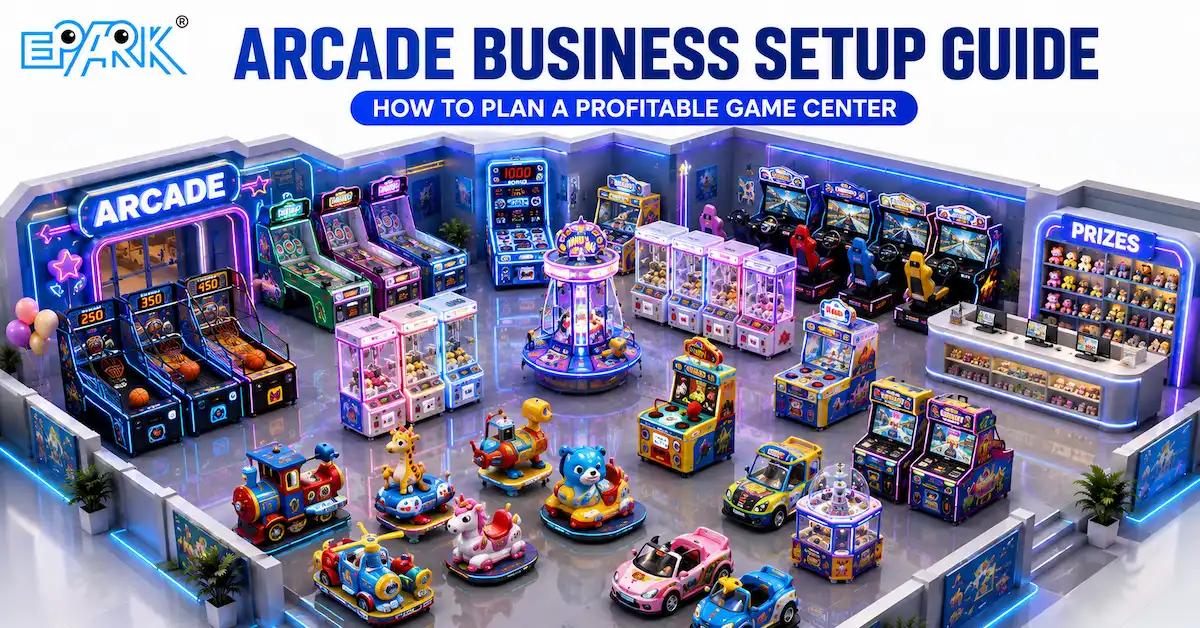


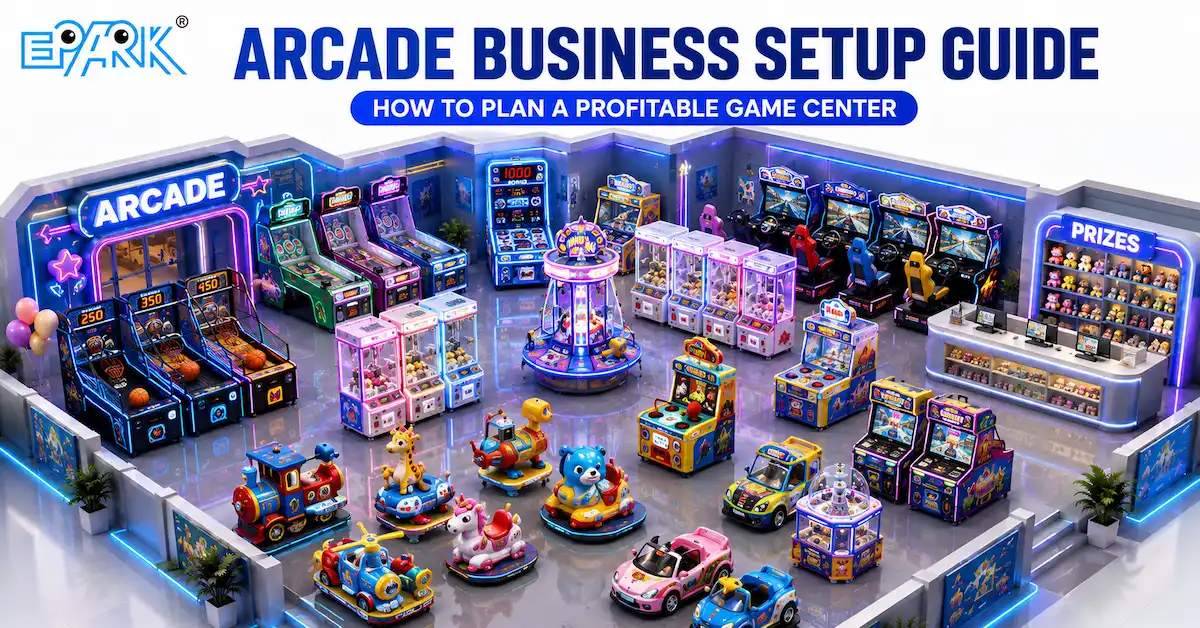
A practical arcade business setup guide should begin with the business model rather than a list of popular machines. New investors often focus first on racing games, claw machines, basketball machines, and prize equipment. However, equipment selection only becomes effective after the venue concept, target customers, floor plan, payment system, and operating budget are clear.
A commercial arcade must combine entertainment value with efficient daily operation. Machines need to fit the available space, attract the correct audience, remain easy to maintain, and support a payment model that customers understand.
Before requesting quotations, investors should confirm:
- Target customers and age groups
- Location and usable floor area
- Arcade concept and market positioning
- Equipment and renovation budget
- Preferred payment system
- Prize and redemption strategy
- Opening schedule
- Staffing and maintenance requirements
- Expected revenue sources
- Future expansion plans
Careful planning reduces purchasing risk and helps turn an empty commercial unit into a structured entertainment business.
Quick Answer: What Is Required to Set Up an Arcade Business?
An arcade business setup normally requires a suitable venue, a balanced machine mix, clear entertainment zones, a payment system, a prize counter, electrical and network preparation, trained staff, spare parts, and reliable supplier support.
The best setup depends on whether the venue targets children, teenagers, families, shopping mall visitors, tourists, or adult players. There is no single machine list suitable for every arcade.
1. Define Your Arcade Business Concept
The venue concept determines the equipment mix, interior style, pricing, and marketing strategy.
Shopping Mall Arcade
Shopping mall arcades depend on strong foot traffic and quick customer decisions. Suitable equipment may include:
- Claw machines
- Prize machines
- Basketball games
- Compact racing machines
- Kiddie rides
- Short-session redemption games
The entrance should look bright, active, and easy to understand.
Family Entertainment Center
A family entertainment center needs broader age coverage. The venue may combine:
- Redemption games
- Kiddie rides
- Racing simulators
- Sports machines
- Prize games
- Soft play equipment
- A redemption counter
- Parent seating
This model normally requires stronger zoning and a more complete payment system.
Teen and Adult Arcade
An arcade targeting teenagers and adults may prioritize:
- Racing simulators
- Shooting machines
- Rhythm games
- Basketball machines
- Air hockey
- Multiplayer games
- VR attractions
The environment can use stronger lighting effects and a competitive visual style.
Indoor Playground Arcade Area
Indoor playground operators can add arcade equipment to generate revenue beyond admission tickets. Compact claw machines, kiddie rides, redemption games, and parent-child machines are practical options.
2. Research the Local Arcade Market
Market research helps determine whether the proposed concept matches local demand.
Visit competing entertainment venues and observe:
- Which machines attract the most players
- Which customer age groups visit
- Average game prices
- Peak operating hours
- Prize categories
- Payment methods
- Venue cleanliness
- Staff service
- Machine downtime
- Customer traffic patterns
Investors should also study nearby shopping malls, cinemas, schools, residential communities, restaurants, and tourist attractions.
A location with many families may need more children’s machines and redemption games. An entertainment district with teenagers and young adults may support more racing, shooting, sports, and immersive machines.
3. Choose a Suitable Location
Location affects rent, visibility, customer acquisition, operating hours, and long-term profitability.
Common arcade locations include:
- Shopping malls
- Commercial streets
- Family entertainment complexes
- Cinemas
- Resorts
- Hotels
- Tourist attractions
- Indoor playgrounds
- Community centers
When evaluating a venue, check:
- Daily and weekend foot traffic
- Usable floor area
- Ceiling height
- Entrance visibility
- Loading access
- Electrical capacity
- Internet availability
- Fire exits
- Noise restrictions
- Storage space
- Parking
- Public transportation
Low rent is not always the best advantage. A venue with poor visibility may require significantly more marketing expenditure.
4. Prepare an Arcade Business Budget
A complete budget should include more than machine prices.
| Budget Area | Typical Costs |
|---|---|
| Venue | Deposit, rent and property fees |
| Renovation | Flooring, lighting, walls and signage |
| Equipment | Arcade machines and payment systems |
| Prize Area | Counter, shelving and initial prizes |
| Logistics | Packaging, freight, customs and delivery |
| Installation | Electrical work, positioning and testing |
| Operations | Staff, electricity and maintenance |
| Marketing | Opening promotion and local advertising |
| Spare Parts | Buttons, readers, boards and consumables |
| Reserve Fund | Unexpected delays and repairs |
Investors should keep part of the budget available for early-stage operations. Spending the entire amount on machines can create cash-flow pressure before the venue reaches stable traffic.
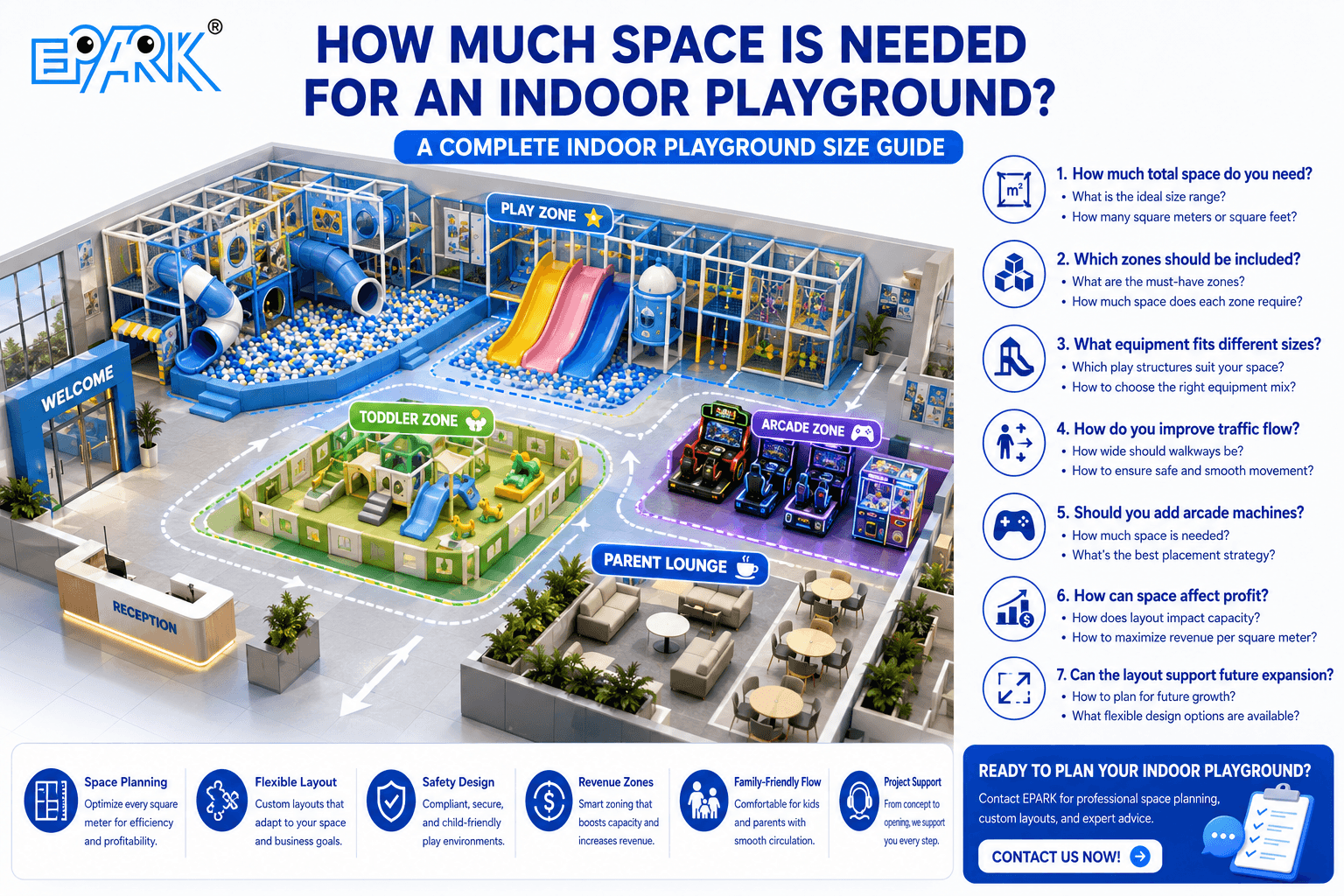
5. Create a Floor Plan Before Ordering Machines
An effective arcade business setup guide should always include floor-plan planning.
The layout should identify:
- Entrance and exit
- Main walking routes
- Columns and fixed walls
- Electrical outlets
- Payment counter
- Prize redemption area
- Storage
- Staff areas
- Parent seating
- Emergency routes
- Machine zones
Machine dimensions should be considered together with player space and maintenance access. A racing simulator requires room for the cabinet, seat movement, player entry, and technician access.
EPARK can review venue information and recommend equipment from its commercial arcade machine range.
6. Build a Balanced Arcade Machine Mix
A profitable arcade should not depend on one machine category.
| Machine Category | Examples | Commercial Function |
|---|---|---|
| Quick-Play Machines | Claw and prize machines | Encourage impulse spending |
| Redemption Machines | Ticket and point games | Increase repeat play |
| Competitive Machines | Racing, basketball and shooting | Attract teens and groups |
| Family Machines | Kiddie rides and interactive games | Serve parents and children |
| Premium Machines | VR and large simulators | Support higher play prices |
| Social Machines | Air hockey and multiplayer games | Increase group participation |
A balanced mix protects the business from relying too heavily on one customer group.
For example, a venue dominated by kiddie rides may not retain teenagers. An arcade filled only with racing and shooting machines may not attract families with young children.
7. Plan Revenue Zones
Machine placement should support customer movement and spending behavior.
Entrance Zone
Use claw machines, prize machines, and visually bright quick-play games to attract attention.
Children’s Zone
Place kiddie rides and simple games in an area that parents can supervise easily.
Family Zone
Use redemption and parent-child games to encourage shared participation.
Competition Zone
Group racing, basketball, shooting, and sports machines to create energy and social interaction.
Prize Zone
Position the redemption counter near ticket games so customers can see available rewards.
Premium Zone
Place VR and large simulators in areas with enough space for staff supervision and safe operation.
Good zoning makes the arcade easier to understand and encourages customers to explore several machine categories.
8. Choose the Payment System
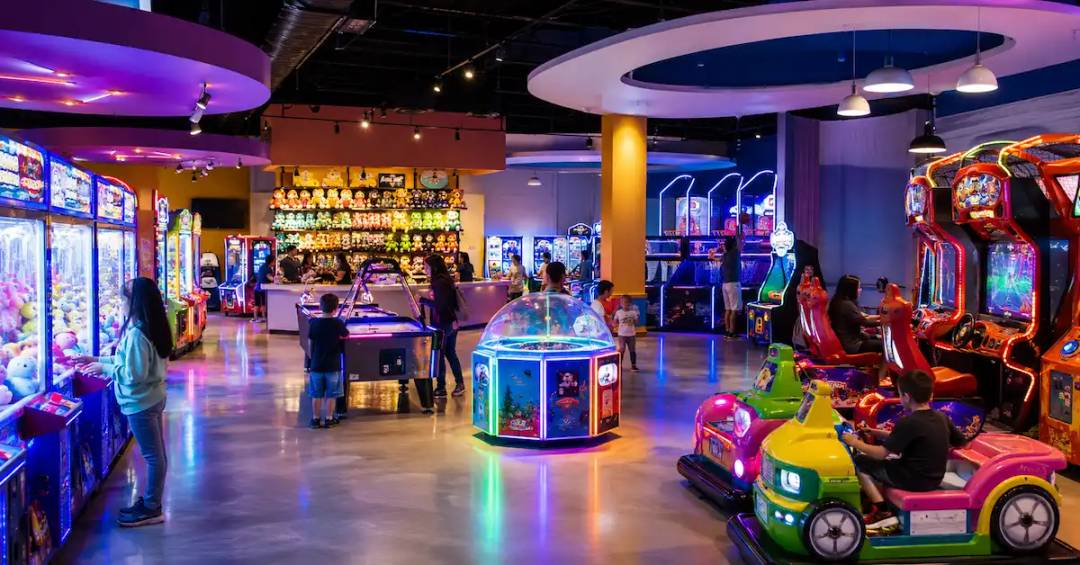
Payment systems influence customer convenience, machine configuration, and daily management.
Common options include:
- Coins
- Tokens
- Prepaid game cards
- Membership cards
- Cashless readers
- QR payment
- Paper tickets
- Electronic ticket points
Coins and tokens are simple for small arcades. A card system can be more suitable for larger venues because it may support:
- Stored value
- Bonus credits
- Membership programs
- Electronic tickets
- Customer promotions
- Centralized reporting
Confirm the payment system before machine production because readers, wiring, software, and cabinet positions may need to be customized.
9. Develop a Prize Redemption Strategy
Redemption games can increase repeat spending when prizes are attractive and clearly displayed.
A good prize counter should provide:
- Small prizes for quick rewards
- Mid-level prizes for repeat players
- Premium prizes for long-term goals
- Clear ticket values
- Organized shelves
- Regular product updates
- Easy inventory access
The reward cycle is straightforward:
Play → Earn points → Select a prize → Continue playing
Prize costs should be monitored carefully so that reward value supports customer satisfaction without reducing profit margins excessively.
10. Select a Reliable Arcade Machine Supplier
A supplier should provide more than a product quotation.
Before ordering, ask:
- Can you review my floor plan?
- Which machines suit my target customers?
- Can you provide a balanced equipment mix?
- Are machines tested before shipment?
- Can you configure local voltage and plugs?
- Do you support coin, card, and cashless systems?
- Is OEM/ODM customization available?
- What packaging method is used?
- Are installation instructions included?
- Are spare parts available?
- What warranty is provided?
A professional supplier should understand the project concept, budget, customer profile, and opening schedule.
Learn more about EPARK’s manufacturing and project capabilities on the About EPARK page.
11. Confirm Machine Customization
Customization helps the equipment match the venue brand and local market.
Possible options include:
- Logo placement
- Cabinet colors
- Side artwork
- Interface language
- Voltage and plug type
- Coin or card readers
- Difficulty settings
- Prize displays
- Packaging labels
- Matching machine series
All customized specifications should be approved before production begins.
12. Inspect Equipment Before Shipment
Pre-shipment testing should cover both machine performance and appearance.
| Inspection Area | What to Confirm |
|---|---|
| Gameplay | Stable operation |
| Controls | Buttons, joysticks, wheels and pedals |
| Payment | Coin, token, card or cashless recognition |
| Redemption | Ticket or electronic point output |
| Display | Screen and sound performance |
| Lighting | Stable LEDs and visual effects |
| Cabinet | Structure, finish and access panels |
| Customization | Logo, colors and artwork |
| Accessories | Keys, manuals and cables |
| Packaging | Export protection and labels |
Request videos, photos, and a packing list before the machines are shipped.
13. Coordinate Shipping and Installation
International arcade projects require accurate coordination.
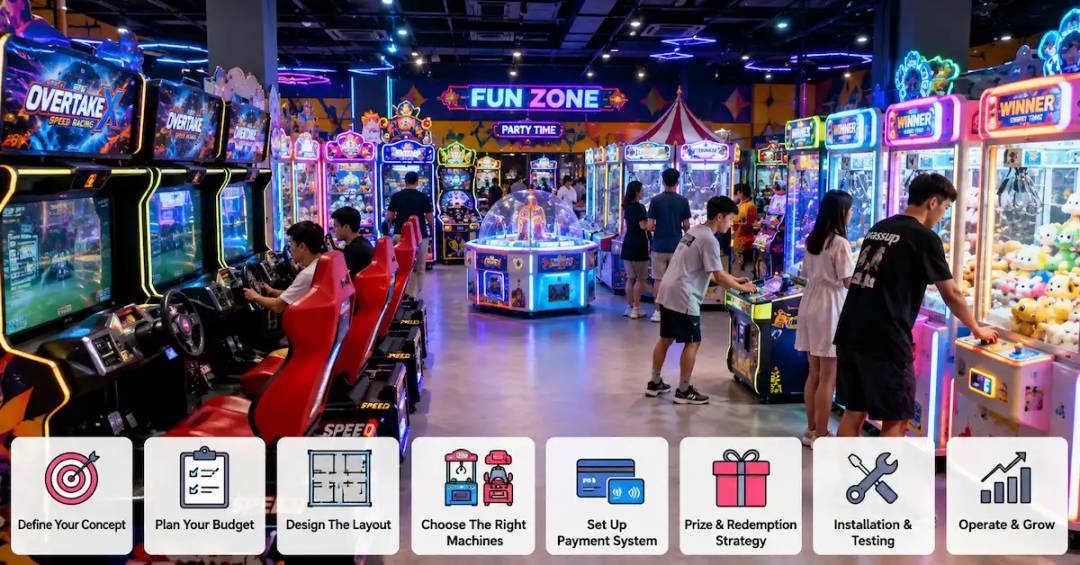
The setup sequence may include:
- Confirming the floor plan
- Approving equipment and specifications
- Completing production
- Conducting quality inspection
- Preparing export packaging
- Shipping and customs clearance
- Delivering machines to the venue
- Positioning and connecting equipment
- Configuring payment systems
- Testing all machines
- Training staff
- Running a soft opening
Installation time should be included in the opening schedule. Do not assume the venue can open immediately after equipment delivery.
Common delivery and installation questions are covered on the EPARK FAQ page.
14. Prepare Daily Operating Procedures
A profitable arcade also needs reliable management after opening.
Daily tasks may include:
- Machine startup checks
- Payment reader inspection
- Prize restocking
- Venue cleaning
- Customer assistance
- Revenue recording
- Machine fault reporting
- Ticket system checks
- Closing inspections
Staff should understand basic machine operation and know how to respond when a customer reports a problem.
15. Track Performance After Opening
Record performance by machine instead of evaluating the venue only by total revenue.
Useful metrics include:
- Daily plays
- Revenue per machine
- Revenue per square meter
- Machine downtime
- Prize cost
- Maintenance frequency
- Customer age groups
- Peak hours
- Repeat visits
- Payment method usage
Weak machines may need relocation, pricing changes, new prizes, difficulty adjustments, or replacement.
16. Common Arcade Business Setup Mistakes
Buying Machines Before Reviewing the Floor Plan
This can lead to overcrowding, poor visibility, and insufficient maintenance access.
Focusing Only on Equipment Price
Cheaper machines may create higher repair costs and more downtime.
Choosing Too Many Similar Games
A narrow product mix reduces customer coverage.
Ignoring the Prize Strategy
Redemption games need attractive and properly priced rewards.
Selecting the Payment System Too Late
Late changes may require cabinet or wiring modifications.
Forgetting Spare Parts
Small replacement components can reduce downtime significantly.
Opening Without Staff Training
Poor customer support can damage the experience even when machines work correctly.
17. Why Work with EPARK for Arcade Business Setup?
EPARK supports new and existing arcade projects with:
- Floor-plan review
- Arcade machine recommendations
- Equipment mix planning
- Revenue zone suggestions
- Claw and redemption machines
- Racing and sports games
- Kiddie rides
- Payment system configuration
- OEM/ODM customization
- Quality inspection
- Export packaging
- Shipping coordination
- Installation guidance
- Spare parts and technical support
Buyers can submit venue dimensions, target customers, machine preferences, and project budget through the EPARK Contact page.
FAQ
1. How much does it cost to set up an arcade business?
The investment depends on rent, venue size, renovation, machine types, payment systems, logistics, prizes, staffing, and local operating costs. A detailed floor plan and machine proposal are needed for an accurate budget.
2. How many machines should a new arcade have?
Machine quantity depends on usable space, cabinet dimensions, customer capacity, walking routes, seating, and safety requirements. A smaller number of well-positioned machines may perform better than an overcrowded layout.
3. Which machines are best for a new arcade?
A balanced setup may include claw machines, redemption games, basketball machines, racing simulators, kiddie rides, sports games, and one or two premium attractions.
4. Is an arcade business profitable?
Profitability depends on location, rent, customer traffic, game pricing, machine mix, prize costs, maintenance, and daily management. Careful planning is essential.
5. Should a new arcade use game cards?
A game-card system can support stored value, memberships, promotions, and electronic tickets. Coins or tokens may remain suitable for smaller operations.
6. How can EPARK support a new arcade project?
EPARK can support floor-plan review, machine selection, layout planning, customization, payment systems, export packaging, shipping, installation guidance, spare parts, and after-sales service.
Conclusion
This arcade business setup guide shows that a successful venue depends on coordinated planning. The location, floor plan, equipment mix, payment system, prize strategy, supplier, installation schedule, and operating procedures must support the same commercial objective.
Investors who prepare these details before ordering machines can reduce avoidable costs and build a more attractive, efficient, and sustainable arcade business.
Contact EPARK to receive equipment recommendations, floor-plan support, customization options, and a tailored quotation for your arcade project.
Disclaimer
The information provided on this website is for general informational purposes only.
While EPARK Arcade Game Machine Manufacturer strives to ensure accuracy and reliability, no warranties—express or implied—are made regarding completeness, performance, or applicability.
Product specifications, designs, and features may vary depending on usage, customization, and customer requirements.
Buyers are responsible for verifying all technical details, compliance certifications, and suitability before procurement.
EPARK shall not be held liable for any direct, indirect, incidental, or consequential damages arising from the use of this website or its content, including but not limited to business losses, data errors, or equipment misuse.
For tailored solutions or further verification, please visit our Contact Us
Intellectual Property Notice
All articles, product images, videos, catalogs, software, and related materials published on this website are the intellectual property of EPARK, unless otherwise stated.
Unauthorized reproduction, distribution, modification, or commercial use of any content is strictly prohibited without prior written consent from EPARK.
EPARK reserves the right to take legal action against any unauthorized use, including but not limited to copyright infringement, misrepresentation, or unfair competition.
Trademarks
The name EPARK, the EPARK logo, and all related brand elements displayed on this website are registered trademarks or trade names of Guangzhou EPARK Electronic Technology Co., Ltd.
Other product names, company names, or logos mentioned on this site may be trademarks of their respective owners.
Unauthorized use of EPARK's trademarks for commercial purposes, including advertising, promotions, or product packaging, is strictly prohibited.
Governing Law
These terms are governed by the laws of the People's Republic of China.