

When investors ask how much space is needed for an indoor playground, they are really asking a deeper question: how to design a profitable and safe family entertainment venue within a limited area. Understanding the ideal indoor playground size is one of the most important steps in planning a successful project.
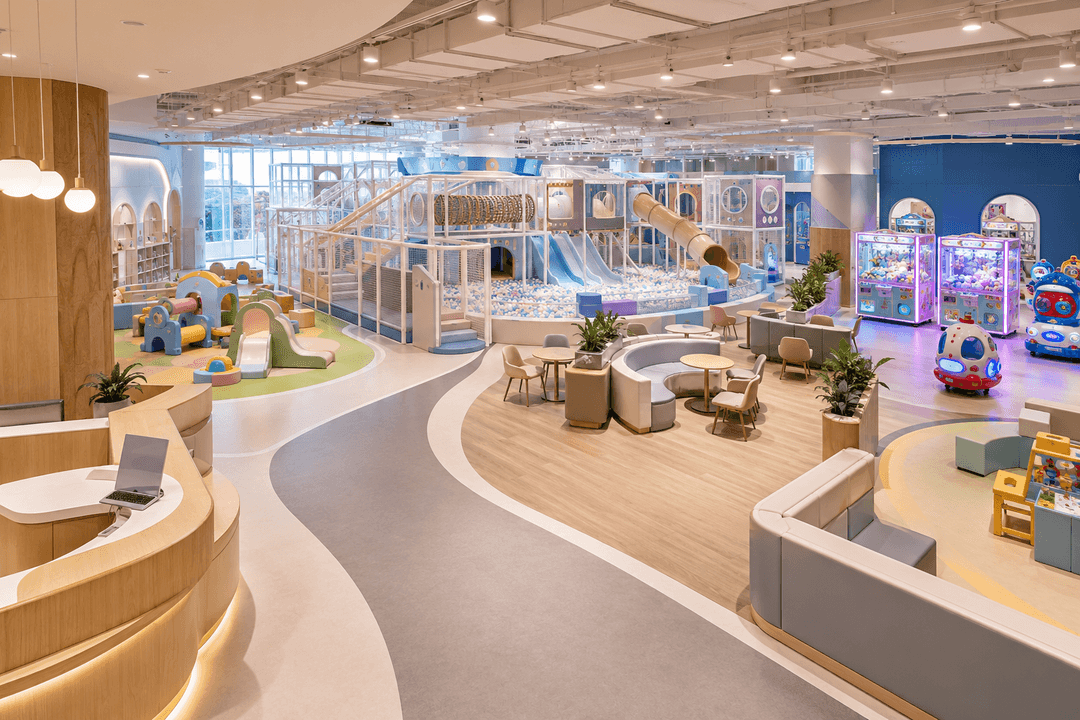
Space directly affects:
- Equipment selection
- Customer capacity
- Safety design
- Traffic flow
- Revenue potential
- Experience quality
- Expansion possibility
A well-planned indoor playground can perform well even in a relatively small area, while a poorly designed large space may feel empty and inefficient. Choosing the right indoor playground size helps operators maximize both customer satisfaction and return on investment.
Indoor playgrounds are commonly built in:
- Shopping malls
- Family entertainment centers (FECs)
- Indoor amusement parks
- Community commercial centers
- Retail entertainment zones
- Cinema and leisure complexes
Each venue type requires different space planning strategies. This guide explains how to calculate, design, and optimize indoor playground space for commercial success while selecting the most suitable indoor playground size for your target market.
Minimum Space Requirement for an Indoor Playground
The minimum space depends on the type of indoor playground you want to build. There is no single fixed number, but there are industry-based ranges. The recommended indoor playground size varies according to customer capacity, equipment mix, and business goals.
Basic Space Guidelines
| Playground Type | Recommended Size | Description |
|---|---|---|
| Mini Kids Zone | 50–100㎡ | Small mall corner, basic soft play setup |
| Small Indoor Playground | 100–300㎡ | Standard soft play + simple equipment |
| Medium Playground | 300–600㎡ | Full play structure + arcade zone |
| Large FEC Playground | 600–1500㎡ | Multi-zone entertainment center |
| Mega Indoor Park | 1500㎡+ | Full commercial amusement park |
Even a small 80–100㎡ area can be profitable if the layout is well designed and focuses on compact soft play equipment, toddler zones, and simple attractions.
However, for long-term scalability and higher revenue potential, most commercial investors prefer at least 200–300㎡. This indoor playground size range provides enough flexibility for multiple attractions and future upgrades.
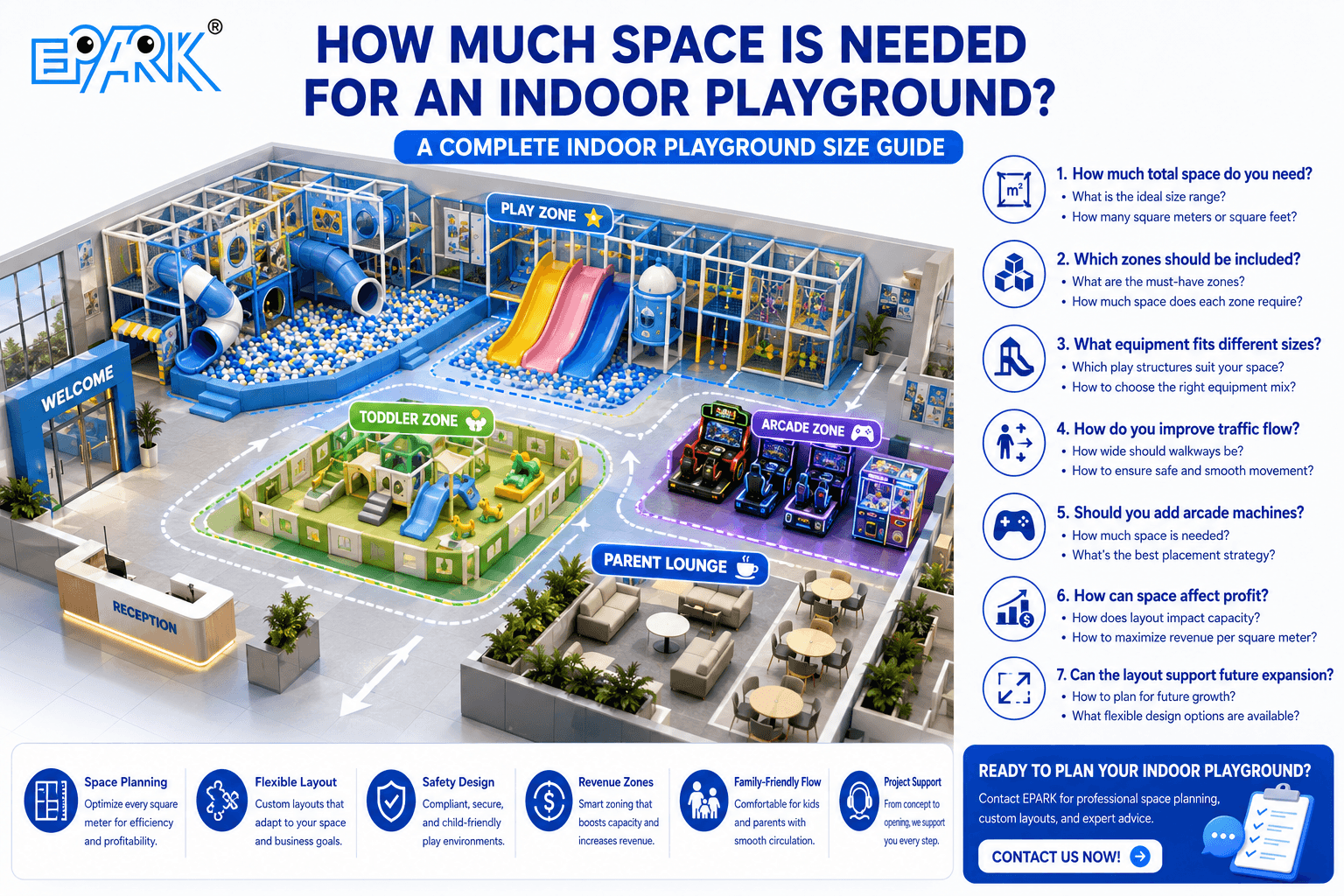
Space Breakdown by Functional Zones
Instead of thinking only about total area, successful operators divide space into functional zones.
Standard Indoor Playground Layout Structure
| Zone | Purpose | Suggested Space Ratio |
| Entrance & Reception | Ticketing, control, visibility | 5–10% |
| Toddler Area | Safe play for ages 1–3 | 10–20% |
| Main Soft Play Zone | Slides, climbing, ball pit | 30–40% |
| Active Play Zone | Obstacle courses, nets, tunnels | 10–20% |
| Arcade & Add-on Zone | Claw machines, kiddie rides | 10–15% |
| Parent Rest Area | Seating, café, waiting space | 10–15% |
| Party Room | Events, birthdays | 5–10% |
A well-designed indoor playground is not just “filled with equipment”. It is carefully structured to balance movement, safety, visibility, and revenue generation. Regardless of the total indoor playground size, proper zoning is essential for efficient operation.
How Space Affects Equipment Selection
Space size directly determines what equipment you can install. Choosing the right equipment mix is critical for maximizing ROI.
Equipment vs Space Matching
| Space Size | Recommended Equipment |
| 50–100㎡ | Mini slides, foam blocks, small ball pit, 1–3 arcade machines |
| 100–300㎡ | Soft play structure, toddler zone, small climbing area, kiddie rides |
| 300–600㎡ | Large slide system, ball pit, climbing net, arcade zone, party room |
| 600㎡+ | Full FEC setup: soft play + arcade + VR + redemption + party rooms |
For commercial investors, combining soft play equipment with arcade machines (such as claw machines, kiddie rides, and redemption games) helps increase revenue per square meter.
EPARK supports arcade machines, kiddie rides, and FEC equipment solutions that can be integrated into indoor playground layouts to improve monetization and customer engagement. Selecting equipment according to the available indoor playground size ensures better space utilization and customer flow.
Space Planning Principles for Better Revenue
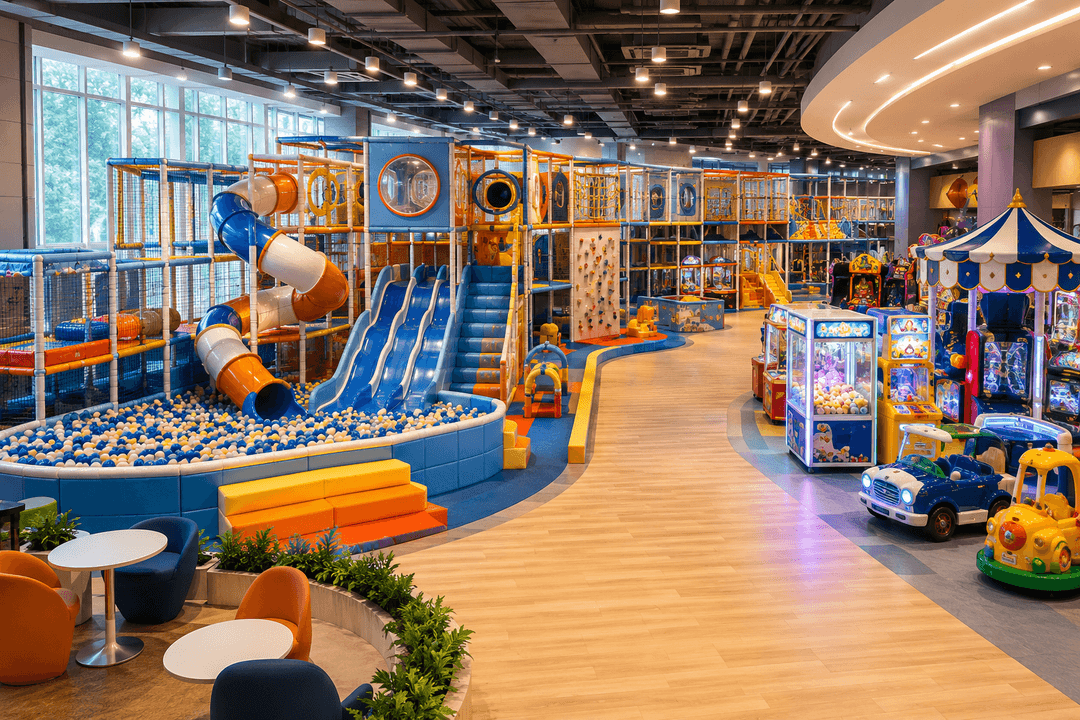
Space is not just about size—it is about efficiency.
Key Planning Principles:
1. Visibility First
Children’s attractions should be visible from the entrance to attract walk-in customers.
2. Flow Optimization
Customers should move naturally from entrance → play zone → rest area → exit.
3. Zoning by Age
Separate toddlers, kids, and active play areas for safety and comfort.
4. Revenue Placement Strategy
Place arcade machines and redemption games near:
- Entrance areas
- Parent seating zones
- Exit paths
5. Avoid Overcrowding
Too many structures reduce safety and visibility.
6. Keep Open Sightlines
Parents should always see their children from seating areas.
A properly planned indoor playground size allows operators to balance attractions, circulation, and revenue-generating zones effectively.
Indoor Playground Space Efficiency Tips
To maximize profit per square meter, investors should focus on smart design rather than simply increasing space.
Optimization Tips:
- Use vertical structures (multi-level play systems)
- Combine soft play + arcade machines
- Reduce dead corners
- Add modular equipment for flexibility
- Design for future expansion
- Use mirrored or open layouts for visibility
- Integrate seating into perimeter zones
- Keep central space for main attraction structure
A well-optimized 200㎡ playground can outperform a poorly designed 400㎡ venue.
How Space Impacts Profitability
Indoor playground profit is closely linked to space efficiency.
Revenue Factors:
| Factor | Impact |
| Customer Capacity | More space = more children at peak time |
| Equipment Density | Balanced density improves engagement |
| Visibility | Better layout increases walk-in conversion |
| Add-on Revenue | Arcade machines increase spending per customer |
| Event Space | Party rooms increase high-margin income |
A well-designed 300㎡ playground can generate significantly higher ROI than a poorly planned 500㎡ space.
Common Mistakes in Indoor Playground Space Planning
Many investors lose revenue due to poor planning.
Common Mistakes:
- Overcrowding equipment
- No clear zoning
- Blocking customer flow
- Ignoring parent seating area
- Poor visibility from entrance
- No arcade or add-on revenue zone
- Not planning for future expansion
- Underestimating safety space requirements
Avoiding these mistakes is more important than simply increasing square meters.
How to Decide the Right Size for Your Project
To determine how much space you need, ask these questions:
- What is my target customer group?
- Is it a mall corner or full FEC?
- Do I want arcade integration?
- What is my expected daily traffic?
- Do I need party rooms or events?
- What is my budget level?
- Do I plan to expand in the future?
Simple Decision Guide:
- Small budget → 100–200㎡
- Medium investment → 200–600㎡
- Large commercial project → 600㎡+
Choosing the correct indoor playground size should be based on both current demand and future growth plans.
EPARK Support for Indoor Playground Projects
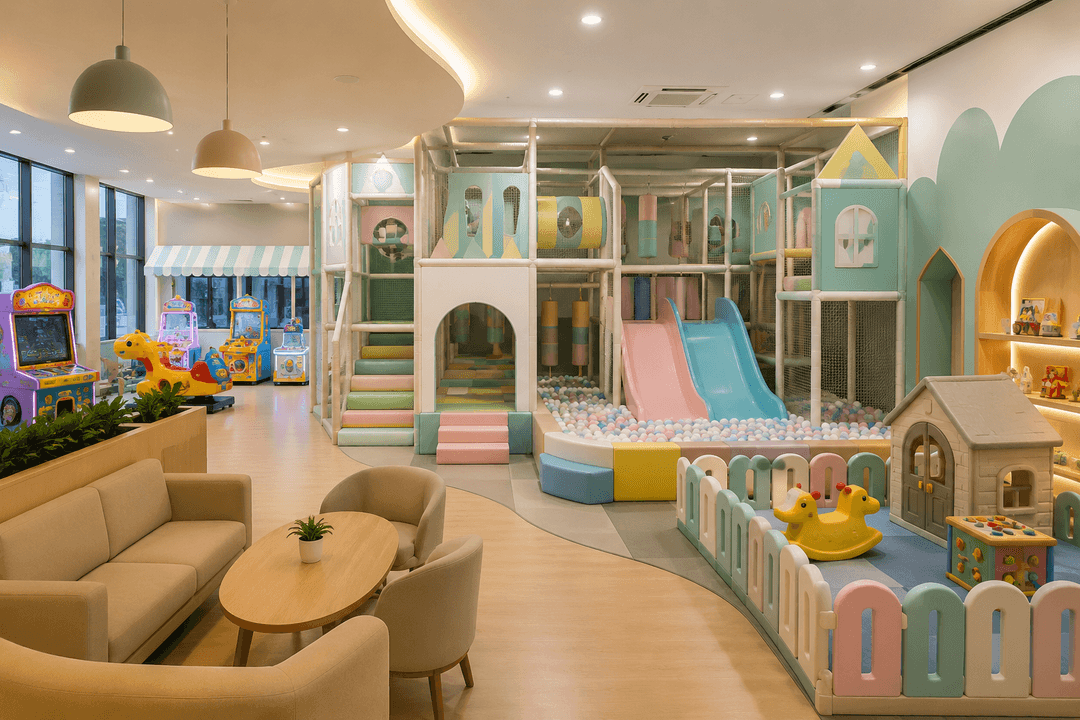
EPARK supports indoor playground and FEC investors with:
- Arcade machine supply
- Kiddie rides
- Redemption games
- Claw machines
- Space layout planning
- OEM/ODM customization
- Equipment integration for playgrounds
- Export packaging
- Global shipping support
- Installation guidance
- Spare parts and after-sales service
This helps investors turn space into a profitable entertainment system, not just a play area.
Explore more on the EPARK Products page, learn about company capability on the About Us page, or contact the team via the Contact page.
FAQ
1. What is the minimum space needed for an indoor playground?
A small indoor playground can start from 50–100㎡ depending on equipment selection.
2. Is a small indoor playground profitable?
Yes, if space is optimized with good layout, visibility, and add-on revenue such as arcade machines.
3. What is the best size for a commercial indoor playground?
Most commercial projects perform well between 200–600㎡.
4. Can I build an indoor playground in a shopping mall corner?
Yes, small mall zones are very common and usually start from 80–150㎡.
5. How does space affect profit?
More space allows more customers, but efficiency and layout design have a bigger impact than size alone.
6. Should I include arcade machines in my playground?
Yes, arcade machines help increase revenue and attract older children and parents.
7. Can small spaces still include soft play equipment?
Yes, modular soft play systems are designed for compact venues.
8. What is the biggest mistake in space planning?
Overcrowding equipment without considering flow, safety, and visibility.
9. Do I need a party room?
It is optional, but party rooms significantly increase high-margin revenue.
10. Can EPARK help with layout planning?
Yes, EPARK provides arcade and FEC layout support for commercial indoor playground projects.
Conclusion
So, how much space is needed for an indoor playground?
The answer depends on your business model, but most successful commercial venues fall between 100㎡ and 600㎡, with layout quality being more important than size alone.
A well-planned space with clear zoning, optimized flow, and integrated arcade revenue zones can outperform larger but poorly designed playgrounds. Selecting the right indoor playground size is a key factor in achieving long-term profitability and customer satisfaction.
For investors, the key is not just choosing the right size—but designing the right system inside that space.
Contact EPARK today to get professional indoor playground size planning guidance, commercial layout solutions, arcade equipment recommendations, and a tailored quotation for your FEC or indoor playground project.
Disclaimer
The information provided on this website is for general informational purposes only.
While EPARK Arcade Game Machine Manufacturer strives to ensure accuracy and reliability, no warranties—express or implied—are made regarding completeness, performance, or applicability.
Product specifications, designs, and features may vary depending on usage, customization, and customer requirements.
Buyers are responsible for verifying all technical details, compliance certifications, and suitability before procurement.
EPARK shall not be held liable for any direct, indirect, incidental, or consequential damages arising from the use of this website or its content, including but not limited to business losses, data errors, or equipment misuse.
For tailored solutions or further verification, please visit our Contact Us
Intellectual Property Notice
All articles, product images, videos, catalogs, software, and related materials published on this website are the intellectual property of EPARK, unless otherwise stated.
Unauthorized reproduction, distribution, modification, or commercial use of any content is strictly prohibited without prior written consent from EPARK.
EPARK reserves the right to take legal action against any unauthorized use, including but not limited to copyright infringement, misrepresentation, or unfair competition.
Trademarks
The name EPARK, the EPARK logo, and all related brand elements displayed on this website are registered trademarks or trade names of Guangzhou EPARK Electronic Technology Co., Ltd.
Other product names, company names, or logos mentioned on this site may be trademarks of their respective owners.
Unauthorized use of EPARK's trademarks for commercial purposes, including advertising, promotions, or product packaging, is strictly prohibited.
Governing Law
These terms are governed by the laws of the People's Republic of China.