
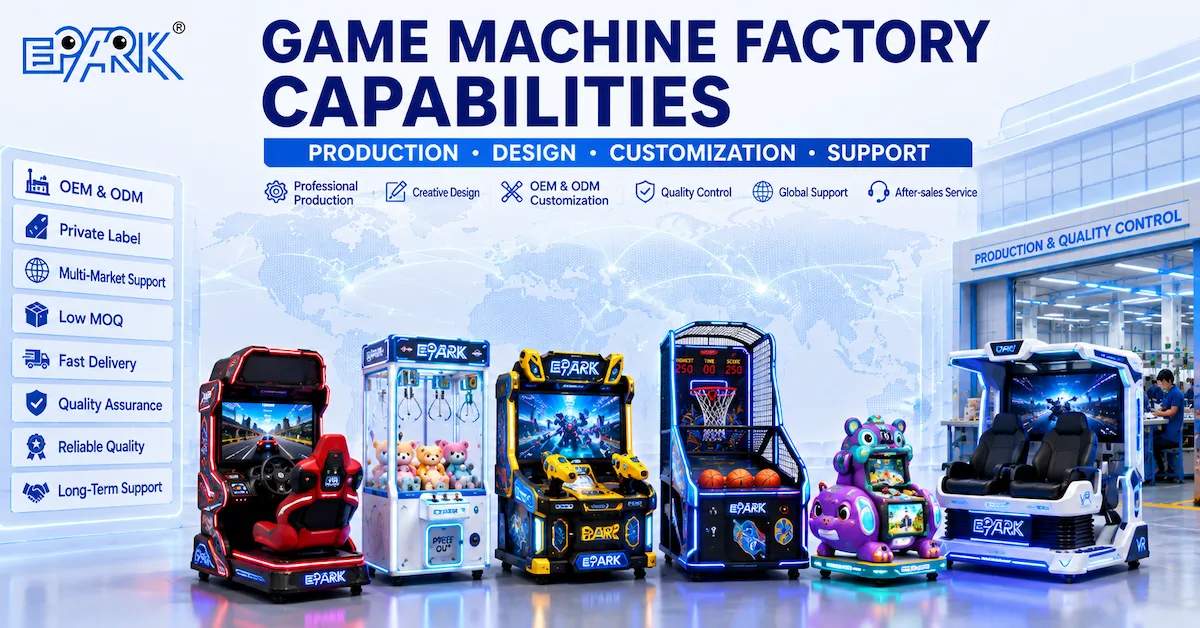
What Capabilities Should a Commercial Game Machine Factory Have?
A commercial game machine factory does much more than assemble cabinets and install screens.
For arcade operators, FEC investors, distributors, private-label brands, and international project buyers, factory capability directly affects whether equipment can be produced consistently, adapted to different markets, maintained after delivery, and reordered in the future.
A capable manufacturing partner should typically support six core areas:
- Production and assembly
- Product design and engineering
- Customization and OEM/ODM
- Quality control and testing
- Project and international order support
- After-sales and spare-parts service
These capabilities do not have equal importance for every buyer.
A single arcade operator buying proven equipment may care most about machine quality, delivery, and spare parts. A distributor building a branded product range may prioritize repeatability, customization, and production stability. An ODM buyer developing a new concept needs engineering, prototyping, testing, and controlled production.
The key is therefore not finding the factory with the longest list of services.
It is finding a factory whose capabilities match the commercial requirements of your project.
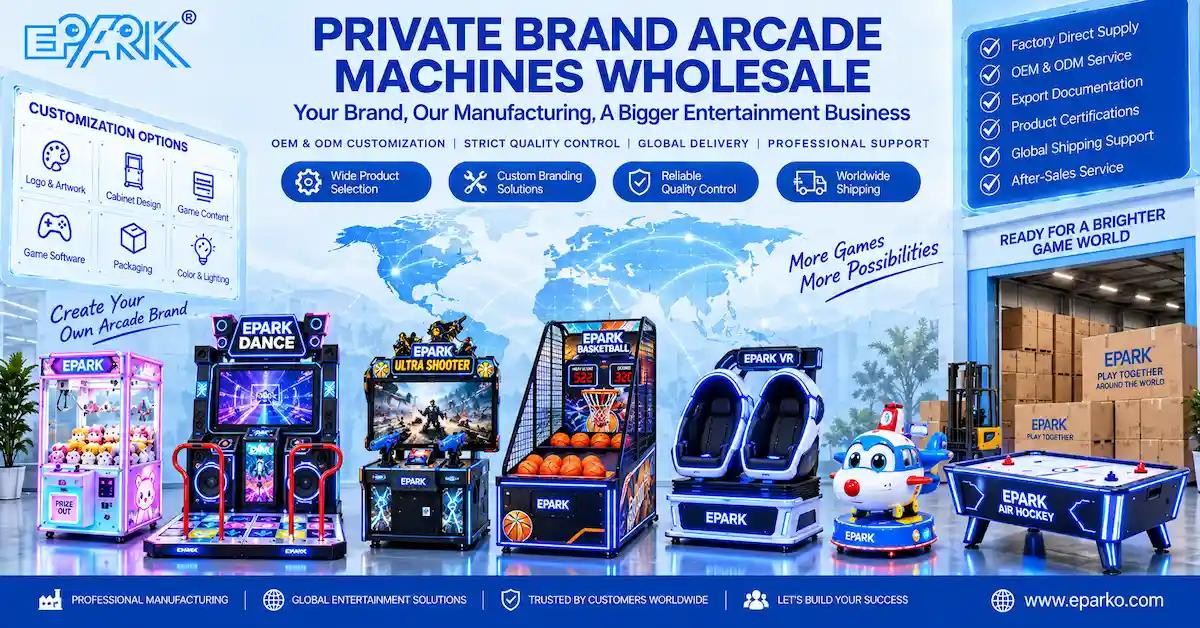
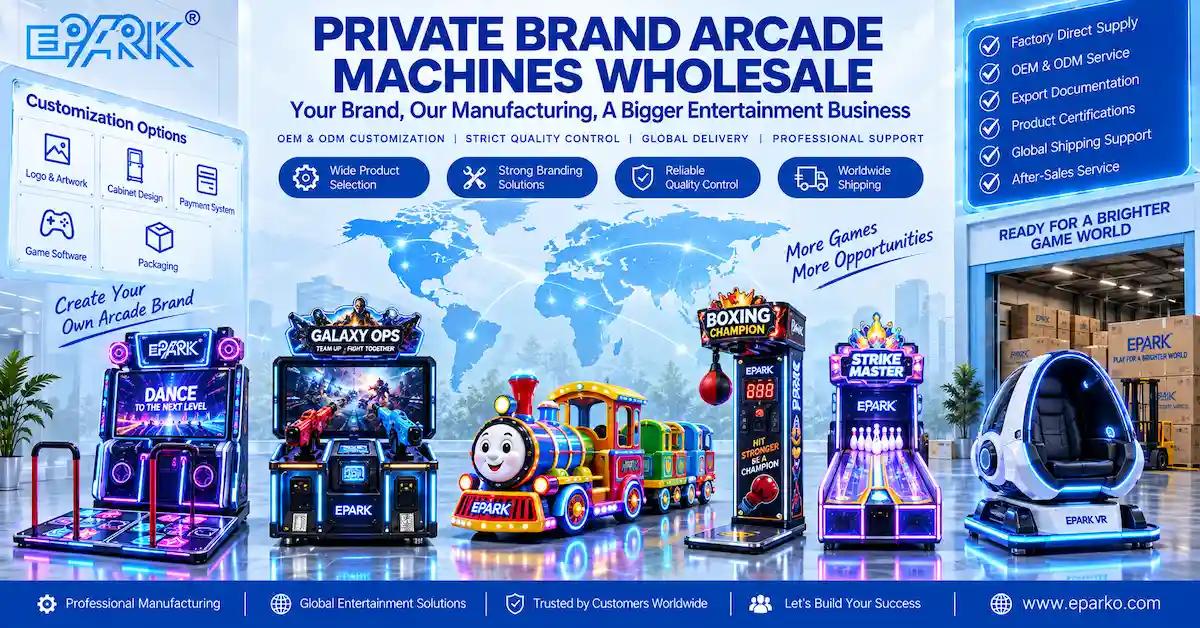
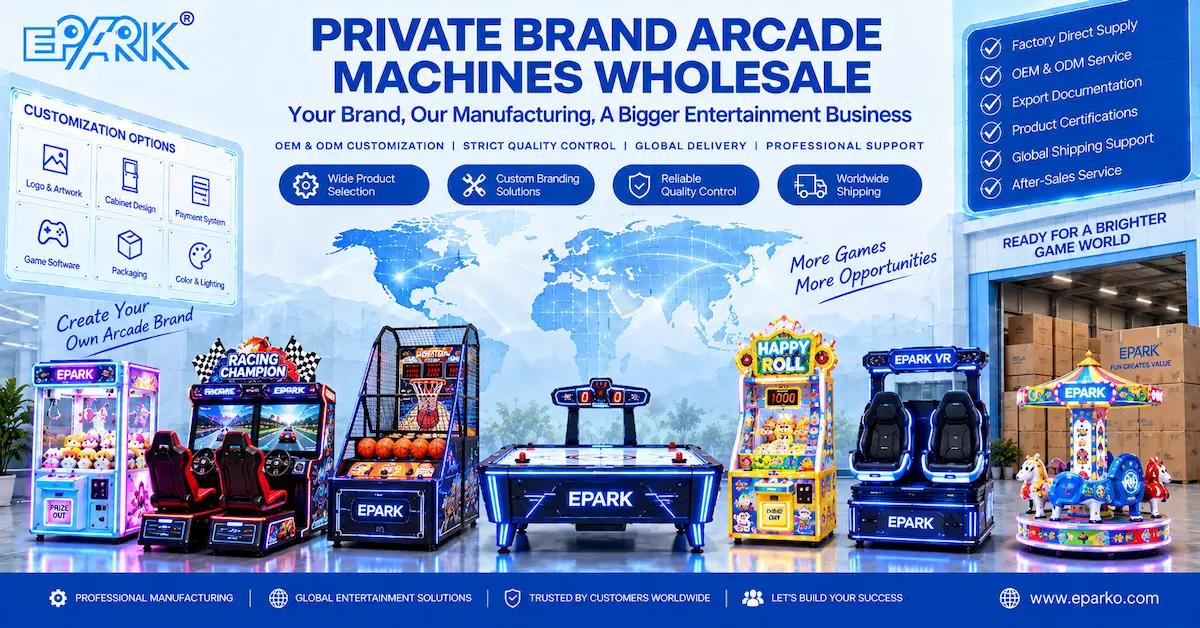
Buyers can first review EPARK's commercial arcade machines to understand the types of existing equipment that may be available before deciding whether standard supply or deeper customization is required.
Six Core Game Machine Factory Capabilities
| Factory Capability | What It Includes | Buyer Value |
|---|---|---|
| Production | Assembly, wiring, configuration, batch manufacturing | Stable supply |
| Design & Engineering | Cabinet, controls, electronics, prototype support | Better product fit |
| Customization | Branding, market configuration, OEM/ODM | Market differentiation |
| Quality Control | Inspection, testing, final verification | Product consistency |
| Project Support | Product mix, scheduling, export coordination | Lower project risk |
| After-sales | Spare parts, troubleshooting, repeat-order support | Lower downtime |
A strong game machine factory should be able to explain how these capabilities work together rather than presenting them as isolated marketing claims.
Production Capability: Turning Specifications Into Repeatable Machines
Production capability is the foundation of commercial arcade manufacturing.
One good sample does not prove that a supplier can manufacture a complete batch consistently.
The real question is:
Can the factory reproduce the approved machine repeatedly with the same configuration and acceptable quality?
Material and Component Preparation
Before assembly begins, the factory needs to prepare and manage components such as:
- Displays
- Control boards
- Buttons and joysticks
- Steering systems
- Sensors
- Power supplies
- Wiring
- Speakers
- LED systems
- Cabinet parts
- Mechanical components
Component management becomes especially important for repeat orders.
If a machine depends on difficult-to-source parts, future production and after-sales service may become less predictable.
Cabinet and Mechanical Assembly
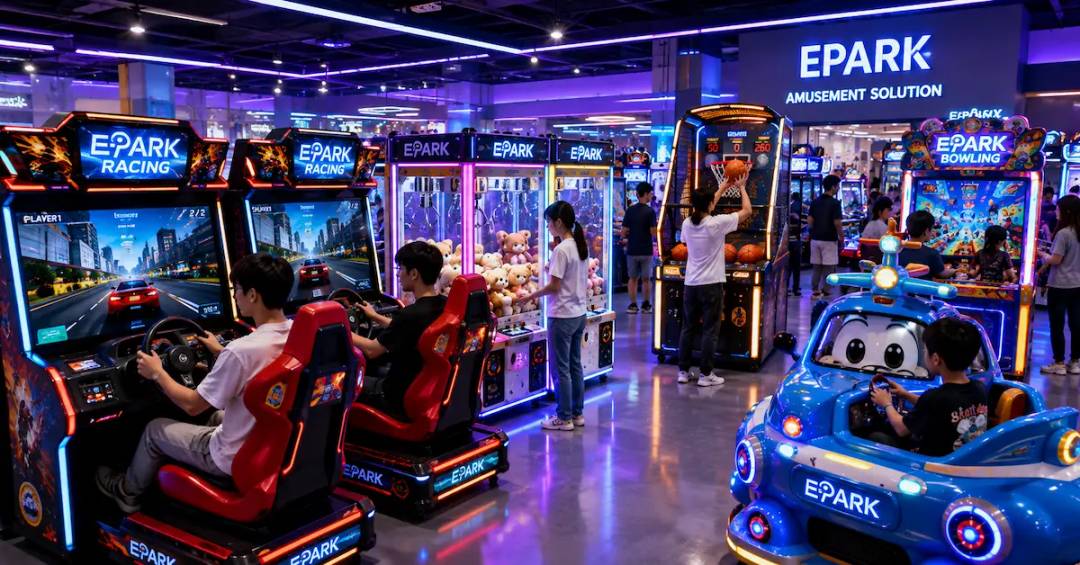
Commercial arcade equipment may include:
- Racing cabinets
- Shooting games
- Basketball machines
- Claw machines
- Redemption equipment
- Kiddie rides
- Simulator products
Each category has different structural requirements.
Assembly should control:
- Cabinet fit
- Mechanical stability
- Panel alignment
- Access doors
- Internal mounting
- Player-facing controls
A visually attractive cabinet still needs to withstand commercial operation and routine service.
Electrical and System Integration
The factory must also integrate:
- Displays
- Controls
- Sensors
- Audio
- Lighting
- Power systems
- Payment hardware
- Software or game systems
This work requires more than connecting components.
The systems need to function together as one commercial machine.
Production Repeatability
This is one of the most important game machine factory capabilities for distributors and chain operators.
Repeatability means that the approved product configuration can be reproduced across:
- Multiple units
- Multiple batches
- Repeat orders
- Different project phases
A factory should therefore manage specifications rather than rely entirely on memory or informal conversations.
Design and Engineering Capability: More Than Cabinet Appearance
Many buyers hear “design capability” and immediately think about graphics and colors.
Commercial arcade design goes much deeper.
It may include:
- Cabinet structure
- Player ergonomics
- Screen position
- Control placement
- Component layout
- Maintenance access
- Electrical integration
- Payment-system integration
- Packaging considerations
Cabinet Design
A cabinet should be evaluated from several perspectives at once.
It needs to:
- Attract players
- Fit the intended venue
- Support comfortable interaction
- Protect internal components
- Allow routine maintenance
- Be practical to manufacture
- Be practical to transport
For example, a larger cabinet may create stronger visual impact but also increase shipping volume and floor-space requirements.
A compact cabinet may improve space efficiency but make internal maintenance more difficult if the structure is not carefully planned.
Player Interaction and Ergonomics
Engineering should consider:
- Player height
- Viewing angle
- Reach distance
- Seating
- Multiplayer spacing
- Control position
- Entry and exit
A machine that looks impressive but feels uncomfortable to play is not a successful commercial design.
Functional Engineering
Depending on the machine, engineering may include:
- Steering systems
- Gun controllers
- Sensors
- Motors
- Screens
- Audio
- Lighting
- Control boards
- Payment interfaces
These systems need to be evaluated as one product.
Prototype Development
For deeper product changes or new equipment concepts, the development process may involve:
Design → Prototype → Testing → Revision → Approval
A prototype can help identify problems before they enter mass production.
Buyers considering deeper development can learn more from EPARK's arcade machine manufacturer information and related custom-development capabilities.
Customization Capability for Different Buyer Needs
Customization is one of the most commercially important factory capabilities for distributors, arcade chains, and entertainment brands.
However, customization can range from simple artwork changes to full ODM development.
Branding Customization
Typical branding options may include:
- Logo placement
- Cabinet artwork
- Brand colors
- Labels
- Packaging
- Product naming
This level is useful for:
- Arcade chains
- Distributors
- Private-label buyers
- Branded entertainment venues
Market Configuration
International buyers may require:
- Voltage configuration
- Plug type
- Language
- Payment system
- Operator settings
- Selected accessories
These changes are less visible than branding but often more important operationally.
Product Customization
Deeper changes may include:
- Cabinet dimensions
- Cabinet structure
- Control layout
- Screen arrangement
- Lighting
- Seating
- Decorative elements
These modifications usually require stronger engineering review because they can affect production, maintenance, and shipping.
OEM Capability
OEM cooperation may be suitable when the buyer has clearer specifications or wants to modify an existing platform.
Typical requirements include:
- Custom branding
- Product configuration
- Cabinet adaptation
- Private-label production
ODM Capability
ODM cooperation may require the factory to participate in:
- Product concept development
- Engineering
- Prototype production
- Testing
- Product revision
- Production preparation
ODM is particularly relevant when buyers want to develop more differentiated commercial equipment instead of only modifying a standard machine.
Quality Control: From Components to Finished Machines
Manufacturing capability is incomplete without quality-control capability.
The purpose of QC is not simply to confirm that one finished machine powers on.
It is to reduce variation throughout production.
Incoming Inspection
Depending on the product, incoming inspection may cover:
- Electronic components
- Displays
- Wiring
- Mechanical parts
- Controls
- Cabinet materials
Assembly Inspection
During manufacturing, important checks may include:
- Cabinet assembly
- Internal wiring
- Component installation
- Mechanical stability
- Appearance
Functional Testing
Finished machines should be tested according to their actual functions.
| QC Area | What Should Be Verified |
|---|---|
| Cabinet | Structure, finish and assembly |
| Controls | Buttons, steering, guns, sensors |
| Display | Screen operation |
| Electrical | Wiring and configured power system |
| Payment | Exact configured system |
| Software | Correct language/settings |
| Gameplay | Main machine functions |
| Lighting & Audio | Correct operation |
| Accessories | Required items included |
| Packaging | Protection before shipment |
Final Inspection
Final inspection should compare the completed machine with the approved specification.
This is especially important for:
- Custom artwork
- Voltage configuration
- Language
- Payment systems
- Accessories
- Private-label orders
A useful principle is:
Factory capability is not only the ability to make a machine; it is the ability to make the same approved machine consistently.
Project Capability for FECs and Arcade Operators
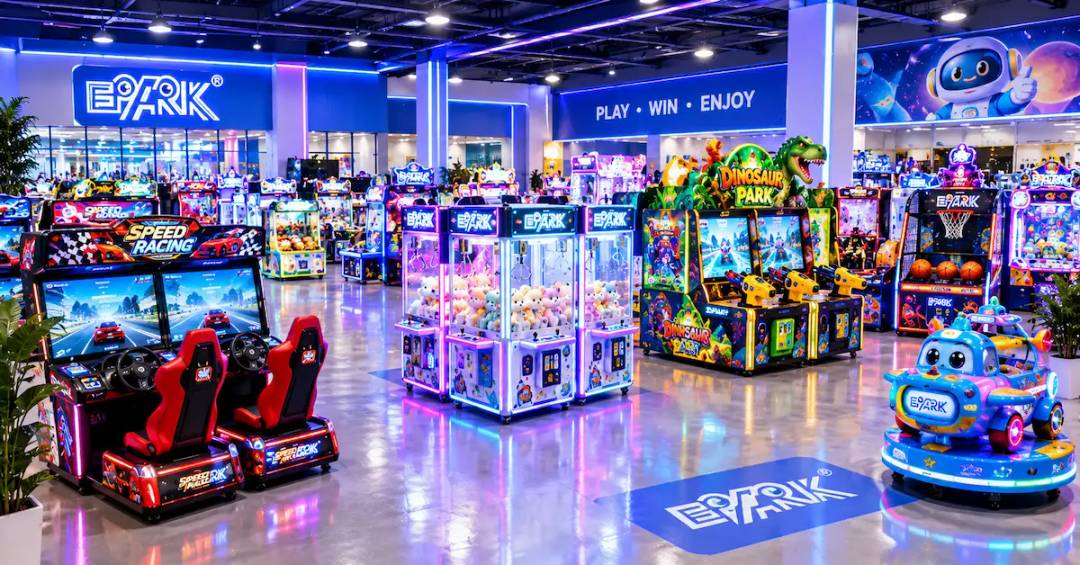
Large entertainment projects often require more than individual product supply.
A complete FEC or arcade project may involve several equipment categories at the same time.
The factory may need to support:
- Racing games
- Redemption machines
- Claw machines
- Basketball games
- Shooting machines
- Kiddie equipment
- Simulators
This creates a project-management challenge.
Product Mix Support
A project partner should understand the difference between supplying machines and creating a balanced equipment mix.
Different categories may serve different players and operating goals.
For example:
- Racing games may support competitive play
- Claw machines may provide prize-based interaction
- Basketball games may encourage social competition
- Kiddie rides serve younger visitors
The product mix should reflect:
- Venue type
- Target players
- Floor space
- Business model
Multi-Category Production
A project may require different products to be completed within the same commercial schedule.
The factory therefore needs to coordinate:
- Materials
- Assembly
- Customization
- QC
- Packaging
- Shipment preparation
This becomes more important as order complexity increases.
International Order and Export Support
A factory serving global customers should understand that international orders involve additional requirements.
Capabilities may include:
- Destination-market configuration
- Export packaging
- Shipment preparation
- Product documentation coordination
- Spare-parts planning
- Remote technical support
International buyers should confirm market-specific requirements before production begins.
For example:
- Voltage
- Plug configuration
- Payment system
- Language
- Packaging
These are easier to control before shipment than after the equipment arrives overseas.
Buyers can review EPARK's arcade machine FAQ for common purchasing and equipment questions.
Packaging Is Part of Factory Capability
Packaging should not be treated as an afterthought.
Commercial arcade machines can contain:
- Screens
- Glass
- Acrylic
- Controls
- Decorative structures
- Electronic systems
International transportation may involve multiple stages of handling.
A capable factory should consider how to protect:
- Cabinet corners
- Screens
- Movable parts
- Player controls
- Internal components
Packaging quality can directly affect whether a correctly manufactured machine reaches the buyer in usable condition.
After-Sales Support Is Part of Factory Capability
For commercial buyers, the relationship should not end when the shipment leaves the factory.
Machines operate for extended periods and may eventually require:
- Replacement parts
- Troubleshooting
- Technical guidance
- Configuration support
Spare Parts
The factory should be able to help identify components such as:
- Buttons
- Sensors
- Power supplies
- Motors
- Control boards
- LED components
- Payment-system parts
Technical Support
Depending on the project, support may include:
- Remote troubleshooting
- Replacement guidance
- Configuration assistance
- Operating information
Product Documentation
Useful information may include:
- Product specifications
- Component references
- Manuals
- Wiring information
- Spare-parts information
Repeat-Order Support
A long-term factory partner should also be able to reproduce previous configurations.
This is especially important for:
- Distributors
- Arcade chains
- Private-label brands
Manufacturing capability ends at shipment only for a short-term supplier. For a long-term factory partner, support should continue throughout the equipment lifecycle.
Which Factory Capabilities Matter Most for Different Buyers?
Not every buyer needs the same level of factory capability.
| Buyer Type | Most Important Capabilities |
|---|---|
| Single arcade operator | Product quality + after-sales |
| FEC project | Product range + project support |
| Distributor | Production + repeatability |
| Private-label brand | Branding + customization |
| OEM buyer | Engineering + manufacturing |
| ODM buyer | Design + prototype + engineering |
| Arcade chain | Standardization + repeat supply |
| International buyer | Export support + spare parts |
A good purchasing decision starts by identifying which capabilities actually matter for the business model.
Do All Buyers Need Full OEM and ODM Capability?
No.
Deeper capability is not always necessary.
If a buyer needs mature, standard commercial machines for a straightforward project, the most important factors may be:
- Product quality
- Correct configuration
- Delivery reliability
- Spare-parts support
Developing new cabinets, prototypes, or custom systems may add cost and complexity without improving the project.
Full OEM or ODM capability becomes more valuable when the buyer needs:
- Unique equipment
- Branded product lines
- Exclusive SKUs
- Market-specific configurations
- Long-term product development
The correct level of capability should follow the business need.
How EPARK Supports Different Arcade Buyer Requirements
EPARK works with commercial arcade operators, distributors, FEC projects, and entertainment equipment buyers requiring different levels of manufacturing and customization support.
A buyer can begin by providing:
- Target market
- Venue type
- Product categories
- Quantity
- Branding requirements
- Customization requirements
- Payment system
- Voltage and language
- Project schedule
The project can then be evaluated through an appropriate cooperation route:
Standard Product Supply → Market Configuration → OEM Customization → ODM Development
This helps avoid unnecessary development while still providing deeper manufacturing support when the project requires it.
Buyers can browse EPARK's commercial arcade equipment, learn more about its arcade manufacturing capabilities, review common questions through the FAQ section, or contact EPARK to discuss specific arcade equipment requirements.
FAQ About Game Machine Factory Capabilities
What capabilities should a game machine factory have?
A commercial factory should typically support production, assembly, engineering, customization, quality control, project coordination, international order preparation, spare parts, and technical support.
What does game machine production include?
Production may include material preparation, cabinet assembly, wiring, electronics integration, controls, configuration, functional testing, inspection, and packaging.
Can a game machine factory design new arcade equipment?
Some factories with engineering and ODM capabilities can support cabinet design, technical development, prototype production, testing, and production preparation.
What arcade machine customization options are available?
Depending on the product, customization may include logos, artwork, colors, cabinet design, payment systems, language, voltage, controls, screens, packaging, and private labeling.
What is the difference between OEM and ODM capabilities?
OEM generally focuses on manufacturing or modifying products based on clearer buyer requirements, while ODM may involve deeper factory participation in product design, engineering, prototyping, and development.
How does a factory control arcade machine quality?
Quality control can include incoming-component inspection, assembly checks, functional testing, final configuration verification, and packaging inspection.
Can a game machine factory support large FEC projects?
Factories with sufficient product range, production capacity, project management, customization, and delivery coordination can support multi-category FEC or commercial arcade projects.
How does a game machine factory support international orders?
International support may include market-specific configurations, export packaging, shipment preparation, documentation coordination, spare-parts planning, and remote technical assistance.
What after-sales support should arcade buyers expect?
Depending on the supplier, support may include spare-parts identification, troubleshooting, technical guidance, manuals, replacement assistance, and repeat-order support.
How do I choose the right factory capability for my project?
Start with the business requirement. Standard buyers may prioritize quality and support, while distributors, private-label brands, OEM buyers, and ODM buyers may need stronger customization, engineering, repeat-production, or development capabilities.
Conclusion
A professional game machine factory should be evaluated as a complete manufacturing and support system rather than only as an assembly facility.
The most important capability layers are:
Production → Design & Engineering → Customization → Quality Control → Project Support → After-Sales
For commercial arcade buyers, these capabilities affect different stages of the equipment lifecycle.
Production determines whether machines can be supplied consistently.
Engineering determines whether products fit real operating requirements.
Customization helps equipment adapt to brands and markets.
Quality control protects batch consistency.
Project support helps coordinate complex orders.
After-sales service keeps equipment supportable after delivery.
The strongest factory is therefore not necessarily the one offering the most services.
It is the one whose capabilities match the buyer's actual business model and can support the equipment consistently from initial specification through long-term operation.
Disclaimer
The information provided on this website is for general informational purposes only.
While EPARK Arcade Game Machine Manufacturer strives to ensure accuracy and reliability, no warranties—express or implied—are made regarding completeness, performance, or applicability.
Product specifications, designs, and features may vary depending on usage, customization, and customer requirements.
Buyers are responsible for verifying all technical details, compliance certifications, and suitability before procurement.
EPARK shall not be held liable for any direct, indirect, incidental, or consequential damages arising from the use of this website or its content, including but not limited to business losses, data errors, or equipment misuse.
For tailored solutions or further verification, please visit our Contact Us
Intellectual Property Notice
All articles, product images, videos, catalogs, software, and related materials published on this website are the intellectual property of EPARK, unless otherwise stated.
Unauthorized reproduction, distribution, modification, or commercial use of any content is strictly prohibited without prior written consent from EPARK.
EPARK reserves the right to take legal action against any unauthorized use, including but not limited to copyright infringement, misrepresentation, or unfair competition.
Trademarks
The name EPARK, the EPARK logo, and all related brand elements displayed on this website are registered trademarks or trade names of Guangzhou EPARK Electronic Technology Co., Ltd.
Other product names, company names, or logos mentioned on this site may be trademarks of their respective owners.
Unauthorized use of EPARK's trademarks for commercial purposes, including advertising, promotions, or product packaging, is strictly prohibited.
Governing Law
These terms are governed by the laws of the People's Republic of China.