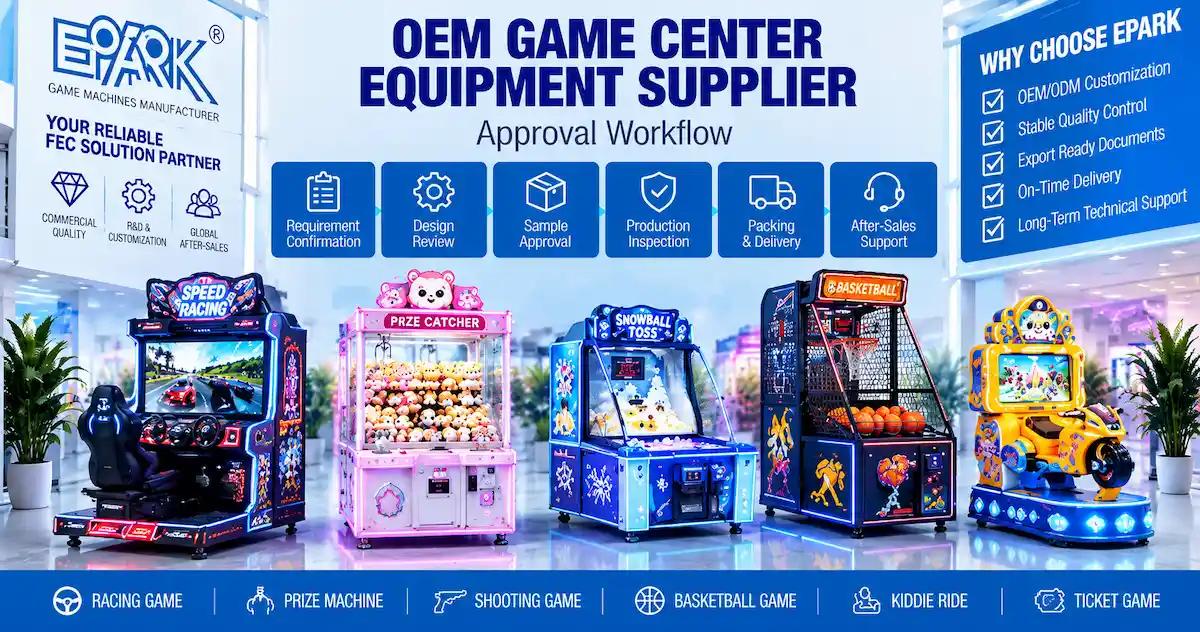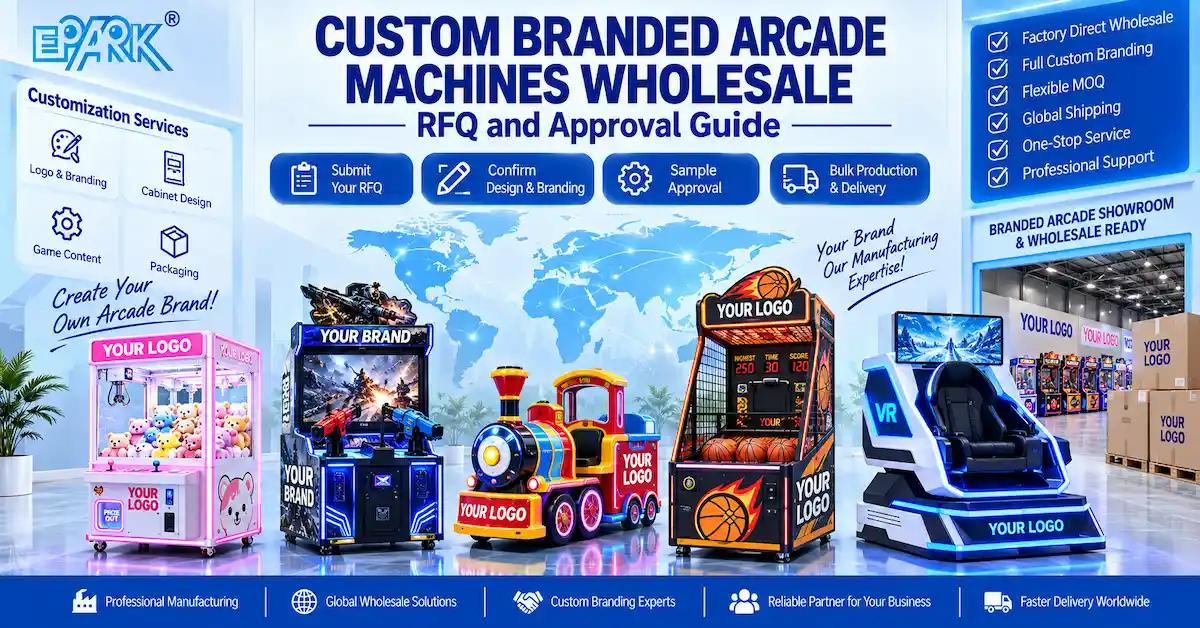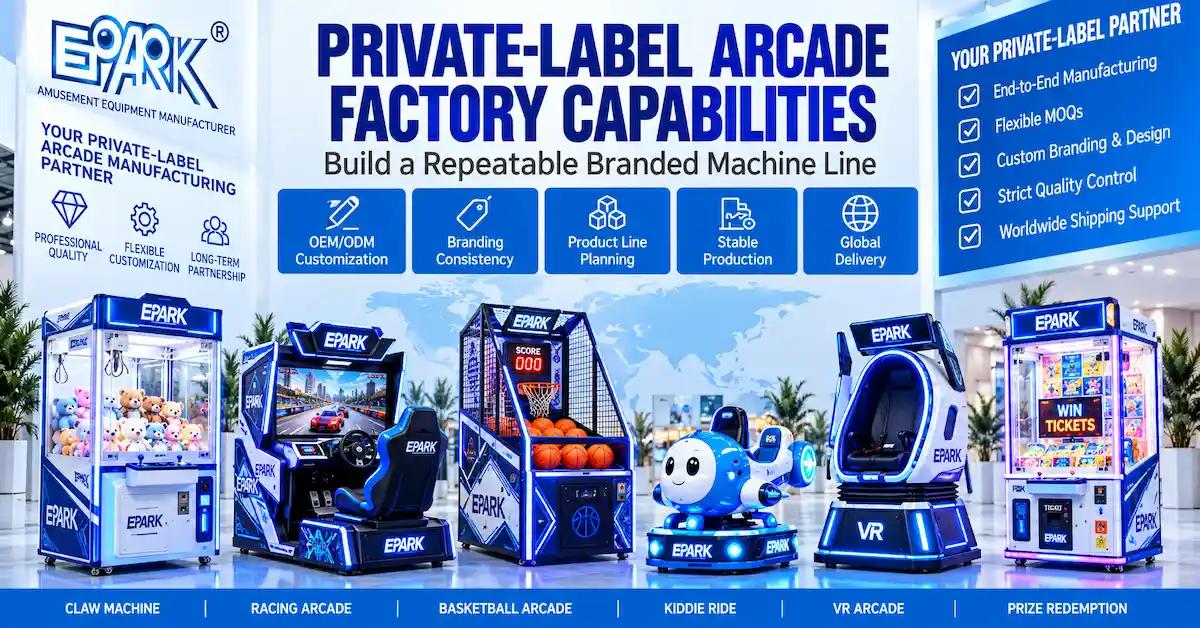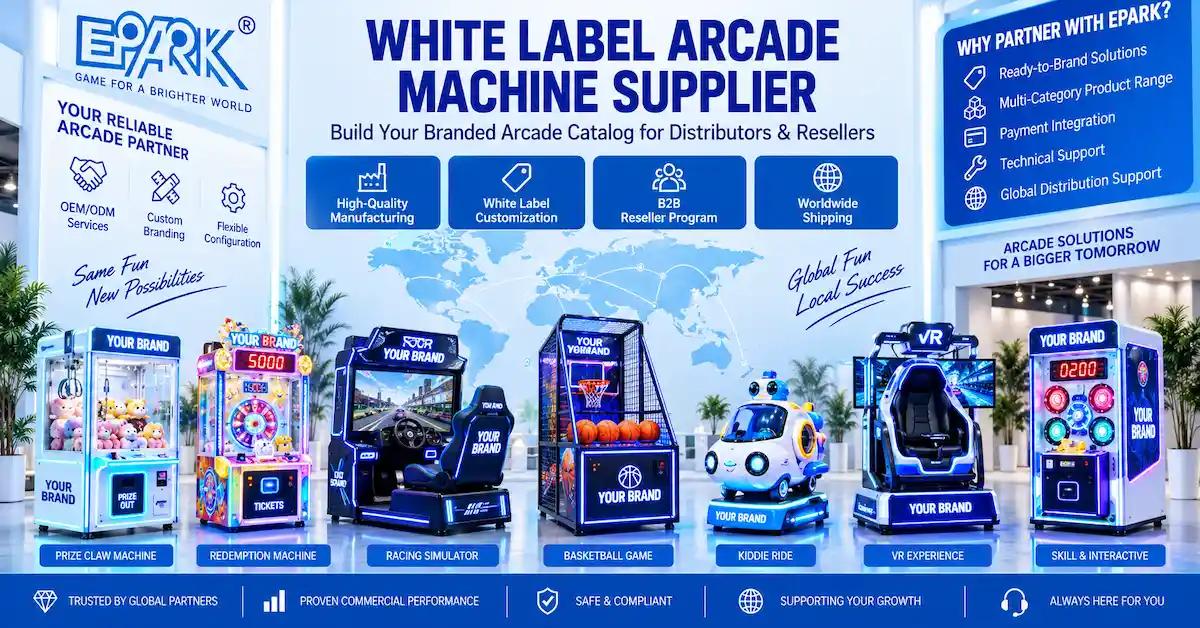


What should buyers specify when ordering custom branded arcade machines wholesale?
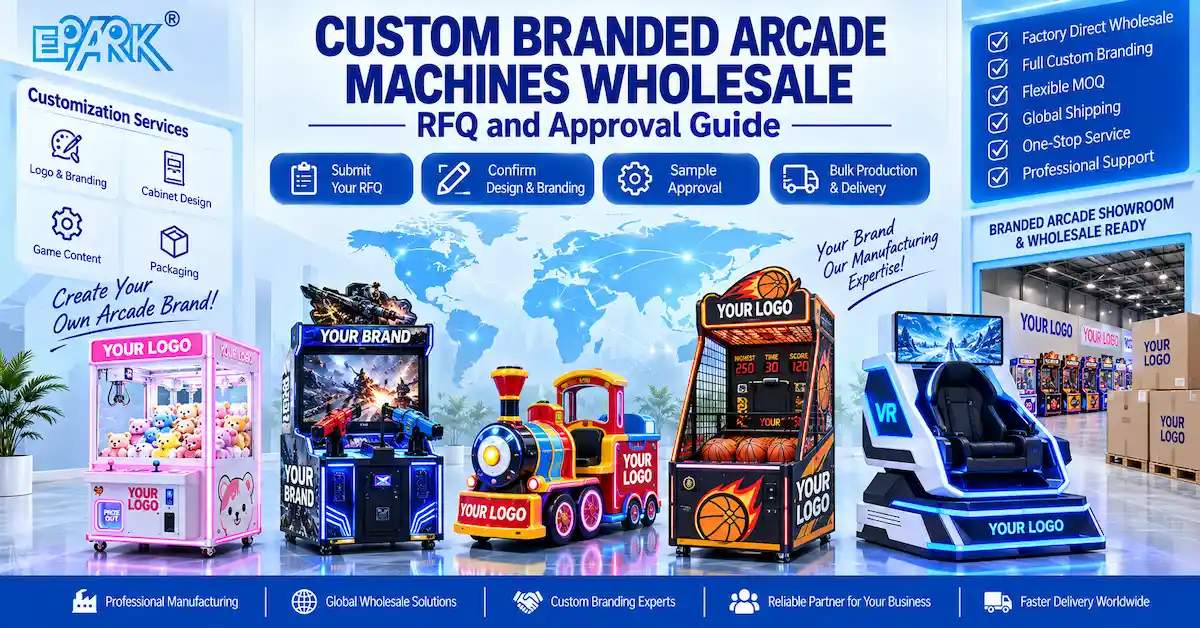
Custom branded arcade machines wholesale should be purchased as a controlled product line, not as standard cabinets with a logo added at the end. A serious wholesale order defines the brand system, cabinet and control changes, artwork, language, payment interface, packaging identity, sample approval, production revision, testing, spare parts, warranty and repeat-order rules. The buyer's goal is not simply to make the first shipment look branded; it is to make the next shipment match the approved commercial product.
This is an RFQ-focused question for arcade distributors, FEC brands, regional wholesalers, retail entertainment chains and operators building a recognizable equipment range. It is different from a general private-label capability overview. The useful output is a model-level specification and approval process that protects brand consistency when quantities, destinations, cabinet families and production batches change.
Define what “custom branded” means in the RFQ
The phrase can describe several different products. A logo-only application may leave the cabinet, controls, game content and packaging standard. A configured branded unit may change colors, graphics, lighting, language, payment hardware or player arrangement. A deeper ODM project may alter the cabinet structure, user experience, software or system integration. These levels have different engineering effort, sample risk, MOQ, lead time and ownership questions.
Start with a scope table and require the supplier to mark each field as standard, configured, custom, third-party or buyer-provided. Do not allow “OEM” to hide an unspecified deliverable. A wholesale buyer should know whether a quotation covers only the visible skin or the complete product experience behind it.
| Level | Typical changes | Approval risk |
|---|---|---|
| Brand application | Logo, artwork, colors, header marquee, labels and packaging marks | Color accuracy, placement, print finish and repeatability |
| Configured brand line | Selected controls, language, lighting, player setup, payment or software settings | Compatibility, service parts and revision control |
| ODM development | New cabinet, materially changed mechanics, game experience or system | Prototype, tooling, testing, IP ownership and acceptance criteria |
Use a separate line for each custom field. “Custom cabinet” is not enough if the buyer needs a specific screen position, access door, control panel height, payment reader, lighting color or service opening.
For custom branded arcade machines wholesale, the scope line is the point where a visual brand request becomes a manufacturable product requirement.
Build the brand system around the player experience
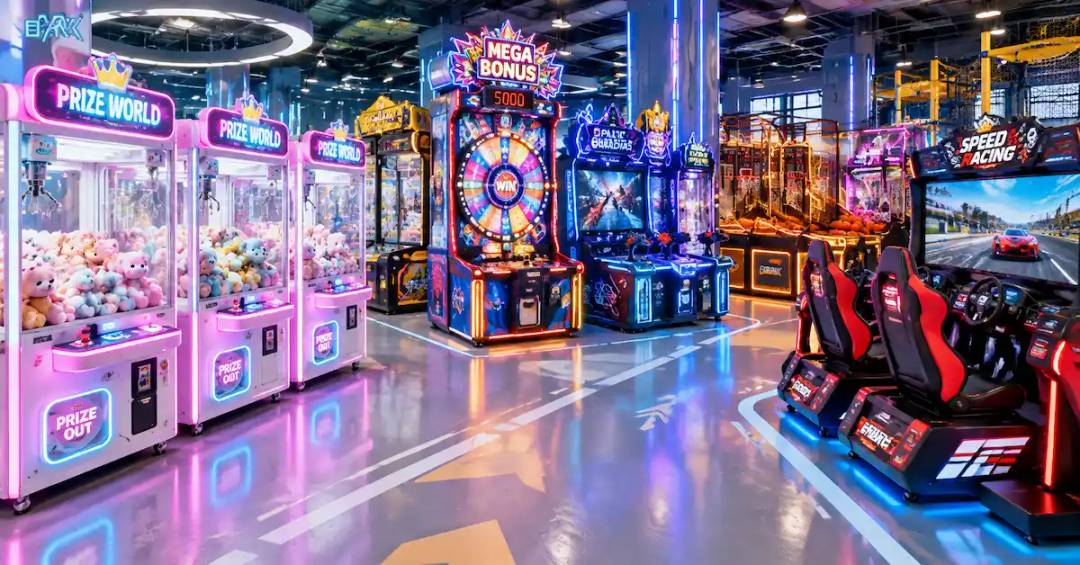
Branding is more than artwork on a side panel. Define how the player sees the product from the entrance, approaches the cabinet, starts a session, reads the display, hears the sound, receives a ticket or prize and recognizes the same brand at another venue. A visually consistent wholesale range can include different game categories while sharing a controlled language of color, logo placement, lighting, typography, start-up screen and packaging.
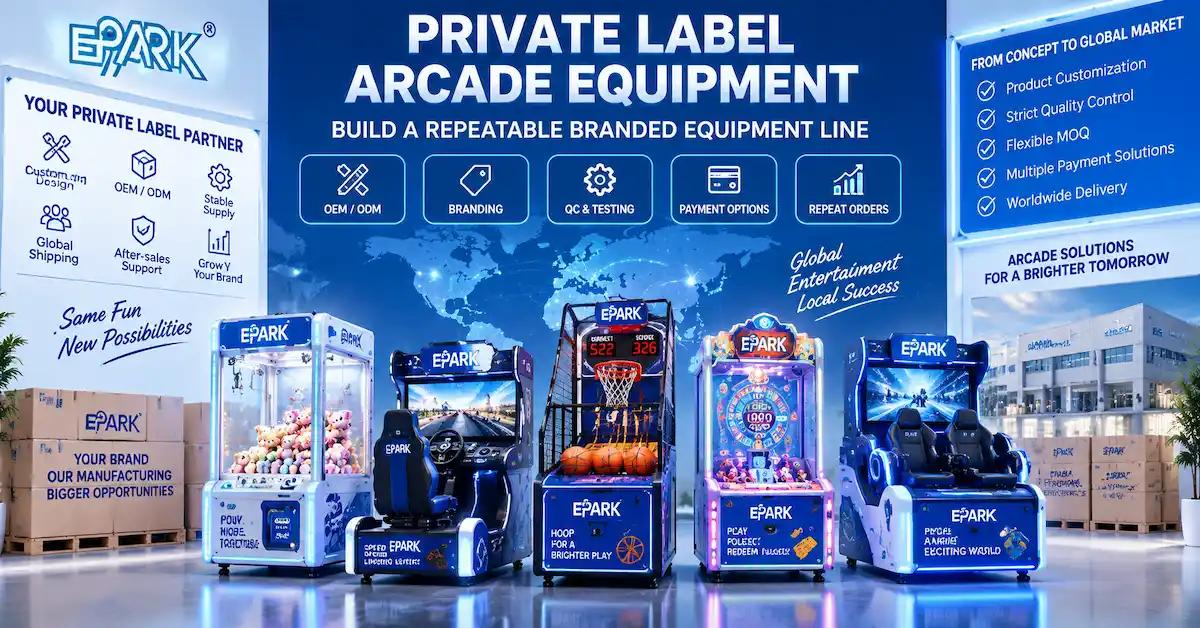
EPARK's public product information describes logo printing, cabinet graphics, header marquees, color themes, lighting styles and branding integration. Ask the supplier to convert those options into an artwork map for each model. Include safe areas, bleed, print method, visible dimensions, light diffusion, warning labels, language and approval owner. If a model uses a transparent prize window, display frame or illuminated header, specify how the artwork interacts with those surfaces.
Control the parts customers can touch
Controls, buttons, joysticks, seats, handles, screens and prize doors affect both brand perception and service. A graphic can look premium while a mismatched control panel makes the line feel improvised. Confirm the control color, button layout, player count, screen orientation, speaker position, access doors and replacement parts. Ask whether these items are standard or custom and whether the same component can be reordered for later batches.
For a multi-category line, create a shared component strategy where it makes sense. For example, the same logo treatment, button color, label hierarchy or service lock may appear across a claw machine, basketball cabinet and redemption game. Do not force identical components where the game requires different safety, ergonomics or maintenance. Consistency should serve the player and technician, not merely the photograph.
Prepare a sample that can control wholesale production
A sample is useful only when it becomes a reference. Decide whether the supplier will produce a visual mock-up, functional prototype, first article or saleable unit. For custom branded arcade machines wholesale, the buyer should approve the visible brand system and the functional configuration before volume production. A photograph may be enough for a simple logo update, but it is weak evidence for a changed cabinet, new control layout, payment interface or software behavior.
EPARK's public FAQ describes OEM/ODM services and supports questions about prototypes, but it does not publish one universal sample fee, MOQ or prototype schedule for every machine family. Put these fields in the RFQ. Ask which sample costs are refundable, which components transfer to production, what happens after a rejected sample and whether a sample can be retained as a golden reference.
Sample approval record
- Factory model reference, buyer SKU, cabinet family and revision number.
- Marked photographs or drawings showing logo, graphics, colors, lighting and labels.
- Screen, controls, speakers, payment interface, language and software configuration.
- Material or component schedule for the cabinet, display, PCB, wiring and user-facing parts.
- Functional test observations, open defects, correction owner and re-approval date.
- Packaging marks, manuals, serial format and spare-parts compatibility.
- Approval status: visual only, pilot, approved for mass production or approved with deviations.
“Looks good” is not a production release. The approval record should state what the factory is authorized to reproduce and which open items cannot be changed without written approval.
Choose a wholesale portfolio before customizing every cabinet
Brand owners often make the same mistake as venue buyers: they start with too many models. A wholesale range is easier to launch when the first group has clear commercial roles and shared service logic. Select a core model that can be quoted often, a supporting model that broadens the offer, and a project model only when the customer supplies enough site and audience information. Then decide which elements should be common across the range and which should remain category-specific.
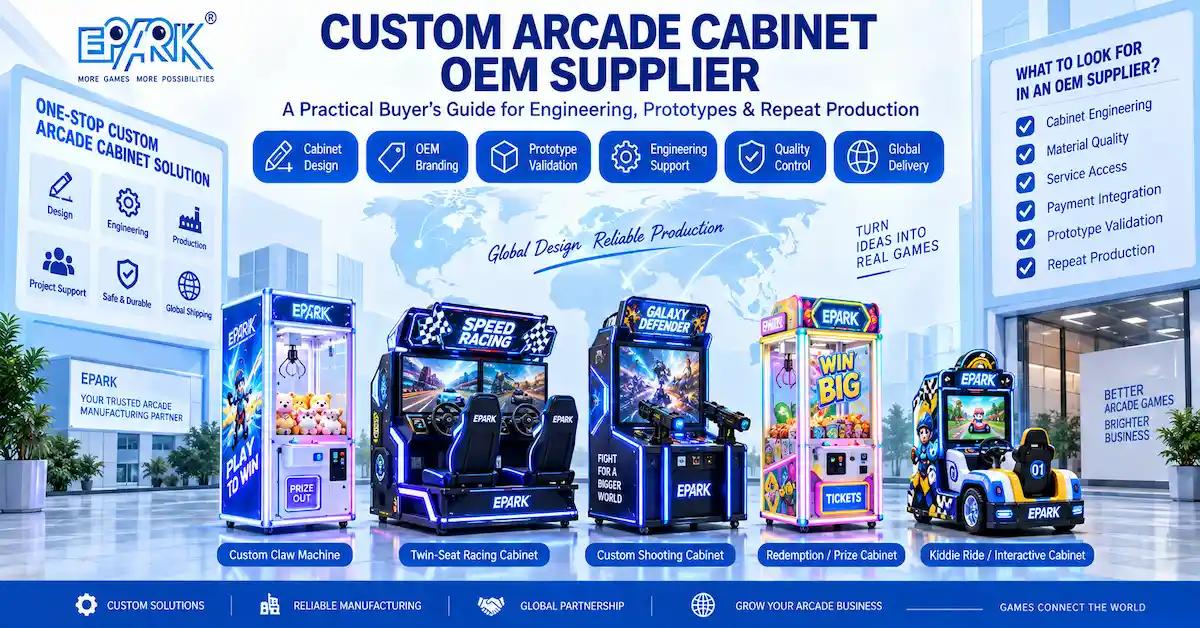
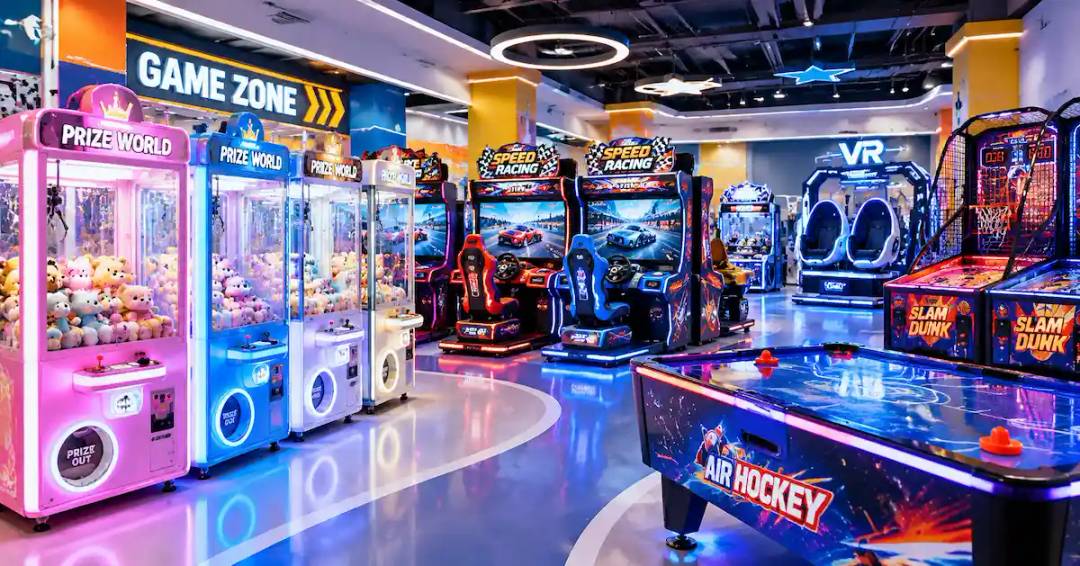
A claw or prize machine may carry the visual identity in a retail entertainment zone. A redemption or skill machine may add a family-oriented package. A basketball, shooting, rhythm or racing game may give the reseller a higher-visibility attraction. VR and motion products may require more technical and content support. The purpose of a portfolio table is not to promise a sales result; it is to make the commercial and service burden visible before artwork and samples are commissioned.
| Portfolio role | Selection question | Brand and service implication |
|---|---|---|
| Core seller | Can this model be quoted in repeatable quantities? | Needs the clearest documents, stable parts and fast approval path |
| Supporting model | Does it expand the range without a new service burden? | Should share compatible brand rules and support language where practical |
| Project model | Does the buyer have a venue and audience brief? | May require layout, engineering, content, payment and site-specific approval |
| Campaign model | Can the schedule support the campaign date? | Artwork lock, production start, inspection and freight must be separated |
This portfolio decision keeps a brand from spending its first MOQ and engineering budget on a catalog that the sales team cannot explain or support. It also gives the factory a more precise request for sample, quote and repeat-order planning.
Make the commercial quote comparable across suppliers
Custom wholesale quotes are often difficult to compare because one supplier prices a standard cabinet plus graphics while another prices a changed cabinet, software setup, packaging and sample. Normalize the offers before selecting a factory. Use the same model reference, dimensions, player arrangement, payment requirement, destination, artwork level, sample stage, quantity and acceptance test for each quote.
Ask every supplier to separate one-time and recurring costs. One-time costs may include engineering, artwork preparation, tooling, prototype or software configuration. Recurring costs may include the machine, packaging, spare parts, software or content, freight and support. If the supplier cannot separate those fields, the buyer cannot know whether a repeat order will be materially different from the launch order.
| Cost group | Request separately | Repeat-order question |
|---|---|---|
| One-time engineering | Drawings, cabinet changes, tooling, prototype and software setup | Which items carry forward and which are charged again? |
| Brand assets | Artwork adaptation, printing, labels, packaging and manuals | Is the approved file retained and reused without new setup? |
| Equipment | Model, configuration, controls, display, payment and accessories | Can the same revision and compatible parts be supplied? |
| Logistics | Packing, freight, insurance, customs, taxes and local delivery | Which assumptions change with destination or quantity? |
| Service | Training, spare parts, warranty route, software support and local labor | What evidence and response route apply after the first batch? |
This comparison protects the buyer from choosing a low headline price that excludes the work required to make the brand sellable. It also gives a supplier an opportunity to explain where its process is genuinely stronger rather than competing only on a cabinet number.
A disciplined custom branded arcade machines wholesale quote also gives the reseller a defensible basis for pricing the next batch, not just the launch order.
Protect artwork, revision and intellectual property control
Brand consistency fails when files are scattered between sales, design, production and the buyer. Create one controlled artwork package with file names, version, color references, fonts, logos, language, print dimensions, usage restrictions and approval status. Store the package alongside the technical drawing and component schedule. This makes it possible to identify which file was used for a later batch.
Discuss ownership and usage terms before engineering begins. The public EPARK pages describe OEM/ODM and branding support, but the reviewed material does not establish a universal rule for source files, tooling, game content, exclusivity or intellectual-property ownership. Ask who owns buyer-supplied artwork, who may reuse a cabinet design, who pays for tooling, whether a game or graphic is licensed, and what happens when the supplier changes a component.
| Asset | Record | Change trigger |
|---|---|---|
| Artwork | File name, version, color reference, language and approval | Brand update, print correction or cabinet change |
| Cabinet | Drawing, dimensions, player position, service access and material | Engineering, freight, safety or component substitution |
| Electronics | PCB, display, controls, wiring, power and payment configuration | Availability, performance, compliance or service change |
| Packaging | Carton marks, labels, manuals and serial-number format | Destination, brand refresh or logistics revision |
| Software | Language, boot screen, game settings, content and version | Bug fix, content change, licensing or payment integration |
A change request should identify the reason, affected SKUs, replacement specification, cost, lead-time effect, service impact and approval owner. This is how a brand prevents a silent substitution from becoming a different product in the market.
Confirm materials, manufacturing and testing by model
EPARK's public material mentions metal frames, ABS plastic, tempered glass, plywood or high-quality plywood, screens, controls, power supplies, speakers and LED lighting. These categories can help a buyer build a specification, but they do not establish one thickness, component brand or grade for every cabinet. Ask which materials apply to each branded model and which surfaces carry the artwork.
The published Design & Process workflow includes artwork printing and painting, PCB installation, wiring, LED setup, screen and control integration, final assembly and function testing. EPARK also states that each machine receives a 48-hour full-operation test before shipment, covering gameplay, electrical safety, lighting effects and mechanical durability. Request the test scope, serial-number link and result for the exact wholesale configuration, including payment, language, artwork and software revision.
Wholesale acceptance checklist
- Compare cabinet, artwork, colors, logos, labels and lighting with the approved reference.
- Verify display, controls, speakers, PCB, wiring, payment interface and software version.
- Run gameplay, score, ticket or prize, payment and linked-station functions included in the quote.
- Check electrical input, grounding, accessible edges, glass and moving parts as applicable.
- Record serial number, test duration, result, defect, correction and retest status.
- Photograph final artwork, labels, packing, carton marks and visible condition before loading.
Plan MOQ, lead time and repeat wholesale orders
For custom branded arcade machines wholesale, the commercial question is not only “what is the first-order price?” It is “what will the next batch cost in time, approval effort, spare parts and brand risk?” Ask for quantities at sample, pilot, initial commercial order and repeat order stages. EPARK's FAQ discusses small trial orders and large-scale production, but it does not publish one universal MOQ for every model and customization level.
Separate standard production from brand engineering. A standard cabinet with approved graphics may have a different schedule from a changed control panel or newly developed cabinet. The quote should state the design approval event, sample gate, production start, inspection window, packing release and shipping assumption. Public FAQ ranges are planning guidance, not a fixed delivery promise for every destination.
| Field | Ask the supplier | Why it matters to the brand |
|---|---|---|
| MOQ | Quantity by model, revision and customization level | Controls inventory exposure and brand launch size |
| Sample | Type, cost, approval gate and production reuse | Prevents mass production from starting against a visual guess |
| Lead time | Design start, production days, test, packing and freight assumptions | Protects launch promises and campaign dates |
| Repeat order | Reference retention, change notice and compatible parts | Keeps later venues visually and technically consistent |
| Exclusivity and IP | Artwork, tooling, cabinet, content and territory rights | Prevents an unplanned conflict with other channels |
Make branded packaging and after-sales part of the product
Wholesale customers experience the brand before installation. EPARK describes bubble wrap, thick foam, wooden frame or crate reinforcement and waterproof film for sea shipment. Ask whether cartons, labels, manuals, spare-parts packs and serial records carry the same brand system as the cabinet. Confirm the destination language, warning labels, shipping marks and documentation required by the reseller or venue.
After-sales consistency matters just as much. EPARK's public FAQ states a two-year warranty from shipment, replacement parts for manufacturing defects during the warranty period, and exclusions for consumables and misuse. It also discusses remote support, spare parts, software updates or bug fixes during the warranty period and paid parts after warranty. Confirm the exact order coverage, freight, local labor, third-party payment systems and evidence required for a claim.
Give the reseller a support pack that connects the buyer SKU to the factory model and serial range. Include manuals, compatible parts, cleaning guidance, basic fault isolation, escalation contacts and the approved configuration. A generic support email cannot replace a model-specific service record.
Send a copy-ready branded wholesale RFQ
Use this structure: “Please quote custom branded arcade machines wholesale for the attached model list and destination. For each SKU, separate standard, configured and custom scope. Provide factory reference, dimensions, material and component categories, screen and controls, language, payment interface, artwork requirements, packaging marks, packed dimensions, weight, MOQ, sample or first-article terms, production lead time, test scope, spare parts, warranty route and repeat-order conditions. Please identify artwork, cabinet, software, tooling, game content and packaging ownership, plus every exclusion.”
Attach brand guidelines, vector logos, color references, target venues, player age, country, voltage, quantity by stage, desired launch date and expected reorder pattern. Ask the factory to identify assumptions before the quote is accepted. If a visual asset, component or software element is not included, it should appear in the open-items list.
Frequently asked questions about branded arcade wholesale
What is the difference between branded and standard wholesale arcade machines?
Branded machines apply a controlled identity to the cabinet, player-facing elements, software or packaging. The scope may be logo-only, configured or fully developed. The buyer should specify the level because engineering effort, sample requirements, MOQ and ownership can change.
Does custom branding require a new cabinet?
No. Some orders change only artwork, colors, labels or packaging. Others change controls, dimensions, lighting, player arrangement or software. Ask the supplier to mark each change as standard, configured or custom and test the affected areas.
What should be approved before mass production?
Approve the model reference, revision, artwork, colors, cabinet, controls, display, language, payment interface, software, material categories, labels, packaging and acceptance tests. Record open deviations instead of approving a vague visual impression.
Does EPARK publish a universal MOQ for custom branded machines?
No universal MOQ for every model and customization level is established in the reviewed public material. Request MOQ for sample, pilot, initial order and repeat order by SKU and shipment method.
What materials can a buyer ask about?
EPARK publicly mentions metal frames, ABS plastic, tempered glass, plywood or high-quality plywood, screens, controls, power supplies, speakers and LED lighting. Confirm which materials and components apply to each branded model rather than generalizing across the catalog.
How can a reseller keep later batches consistent?
Retain a golden reference with the approved sample, artwork package, drawings, component schedule, software version, test points and packaging marks. Require written change control for substitutions or revisions and connect factory references to the reseller SKU.
What should the buyer confirm about IP and exclusivity?
Confirm ownership and permitted use of artwork, source files, tooling, cabinet design, game content, software, packaging and territory rights. EPARK's public pages describe OEM/ODM and branding support but do not define one universal ownership policy.
Conclusion
Custom branded arcade machines wholesale succeeds when the brand is treated as a controlled product system. The buyer must define the customization level, approve a usable sample, control artwork and revisions, verify materials and testing, separate MOQ and lead-time stages, protect packaging and service consistency, and document ownership before the first batch is released.
EPARK's public information provides a relevant manufacturing starting point: Guangzhou identity, multi-category commercial amusement equipment, OEM/ODM, branding and layout support, a described production workflow, 48-hour full-operation testing, export packaging, parts, warranty and technical service. Convert those capabilities into a model-level specification, approval record and repeat-order agreement before committing to a wholesale line.
Disclaimer
The information provided on this website is for general informational purposes only.
While EPARK Arcade Game Machine Manufacturer strives to ensure accuracy and reliability, no warranties—express or implied—are made regarding completeness, performance, or applicability.
Product specifications, designs, and features may vary depending on usage, customization, and customer requirements.
Buyers are responsible for verifying all technical details, compliance certifications, and suitability before procurement.
EPARK shall not be held liable for any direct, indirect, incidental, or consequential damages arising from the use of this website or its content, including but not limited to business losses, data errors, or equipment misuse.
For tailored solutions or further verification, please visit our Contact Us
Intellectual Property Notice
All articles, product images, videos, catalogs, software, and related materials published on this website are the intellectual property of EPARK, unless otherwise stated.
Unauthorized reproduction, distribution, modification, or commercial use of any content is strictly prohibited without prior written consent from EPARK.
EPARK reserves the right to take legal action against any unauthorized use, including but not limited to copyright infringement, misrepresentation, or unfair competition.
Trademarks
The name EPARK, the EPARK logo, and all related brand elements displayed on this website are registered trademarks or trade names of Guangzhou EPARK Electronic Technology Co., Ltd.
Other product names, company names, or logos mentioned on this site may be trademarks of their respective owners.
Unauthorized use of EPARK's trademarks for commercial purposes, including advertising, promotions, or product packaging, is strictly prohibited.
Governing Law
These terms are governed by the laws of the People's Republic of China.