
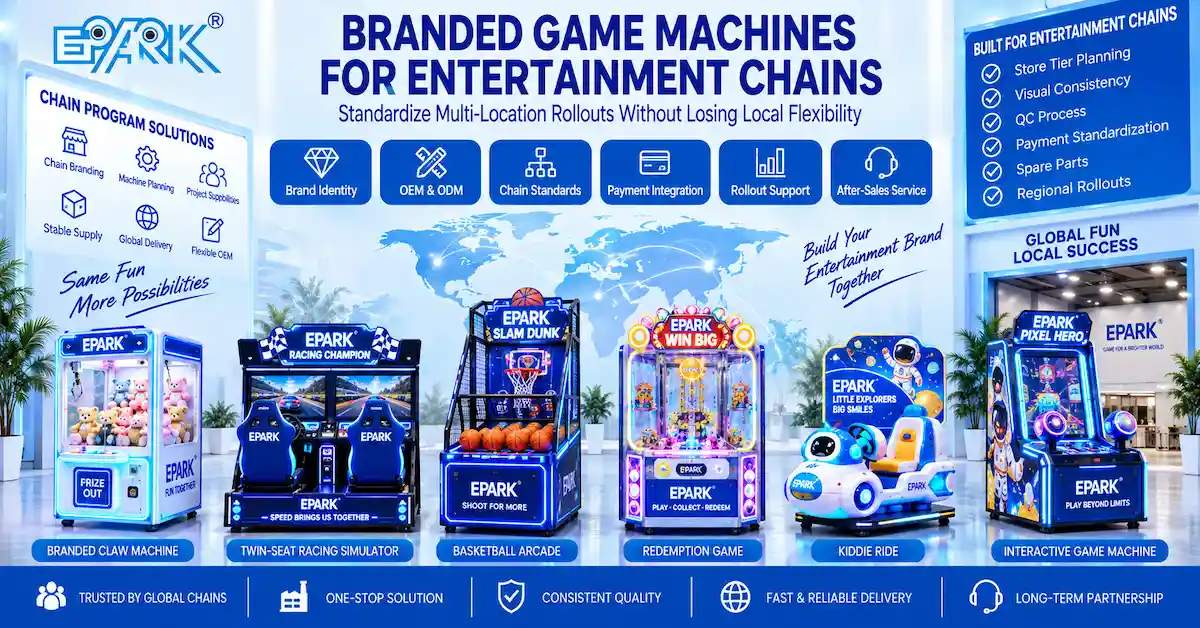
Why Entertainment Chains Need More Than Branded Arcade Cabinets
For a single arcade venue, customization can be treated as one project.
For an entertainment chain, it becomes an operating system.
The same machine may eventually appear in five, twenty, or fifty locations. Purchasing teams need repeatable specifications. Designers need a recognizable visual identity. Operations teams need familiar controls. Technicians need compatible spare parts. Regional managers may still need enough flexibility to adapt to different customer groups and venue sizes.
That is why branded game machines for entertainment chains should be planned around one central question:
Which parts of the equipment experience must remain identical across every location, and which parts can change locally?
If everything is customized independently, the chain loses consistency.
If everything is locked globally, individual venues may struggle to respond to local demand.
The objective is controlled flexibility.
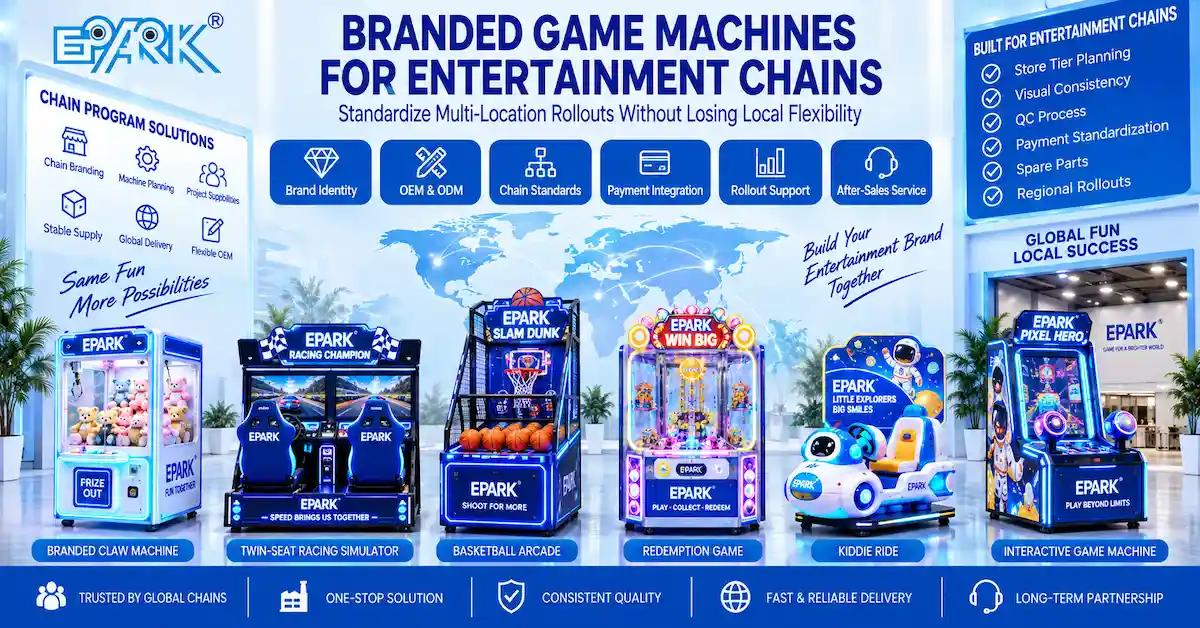
Entertainment-chain buyers can begin by reviewing the available EPARK commercial arcade equipment range and identifying proven platforms that can become standardized machine families instead of developing every machine from zero.
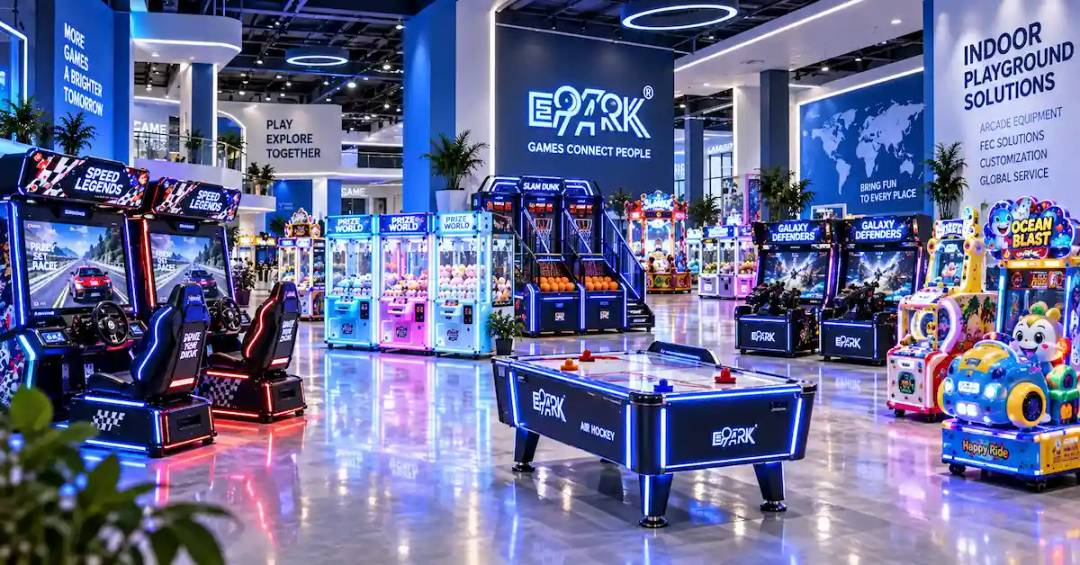
Define the Chain Standard Before Selecting Individual Machines
A chain should define its equipment rules before its purchasing department starts choosing models.
This prevents machine selection from becoming a series of disconnected decisions.
Separate the Standard Into Four Layers
Brand Layer
This covers what customers immediately recognize:
- Logo placement
- Cabinet color family
- Artwork style
- Header graphics
- Lighting language
- Product naming
- On-machine messaging
- Prize-zone visual identity
Technical Layer
This defines the operating configuration:
- Voltage and frequency
- Payment interface
- Controls
- Screen configuration
- Software or language where applicable
- Accessories
- Machine revision
Operational Layer
This covers how staff interact with the equipment:
- Startup procedures
- Service access
- Basic maintenance
- Machine identification
- Error escalation
- Spare-parts references
Commercial Layer
This defines why the machine belongs in the chain:
- Target players
- Store tier
- Machine role
- Expected placement
- Replacement strategy
- Rollout priority
Without these layers, branding can become purely decorative.
Build a Chain-Wide Game Machine Design System
A branded entertainment chain does not need every machine to look identical.
It needs them to look as though they belong to the same business.
Create Visual Rules Instead of Designing Each Cabinet Independently
A machine design system can define:
- Primary and secondary colors
- Logo clear space
- Typography
- Graphic style
- Light temperature or accent color
- Header format
- Side-panel structure
- Product naming system
This gives different machine categories a common visual language.
A racing simulator can still look like a racing simulator.
A claw machine can remain bright and prize-oriented.
A basketball game can retain its sports identity.
The shared design system connects them visually without forcing all cabinets into one shape.
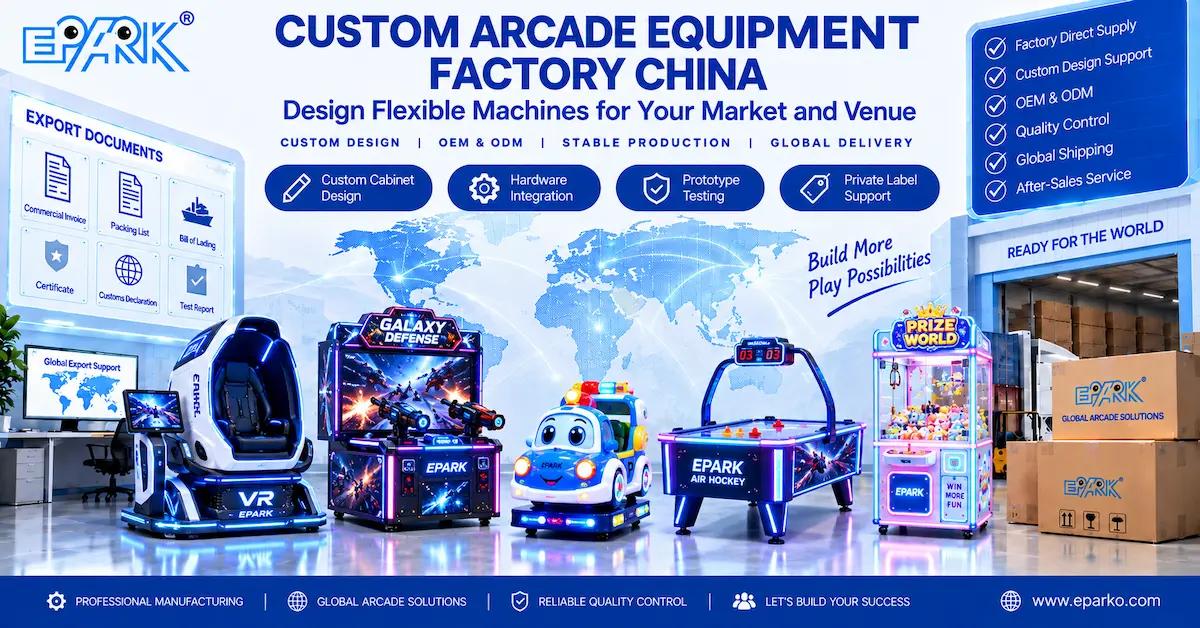
For deeper cabinet-level differentiation, the existing Custom Game Machine Design guide covers the relationship between visual identity, player experience, layout, and maintenance.
Do Not Fully Customize Every Machine
One of the easiest ways to make chain expansion expensive is to over-customize.
A branded machine does not automatically need a completely new cabinet.
| Development Level | Typical Scope | Suitable Chain Use |
|---|---|---|
| Standard Platform | Existing production model | Fast expansion |
| Branded OEM | Logo, artwork, colors | Most chain rollouts |
| Configured OEM | Branding + payment/language/options | Regional chain programs |
| Cabinet Customization | Modified exterior structure | Signature machine families |
| ODM Development | New structure/functionality | Strategic proprietary products |
Most chains can build a strong equipment identity using a mixture of existing platforms and controlled branding.
Deeper engineering should be reserved for machines where differentiation creates enough commercial value to justify additional development, validation, service documentation, and repeat-order control.
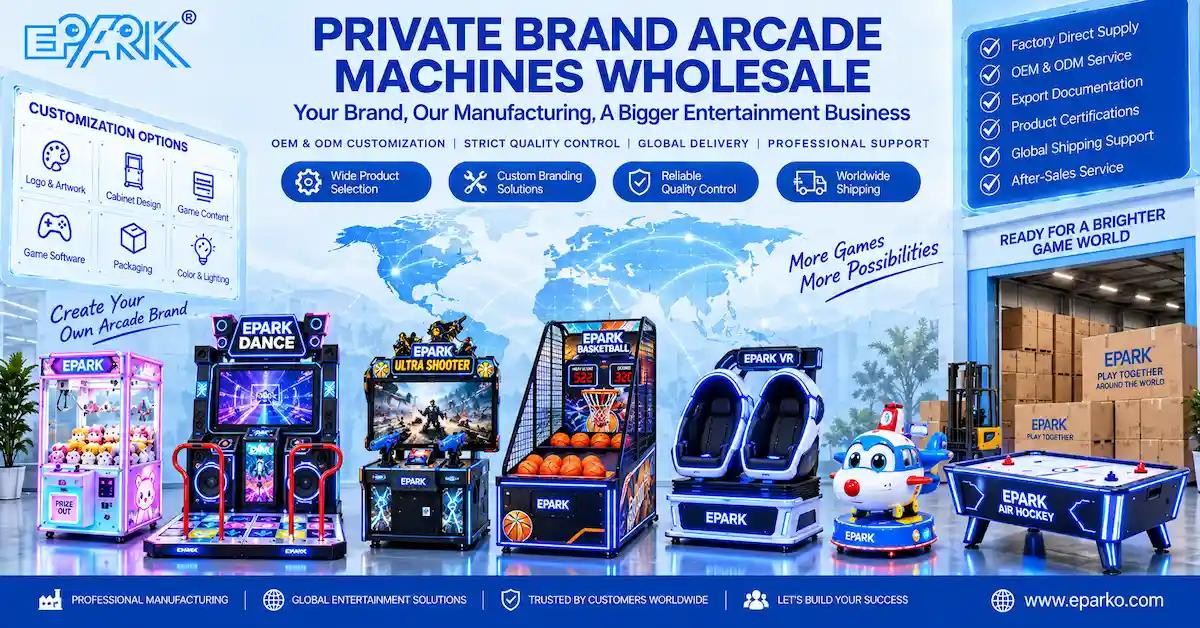
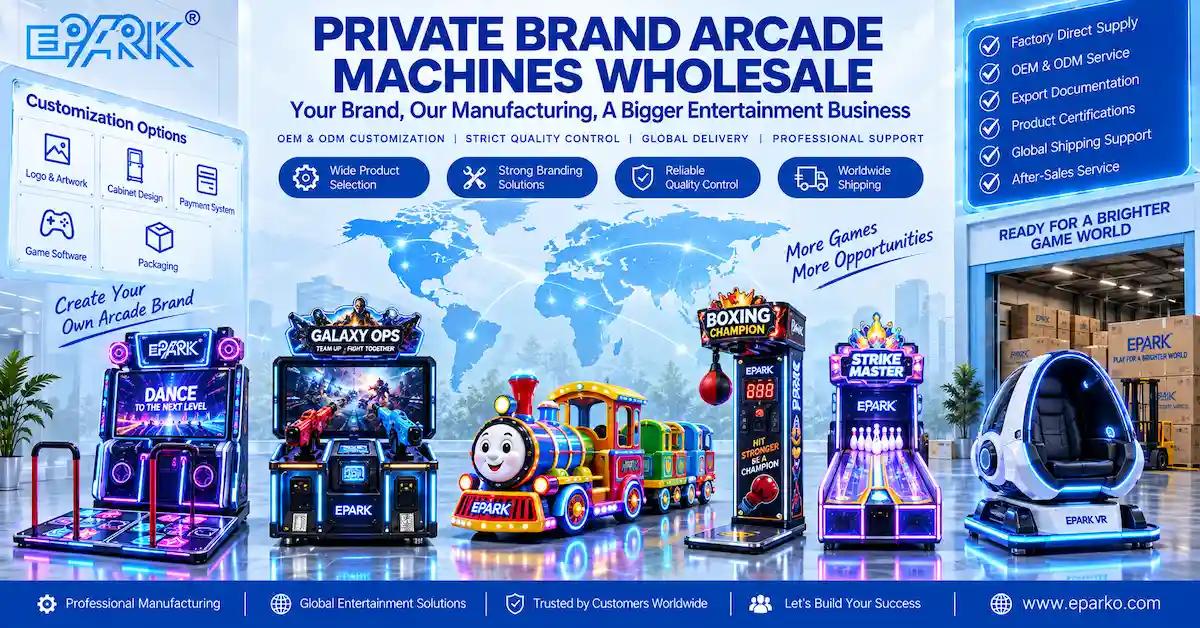
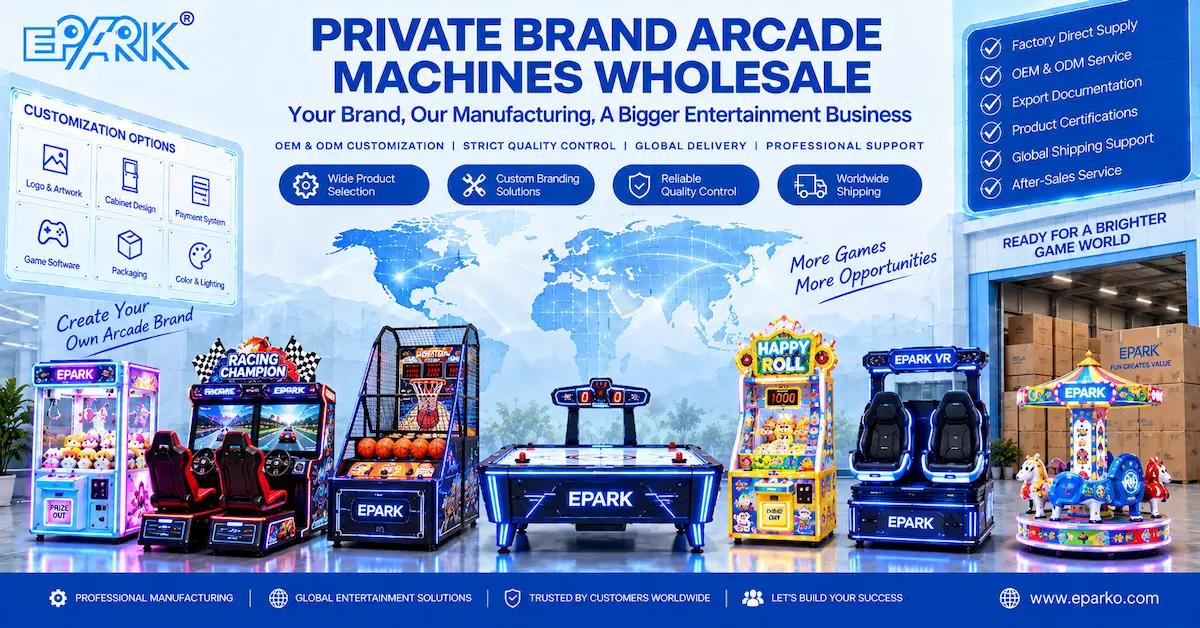
For buyers evaluating private-brand execution specifically, see the Private Brand Arcade Machines Wholesale guide.
Use Store Tiers Instead of Making Every Location Identical
Entertainment chains rarely operate identical locations.
One site may occupy a premium shopping mall anchor space.
Another may be a compact neighborhood entertainment venue.
A third may sit inside a cinema, resort, or mixed-use development.
Trying to install exactly the same equipment package everywhere can reduce space efficiency.
A stronger chain model uses store tiers.
| Store Tier | Typical Role | Equipment Strategy |
|---|---|---|
| Flagship | Brand showcase | Full product mix + signature attractions |
| Core Store | Main repeatable format | Standardized high-performing portfolio |
| Compact Store | Limited footprint | Space-efficient core machines |
| Satellite Zone | Small mall/cinema placement | High-visibility compact products |
| Market-Test Store | New region or concept | Controlled test configuration |
Flagship Locations
Flagships can carry:
- Premium VR
- Larger racing configurations
- Signature custom machines
- Expanded redemption areas
- Strong photo/brand features
Core Locations
Core stores should contain the most repeatable and operationally efficient machine mix.
Compact Locations
Compact sites need stricter decisions about footprint and commercial role.
The chain standard should therefore define which SKUs belong to each store tier.
Create an Approved Machine Architecture
Rather than thinking only in product categories, classify machines according to the role they play in the customer experience.
Hero Machines
High-visibility equipment that helps define the venue.
Examples can include premium racing, VR, or a signature branded attraction.
Revenue-Dense Machines
Products that use space efficiently and fit frequent commercial operation.
Claw and selected prize machines can play this role depending on the venue model.
Social Machines
Equipment designed around shared or competitive play:
- Basketball
- Air hockey
- Racing
- Shooting
- Sports games
Family Machines
Accessible products that widen the age range.
Flex Machines
A limited group of machines that regional teams can rotate according to local demand.
This structure creates a recognizable chain experience without forcing identical product counts everywhere.
Build a Golden Configuration for Every Approved Machine
One of the most useful tools for a multi-location chain is a Golden Configuration.
This is the reference specification against which every new batch is purchased and inspected.
A Golden Configuration Can Include
- Chain SKU
- Factory model
- Machine revision
- Approved artwork
- Cabinet colors
- Voltage
- Frequency
- Plug
- Payment configuration
- Language
- Software/version where relevant
- Controls
- Accessories
- Spare-parts references
- Packaging reference
The document should be specific enough that:
Purchasing, production, QC, operations, and service teams are all talking about the same machine.
“Same machine as before” is not enough.
Separate Global Standards From Local Flexibility
International entertainment chains often need local adaptation.
The solution is not uncontrolled customization.
It is a localization matrix.
| Configuration Area | Global Standard | Local Flexibility |
|---|---|---|
| Brand logo | Fixed | No |
| Core color system | Fixed | Limited |
| Machine SKU | Controlled | Approved substitutions |
| Payment system | Standard architecture | Market-specific hardware |
| Language | Brand-controlled | Local language permitted |
| Voltage / plug | Technical standard by market | Required |
| Prize assortment | Commercial guidelines | Local adaptation |
| Promotional messaging | Brand framework | Local campaigns |
| Game mix | Core percentage fixed | Flex allocation |
| Spare parts | Central references | Regional stock level |
Use a Core + Flex Model
For example, a chain can designate:
70–80% Core Portfolio
Standard machines that support a consistent chain identity.
20–30% Flex Portfolio
Machines chosen for local audience, venue size, or market trends.
The exact ratio should be determined by the chain itself rather than treated as a universal rule.
The principle matters more than the percentage:
protect the brand core while creating controlled market flexibility.
Payment Systems Need Chain-Level Governance
A multi-location chain should not treat payment hardware as a machine-by-machine decision.
If one store uses one reader system and the next store uses another, rollout and maintenance become more complicated.
Chain buyers should define:
- Approved payment platform
- Reader mounting requirements
- Communication interface
- Wiring responsibility
- Cabinet integration
- Testing procedure
- Spare reader strategy
- Local market exceptions
If several countries require different payment providers, the cabinet design can still follow a standardized integration framework.
This reduces engineering differences between markets.
Pilot the System Before Rolling Out to Every Location
A chain-wide program should not move directly from concept to mass rollout.
Use a pilot.
Stage 1 — Design Validation
Confirm appearance, branding, machine mix, and technical configuration.
Stage 2 — Operational Validation
Run the approved machines in a real venue.
Observe:
- Staff interaction
- Service access
- Payment integration
- Player response
- Layout fit
- Maintenance issues
Stage 3 — Specification Freeze
Record what needs to change.
Then create the Golden Configuration.
Stage 4 — Rollout Release
Only after the pilot configuration is approved should it become the standard for wider deployment.
This is especially important when the chain is introducing customized hardware or a new equipment family.
Create a Standard Rollout Pack for Every New Location
Once the pilot is complete, each new location should not reinvent the project.
Create a rollout pack.
Store Information
- Floor plan
- Ceiling height
- Entrances
- Electrical conditions
- Target opening date
Equipment Schedule
- Chain SKU
- Machine model
- Quantity
- Store tier
- Placement
Brand Package
- Artwork
- Machine labels
- Logo specifications
- Promotional graphics
Technical Package
- Electrical configuration
- Payment requirements
- Accessories
- Machine settings
Service Package
- Spare-parts starter kit
- Machine references
- Support contacts
- Maintenance records
For venue planning, EPARK's published Design & Process information describes 2D layout planning around space size, entrances, exits, audience, game preferences, and budget. Eparko
Standardize Machine Naming Across the Entire Chain
Equipment often accumulates several different names:
- Factory model
- Buyer product name
- Marketing name
- Internal operations nickname
- Technician reference
This can become confusing after several years.
Use one mapping system:
Chain SKU → Customer-Facing Name → Factory Model → Revision
Example:
RAC-02 → Turbo Racing → Factory Model XX → Rev B
The specific naming method can differ.
What matters is traceability.
If a technician in another country requests a part, the factory and chain service team should be able to identify the exact configuration.
Use Rollout Waves Instead of One Massive Deployment
Large entertainment chains can reduce rollout risk by deploying new equipment in waves.
Wave 1 — Pilot Sites
Limited locations used for validation.
Wave 2 — Priority Markets
Strong locations with experienced operating teams.
Wave 3 — Wider Chain Rollout
Deployment after operational issues have been corrected.
Wave 4 — Optimization
Updates based on chain-wide data and maintenance experience.
This structure allows the chain to correct problems before they are multiplied across dozens of locations.
Chain-Wide QC Should Verify Brand Consistency as Well as Function
Traditional arcade machine QC focuses mainly on whether the machine operates.
A branded chain requires another layer.
Functional QC
Depending on equipment type:
- Controls
- Display
- Audio
- Lighting
- Sensors
- Mechanical systems
- Payment device
- Score system
- Prize or ticket mechanism
Brand QC
Verify:
- Correct artwork
- Correct colors
- Logo placement
- Header design
- Machine naming
- Label placement
Configuration QC
Verify:
- Chain SKU
- Machine revision
- Electrical setup
- Payment setup
- Language
- Accessories
The acceptance standard should match the Golden Configuration.
Decide What Purchasing Should Be Centralized
Multi-location chains can use centralized purchasing without removing all local decision-making.
Central Purchasing Should Usually Control
- Approved supplier list
- Machine platforms
- Brand design
- Core equipment schedule
- Technical specifications
- Payment standards
- QC requirements
- Spare-parts references
Regional Teams Can Manage Approved Variables
Depending on the chain:
- Quantity adjustments
- Flex SKUs
- Prize mix
- Local promotional content
- Local installation scheduling
- Regional spare-parts quantities
This creates governance without making every operational decision dependent on headquarters.
Build Regional Spare-Parts Pools
Maintaining a separate full spare-parts inventory in every venue can be inefficient.
Chains can consider a layered service model.
Store-Level Parts
Small, commonly required components.
Regional Parts Pool
Parts used less frequently but needed quickly.
Central or Supplier Stock
Expensive or low-frequency parts.
Every component should still be linked to the appropriate machine model and revision.
The Arcade Equipment Maintenance Parts guide explores model-linked parts identification and maintenance planning for chains, FECs, and distributors in more detail.
Track the Arcade Fleet Like an Asset System
When the chain reaches multiple locations, machine information should not live only in email or spreadsheets maintained by individual managers.
Create a fleet record.
Useful fields include:
- Asset ID
- Chain SKU
- Factory model
- Revision
- Venue
- Installation date
- Payment configuration
- Warranty record
- Major service history
- Spare-parts usage
- Current status
This makes chain-wide equipment decisions easier.
Measure Consistency With Operational KPIs
Brand standardization should eventually produce measurable operational benefits.
Useful internal metrics can include:
Configuration Compliance
How many installed machines match the approved specification?
Uptime
How consistently are important machines available to players?
Parts Commonality
How many locations use compatible service components?
Rollout Variance
How much does each new store deviate from the approved equipment plan?
Technical Response
How quickly can chain teams identify the correct machine and component?
Refresh Performance
Which older machine families should be upgraded or replaced?
The purpose is not to create excessive reporting.
It is to make chain expansion more predictable.
Plan Equipment Refresh at the Portfolio Level
A mature entertainment chain should not replace machines only when individual units fail.
Create a lifecycle plan.
Maintain
Machine remains commercially and operationally useful.
Refresh Appearance
Update graphics, lighting, or visible branding while retaining the core platform.
Reconfigure
Adjust payment, software, accessories, or selected components.
Relocate
Move machines between flagship, core, or compact stores when commercial fit changes.
Replace
Retire equipment that no longer supports the chain experience or operating model.
This gives branded game machines a managed lifecycle rather than treating every purchase as permanent.
Avoid Brand Drift Between Locations
Brand drift occurs when locations gradually stop looking or operating like part of the same chain.
Common causes include:
- Local artwork changes
- Different replacement components
- Uncontrolled machine substitutions
- Different payment hardware
- Inconsistent lighting
- Different cabinet modifications
Use an Exception Approval Process
Local teams should be able to request changes.
But changes should be classified:
Temporary
Market-specific
Pilot
Permanent global revision
This allows the chain to learn from local innovation without losing control of the system.
Common Mistakes Entertainment Chains Make With Branded Machines
Mistake 1: Treating Branding as Logo Placement
A logo alone does not create a consistent chain experience.
Better: create a complete equipment design system.
Mistake 2: Customizing Every Location Independently
This increases complexity and brand drift.
Better: define fixed and flexible elements.
Mistake 3: Rolling Out Before Pilot Validation
Problems can be multiplied across many stores.
Better: pilot, correct, freeze, then scale.
Mistake 4: Allowing Technical Configurations to Drift
Machines that look identical may require different parts.
Better: use Golden Configurations and revision records.
Mistake 5: No Store-Tier Strategy
Small and flagship venues receive inappropriate machine mixes.
Better: build separate approved equipment schedules.
Mistake 6: No Lifecycle Plan
The portfolio gradually becomes inconsistent and outdated.
Better: manage machines as a chain-wide fleet.
What Should an Entertainment Chain Send a Manufacturer?
A useful branded chain brief should contain:
- Chain name and target markets
- Number of existing and planned locations
- Store tiers
- Target customer groups
- Core machine categories
- Flagship machine requirements
- Brand guidelines
- Approved colors
- Payment-system requirements
- Market-specific language requirements
- Electrical configuration by market
- Expected rollout volume
- Pilot quantity
- Spare-parts strategy
- Rollout schedule
- Required documentation
- Central vs regional purchasing structure
The manufacturer can then evaluate whether existing platforms, branded OEM, configured OEM, deeper customization, or a combination is appropriate.
Entertainment-chain buyers can review EPARK's arcade equipment portfolio and submit rollout requirements through EPARK Contact Us.
Frequently Asked Questions
What Are Branded Game Machines for Entertainment Chains?
They are commercial game machines configured to support a chain's visual identity, operating standards, technical requirements, and multi-location purchasing strategy. Branding may include appearance, product identity, payment configuration, labels, and standardized machine families.
Do All Chain Arcade Machines Need Custom Cabinets?
No. Many chain programs can use proven standard platforms with controlled branding and configuration. Full cabinet development should be reserved for cases where deeper differentiation creates sufficient commercial value.
How Can Entertainment Chains Keep Machines Consistent Across Locations?
Use an approved machine list, Golden Configuration, artwork revisions, payment standards, machine SKUs, QC checklists, and formal change control.
Should Every Chain Location Have the Same Game Mix?
Usually not. Store size, local audience, and market demand can vary. A core-plus-flex model allows the chain to protect its main identity while adapting selected machines.
What Is a Golden Configuration?
It is the approved reference specification for a machine, including model, revision, artwork, technical setup, payment system, accessories, and other controlled details used for repeat purchasing and QC.
How Should Chains Test New Branded Machines?
Begin with pilot locations. Validate appearance, operation, maintenance, customer fit, and technical configuration before releasing the product for broader rollout.
Can Different Countries Use Different Payment Systems?
Yes, when local requirements differ. The chain should still define a controlled integration framework so market-specific hardware does not create unnecessary cabinet and service variation.
How Should Spare Parts Be Managed Across a Chain?
Use store-level parts for frequent needs, regional pools for less common components, and centralized or supplier stock for low-frequency items. Parts should remain linked to machine revisions.
When Should Entertainment Chains Use ODM Development?
ODM makes the most sense when the chain needs substantial functional or structural differentiation that cannot be achieved efficiently through existing platforms or configured OEM.
How Can a Chain Start a Branded Machine Rollout?
Define store tiers, machine roles, brand standards, technical requirements, payment systems, pilot locations, rollout volumes, service strategy, and the level of local flexibility. Then discuss the program with a manufacturer that can support repeat production and multi-location deployment.
Conclusion
Successful branded game machines for entertainment chains are not created by applying the same logo to every cabinet. Chain-scale branding requires a controlled system connecting machine identity, store tiers, visual standards, technical configurations, payment integration, rollout approvals, QC, spare parts, and lifecycle management.
The most scalable approach is to standardize the elements that protect brand consistency and operational efficiency while deliberately leaving selected areas flexible for local markets. Entertainment groups planning multi-location expansion can review EPARK's commercial arcade equipment and contact EPARK with their chain format, target markets, store tiers, machine categories, branding requirements, pilot quantity, and rollout schedule.
Disclaimer
The information provided on this website is for general informational purposes only.
While EPARK Arcade Game Machine Manufacturer strives to ensure accuracy and reliability, no warranties—express or implied—are made regarding completeness, performance, or applicability.
Product specifications, designs, and features may vary depending on usage, customization, and customer requirements.
Buyers are responsible for verifying all technical details, compliance certifications, and suitability before procurement.
EPARK shall not be held liable for any direct, indirect, incidental, or consequential damages arising from the use of this website or its content, including but not limited to business losses, data errors, or equipment misuse.
For tailored solutions or further verification, please visit our Contact Us
Intellectual Property Notice
All articles, product images, videos, catalogs, software, and related materials published on this website are the intellectual property of EPARK, unless otherwise stated.
Unauthorized reproduction, distribution, modification, or commercial use of any content is strictly prohibited without prior written consent from EPARK.
EPARK reserves the right to take legal action against any unauthorized use, including but not limited to copyright infringement, misrepresentation, or unfair competition.
Trademarks
The name EPARK, the EPARK logo, and all related brand elements displayed on this website are registered trademarks or trade names of Guangzhou EPARK Electronic Technology Co., Ltd.
Other product names, company names, or logos mentioned on this site may be trademarks of their respective owners.
Unauthorized use of EPARK's trademarks for commercial purposes, including advertising, promotions, or product packaging, is strictly prohibited.
Governing Law
These terms are governed by the laws of the People's Republic of China.