

How should a cinema specify arcade equipment around showtime queues?
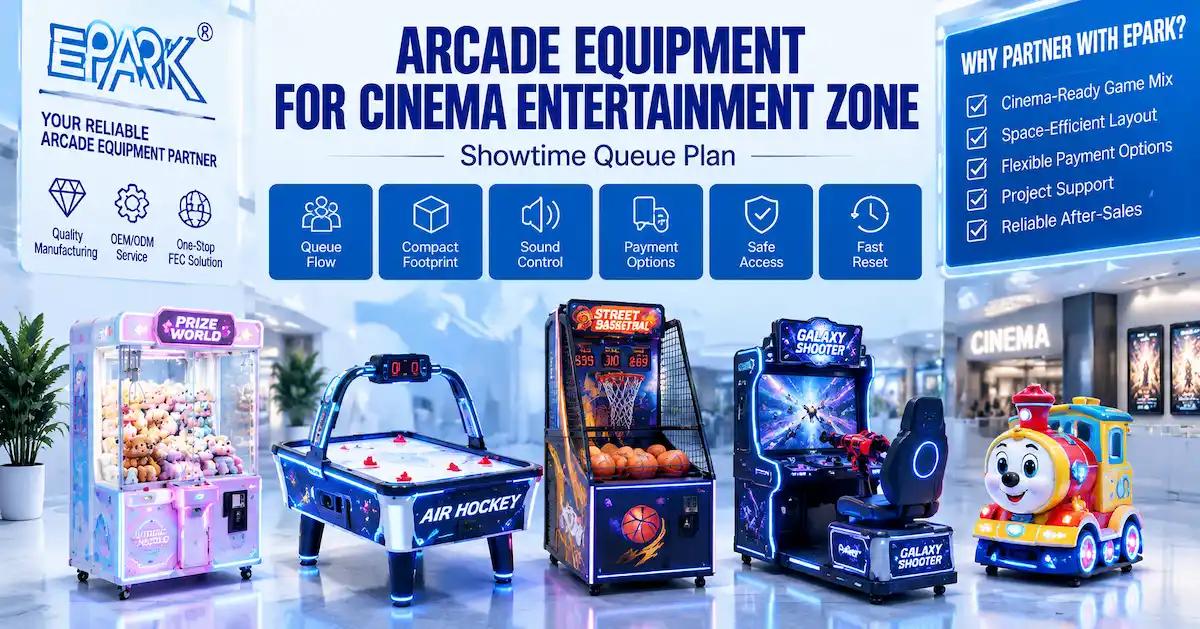
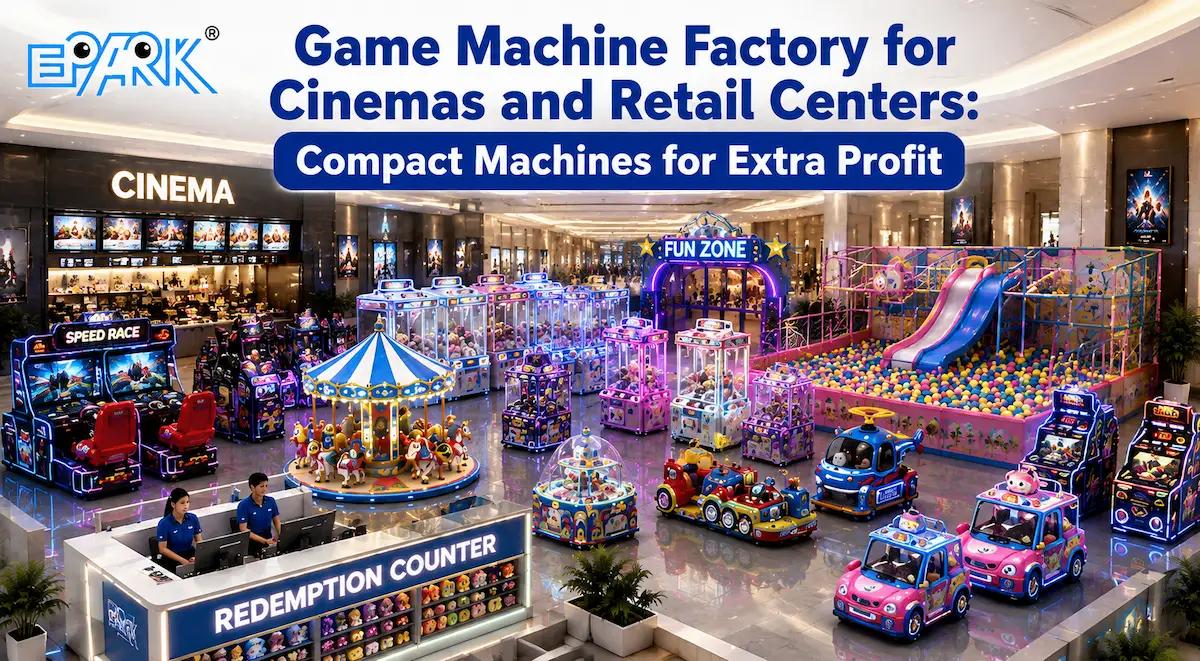
The right arcade equipment for cinema entertainment zone is selected for the cinema's arrival peaks, short waiting periods, family and group audiences, front-of-house visibility, sound limits and fast reset between sessions. A cinema zone should not be planned like a standalone arcade. It may need compact machines that work before a screening, attractions that use the lobby without blocking ticket queues, and prize or skill games that can be operated by a small team during evening peaks.
This is a commercial-investigation question for cinema chains, mall cinema operators, leisure contractors, FEC brands adding a movie component and distributors supplying retail entertainment spaces. The purchasing problem is how to turn waiting time and lobby circulation into a managed entertainment offer without compromising fire paths, concession queues, screen schedules, noise control or staff workload. The useful output is a cinema-specific equipment and operations brief, not a generic arcade catalog.
Guangzhou EPARK Electronic Technology Co., Ltd. describes a Guangzhou manufacturing and project-support base for commercial amusement equipment used in arcades, FECs, malls and cinema-related spaces. For this brief, the useful capabilities are the published range of compact and interactive machines, payment or redemption options, layout support, export preparation, installation guidance, training and after-sales service. Suitability depends on the cinema's showtime rhythm and staff operating model.
Operating note: Prepared by the EPARK Editorial Team from public About Us, Design & Process, Service and FAQ material reviewed on 2026-10-29. Confirm session settings, content, payment scope, local duties and handover ownership in the cinema's written order file.
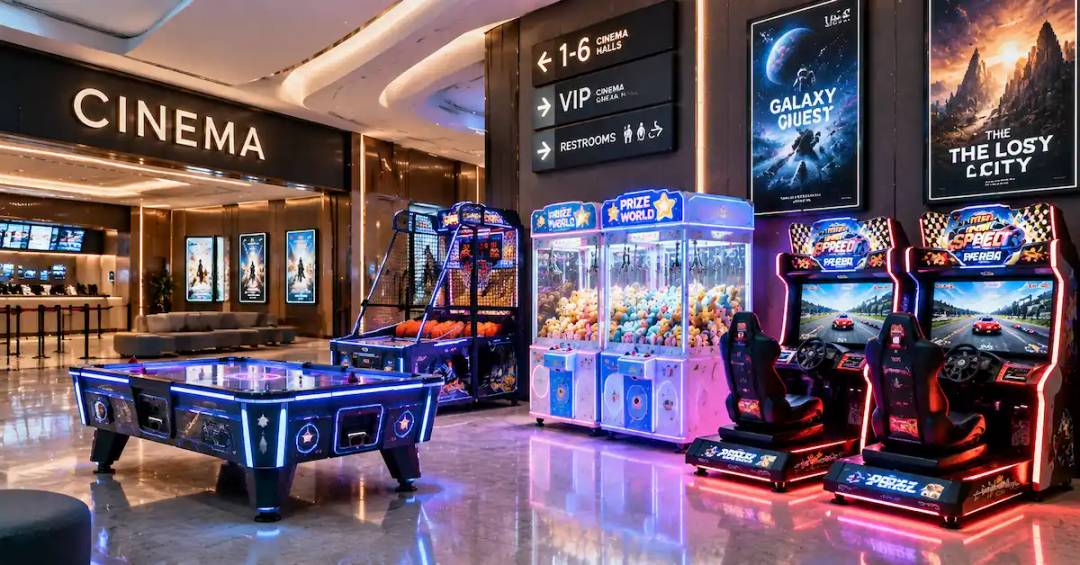
Start with the cinema schedule and lobby behavior
A cinema entertainment zone has time-based demand. Arrival peaks occur before popular screenings, family sessions, school holidays and weekend evenings. During a film, the lobby may quiet down; at release time, it may fill quickly. The brief should therefore include screen count, showtime pattern, ticketing and concession locations, average dwell time, queue widths, emergency exits, accessible routes, cleaning windows, staffing and security coverage.
EPARK's public project process asks for a floor plan, entrances and exits, target audience, preferred game categories, budget and photographs or video. For a cinema, add the ticketing map, concession queue, auditorium doors, merchandise or birthday area, fire routes, lift route, delivery restrictions and sound policy. Identify whether the zone is inside the paid area, in the public mall lobby or in a separate entertainment room. That boundary changes payment, supervision and opening hours.
| Cinema input | What to document | Equipment effect |
|---|---|---|
| Showtime peaks | Arrival, intermission and exit patterns by day and film type | Favors quick-start games and queue-safe placement |
| Lobby layout | Ticketing, concessions, auditorium doors, exits and accessible routes | Sets footprint, aisle, queue and sightline limits |
| Operating boundary | Paid or public area, hours, supervision and security ownership | Changes payment, staffing, age guidance and closing procedure |
| Sound and light | Cinema sound policy, neighboring screens, brightness and signage rules | May favor quiet, directional or adjustable equipment |
| Audience | Families, teens, couples, groups, accessibility and age mix | Shapes controls, session length, supervision and game categories |
Do not assume that every cinema visitor is a player. Some people are waiting for a screening, some are escorting children, and some are moving quickly toward concessions or an auditorium. The equipment must work with those behaviors rather than forcing the lobby to operate like a dedicated arcade.
Choose equipment for short sessions and clear reset points
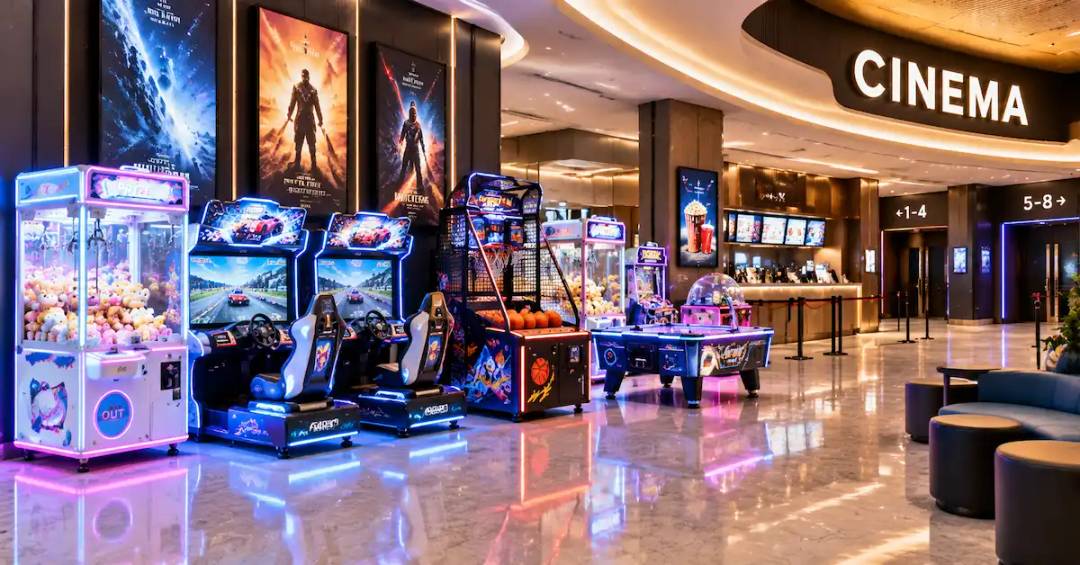
Cinema zones benefit from machines that explain themselves quickly and can be reset between users. Claw and prize machines can offer visible, self-contained interaction when prize replenishment is planned. Basketball, shooting, boxing and rhythm games can support short competitive sessions but require player clearance and sound review. Air hockey or other two-player formats may be attractive for groups but need queue and aisle control. VR and racing simulators can be strong attractions, but their footprint, content, cleaning, operator support and session duration need special planning.
EPARK's public product range includes these equipment families and notes cinema lobbies among possible application settings for some interactive products. This does not establish that every model is suitable for every cinema. Ask how long a session takes, how the game starts, whether staff intervention is required, how the machine is cleaned, what happens when a screening starts and how the zone is closed after the last show.
| Cinema role | Possible equipment | Operational question |
|---|---|---|
| Waiting-time game | Claw, prize or compact skill game | Can a visitor understand and finish it before the auditorium opens? |
| Group activity | Basketball, air hockey, racing or linked sports game | Where do players queue without blocking ticket or concession flow? |
| Premium attraction | VR or motion simulator | Who cleans, calibrates, supervises and resets the experience? |
| Family reward | Prize, redemption or child-focused machine | Where are prizes stored and how are age and supervision handled? |
The best cinema equipment mix may include fewer categories than a full FEC. The objective is to fit the cinema's peak moments and service capacity, not to fill every available corner with cabinets.
Protect cinema queues, exits and screen experience
The cinema's most valuable constraint is flow. Keep the equipment away from ticket scanners, concession queues, auditorium doors, emergency exits and accessible routes. Show where players stand, where parents wait, where prizes are carried and how staff reach the machine. A machine that looks compact from the front may need a larger operating envelope once players, queues and service doors are included.
Sound and light should be treated as design requirements. A shooting or rhythm game may be acceptable in a dedicated zone but disruptive near a screening entrance. A bright LED header may compete with wayfinding or affect the lobby atmosphere. Ask whether the selected models support volume, lighting or attract-mode settings and record the approved settings in the handover file.
Security and cleaning also affect placement. A cinema may have long periods with limited staff in the lobby or a rapid changeover between showtimes. Put high-value or prize-bearing equipment where staff can observe it. Avoid placing machines in a corner where spills, litter or blocked vents will go unnoticed. Include cleaning access, consumable storage and the daily opening and closing route.
| Placement check | Evidence | Failure mode |
|---|---|---|
| Ticket and concession flow | Plan with queues, player positions and clear aisle widths | Visitors cluster around machines and miss screening flow |
| Auditorium entrances | Sightline and queue review at peak arrival | Late arrivals, blocked doors or customer complaints |
| Sound and light | Approved volume, attract mode, lighting and neighbor review | Distraction or landlord restriction |
| Cleaning and security | Staff sightline, cleaning route, vents and consumables | Downtime, hygiene issues or unmanaged prize stock |
| Accessible path and exits | Landlord or code review of the final drawing | Redesign, inspection delay or unsafe circulation |
Specify utilities, payment and session management
Ask for model-level voltage, frequency, plug, rated input, estimated power, heat, network and sound data. EPARK's public materials mention coins, QR codes, cards, tickets, points, redemption and membership systems, as well as card or management system integration. The reviewed pages do not define a universal payment vendor, API, network protocol or reporting structure. A cinema buyer should therefore specify who supplies the reader, who configures it, who owns the network and who supports the system after opening.
Payment choice may depend on the cinema's existing customer journey. A public lobby may need a standalone card or QR flow. A paid entertainment zone may use the cinema's existing card, membership or ticket system. A prize machine may require a ticket or point process that staff can explain to families. Do not assume that “cashless ready” means integrated with the cinema's platform.
Session management is equally important. Define whether the machine is always available, restricted to operating hours, paused during cleaning, disabled during an evacuation or monitored by staff. For VR or motion products, add hygiene, calibration, content reset and supervision steps. For redemption or prize machines, add stock, ticket, token and counter procedures.
Confirm materials, process and cinema-ready testing
Cinema use changes the evidence needed at the surface. Ask whether the quoted model uses metal framing, ABS plastic, tempered glass, plywood, a particular screen, control set, speaker and LED arrangement; EPARK publicly mentions these categories but does not claim one universal build. Add the wipe-down method, touch points, vents, headset or seat-contact areas and access panels to the operating file.
EPARK's published production description covers artwork, painting, PCB and wiring assembly, LED setup, screen/control integration, final assembly and function testing. The stated 48-hour full-operation test covers gameplay, electrical safety, lighting effects and mechanical durability. A cinema acceptance run should extend that evidence with a pre-show session, pause and shutdown behavior, volume, attract mode, cleaning reset, payment result and queue clearance for the exact serial range.
Cinema commissioning checklist
- Run a start-to-finish player session during a realistic pre-show period.
- Check payment, tickets, points, prizes, membership or card integration included in the quote.
- Verify sound and lighting settings from the approved lobby review.
- Test queue behavior, accessible path, auditorium door clearance and staff sightline.
- Confirm cleaning, reset, closing and emergency shutdown procedures.
- Record serial numbers, settings, defects, corrective action and retest status.
Plan packing, delivery and installation around cinema hours
EPARK describes bubble wrap, thick foam, wooden frame or crate reinforcement and waterproof film for sea shipment. It also discusses customs, insurance, tracking and multi-batch shipping. Ask which packing method applies to each cabinet, whether packed dimensions fit the cinema's loading route and who books delivery outside customer hours.
Coordinate the installation with the cinema's construction and showtime plan. A delivery may need to happen before opening, after the last screening or during a scheduled closure. Confirm temporary storage, crate disposal, floor protection, lift access, unloading labor and the sequence for moving machines through public areas. The final placement should be checked against the approved plan after the machines are in position, not only before shipment.
| Stage | Supplier evidence | Cinema action |
|---|---|---|
| Release | Approved schedule, test record, serial list and packed data | Confirm delivery window, route, storage and receiving team |
| Transit | Invoice, packing list, labels, freight and agreed documents | Broker, unloading, damage record and temporary storage |
| Installation | Assembly guide, technical contact and configuration notes | Power, network, cleaning, staff and landlord readiness |
| Opening handover | Manuals, training, warranty route, parts and acceptance checklist | Operator sign-off, open issues and showtime operating procedure |
Define support for cinema staff, not only technicians
EPARK's public service information describes installation guidance, training, remote technical support, spare parts and after-sales service. The FAQ states a two-year warranty from shipment and replacement parts for manufacturing defects during the warranty period, with consumables and misuse excluded. Confirm the exact order coverage, freight, local labor, third-party payment systems and evidence required for claims.
A cinema support file should be practical for concession, guest-service and duty-manager teams. Include start-up and shutdown, cleaning, basic fault isolation, prize or ticket replenishment, payment reset, emergency stop or power isolation where applicable, escalation contacts and the machine serial number. The team should know whether a problem requires a simple reset, a technician, a payment-system owner or a factory warranty case.
Send a cinema-specific RFQ
Use this wording: “Please recommend arcade equipment for our cinema entertainment zone using the attached lobby plan, screen schedule, audience profile, destination and opening date. For each proposed model, provide footprint, player positions, power, voltage, sound and lighting assumptions, payment or ticket interface, session length, quantity, packed data, MOQ, lead time, test scope and price. Separate layout, systems, packing, freight, insurance, customs, installation, training, spare parts and taxes. Identify all queue, exit, cleaning, security, landlord and third-party system responsibilities.”
Ask the supplier to explain which models were rejected and why. Request the final plan with ticketing, concessions, auditorium doors, exits, accessible paths and player queues. Ask how the equipment can be paused, cleaned, reset or closed during showtime changes. The best proposal is the one the cinema team can operate after the installation crew leaves.
Map the cinema day before selecting the equipment mix
Cinema demand is time-based. The lobby may be quiet between shows, then become crowded when several auditoriums release at once. Build the equipment brief around at least four operating windows: opening and cleaning, pre-show arrival, the interval between showtimes, and late-evening closing. For each window, record customer density, staff coverage, cleaning activity, queue tolerance and which machines may be paused. This prevents a design that looks efficient on a quiet floor plan but fails during the ten minutes before a popular screening.
Ask the cinema team to mark the routes for ticket scanning, concessions, accessible seating, toilets, auditorium doors and emergency response. Add the route for prizes, cleaning carts, waste and replacement parts. The drawing should show where a parent waits while a child plays and where a group can gather without becoming an accidental queue across the lobby. If the zone is shared with a retail tenant or food outlet, include those sightlines in the sound and lighting review.
| Window | Question | Design consequence |
|---|---|---|
| Opening and cleaning | Who powers up, cleans and checks the machines? | Requires reachable surfaces, reset steps and a clear checklist |
| Pre-show arrival | Where do groups queue and how long can a session last? | Favors quick-to-understand play and visible staff oversight |
| Showtime change | Can the zone pause without blocking doors or queues? | Needs attract-mode, shutdown and crowd-control rules |
| Late closing | Who secures prizes, payments and machine power? | Requires stock control, reporting and end-of-day sign-off |
Specify content, hygiene and accessibility for repeat play
Entertainment equipment in a cinema is used by a changing audience, including children, families, groups and visitors who did not plan to play. The buyer should specify how a first-time visitor understands the controls, how the machine presents price or session information, and how staff explain a fault or refund. For VR and motion products, document headset cleaning, face-contact materials, hand-controller cleaning, calibration and the action required when a visitor feels uncomfortable. For prize machines, document refill frequency, visible prize rules and how staff handle a jam.
Accessibility should be reviewed at the selected model, not inferred from a product category. Check approach space, reach range, screen angle, audio alternatives, queue width and the ability to pause a session. Ask the supplier to identify which controls can be changed and which are fixed. The cinema's local code, landlord and accessibility consultant remain the authority; the supplier should provide the dimensions and configuration evidence needed for that review.
Evidence to place in the cinema operations file
- Model-specific dimensions, player positions, approach space and service clearance.
- Price, session, attract-mode, volume, lighting and shutdown settings approved by the cinema.
- Cleaning products or methods compatible with screens, controls, plastics, glass, seats and headsets.
- Payment, ticket, point, prize and refund instructions written for guest-service staff.
- Escalation route for a jam, payment error, safety concern, software fault or warranty claim.
Run a controlled soft opening before full promotion
Commissioning should include a quiet technical test and a realistic customer-flow trial. Invite cinema staff to operate the zone during a simulated pre-show surge. Observe whether players understand the start action, whether queues spill into ticket or concession routes, whether staff can reset machines while answering customer questions, and whether the sound or lights compete with wayfinding. Record each issue against the machine code and the responsible owner.
Do not use a soft opening to conceal missing documentation. Before promotion, the cinema should have the approved layout, serial list, test record, payment or ticket instructions, cleaning schedule, emergency procedure, warranty route and contact list. A supplier may describe installation guidance, remote support, training and spare parts, but the cinema still needs a local operating owner and a written decision on what happens outside the supplier's scope.
Keep the launch record practical: note the showtime, machine code, observed queue, staff action, fault and final decision. This creates a useful baseline for later changes to pricing, payment, content, lighting or placement. It also makes a future supplier conversation precise because the team can point to an operating condition rather than saying that the zone simply felt busy.
Frequently asked questions about cinema arcade equipment
What is arcade equipment for cinema entertainment zone projects?
It is equipment selected for cinema arrival peaks, lobby circulation, short waiting periods, family and group audiences, sound restrictions, cleaning and limited staff coverage. The right mix is usually more compact and operationally controlled than a full FEC.
Can cinema equipment be placed near auditorium doors?
Only after reviewing queues, exits, accessible paths, sound, lighting and peak arrival flow. A machine should not block a door, compete with wayfinding or create a cluster that delays screening access.
Are VR and racing machines suitable for cinema lobbies?
They may be suitable where the cinema can provide footprint, queue, power, cleaning, supervision, content and reset support. Confirm session length and operating responsibilities before selecting them.
What payment system should a cinema use?
It depends on whether the zone is public or paid, and whether the cinema already has cards, QR, membership, tickets or points. Put the reader, software, network, reporting and support owner in the quote. Public EPARK material describes these categories but not one universal integration.
What materials and testing does EPARK publish?
EPARK mentions metal frames, ABS plastic, tempered glass, plywood or high-quality plywood, screens, controls, power supplies, speakers and LED lighting. It describes a 48-hour full-operation test before shipment. Confirm the exact model, revision and cinema settings in the order evidence.
What should cinema staff receive at handover?
Provide an as-built equipment schedule, serial numbers, manuals, cleaning and reset procedures, payment or ticket instructions, warranty route, parts information, technical contacts and a list of open issues with owners and dates.
Conclusion
Choosing arcade equipment for cinema entertainment zone projects means designing around time, flow and staff reality. The buyer must connect the equipment mix to showtime peaks, ticket and concession queues, auditorium doors, sound, lighting, payment, cleaning, security, delivery access and handover support. A compact, well-documented plan is more valuable than a long catalog.
EPARK's published capabilities are useful only when translated into cinema operating controls. Before promotion, the cinema should hold a showtime-ready equipment schedule, session and pause rules, queue drawing, hygiene record, payment owner, commissioning log, staff guide and warranty route that identify the exact models installed.
Disclaimer
The information provided on this website is for general informational purposes only.
While EPARK Arcade Game Machine Manufacturer strives to ensure accuracy and reliability, no warranties—express or implied—are made regarding completeness, performance, or applicability.
Product specifications, designs, and features may vary depending on usage, customization, and customer requirements.
Buyers are responsible for verifying all technical details, compliance certifications, and suitability before procurement.
EPARK shall not be held liable for any direct, indirect, incidental, or consequential damages arising from the use of this website or its content, including but not limited to business losses, data errors, or equipment misuse.
For tailored solutions or further verification, please visit our Contact Us
Intellectual Property Notice
All articles, product images, videos, catalogs, software, and related materials published on this website are the intellectual property of EPARK, unless otherwise stated.
Unauthorized reproduction, distribution, modification, or commercial use of any content is strictly prohibited without prior written consent from EPARK.
EPARK reserves the right to take legal action against any unauthorized use, including but not limited to copyright infringement, misrepresentation, or unfair competition.
Trademarks
The name EPARK, the EPARK logo, and all related brand elements displayed on this website are registered trademarks or trade names of Guangzhou EPARK Electronic Technology Co., Ltd.
Other product names, company names, or logos mentioned on this site may be trademarks of their respective owners.
Unauthorized use of EPARK's trademarks for commercial purposes, including advertising, promotions, or product packaging, is strictly prohibited.
Governing Law
These terms are governed by the laws of the People's Republic of China.