

Introduction: Why Sport Arcade Machines Matter More Than Ever for Distributors
Over the past decade, sport arcade machines have become one of the most visible and aggressively marketed categories in the global amusement equipment industry. Basketball shooters, racing simulators, boxing machines, and interactive sports games are now common fixtures in shopping malls, family entertainment centers (FECs), arcades, and even temporary pop-up venues. For distributors, these machines are often promoted as “high-return,” “fast-payback,” and “traffic-driving” products that can significantly boost revenue per square meter.
However, behind the hype lies a more nuanced reality. While some operators report strong performance from sport arcade machines, others struggle with inconsistent play rates, higher maintenance costs, and slower-than-expected ROI. This discrepancy raises an important question for B2B buyers: are sport arcade machines truly overhyped, or are they simply misunderstood and misapplied?
For distributors making bulk purchasing decisions, the stakes are high. A single misjudged investment can result in inventory backlogs, dissatisfied clients, and strained cash flow. This article provides a comprehensive, data-driven analysis to help distributors evaluate sport arcade machines objectively, understand where they perform best, identify hidden risks, and make informed investment decisions grounded in real operational logic rather than market buzz.
What Are Sport Arcade Machines? Defining the Category Clearly
Sport arcade machines are amusement machines designed to simulate real-world sports or athletic activities through physical interaction, motion sensing, or mechanical input. Unlike traditional video arcade games, sport machines emphasize bodily movement, competition, and skill-based gameplay.
Common Types of Sport Arcade Machines
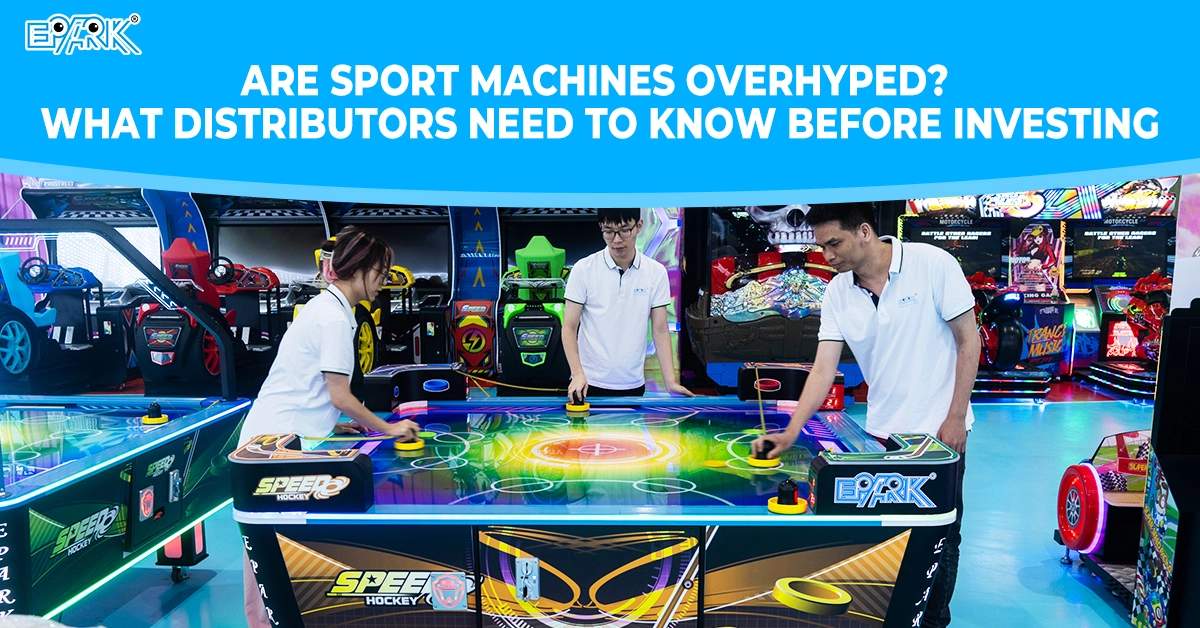
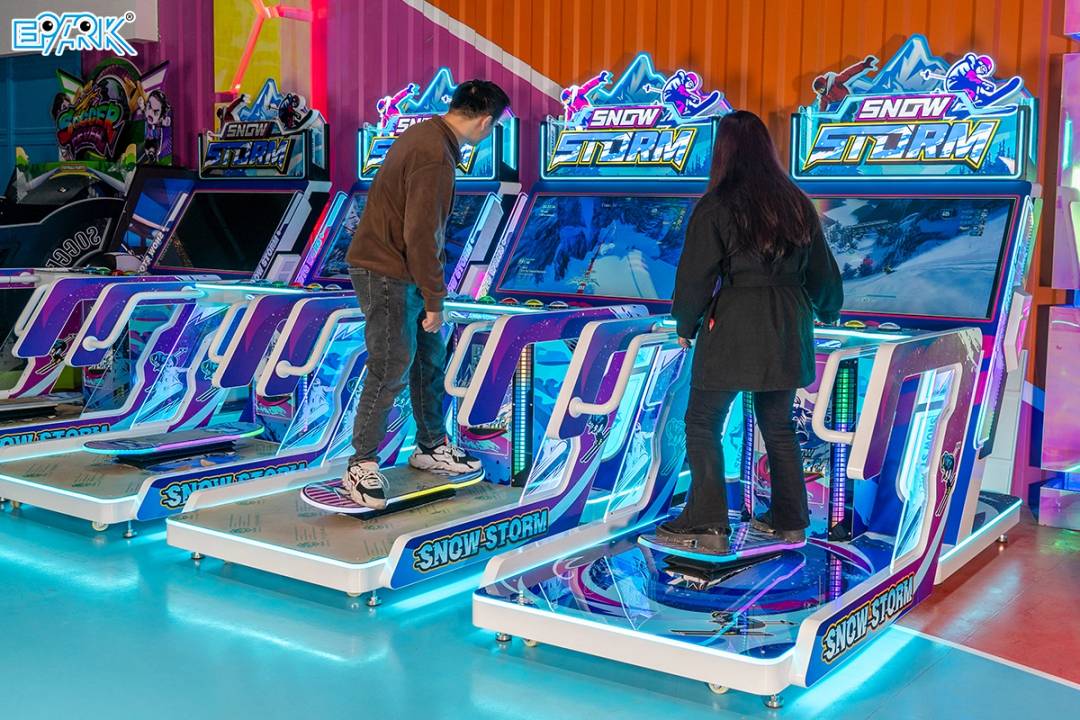
Sport arcade machines generally fall into several well-defined subcategories. Basketball shooting machines remain the most popular, typically featuring timed gameplay, automatic ball return systems, and adjustable difficulty levels. Racing and motorcycle simulators use steering wheels, pedals, and motion platforms to replicate real driving experiences. Boxing and punching machines measure impact force and appeal strongly to competitive players. Other categories include football kicking games, air hockey, rowing simulators, and emerging VR-based sport games.
Each type varies significantly in footprint, mechanical complexity, and target audience. Distributors should avoid treating sport machines as a single homogeneous category, as performance and maintenance requirements differ widely between subtypes.
Core Features That Drive Market Appeal
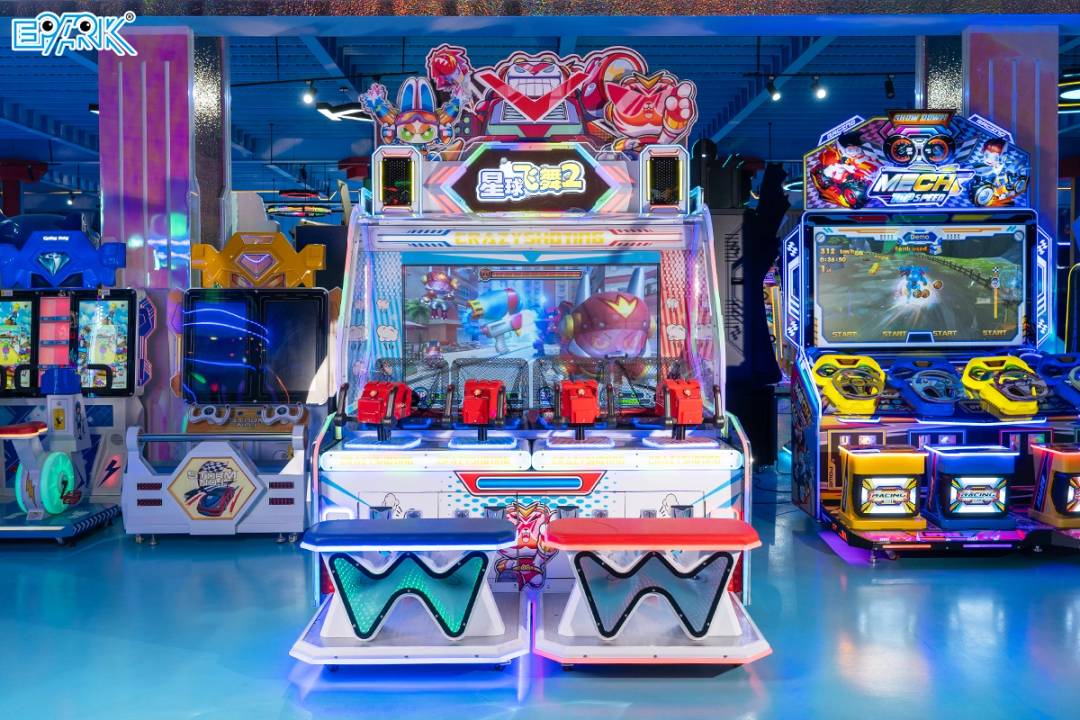
Sport arcade machines are visually striking and highly interactive. Bright LED lighting, large cabinets, motion platforms, and physical components create strong visual attraction on the arcade floor. Gameplay is typically intuitive, requiring little explanation, which lowers barriers to entry for first-time players. Additionally, competitive elements such as scoreboards, rankings, and time-based challenges encourage social interaction and repeat play.
These features make sport machines effective at attracting foot traffic, but attraction alone does not guarantee long-term profitability—a critical distinction distributors must understand.
Why Are Sport Arcade Machines So Popular in the Global Market?
The growing popularity of sport arcade machines is not accidental. Several macro and micro-level factors have contributed to their rapid adoption by operators and distributors worldwide.
Influence of Social Media and Visual Marketing
In the age of short-form video platforms, visually dynamic machines outperform static ones in marketing exposure. Sport arcade machines naturally lend themselves to video content: players sweating, competing, celebrating wins, and reacting emotionally. This “spectator appeal” amplifies their perceived success and fuels demand among new operators.
However, distributors should recognize that social media visibility often reflects short-term novelty rather than sustained revenue performance. A machine that performs well in viral videos may not maintain consistent daily income over several years.
Perceived Revenue Potential and Premium Pricing
Sport arcade machines typically command higher per-play pricing than claw machines or classic redemption games. In many markets, a single play can cost 2–3 times more than standard machines. This pricing model creates the perception of faster ROI and higher profit margins.
Yet higher pricing also increases customer expectations. If gameplay depth, durability, or novelty decline over time, players may disengage quickly, reducing repeat play rates. High price points magnify both success and failure.
Are Sport Arcade Machines Really Overhyped?
The question is not whether sport arcade machines can perform well—they clearly can—but whether market expectations are often misaligned with operational reality.
Marketing Claims vs. Real-World Performance
Manufacturers and resellers frequently promote sport machines with optimistic ROI claims, sometimes suggesting payback periods as short as three to six months. In practice, actual performance varies significantly depending on location, demographic profile, and operator management.
For example, a basketball machine in a youth-heavy shopping mall may achieve 100–150 plays per day, while the same model placed in a low-traffic family venue may struggle to reach 30 plays. Distributors must evaluate contextual performance rather than relying on generalized benchmarks.
Higher Wear and Maintenance Requirements
Sport arcade machines involve frequent physical interaction, impact forces, and mechanical movement. Compared to claw machines or ticket redemption games, they experience faster wear on components such as sensors, motors, belts, and mechanical joints.
Maintenance frequency directly affects operational uptime and long-term cost. Distributors should factor in spare part availability, technical support, and after-sales service quality when evaluating suppliers, as these elements significantly influence total cost of ownership.
Key Risks Distributors Must Evaluate Before Investing
Understanding potential risks is essential for distributors seeking sustainable growth rather than short-term sales volume.
Market Saturation and Homogenization
In many regions, especially mature markets, sport arcade machines have become ubiquitous. When multiple venues offer identical basketball or boxing machines, differentiation disappears. Players lose interest faster, and price competition intensifies.
Distributors should assess whether a market is underpenetrated or already saturated before recommending large-scale deployments. Novelty-driven products require careful rollout strategies to avoid diminishing returns.
Space Efficiency and Opportunity Cost
Sport arcade machines often occupy large footprints, ranging from 3 to 8 square meters per unit. In high-rent locations, floor space efficiency becomes a critical metric. A single sport machine may replace multiple claw or redemption machines that collectively generate higher total revenue.
Below is a simplified comparison table illustrating space efficiency considerations:
| Machine Type | Avg. Footprint (㎡) | Avg. Daily Plays | Revenue per ㎡ |
|---|---|---|---|
| Basketball Machine | 5.5 | 80 | Medium |
| Racing Simulator | 6.0 | 60 | Medium-Low |
| Claw Machine | 1.2 | 120 | High |
| Redemption Game | 2.0 | 150 | High |
This comparison highlights why sport machines should be part of a balanced mix rather than the sole focus of an arcade floor.
Audience and Demographic Mismatch
Sport arcade machines perform best with teenagers and young adults aged 12–35. Venues targeting younger children or family-only demographics may see limited engagement. Distributors must ensure alignment between machine type and venue audience profile.
Failure to consider demographic fit is one of the most common reasons sport machines underperform after installation.
When Sport Arcade Machines Are a Smart Investment
Despite the risks, sport arcade machines can be highly profitable when deployed strategically and supported by the right operational environment.
Ideal Venues and Use Cases
Large shopping malls, mixed-use entertainment complexes, sports-themed venues, and high-traffic urban arcades are ideal locations. These environments provide sufficient foot traffic, competitive energy, and demographic diversity to sustain interest.
Sport machines also perform well in venues that host events, tournaments, or group activities. Competitive formats increase repeat visitation and extend machine lifecycle relevance.
Portfolio-Based Investment Strategy
Rather than overinvesting in a single category, experienced distributors recommend bundling sport arcade machines with claw machines, redemption games, and prize-based attractions. This approach stabilizes revenue by balancing high-engagement, high-maintenance machines with lower-risk, high-frequency products.
A diversified product mix reduces dependency on any single machine type and improves overall client satisfaction.
How Distributors Can Choose the Right Sport Arcade Machines
Selecting the right machines and suppliers is more important than following market trends.
Key Manufacturer Evaluation Criteria
Reliable manufacturers should demonstrate proven export experience, consistent quality control systems, and compliance with international safety standards such as CE, RoHS, and ISO manufacturing certifications. Durable materials, reinforced mechanical structures, and tested components are essential for high-traffic environments.
Customization capability is another critical factor. Adjustable difficulty settings, branded cabinet designs, and localized software options allow distributors to tailor products to specific markets and client needs.
Critical Questions Before Placing Bulk Orders
Distributors should ask suppliers for real operational data rather than marketing promises. Key questions include average ROI timelines in comparable markets, availability of spare parts, warranty terms, and technical training support.
Understanding after-sales infrastructure is especially important, as delayed maintenance support can quickly erode an operator’s confidence and long-term partnership value.
Product Insight: Modern Sport Arcade Machines Designed for Sustainable Returns
The latest generation of sport arcade machines reflects a shift away from purely mechanical designs toward smarter, data-driven systems. Many modern machines now include modular components that simplify maintenance and reduce downtime. Software-based difficulty adjustment allows operators to optimize gameplay for different skill levels, increasing replay value.
Advanced models also integrate data tracking features that monitor play frequency, peak usage times, and revenue performance. These insights enable operators to fine-tune pricing strategies and machine placement, improving long-term profitability rather than relying on guesswork.
For distributors, promoting machines with these capabilities strengthens value propositions and supports more transparent ROI discussions with clients.
Conclusion: Are Sport Arcade Machines Overhyped or Simply Misunderstood?
Sport arcade machines are neither a guaranteed goldmine nor an overblown failure. Their performance depends entirely on context, strategy, and execution. The hype surrounding them often stems from selective success stories rather than comprehensive market analysis.
Distributors who approach sport machines with a data-driven mindset—evaluating venue fit, demographic alignment, space efficiency, and lifecycle costs—can unlock significant value. Those who chase trends without due diligence risk disappointing results.
Ultimately, sport arcade machines are best viewed as strategic components within a diversified arcade portfolio, not standalone solutions. Informed investment decisions consistently outperform impulsive ones.

Disclaimer
The information provided on this website is for general informational purposes only.
While EPARK Arcade Game Machine Manufacturer strives to ensure accuracy and reliability, no warranties—express or implied—are made regarding completeness, performance, or applicability.
Product specifications, designs, and features may vary depending on usage, customization, and customer requirements.
Buyers are responsible for verifying all technical details, compliance certifications, and suitability before procurement.
EPARK shall not be held liable for any direct, indirect, incidental, or consequential damages arising from the use of this website or its content, including but not limited to business losses, data errors, or equipment misuse.
For tailored solutions or further verification, please visit our Contact Us
Intellectual Property Notice
All articles, product images, videos, catalogs, software, and related materials published on this website are the intellectual property of EPARK, unless otherwise stated.
Unauthorized reproduction, distribution, modification, or commercial use of any content is strictly prohibited without prior written consent from EPARK.
EPARK reserves the right to take legal action against any unauthorized use, including but not limited to copyright infringement, misrepresentation, or unfair competition.
Trademarks
The name EPARK, the EPARK logo, and all related brand elements displayed on this website are registered trademarks or trade names of Guangzhou EPARK Electronic Technology Co., Ltd.
Other product names, company names, or logos mentioned on this site may be trademarks of their respective owners.
Unauthorized use of EPARK's trademarks for commercial purposes, including advertising, promotions, or product packaging, is strictly prohibited.
Governing Law
These terms are governed by the laws of the People's Republic of China.