
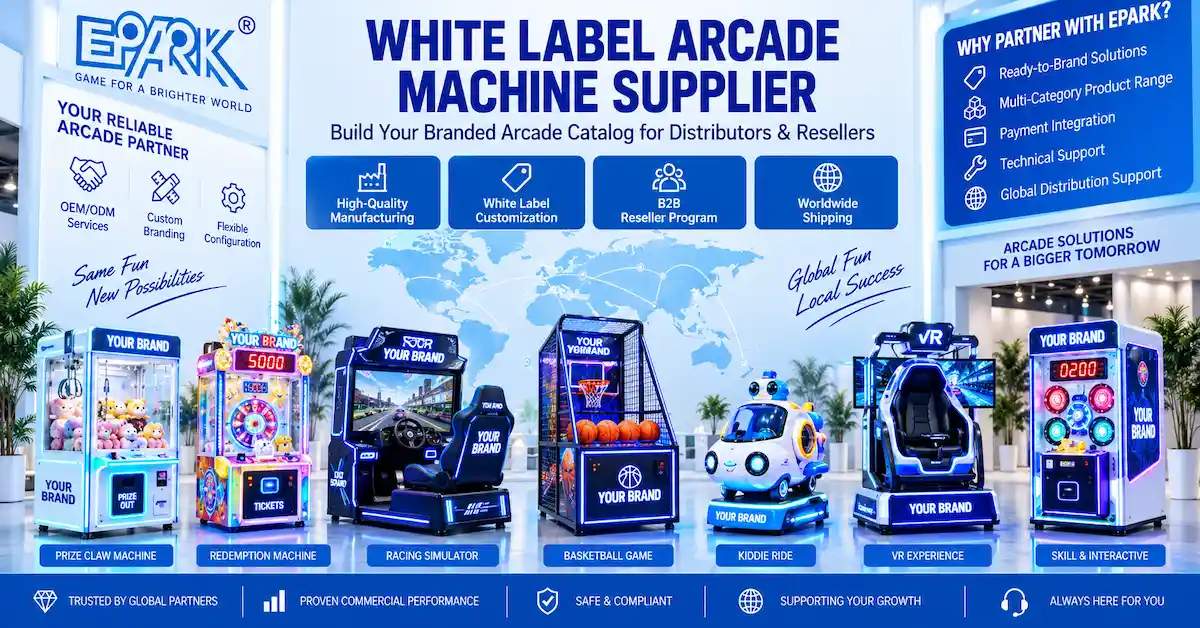
Direct answer: The right white label arcade machine supplier should provide more than a cabinet that can carry your logo. A commercially useful white-label program connects the buyer's brand with a defined factory model, approved machine configuration, artwork revision, payment setup, packaging, quality-control requirements, spare-parts information, and repeat-order records.
For distributors and resellers, the central procurement question is not simply whether the supplier offers “white label” service. It is whether the supplier can repeatedly manufacture the same approved commercial product while keeping the buyer's branding and technical requirements under control.
1. What Is a White Label Arcade Machine Supplier?
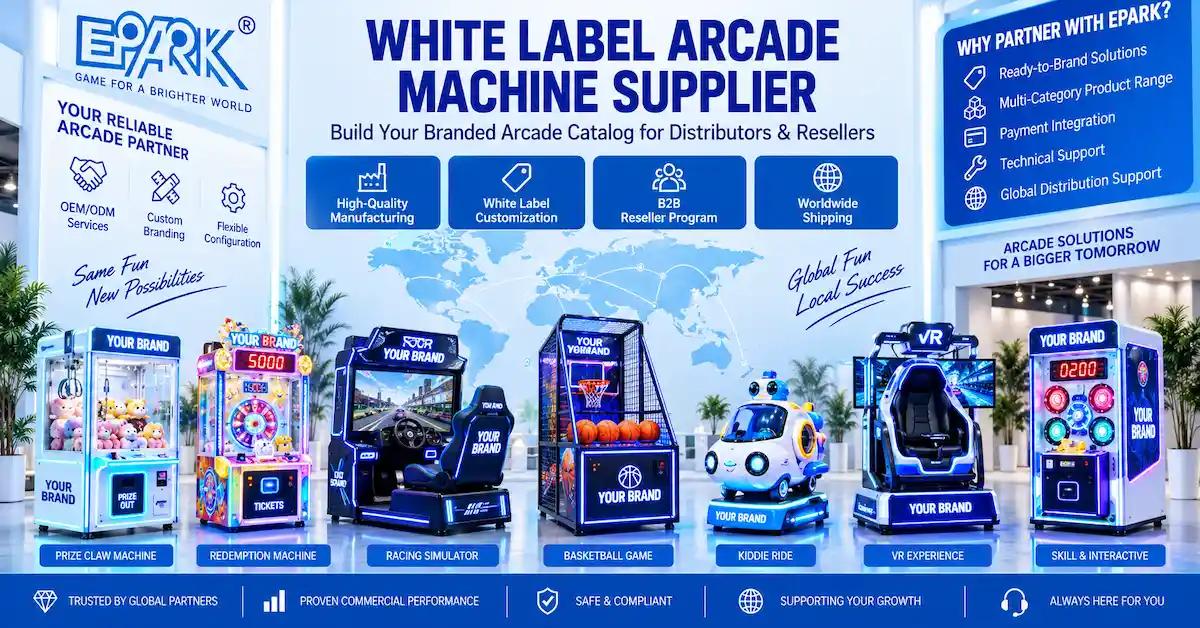
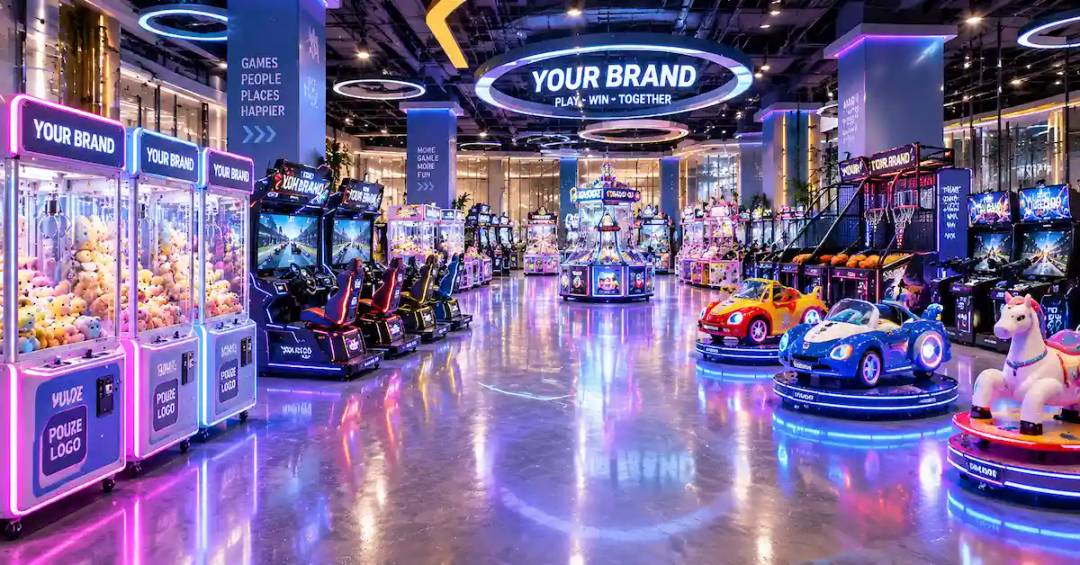
The term white label arcade machine supplier normally refers to a supplier that provides an existing or established arcade machine platform that can be presented under the buyer's own commercial identity. The exact scope varies between manufacturers, so buyers should define the actual deliverables instead of assuming that every supplier uses “white label” in the same way.
For a B2B buyer, white labeling is best understood as a controlled commercial layer placed over an established equipment platform. The machine may already have a production structure, electronics architecture, gameplay system, cabinet design, and service configuration. The buyer then defines the branding and selected market requirements that need to change.
This approach can be attractive because it avoids developing every machine from zero. A distributor can build a branded product range around established categories while directing its investment toward market positioning, customer acquisition, inventory, distribution, and after-sales support.
| White Label Element | What the Buyer Should Define | Why It Matters |
|---|---|---|
| Factory model | Exact machine or platform being purchased | Creates technical traceability |
| Buyer SKU | Customer-facing product code | Supports catalog and inventory control |
| Branding | Logo, colors, graphics, labels and other agreed elements | Creates a consistent market identity |
| Configuration | Controls, payment system, language, voltage and approved options | Prevents the wrong version from being produced |
| Packaging | Shipping package and buyer-facing identification | Improves receiving and reseller readiness |
| QC | Functional, cosmetic and configuration checks | Protects brand reputation |
| After-sales | Parts, manuals and technical support | Reduces service uncertainty |
The most important distinction is that white labeling reduces unnecessary product-development work; it should not reduce procurement discipline. A branded machine still needs an identifiable model, approved configuration, testing process, documentation, and repeat-order method.
2. White Label vs. Private Label vs. OEM vs. ODM
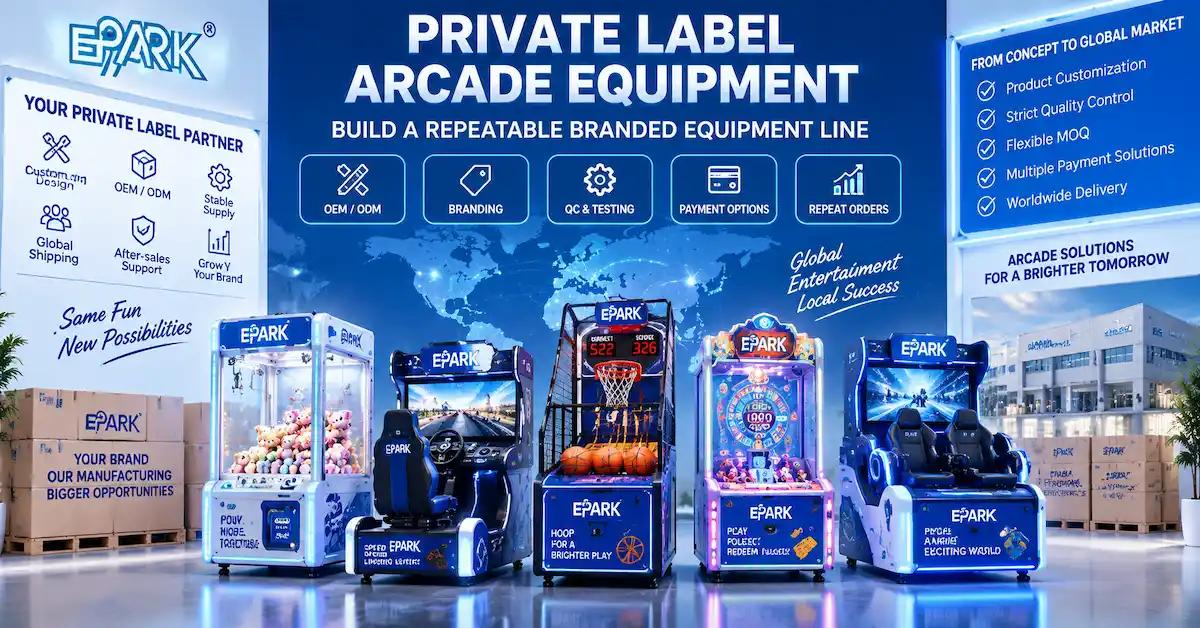
Buyers frequently use white label, private label, OEM, and ODM as if they were interchangeable. In practice, the terminology can vary between suppliers and regions. The safer procurement method is to define the manufacturing scope rather than relying on the name of the cooperation model.
| Supply Model | Typical Starting Point | Typical Buyer Requirement | Main Approval Focus |
|---|---|---|---|
| Standard Wholesale | Existing production model | Model selection and quantity | Final specification and price |
| White Label | Existing machine platform | Buyer-facing brand and selected changes | Branding and configuration |
| Private Label | Existing or configured platform | Broader branded product identity | Brand system and repeatability |
| OEM | Existing manufacturing capability or defined specification | Buyer-specific production requirements | Technical specification and production control |
| ODM | Product concept or market requirement | Deeper design or functional development | Prototype, engineering and production release |
A distributor should normally start with the least complex model that solves its commercial problem. If the machine already meets the desired player experience and only needs branding, a white-label or basic OEM route may be appropriate.
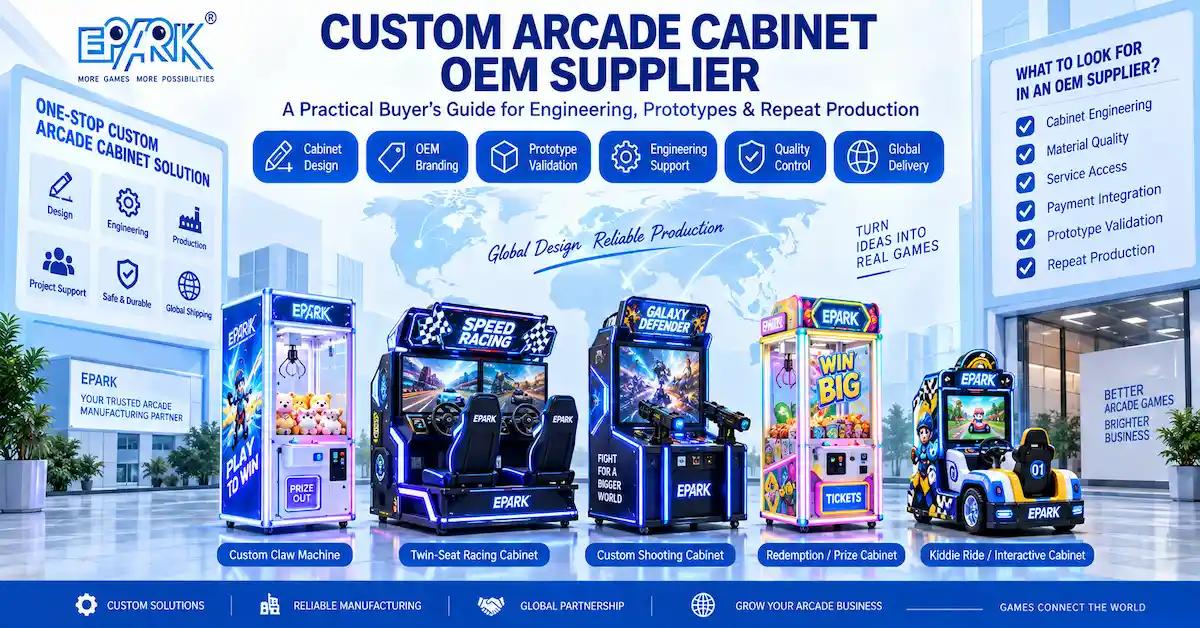
If the buyer needs a different cabinet structure, new interaction system, substantially modified controls, or new functionality, the project may move toward deeper OEM or ODM development. At that point, the quotation should identify engineering responsibilities, prototype requirements, development approvals, and production-release conditions.
3. Who Should Source White Label Arcade Machines?
White-label arcade equipment is most useful when the buyer has a customer-facing sales channel or a multi-location operating strategy. The stronger the need for brand consistency and repeat purchasing, the more valuable a controlled white-label program becomes.
Regional Arcade Equipment Distributors
Distributors can use white-label equipment to create their own market-facing catalog. Instead of selling an unrelated collection of factory-branded machines, the distributor can organize selected equipment under a consistent product architecture.
The important requirement is not catalog size. It is product coherence. A distributor may prefer a smaller range of well-defined machines that its sales team understands, warehouses can manage, and service technicians can support.
Importers and Wholesalers
Importers often need to balance product variety against inventory and service complexity. A white-label program can help them standardize selected SKUs and create a recognizable commercial range.
The buyer should retain a relationship between the private SKU and the supplier's underlying model. Without that connection, replacement parts and repeat orders can become difficult when the original sales person, quotation, or product page is no longer available.
Arcade and FEC Brands
FEC operators and arcade chains may want equipment that matches their venue identity. Branding can include visual elements such as cabinet colors, artwork, logos, labels, and other agreed design features.
However, the branding should be designed around the venue rather than treated as an isolated sticker exercise. Machine appearance, signage, lighting, prize zones, traffic flow, and the broader interior concept should support one commercial identity.
Entertainment Project Companies
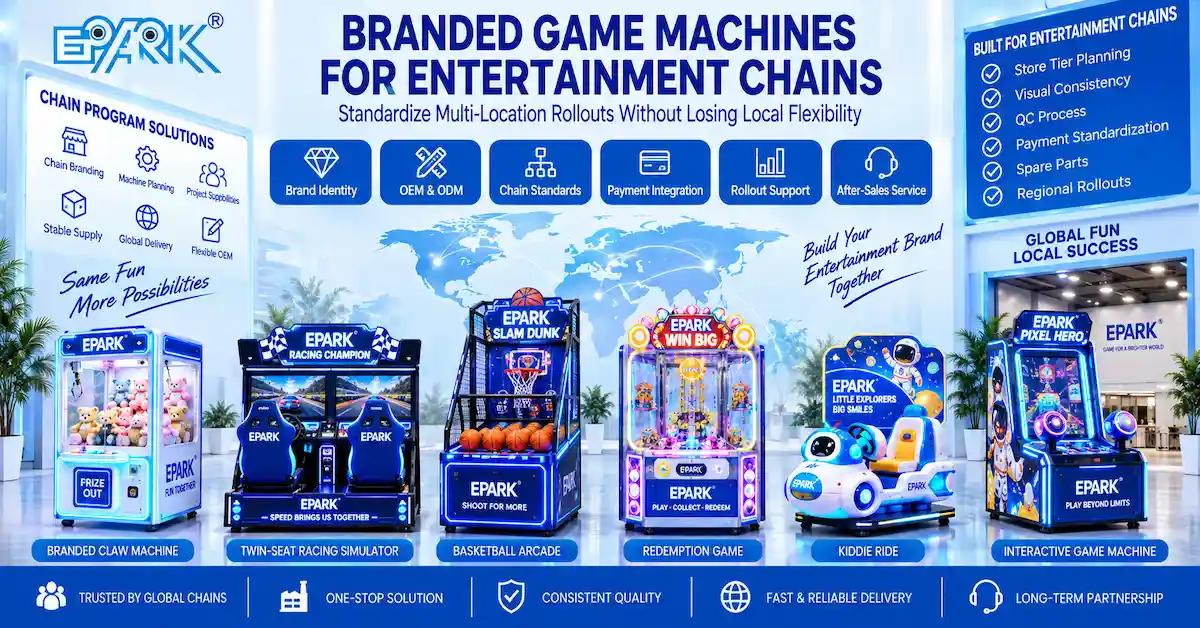
Project contractors and entertainment solution providers may need multiple equipment categories in one order. In that case, white labeling can help create a consistent equipment package while the underlying machines retain their category-specific technical characteristics.
Who May Not Need a White Label Program?
A buyer purchasing one machine for internal use may not need a dedicated branded product program. If there is no resale channel, no repeat-order plan, and no need for a separate product identity, standard equipment may be simpler.
White label becomes more commercially meaningful when the buyer expects repeat sales, regional distribution, multiple customer accounts, chain expansion, catalog development, or long-term brand recognition.
4. How to Qualify a White Label Arcade Machine Supplier
Supplier qualification should be performed before the buyer spends significant time on artwork, packaging, or market launch. A supplier that can print a logo is not automatically a suitable long-term manufacturing partner.
For B2B procurement, evaluate the supplier across the following areas:
| Evaluation Area | Weak Evidence | Stronger Evidence to Request |
|---|---|---|
| Product capability | Large catalog only | Relevant models matched to the intended application |
| Branding | “Logo available” | Defined artwork, color and label approval process |
| Technical control | Product name only | Configuration sheet tied to the actual model |
| QC | “Strict quality control” | Defined inspection points and test records |
| Customization | “OEM/ODM available” | Clear distinction between standard, branding and engineering changes |
| Packaging | “Export standard” | Machine-specific packaging and accessory list |
| Spare parts | “Parts available” | Model-linked replacement-part references |
| Repeat orders | “Same machine as before” | Revision-controlled production records |
| Technical support | Generic contact channel | Defined troubleshooting and support process |
Ask the Supplier to Explain the Process
One of the most useful qualification questions is simple:
“What happens after I approve the machine and branding?”
A mature supplier should be able to explain how the project moves through specification confirmation, design or artwork approval, production, testing, packing, shipment, installation guidance where applicable, and after-sales support.
The answer also reveals whether the supplier treats customization as an organized manufacturing process or simply as an informal sales request.
5. Start With the Base Machine, Not the Logo
The most common white-label sourcing mistake is starting with branding before selecting the right machine. A visually attractive cabinet cannot compensate for poor product-market fit.
Before requesting artwork, confirm:
- What type of game the machine provides.
- Who the intended player is.
- Where the machine will be installed.
- How much usable floor space is available.
- How players enter and exit the machine area.
- How the machine is paid for.
- How staff access service areas.
- What accessories are required.
- What spare parts may be needed.
- Whether the machine can be reordered in the same configuration.
For a distributor, the base machine should also have a clear sales position. For example, a claw machine may belong to a prize-focused range, a basketball game may support a sports or competitive-play range, and a racing simulator may occupy a more immersive attraction category.
This product architecture makes the later branding work more useful. Instead of putting the same visual treatment on every machine, the buyer creates a brand system that allows different equipment categories to remain technically appropriate while still looking like part of the same commercial portfolio.
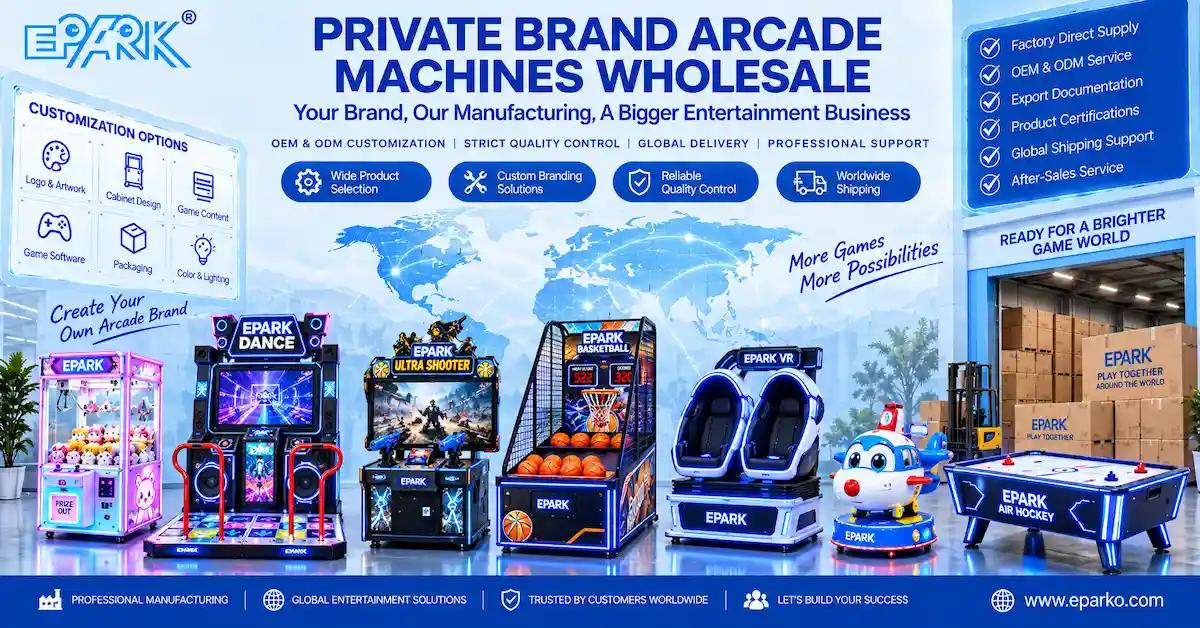
EPARK's published product and FAQ information covers multiple commercial amusement categories, including claw machines, ticket redemption games, kiddie rides, family games, racing, shooting, basketball, gift dispensers, interactive skill machines, and VR or simulator-related equipment. The exact available model and configuration should always be confirmed against the current quotation.
6. Which Arcade Equipment Categories Fit White Label Programs?
Different arcade machine categories create different technical and branding requirements. A good white label arcade machine supplier should not treat every cabinet as if the same checklist applies.
Claw and Prize Machines
For claw and prize equipment, visual presentation is important because the prize area is part of the customer experience. Buyers should evaluate cabinet appearance, logo placement, lighting, prize access, payment configuration, controls, locks, service openings, and the underlying mechanism.
A distributor should also decide whether the machine is positioned as an impulse-play product, a dedicated prize-store product, or part of a larger FEC equipment package.
Redemption and Ticket Games
Redemption equipment needs additional attention to the relationship between gameplay, scoring, tickets, points, prizes, and the venue's operating system.
When sourcing these machines, confirm the exact payment method and reward architecture. If a venue uses a card or cashless system, the supplier should know the actual system being used rather than simply being told that “cashless payment is required.”
Racing and Simulator Equipment
Racing equipment requires more physical planning than many conventional cabinets. Seats, steering controls, pedals, displays, player clearance, service access, and linked-play requirements may all affect installation.
The white-label product record should therefore identify the actual configuration. “Racing simulator” is a category, not a sufficient technical specification.
Basketball and Sports Games
Sports arcade machines combine physical interaction and electronic scoring. Buyers should review player clearance, scoring functions, sensors, structural components, ball management, assembly requirements, and service access.
Shooting and Interactive Games
Interactive shooting equipment can involve controllers, displays, sensors, calibration, sound, and software. Similar-looking cabinets may still contain different systems, so the buyer should request the actual configuration being quoted.
VR and Simulator Equipment
VR and simulator equipment generally deserves a more detailed technical review. Buyers should consider the hardware, software, controls, accessories, setup requirements, operating space, and maintenance process relevant to the selected model.
Kiddie Rides and Family Equipment
Equipment intended for younger players requires additional attention to intended use, operating conditions, supervision, installation, maintenance access, and destination-market requirements.
The key point is simple: white-label branding should follow equipment selection, not replace equipment selection.
7. How to Define the White Label Branding Scope
A professional branding specification should be written before production begins. “Add our logo” is not detailed enough for a repeatable commercial product.
Depending on the selected machine and agreed scope, branding may cover:
- Logo placement.
- Cabinet colors.
- Cabinet artwork.
- Header or marquee artwork.
- Product labels.
- Brand-facing product name.
- Buyer SKU.
- Packaging identification.
- Selected documentation.
- Other agreed visual elements.
Create a Revision-Controlled Artwork Package
A distributor should keep a final artwork package containing the approved files and revision identifier. This is particularly important when several machines share the same brand identity.
For example, “Brand Artwork V3” should not exist only in an email attachment. The buyer should be able to connect that artwork revision to the machine model and purchase order.
The same principle applies to cabinet colors. A generic instruction such as “blue cabinet” leaves too much room for interpretation. Where exact color matching matters, use the buyer's defined color reference or an approved physical or digital standard.
Branding Should Also Support Service
The buyer-facing brand name should not eliminate the factory model reference from internal records. The customer may see “Brand X Racing Pro,” while the purchasing and technical teams still need to know the underlying factory model.
This chain is one of the most useful controls in a white-label program because it connects marketing, purchasing, warehouse management, service, and future production.
8. Technical Configuration Buyers Should Control
White labeling becomes risky when the buyer focuses heavily on appearance and leaves technical configuration vague. A branded machine still needs a defined operating version.
Payment Configuration
Payment is one of the first technical areas to clarify. Depending on the machine and project, the system may involve coins, tokens, cards, QR codes, or other payment arrangements.
For a commercial project, specify the actual payment method rather than writing “payment compatible.” Ask who supplies the reader, who configures credits, how the machine recognizes payment, and how the transaction will be tested.
Voltage and Electrical Requirements
Destination-market electrical requirements should be defined before production. Confirm voltage, frequency, plug or connector requirements, and any relevant installation documentation for the actual model.
Do not assume that a supplier's general statement about international markets automatically means every configuration is ready for every country.
Language and User Interface
If the machine has user-facing instructions, menus, prompts, or labels, specify the required language and identify whether the change affects software, graphics, labels, or manuals.
Controls and Player Interface
Controls should be treated as part of the machine configuration. Joysticks, buttons, steering wheels, pedals, shooting controllers, sensors, and other player interfaces should be identified according to the machine type.
Software and Game Configuration
If software or game settings are configurable, record the approved version or settings where relevant. This becomes particularly important when the same cabinet can be supplied with different game configurations.
Materials and Cabinet Construction
EPARK's published FAQ identifies metal frames, ABS plastic, and tempered glass among the materials used in its machines. This should be treated as general published information rather than a universal specification for every model.
For a purchase order, request the actual materials and construction details relevant to the selected machine. Review panel fit, doors, locks, service openings, visible fasteners, screen protection, and other components that affect operation and maintenance.
Service Access
A machine can be technically functional and still be difficult to maintain. Ask where staff need access for payment components, controls, electronics, mechanisms, or other service items.
For venue planning, service access should be considered before the machine is placed against a wall or inside a restricted area.
9. How to Build a White Label Arcade Machine QC Plan
A white-label QC plan should protect two things simultaneously: the physical machine and the buyer's brand promise.
A machine can function correctly but still fail the buyer's requirements if the wrong artwork, payment configuration, accessories, or packaging is supplied.
Functional QC
Depending on the selected category, functional checks may include:
- Power-up and startup.
- Display operation.
- Buttons and controls.
- Game start sequence.
- Scoring or gameplay functions.
- Payment recognition.
- Prize, ticket, or point functions where applicable.
- Lighting and audio.
- Mechanical movement.
- Linked or multiplayer functions where applicable.
Configuration QC
The inspection team should compare the physical machine with the approved order information.
| QC Layer | Check | Typical Evidence |
|---|---|---|
| Identity | Model and buyer SKU | Machine label and production record |
| Branding | Logo, artwork and colors | Approved artwork revision |
| Electrical | Voltage, plug and relevant electrical configuration | Configuration record and functional test |
| Payment | Reader and credit recognition | Transaction test |
| Gameplay | Controls and intended game operation | Functional test |
| Accessories | Cables, keys, fixings and other ordered items | Packing checklist |
| Appearance | Surface, graphics, screen, lighting and visible components | Visual inspection |
| Packaging | Protection and package identification | Packing photos and records |
Pre-Shipment Testing
EPARK's published Design & Process information states that each machine goes through a 48-hour full-operation test before shipment, with testing covering gameplay functionality, electrical safety, lighting effects, and mechanical durability.
For a buyer, the useful next step is to request test evidence relevant to the actual order and connect the result to the selected machine or batch. A general factory statement is less useful than a record showing that the approved configuration was tested.
10. Sample, First-Unit Approval, and Pilot Orders
A white-label project should not automatically move from a catalog photograph directly to a large commercial order. The level of approval should match the level of customization and commercial risk.
| Project Stage | Buyer Action | Output |
|---|---|---|
| 1. Market definition | Define country, customer and sales channel | Market brief |
| 2. Model selection | Select suitable machine categories and models | Shortlist |
| 3. Technical review | Confirm payment, electrical, controls and accessories | Configuration sheet |
| 4. Branding review | Approve logo, colors and artwork | Artwork revision |
| 5. Quotation | Compare machine, customization, packaging and logistics scope | Comparable quotation |
| 6. Sample / first unit | Validate important changes | Approved reference |
| 7. Pilot order | Introduce selected SKUs to the market | Market feedback |
| 8. Repeat production | Order using approved records | Controlled reorder |
When Should a Sample Be Required?
A sample or first-unit review is particularly valuable when the project changes important elements such as cabinet structure, payment hardware, controls, electrical configuration, software, user interface, packaging, or major artwork surfaces.
If the customization is limited to a simple visual element and the underlying machine is already well established, a formal artwork approval may be enough. The correct approval method depends on the risk created by the change.
What Should Be Compared With the Approved Sample?
The comparison should cover more than appearance. Check the machine identity, cabinet configuration, controls, payment method, language, accessories, packaging, and any other items that were part of the approved commercial version.
This creates a useful distinction between sample approval and production approval. The sample becomes the reference, while the production inspection verifies that the batch continues to match the approved version.
11. How to Compare White Label Arcade Machine Costs
Comparing only the quoted machine price is one of the easiest ways to make a poor sourcing decision. A white-label project can contain one-time customization costs, recurring machine costs, packaging expenses, freight, destination charges, service parts, and other project-specific expenses.
Not every cost applies to every order. The purpose of this formula is to prevent the buyer from comparing incomplete quotations.
Base Machine Cost
Confirm the exact machine model and configuration included in the quoted price. Similar-looking machines can have different controls, payment systems, displays, mechanisms, or accessories.
Branding and Customization Cost
Ask whether artwork, logo placement, cabinet colors, labels, packaging changes, payment modifications, or other requested changes are included.
Packaging Cost
Export packaging may need additional protection for screens, acrylic components, glass, electronics, mechanisms, or structural assemblies. If branded packaging is requested, determine whether it is necessary for the sales channel or simply increases cost.
Freight and Destination Costs
Separate factory-side costs from freight and destination-side expenses. The buyer should understand which party is responsible for freight booking, insurance where applicable, customs, local delivery, unloading, and installation.
Spare-Parts Cost
A distributor should consider spare parts as part of the product program rather than as an emergency purchase after the first machine fails.
The correct starter spare-parts package depends on the machine mix, local technical capability, expected service demand, and replenishment method.
Compare Like With Like
When comparing two suppliers, create one commercial scope and ask both suppliers to respond to the same fields.
| Cost Item | Supplier A | Supplier B | Buyer Check |
|---|---|---|---|
| Base machine | — | — | Same model or equivalent configuration? |
| Branding | — | — | Logo, artwork and color included? |
| Payment | — | — | Same payment configuration? |
| Packaging | — | — | Same protection and identification? |
| Spare parts | — | — | Same spare-parts scope? |
| QC | — | — | Same acceptance requirements? |
| Freight | — | — | Same shipping basis? |
12. Packaging, Documentation, and Spare Parts
White-label equipment should be prepared for the buyer's distribution channel, not simply for factory shipment.
Packaging Should Support Receiving
A distributor may receive machines into a warehouse before delivering them to its customer. Package identification therefore matters.
The receiving team should be able to identify the buyer SKU, package count, accessories, and relevant machine reference without opening every package.
EPARK's published Design & Process information describes export packaging using bubble wrap and thick foam protection, wooden frame or crate reinforcement, and waterproof film wrapping for sea shipment. The exact packaging arrangement should still be confirmed for the selected equipment and shipping method.
Documentation Should Match the Actual Product
A reseller should organize documentation around the approved product version. Depending on the machine and destination, this may include:
- Product specification.
- Operation guide.
- Installation information.
- Maintenance information.
- Payment-system instructions.
- Spare-parts references.
- Applicable compliance documentation.
- Warranty and support procedure.
Do not assume that a general document applies unchanged after customization. If the buyer changes payment hardware, controls, cabinet structure, language, or other technical elements, confirm whether the documentation needs revision.
Spare Parts Should Be Linked to the SKU
A practical spare-parts record should connect:
This is much more useful than a generic parts list. If the distributor has multiple machine models, the service team can identify the correct replacement without reconstructing the original order from memory.
After-Sales Support Is Part of Supplier Qualification
EPARK's published FAQ states that it provides remote installation guidance through video calls and messaging, setup manuals, operation guides, remote technical support, and spare-parts support. For a specific project, the buyer should still confirm the actual support scope and responsibilities in writing.
13. Repeat Orders and Configuration Change Control
The first shipment proves that a machine can be purchased. The second shipment tests whether the white-label system is actually repeatable.
A distributor may have machines in stock, machines already installed at customer locations, and a new batch being manufactured at the same time. If the supplier changes an important component without documentation, the distributor may unknowingly create different technical products under one SKU.
Maintain a Product Master Record
For each white-label SKU, maintain:
- Buyer product code.
- Factory model.
- Approved artwork revision.
- Cabinet configuration.
- Payment configuration.
- Electrical configuration.
- Language or interface requirements.
- Accessory list.
- Packaging specification.
- QC requirements.
- Spare-parts references.
- Relevant product documentation.
Control Component Changes
Manufacturers may change components because of supply conditions, engineering improvements, discontinued parts, or production optimization. A component change is not automatically a defect, but the buyer should understand whether it affects performance, installation, service, compatibility, or documentation.
The practical rule is:
If a substitution changes the approved product in a meaningful way, decide whether the existing SKU can remain or whether a new revision should be created.
Prepare for Model Updates
Arcade equipment evolves. A supplier may introduce a newer cabinet, new controls, a revised display, or a different software configuration.
Before accepting a successor model, compare it against the existing version. Review dimensions, installation requirements, controls, payment configuration, service parts, packaging, manuals, and customer-facing product information.
For a distributor, this is especially important because a product may remain in the market for years after the factory has moved to a newer version.
14. How EPARK Fits a White Label Arcade Equipment Program
EPARK identifies itself as Guangzhou EPARK Electronic Technology Co., Ltd., a commercial amusement equipment and entertainment solutions provider integrating R&D, design, production, and sales. Its published business scope includes coin-operated arcade machines, VR simulators, kiddie rides, gift machines, and other amusement equipment.
For a white-label buyer, the relevant point is not simply that EPARK has arcade machines. The more useful question is whether the supplier's published capabilities correspond with the buyer's required sourcing process.
OEM and ODM Customization
EPARK's public information describes OEM/ODM customization and branding support. This can be relevant when a buyer needs a branded product line rather than a standard factory catalog.
The buyer should still define whether the project is simple branding, configured OEM, cabinet customization, or deeper ODM development.
Machine Selection and Venue Planning
EPARK provides arcade equipment selection and venue planning support. Its published service information describes customized machine plans with machine lists and 2D/3D layout designs, together with theme and venue design.
For a distributor, this capability can be useful when the customer is not simply buying machines for inventory but also requires an equipment package for an FEC, arcade, mall entertainment area, or other venue.
Payment and System Integration
EPARK's published service information describes payment options including coins, QR codes, and cards, as well as ticket, point, and redemption system integration. The exact compatibility should be confirmed against the selected machine and the buyer's actual payment or management system.
Production and Quality Control
EPARK's Design & Process information describes artwork and painting, electronic assembly, PCB and wiring installation, screen and control integration, final assembly, and function testing. It also states that every machine undergoes a 48-hour full-operation test before shipment.
For a white-label project, the buyer should translate this general production process into order-specific acceptance criteria. The approved branding and technical configuration should remain connected to the inspection process.
Installation and After-Sales Support
EPARK's published information also describes installation guidance, operation training, technical support, and spare-parts support. For a specific project, the buyer should define whether support is remote, on-site, or a combination and identify the responsibilities of the supplier, local contractor, freight provider, and venue team.
| Buyer Requirement | EPARK Published Capability to Discuss | What the Buyer Should Confirm |
|---|---|---|
| Branded equipment | OEM/ODM and branding support | Exact logo, artwork and cabinet scope |
| Machine selection | Arcade equipment portfolio | Models suitable for the target market |
| Venue project | Layout and project planning | Equipment mix and layout deliverables |
| Payment | Payment and system integration | Actual provider and compatibility |
| QC | Production inspection and 48-hour full-operation test | Order-specific test evidence |
| Packaging | Export packaging process | Machine-specific packing method |
| Installation | Installation guidance and training | Remote/on-site scope and responsibility |
| After-sales | Technical and spare-parts support | Service procedure and parts arrangement |
15. White Label Arcade Machine RFQ Checklist
A strong RFQ makes supplier comparison easier because every manufacturer responds to the same commercial requirements. Instead of asking for “your best price for white-label arcade machines,” provide enough information to define the actual project.
| RFQ Field | What to Provide |
|---|---|
| Target market | Country or region where the equipment will be sold or operated |
| Buyer type | Distributor, importer, reseller, arcade chain, FEC or project contractor |
| Machine categories | Claw, redemption, racing, basketball, shooting, VR, kiddie or other required categories |
| Reference models | Supplier model names, product links, images or reference examples |
| Initial quantity | Estimated quantity by machine model |
| Repeat demand | Expected future orders or planned catalog expansion |
| Brand files | Logo, color references, artwork and brand guidelines |
| Payment | Coin, token, card, QR, cashless or other required system |
| Electrical | Destination-market voltage, frequency and plug requirements |
| Language | User interface, labels, manuals and packaging language |
| Packaging | Standard export packaging or buyer-branded packaging |
| Documentation | Manuals, technical documents and applicable compliance documents |
| Spare parts | Initial service stock and future replacement requirements |
| Sample | Whether sample or first-unit approval is required |
| Schedule | Target production and shipment window |
Ten Questions to Ask Before Placing the Order
- Which factory model is behind the proposed white-label SKU?
- Which branding changes are included in the quotation?
- Which requested changes require engineering or separate approval?
- Can the approved configuration be reproduced for repeat orders?
- What payment configuration is available for the destination market?
- What accessories and spare parts are included?
- What testing is performed before shipment?
- Which documentation applies to the selected model and destination?
- How will packaging and machine identification be handled?
- What technical and after-sales support is included?
For FEC or Venue Projects, Add These Inputs
If the white-label order is part of a venue project, provide the floor plan, entrance and exit locations, usable machine area, target player groups, preferred equipment categories, payment system, local installation resources, and target opening schedule.
EPARK's published project-planning information indicates that venue planning can use information such as space size, floor plan, entrances and exits, target audience, preferred games, and budget range. Supplying this information early gives the supplier a better basis for equipment selection and layout discussion.
How to Request a More Useful Quotation
A quotation should ideally separate:
- Base machine price.
- Branding and customization.
- Payment-system changes.
- Packaging.
- Spare parts.
- Testing or sample requirements.
- Freight or logistics scope.
- Installation or technical support.
- Items included.
- Items excluded or awaiting confirmation.
This structure prevents a low headline price from hiding important project costs.
Ready to Send Your White Label Arcade RFQ?
A detailed brief helps the supplier evaluate your machine mix, branding scope, technical requirements, packaging, support needs, and repeat-order expectations more accurately.
16. Frequently Asked Questions
1. What is a white label arcade machine supplier?
A white label arcade machine supplier provides an existing or established arcade machine platform that can be sold under the buyer's own brand identity with an agreed level of branding or configuration changes. The exact scope varies by supplier, so buyers should define the machine model, branding, technical configuration, packaging, QC, and support requirements before ordering.
2. What is the difference between white label and private label arcade machines?
The terminology is not standardized across every supplier. In practical purchasing terms, white label often emphasizes an existing machine platform with buyer-facing branding, while private label may involve a broader branded product program. The buyer should focus on the actual manufacturing scope instead of the terminology alone.
3. Are white label arcade machines suitable for distributors?
Yes. White-label sourcing can be useful for distributors that want to create a recognizable arcade equipment catalog without developing every machine from scratch. The distributor should maintain a clear relationship between its own SKU, the factory model, approved configuration, artwork, packaging, and spare parts.
4. Can I sell arcade machines under my own brand?
Branding arrangements depend on the supplier and the project agreement. EPARK publicly describes OEM/ODM customization and branding support. Buyers should confirm the exact logo, artwork, cabinet, packaging, product-name, and commercial-use scope before production.
5. Do white label arcade machines require a new cabinet?
No. A major advantage of white-label sourcing is that an existing machine platform can be used when it already meets the buyer's functional and market requirements. A new cabinet or deeper development becomes more relevant when the buyer needs structural, functional, or engineering changes.
6. Which arcade machine categories can be white labeled?
Potential categories include claw machines, prize machines, redemption games, basketball machines, racing equipment, shooting games, interactive skill machines, kiddie rides, VR equipment, simulators, and other commercial amusement products. The actual available models should be confirmed with the supplier.
7. Should I order a sample before a bulk white-label order?
A sample or first-unit review is particularly useful when branding affects multiple surfaces or when the project changes payment hardware, controls, electrical configuration, software, cabinet structure, or other important technical elements. For simple visual branding, formal artwork approval may sometimes be sufficient.
8. How do I compare the cost of white label arcade machines?
Compare the complete commercial scope rather than only the factory unit price. Include the machine, branding, customization, packaging, freight, applicable import or local costs, setup, spare parts, and technical support where relevant. Use the same quotation fields for each supplier.
9. Does white labeling automatically give me exclusive rights?
No. Branding customization and exclusivity are separate commercial issues. If you require exclusive territory, exclusive models, artwork protection, or channel restrictions, define the applicable rights, territory, duration, and conditions in a written agreement.
10. What should I send a white label arcade machine supplier for a quotation?
Provide your destination market, buyer type, preferred machine categories, reference models, initial quantities, branding files, payment requirements, electrical requirements, language needs, packaging expectations, sample requirements, spare-parts plan, and target schedule. For venue projects, also provide the floor plan and target customer profile.
11. What should a distributor record for every white-label SKU?
At minimum, connect the buyer SKU with the factory model, approved artwork revision, technical configuration, payment configuration, accessory list, packaging information, QC requirements, and spare-parts references. This creates traceability for future orders and customer service.
12. How important is after-sales support when choosing a supplier?
It becomes increasingly important as the installed base grows. A distributor may eventually need troubleshooting, manuals, replacement parts, configuration information, and technical assistance for multiple machine categories. Support should therefore be evaluated before the first order rather than after the first failure.
17. Conclusion
Choosing a white label arcade machine supplier should be treated as a product-control and supply-chain decision, not simply a branding exercise.
- Choose the right base machine before approving branding.
- Define the exact technical configuration for each buyer SKU.
- Control artwork, payment, packaging and QC revisions.
- Keep factory models linked to buyer SKUs for repeat orders and service.
- Compare complete landed costs and support scope, not only unit price.
For a white-label program, the goal is simple: build a branded arcade equipment range that is technically traceable, commercially ready, serviceable, and repeatable.
Build Your White Label Arcade Equipment Program
Send EPARK your target market, machine categories, quantities, branding requirements, payment configuration, packaging needs, and repeat-order plan for an order-specific discussion.
Disclaimer
The information provided on this website is for general informational purposes only.
While EPARK Arcade Game Machine Manufacturer strives to ensure accuracy and reliability, no warranties—express or implied—are made regarding completeness, performance, or applicability.
Product specifications, designs, and features may vary depending on usage, customization, and customer requirements.
Buyers are responsible for verifying all technical details, compliance certifications, and suitability before procurement.
EPARK shall not be held liable for any direct, indirect, incidental, or consequential damages arising from the use of this website or its content, including but not limited to business losses, data errors, or equipment misuse.
For tailored solutions or further verification, please visit our Contact Us
Intellectual Property Notice
All articles, product images, videos, catalogs, software, and related materials published on this website are the intellectual property of EPARK, unless otherwise stated.
Unauthorized reproduction, distribution, modification, or commercial use of any content is strictly prohibited without prior written consent from EPARK.
EPARK reserves the right to take legal action against any unauthorized use, including but not limited to copyright infringement, misrepresentation, or unfair competition.
Trademarks
The name EPARK, the EPARK logo, and all related brand elements displayed on this website are registered trademarks or trade names of Guangzhou EPARK Electronic Technology Co., Ltd.
Other product names, company names, or logos mentioned on this site may be trademarks of their respective owners.
Unauthorized use of EPARK's trademarks for commercial purposes, including advertising, promotions, or product packaging, is strictly prohibited.
Governing Law
These terms are governed by the laws of the People's Republic of China.