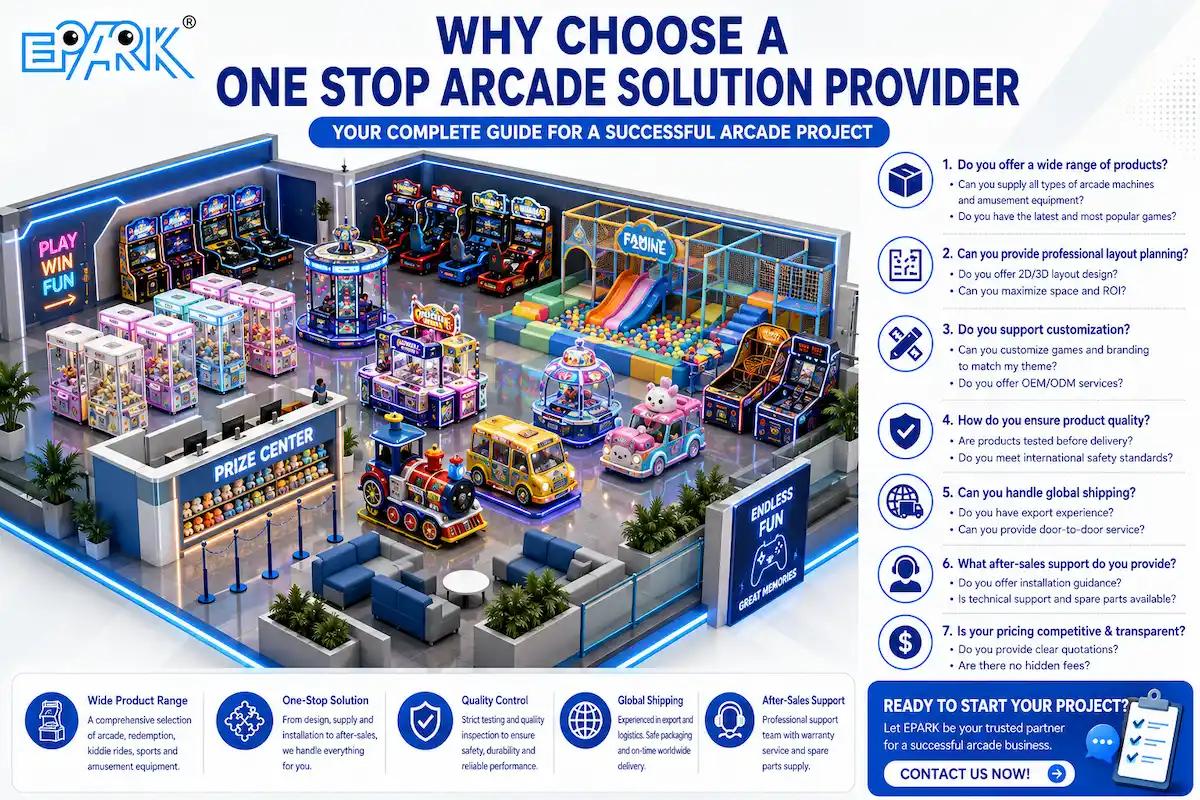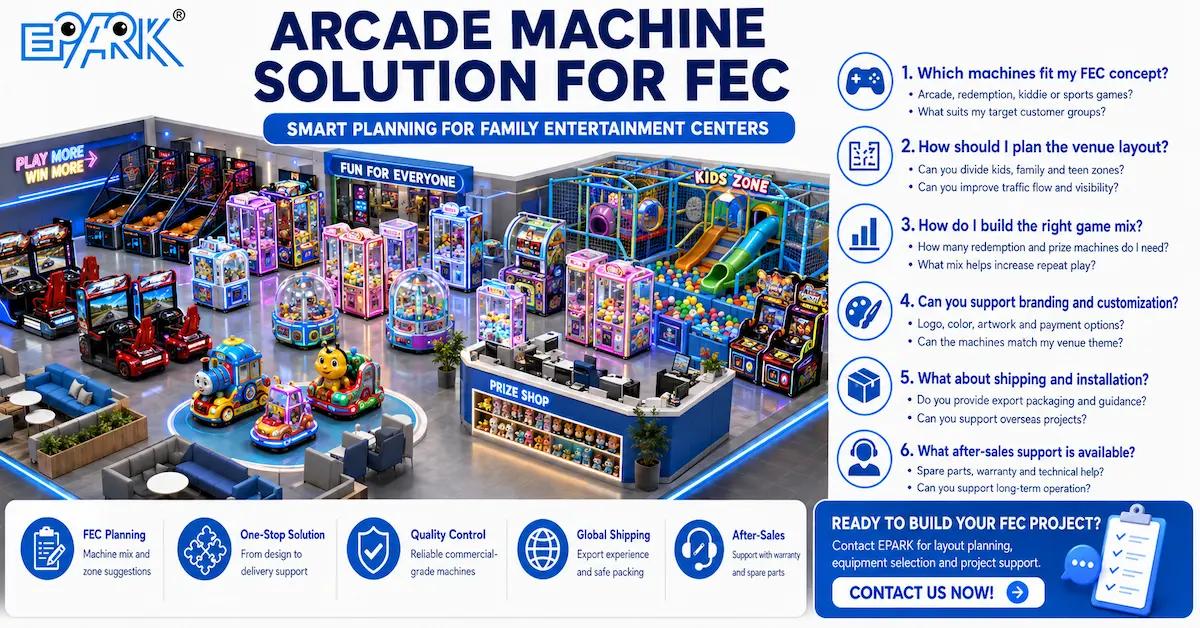

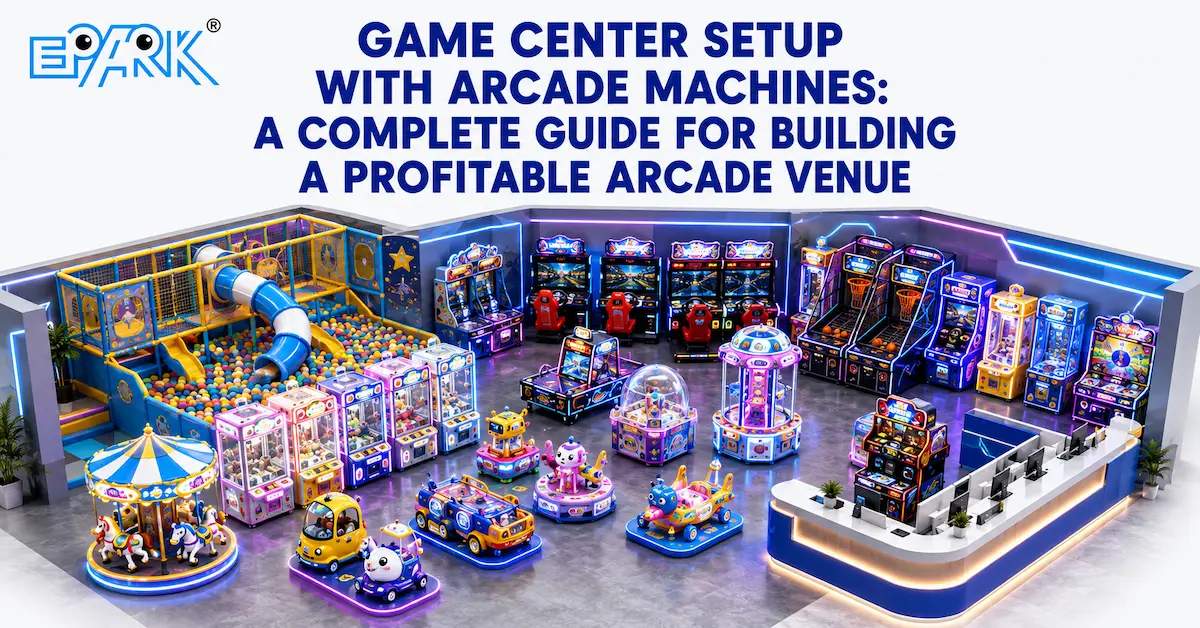
A successful game center setup with arcade machines begins before any equipment is ordered. Investors first need to understand the venue, target customers, payment model, operating budget, and expected customer flow.
Many new arcade projects make the same mistake: selecting machines individually because they look attractive in a catalog. The result may be too many similar games, weak coverage for different age groups, poor traffic flow, and unused floor space.
A better approach is to treat the arcade as one complete commercial system. The machines, layout, prize strategy, payment system, staff area, and maintenance access should all work together.
For a new project, the planning process should cover:
- Target customer groups
- Available floor area
- Machine categories
- Revenue zones
- Electrical and network requirements
- Coin, token, card, or cashless payment
- Prize counter operation
- Shipping and installation schedule
- Spare parts and maintenance support
- Future expansion space
Quick Answer: What Does a Complete Game Center Setup Need?
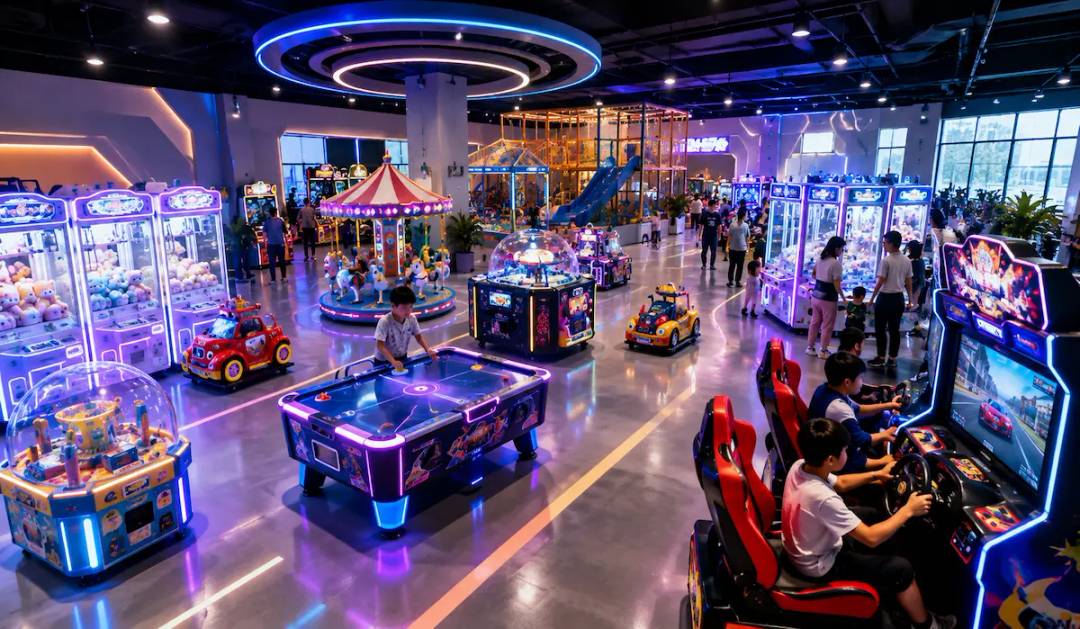
A complete game center setup normally includes entrance attractions, family games, competitive machines, redemption equipment, a prize counter, payment infrastructure, customer circulation space, and technical support.
The exact machine mix depends on whether the venue targets young children, teenagers, families, tourists, shopping mall visitors, or adult players. A professional supplier should review the floor plan and recommend equipment based on the project rather than offering the same machine list to every buyer.
1. Define the Type of Game Center You Are Building
Before selecting equipment, determine what kind of venue the project will become.
Shopping Mall Arcade
A mall-based arcade normally needs strong visual attraction and quick-play machines. Claw machines, prize games, basketball machines, kiddie rides, and compact racing games are practical choices.
Family Entertainment Center
An FEC needs wider age coverage. It may combine redemption games, kiddie rides, sports machines, racing simulators, soft play areas, a prize counter, and family seating.
Teen and Adult Arcade
A venue targeting teenagers and adults may prioritize racing simulators, shooting machines, rhythm games, air hockey, basketball machines, and immersive attractions.
Indoor Playground Arcade Zone
An arcade area inside an indoor playground usually uses compact claw machines, kiddie rides, simple redemption games, and parent-child interactive equipment to create additional revenue.
The venue concept determines which machines should receive the largest share of the budget.
2. Measure the Space Before Choosing Machines
Machine dimensions should be checked against the actual floor plan. Product width alone is not enough because operators also need player space, service access, walking routes, and safety clearance.
Record the following information before requesting a proposal:
- Total usable floor area
- Entrance and exit positions
- Ceiling height
- Columns and fixed structures
- Electrical outlets
- Network access
- Fire exits
- Staff service areas
- Prize counter location
- Restrooms and storage rooms
A large simulator may look profitable in a showroom but become impractical if it blocks customer circulation or leaves no maintenance access.
EPARK can review a venue plan and recommend suitable commercial equipment from its arcade machine product range.
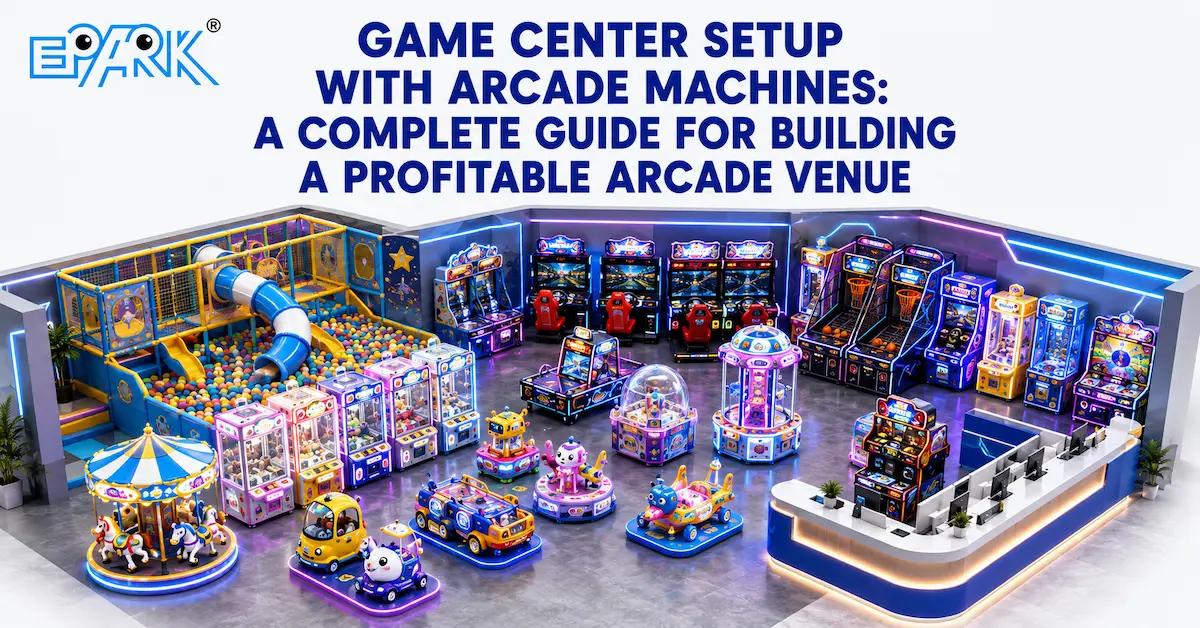
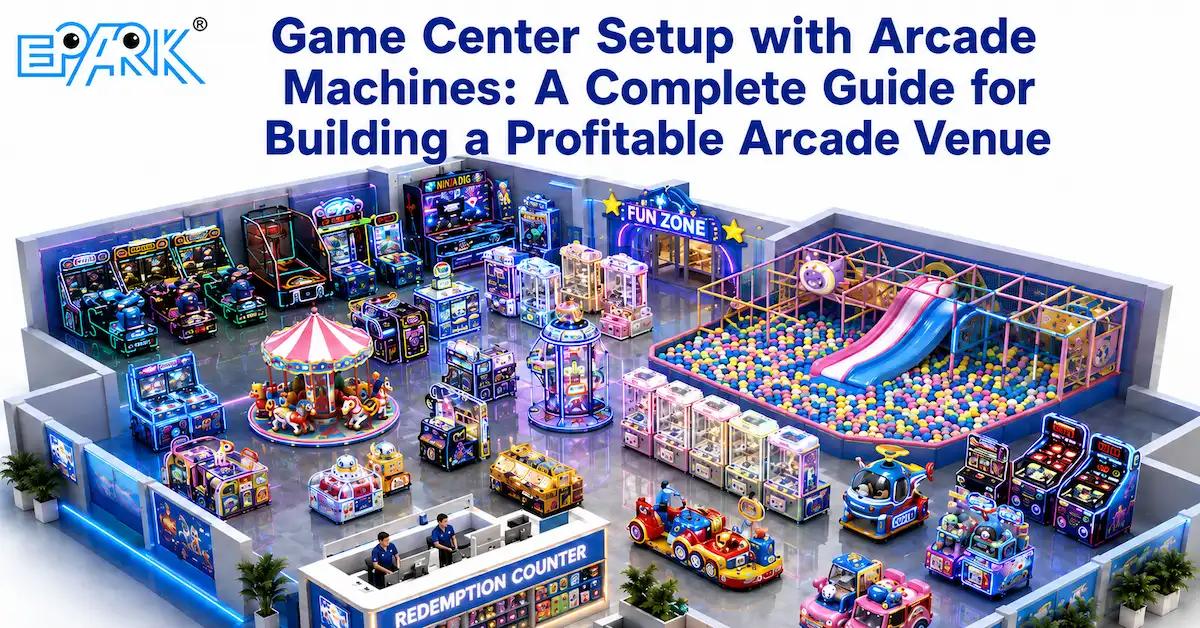
3. Divide the Venue into Clear Revenue Zones
A strong layout guides customers naturally through the game center. It also gives each machine category a clear commercial purpose.
| Venue Zone | Recommended Equipment | Main Objective |
|---|---|---|
| Entrance Zone | Claw and prize machines | Capture attention immediately |
| Children’s Zone | Kiddie rides and simple games | Provide accessible play |
| Family Zone | Redemption and interactive games | Encourage shared participation |
| Competition Zone | Racing, basketball and shooting games | Increase repeat and group play |
| Prize Zone | Ticket games and redemption counter | Strengthen reward motivation |
| Premium Zone | VR and large simulators | Offer higher-value experiences |
| Waiting Area | Compact machines | Monetize unused waiting time |
Entrance machines should be visually bright and easy to understand. Competitive machines can be grouped together to create energy. Redemption equipment should remain connected visually and physically to the prize counter.
4. Build a Balanced Arcade Machine Mix
A profitable game center needs more than best-selling models. It needs a balanced mix of machines with different play durations, price points, and customer appeal.
Quick-Play Machines
Claw machines and compact prize games are suitable for impulse spending. They can generate frequent transactions without requiring long instructions.
Repeat-Play Machines
Redemption games, basketball machines, racing games, and shooting machines encourage customers to play multiple rounds.
Family Machines
Kiddie rides and parent-child games help the venue serve younger visitors and families who may otherwise leave quickly.
Premium Machines
Large simulators and VR equipment can support higher play prices, but they normally need more floor area and stronger technical support.
A practical game center setup with arcade machines combines these categories instead of placing too much investment into one product type.
5. Estimate Machine Quantity by Space and Operation Needs
There is no universal machine count for every arcade. Equipment quantity depends on machine dimensions, aisle width, customer capacity, seating, prize areas, and fire-safety requirements.
A small venue may perform better with fewer well-positioned machines than with an overcrowded layout. Overloading the space can create several problems:
- Customers cannot move comfortably
- Machine screens and lighting compete visually
- Staff cannot supervise the venue
- Repairs become more difficult
- Emergency routes may be affected
- Families may avoid congested areas
When requesting a quotation, provide the floor plan rather than asking only for a fixed number of machines. This allows the supplier to recommend a realistic combination.
6. Select the Payment and Redemption System Early
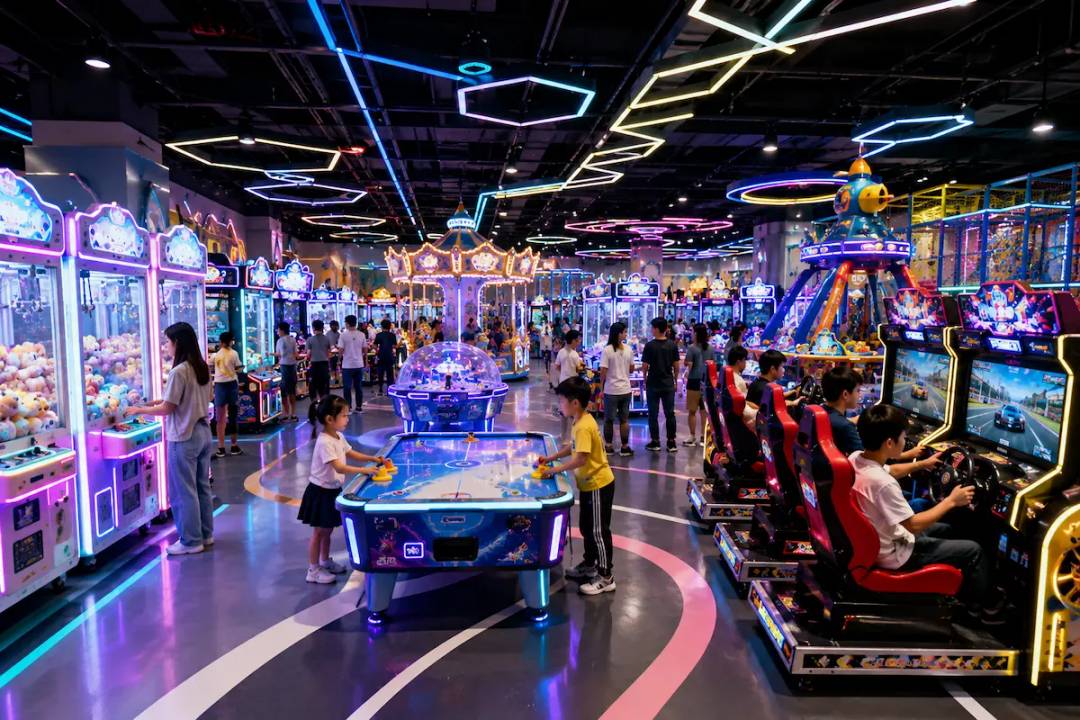
The payment system should be decided before machine production because it affects the cabinet, wiring, control settings, and venue operation.
Common options include:
- Coin acceptors
- Tokens
- Prepaid game cards
- Membership cards
- Cashless readers
- Ticket dispensers
- Electronic ticket points
Coin and token systems are simple for smaller locations. Card systems may be more suitable for larger game centers because they support stored value, membership programs, bonus credits, ticket balances, and centralized management.
Buyers should confirm:
- Local currency or token dimensions
- Credits required per game
- Card reader compatibility
- Ticket or point output
- Payment system installation position
- Availability of replacement components
- Options for future upgrades
7. Plan the Prize Counter as Part of the Revenue System
The redemption counter should not be treated as an afterthought. It connects game participation with visible rewards and can influence repeat spending.
A practical prize strategy includes:
- Low-point prizes for immediate rewards
- Mid-range products for repeat customers
- High-point prizes that encourage return visits
- Clear point labels
- Organized product displays
- Easy restocking access
- Inventory monitoring
The prize counter should be visible from redemption zones. Players who can see attractive rewards while playing are more likely to continue collecting points.
8. Confirm OEM and Venue Customization
Customization can help the game center develop a consistent identity instead of looking like a collection of unrelated machines.
Available options may include:
- Custom logos
- Cabinet colors
- Side-panel artwork
- Theme graphics
- Interface languages
- Voltage and plug standards
- Coin or card payment configuration
- Machine difficulty settings
- Prize display styling
- Packaging labels
For a chain arcade or branded FEC, the same visual system can be repeated across different locations. Learn more about EPARK’s production and project capabilities through the About EPARK page.
9. Check Quality Before Shipment
Commercial machines should be tested under realistic operating conditions before export.
The pre-shipment inspection should cover:
| Inspection Area | What to Check |
|---|---|
| Gameplay | Stable operation and correct settings |
| Controls | Buttons, joysticks, wheels and pedals |
| Payment | Coin, token, card or cashless recognition |
| Redemption | Ticket or point output |
| Display | Screen clarity and sound performance |
| Lighting | LED stability and visual consistency |
| Cabinet | Structure, finish and access panels |
| Accessories | Keys, manuals, cables and spare parts |
| Packaging | Protection for international transport |
Buyers can request machine photos, test videos, packaging photos, and a final packing list before shipment.
10. Coordinate Delivery and Installation with the Opening Schedule
The opening date should not be planned around the estimated shipping date alone. Allow time for customs clearance, unloading, machine positioning, electrical connection, testing, staff training, and trial operation.
A practical project sequence is:
- Confirm the floor plan and machine mix
- Approve specifications and customization
- Complete production and quality inspection
- Prepare export packaging and documents
- Ship the equipment
- Position and install the machines
- Configure payment and redemption systems
- Test every machine
- Train the operating team
- Run a soft-opening period
Clear coordination reduces the risk of receiving machines before the venue is ready or delaying the opening because electrical and network requirements were overlooked.
Common delivery, installation, and service questions are covered on the EPARK FAQ page.
11. Common Game Center Setup Mistakes
Buying Too Many Similar Machines
A venue filled with only claw machines or racing games may attract one customer group but lose broader family traffic.
Ignoring Maintenance Access
Machines placed too close to walls or other equipment become difficult to inspect and repair.
Selecting Payment Systems Too Late
Changing from coins to cards after production may require wiring and cabinet modifications.
Underplanning the Prize Counter
Weak prize selection can reduce the commercial value of redemption games.
Choosing Machines Only by Price
Lower purchase prices may lead to higher downtime, spare-parts costs, and customer complaints.
Forgetting Future Expansion
A layout with no flexible space makes it difficult to introduce new machines or refresh the venue later.
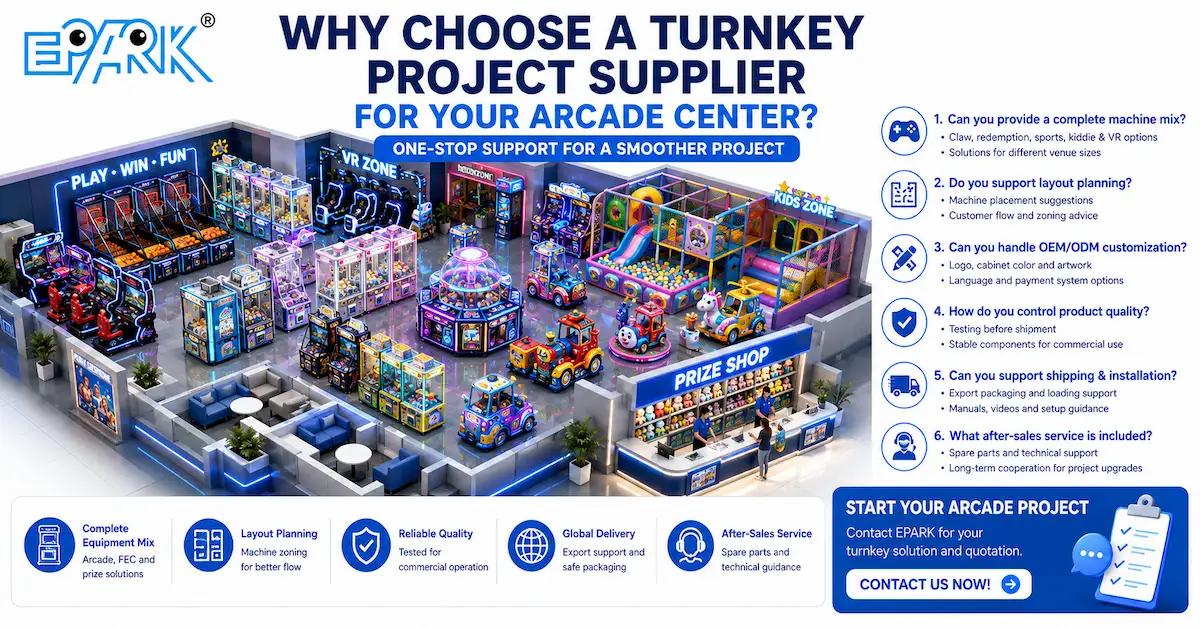
12. Why Work with EPARK for Your Game Center Project?
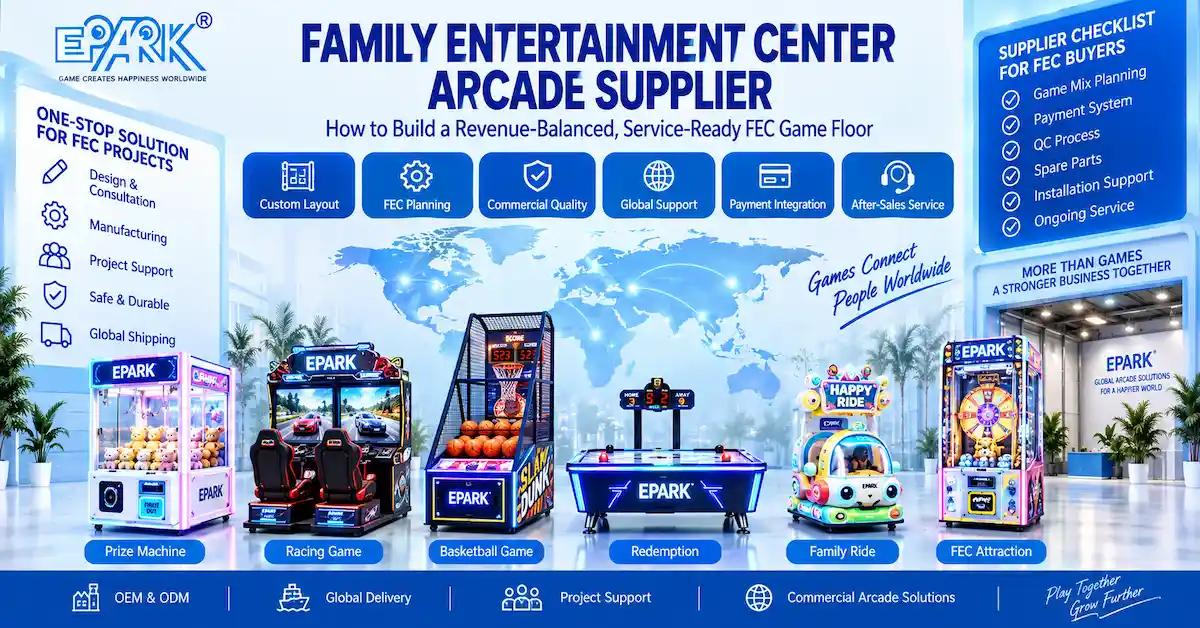
EPARK supports commercial arcade and FEC projects from equipment planning through delivery.
Project support can include:
- Arcade machine recommendations
- Machine mix planning
- Venue zoning suggestions
- Claw, redemption, sports and racing equipment
- Kiddie rides and family games
- Prize area planning
- OEM/ODM customization
- Payment system configuration
- Pre-shipment quality control
- Export packaging and shipping
- Installation guidance
- Spare parts and technical support
The goal is to help buyers build a game center that is practical to install, attractive to customers, and easier to operate over time.
Explore available equipment on the Products page or contact EPARK with your floor plan, target market, preferred machine categories, and project budget.
FAQ
1. What is included in a game center setup with arcade machines?
A complete setup can include machine selection, floor-plan zoning, payment systems, redemption equipment, prize counter planning, customization, shipping, installation guidance, and after-sales support.
2. How many arcade machines should a new venue buy?
The quantity depends on usable floor space, machine dimensions, aisle requirements, customer capacity, and revenue strategy. A floor-plan-based proposal is more reliable than selecting a fixed number without layout analysis.
3. Which machines should be placed near the entrance?
Claw machines, prize machines, and visually bright quick-play games usually work well near entrances because customers can understand them quickly and begin playing without long instructions.
4. Is a card system better than coins or tokens?
Card systems can support stored value, membership, electronic tickets, and centralized reporting. Coins or tokens may remain practical for smaller venues with simpler operations.
5. Can arcade machines be customized for a branded venue?
Yes. Cabinet colors, logos, artwork, interface language, payment systems, voltage, packaging, and selected game settings may be customized according to the project.
6. What support does EPARK provide after delivery?
EPARK can provide installation guidance, operating instructions, remote technical assistance, replacement components, spare parts, and support for future equipment orders.
Conclusion
A successful game center setup with arcade machines depends on coordinated planning rather than buying popular equipment individually. The venue concept, customer groups, machine mix, payment system, prize strategy, floor layout, quality control, and installation schedule should all support the same commercial goal.
Working with an experienced supplier can reduce sourcing complexity and help avoid costly layout or equipment mistakes.
Contact EPARK to submit your venue plan and receive machine recommendations, layout support, customization options, and a project quotation for your arcade center.
Disclaimer
The information provided on this website is for general informational purposes only.
While EPARK Arcade Game Machine Manufacturer strives to ensure accuracy and reliability, no warranties—express or implied—are made regarding completeness, performance, or applicability.
Product specifications, designs, and features may vary depending on usage, customization, and customer requirements.
Buyers are responsible for verifying all technical details, compliance certifications, and suitability before procurement.
EPARK shall not be held liable for any direct, indirect, incidental, or consequential damages arising from the use of this website or its content, including but not limited to business losses, data errors, or equipment misuse.
For tailored solutions or further verification, please visit our Contact Us
Intellectual Property Notice
All articles, product images, videos, catalogs, software, and related materials published on this website are the intellectual property of EPARK, unless otherwise stated.
Unauthorized reproduction, distribution, modification, or commercial use of any content is strictly prohibited without prior written consent from EPARK.
EPARK reserves the right to take legal action against any unauthorized use, including but not limited to copyright infringement, misrepresentation, or unfair competition.
Trademarks
The name EPARK, the EPARK logo, and all related brand elements displayed on this website are registered trademarks or trade names of Guangzhou EPARK Electronic Technology Co., Ltd.
Other product names, company names, or logos mentioned on this site may be trademarks of their respective owners.
Unauthorized use of EPARK's trademarks for commercial purposes, including advertising, promotions, or product packaging, is strictly prohibited.
Governing Law
These terms are governed by the laws of the People's Republic of China.