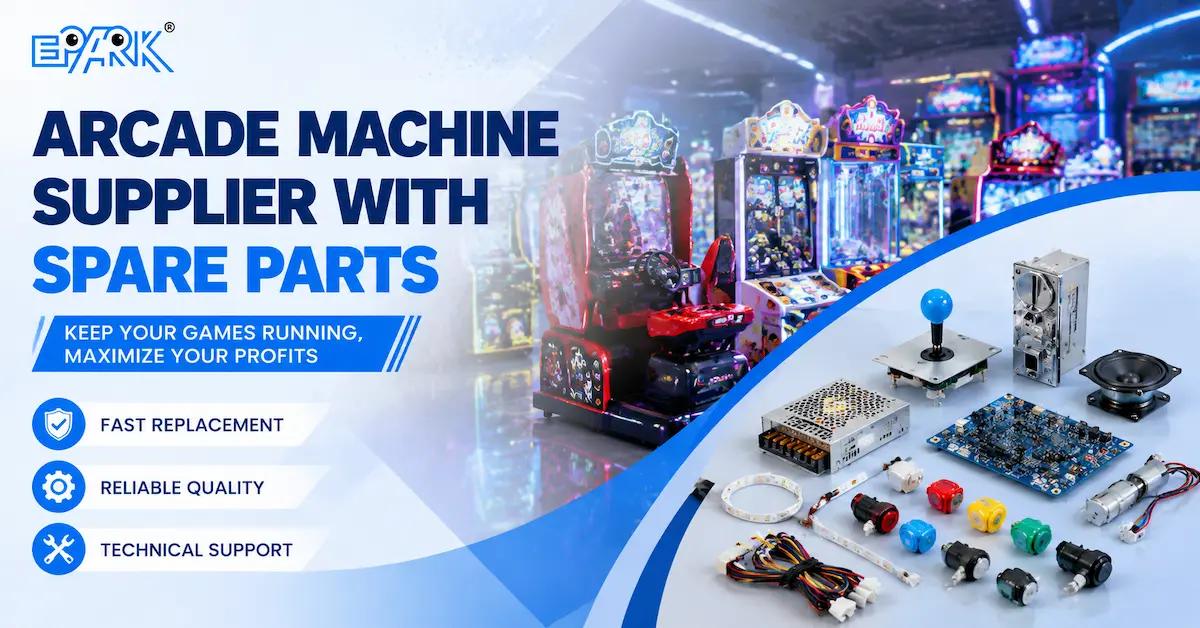

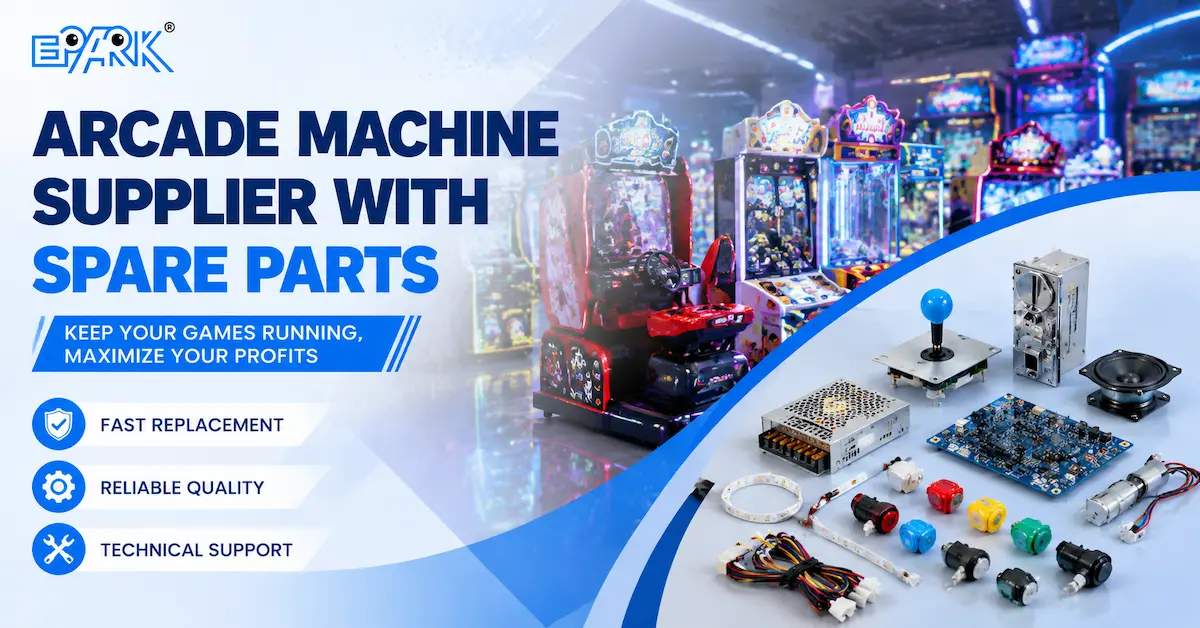
When buyers search for an arcade machine supplier with spare parts, they are usually thinking beyond the initial equipment price. They want to know whether the supplier can continue supporting the machines after installation.
Commercial arcade machines may operate for long hours in family entertainment centers, shopping malls, indoor playgrounds, cinemas, hotels, and arcade chains. Even reliable equipment contains components that may eventually require maintenance or replacement.
A button, card reader, sensor, power supply, motor, or control board may be small compared with the complete machine, but one failed component can stop the equipment from generating revenue.
A professional supplier should therefore provide more than machines. It should support buyers with:
- Recommended spare-parts packages
- Clearly labeled components
- Replacement part numbers
- Technical manuals
- Wiring diagrams
- Remote troubleshooting
- Warranty procedures
- Repair videos
- Long-term parts availability
- Future machine upgrades
For commercial buyers, spare-parts planning is one of the most practical ways to reduce downtime and protect operating revenue.
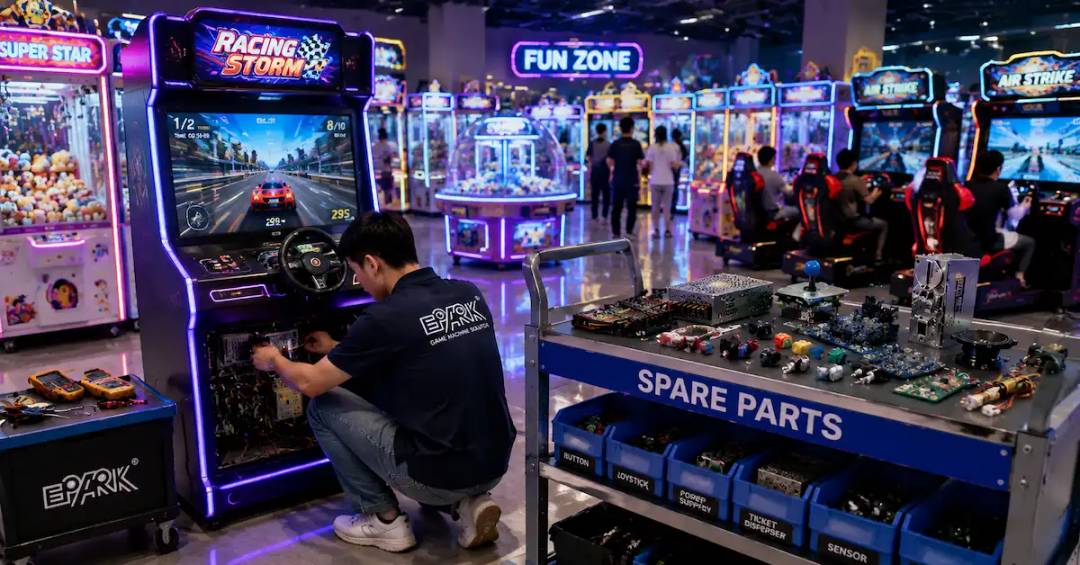
Quick Answer: What Should an Arcade Machine Supplier Provide?
An experienced supplier should provide the machines, recommended replacement parts, consumable components, warranty parts, installation guidance, maintenance documents, and remote technical support.
The supplier should also explain which components are included with the shipment, which parts should be purchased as backups, and how quickly additional replacements can be dispatched.
1. Why Spare-Parts Availability Matters for Arcade Businesses
Arcade operators depend on machine uptime. When a popular game stops working, the venue may experience:
- Lost game revenue
- Customer complaints
- Reduced venue appeal
- Longer maintenance time
- Additional technician costs
- Lower return on equipment investment
The effect can be more serious for distributors because they may support multiple local customers. If replacement parts are unavailable, the distributor’s reputation may also be affected.
Reliable spare-parts support helps businesses:
- Repair machines faster
- Reduce international shipping delays
- Maintain consistent customer experiences
- Extend equipment service life
- Support multiple venue locations
- Improve local after-sales service
- Prepare for peak operating periods
Spare parts should be discussed before shipment, not after a failure occurs.
2. Which Arcade Machine Spare Parts Are Commonly Needed?
Different machines use different components, but several replacement categories are common across commercial arcade equipment.
Control Components
These include:
- Push buttons
- Joysticks
- Steering wheels
- Pedals
- Gear selectors
- Touch panels
- Guns and triggers
- Air-hockey paddles
Control components receive frequent physical use and should be easy to replace.
Payment Components
These may include:
- Coin acceptors
- Token readers
- Card readers
- QR payment devices
- Credit boards
- Recharge-system accessories
Payment failures can stop customers from starting a game, even when the rest of the machine works normally.
Electronic Components
Common electronic parts include:
- Main control boards
- Power supplies
- Display boards
- Interface boards
- Relays
- Sensors
- Wiring harnesses
- Connectors
- Speakers
These components should be labeled clearly so buyers can identify the correct replacement model.
Mechanical Parts
Depending on the machine, mechanical parts may include:
- Motors
- Belts
- Chains
- Bearings
- Claw assemblies
- Ticket dispensers
- Prize mechanisms
- Moving-seat components
Mechanical parts are particularly important for claw machines, redemption games, kiddie rides, and simulator equipment.
Lighting and Appearance Parts
These may include:
- LED strips
- Light modules
- Decorative panels
- Acrylic covers
- Stickers
- Cabinet artwork
- Screen protectors
Replacing damaged appearance parts helps maintain the venue’s visual quality.
3. Spare Parts by Machine Category
The recommended parts package should match the machine mix.
| Machine Category | Common Spare Parts |
|---|---|
| Claw Machines | Claw assembly, motor, string, joystick, coin reader |
| Racing Machines | Steering sensor, pedals, power supply, buttons, screen parts |
| Basketball Games | Sensors, scoring board, ball-release parts, nets |
| Redemption Games | Ticket dispenser, sensors, buttons, control board |
| Kiddie Rides | Motor, power supply, coin reader, switches, LED parts |
| Shooting Games | Gun sensor, trigger, cables, calibration components |
| Air Hockey | Pucks, paddles, blower parts, scoring sensors |
| Prize Machines | Motors, sensors, payment parts, lighting components |
A professional arcade machine supplier with spare parts should recommend parts based on the actual order rather than providing the same package for every project.
4. Distinguish Consumable Parts from Warranty Parts
Buyers should understand the difference between consumable components and warranty-covered components.
Consumable Parts
These are parts that may wear during normal operation, such as:
- Buttons
- Joysticks
- Belts
- Ticket paper
- Locks
- Keys
- Paddles
- Nets
- Decorative stickers
Consumables may not be covered by the standard warranty.
Warranty Parts
Warranty coverage may apply to manufacturing-related failures involving:
- Control boards
- Power supplies
- Motors
- Displays
- Sensors
- Electrical components
The exact terms vary by supplier and machine model.
Before ordering, ask:
- Which parts are considered consumables?
- Which parts are covered by warranty?
- How long is the warranty period?
- Who pays replacement shipping costs?
- What evidence is required for a claim?
- Must the damaged component be returned?
- Is local installation labor included?
Clear written terms help prevent disputes after delivery.
5. Ask for a Recommended Spare-Parts Package
A spare-parts package should reflect the venue size, order quantity, machine categories, and local technical capability.
Small Arcade Venue
A smaller location may prepare:
- Common buttons
- Coin acceptors
- Power supplies
- LED strips
- Locks and keys
- Basic sensors
Large Family Entertainment Center
A large FEC may need:
- Parts for every major machine category
- Additional payment readers
- Control boards
- Ticket dispensers
- Motors
- Screens or display modules
- Wiring components
Arcade Chain
A chain operator should standardize parts across locations whenever possible. Using compatible machine series can simplify:
- Technician training
- Parts inventory
- Repair procedures
- Repeat orders
Distributor
A distributor may require a larger inventory because it serves multiple customers. It should keep fast-moving components and request detailed part numbers from the factory.
EPARK provides commercial arcade machines across different categories. Buyers can review related equipment on the EPARK Products page.
6. Confirm Long-Term Spare-Parts Availability
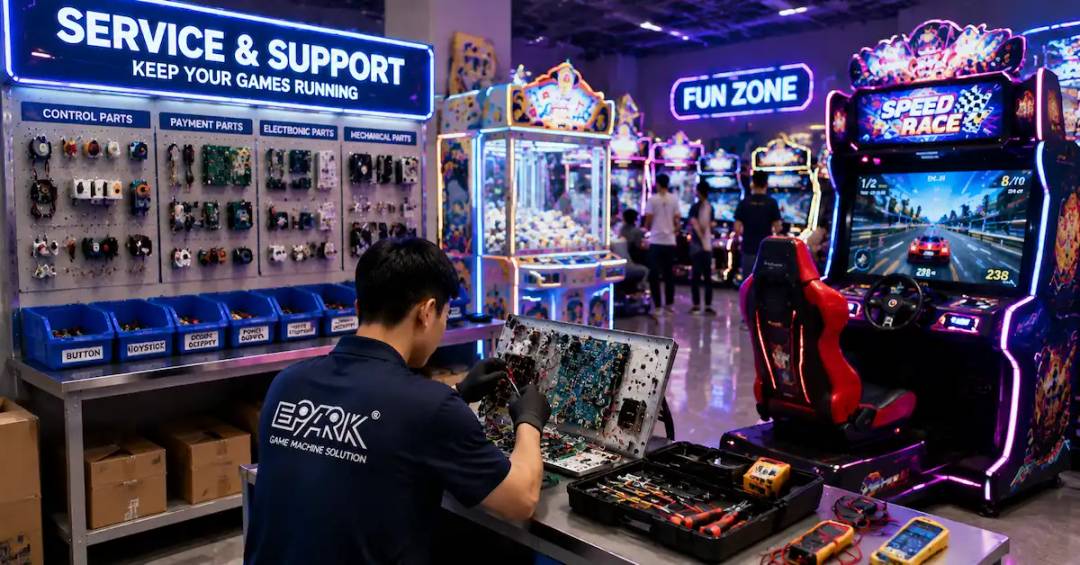
A spare-parts package included with the first order is useful, but buyers should also confirm future availability.
Ask the supplier:
- How long will replacement parts remain available?
- Are parts compatible across different machine versions?
- How are discontinued parts handled?
- Can alternative components be recommended?
- Are part numbers recorded?
- Can parts be purchased separately?
- How quickly can parts be shipped?
This is particularly important for distributors and arcade chains that may operate the same machines for several years.
Frequent uncontrolled changes to boards, readers, or motors can make maintenance more difficult. A reliable supplier should keep organized records of machine specifications and compatible components.
7. Make Sure Every Part Is Clearly Labeled
Spare parts should be easy to identify.
The factory should ideally provide:
- Part name
- Part number
- Compatible machine model
- Voltage or specification
- Installation position
- Quantity
- Packaging label
- Reference photo
Unlabeled parts can create confusion when several machine models use similar-looking components.
A clear spare-parts list also helps buyers reorder the correct component without sending repeated photos or measurements.
8. Technical Documents Make Spare Parts More Useful
Receiving replacement parts is only one part of the repair process. Local technicians also need instructions.
Useful technical documents include:
- Wiring diagrams
- Exploded machine diagrams
- Parts lists
- Installation manuals
- Repair videos
- Error-code guides
- Settings instructions
- Maintenance checklists
- Component replacement steps
Documents should match the delivered machine version.
If the factory updates the control system or payment reader, it should also update the relevant technical information.
Learn more about EPARK’s production and project capabilities through the About EPARK page.
9. Remote Troubleshooting Before Replacing Components
Not every machine problem requires a replacement part. Some issues may be caused by:
- Loose wiring
- Incorrect settings
- Poor network connection
- Sensor misalignment
- Payment-system configuration
- Power interruption
- Software errors
Remote troubleshooting can help determine the real cause before parts are changed.
When reporting an issue, send:
- Machine model
- Serial number or order reference
- Clear fault description
- Photos of the machine and component
- A short video showing the issue
- Error code, if available
- Recent changes to wiring or settings
A professional technical team should provide structured testing instructions instead of immediately recommending random component replacements.
10. Evaluate the Supplier’s Response Process
Reliable support requires organized communication.
Before ordering, ask:
- Who handles after-sales cases?
- Which communication channels are available?
- Is support available in English?
- What information is required?
- How quickly are technical cases reviewed?
- How quickly can parts be prepared?
- Are urgent cases prioritized?
- Are previous support records saved?
A dedicated service contact is especially valuable for distributors and large projects.
Buyers can review common technical, shipping, and warranty questions on the EPARK FAQ page.
11. Include Spare Parts in the Original Shipment
Shipping spare parts together with the main order can reduce future logistics expenses.
Advantages include:
- Lower shipping cost per part
- Immediate local availability
- Faster repairs
- Reduced customs procedures
- Easier venue opening preparation
Small components can often be packed with the machines if properly labeled and protected.
Before shipment, confirm:
- Which spare parts are included
- Which parts are purchased separately
- Packaging location
- Part quantities
- Packing-list details
- Warranty replacements
- Consumable components
The buyer should inspect the spare-parts package when the shipment arrives.
12. Prepare Local Spare-Parts Storage
Spare parts should be stored carefully to prevent damage.
Recommended storage practices include:
- Keep electronic boards in anti-static packaging
- Protect parts from moisture
- Label shelves by machine model
- Record incoming and outgoing quantities
- Store keys and locks securely
- Keep fragile acrylic parts protected
- Separate warranty parts from consumables
- Maintain a reorder level for fast-moving parts
A simple inventory spreadsheet can record:
- Part name
- Part number
- Compatible machine
- Quantity
- Storage location
- Usage history
- Reorder date
Organized inventory helps staff locate components quickly during repairs.
13. Train Local Staff to Handle Basic Replacements
Venue employees do not need to become advanced engineers, but selected staff should understand basic maintenance.
Training may cover:
- Replacing buttons
- Checking power supplies
- Installing coin acceptors
- Refilling ticket dispensers
- Inspecting wiring connections
- Changing LED modules
- Recording error codes
- Reporting technical problems
- Following electrical safety procedures
More complex repairs should be handled by qualified technicians with factory guidance.
A supplier can support training through:
- Videos
- Manuals
- Video calls
- Diagrams
- Online demonstrations
14. Common Mistakes When Planning Arcade Spare Parts
Waiting Until a Machine Fails
International replacement delivery may take longer than expected.
Buying Parts Without Model Numbers
Similar components may have different specifications.
Keeping No Payment-System Backups
A reader failure can stop an otherwise functional machine.
Ignoring Consumable Components
Low-cost parts can still cause long downtime when unavailable.
Storing Parts Poorly
Moisture, dust, or static electricity can damage electronic components.
Choosing a Supplier Without Long-Term Support
A low initial price may not compensate for unavailable parts and weak technical service.
15. Questions to Ask an Arcade Machine Supplier
Use this checklist before placing an order:
- Which spare parts are included?
- Which components are consumables?
- What parts are covered by warranty?
- Can you recommend a backup-parts package?
- Are part numbers clearly labeled?
- How long will parts remain available?
- Can parts be shipped internationally?
- Are wiring diagrams provided?
- Are repair videos available?
- Do you offer remote troubleshooting?
- How quickly can replacement parts be prepared?
- Can you support future machine upgrades?
- Are parts compatible across repeat orders?
Clear answers help buyers compare suppliers on long-term value rather than machine price alone.
16. Why Choose EPARK as Your Arcade Machine Supplier with Spare Parts?
EPARK supports FEC operators, arcade investors, distributors, shopping mall projects, indoor playgrounds, and entertainment contractors with equipment and long-term service.
Support can include:
- Commercial arcade machines
- Recommended spare-parts packages
- Component identification
- Technical manuals
- Remote troubleshooting
- Warranty assistance
- Repair guidance
- Payment-system support
- Repeat-order compatibility
- Future equipment upgrades
Whether you are opening a single arcade venue or building a regional distribution business, spare-parts planning can be included during the equipment-selection stage.
Contact EPARK through the Contact page with your machine categories, order quantity, payment system, destination market, and technical support requirements.
FAQ
1. Which spare parts should be ordered with arcade machines?
Recommended parts depend on the machines. Common options include buttons, joysticks, payment readers, sensors, power supplies, control boards, motors, LED components, locks, and cables.
2. Are arcade machine spare parts covered by warranty?
Some manufacturing-related failures may be covered, while consumable parts may not be. Buyers should confirm the written warranty terms before ordering.
3. Can spare parts be shipped with the arcade machines?
Yes. Packing spare parts with the original shipment can reduce logistics costs and provide immediate maintenance inventory.
4. How do I identify the correct replacement component?
Use the part number, compatible machine model, specification, voltage, and reference photo provided by the supplier.
5. Can a factory diagnose machine problems remotely?
Professional factories can use photos, videos, error codes, wiring diagrams, and video calls to diagnose many common problems.
6. Does EPARK provide spare parts for international buyers?
EPARK can provide recommended spare-parts packages, replacement components, warranty assistance, remote guidance, and long-term technical support.
Conclusion
Choosing an arcade machine supplier with spare parts is essential for protecting long-term venue performance. Machines generate revenue only when they remain available for customers, and even small component failures can create unnecessary downtime.
A reliable supplier should provide clearly labeled parts, technical documents, warranty terms, remote troubleshooting, and long-term replacement availability. Buyers should prepare their spare-parts strategy before shipping rather than after problems occur.
For FEC operators, arcade chains, distributors, and project contractors, strong spare-parts support can reduce maintenance risk and improve customer satisfaction.
Disclaimer
The information provided on this website is for general informational purposes only.
While EPARK Arcade Game Machine Manufacturer strives to ensure accuracy and reliability, no warranties—express or implied—are made regarding completeness, performance, or applicability.
Product specifications, designs, and features may vary depending on usage, customization, and customer requirements.
Buyers are responsible for verifying all technical details, compliance certifications, and suitability before procurement.
EPARK shall not be held liable for any direct, indirect, incidental, or consequential damages arising from the use of this website or its content, including but not limited to business losses, data errors, or equipment misuse.
For tailored solutions or further verification, please visit our Contact Us
Intellectual Property Notice
All articles, product images, videos, catalogs, software, and related materials published on this website are the intellectual property of EPARK, unless otherwise stated.
Unauthorized reproduction, distribution, modification, or commercial use of any content is strictly prohibited without prior written consent from EPARK.
EPARK reserves the right to take legal action against any unauthorized use, including but not limited to copyright infringement, misrepresentation, or unfair competition.
Trademarks
The name EPARK, the EPARK logo, and all related brand elements displayed on this website are registered trademarks or trade names of Guangzhou EPARK Electronic Technology Co., Ltd.
Other product names, company names, or logos mentioned on this site may be trademarks of their respective owners.
Unauthorized use of EPARK's trademarks for commercial purposes, including advertising, promotions, or product packaging, is strictly prohibited.
Governing Law
These terms are governed by the laws of the People's Republic of China.