
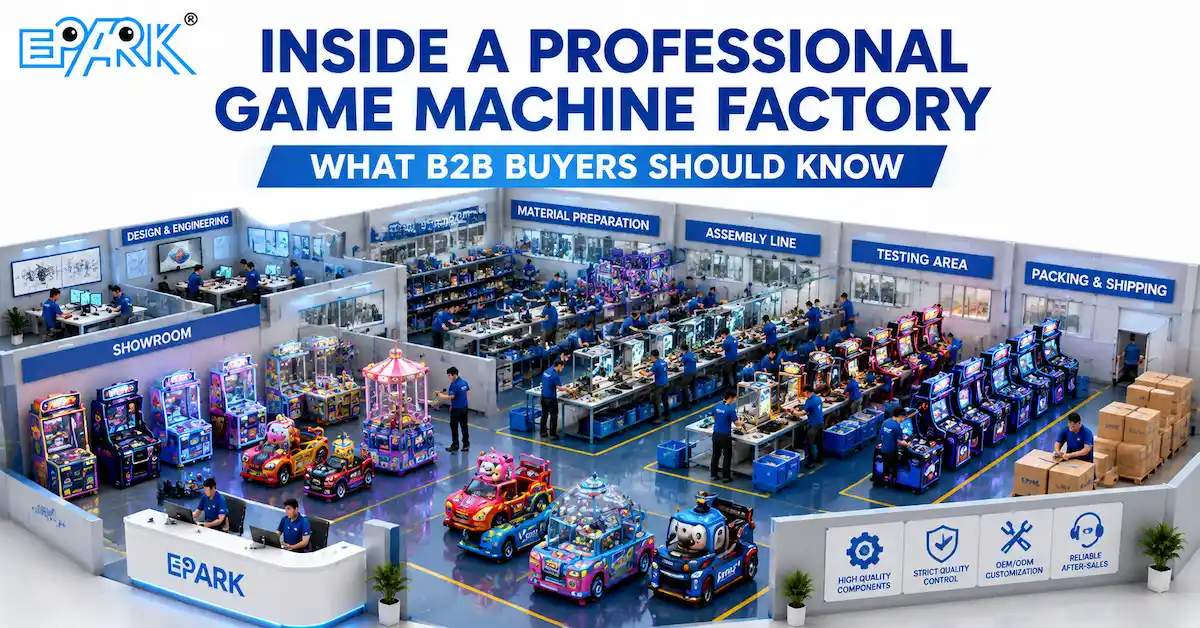
For global arcade operators, distributors, and entertainment project buyers, choosing the right supplier requires more than reviewing product photos and prices.
Understanding what happens inside a professional game machine factory helps buyers evaluate:
- Manufacturing capability
- Product reliability
- Production standards
- Customization ability
- Quality management
- Delivery capability
- Long-term supplier potential
Commercial arcade machines are complex products that combine:
- Mechanical structures
- Electronic systems
- Software
- Interactive components
- Payment systems
- Safety features
- Visual design
A professional factory manages every stage from concept development to final shipment.
For B2B buyers, factory knowledge provides confidence when selecting a long-term manufacturing partner.
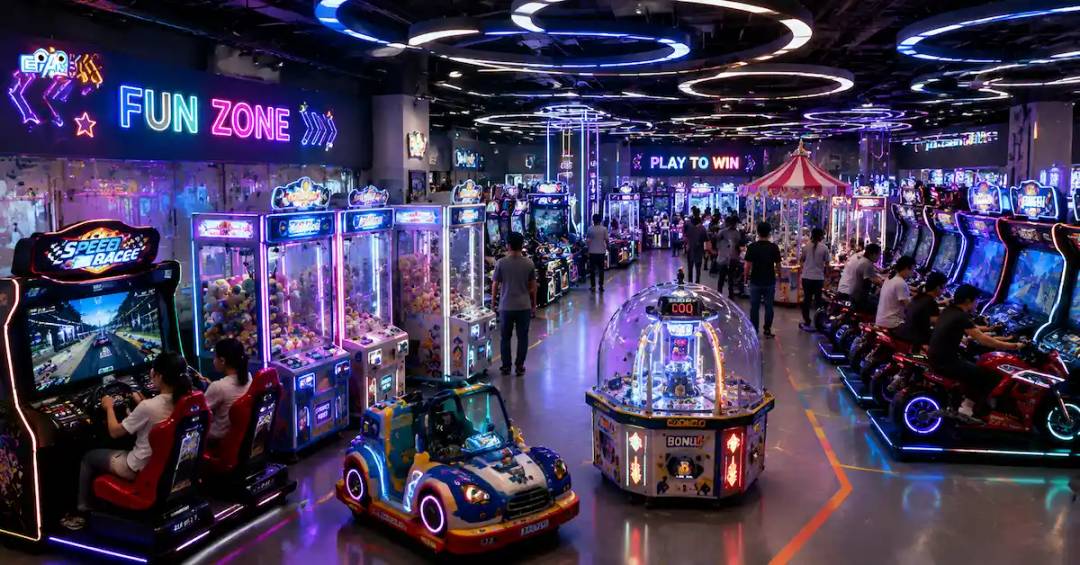
Quick Answer: What Happens Inside a Professional Game Machine Factory?
A professional game machine factory typically includes:
- Product design and engineering
- Material preparation
- Cabinet manufacturing
- Electronic assembly
- Machine assembly
- Software configuration
- Quality inspection
- Function testing
- Packaging and shipping
Each stage affects the final performance, durability, and commercial value of arcade equipment.
1. Product Design and Engineering Development
Before production begins, professional factories start with product design and engineering planning.
The development stage includes:
- Market research
- Product concept planning
- Industrial design
- Mechanical structure design
- Electronic system design
- Software development
- Prototype testing
Engineers consider:
User Experience
Commercial arcade machines need to be:
- Easy to understand
- Attractive to customers
- Comfortable to operate
- Suitable for different age groups
Commercial Durability
Unlike home entertainment products, arcade machines must handle:
- Frequent operation
- Different player behaviors
- Long working hours
- Public environments
Maintenance Requirements
Professional designs consider:
- Easy access to components
- Simple troubleshooting
- Replaceable parts
- Service efficiency
Strong engineering capability is one of the first indicators of a reliable manufacturer.
2. Material Preparation and Component Inspection
Before entering production, factories prepare and inspect raw materials.
Common materials and components include:
- Cabinet materials
- Screens
- Control boards
- Motors
- Sensors
- Speakers
- LED lighting
- Payment systems
- Wiring components
A professional factory should inspect incoming materials to ensure:
| Component | Inspection Focus |
|---|---|
| Cabinet Material | Strength and appearance |
| Electronic Parts | Compatibility and stability |
| Screens | Display quality |
| Motors | Performance |
| Sensors | Accuracy |
| Wiring | Safety and reliability |
| Payment Systems | Recognition function |
Material quality directly affects machine lifespan and maintenance costs.
3. Cabinet Manufacturing Process
The cabinet is one of the most visible parts of an arcade machine.
Inside a professional factory, cabinet production usually includes:
Cutting and Forming
Materials are processed according to design specifications.
Surface Treatment
Processes may include:
- Painting
- Printing
- Artwork application
- Protective finishing
Structural Assembly
Workers assemble:
- Panels
- Doors
- Internal brackets
- Mounting structures
- Decorative components
Appearance Inspection
The factory checks:
- Color consistency
- Surface quality
- Panel alignment
- Artwork accuracy
A high-quality cabinet improves both appearance and long-term durability.
4. Electronic Assembly and Wiring Installation
Arcade machines rely heavily on electronic systems.
The factory assembly process may include:
- Installing control boards
- Connecting power systems
- Installing screens
- Adding sensors
- Configuring lighting
- Connecting audio systems
- Installing payment modules
Professional factories focus on:
- Organized wiring
- Correct connections
- Safety protection
- Easy maintenance access
Poor wiring can create future problems, so inspection during assembly is essential.
5. Machine Assembly and Production Line Management
After components are prepared, machines move through assembly stages.
Production workers may complete:
- Cabinet assembly
- Screen installation
- Control installation
- Electronic connection
- Software setup
- Exterior finishing
A professional production line should have:
- Clear workflow
- Skilled technicians
- Standard operating procedures
- Production tracking
- Inspection checkpoints
Standardized production helps ensure consistency across large orders.
6. Software Configuration and System Testing
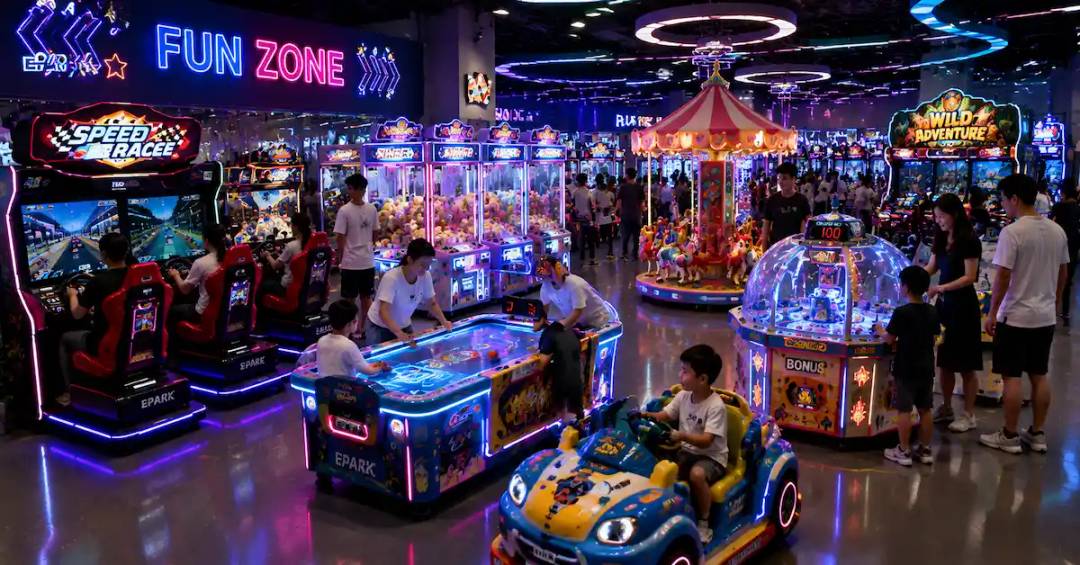
Modern arcade machines often include advanced software systems.
Factories configure:
- Game programs
- Payment settings
- Language options
- Difficulty levels
- Ticket systems
- Multiplayer functions
- Network settings
Testing includes:
- Game startup
- User interaction
- Payment operation
- Score calculation
- Prize output
- System stability
Software quality directly affects customer experience in commercial venues.
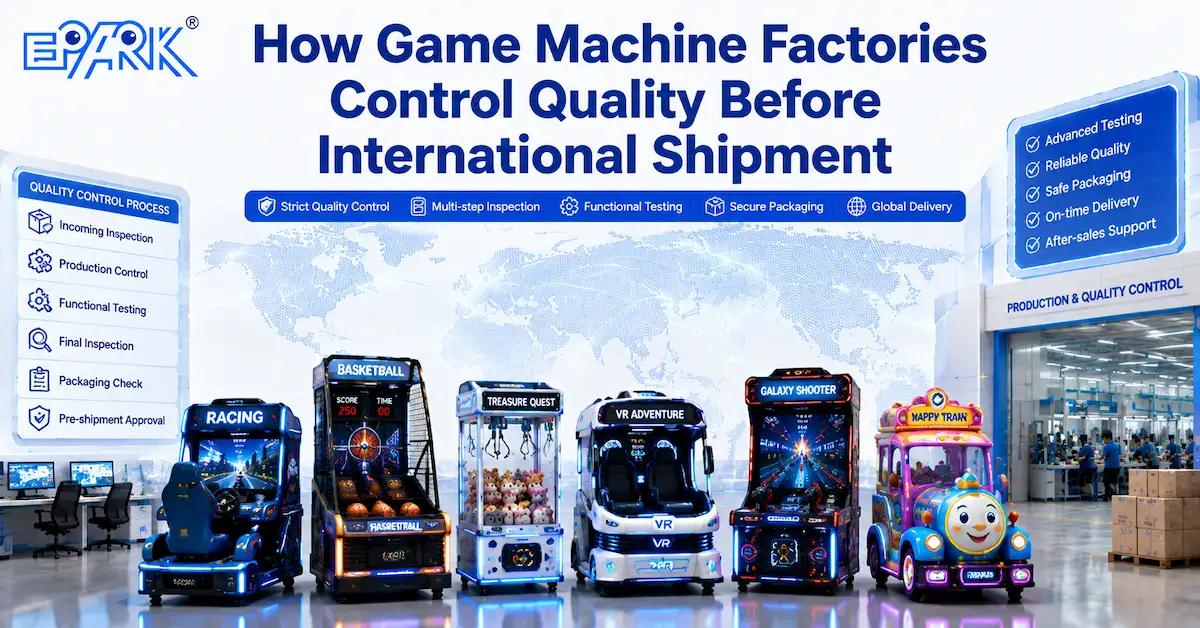
7. Quality Control Inside the Factory
Quality control is one of the most important stages inside a professional game machine factory.
A complete quality system should cover:
Incoming Inspection
Checking:
- Materials
- Components
- Electronics
Production Inspection
Monitoring:
- Assembly accuracy
- Wiring quality
- Installation process
Final Inspection
Testing:
- Machine appearance
- Gameplay
- Electronics
- Safety
- Packaging
A professional factory should not only inspect finished products but control quality throughout production.
8. Function Testing Before Shipment
Before delivery, every commercial arcade machine should pass function testing.
Testing may include:
| Test Item | Purpose |
|---|---|
| Gameplay Test | Confirm normal operation |
| Control Test | Check player response |
| Screen Test | Verify display performance |
| Sound Test | Check audio output |
| Payment Test | Confirm transaction function |
| Sensor Test | Ensure accuracy |
| Lighting Test | Verify LED operation |
| Safety Test | Check protection systems |
Testing helps identify problems before machines leave the factory.
9. OEM and Custom Production Capability
Many B2B buyers require customized arcade equipment.
A professional factory should support:
- Logo customization
- Cabinet design changes
- Artwork customization
- Language options
- Payment adjustments
- Voltage requirements
- Packaging customization
OEM capability is important for:
- Arcade chains
- Regional distributors
- Entertainment brands
- Large commercial projects
Working directly with a capable factory allows buyers to create differentiated products.
EPARK provides OEM/ODM customization for commercial arcade projects. Learn more through the About EPARK page.
10. Packaging and Export Preparation
The final factory stage involves preparing machines for international shipment.
Professional packaging includes:
- Protective materials
- Secure fixing
- Moisture protection
- Shock protection
- Shipping labels
Factories should prepare:
- Commercial invoices
- Packing lists
- Product specifications
- Loading information
Export experience is especially important for international buyers because arcade machines are large and sensitive products.
11. How B2B Buyers Can Evaluate a Game Machine Factory
Before cooperation, buyers should evaluate:
Factory Capability
Ask:
- Do you manufacture directly?
- How large is your production facility?
- How many machines can you produce monthly?
Product Experience
Check:
- Years in business
- Export markets
- Customer types
- Completed projects
Quality Management
Ask:
- What testing procedures are used?
- How are defects handled?
- Are inspection records available?
Customization Ability
Confirm:
- OEM services
- Design support
- Minimum order requirements
After-Sales Support
Evaluate:
- Spare parts
- Technical support
- Warranty service
A complete evaluation helps buyers choose suppliers with long-term value.
12. Why Factory Transparency Matters for Global Buyers
For international buyers, factory transparency reduces purchasing risks.
A transparent supplier can provide:
- Factory information
- Production photos
- Testing videos
- Quality documents
- Project examples
- Product specifications
This helps buyers understand:
- How machines are produced
- Who controls quality
- How orders are managed
- What support is available after delivery
A strong supplier relationship begins with trust and visibility.
13. Common Mistakes When Choosing a Game Machine Factory
Choosing Only Based on Price
Low prices may mean:
- Lower-quality components
- Limited testing
- Weak support
Ignoring Manufacturing Capability
A supplier may not handle:
- Large orders
- Custom projects
- Repeat production
Not Checking Quality Systems
Without proper inspection, problems may appear after installation.
Overlooking After-Sales Support
Long-term support affects operating costs.
Not Understanding Production Processes
Knowing factory capability helps buyers make better decisions.
14. Why Choose EPARK as Your Professional Game Machine Factory?
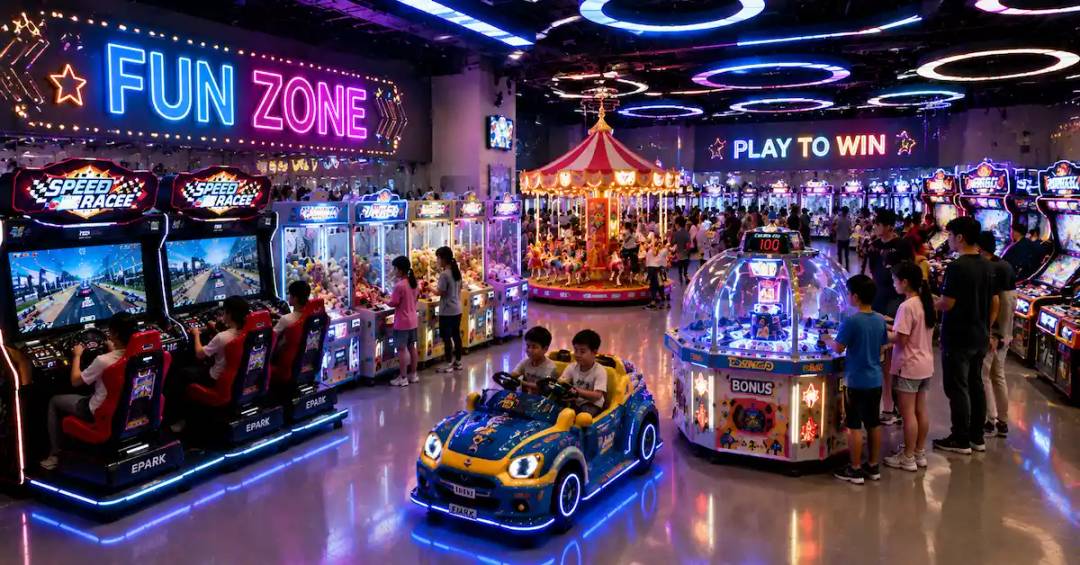
EPARK provides commercial arcade equipment solutions for global buyers.
EPARK supports:
- Arcade operators
- FEC investors
- Distributors
- Shopping mall projects
- Entertainment contractors
Capabilities include:
- Product development
- Manufacturing
- Quality inspection
- OEM/ODM customization
- Bulk production
- Export support
- Spare parts
- Technical service
By combining manufacturing experience and commercial project knowledge, EPARK helps buyers build reliable arcade solutions.
Explore available equipment through the EPARK Products page or contact EPARK through the Contact page.
FAQ
1. What happens inside a professional game machine factory?
A professional factory handles design, material preparation, assembly, testing, quality inspection, customization, packaging, and shipment.
2. Why should B2B buyers understand factory processes?
Understanding factory processes helps buyers evaluate supplier capability, product quality, production standards, and long-term reliability.
3. Can a game machine factory provide OEM customization?
Yes. Professional factories can customize designs, logos, artwork, payment systems, languages, and packaging.
4. How do factories ensure arcade machine quality?
Factories use material inspection, production monitoring, function testing, and final quality checks before shipment.
5. What should buyers check before choosing a factory?
Buyers should evaluate manufacturing experience, production capacity, quality control, customization ability, export experience, and after-sales support.
6. Does EPARK provide factory-direct arcade solutions?
Yes. EPARK provides commercial arcade machines, OEM customization, quality control, spare parts, and technical support for global buyers.
Conclusion
Understanding what happens inside a professional game machine factory helps B2B buyers make smarter supplier decisions.
A reliable manufacturer should provide more than products. It should provide:
- Engineering capability
- Stable production
- Quality management
- Customization support
- Export experience
- Long-term service
For arcade operators, distributors, and entertainment project developers, choosing a professional factory partner creates a stronger foundation for business growth.
Build Your Arcade Project with a Professional Factory
EPARK helps global buyers source commercial arcade machines with factory manufacturing support, OEM customization, quality control, and long-term technical assistance.
Get your equipment recommendations and project quotation today.
Contact EPARK → https://www.eparko.com/contact-us
Disclaimer
The information provided on this website is for general informational purposes only.
While EPARK Arcade Game Machine Manufacturer strives to ensure accuracy and reliability, no warranties—express or implied—are made regarding completeness, performance, or applicability.
Product specifications, designs, and features may vary depending on usage, customization, and customer requirements.
Buyers are responsible for verifying all technical details, compliance certifications, and suitability before procurement.
EPARK shall not be held liable for any direct, indirect, incidental, or consequential damages arising from the use of this website or its content, including but not limited to business losses, data errors, or equipment misuse.
For tailored solutions or further verification, please visit our Contact Us
Intellectual Property Notice
All articles, product images, videos, catalogs, software, and related materials published on this website are the intellectual property of EPARK, unless otherwise stated.
Unauthorized reproduction, distribution, modification, or commercial use of any content is strictly prohibited without prior written consent from EPARK.
EPARK reserves the right to take legal action against any unauthorized use, including but not limited to copyright infringement, misrepresentation, or unfair competition.
Trademarks
The name EPARK, the EPARK logo, and all related brand elements displayed on this website are registered trademarks or trade names of Guangzhou EPARK Electronic Technology Co., Ltd.
Other product names, company names, or logos mentioned on this site may be trademarks of their respective owners.
Unauthorized use of EPARK's trademarks for commercial purposes, including advertising, promotions, or product packaging, is strictly prohibited.
Governing Law
These terms are governed by the laws of the People's Republic of China.