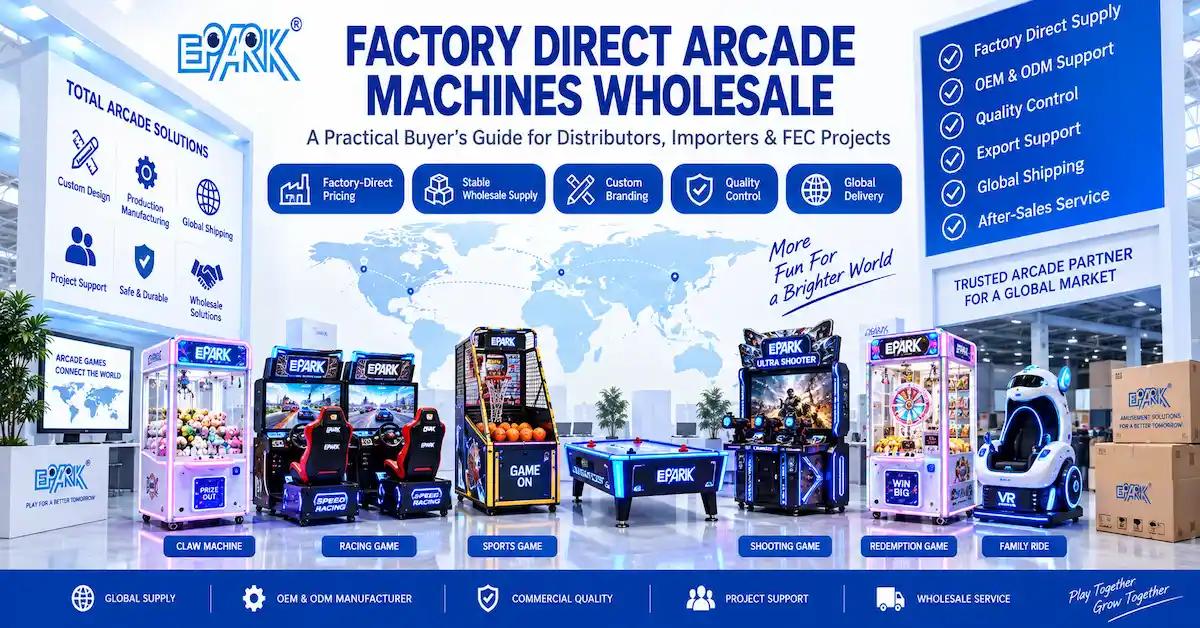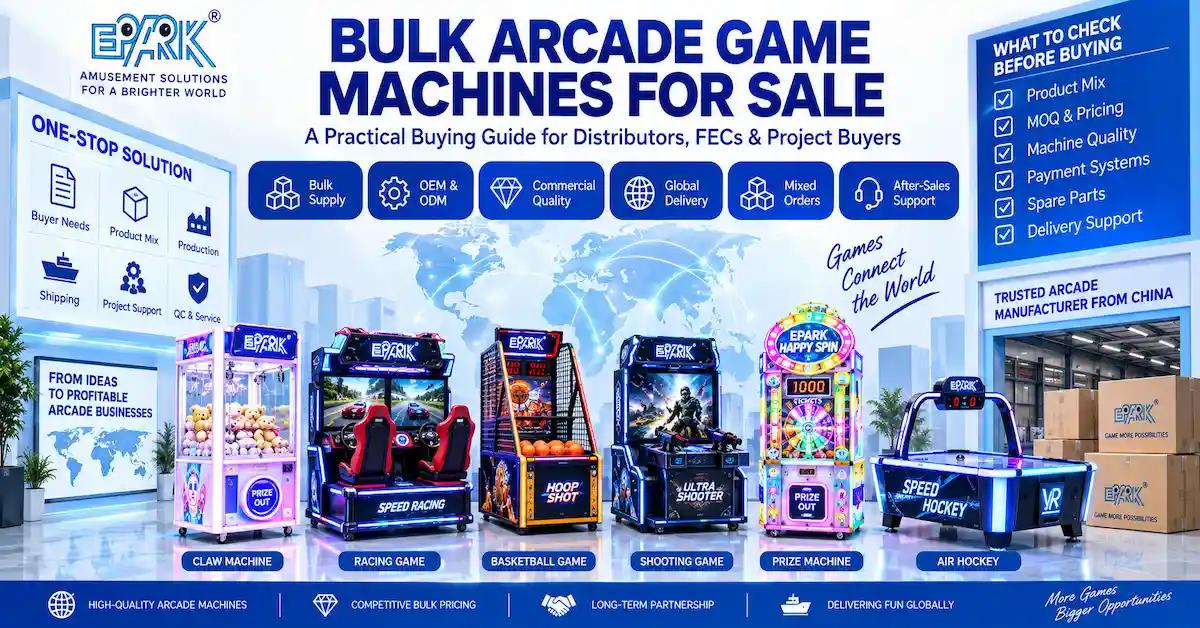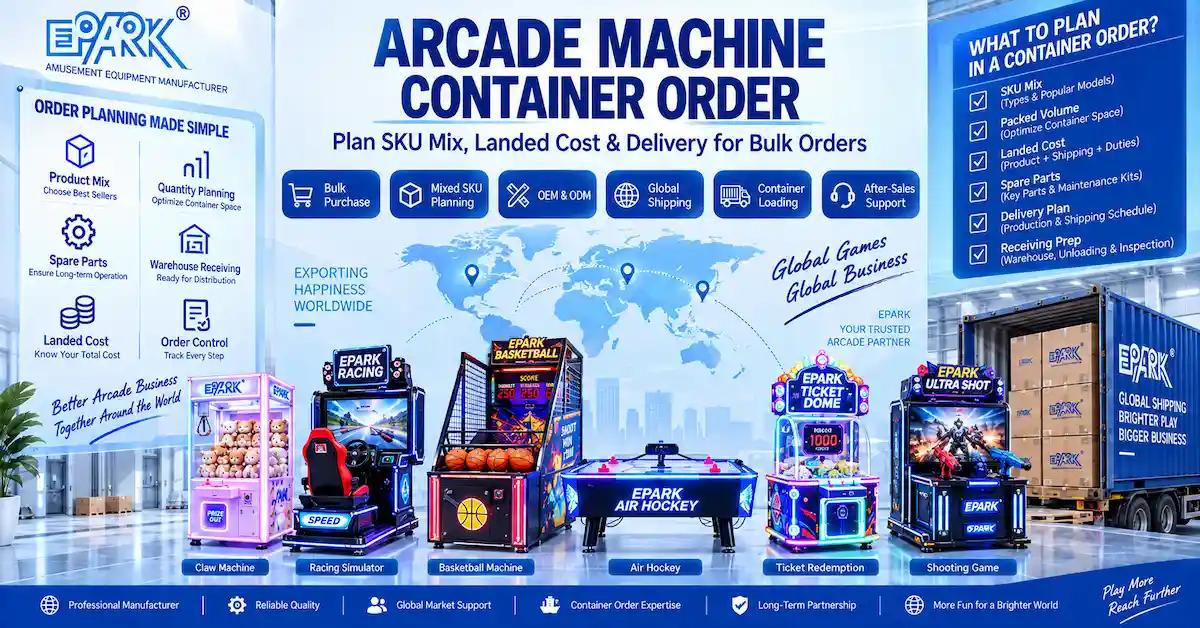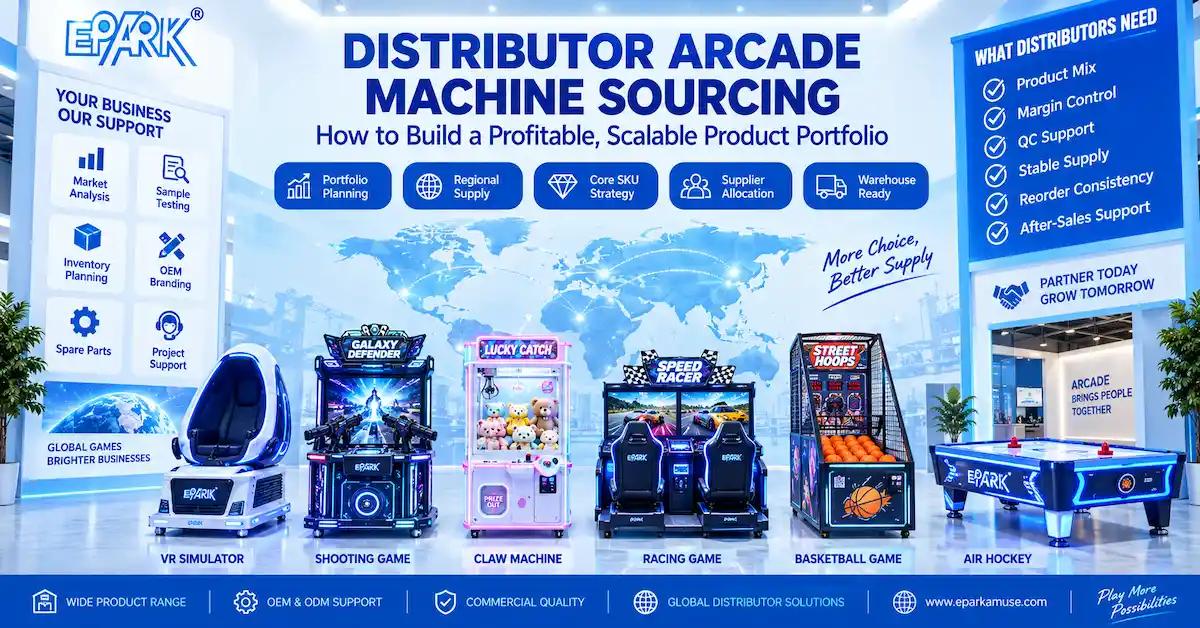

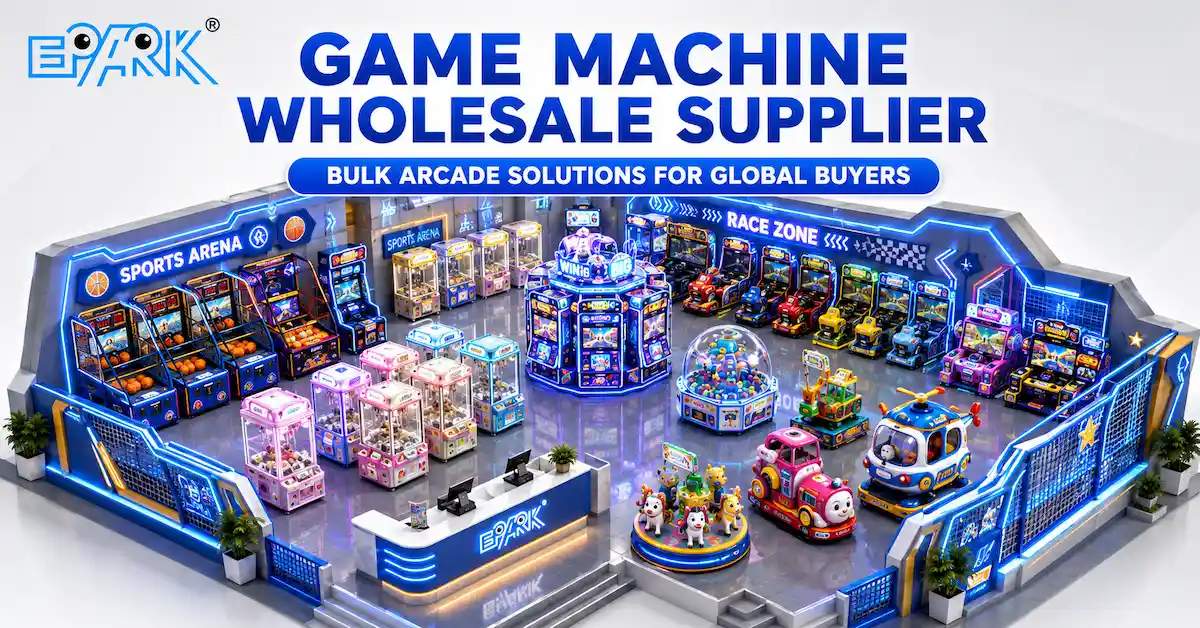
When buyers search for a game machine wholesale supplier, they usually have clear commercial purchasing intent. They may be preparing machines for local resale, a showroom, an arcade chain, a family entertainment center project, or regular distribution across a regional market.
Wholesale sourcing is different from purchasing one or two arcade machines. A distributor must consider whether the supplier can maintain stable models, provide mixed-machine orders, support repeat purchases, prepare spare parts, control quality, and coordinate international shipping.
A low initial quotation may appear attractive, but it does not guarantee a profitable wholesale business. Distributors also need to evaluate:
- Product demand in the local market
- Wholesale price structure
- Minimum order quantity
- Mixed-container flexibility
- Machine quality and commercial durability
- OEM and private-label options
- Export packaging
- Spare-parts availability
- Warranty and technical support
- Stability of future supply
The best supplier helps buyers build a product portfolio rather than simply complete a single transaction.
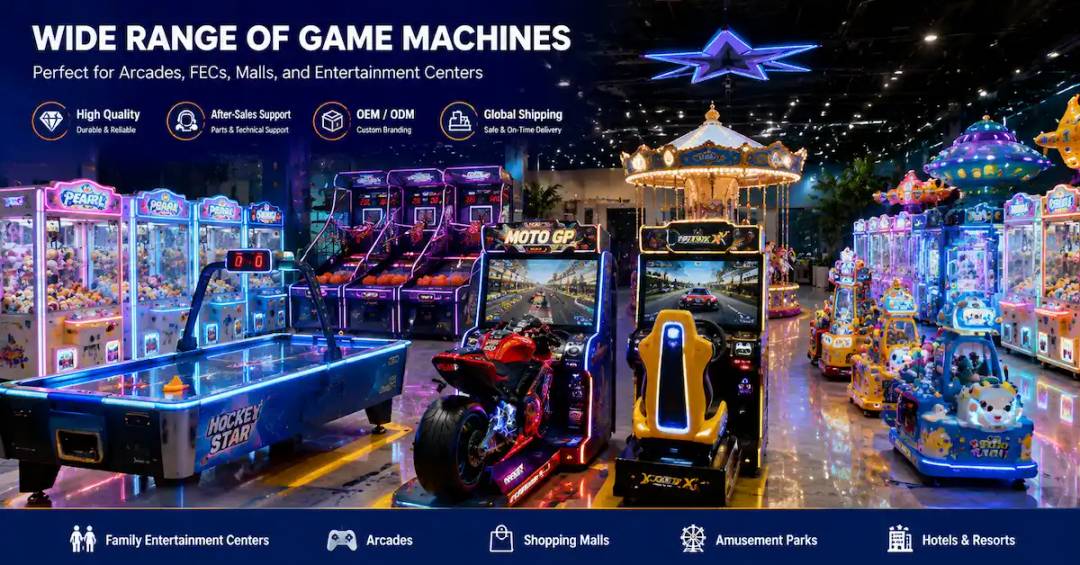
1. Who Needs a Game Machine Wholesale Supplier?
Wholesale arcade sourcing is suitable for several types of B2B buyers.
Arcade Machine Distributors
Distributors need popular models, stable pricing, product updates, marketing materials, and reliable repeat-order support.
Amusement Equipment Wholesalers
Wholesalers may supply different customer types, including arcade centers, indoor playgrounds, shopping malls, resorts, and family entertainment centers.
FEC Project Contractors
Project contractors need multiple machine categories for complete venue solutions. Mixed orders and coordinated delivery are particularly important.
Arcade Chains
Chain operators may purchase machines in batches for new branches, equipment upgrades, or standardized venue expansion.
Rental and Route Operators
Rental businesses need durable machines that are easy to maintain, relocate, and support with replacement components.
Importers and Regional Dealers
Importers may require local voltage, language, payment systems, branded packaging, and documentation suitable for regional distribution.
A professional supplier should understand how these business models differ before recommending machines.
2. Build a Wholesale Portfolio Around Customer Demand
A good wholesale portfolio should include machines for different venue types and customer age groups.
Common wholesale categories include:
- Claw machines
- Prize machines
- Redemption games
- Basketball arcade machines
- Racing simulators
- Shooting machines
- Kiddie rides
- Coin-operated games
- Air hockey tables
- Sports arcade machines
- VR equipment
- Compact game cabinets
Distributors should avoid purchasing too many machines from one category before understanding local demand.
Suggested Wholesale Product Structure
| Product Group | Typical Customers | Commercial Role |
|---|---|---|
| Claw and Prize Machines | Malls, arcades, cinemas | High visibility and quick play |
| Redemption Games | FECs and game centers | Repeat play and prize revenue |
| Racing and Shooting Games | Teen and adult venues | Competitive entertainment |
| Kiddie Rides | Indoor playgrounds and malls | Young-family customer coverage |
| Sports Games | Arcades and leisure venues | Group and social play |
| Compact Machines | Small venues and distributors | Flexible placement and shipping |
| Premium Simulators | Large FECs and attractions | Higher-value experience |
A balanced portfolio allows a distributor to serve more customers without depending on one product type.
EPARK offers different commercial arcade categories that wholesale buyers can review on the Products page.
3. Compare Wholesale Prices by Total Business Value
The cheapest machine is not always the most profitable wholesale option.
A distributor should compare the total value of each order, including:
- Machine purchase price
- Order quantity
- Packaging cost
- Container utilization
- Freight
- Customs and import expenses
- Spare-parts cost
- Warranty support
- Expected local resale price
- Maintenance requirements
Two machines may look similar in product photos but differ significantly in component quality, cabinet durability, payment-system compatibility, and after-sales support.
Before confirming a wholesale order, buyers should calculate:
Estimated resale margin = Local selling price − landed cost − service cost
The landed cost includes more than the factory quotation. Freight, import duties, local delivery, storage, installation, and customer support should also be considered.
4. Ask About MOQ and Mixed-Machine Orders
Minimum order quantity can affect a distributor’s cash flow and inventory risk.
Some wholesale buyers prefer multiple units of one model. Others need a mixed container containing claw machines, racing games, kiddie rides, redemption machines, and sports equipment.
A flexible game machine wholesale supplier should explain:
- MOQ for each model
- MOQ for customized machines
- Whether different models can be combined
- Available container-loading plans
- Production time for mixed orders
- Packaging dimensions
- Replacement parts included
- Payment terms
- Repeat-order conditions
Mixed orders are useful for new distributors because they allow market testing. Larger repeat orders can then focus on the models with the strongest local demand.
5. Check Whether Models Can Be Supplied Consistently
Wholesale buyers often need repeat orders. A machine that sells well locally may become an important part of the distributor’s catalog.
Before promoting a model extensively, ask:
- Will the model remain available?
- Can the appearance remain consistent?
- Can components be supplied in future orders?
- Will spare parts remain compatible?
- Can artwork and branding be repeated?
- Can the factory provide updated specifications?
- How are discontinued models handled?
Stable supply allows distributors to prepare catalogs, train technicians, maintain spare-parts inventory, and support customers more efficiently.
Frequent uncontrolled product changes can make local service more difficult.
6. Evaluate Commercial Quality and Pre-Shipment Testing
Wholesale machines may be resold to multiple venues, so a quality problem can affect both the distributor and its customers.
A reliable supplier should inspect:
- Gameplay performance
- Screens and sound
- Buttons and joysticks
- Steering wheels and pedals
- Sensors and motors
- Coin or card readers
- Ticket output
- LED lighting
- Cabinet structure
- Internal wiring
- Customized artwork
- Packaging condition
Wholesale Quality Checklist
| Inspection Area | What the Buyer Should Confirm |
|---|---|
| Machine Function | Stable operation under repeated use |
| Controls | Responsive and correctly installed |
| Payment System | Accurate coin, card, or token recognition |
| Cabinet | Strong structure and clean finish |
| Electrical System | Organized wiring and correct voltage |
| Custom Details | Logo, colors, language, and artwork |
| Accessories | Keys, manuals, cables, and spare parts |
| Packaging | Suitable for international freight |
Distributors can request product photos, testing videos, packaging images, and packing lists before shipment.
7. Confirm Local Payment and Electrical Requirements
Machines must match the destination market.
Wholesale buyers should provide:
- Local voltage
- Plug type
- Coin or token specifications
- Preferred card system
- Interface language
- Credit setting
- Ticket or point system
- Local safety requirements
Common payment options include:
- Coin acceptors
- Tokens
- Prepaid cards
- Membership cards
- Cashless readers
- Electronic ticket systems
Payment configuration should be confirmed before production. Changing it after machines arrive may require additional wiring, control boards, or cabinet modifications.
8. Use OEM and Private Label Services to Build Your Brand
Wholesale distributors often compete with other importers selling similar equipment. Branding can help create a stronger market position.
Customization may include:
- Distributor logo
- Cabinet color
- Side-panel artwork
- Machine nameplate
- Interface language
- Packaging labels
- User manuals
- Payment-system configuration
- Matching machine series
- Showroom display design
Private-label machines can make a distributor’s catalog look more professional and reduce direct comparison with generic products.
For consistent repeat orders, confirm logo files, color references, artwork specifications, model codes, and packaging requirements in writing.
Learn more about EPARK’s customization and project capabilities on the About Us page.
9. Prepare Spare Parts for Local Customer Support
After-sales capability is an important competitive advantage for distributors.
Common spare parts may include:
- Buttons
- Joysticks
- Coin acceptors
- Card readers
- Sensors
- Power supplies
- LED strips
- Control boards
- Motors
- Cables
- Locks
- Keys
- Ticket dispensers
Wholesale buyers should discuss spare parts before shipment rather than waiting for a failure.
Ask the supplier:
- Which parts are recommended for each model?
- Are consumable parts included?
- Can spare parts be shipped with the machines?
- Are model and part numbers clearly labeled?
- Are repair videos or wiring diagrams available?
- How quickly can replacement parts be dispatched?
Keeping a basic local parts inventory can reduce customer downtime and strengthen distributor credibility.
10. Evaluate Export Packaging and Container Loading
Arcade machines contain screens, acrylic panels, glass, sensors, lights, control boards, and moving components. Poor packaging can create damage during long-distance transportation.
A wholesale supplier should clarify:
- Inner protective materials
- Wooden-frame or crate options
- Packaging dimensions
- Gross and net weight
- Container-loading quantity
- Accessory packaging
- Moisture protection
- Packing list
- Loading photos
- Shipping marks
Container utilization affects landed cost. A supplier experienced in mixed loading can help buyers combine machines more efficiently.
Before production is complete, confirm whether the shipment will use:
- Less-than-container load
- 20-foot container
- 40-foot container
- 40-foot high-cube container
The best option depends on order quantity, machine dimensions, destination, and freight rates.
11. Confirm Documentation and Delivery Support
Overseas wholesale orders may require several documents.
Depending on the destination and shipping terms, these may include:
- Commercial invoice
- Packing list
- Bill of lading
- Product specifications
- Certificate-related documents
- Country-of-origin documents
- Insurance information
- Shipping marks
Distributors should also confirm whether the supplier can:
- Work with the buyer’s freight forwarder
- Arrange sea freight
- Provide loading photos
- Coordinate mixed containers
- Share shipping dimensions early
- Support customs-document preparation
Common export, installation, and service questions are available on the EPARK FAQ page.
12. Protect Your Market with Reliable After-Sales Support
Wholesale buyers often become the first contact for local customers. Factory support therefore affects the distributor’s reputation.
A dependable supplier should offer:
- Installation guidance
- Operation manuals
- Remote troubleshooting
- Repair videos
- Wiring diagrams
- Spare-parts support
- Warranty procedures
- Product update information
- Repeat-order assistance
Distributors should understand which issues are handled under warranty, which parts are consumable, and how technical cases are communicated.
Clear support procedures make it easier to serve multiple local customers.
13. Ask About Distributor Cooperation
Long-term distributor relationships may include more than price discounts.
Possible cooperation areas include:
- Wholesale pricing tiers
- Product training
- Catalog materials
- Product images and videos
- New-model updates
- Regional market recommendations
- Customized product series
- Showroom planning
- Repeat-order support
- Project quotation assistance
Exclusive distribution should be discussed carefully. Buyers should understand any sales targets, regional boundaries, product scope, branding requirements, and duration before signing an agreement.
14. Common Wholesale Purchasing Mistakes
Buying Only the Cheapest Models
Low purchase prices may result in weak resale value, higher repair costs, and more customer complaints.
Ordering Too Many Untested Products
New distributors should test local demand before building large inventories.
Ignoring Spare Parts
A small component failure can create long downtime when replacement parts are unavailable locally.
Failing to Confirm Payment Systems
Machines configured for the wrong coins, voltage, or card system may require expensive changes.
Overlooking Packaging Dimensions
Poor container planning can increase freight cost.
Using Different Suppliers Without Standardization
Too many unrelated models may create difficulties with training, documentation, and spare-parts management.
Promoting Models Without Checking Repeat Supply
A distributor may lose sales opportunities if successful products cannot be reordered consistently.
15. Why Work with EPARK as a Game Machine Wholesale Supplier?
EPARK supports distributors, importers, FEC project contractors, arcade chains, and amusement equipment dealers with wholesale arcade machine sourcing and project services.
Support can include:
- Wholesale machine recommendations
- Mixed product selection
- Claw and redemption machines
- Racing and sports arcade games
- Kiddie rides
- OEM/ODM customization
- Local payment-system configuration
- Quality inspection
- Export packaging
- Container-loading support
- Shipping coordination
- Spare parts
- Technical and after-sales assistance
Buyers can submit their target market, preferred machine categories, estimated order quantity, payment requirements, and shipping destination through the EPARK Contact page.
FAQ
1. What does a game machine wholesale supplier provide?
A wholesale supplier provides commercial arcade machines in bulk, along with product selection, mixed-order support, customization, testing, export packaging, shipping coordination, spare parts, and after-sales service.
2. Can different arcade machine models be combined in one order?
Yes, mixed-model orders may be available. Buyers should confirm MOQ, packaging dimensions, container capacity, production time, and customization requirements.
3. Which machines are suitable for wholesale distribution?
Popular wholesale categories include claw machines, redemption games, racing simulators, basketball machines, kiddie rides, sports games, and compact arcade cabinets.
4. Can wholesale arcade machines carry a distributor’s brand?
Yes. Logo placement, cabinet colors, artwork, language, packaging labels, and selected interface elements may be customized.
5. What spare parts should a distributor order?
Recommended parts depend on the machine models. Common options include buttons, readers, sensors, power supplies, control boards, motors, LED components, locks, and cables.
6. How can EPARK support wholesale buyers?
EPARK can support machine selection, mixed orders, OEM/ODM customization, payment configuration, quality inspection, export packaging, container loading, shipping, spare parts, and technical service.
Conclusion
Choosing a reliable game machine wholesale supplier requires more than comparing unit prices. Distributors should evaluate product demand, model stability, quality control, mixed-order flexibility, customization, payment systems, packaging, shipping, spare parts, and after-sales support.
A strong wholesale partner helps buyers reduce sourcing risk, improve local service, and build a profitable arcade equipment portfolio.
Contact EPARK to receive wholesale machine recommendations, mixed-order support, OEM/ODM options, export guidance, and a tailored quotation for your distribution market.
Disclaimer
The information provided on this website is for general informational purposes only.
While EPARK Arcade Game Machine Manufacturer strives to ensure accuracy and reliability, no warranties—express or implied—are made regarding completeness, performance, or applicability.
Product specifications, designs, and features may vary depending on usage, customization, and customer requirements.
Buyers are responsible for verifying all technical details, compliance certifications, and suitability before procurement.
EPARK shall not be held liable for any direct, indirect, incidental, or consequential damages arising from the use of this website or its content, including but not limited to business losses, data errors, or equipment misuse.
For tailored solutions or further verification, please visit our Contact Us
Intellectual Property Notice
All articles, product images, videos, catalogs, software, and related materials published on this website are the intellectual property of EPARK, unless otherwise stated.
Unauthorized reproduction, distribution, modification, or commercial use of any content is strictly prohibited without prior written consent from EPARK.
EPARK reserves the right to take legal action against any unauthorized use, including but not limited to copyright infringement, misrepresentation, or unfair competition.
Trademarks
The name EPARK, the EPARK logo, and all related brand elements displayed on this website are registered trademarks or trade names of Guangzhou EPARK Electronic Technology Co., Ltd.
Other product names, company names, or logos mentioned on this site may be trademarks of their respective owners.
Unauthorized use of EPARK's trademarks for commercial purposes, including advertising, promotions, or product packaging, is strictly prohibited.
Governing Law
These terms are governed by the laws of the People's Republic of China.